






AI Agent hoàn toàn thay đổi Game Web3: Từ tranh cãi về bot Rugpull Bakery đến mô hình mới của tác tử thông minh năm 2026


- Quan điểm cốt lõi: Gần đây, game trên chain Abstract là Rugpull Bakery đã hợp pháp hóa script tự động sau tranh cãi về bot, đánh dấu sự chuyển đổi của game Web3 từ mô hình thâm dụng lao động sang kỷ nguyên Agentic Gaming, nơi AI Agent là cốt lõi, với quyền tự chủ ra quyết định và chủ quyền kinh tế là đặc điểm, AI Agent đã trở thành "công dân hạng nhất" của hệ sinh thái on-chain.
- Yếu tố then chốt:
- Rugpull Bakery đã công nhận tính hợp pháp của AI Agent ở mùa thứ ba và cung cấp hướng dẫn vận hành chính thức cho các tác tử thông minh thông qua việc phát hành skill.md và agent.json, đưa chúng vào lối chơi cốt lõi.
- Trong mô hình Đối thủ tự chủ, AI Agent tham gia game với tư cách là người dự thi độc lập (ví dụ: TEN Protocol), người chơi chuyển thành "người quản lý" kiếm lời thông qua việc staking tác tử thông minh.
- EVE Frontier thông qua "Modding phía máy chủ" và hệ thống thành phần thông minh, cho phép AI điều khiển các thực thể có thể lập trình (như tháp pháo, cổng sao), có thể tự động thực hiện nhiệm vụ và điều chỉnh quy tắc một cách linh hoạt.
- Tiêu chuẩn ERC-8183 giới thiệu nguyên mẫu "nhiệm vụ", cho phép AI Agent tự động thuê các Agent dịch vụ khác và thanh toán on-chain, tạo ra sự hợp tác xã hội và thực thể kinh tế phức tạp.
- Trong các mô hình kết hợp như Parallel Colony, AI Avatar có trí nhớ dài hạn và hệ thống cảm xúc, có thể tự chủ ra quyết định và từ chối mệnh lệnh, hình thành mối quan hệ cộng sinh hợp tác giữa con người và AI.
By GMA researcher Elinor | @AllianceGma
Recently, a controversial resolution regarding rampant in-game bots caught GMA's attention — Rugpull Bakery, a competitive baking game on the Abstract chain, became embroiled in controversy during its second season due to an influx of automation scripts. Players accused bot accounts of undermining fairness, and the team ultimately chose to "legalize" them for the third season, adding a 30% passive reward pool.
This incident not only exposed the human-machine asymmetry inherent in the traditional Play-to-Earn model but also served as a catalyst for AI Agents to move from the periphery of gaming to the center of sovereignty. With the OnchainChemists team's official release of skill.md and agent.json, providing an official operational guide for AI Agents, Web3 gaming has officially bid farewell to the old era centered on human manual labor, entering the Agentic Gaming epoch characterized by autonomous decision-making, algorithmic optimization, and on-chain economic entities.
From Rugpull Bakery's "crisis of trust" to the deep practices of projects like TEN, AI Arena, Parallel Colony, Illuvium, and EVE Frontier, AI Agents are reshaping the entire Web3 gaming ecosystem: They are no longer auxiliary tools but "first-class citizens" with independent strategies, persistent memory, and economic sovereignty, driving games from static rules towards dynamic emergence, from labor-intensive to intelligent symbiosis.
Rugpull Bakery Controversy: Technological Awakening Amidst a Trust Crisis
Rugpull Bakery's second season ended amidst a storm of accusations. Player Zoloto231 publicly alleged that some community players used bots and multi-account strategies to severely undermine competitive fairness. The core of the controversy lies in the fact that human guilds were simply unable to compete against automation scripts operating 24/7, precisely coordinating "Rug" actions. This technological asymmetry not only led to unfair rankings but also sparked a discussion about the nature of on-chain gaming in an era dominated by AI Agents: In a permissionless environment where code is law, where AI Agents and on-chain games are naturally compatible, making them an ideal testing ground, isn't restricting automation itself an anachronistic and futile effort?
The response from OnchainChemists was not a traditional ban, but a radical strategic adjustment. In the update for the third season, developers rewrote the terms of service, explicitly defining AI Agents, bots, and automation systems as core gameplay elements. This shift from "containment" to "recognition" marks the developers' official acknowledgment that, in an on-chain environment, AI Agents are unstoppable. Therefore, they instead turned to mechanism design to balance the relationship between agents and human players.
By releasing skill.md (a machine-readable instruction set) and agent.json (a bootstrap program), Rugpull Bakery effectively provided an official "operating manual" for AI Agents, making them first-class citizens within the game ecosystem.

Diverse Implementation Models of Web3 Gaming Agents
In 2026, the application of agents in Web3 games has moved far beyond simple script automation, evolving into multiple deeply integrated implementation models. Based on the role the agent plays in the game loop, its degree of autonomy, and the depth of its intervention in the economic system, these can be categorized as follows.
Autonomous Competitor and Economic Entity Model
In this model, agents are no longer tools aiding humans but independent participants. In May last year, TEN Protocol launched its groundbreaking Demo product, House of TEN, a fully on-chain poker game. Serving as a live demonstration of TEN's privacy technology, it attracted significant attention and simultaneously proved that AI Agents could play real games on-chain as first-class citizens. Agents deployed on its encrypted Layer 2 possess unique strategies, game-playing personalities, and risk preferences, capable of simulating human-like gameplay and psychological reasoning. The player's role transforms into an "agent broker," staking specific agents and sharing in their in-game profits for passive asset appreciation.
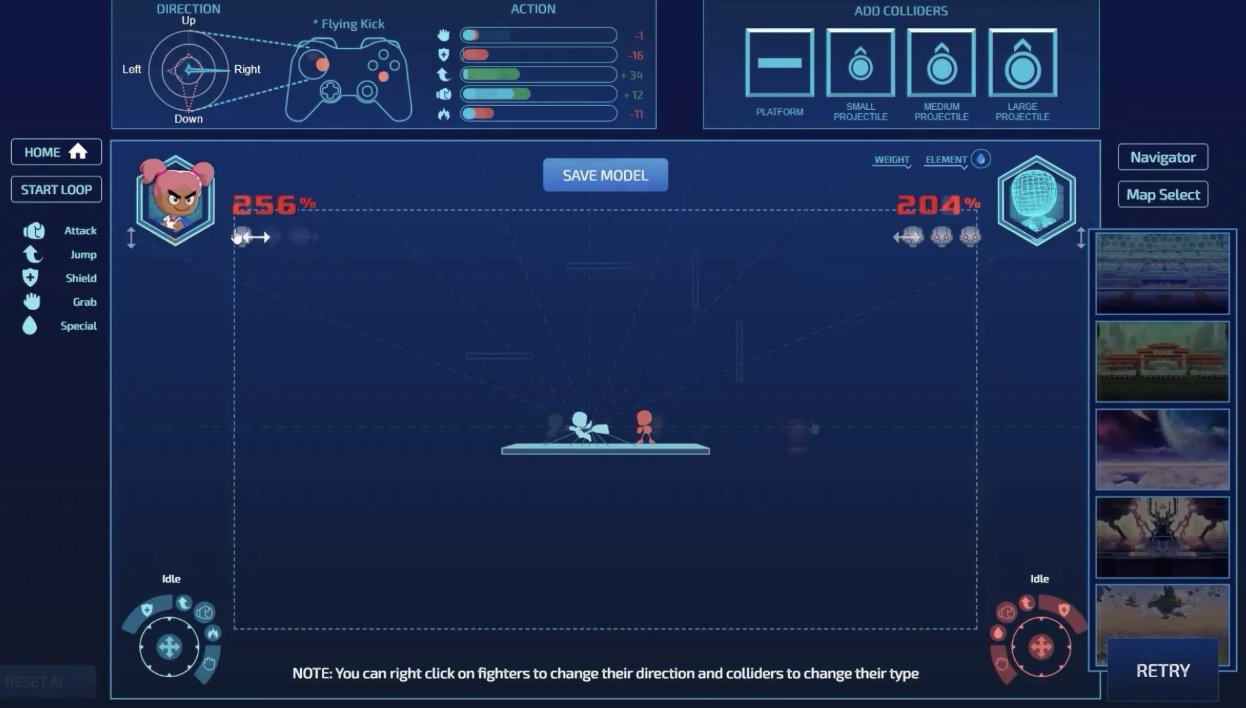
AI Arena (NRN Agents) and Satoshi Strike Force (SSF) further strengthened this trend. AI Arena uses imitation learning from actual player actions to train NFT characters into autonomous AI Agents. Once trained, these agents can fully automatically participate in PvP arena battles, with the player becoming an "AI coach." SSF, centered on the concepts of "Skill Economies as Intelligence Engines" and the "Cognitive Economy," utilizes a "Play-to-Verify™" mechanism. It transforms every tactical decision, reaction, and choice under pressure made by players in competition into high-signal, verifiable "cognitive traces." This real player data is directly used to train AI Agents called "Digital Athletes," forming a closed loop: "Your play is the training; your playstyle is the agent." Trained AI Agents can independently participate in PvP competition, strategy evolution, and autonomous competition, while also supporting dataset licensing, agent leasing, and competitive rewards, truly enabling players' skills to be on-chain assets that can be continuously iterated.
Somnia, as an Agentic L1 infrastructure, pushes this model to its extreme.On April 21, 2026, Somnia completed a major strategic pivot, officially becoming "The Agentic L1" — a high-performance Layer 1 blockchain built specifically for AI Agents. Its Somnia Agents are already running on-chain as part of the validator consensus, supporting native API queries from smart contracts, running deterministic AI models validated by the consensus mechanism. This allows AI Agents to become true "native users" of the blockchain, capable of autonomous world perception, decision-making execution, and real-time reaction (Reactive design), providing the underlying computational power and execution environment for games like AI Arena, Parallel Colony, and Illuvium, enabling fully on-chain autonomous competition and economic activities under millions of TPS, completely shedding off-chain dependencies.
Modular Infrastructure and Programmable Environment Model
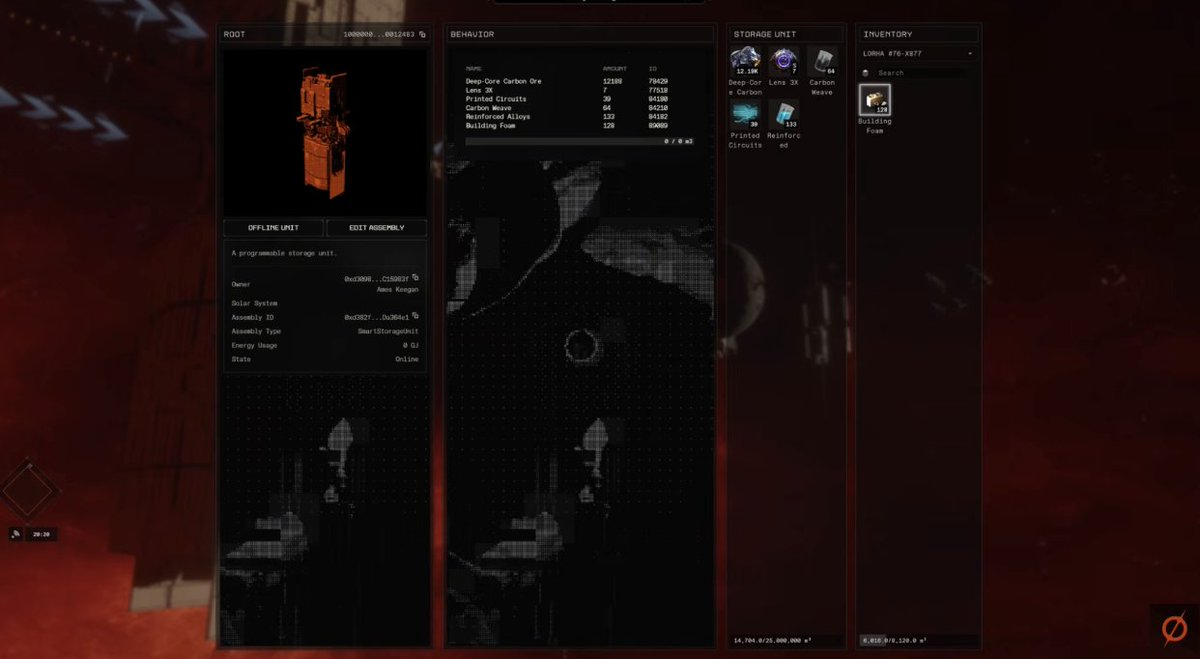
EVE Frontier pushes the implementation of agents to an architectural level. This hardcore interstellar survival game, developed by CCP Games, introduces the concept of "Server-side Modding" as its core innovation. Through the Smart Assemblies system, players and third-party AI Agents can write custom logic and deploy it directly onto stargates, turrets, or storage facilities. This means the infrastructure within the game world is no longer static but becomes programmable entities driven by AI. At this point, what players and AI Agents modify is no longer a simple local display skin, but the shared physical logic and economic laws of the entire universe.
1. Smart Assemblies: From Static Buildings to "Living Entities"
In the current Founder Access universe, Smart Assemblies offer three core carriers. AI Agents can effectively "possess" these facilities by mounting smart contracts (Mods) onto them:
- Smart Storage Unit (SSU): A basic resource warehouse. Through AI logic, it can evolve into an automated arbitrage hub, a tribal shared bank, or a decentralized market, capable of autonomously executing rent collection and quota management.
- Smart Turret: An automated defense weapon supporting AI-customizable rules of engagement. For example, based on a target's on-chain reputation score or historical bounty records, the AI can decide whether to initiate an active attack.
- Smart Gate: A spatial teleportation device. AI Agents can transform it into an intelligent checkpoint, dynamically adjusting passage fees based on real-time traffic flow, reputation weights, or cross-chain market exchange rates.
2. Technological Empowerment: Sui Migration and High-Frequency Game Support
To support this high-density Agent interaction, EVE Frontier officially migrated to the Sui chain in March this year. This architectural evolution provides key support for AI Agents:
- High-Concurrency Logic Execution: Leveraging Sui's object model, AI-driven components can process massive instructions in parallel, ensuring the real-time responsiveness of server-side logic.
- Seamless Onboarding and Low Friction: Combined with zkLogin and gas-free onboarding, AI Agents can interact with contracts at extremely low cost and high frequency, eliminating the old frictions associated with Web3 interaction.
3. Ecosystem Validation: From Hackathon Results to Collaborative Evolution in an Autonomous World
At the $80,000 prize pool EVE Frontier x Sui Hackathon concluding in April this year, the community-submitted 123 Mods/Tools further validated the vitality of this model. This event was not just a technology showcase but a practical simulation of the "Human+AI" co-governance model:
- Collaborative Evolution: Through Ghost Build (a ghost planning mode), human players and AI Agents can collaboratively plan the interstellar map. AI optimizes complex resource flow paths, while humans handle macro-strategic decisions, jointly constructing an infinitely scalable Autonomous World.
- Use Case Breakthroughs: The competition featured AI-driven "automated bounty hunter protocols" and "dynamic insurance pools." These protocols were directly mounted on Smart Assemblies, seamlessly transforming complex on-chain financial actions into in-game physical survival laws. Some excellent projects have already been integrated into the current Founder Access universe.
4. Economic Evolution: The "Commercial Soul" Granted by ERC-8183
If EVE Frontier achieves "code is law" on a physical level, then the ERC-8183 standard, jointly launched by Virtuals Protocol and the Ethereum Foundation, injects an autonomous commercial soul into this infrastructure.
ERC-8183 introduces a key "Job" primitive, allowing a game agent to autonomously hire another service agent for resource collection or data analysis, with fees automatically settled via on-chain escrow. This fundamentally changes the social role of agents:
- From "Tool" to "Employer": Using the 'Job' primitive of ERC-8183, a Smart Gate in EVE Frontier is no longer a dead object passively waiting for transit. It can even become an "employer," autonomously publishing Jobs on-chain to hire other service Agents for real-time data cruising or market risk hedging.
- Trust and Settlement: Through on-chain escrow for automatic fee settlement, ERC-8183 solves the trust foundation for cross-entity, cross-architecture collaboration.
This vision of 'infrastructure autonomously hiring labor' marks the evolution of Web3 game agents from simple execution to complex social collaboration.
Hybrid Companion and Dynamic Adaptive Environment Model
Parallel Colony and Illuvium explore the boundaries of human-AI collaboration.
As the pioneer of the "1.5-player game," Parallel Colony has players act as Cappy (a companion robot/guide), forming a symbiotic relationship with highly autonomous AI Avatars (colonists/execution agents). Each Avatar is itself a fully autonomous AI Agent, with infrastructure provided by Google Cloud (including Gemini models, Vertex AI, GKE, Cloud Spanner, etc.), enabling the AI Agent to autonomously understand player instructions, generate responses, and execute tasks. Avatars possess long-term memory, unique personalities, psychological assessments, emotional systems (Mood, Morale), and personalized goals. They can live, work, make decisions, adapt to dynamic post-apocalyptic environments, and can even reject or reinterpret player commands. Players provide high-level advice through chat (rather than direct control), while the Avatar autonomously manages territory, collects resources, engages in social interactions, and expands the colony. Additionally, the game features a real-time generative crafting engine, Fabricator (powered by Nano Banana technology), allowing players to instantly generate/mint 3D game assets via text prompts. Avatars also have on-chain autonomous trading capabilities (dedicated Web3 wallets + NFT binding), fostering true hybrid companion collaboration and emergent storytelling.
Youmio provides another symbiotic path with its Agentic L1 + 3D AI characters (Mios). Users can one-click create 3D AI companions with persistent memory, unique personalities, and an Affinity system. These Mios can not only chat and interact autonomously but also exhibit emergent behaviors in the Miogotchi adventure world, achieving economic value through on-chain identity. Players form a hybrid "digital partner + co-growth" relationship with their AI.


In Illuvium, through a strategic partnership with Virtuals Protocol in January 2025, plans are underway to inject AI Agent capabilities into NPCs using Virtuals' proprietary G.A.M.E LLM framework. This could transform these non-player characters from traditional static scripts into highly intelligent, context-aware dynamic entities. NPCs are expected to dynamically adjust dialogue, quests, challenges, and storylines in real-time based on player interactions, enabling personalized quest systems, emergent narratives, and hyper-personalized relationship building. This would span the three games: Overworld (open-world survival), Arena (auto-battler), and Zero (city builder), with Overworld being the first to implement it. This world-level dynamic adaptation mechanism could potentially turn the entire game environment into a "living companion" for the player, creating a dynamic meta-game with infinite content, high replayability, and continuous evolution, making each player's journey unique and difficult to fully predict.
Conclusion: The 'Post-Human' Turning Point for Web3 Gaming
Rugpull Bakery started from a cheating controversy but ultimately illuminated the future direction of Web3 gaming: a new digital order where humans and AI Agents coexist, collaborate, and compete. In the 2026 wave of Agentic Gaming, AI Agents have evolved into three core models — Autonomous Competitor and Economic Entity (TEN, AI Arena, SSF, Somnia Agentic L1), Modular Infrastructure and Programmable Environment (EVE Frontier + ERC-8183), and Hybrid Companion and Dynamic Adaptive Environment (Parallel Colony, Illuvium) — fully embedding themselves into the game's training, decision-making, execution, and economic cycles.
Attempting to block automation through traditional means is futile. Leveraging blockchain's transparency, programmability, and the native support of Agentic L1s (like Somnia) to regulate and empower agents is the only path to mass adoption. With the proliferation of the ERC-8183 "Job" primitive and the deployment of million-TPS Agentic infrastructure, Web3 gaming is rapidly shifting from "inefficient human labor" to "efficient algorithmic hedging and emergent intelligence." Players are no longer cogs in a machine but commanders of digital sovereignty and symbiotic partners. As Animoca Brands CEO Robby Yung noted, the industry frontier in 2026 will be "post-human by default," and this transformation will not only reshape gaming but will also serve as the ultimate testing ground for future human-machine societies concerning ownership, economics, and governance.
As a DAO deeply rooted in the gaming sector, GMA will continue to track the Agentic Gaming track. Which model do you think is most promising? Feel free to discuss in the comments!


