






原油价格何去何从?伊朗冲突阴影下的能源市场全解析


- 核心观点:2026年2月美以军事冲突导致霍尔木兹海峡近乎封锁,造成每日约1400万桶原油供应中断,布伦特原油飙升至138美元/桶后高位震荡。市场普遍低估了外交协议与供应恢复的时间差,即使停火,石油供应完全正常化也要等到2027年,这决定了2026年下半年油价将呈现“低价高波”格局。
- 关键要素:
- 供应冲击规模史无前例:每日约1400万桶原油供应中断,是1973年阿拉伯石油禁运规模的三倍以上,3月全球石油供应单月暴降1010万桶/日。
- 价格走势剧烈:布伦特原油从80美元以下飙升至4月7日138美元峰值,截至2026年5月26日仍在97-105美元区间高位震荡。
- 供应恢复时间差显著:ADNOC表示即使冲突立即结束,霍尔木兹全面恢复通行最早也要到2027年一季度或二季度,导致和平协议落地后油价下行空间有限。
- 各机构预测分歧:EIA预测2026年布伦特均价约96美元,高盛下调至85美元,摩根士丹利则持鹰派观点高达110美元,麦格理甚至提出200美元的极端情景。
- 宏观与加密市场联动:百美元以上油价压制美联储降息预期,对风险资产构成宏观压力;同时在局部地区,BTC和USDT作为替代储值和跨境转账工具的需求可能上升。
Overview
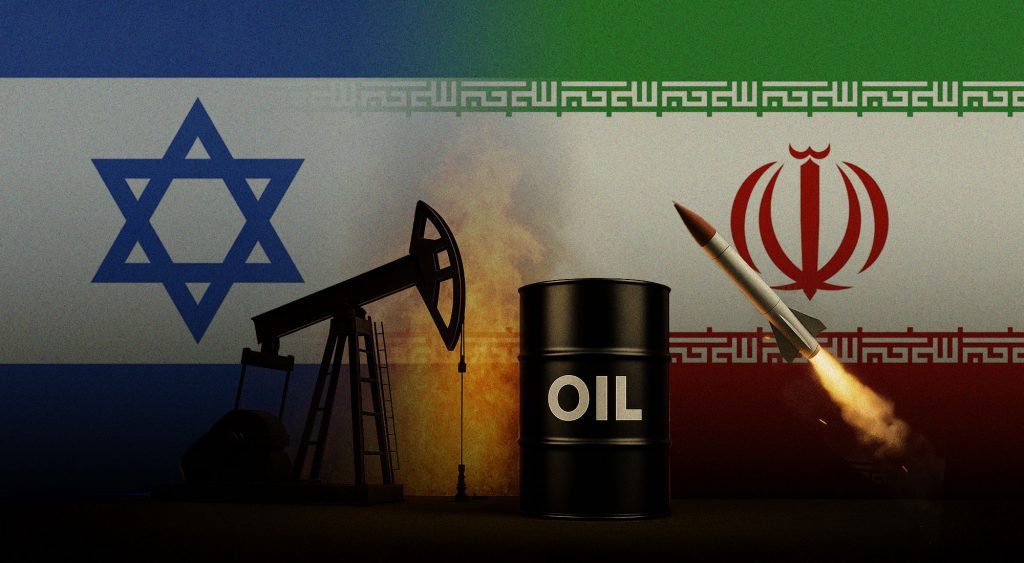
On February 28, 2026, the joint US-Israel military operation officially began, plunging the global energy market into its most severe supply shock since the 1973 oil crisis. The Strait of Hormuz – a critical waterway carrying approximately 20% of the world's daily crude oil and liquefied natural gas – was brought nearly to a standstill. Brent crude surged from under $80 per barrel to a peak of $138 within weeks of the conflict's outbreak, before gradually retreating amid peace talk expectations. However, as of May 26, 2026, prices are still oscillating at high levels between $97 and $105 per barrel.
The impact of this geopolitical storm extends far beyond the Middle East itself. Global inflation is resurging, gasoline prices have risen sharply in many countries, and costs have skyrocketed for energy-intensive industries such as aviation, chemicals, and shipping. Simultaneously, this crisis has created unprecedented trading opportunities for commodity traders and digital asset investors.
Key Takeaways
The actual blockade of the Strait of Hormuz has disrupted the supply of approximately 14 million barrels of crude oil per day, which is more than three times the scale of the 1973 Arab oil embargo.
Brent crude peaked at $138/barrel and is currently consolidating in the $97–$105/barrel range (as of May 2026).
The US Energy Information Administration (EIA) latest forecast: Brent average price around $96/barrel for 2026, falling to $89/barrel in the second half as the Strait of Hormuz gradually reopens.
Goldman Sachs lowered its Q2 Brent forecast to $90/barrel, maintaining Q3 at $82 and Q4 at $80.
The head of the Abu Dhabi National Oil Company (ADNOC) clearly stated that even if the conflict ends immediately, a full resumption of traffic through the Strait of Hormuz is unlikely before Q1 or Q2 2027.
Oil price trends are highly dependent on diplomatic progress, with each round of negotiation signals triggering severe price volatility.
1. Why is this conflict so unique?
Historically, Middle East turmoil has frequently impacted oil prices, but the intensity of this disruption is unprecedented. According to data from the International Energy Agency (IEA) April Oil Market Report, global oil supply plummeted by 10.1 million barrels per day in March 2026 to 97 million barrels per day, marking the largest single-month drop in modern history.
The fundamental reason is this: the Strait of Hormuz previously saw daily oil flows of approximately 20 million barrels, covering major exports from Saudi Arabia, Iraq, the UAE, and Kuwait. According to assessments by ICIS analysts, this conflict has resulted in the loss of about 14 million barrels per day of Middle Eastern oil production, with no overland alternative route capable of bridging a gap of this magnitude.
In comparison, the 1973 Arab oil embargo removed only about 4-5 million barrels per day from the market, yet it caused a quadrupling of oil prices and triggered economic recessions in several countries. The current shock is three times that in absolute scale, and modern economies have not substantially reduced their dependence on energy.
2. Price Timeline: From Outbreak to Now
Early March 2026 (Conflict Outbreak): After the US and Israel struck Iran, WTI futures surged 24.6% in a single day to $113, with Brent rising to around $114. According to a Fortune magazine report, Dow futures crashed over 1,000 points on the same day.
Peak Period (March to April): As the situation continued to escalate, IEA data shows Brent spot prices hit a historic high of $138 per barrel on April 7, with an average price of $117/barrel for the entire month of April. Middle distillate prices in the Asian market briefly broke through $290/barrel during this period, hitting an all-time high.
Retreat Period (April to May): The signing of a two-week ceasefire agreement provided a significant respite for the market. An investigative report by CBS News noted that the average US retail gasoline price briefly rose to $4.06 per gallon, a peak for recent years, but prices retreated slightly from the peak as diplomatic contacts commenced.
Current Situation (Late May): Brent is quoted in the range of approximately $103 to $105 per barrel. US Secretary of State Marco Rubio publicly stated that there is a "fairly solid proposal" on the negotiating table. A Washington Times report indicates that oil prices briefly fell to $97.90 on Monday, the first time they dipped below the $100 mark in nearly a month.
3. Diplomatic Progress ≠ Supply Normalization: The Most Overlooked Detail
Many market participants equate "ceasefire" with "falling oil prices," a dangerous miscalculation.
According to public statements by the head of ADNOC, even if the conflict stops immediately, the most optimistic estimate for the Strait of Hormuz to return to pre-war traffic levels is Q1 or Q2 2027. The reason is that normalizing the strait is a phased physical process: upstream oil wells require safety inspections before resuming production, port infrastructure needs repair assessments, oil tanker operators need to recalculate voyage risk premiums, and buyers and sellers need to rebuild supply chains.
ICIS analyst Kojo Orgle further pointed out that even with a rapid physical reopening of the strait, the actual tight supply situation in the oil market is expected to persist for at least three months or longer after a resolution is reached. This implies that the downside for oil prices remains limited even after any peace agreement is implemented.
4. Horizontal Comparison of Latest Major Institution Forecasts
There is significant divergence among institutions regarding their average Brent price forecasts for 2026, with the core variable being the timeline for the Strait of Hormuz to resume operations:
US Energy Information Administration (EIA): The May Short-Term Energy Outlook forecasts an average Brent price of about $106/barrel for May and June. As Middle Eastern production gradually recovers in the second half of the year, the Q4 average is expected to fall to $89, resulting in a full-year average of around $96.
Goldman Sachs: In a research report covered by Bloomberg, Goldman Sachs raised its full-year 2026 Brent average forecast to $85, characterizing the shock as the "largest supply shock ever." Subsequently, with signs of peace talks, Goldman Sachs lowered its Q2 forecast to $90, maintained Q3 at $82, and kept its Q4 baseline expectation at $80.
Morgan Stanley: Their Q2 Brent forecast is as high as $110/barrel, the most hawkish among major institutions, believing supply recovery will be much slower than the market expects.
Macquarie Group: According to an analysis report by Seeking Alpha, Macquarie estimates that if the conflict extends to the end of Q2 with the Strait of Hormuz remaining closed, oil prices could rise to an extreme scenario of $200/barrel.
BMI (a Fitch company): Has raised its 2026 Brent average price forecast by $8.5/barrel.
J.P. Morgan: In pre-war forecasts, J.P. Morgan estimated a 2026 Brent average around $60, but this projection was made before the conflict's outbreak and its current reference value has significantly diminished.
5. Three Scenario Analyses: Where Could Oil Prices Go?
Scenario 1: Peace Agreement Reached, Strait of Hormuz Gradually Reopens (Baseline Scenario)
This is the primary direction in which the market is currently pricing. If the US and Iran reach a phased agreement by June, Brent could gradually retreat from its current level above $100 to the $80-$90 range in the second half of 2026, potentially closing to around $70 by year-end, closer to the EIA's forecast. However, as mentioned earlier, full supply normalization will still take several quarters.
Scenario 2: Talks Break Down, Conflict Continues (Stress Scenario)
If the diplomatic process stalls again and the Strait of Hormuz blockade persists, oil prices could retest levels above $120, and the extreme scenario of $200 proposed by Macquarie would no longer be just a theoretical number. Lydia Boussour, senior economist at EY-Parthenon, stated in an interview with CBS News that even if the conflict ends, the "lagged effects" on the supply chain will last throughout 2026.
Scenario 3: Unexpected OPEC+ Production Increase Provides Relief (Easing Scenario)
The rhetoric from OPEC+ about increasing production continues, but as analysis from Discovery Alert points out, several core member countries of OPEC+ are themselves affected by the conflict. An increase in paper quotas does not equal an increase in actual delivered supply. Even so, record-high production in non-OPEC countries like the US and Brazil represents one of the real variables that could ease oil prices.
6. How Oil Price Turmoil Affects Cryptocurrency and Investor Strategies
The violent fluctuations in crude oil prices are not just a topic for traditional energy investors.
Inflation & Macro Linkage: Every $10/barrel increase in oil prices typically pushes global CPI up by about 0.3 to 0.5 percentage points. With current oil prices still above $100, expectations for Fed rate cuts will continue to be suppressed, creating a macro headwind for risk assets, including cryptocurrencies.
Risk Aversion & Capital Flows: During periods of escalating conflict, capital tends to flow towards gold and the US Dollar. However, historical data shows that in certain regions (e.g., economies facing currency devaluation like Iran or increased sanctions), on-chain transaction volumes for BTC and USDT typically rise in tandem, serving as alternative stores of value and tools for cross-border transfers.
Commodity Trading Opportunities: For investors looking to capture trading opportunities in oil price volatility, MEXC offers a diverse range of trading products, including oil-related contracts. Coupled with one of the deepest trading pair liquidity pools and leverage options up to 200x, it provides flexible tools for professional traders.
7. Exclusive Insights from the MEXC Crypto Pulse Research Team
The core logic of the current oil market revolves around a time lag issue that the market generally underestimates: the diplomatic timeline and the supply recovery timeline are two fundamentally different curves. Each rapid market reaction to peace talk news implicitly assumes a false premise – that the oil price risk will dissipate the moment an agreement is signed.
We believe crude oil trading in the second half of 2026 will exhibit a special pattern: the overall price range will shift lower (retreating from above $110 to the $80-$90 range), but volatility will not narrow correspondingly. Each round of negotiation progress or breakdown will trigger daily swings of several dollars, or even over ten dollars. This "lower price, high volatility" environment is a trap for trend-following position traders but a window of opportunity for short-term traders capable of precisely timing event-driven moves.
Another aspect worth noting is that high oil prices are systematically improving the drilling economics in non-OPEC US regions, especially the Permian Basin. US crude oil production could hit new highs in the second half of 2026. If Middle Eastern supply gradually recovers in 2027, the market will face the dual incremental pressure of high US output and resurgent Middle Eastern production. The subsequent price adjustment could then be far more significant than current expectations.
FAQ
Q: How big is the impact of the Strait of Hormuz closure on global oil prices?
A: The Strait of Hormuz is the world's most critical crude oil transportation route. Under normal circumstances, about 20 million barrels of crude oil and LNG pass through daily, constituting roughly 20% of global energy supply. This conflict has caused a supply disruption of about 14 million barrels per day, directly pushing Brent crude prices from below $80 to a peak of $138 – the largest single supply shock in modern oil market history.
Q: Will current oil prices continue to rise?
A: This is highly dependent on the progress of peace talks. In the baseline scenario, with the Strait of Hormuz gradually resuming traffic in the second half of the year, Brent could retreat from its current level around $100 to the $80-$90 range. However, if negotiations break down, an extreme scenario cannot rule out retesting levels above $120 or even higher. Institutional forecasts vary widely, requiring continuous monitoring of diplomatic developments.
Q: Can OPEC+ production increases alleviate the supply shortage?
A: Theoretically yes, but the practical effect is limited. Several core OPEC+ producing countries are themselves affected by the conflict, meaning paper production quota increases cannot be immediately converted into actual deliveries. Production growth from non-OPEC regions like the US and Brazil provides more tangible relief, but its scale is still insufficient to fill the roughly 14 million barrel per day supply gap from the Middle East.
Q: What impact will the Iran conflict have on the cryptocurrency market?
A: The indirect impact is primarily transmitted through two channels. First, the macro channel: high oil prices fuel inflation, suppress expectations for central bank rate cuts, and create overall pressure on risk assets. Second, the demand channel: in economies facing sanctions or significant currency devaluation pressure, usage of BTC and USDT as alternative financial tools typically increases, a pattern repeatedly validated by historical data.
Q: How can retail investors participate in crude oil-related trading?
A: Investors can access the crude oil market through various channels, including oil futures, ETFs, and trading oil-related contracts or digital assets linked to energy prices on platforms like MEXC. Please note that commodity trading carries high risk. It is recommended to understand the leverage risks thoroughly and operate cautiously.
Q: What is a reasonable expected range for oil prices in 2026?
A: Based on the midpoint of the latest forecasts from various institutions, the average price for Brent crude in 2026 could be in the range of $80 to $96 per barrel. This is higher than the pre-conflict level of $60 to $65 but lower than the peak crisis periods. Uncertainty remains extremely high, with the primary variables being the actual timeline for resuming Strait of Hormuz traffic and the outcome of US-Iran negotiations.
Disclaimer
This article is for informational purposes only and does not constitute investment advice or a financial product recommendation. Trading in crude oil and related assets involves high market risk. Prices can experience violent fluctuations due to unforeseen factors such as geopolitical events and policy changes. Readers should fully assess their own risk tolerance and consult with a professional financial advisor before making any investment decisions. Past performance is not indicative of future results.


