






OpenAI Trial Sequel: Musk Goes Berserk, Bails Out Tesla, and the Inside Story of the "Haunted House Meeting"


- Core Insight: The legal dispute between Musk and OpenAI has exposed the power struggles and conflicts of interest within the founding team of the AI sector. The central controversy lies in OpenAI's transition from a non-profit, open-source organization to a for-profit commercial entity, during which Musk broke away due to disagreements over control, financial commitments, and strategic direction.
- Key Elements:
- Funding and Equity Conflicts: Musk provided $38 million in initial funding, while co-founder Greg Brockman, who contributed no cash, now holds approximately $30 billion in equity based on OpenAI's current valuation of $825 billion.
- Power Struggle Details: During the 2017 "Haunted House Meeting," Musk became enraged upon failing to gain control, threatened to cut off funding, and demanded the resignations of Brockman and Sutskever, leading to a breakdown in their relationship.
- Controversy Over For-Profit Transition: OpenAI's original core principles were "openness and transparency," but it ultimately shifted toward becoming a for-profit company with plans for an IPO, deviating from its founding mission. Musk proposed merging it as a subsidiary of Tesla, but was rejected and subsequently left in anger.
- Influence of Key Figures: Former Google researcher Ilya Sutskever was convinced by Musk to join, later participated in ousting Altman over disagreements on safety strategy, and eventually left. Board member Shivon Zilis has children with Musk.
- Exposure of Personal Motives: Brockman's diary reveals his ambitions for wealth, while Musk is reportedly in need of $80 billion to realize his Mars city vision, attempting to use OpenAI as a funding source for SpaceX.
Original|Odaily Planet Daily (@OdailyChina)
Author|Wenser (@wenser2010)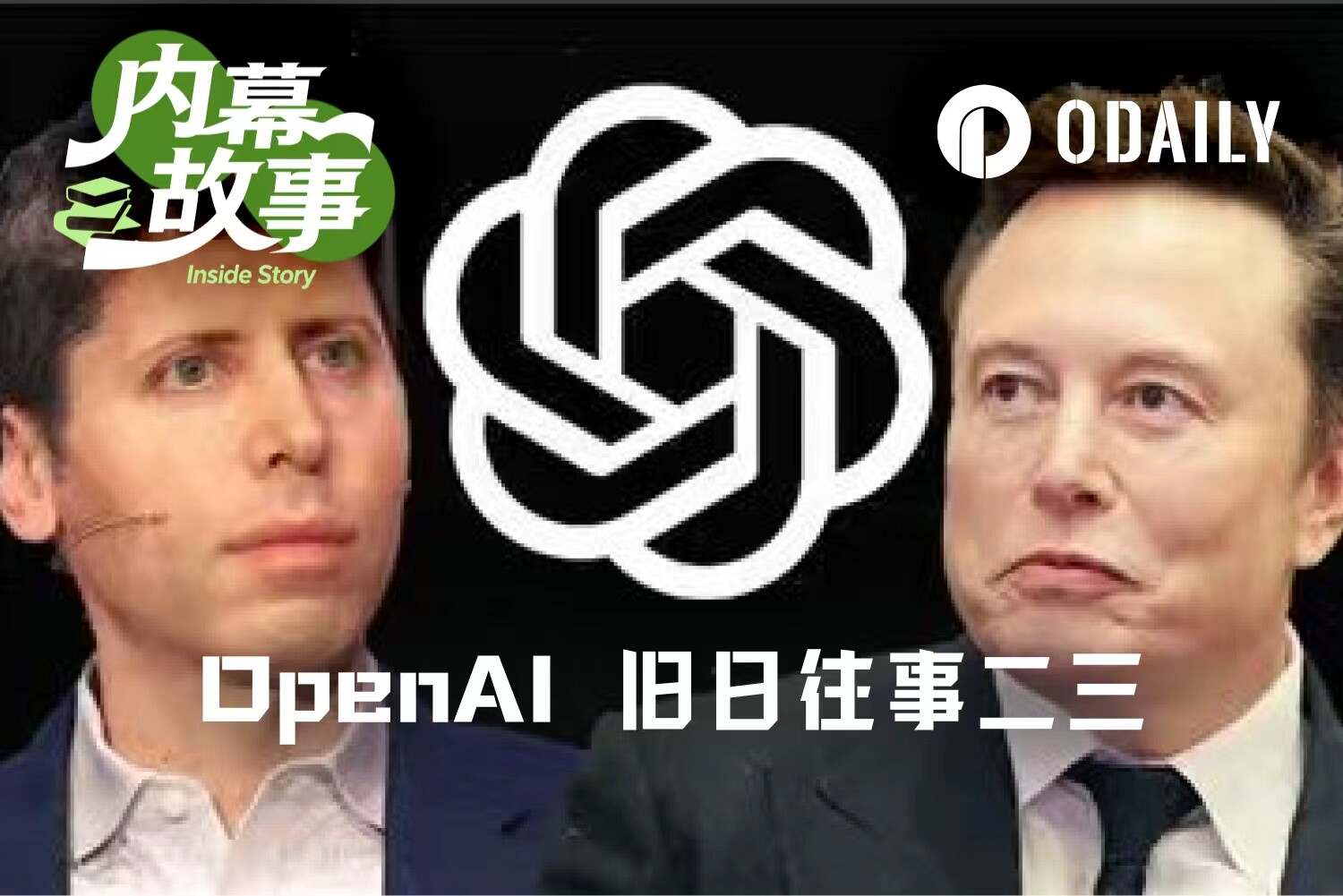
On April 28, Musk and a group of OpenAI executives faced off in federal court in Oakland, California. (For details, see Musk vs. Altman: The Biggest Case in AI History Begins Trial)
This man, bearing the title of the world's richest person, co-founded OpenAI and then, like Jobs in his time, left in a huff. As insider information, including opening statements and court exhibits, was released on May 6 and 7, more unknown details of this case involving two tech giants valued at trillions of dollars each – SpaceX and OpenAI – gradually came to light. This includes both Musk's various tactics and the personal motives and professional principles of OpenAI executives.
Odaily Planet Daily has compiled eight stories based on public information and court documents to help readers understand the background of the "largest AI trial in history," which involves a potential settlement of up to $134 billion.
Insider Story 1: Musk Poured $38 Million in Startup Funds, OpenAI Exec Greg Brockman "Earned" $30 Billion in Equity Without Investing a Dime
In the second week of the Musk vs. OpenAI trial, OpenAI co-founder and President Greg Brockman, along with his personal diary from 2015 to 2023, appeared as a witness and evidence in the California court. Musk's lawyer, Steven Molo, quickly caught him in a "contradiction" – compared to Musk's genuine investment of $38 million to support OpenAI's founding and early development, Greg Brockman himself admitted, "I didn't put a penny into the founding and development of OpenAI." Yet today, based on OpenAI's valuation of $825 billion after its latest funding round, his personal OpenAI equity is worth approximately $30 billion.
Greg Brockman's diary also exposed his "wealth ambitions" – it mentioned:
- "Financially, what will take me to $1B?" ; "It would be nice to be making the billions." / "We've been thinking that maybe we should just flip to a for profit. Making the money for us sounds great and all." (Making billions sounds nice / Maybe we should just convert to a for-profit company. Making money sounds great.)
- "Can't see us turning this into a for-profit without a very nasty fight... It'd be wrong to steal the non-profit from him. That'd be pretty morally bankrupt... and he's really not an idiot. His story will correctly be that we weren't honest with him in the end about still wanting to do the for-profit just without him." (Turning it into a for-profit won't come without a nasty fight… Stealing the non-profit from him is morally bankrupt… He's not stupid. He'll say we weren't honest with him in the end, that we still wanted the for-profit, just without him.)
- Furthermore, he wrote, "This is our only chance to get rid of Musk… to let me make $1 billion."
Although Greg Brockman argued that some of these were hypothetical scenarios after the board ousted Musk, it hardly paints a picture of someone indifferent to fame and fortune.
This is significant because Greg Brockman had previously promised to donate $100,000 to the OpenAI non-profit foundation, a promise that was never fulfilled. When asked, "Do you want to fund a non-profit, or become a billionaire through OpenAI?", he responded magnanimously, "Having $1 billion in stock is already very satisfying." But when Musk's lawyer Molo asked why he didn't donate the remaining $29 billion in equity to the OpenAI non-profit foundation, Greg was left speechless.
In contrast, Greg invested $471 million in his former company, Stripe, and holds shares in cloud computing provider CoreWeave, one of OpenAI's partners. The co-founder who joined via a technical contribution suddenly became the center of public opinion for wanting it both ways.
Insider Story 2: Former OpenAI Board Member Met Musk at a Company Retreat, Then Used His Sperm Donation to Have Four Children
On May 7, Beijing time, Shivon Zilis, the former OpenAI board member who has four children with Musk, also appeared as a witness in court.
She stated that she first met Musk at an OpenAI company retreat. At the time, she joined OpenAI in 2016 and later served on the board for several years.
When she decided to become a single mother and have children, Musk, who has always championed "human-centric" values, proactively offered to donate his sperm for in-vitro fertilization (IVF).
Regarding their current relationship status, Shivon Zilis said, "We are in a romantic relationship; Musk visits regularly." However, she denied being Musk's "secret agent" or "source of intelligence"; Musk, on the other hand, calls her his "close advisor."
After Musk's relationship with other OpenAI co-founders broke down in 2018, she continued to act as a bridge between them. She formally left the OpenAI board only after Musk founded xAI, a competitor to OpenAI, in 2023.
Insider Story 3: OpenAI Was Originally Called "AI Manhattan Project"; Musk Personally Chose Its Current Name
In May 2015, OpenAI founder Sam Altman, then president of Y Combinator, sent Musk an email proposing that Y Combinator lead the creation of a "Manhattan Project-style AI lab." (Odaily Planet Daily Note: A reference to the atomic bomb project led by Oppenheimer.)
Ultimately, Musk personally named the new AI lab "Open AI Institute," abbreviated as "OpenAI" (drawing inspiration from the Open Source philosophy) – a name that embodies the core principle of OpenAI's birth – openness, transparency, and serving all of humanity.
Looking back now, considering the development of the AGI path and their current awkward legal battle, perhaps Sam Altman foresaw that OpenAI and large AI models would become like the atomic bomb – transforming from a tool initially hoped to "end wars" into a "weapon of mass destruction that could destroy the world." OpenAI's complete transformation into a for-profit company, planning an IPO, also signals its departure from its original spirit of open source and openness.
Insider Story 4: Musk Poached Former Google Researcher Ilya Sutskever with a Single Phone Call
In 2015, Ilya Sutskever, who had been acquired by Google through a talent acquisition, received a sudden "cold email" from Sam Altman (Odaily Planet Daily Note: A personal email sent directly to someone with no prior interaction), inviting him to dinner with Greg Brockman and Musk to discuss founding a new AI research organization (later OpenAI). At the time, Altman emphasized that the organization's goal was to develop AGI for the benefit of all humanity, to prevent monopolization by a few giant companies.
Sutskever had already worked at Google for nearly three years and was highly valued and strongly persuaded to stay by the Google Brain team and DeepMind founder Demis Hassabis.
When OpenAI, the "upstart" with no major achievements yet, offered him the role of "Chief Scientist," Sutskever hesitated despite sharing their vision, harboring various concerns. Ultimately, Musk called him on the very day of OpenAI's official public launch, convincing him to join, thus bringing a founding figure to OpenAI's early development.
Unfortunately, in November 2023, Ilya Sutskever, as a board member,participated in the "vote to remove Sam Altman as CEO" due to conflicts over AI safety and commercial development paths. The incident ended with Sam Altman gaining control of the board, Ilya publicly apologizing, and resigning from the board. In May 2024, he formally left OpenAI. Sam Altman publicly thanked him at the time, saying, "Without Ilya, there is no OpenAI as we know it."
Insider Story 5: OpenAI Almost Became a Tesla Subsidiary; OpenAI Employees Once Worked for Free for Tesla
These two pieces of information come from the aforementioned former OpenAI board member Shivon Zilis and OpenAI co-president Greg Brockman.
According to Shivon Zilis, around 2017, about two years after OpenAI's founding, Musk, Sam Altman, and others were at their wit's end due to computing resources and funding issues, constantly brainstorming ways to find capital and GPU resources.
One day, Musk suddenly proposed merging OpenAI into Tesla, making it a subsidiary that would function as an internal AI lab to seek more funding and resource support. Additionally, Musk had prepared a Tesla board seat for Sam Altman. Of course, due to strong insistence from Sam Altman and Greg Brockman, the plan never materialized. It was soon after this that Musk gradually parted ways with the current OpenAI founding team, leading to a complete breakdown in their relationship in 2018 and his angry exit.
Furthermore, Greg Brockman pointed out that Musk had reassigned several OpenAI employees to work for free on Tesla's Autopilot team, including former OpenAI researcher Andrej Karpathy, who later formally joined Tesla and is now considered one of the "giants" in the AI field.
Insider Story 6: Musk Bribed Greg Brockman and Ilya Sutskever with Founder Series Tesla Model 3s
In July 2017, on the eve of the "Haunted Mansion meeting" regarding the struggle for majority control of OpenAI, Musk explicitly stated via email to some OpenAI executives: "As a thank you for your contributions to OpenAI, I want to give each of you a Founder Series Model 3. These are the first ones produced, not yet available to the public."
In August 2017, Sutskever also mentioned this in a text message to Brockman: "At least we're getting our Teslas." (At least we got the Model 3s.) "Will a Model 3 make you be willing to accept massively unfavourable terms?" (Would a Model 3 make you willing to accept massively unfavorable terms?) By then, OpenAI's core leadership was already prepared for Musk's "sugar-coated bullets."
Greg Brockman also stated in court that the "Tesla car reward" mentioned by Musk wasn't a recognition of hard work, but rather a means for Musk to gain greater influence within OpenAI, a way to "curry favor" with him and Ilya Sutskever (Odaily Planet Daily Note: arguably a form of bribery). This was because the cars were delivered in late August 2017, perfectly timed just before the meeting on equity distribution for the OpenAI for-profit entity.
Interestingly, as a gesture of goodwill, then-OpenAI Chief Scientist Ilya Sutskever commissioned a painting of a Tesla Model 3 and presented it to Musk during the subsequent "Haunted Mansion meeting."
Insider Story 7: At the Haunted Mansion Meeting, Musk Suddenly Went Berserk, Nearly "Beating Someone"
In August 2017, after OpenAI defeated top human players in a Dota 2 tournament, Musk proposed a "celebration" and invited the OpenAI team to a party at his newly purchased mansion in Hillsborough, California – a 47-acre property worth $23 million with a strange, spooky vibe.
Because the property was old, poorly maintained, and had an eerie atmosphere (like a Gatsby-esque odd mansion), Musk jokingly called it the "haunted mansion." He even sent an email warning everyone they might see "party carnage."
According to Greg Brockman's recollection in court, Musk's girlfriend at the time, Amber Heard, was initially present, poured everyone whiskey, and then left with her friends. The atmosphere was initially pleasant, but as they discussed the "next steps" for "OpenAI transitioning to a for-profit entity," things changed dramatically – when Musk didn't get the response he wanted regarding equity distribution and control, he seemed to transform like a different person, "suddenly stood up, walked around the table in a rage, and was very angry." Brockman stated: "I honestly thought he was going to hit me."
Finally, Musk grabbed the painting Ilya Sutskever had given him, announced that he would cut off funding for OpenAI unless Brockman and Sutskever resigned, and stormed out of the room, ending the party on a sour note.
Insider Story 8: Musk "Endured Humiliation" to Gain Control of OpenAI, Just to Fulfill His "Mars Dream"?
During the trial, when asked, "Why did Musk absolutely need to gain control of OpenAI?", Greg Brockman stated that Musk told him part of the reason was: He needed $80 billion to realize his grand vision of building a city on Mars.
Meanwhile, SpaceX's IPO was also progressing rapidly, and its fundraising target happened to be around $75 billion, quite close to the $80 billion mentioned by Brockman.
After 8 years, the root cause of the love-hate relationship between Musk and OpenAI may finally have come to light – Musk needed OpenAI as a key vessel to provide capital for SpaceX. If he had successfully gained control of OpenAI back then, he might have transformed it into a for-profit entity anyway, just like Sam Altman and Greg Brockman. The difference is that Musk might not have had to bother creating xAI from scratch and eventually merging it into SpaceX.
Of course, according to the latest news, Musk has turned to partner with Anthropic, OpenAI's biggest competitor, betting his available computing resources on them as a roundabout way to achieve his ultimate dream – landing on Mars. See details in Musk and Anthropic: Going to Space to Find Electricity.
We conclude the article with a trial anecdote from the "first major case in the AI field" involving potential compensation of up to $134 billion.
According to documents filed by OpenAI's lawyers, two days before the trial officially began, Musk sent a text message to Greg Brockman probing OpenAI's willingness to settle. When the latter mentioned that "both sides should drop their claims," Musk retorted sharply: "This weekend, you and Sam will be the most hated people in all of America. If you insist, so be it."
Although Judge Yvonne Gonzalez Rogers, who presides over the case, ultimately did not admit the text message as evidence, the current situation suggests that Musk and OpenAI's "litigation war" is far from showing their final hand.


