






42 tỷ USD mua lại Equiniti, Bullish đặt cược vào đại dương xanh nghìn tỷ của RWA


- Quan điểm cốt lõi: Nền tảng tài sản mã hóa niêm yết tại Mỹ Bullish đã mua lại nhà cung cấp dịch vụ chuyển nhượng truyền thống Equiniti với giá 42 tỷ USD, nhằm tích hợp dịch vụ chuyển nhượng được quản lý, nền tảng giao dịch mã hóa và dữ liệu truyền thông, xây dựng cơ sở hạ tầng token hóa từ đầu đến cuối, chiếm lĩnh thị trường đại dương xanh nghìn tỷ của việc token hóa tài sản truyền thống.
- Các yếu tố chính:
- Tổng giá trị mua lại là 42 tỷ USD, bao gồm 18,5 tỷ USD nợ phải trả và 23,5 tỷ USD cổ phiếu, dự kiến hoàn thành vào tháng 1 năm 2027, cần được cơ quan quản lý phê duyệt.
- Equiniti cung cấp dịch vụ chuyển nhượng cho gần 3000 công ty niêm yết, quản lý hơn 20 triệu cổ đông, xử lý khoảng 500 tỷ USD thanh toán mỗi năm, sở hữu khuôn khổ tuân thủ trưởng thành.
- Sau khi mua lại, thực thể hợp nhất dự kiến đạt tổng doanh thu điều chỉnh khoảng 13 tỷ USD trong năm tài chính 2026, với dịch vụ token hóa và blockchain đóng góp 20% tốc độ tăng trưởng doanh thu kép hàng năm từ 2027-2029.
- CEO của Bullish nhấn mạnh token hóa là "sự chuyển đổi thế hệ của thị trường vốn", việc mua lại đã cung cấp ba yếu tố: dịch vụ từ đầu đến cuối, sổ cái thống nhất và mối quan hệ với các tổ chức phát hành blue-chip.
- Sau khi hợp nhất, Bullish sẽ chuyển từ doanh thu giao dịch sang dịch vụ cơ sở hạ tầng biên lợi nhuận cao, tăng cường khả năng chống chu kỳ, giá cổ phiếu của họ đã tăng hơn 11% sau thông báo.
Original author: Ma He, Foresight News
On May 5, US-listed crypto asset platform Bullish and private equity firm Siris Capital reached a definitive agreement to acquire Equiniti for a total consideration of $4.2 billion. The transaction comprises $1.85 billion in assumption of Equiniti's existing debt and approximately $2.35 billion in Bullish stock consideration. The stock issuance price is based on the volume-weighted average price (VWAP) of $38.48 per share over the 30 trading days prior to the close on May 4, 2026. The transaction is subject to customary purchase price adjustments.
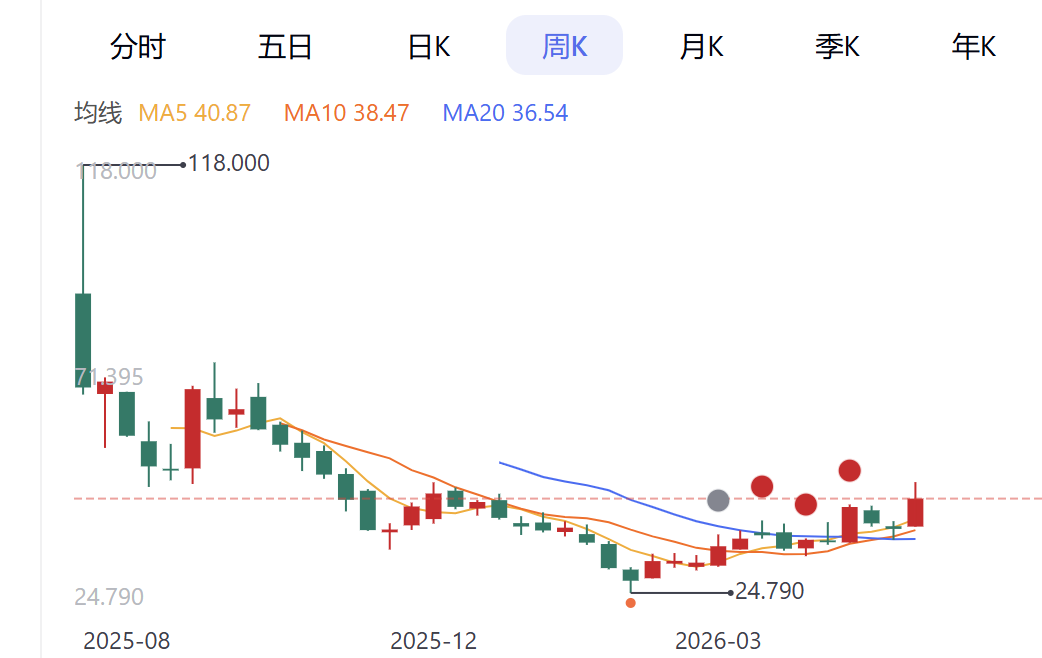
The transaction is expected to close in January 2027, pending regulatory approvals and satisfaction of other customary closing conditions. Following the announcement, Bullish's stock price briefly rose to a high of $48.93, an increase of over 11%.
Equiniti: The Core "Household Registration" Service Provider for Traditional Capital Markets
Founded in the late 19th century, Equiniti is a transfer agent and shareholder services provider. It primarily offers core services for listed companies, including managing registered shareholder records, stock issuance/transfer/cancellation, dividend distribution and reinvestment, shareholder communications, corporate action processing, and tax filing.
Equiniti currently acts as a transfer agent for nearly 3,000 listed companies, serves over 15,000 corporate clients, manages more than 20 million verified shareholders, and processes approximately $500 billion in payments annually.
Registered as a transfer agent with the U.S. Securities and Exchange Commission (SEC) and regulated by the Financial Conduct Authority (FCA) in the UK, Equiniti possesses a mature compliance framework and cross-market operational capabilities.
In 2021, Siris Capital acquired Equiniti and merged it with its US counterpart, AST, forming a scaled global transfer agent platform.
Acquisition Logic Directly Targets the Trillion-Dollar Tokenization Blue Ocean
Upon completion of the acquisition, Bullish's portfolio will include the Bullish Exchange trading platform, media outlet CoinDesk, and end-to-end tokenization infrastructure services.

Disclosed in its Q4 2025 earnings report, Bullish reported adjusted revenue of $92.5 million, a significant year-over-year increase (compared to $55.2 million in the same period of 2024). Adjusted EBITDA reached $44.5 million, a substantial year-over-year improvement, with a gross margin of 48%. Full-year adjusted revenue was approximately $288.5 million, up about 35% year-over-year. Subscription, service, and other revenue hit $54.6 million in Q4 alone, surging 284% year-over-year, driven by the launch of options trading, growth in institutional client funds, and the expansion of tokenization liquidity services. Its stock price hit a low of $24.79 on February 5, but after the earnings release, it rose for two consecutive days, briefly touching $32.
Following the transaction, the combined Bullish and Equiniti entity is projected to generate approximately $1.3 billion in adjusted total revenue for the fiscal year 2026.
From 2027 to 2029, the combined company is expected to achieve a 6%-8% compound annual revenue growth rate, with tokenization and blockchain services contributing a 20% revenue growth rate.
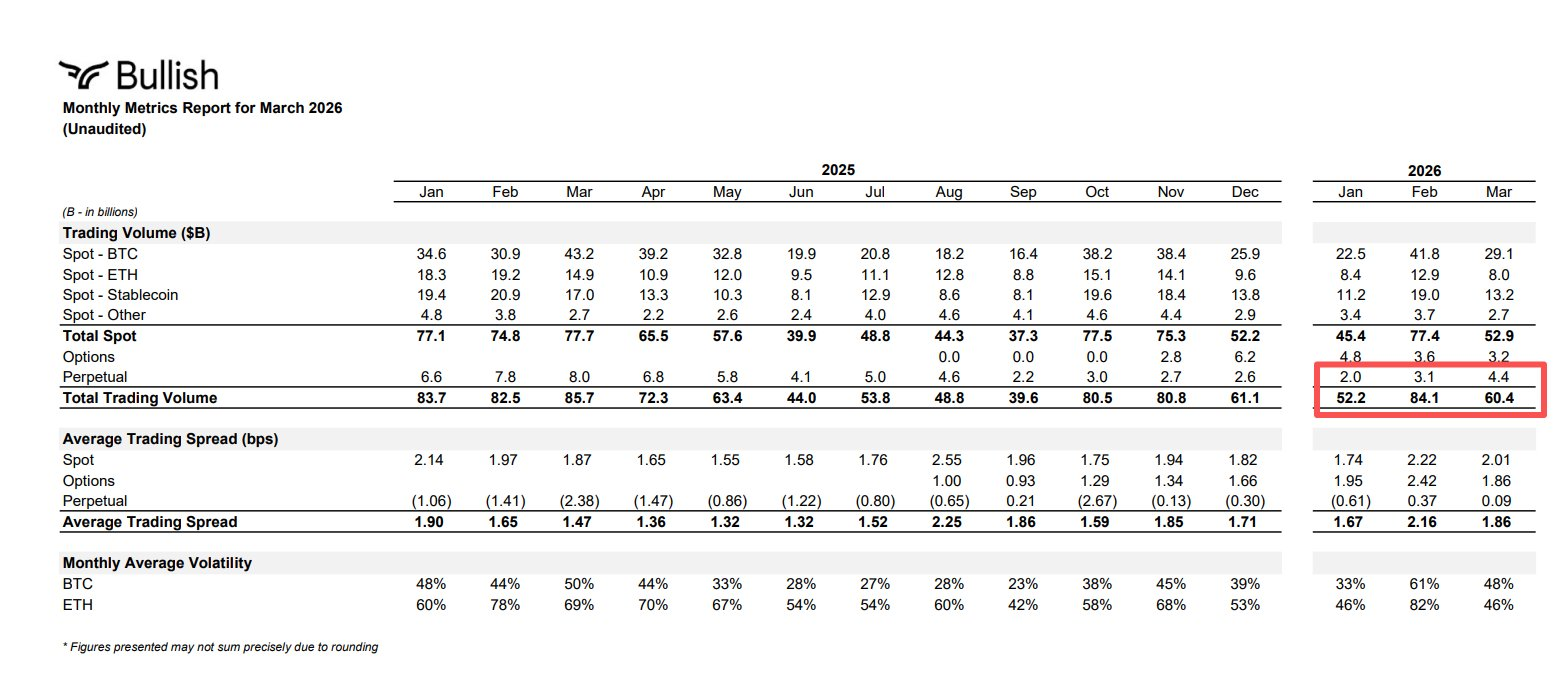
In March this year, Bullish's total trading volume was $60.4 billion, a decline of about 28% from $84.1 billion in February. However, Bullish's perpetual contract volume in March reached $4.4 billion, a new high since May 2025, achieving counter-trend growth despite the overall decline in trading volume.
Within the crypto ecosystem, RWA is already viewed as the next trillion-dollar track. The bottleneck for traditional transfer agents lies in manual processing, delayed settlement, and high costs, whereas blockchain technology enables instant ownership transfer, fractionalized ownership, and global 24/7 liquidity.
Bullish's move might be seen as a crypto-native response to traditional giants like BlackRock and BNY Mellon deploying in the RWA space, first integrating "regulated transfer agent + crypto exchange + media/data" into a closed-loop ecosystem.
Tom Farley, former President of the New York Stock Exchange and current CEO of Bullish, emphasized in the announcement: "Tokenization represents a generational shift in how capital markets operate and is the most defining infrastructure trend of the next 25 years. Institutional-scale adoption requires three elements: end-to-end tokenization services, a single unified ledger, and scaled blue-chip issuer relationships. This merger delivers all three in one go."
This also signifies Bullish's gradual shift from a model dominated by trading revenue towards high-margin infrastructure services, potentially significantly enhancing its resilience against market cycles.


