






芯片股的“最大利空”终于来了?Meta会是“第一个缩减资本开支的大厂”吗?


- 核心观点:Meta计划出售过剩算力,打破了市场“算力绝对稀缺”的信仰,标志着AI投资周期从硬件军备竞赛转向财务纪律与算力利用率,引发芯片股抛售和资金向软件及削减开支的科技巨头轮动。
- 关键要素:
- Meta组建“Meta Compute”新业务,拟将过剩算力以API服务或直接租赁方式出售给外部客户,与供应商CoreWeave等直接竞争。
- 受此消息影响,Meta股价单日暴涨10%,而英伟达、美光等芯片股及新兴云服务商遭猛烈抛售,纳斯达克指数显著波动。
- 高盛警告称,“算力稀缺”叙事被颠覆后,硬件领域率先承压;AI市场如“拉伸的橡皮筋”,负面信号累积至临界点将引发估值重构。
- 动量交易策略崩盘,高盛高Beta动量篮子单日重挫9%,多空高Beta动量指数创2020年以来最差单日表现。
- 市场焦点转向自由现金流稳定性和财务纪律,瑞银表示此举缓解了资本支出持续上升的担忧,资金轮动至软件板块。
- “过剩产能”提法引发对AI真实需求担忧,即将到来的财报季和资本支出指引是估值重估能否持续的关键。
- 尽管成交量创历史新高,但市场流动性极差,标普E-mini期货顶层流动性环比暴跌33%,大额交易易引发剧烈波动。
Original Author: Ye Zhen
Original Source: Wall Street Sights
Meta's plan to sell excess computing power has shattered the market's core belief in "absolute computing scarcity." This strategic pivot triggered a sharp capital exodus from chip stocks, also marking a turning point in market tolerance for tech giants' unchecked capital expenditures.
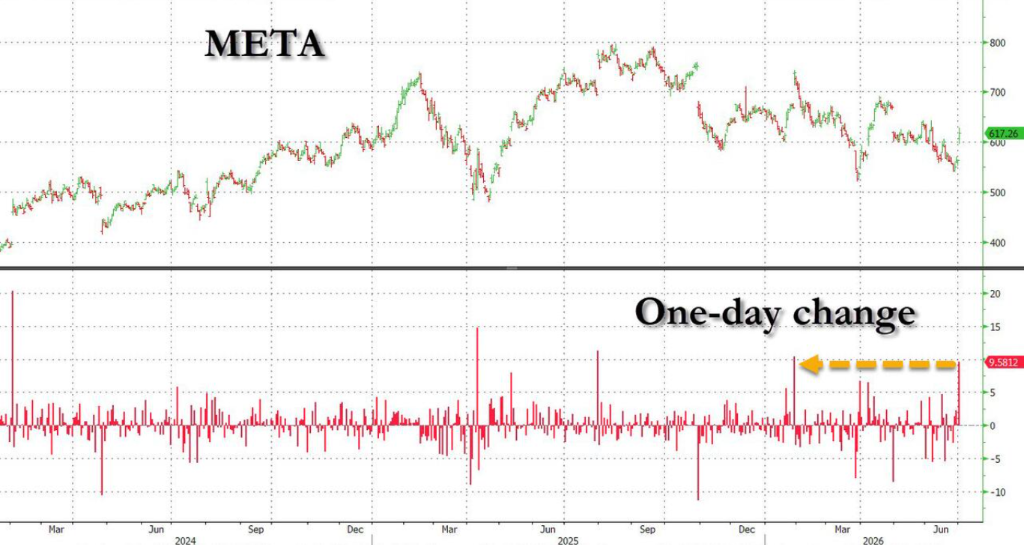
The news caused extreme polarization in the secondary market. Meta, which proactively signaled spending cuts, saw its share price surge 10% in a single day, its best performance of the year. Meanwhile, traditional AI hardware beneficiaries—semiconductor giants, memory chip manufacturers, and emerging cloud service providers (Neocloud)—suffered heavy losses, dragging the Nasdaq index into significant volatility.

Wall Street institutions widely interpret this as a major narrative shift in the AI investment cycle. Investor focus is rapidly pivoting from pure hardware infrastructure buildout towards enterprise free cash flow stability and compute utilization rates. Investors are now rewarding tech giants that demonstrate financial discipline with their capital.
This reshaping of the underlying logic not only rewrites the power dynamics between hyperscale cloud providers (Hyperscalers) and chip suppliers but also directly triggers a collapse in crowded momentum trading strategies, injecting new uncertainty into the upcoming earnings season and market liquidity.
Meta Pivots to Sell 'Excess Compute,' Signaling a Turning Point for Big Tech CapEx
According to Bloomberg, Meta is forming a new business unit to sell its excess computing power to external customers for revenue. Insiders reveal potential plans include allowing external access to various AI models hosted on Meta's existing AI infrastructure, a model similar to AWS's Bedrock service. Meta would operate the data centers and chips powering models like Muse and Spark, charging developers for access.
Furthermore, Meta is considering directly selling "raw" computing power. Ironically, Meta had just signed multi-billion dollar contracts with emerging cloud providers like CoreWeave and Nebius, and this move means it will turn around and compete directly with its own suppliers.
The internal initiative, dubbed "Meta Compute," aims to build and manage the company's AI infrastructure. The team is co-led by Meta's Head of Infrastructure Santosh Janardhan, AI executive from the Super Intelligent Lab Daniel Gross, and Meta's President Dina Powell McCormick.
In fact, this shift was foreshadowed. During a shareholder call in May, Meta CEO Mark Zuckerberg hinted to investors that selling excess compute or API services was "definitely on the table." Another company that previously sold excess compute, SpaceX, is also currently facing intensified competition in that market.
'Compute Scarcity' Logic Under Siege, Chips and Momentum Stocks Slammed
Meta's move directly challenges the core premise underpinning the recent surge in chip stocks. Goldman Sachs 1-Delta trading desk head Rich Privorotsky warned that the market's core premise has been compute scarcity. Once supply increases and lease prices decline, the scarcity narrative will be directly overturned, and the hardware sector will feel the pain first.
Goldman Sachs warned that the AI market is like a stretched rubber band. The market's persistent disregard for negative signals will eventually reach a tipping point. Should any major tech giant be the first to cut AI spending, the valuation logic of the entire AI sector will face a comprehensive restructuring. Concurrently, the rise of low-cost AI models is challenging the current 'high spending for growth' logic.
Affected by the Meta news, the chip and memory sectors bore the brunt, with star stocks like Nvidia, Micron, and Sandisk facing intense selling pressure. Emerging cloud service providers were viewed as the clearest losers, with their stock prices experiencing some of their largest single-day drops this year.
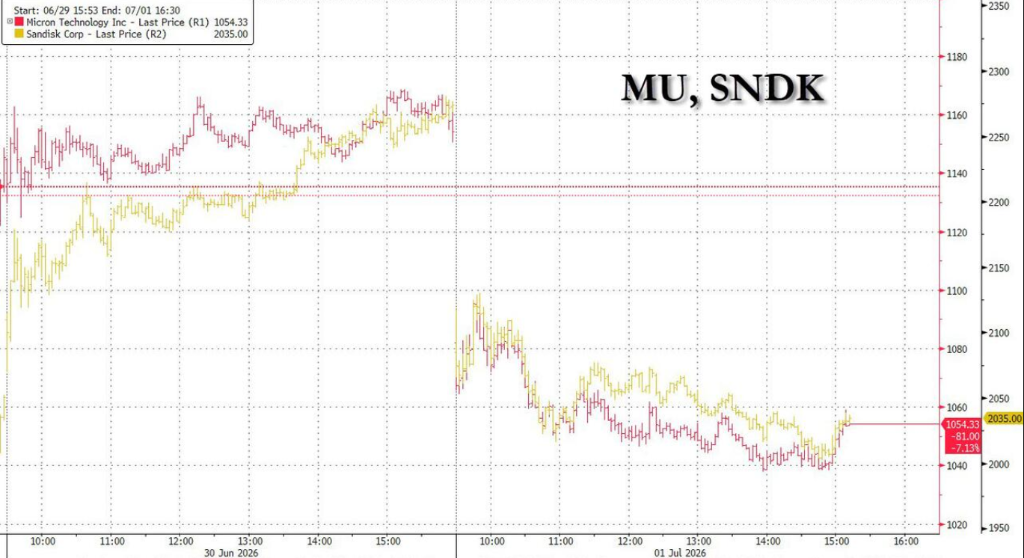
The hardware sector's crash directly triggered a complete collapse of momentum strategies. Goldman Sachs' high Beta momentum basket (currently dominated by chip and memory stocks) plummeted 9% in a single day after a historic rally. BTIG analyst Jonathan Krinsky noted that the long/short high Beta momentum index dropped 10%, its worst single-day performance since 2020.

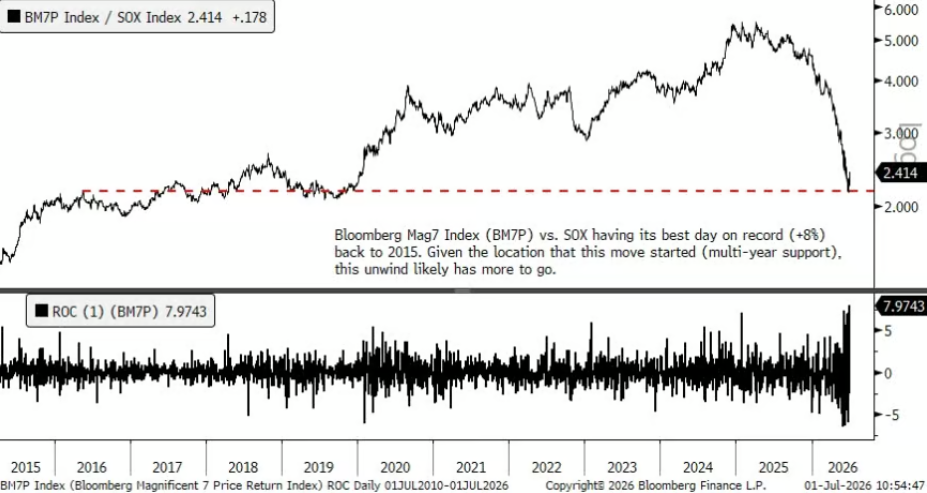
Additionally, the yield spread between the Bloomberg Mag7 Index and the Philadelphia Semiconductor Index (SOX) hit its largest single-day extreme value (+8%) since 2015, indicating a frantic capital exodus from the semiconductor sector.
Market Logic Reshaped, Investors Reward 'Spending Cuts'
In stark contrast to the hardware sector's dismal performance, the market placed a high premium on signals of capital expenditure reduction. As Goldman Sachs previously predicted, the first hyperscaler to signal a potential slowdown in spending pace would be rewarded with a stock price increase.
Meta's 10% surge confirms this assessment, indicating investors believe that at current valuation multiples, incremental revenue streams and financial discipline are more attractive than a limitless arms race.
UBS trader Christina Dwyer stated that the related reports shifted the market narrative towards stricter financial discipline, alleviating concerns over rising capital expenditure. CapEx expectations are no longer skewed unilaterally higher, and market focus has shifted to free cash flow stability.
Against the backdrop of capital rotation, the software sector recorded its second-largest single-day excess return relative to the semiconductor sector in a year.
Increased Competition and Liquidity Concerns, Upcoming Earnings Key Guide
Meta's entry complicates the supply-demand outlook for hyperscale cloud providers. While the emergence of a new competitor disrupts the established landscape, alleviation of supply chain bottlenecks could also bring cost relief.
UBS pointed out that the mention of "excess capacity" has raised concerns about the real underlying demand for AI. Looking ahead to the upcoming Q2 and Q3 earnings seasons, corporate guidance and full-year capital expenditure plans will be crucial in determining whether the current valuation revaluation can be sustained.
Worryingly, while the market undergoes massive rotation, it faces significant liquidity risks. Goldman Sachs' trading desk warns that despite U.S. stocks recording the highest average daily trading volume since 2026, market liquidity remains extremely poor. In June, the top-of-book liquidity for S&P E-mini futures plummeted 33% month-over-month, from $12 million to just $8 million.
This means the market is conducting record trading in a capital pool that has drastically shallowed. Every large order triggers more violent market volatility, execution costs are rising, and the risk of abnormal intraday crashes remains high. Combined with the seasonal factor where momentum stocks have historically performed poorly in July, the tug-of-war between chip stocks and the broader market may face even more severe turbulence.


