






a16z 150万美元扫货PoW神矿?Pearl让矿圈再度沸腾(附挖矿实操)


Original by Odaily Planet Daily (@OdailyChina)
Author: Golem (@web3_golem)
Every year, one or two mining coins emerge in the crypto market, reigniting the sentiment of the mining community. This year's project is called Pearl.
On April 27, the Pearl mainnet quietly launched, but it didn't attract attention until this week, a month later. The catalyst was a post on X on May 27 by Pearl community member @optimist, claiming that a wallet potentially linked to a16z had quietly accumulated over $1.5 million worth of PRL, the native token of the Pearl network. After the news spread, the PRL token price surged from around $0.6 to over $1.5, a gain of more than 150% in two days.
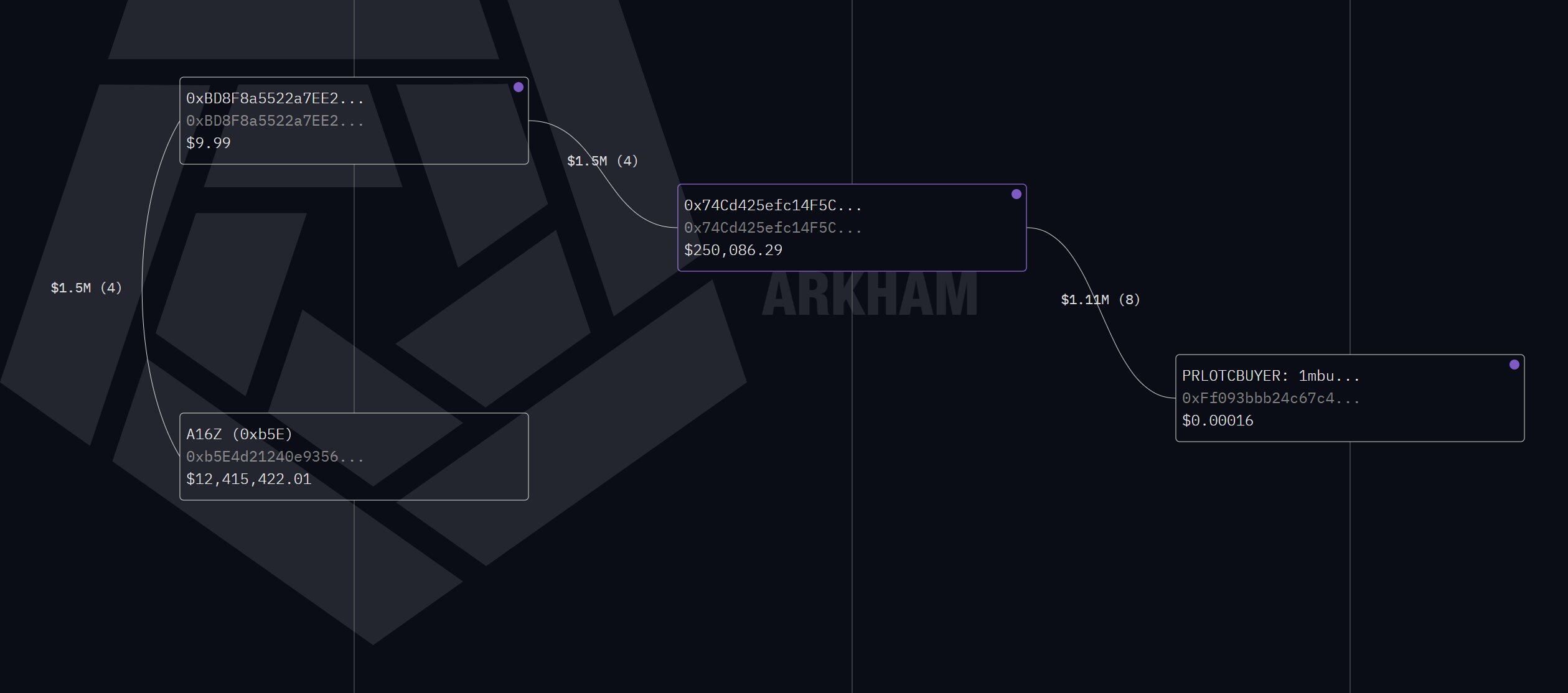
Alleged a16z-linked wallet accumulating PRL
However, it remains unconfirmed whether this wallet actually belongs to a16z. It is highly possible that the community deliberately hyped and spread this rumor to boost attention on the Pearl project. What is certain is that a16z has had some connection with the project: On January 26, 2026, a16z crypto research published an article introducing the PoUW algorithm proposed by Pearl founder Omri Weinstein, which is the core algorithm of the Pearl network (Note by Odaily: This article has since been deleted).
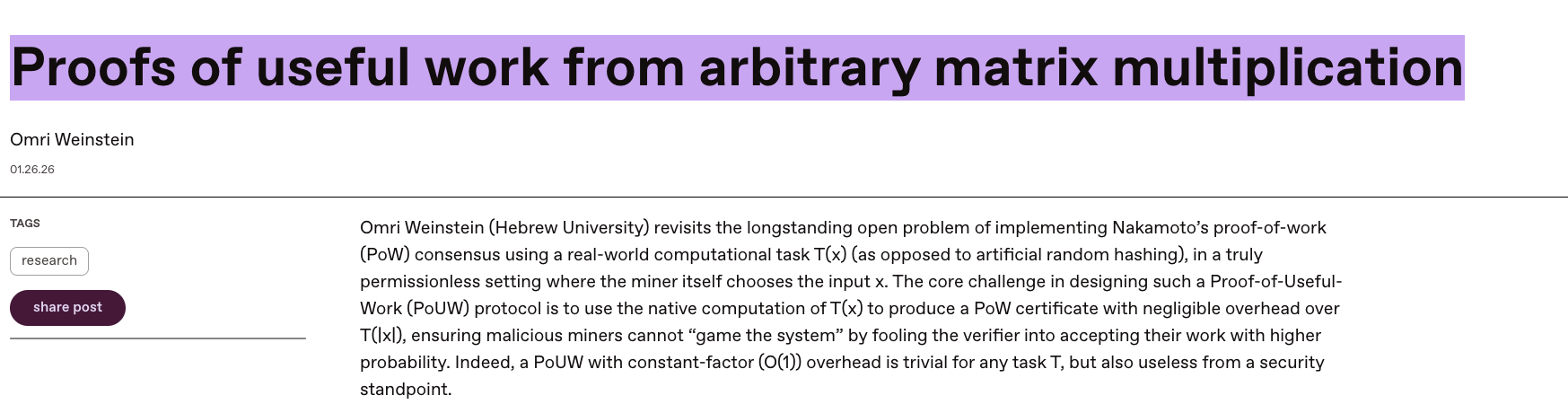
Practical Proof of Work (PoUW): Combining AI Inference Tasks with Mining
The core model of Pearl remains users mining coins with GPUs. Its network design is similar to Bitcoin's blockchain, but its uniqueness lies in proposing a new Proof of Work mechanism based on PoW—Practical Proof of Work (PoUW).
In traditional PoW blockchains, miners primarily secure the network by solving cryptographic puzzles with computers. This computation is often criticized as useless—serving no purpose other than securing the blockchain, especially in the current AI era, where it wastes valuable computing power.
To avoid wasting computing power, Pearl's PoUW replaces the SHA-256 algorithm with matrix multiplication (MatMul/GEMM) commonly used in AI computing. The computing resources contributed by users' GPUs to the Pearl mainnet are not only used to secure the Pearl network but also execute AI workloads, providing AI training and inference services for large model companies, thus generating real value. From this perspective, the tokens mined are essentially rewards for users providing computing power to participate in AI computation.
Pearl's PoUW is considered practical because it allows GPUs to simultaneously perform blockchain Proof of Work and produce tokens while handling AI training and inference workloads. Currently, Pearl has partnered with the large model training platform Together AI to launch the Gemma-4-31B-it-Pearl endpoint (based on Google's Gemma 4 31B model). Developers using this endpoint also receive a 25% discount, which is subsidized by the mined PRL tokens.
The token produced by the Pearl network is PRL, with a total supply of 2.1 billion. The network's average block time is set at 194 seconds. However, the number of tokens produced per block is not fixed and has no halving mechanism. Instead, it is determined by an emission curve. One key formula in this curve is A(t) = t / (t + H), where A(t) is the cumulative distribution ratio of tokens, t is the current block height, and H is a fixed value of 650,226 (the block height corresponding to four years).
Based on the PRL cumulative distribution ratio, one can estimate the number of tokens produced per block. Of course, for the average user, you can simply visit the Pearl block explorer to view current total token output, block reward amounts, block height, and average block time without needing to calculate it yourself.
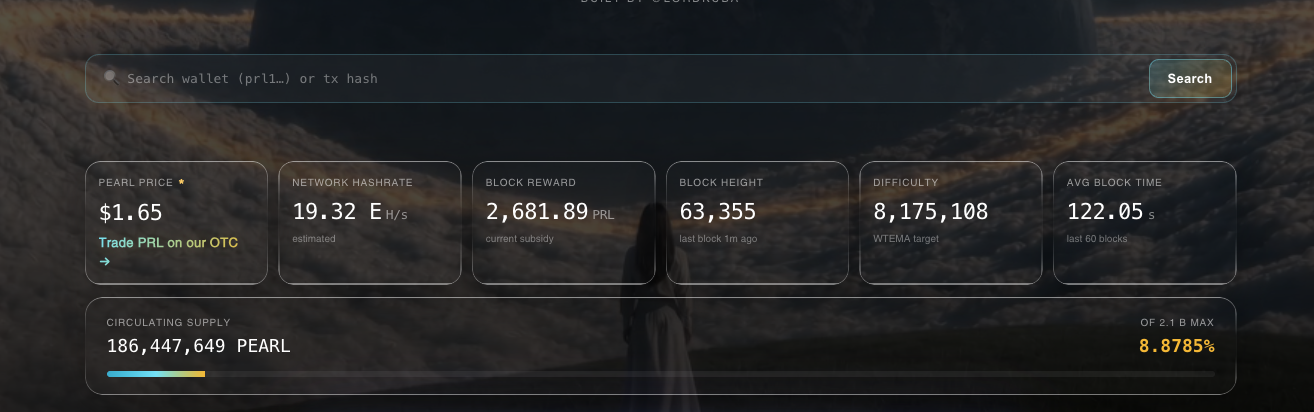
As shown above, over 8.8% of PRL tokens have already been mined. At a price of $1.65, the circulating market cap of PRL exceeds $300 million.
Comprehensive Introduction to Mining and Ecosystem
In the current crypto market climate, the PRL market cap might seem somewhat overvalued, but this is also due to increased mining costs. Pearl supports users mining with their own GPUs or renting cloud GPUs directly on the platform. As shown below, Pearl launched three packages, all of which have sold out due to the project's high热度.
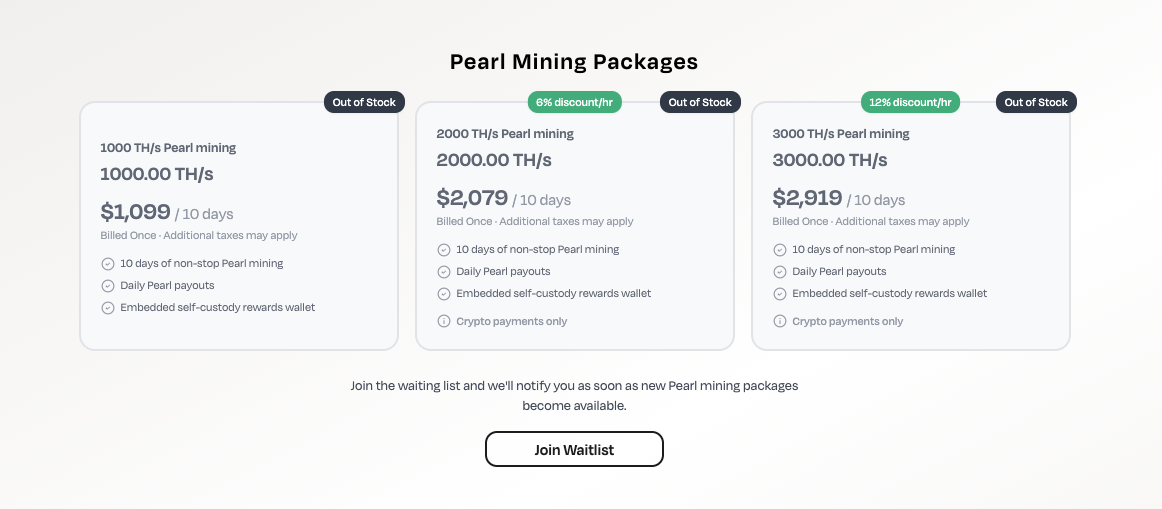
The mining costs for these three packages are not cheap. Taking Package one as an example, $1,099 rents 1000 TH/s for 10 consecutive days, meaning the hourly cost for 1000 TH/s is approximately $4.57. Community member @AKAKAY04 created a simple PRL mining cost estimator. Inputting the hourly cost and hashrate of Package one yields an average cost per PRL mined between $1.51 and $1.77, which is close to PRL's market price. Even purchasing Package three only reduces the cost per PRL to between $1.33 and $1.56.

Therefore, to profitably participate in Pearl network mining, one must rent GPU computing power cheaply enough. Currently, the platforms most recommended by the community for renting cards are RunPod and Vast.ai, with prices for 4090 and 5090 graphics cards ranging from $0.5 to $2 per hour.
After successfully renting a card, users can choose to join a Pearl mining pool. Currently, the Pearl ecosystem has four main mining pools: pearlhash, alphapool, Akoya, and mineprl. Community member @peterdai111 summarized the features of these four pools for users to reference before making a choice. (Note by Odaily: For specific processes, you can ask AI or refer to the tutorial written by community member @0xtonixie)
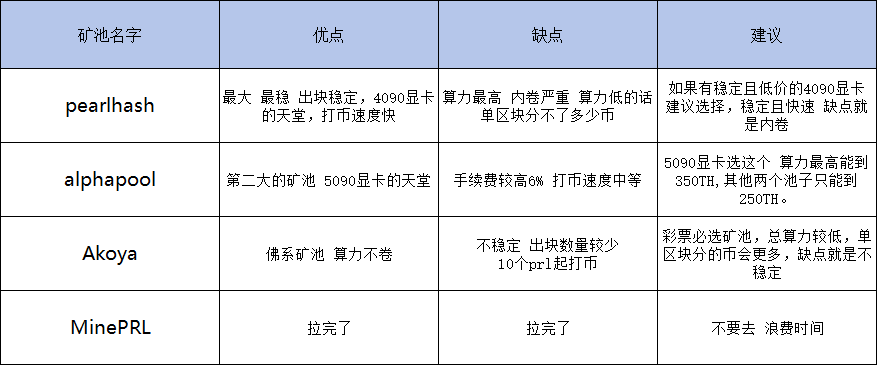
It has only been a month since the Pearl mainnet launched. For a new project, its ecosystem has developed quite well. In addition to community-initiated mining pools and block explorers, there are also cross-chain bridges, OTC platforms, and NFT applications.
PearlBridge is the first cross-chain bridge project for the Pearl network. It allows users to lock native PRL tokens and mint WPRL on Ethereum at a 1:1 ratio. The project charges a 1.5% deposit fee (minimum 4 PRL), and redemption is fee-free. Currently, the project has locked over 320,000 PRL. Users can freely trade the WPRL on EVM chains via the OKX Web3 wallet or other DEXs.
Users can also buy and sell native PRL tokens on the pearl-otc platform. This is a non-custodial trading platform where USDC is transferred directly between buyer and seller wallets, while PRL is held in a "2-of-2" multi-signature escrow account jointly signed by the sellers. The platform cannot unilaterally transfer the funds. This platform is currently the main reference platform for PRL pricing, boasting strong liquidity and allowing users to view PRL price fluctuation charts.
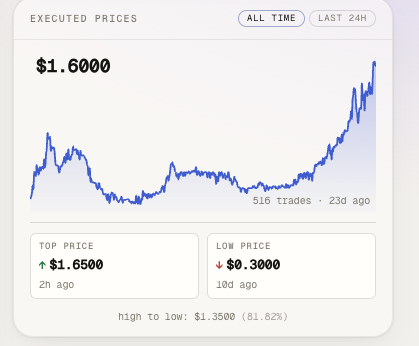
PRL price fluctuation chart
On May 23, the crypto exchange SafeTrade also listed PRL. However, this trading platform is relatively small and not well-known. Users should be cautious about fund security when trading PRL on this platform.
The No-Longer-Hidden Flywheel of Mining Coins
An unwritten rule in the mining community is that regardless of how the model innovates, the core logic always revolves around 'mine and dump'. PoW mining is essentially a mathematical game involving only cold machines, precise input-output calculations, and the greed to squeeze out the last bit of profit before a crash. It's not a regular project token because it lacks fundamental value, nor is it a Meme because it lacks attention and cultural consensus.
Therefore, the flywheel effect of mining coins is no longer hidden: 'Miners mine tokens — design buying pressure — token price rises — creates wealth effect — more people want to mine'. The core supporting this model is the constant existence of buying pressure. However, there is no perpetual motion machine in the world, and the market cannot have infinite buying pressure. It can be said that a mining coin is like a train heading for a cliff from the moment it departs. Everyone can see it, and everyone believes they can get off just before the end.
In the past, some mining coin projects used a 'self-mining, self-pumping' method to create false market demand. Their main profit didn't come from selling tokens but from users buying mining machines. However, when the cost of market-making exceeds the profit from mining machine sales, this model also collapses.
Looking at Pearl, some believe it is not just a mining coin but has the potential to grow into the next Bittensor (TAO). This is because Pearl's biggest difference from past mining projects is that the computing resources it consumes are not only used to price PRL but are genuinely used to provide AI training and inference services for real-world large model companies. This is the value of Pearl's Practical PoW, making Pearl more akin to a DePIN project.
However, given the current stage of the project's development, this value is more of a gimmick. This is because the current core implementation of the Pearl network is based on precise integer matrix multiplication, whereas modern AI workloads (especially large model training) do not operate in integer environments but rely on low-precision floating-point formats. Extending the current PoUW mechanism to floating-point data types presents significant technical challenges.
Therefore, whether Pearl can escape the death spiral curse of mining coins in the future will depend on genuine technical strength, capital and institutional support and endorsement, rather than merely relying on today's 'unlimited fantasies' about a16z.


