






资深分析师对谈:鲍威尔离任,沃什接任对加密意味着什么?


- Core Thesis: The current market exhibits a severe "stock-bond divergence." Equities are driven by AI speculation, while the bond market reflects the tightening global macro reality. A structural "bailout expectation" supports risk appetite, but inflation is declining slowly and is part of a long-term trend. Bitcoin, as a macro asset, faces competition and lacks short-term catalysts.
- Key Elements:
- The "Bliss Trade" (expectation of large-scale, permanent bailouts) has replaced the "Taco Trade" as a structural market support. The government will step in during crises, increasing moral hazard and systemic fragility, thus supporting risk appetite.
- Inflation will not decline quickly. Core CPI has been range-bound between 2.6% and 3% since 2024. The upward trend in inflation is driven by deglobalization (predating Trump's tariffs), and short-term energy price transmission takes time to repair.
- Fed Chair Powell's tenure has both merits and demerits. He defended the Fed's independence but also orchestrated the debanking of crypto companies and the shutdown of Silvergate, and misjudged inflation. Incoming Chair Warsh may scale back forward guidance, but his ability to shrink the balance sheet is constrained by the market.
- Bitcoin is a hedge against currency debasement, but it has become "macro-assetized" – just one of many macro assets. High-volatility investors currently favor themes like AI, leaving Bitcoin without a clear upside catalyst.
- The key historical analogy for the current market is the period before the 1999 dot-com bubble. The divergence between the S&P 500 market-cap weighted index and its equal-weight index suggests the market is driven by a handful of top stocks, making its structure fragile.
Compiled & Arranged by: Odaily TechFlow
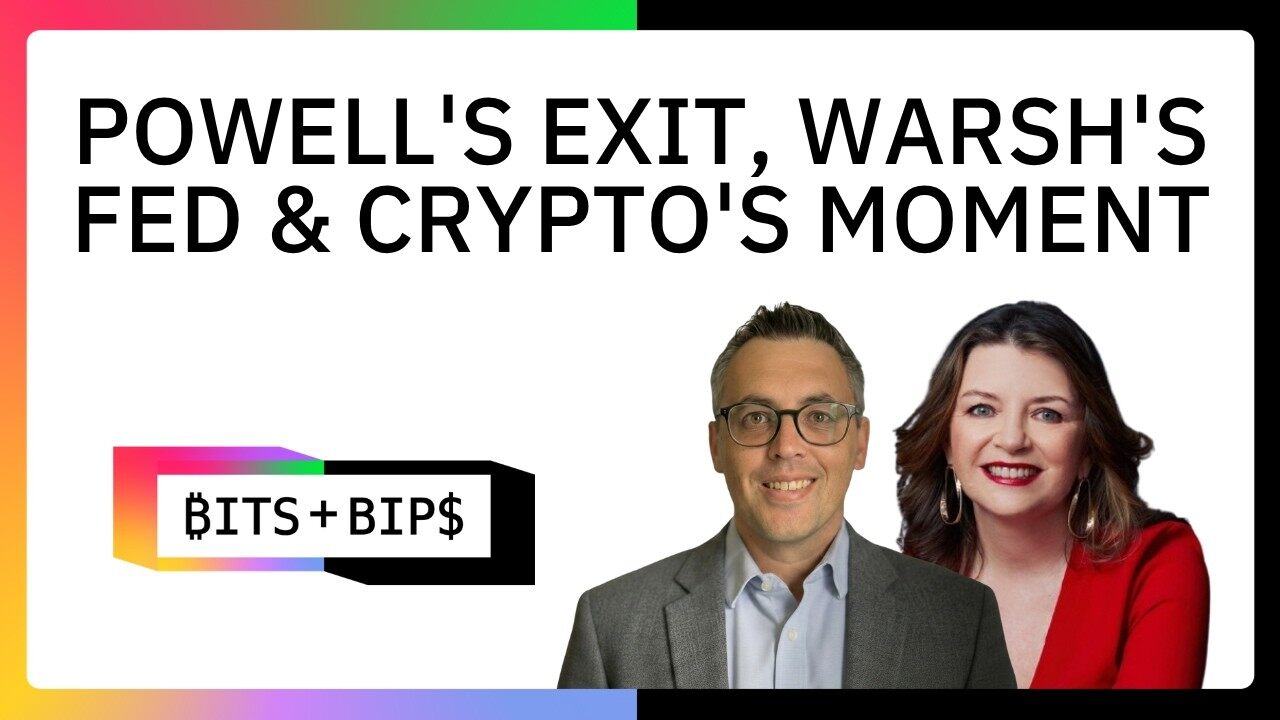
Guest: Noelle Acheson
Host: Steve Ehrlich
Podcast Source: Unchaind
Original Title: Powell Is Out, Warsh Is In: What It Means for Crypto
Air Date: May 22
Editor's Introduction
The "Bliss Trade" (an expectation of large, persistent bailouts), proposed by former IMF Chief Economist Gita Gopinath in the FT, is replacing the "Taco Trade" as the market's underlying logic. This is a structural, cross-party, cross-regime expectation of fiscal backstops, forming the true moat for current risk asset valuations and the core rationale for the currency debasement trade.
In this podcast, Noelle Acheson, author of the *Crypto is Macro Now* newsletter, offers three core judgments: First, the current extreme divergence between stocks and bonds, where the bond market is pricing in global tightening while the stock market is driven by AI hype, mirrors the divergence between the S&P 500 equal-weight index and the market-cap-weighted index before the 1999 dot-com bubble. Second, while Powell deserves credit for defending the Fed's independence, we must not forget his role in the 2023 shutdown of Silvergate and the debanking of crypto companies. Third, inflation won't ease quickly; even if the Hormuz crisis ends tomorrow, the transmission of energy prices and consumer expectations will take months to repair, and rising inflation is a long-term trend driven by deglobalization that predates Trump's tariffs.
Key Quotes
Stock-Bond Divergence, the "Bliss Trade," and Systemic Fragility
- "Global bond yields are rising. This is global tightening, and it's not good for markets. But stocks always march to a different drummer. That's not new. What's new is the scale of this divergence. It's astonishing."
- "The bond market is traditionally known as 'smart money' because it looks at macro data, narratives, and trends. The stock market can get swept up in various hype cycles. Right now, stocks follow the hype, bonds follow the macro. They're telling two completely different stories, but they don't need to be the same."
- "The Bliss Trade is structural, unlike the Taco Trade, which is limited to the Trump term. Its essence is that no government today, whether facing a market crash, banking crisis, or high oil prices, will choose not to spend money to bail out its people. It doesn't matter which party is in power, or even if it's a democracy. We've seen it countless times below the equator."
- "'The backstop is now part of the system, which of course adds another layer of fragility. This is one reason why risk appetite remains so strong despite such high uncertainty.'"
- "Historically, market tops are often triggered by a massive IPO."
- "My current favorite contrarian indicator is that everyone is celebrating the S&P 500 hitting new highs, while ignoring the widening gap between the S&P 500 and the equal-weight index. The last time it widened at this pace was in 1999. Anything that's too top-heavy will eventually topple, according to the laws of physics."
Inflation Won’t Fall Quickly
- "I have to push back on a premise. Inflation hasn't been falling as much as people think. Since 2024, core CPI has been flat between 2.6% and 3%. It simply hasn't declined."
- "The real driver of higher inflation is deglobalization. This trend actually predates the Trump administration, starting under Biden. Trump is just accelerating it, turbocharging it. The back-and-forth on tariffs, and the Hormuz crisis lighting a match underneath it all."
- "Even if the Hormuz crisis ended tomorrow, it would take time for energy prices to fall, and even longer for that to transmit to inflation indices and expectations. So this inflation story, no matter how the Hormuz situation plays out, is not ending anytime soon."
- "A 3% target rate would be reasonable. Many Fed officials privately think so too. But they can't change the target. A big part of the Fed's job is managing trust. If they change the target, they're telling the market, 'We can't reach our original target,' and the entire trust system would be damaged."
Powell's Record: Merits and Faults
- "Powell looks like a grandpa you'd go get a marshmallow latte with, but we can't forget he was the driving force behind the debanking of crypto companies. He was the one behind the shutdown of Silvergate and the events of March 2023. He also completely misjudged inflation."
- "The word 'independence' itself is worth questioning. He deserves credit for pushing back when the DOJ subpoenas arrived. But on shutting down crypto-related banking, there was no independent thinking. That was politically influenced. Does independence mean being unaccountable for decisions? Does it mean ignoring subpoenas?"
- "He wants a smaller balance sheet, but the market won't let him have it. It's that simple. The bond market is the boss here. The Fed cannot allow disorder in the Treasury market because that affects the dollar and price stability. So he can wish for it, but it won't happen. I also wish I were a professional pianist, but that's not happening either."
The Cost of Bitcoin's Macro Assetization and the Outlook for the Clarity Act
- "Bitcoin is a hedge against currency debasement. When Bitcoin surged during the 2023 banking crisis, everyone said it was because people realized the banking system was corrupt and fragile. I said no at the time. It was because people expected central banks to pump liquidity. That's what Bitcoin truly reacts to."
- "Bitcoin becoming a macro asset is a good thing, but it has a cost. It's now just one macro asset among many. And volatility-seeking investors will choose assets with higher volatility, which currently isn't Bitcoin. There are endless AI narratives to trade, prediction markets, so many other things to play with."
- "Even if the Clarity Act passes this year, its impact on Bitcoin would be minimal. Bitcoin doesn't lack regulatory clarity. The real beneficiary would be ETH. And when ETH rallies, it usually drags Bitcoin up with it because they often move in the same direction."
- "My concern is about the details of the innovation exemption for tokenization. If it allows third parties to issue tokens wrapping a company's stock without the company's knowledge or consent, then it becomes a market for pure derivative speculation, not capital formation. This goes against the fundamental purpose of a market and is bad for the crypto industry's already existing stigma of being 'just for speculation.'"
Steve Ehrlich: Hello everyone, welcome to Bits and Bips, where we explore the intersection of macro and crypto. I'm Steve Ehrlich, Head of Research at SharpLink, and your host today. We have a fantastic episode lined up. There's a lot happening in the macro world. Stocks and bonds are moving in completely opposite directions, and crypto is caught in the middle. We have a new Fed Chair taking over tomorrow, and much more to discuss.
Let me welcome our guest. She worked at Genesis, was Head of Research at CoinDesk, and is currently the author of the highly influential newsletter *Crypto is Macro Now*. Noelle Acheson. Noelle, welcome.
Noelle Acheson: Hi Steve, great to be talking to you again.
Steve Ehrlich: How are you doing today?
Noelle Acheson: I'm still recovering from the almost 35-degree Celsius heat in Philadelphia. It's May, and this hot.
Steve Ehrlich: I get it. You'll probably have to get used to this weather. Like many of our viewers today, I'm trying to make sense of what's happening in the markets. As I mentioned at the start, the stock market is still strong.
Noelle Acheson: Yes, but some warning signs are flashing.
Steve Ehrlich: Right. Nvidia delivered another fantastic earnings report, but the market reaction was pretty muted. There's a lot of fear in the bond market. 10-year and 30-year yields are rising, which is a direction you've been watching closely. To make matters worse, we got the first inflation data since the start of the Iran war. No one is sure what happens next. Powell steps down as Fed Chair on Thursday, although he'll remain on the Board to vote, at least for the foreseeable future. Crypto is caught up in this too. Bitcoin rallied to the $80,000-$83,000 range recently, and ETH briefly hit the $2400s, but both have pulled back.
So let's take it one by one. First question: How do you interpret the fear in the bond market? Yields are being pushed higher, the 10-year and 30-year are rising. These look like worrying signs to me, but the stock market seems largely unfazed.
Stock-Bond Divergence and the Bond Market's 'Smart Money' Narrative
Noelle Acheson: You're right, these are indeed worrying signs, and they are global warning signs. Global bond yields are rising. This is global tightening, and it's not good for markets. But stocks always march to a different drummer. That's not new. What's new is the scale of this divergence.
You probably remember the days when everyone loved the 60/40 portfolio, theoretically, stocks and bonds would move in opposite directions. We are seeing that opposite movement now, but the magnitude is stunning.
Stocks are currently driven by some endogenous, temporary factors, mainly enthusiasm for AI. Just look at the performance of the chip sector. The bond market, on the other hand, looks at the macro outlook, at the future. The bond market is traditionally known as 'smart money' because it only focuses on macro data, narratives, and trends. The stock market can get swept up in various hype cycles, and this happens more and more frequently.
So today's situation is that stocks follow the hype, which may or may not have some foundation, we can talk about that later. Bonds follow the macro indicators, and the macro indicators right now don't look good. That's why the two drummers are telling completely different stories, but they don't need to be the same.
Steve Ehrlich: Let's talk about those macro indicators. Inflation data is what everyone is watching. PPI (Producer Price Index) is starting to tick up too. What else are you seeing? How do you interpret these inflation signals? I don't want to use the word 'transitory,' but theoretically, if the Strait reopens and there's any resolution to the Iran issue, energy markets should at least return to pre-February 28 airstrike levels, and things should calm down.
Noelle Acheson: Things will calm down, at least on the oil price front. But that doesn't mean inflation will drop immediately, for two reasons. First, the transmission of inflation is slow. We've already seen some upticks in the core indices the Fed looks at, but they are small because oil, while affecting everything, takes time to transmit through the economy.
Second, we are going to see increased volatility in expectations. This is very interesting, particularly in the US economy, where gasoline prices have a huge impact on inflation expectations. Seeing those numbers tick up at the pump feels like money being drained from your bank account. So even if gasoline doesn't enter the core inflation calculation, consumers already feel that inflation is moving up. This affects their expectations, which in turn affects their behavior, and ultimately affects actual inflation.
So even if the Hormuz crisis ended tomorrow, it would take considerable time for energy prices to fall, and even longer for that to transmit to inflation indices and expectations. In other words, the inflation story is not ending anytime soon, no matter how the Hormuz situation plays out, because this is not new. Inflation was already building up before the Hormuz crisis.
Steve Ehrlich: Can you elaborate on that? I know you're in Spain, so you have a European perspective. I'm American. Since inflation peaked post-COVID and started to fall, the Fed has been raising rates to push it down. While they haven't hit the 2% target, it has been coming down. What do you mean by 'already building up'?
Noelle Acheson: I have to push back on a premise. It hasn't been falling as much as you think. Look at the chart since 2024. Core CPI has been flat between 2.6% and 3%. It simply hasn't declined.
In fact, a year or even a year and a half ago, many people were saying, 'Ok, the inflation story is over. The disinflation process is done. We're going to be in a range here for a while before it goes up again.' Why the expectation for it to move higher? Because of the deglobalization trend. This trend actually predates the Trump administration, starting under Biden. So it's a long-term trend. Trump is just accelerating it, turbocharging it. The back-and-forth on tariffs, the situation with tariff refunds is still unclear, but prices have already moved up because of tariffs. The Hormuz crisis lit a match underneath it all. But honestly, if you look at the chart, inflation hasn't been falling for a long time.
Steve Ehrlich: You're right. I remember discussions too about whether the Fed's 2% target should be raised, maybe recalibrating the neutral rate.
Noelle Acheson: A 3% target would be reasonable. A lot of people discuss this, even many Fed officials privately think so, but they can't change the target expectation. The reason is the Fed's fundamental issue is credibility. A big part of what the Fed does is manage trust. If they suddenly say, 'We can't reach 2%, so we're changing the target,' that would be a blow to market confidence in the Fed's ability to achieve its own goals.
Steve Ehrlich: Understood. We'll talk more about the Fed and trust in about ten minutes.
From the Taco Trade to a Structural Bailout Expectation
Steve Ehrlich: I want to press you a bit more on this 'irresistible force vs. immovable object' between stocks and bonds. In your newsletter this week, you pointed to a very interesting op-ed by a former IMF Deputy Managing Director about the so-called 'Bliss Trade,' which could be a more sustainable version of the Taco Trade, in the same family as the expectation of a Fed put. I read a book a few months ago about the rise of carry trades. The argument was that there would always be a backstop for markets, and this expectation was turbocharged during COVID when global central banks had to flood liquidity to support the shut-down economy. Can you explain the Bliss Trade? Which side do you think will break first?
Noelle Acheson: The Bliss Trade comes from a very interesting FT op-ed from a few weeks ago by Gita Gopinath, former IMF Chief Economist and Deputy Managing Director, now a professor at Harvard. You have to read it through the lens of her IMF background, but she made a fantastic point: the market's expectation of a 'backstop,' a 'safety net,' goes beyond just the T


