






战争内幕交易一共5个人,赚的最多被抓了


- 核心观点:美国司法部首次对预测市场内幕交易提起刑事诉讼,逮捕了利用职务信息在Polymarket押注委内瑞拉总统马杜罗被捕的现役美军上士Gannon Ken Van Dyke,获利超40万美元,此举彰显链上数据不可篡改性的执法威慑力。
- 关键要素:
- Van Dyke利用参与行动规划的先知信息,于2025年12月注册账户并精准押注"马杜罗下台""美军进入委内瑞拉"等预测,本金约3万美元,获利超40万美元。
- 被捕后其在行动当日提现、转移资产、更换邮箱以销毁痕迹,但链上数据被媒体(PolyBeats)在事发24小时内锁定并公开,成为司法部调查关键证据。
- 司法部起诉书指出其对预测市场利用内幕信息进行交易属违法,Van Dyke是Polymarket上首个因内幕交易被正式起诉的案例,从建仓到被捕间隔近四个月。
- 另有4个获利从3.4万到14.5万美元不等的异常账户未被起诉,原因包括获利金额较低、身份核查难度大(非直接参与者)、信息来源可能非一手。
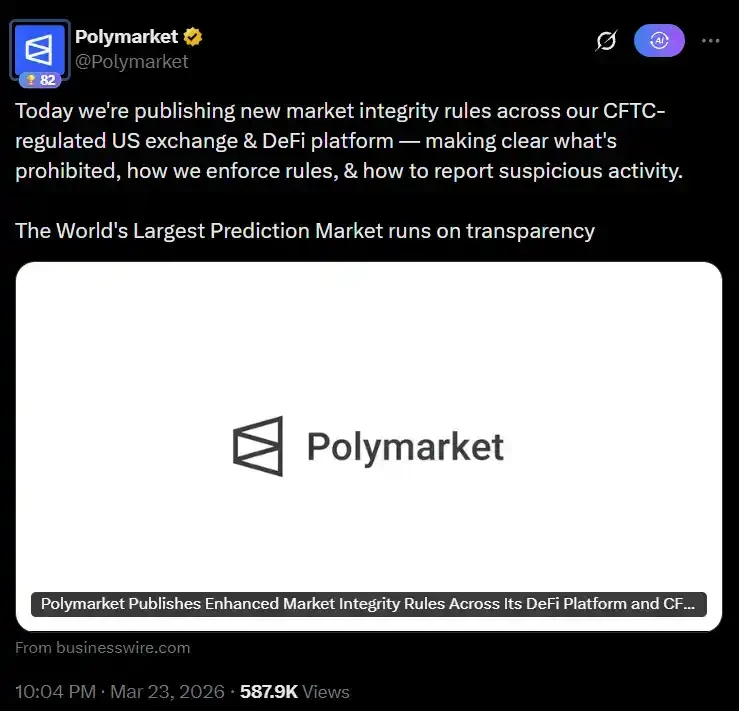
- Polymarket此后于今年3月发布强化版市场诚信规则,明确禁止基于保密信息或影响事件结果的能力进行交易,并表示主动向执法部门举报了Van Dyke的行为。
On April 24, Eastern Time, the U.S. Department of Justice announced the arrest of active-duty Army Special Forces Staff Sergeant Gannon Ken Van Dyke.
According to the indictment released by the DOJ on the same day, Van Dyke was involved in an operation to seize Venezuelan President Nicolás Maduro from the Presidential Palace in Caracas on January 3 of this year.
Reports indicate that Van Dyke bet on Maduro's capture through prediction markets on the eve of the operation, earning over $400,000. Although the reports did not disclose specific account information, by cross-referencing the betting direction and profit amount mentioned, we identified the account 0x31a5.
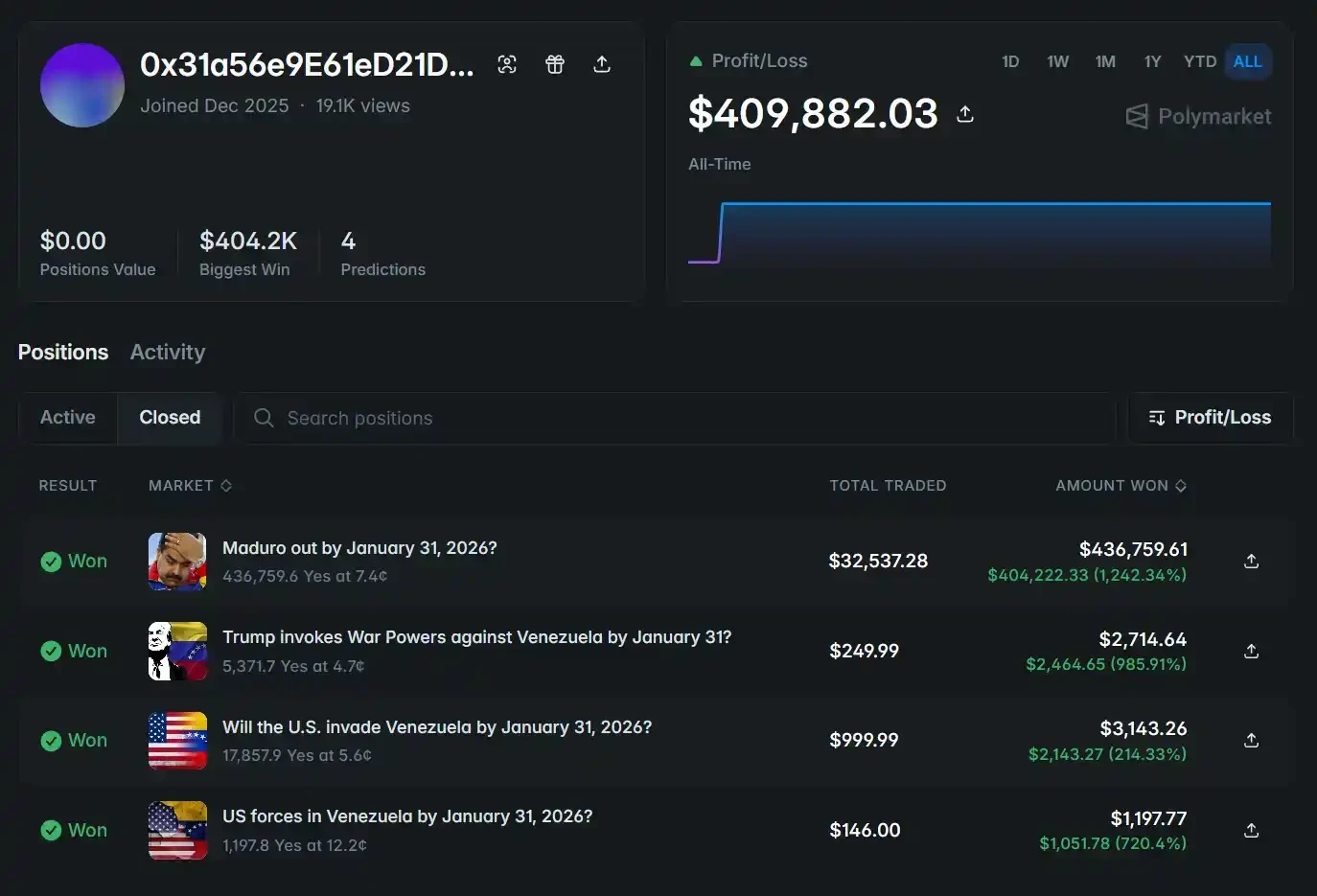
This is one of the five insider accounts specifically named in two consecutive reports by PolyBeats on January 4 and January 7.
Review of Van Dyke's Account
Let's rewind the timeline to January 4 this year.
Following Maduro's capture, PolyBeats immediately analyzed on-chain data, identified five accounts, and published a public report within 24 hours of the operation's conclusion. For details, see "They Missed Out on $2 Million Because Maduro Wasn't Going to Spend the New Year at Home"
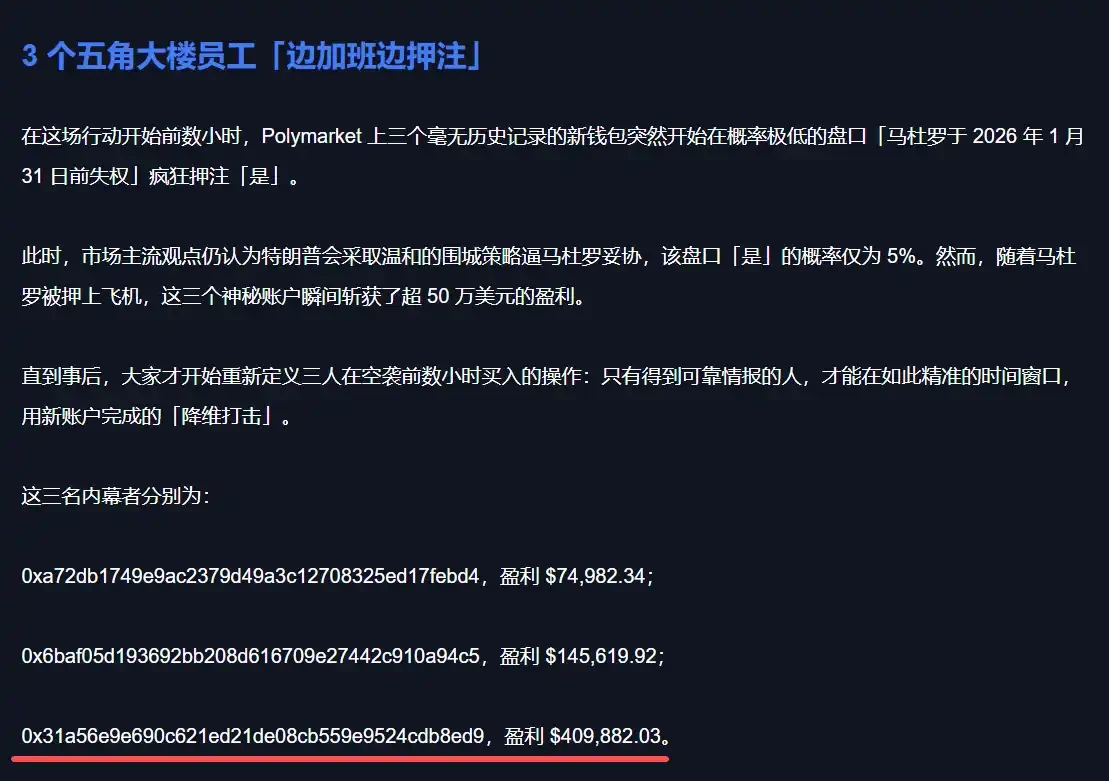
Among them, Van Dyke's account was the most profitable of the five. The account was registered on December 26, 2025, and subsequently made a series of bets highly related to the capture operation, involving topics like "Maduro ousted" and "U.S. military enters Venezuela," with a total principal of approximately $30,000 and total profits exceeding $400,000.
On the day of the operation, the account withdrew most of its funds, transferred them to an overseas cryptocurrency account, and then deposited them into a newly opened brokerage account.
On January 6, three days after the operation, media began reporting unusual trades related to the event on Polymarket. That same day, the account requested Polymarket to delete it, citing that the "registration email was inaccessible." Meanwhile, he changed the registered email for his crypto exchange account to an anonymous email address secretly created on December 14.
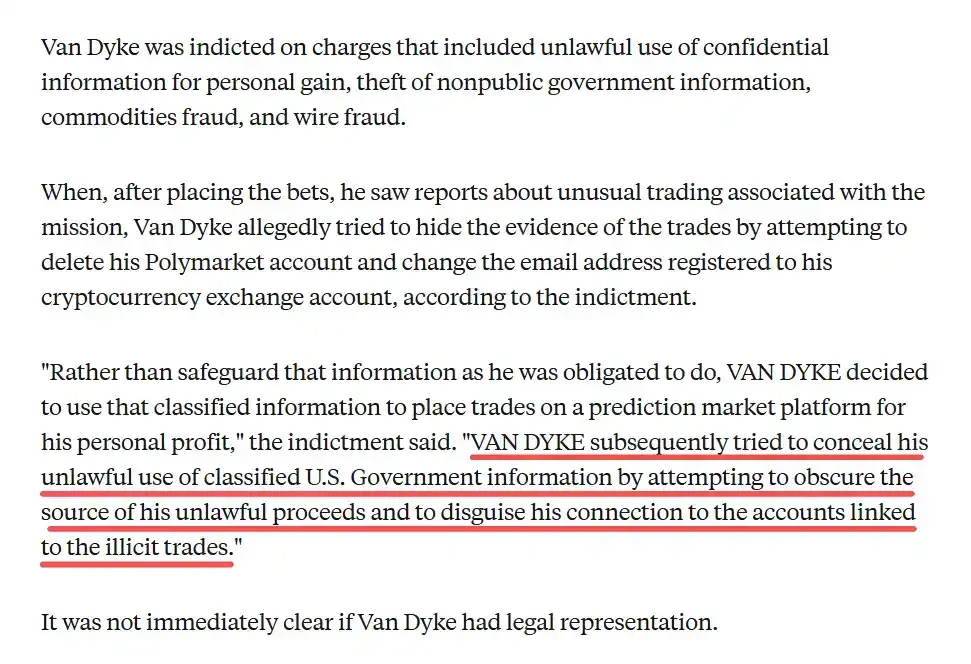
New account, precise position building, cashing out on the event day, and destroying evidence afterward—this set of operations was precisely the anomalous pattern we highlighted in our January review.
Today, the Department of Justice has given this address a name: Gannon Ken Van Dyke.
The Story Involves More Than One Person
Van Dyke's arrest marks the first formal DOJ indictment in the history of insider trading on Polymarket. But this story has never been just about him.
PolyBeats' two reports in January highlighted a total of five accounts. Apart from Van Dyke, no official investigation information has emerged for the other four:
0xa72db1749e9ac2379d49a3c12708325ed17febd4, profit: $74,982;
0x6baf05d193692bb208d616709e27442c910a94c5, profit: $145,619;
0x168b100d7a6620a2f49a455344c2c006eaf1714b, profit: approximately $34,000;
0x168b100d7a6620a2f49a455344c2c006eaf1714b, profit: approximately $54,000.
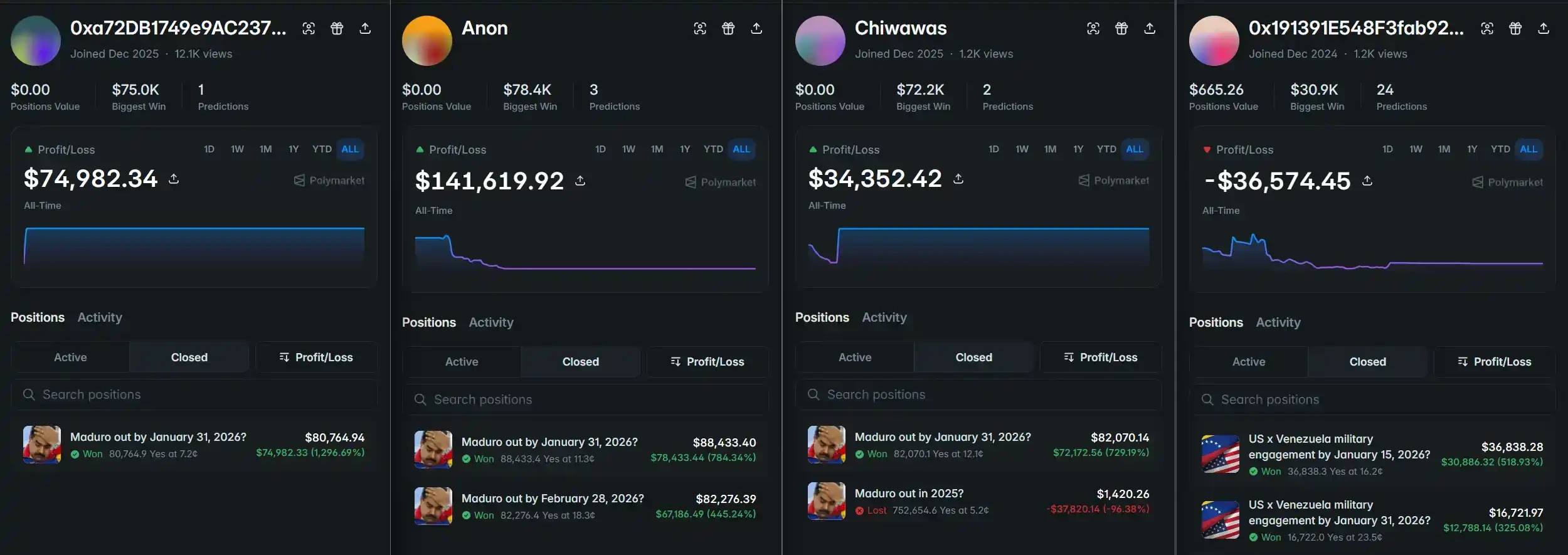
Why haven't these four accounts been caught yet?
The most straightforward reason is the amount. Van Dyke's profit of nearly $410,000 was the highest among the four, making him the clearest law enforcement priority.
A more critical factor is identity. Van Dyke was an active-duty soldier who signed a confidentiality agreement and directly participated in the operation's planning, making the identity verification path very short. The true identities and information sources of the other four accounts are unclear. If they obtained secondhand information, the legal boundaries become much blurrier, significantly increasing the difficulty of prosecution.
There is also the issue of Polymarket's own reporting boundaries. The platform claims it proactively discovered and reported Van Dyke to law enforcement, but the other four accounts, which also displayed anomalies, were clearly not reported simultaneously. The platform has offered no explanation for this.
However, one thing is changing this situation.
In March this year, Polymarket released enhanced market integrity rules, explicitly prohibiting three types of behavior: trading based on information legally required to be kept confidential, trading based on others' insider information, and participation in relevant markets by individuals with the power to influence event outcomes. Alongside the implementation of these rules, this indictment from the DOJ sends a clear signal to everyone: the platform is willing to cooperate with investigations, records on the blockchain will not disappear, and investigations themselves can last for months.
Nearly four months elapsed between Van Dyke's position building and his arrest. For the other four accounts, and for anyone holding an information advantage and attempting insider trading in prediction markets, this arrest may just be the beginning.


