How the Iran Conflict Affects Oil Prices, Stock Markets, and Bitcoin: Understanding Cross-Asset Linkages Through a Transmission Chain


- Core Viewpoint: After the suspension of the US-Iran conflict, the sharp drop in oil prices alleviated inflation expectations, driving a rebound in both stock markets and Bitcoin. Bitcoin's current pricing follows the logic of a risk asset rather than a safe-haven asset, with its trend moving in the same direction as stocks and in the opposite direction of oil prices.
- Key Elements:
- Following the suspension of the conflict on July 27, Brent crude oil fell 11.3% in a single day to $85.87, while US crude oil dropped approximately 7% to $82.61.
- Oil prices influence the market through a transmission chain: oil prices determine inflation expectations, which in turn affect Federal Reserve policy, ultimately deciding the liquidity environment for stocks and Bitcoin.
- Transit volume through the Strait of Hormuz remains significantly lower than pre-conflict levels (fewer than 10 vessels per day vs. a normal level of about 100), indicating that supply tightness has not been substantially relieved and a risk premium still exists.
- The suspension of the conflict pushed the S&P 500 up 2.5% in a single day, while Bitcoin returned to above $65,000, with a 24-hour gain of approximately 1.26%.
- The driving force behind Bitcoin's rise is the easing of inflation brought about by the decline in oil prices, rather than demand for geopolitical safe-haven assets. Its asset attribute has shifted from a safe haven to a risk asset sensitive to liquidity conditions.
Overview
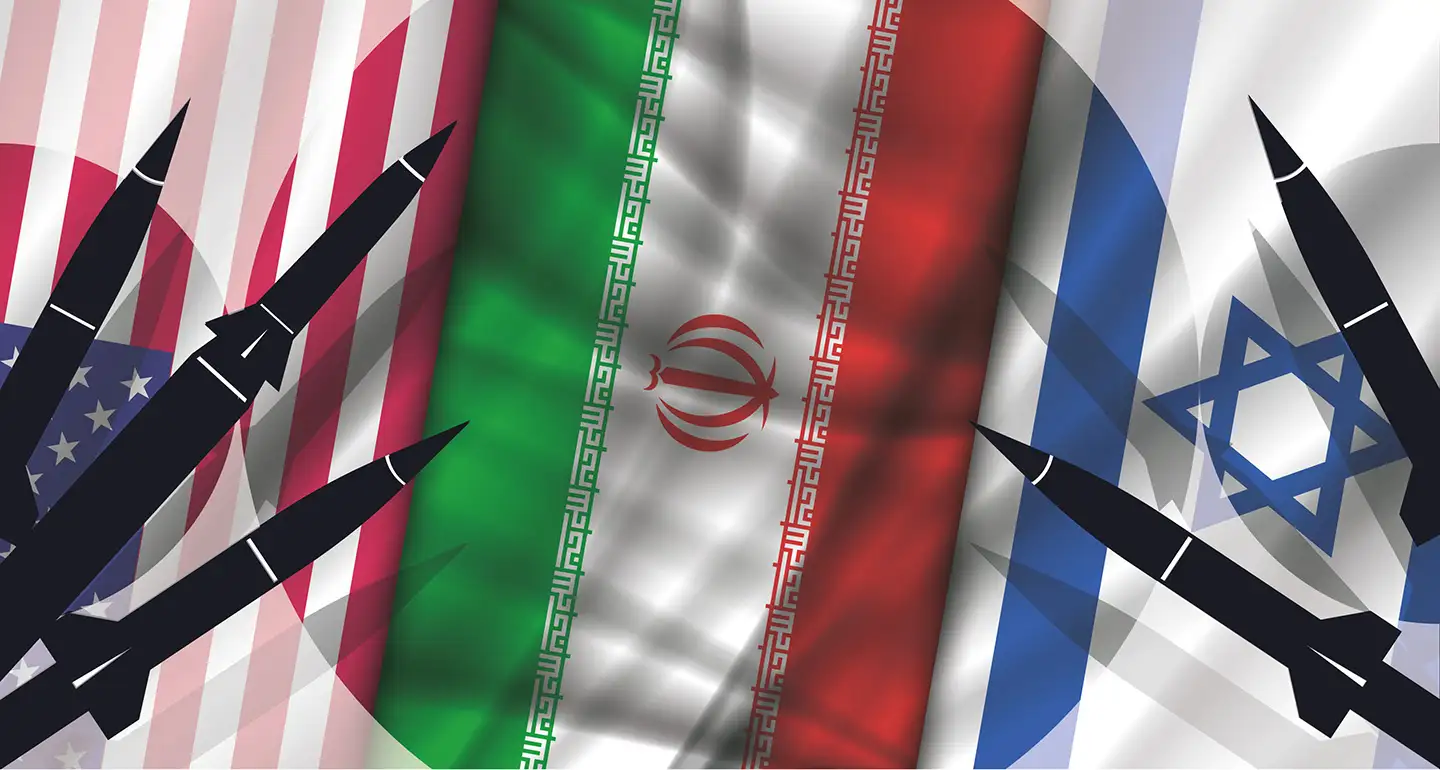
On July 27, the military conflict between the United States and Iran, which had lasted for nearly two weeks, paused, triggering a sharp reaction in global markets. According to a CNN report, Brent crude oil closed at $85.87 per barrel that day, plummeting 11.3% — its largest single-day drop since April 8. U.S. crude oil fell about 7% to $82.61. Stock markets rose in tandem, while Bitcoin briefly reclaimed the $65,000 level. The market focused on this conflict because it simultaneously influences the pricing logic of three asset classes: oil prices dictate inflation expectations, inflation expectations determine central bank policy, and central bank policy shapes the liquidity environment for stocks and Bitcoin. More critically, this pause is fragile. According to a CNBC report, Iran stated it would halt attacks as long as the U.S. did not strike, but shipping through the Strait of Hormuz remains far below pre-war levels. Understanding this transmission chain from the Strait to the candlestick chart is a prerequisite for judging cross-asset trends.
Key Points
According to CNN, after the U.S.-Iran conflict pause, Brent crude oil closed at $85.87 on July 27, down 11.3% in a single day; U.S. crude fell about 7% to $82.61.
This pause has effectively shattered the previous 60-day ceasefire agreement. The conflict lasted nearly two weeks, with oil prices briefly exceeding $100 per barrel at its peak.
The Strait of Hormuz carries about one-fifth of the world's crude oil and natural gas traffic. Over the weekend, fewer than 10 commercial vessels transited it, compared to a normal pre-war level of about 100 per day.
Oil prices are the core transmission variable: They first affect inflation, then influence expectations for Federal Reserve interest rate hikes, and ultimately impact stocks and Bitcoin.
The pause news boosted risk appetite. Previously, U.S. stocks surged on the ceasefire news, with the S&P 500 closing up 2.5% in a single day.
After the pause, Bitcoin reclaimed the $65,000 level before retreating again due to the approaching Fed decision, indicating that its inflation-hedge narrative has given way to liquidity logic.
Why the Conflict is a Common Variable Across Assets
It All Starts with the Strait of Hormuz
Understanding this transmission chain begins with geography. According to a report from the U.S. Congressional Research Service, the Strait of Hormuz is the world's most critical oil chokepoint. As the conflict persisted, oil prices briefly surpassed $100 per barrel. According to TradingEconomics data, the Strait carries about 20% of the world's crude oil and natural gas traffic, and its near-closure triggered one of the most severe supply disruptions in the oil market.
The core issue is not the fighting itself, but shipping. According to a CNN report, even with the conflict paused, fewer than 10 commercial vessels transited the Strait of Hormuz over the weekend, compared to a normal pre-war level of about 100 per day. Deutsche Bank analysts pointed out that Houthi threats against Saudi tankers also risk disrupting both Gulf and Red Sea export routes simultaneously. This means the risk premium on oil prices will not completely dissipate due to a single pause.
Oil Prices are the First Domino for Inflation and Policy
Oil prices are a common variable across assets because they stand at the forefront of the transmission chain. Rising oil prices fuel inflation, inflation forces central banks to maintain or even tighten monetary policy, and a tightening policy environment suppresses both stock valuations and high-volatility assets like Bitcoin. Conversely, falling oil prices ease inflation concerns, creating room for a dovish central bank pivot and a rebound in risk assets.
This chain was clearly visible in the market action on July 27. According to a CNBC report, Brent crude oil for September delivery fell 8.7% to $88.36 per barrel, easing inflation expectations. As oil prices dropped, market fears about Fed rate hikes lessened, giving risk assets a breather. One geopolitical variable, through the hub of oil prices, simultaneously altered the pricing environment for three asset classes.
How the Three Asset Classes Reacted Individually
Oil Prices: Fast to Rise, Fast to Fall
Oil prices react most directly and violently to geopolitical conflicts. According to a report from The Hill, at the height of the conflict, Brent and WTI approached $120 per barrel; but when ceasefire signals appeared, prices quickly retreated. Medlock, an energy expert from Rice University, noted that as long as the conflict is not completely resolved, the market will continue to price a "risk premium" into oil.
This type of two-way violent fluctuation is a classic characteristic of oil prices. According to a CNBC report, U.S. crude oil fell 7.5% in a single day on July 27. Oil is both the fastest-rising asset when conflict escalates and the fastest-falling asset upon a pause signal. Its magnitude of fluctuation directly determines the swing in inflation and policy expectations.
Stock Markets: First De-risk, Then Rally
Stock markets react to conflicts following a "risk-off, risk-on" rhythm. When conflict escalates, oil prices rise, inflation concerns heat up, and stock markets come under pressure; once signs of de-escalation appear, pent-up risk appetite is quickly unleashed. According to a report republished by AOL, when Trump previously announced the U.S.-Iran ceasefire, the S&P 500 surged 2.5% in a single day, the Nasdaq Composite rose 2.8%, and the Dow Jones jumped 1,325 points — its largest single-day percentage gain since April 2025.
However, this repair often has a front-running component. The same report quoted Evercore Vice Chairman Krishna Guha's warning: "We are not out of the woods yet, the ceasefire could unravel, and the initial inflationary shock is still to come." JP Morgan's trading desk also noted that the market tends to treat a ceasefire as the factual end of the conflict, even though economic damage is still unfolding. The stock market rally priced emotion, not certainty.
Bitcoin: From "Safe Haven" to "Risk Asset"
Bitcoin's reaction is the most intriguing, as it reveals a narrative shift. When the conflict de-escalated and oil prices fell, according to a CoinPedia report, the U.S.-Iran pause caused oil prices to drop about 6%, easing inflation concerns and helping Bitcoin reclaim the $65,000 level. It rose about 1.26% in 24 hours to $65,169.
The causal chain here deserves attention. Bitcoin rose not because it served as "digital gold" for safe haven, but because falling oil prices eased inflation, which in turn eased rate hike expectations, ultimately benefiting risk assets, including Bitcoin. In other words, in the current environment, Bitcoin's reaction to the Iran conflict follows a "risk asset" logic, not a "safe haven" logic. It moves in the same direction as stocks and opposite to oil, which is the exact opposite of the traditional safe haven narrative.
What This Means for Investors
For investors holding multiple asset classes, the Iran conflict provides a clear sample for observing cross-asset linkages. The core takeaway is: Do not view the fluctuation of any single asset class in isolation, but gauge which stage of the chain the shock is in: "Strait shipping, oil prices, inflation, policy, risk assets."
A practical framework is to distinguish between an "oil price shock" and a "safe haven shock." When conflict pushes oil prices higher, the dominant logic is inflation and policy, and Bitcoin is more likely to suffer alongside stocks; when the conflict itself sparks market panic without significantly pushing up oil prices, safe-haven capital might briefly flow into gold or even Bitcoin. These two scenarios have completely different implications for portfolio positioning. According to a CNBC report, the current pause primarily benefits risk assets by lowering oil prices and easing inflation, which falls into the former scenario. Users wishing to track Bitcoin's price action and manage related volatility can observe the order book and capital flow changes around geopolitical event windows on MEXC.
Risks and Points to Watch
The Fragile Pause Could Reverse at Any Time
The primary risk is that a pause is not a ceasefire. According to a CNN report, Trump stated that the U.S. paused strikes at Iran's request but warned that the U.S. would resume attacks if a new ceasefire agreement could not be reached. This pause has effectively shattered the previous 60-day ceasefire agreement. Any renewed action by either side could instantly bring back the risk premium in oil prices, thus reversing the current risk-on repair.
Shipping Traffic in the Strait of Hormuz is a Key Indicator
More worth watching than the fighting itself is the shipping data. According to a CNN report, even with the conflict paused, transit volume through the Strait remains far below pre-war levels, tanker insurance costs are high, and some shipowners are still avoiding the area. As long as shipping doesn't recover, actual supply-side tightness will continue to support oil prices, and the price drop from the pause may only be temporary.
The Lagging Effect of the Inflation Shock
Even if the conflict subsides, the impact of earlier oil price increases on inflation will still appear with a lag. According to analysis republished by AOL, experts warned that "the initial inflationary shock is still to come." This means that even if the geopolitical situation calms, central banks may remain cautious due to the already-occurred inflation shock, which could limit the upside for risk assets.
Signals to Watch
In the coming weeks, four signals are worth tracking: Whether the number of commercial vessels transiting the Strait of Hormuz recovers, whether Brent crude oil can stabilize below $90, the Fed's stance on oil-driven inflation, and whether Bitcoin's positive correlation with stocks persists. A shift in any one of these would alter the current market baseline of "pause leads to easing, risk assets recover."
Exclusive Views from the MEXC Crypto Pulse Research Team
The truly important aspect of this conflict is not how much oil prices fluctuated in a day, but that it clearly revealed Bitcoin's current asset attributes. The market habitually calls Bitcoin "digital gold," expecting it to act as a safe haven during geopolitical crises. However, the market action on July 27 provided contrary evidence: Bitcoin did not rise when the conflict escalated, but when the conflict de-escalated, oil prices fell, and inflation concerns eased. Its pricing logic has already switched from a "safe haven asset" to a "risk asset most sensitive to liquidity."
The market may be misinterpreting two things. First, mistaking Bitcoin's rise as safe-haven demand. In reality, the driving force behind this Bitcoin rally was the easing of inflation and recovery of risk appetite brought about by falling oil prices. It moves in the same direction as stocks and opposite to oil, which is precisely the characteristic of a risk asset, not a safe haven. Second, mistaking the pause for the end of the conflict. This pause has effectively shattered the previous ceasefire agreement. Shipping through the Strait of Hormuz has not recovered, and the risk premium has not truly dissipated. The current risk-on sentiment is built on a fragile premise.
If you can only watch one thing, we suggest watching the actual shipping data from the Strait of Hormuz, not the news headlines about the conflict. A pause in fighting is about sentiment, but the recovery of shipping is about supply. As long as the transit volume through the Strait remains at one-tenth of pre-war levels, the risk premium on oil prices will not truly disappear, and uncertainty regarding inflation and policy will persist. Shipping data reflects the true extent of the shock more than any statement.
The implication for the crypto market is that Bitcoin is becoming increasingly embedded in the global macro transmission chain. When a Middle Eastern geopolitical variable can ultimately affect Bitcoin's price through the chain of "Strait, oil prices, inflation, Fed," the independent narrative of crypto assets weakens further. This means it is harder for Bitcoin to stage an independent rally in an inflation-driven tightening environment, and it also means investors must incorporate geopolitics and energy markets into their analysis framework for crypto assets, just as they do for stocks. The boundaries between asset classes are blurring, and true analytical depth lies precisely in understanding how these seemingly unrelated markets are tightly connected through these transmission chains.
Frequently Asked Questions
Why does the Iran conflict affect Bitcoin's price?
Through a transmission chain: The Iran conflict affects oil shipping through the Strait of Hormuz. Shipping disruptions push oil prices up. Higher oil prices worsen inflation. This inflation influences the Federal Reserve's interest rate hike expectations. These rate hike expectations determine the liquidity environment for risk assets, including Bitcoin. Therefore, when the conflict eases and oil prices fall, inflation concerns diminish, often benefiting Bitcoin and other risk assets. In the current environment, Bitcoin operates on a risk asset logic, not a safe haven logic.
Why is the Strait of Hormuz so important?
Because it is the world's most critical oil chokepoint. According to TradingEconomics, the Strait of Hormuz carries about 20% of the world's crude oil and natural gas traffic. If shipping through this Strait is disrupted by conflict, global oil supply faces severe tightness, pushing prices higher. According to CNN, even with the July pause, fewer than 10 commercial vessels transited the Strait over the weekend, compared to a normal pre-war level of roughly 100, meaning supply-side tightness has not truly eased.
Is falling oil prices good for stocks and Bitcoin?
Generally, yes. Falling oil prices ease inflation concerns, reduce pressure on central banks to raise rates, and thus improve the liquidity environment for risk assets like stocks and Bitcoin. The sharp drop in oil prices after the U.S.-Iran conflict pause on July 27, coupled with rising stock markets and Bitcoin reclaiming $65,000, exemplifies this logic. However, be aware that if previous oil price increases have already caused an inflation shock, this benefit might be partially offset by the lagging effects of that inflation.
Is Bitcoin a safe haven asset during geopolitical conflicts?
Currently, it behaves more like a risk asset than a safe haven. Although Bitcoin is often called "digital gold," the market action on July 27 showed it rallied when the conflict de-escalated and oil prices fell, not as a safe haven when conflict escalated. It moves in the same direction as stocks and opposite to oil, following a risk asset logic. In this conflict, genuine safe-haven capital flowed more towards gold than Bitcoin.
Does the pause in the U.S.-Iran conflict mean it's over?
No. According to CNN, Trump stated the U.S. paused strikes at Iran's request but warned it would resume attacks without a new agreement. This pause has effectively shattered the previous 60-day ceasefire agreement. It is a fragile pause, not an official ceasefire. Shipping through the Strait of Hormuz has not recovered, tanker insurance costs remain high, and renewed action by either side could quickly reverse the situation.
Where are oil prices currently?
According to CNN and CNBC, the pause news on July 27 triggered