






Asia-Pacific stock markets suffered another sharp decline, with storage stocks plummeting over 10%.


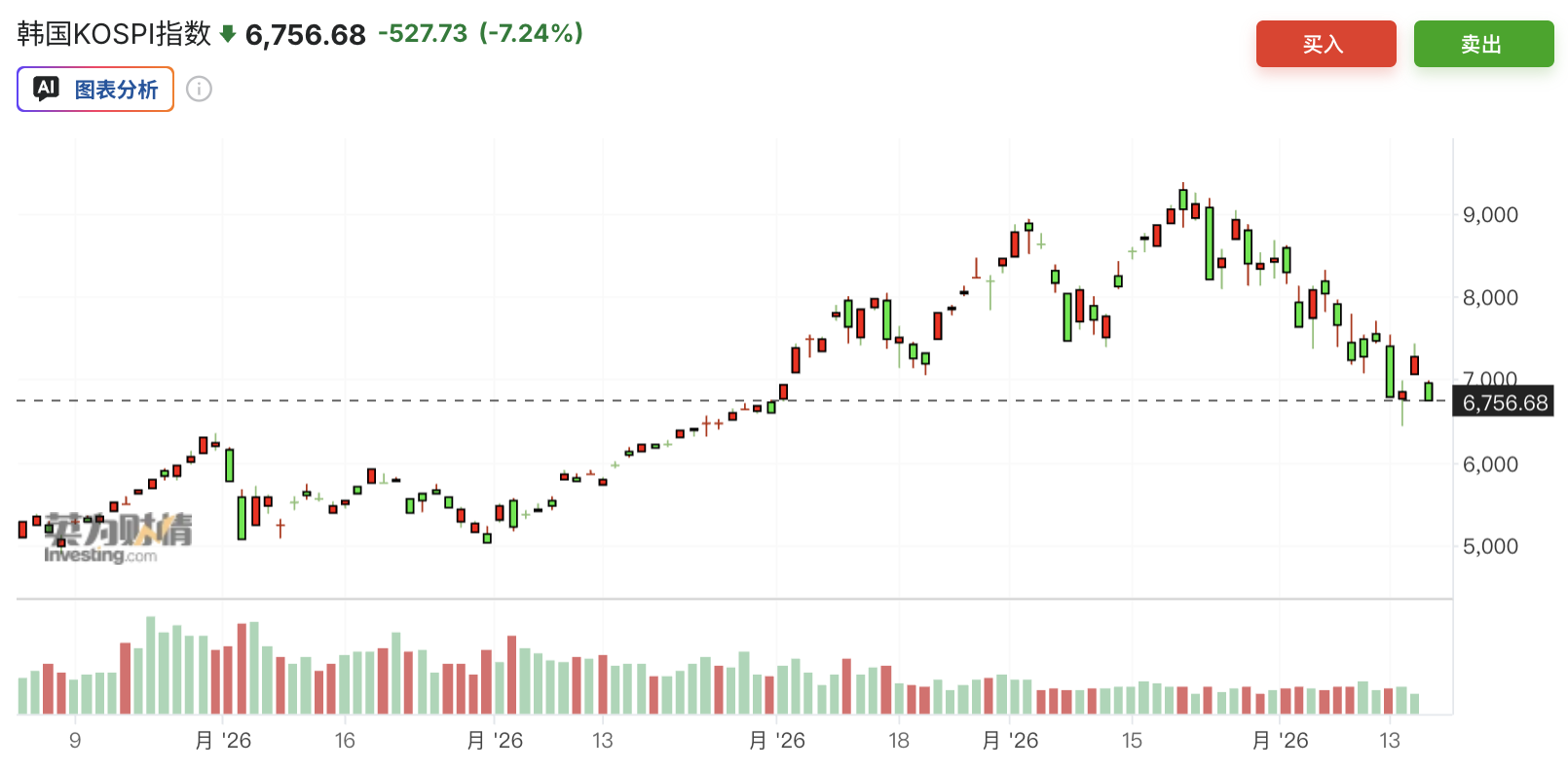
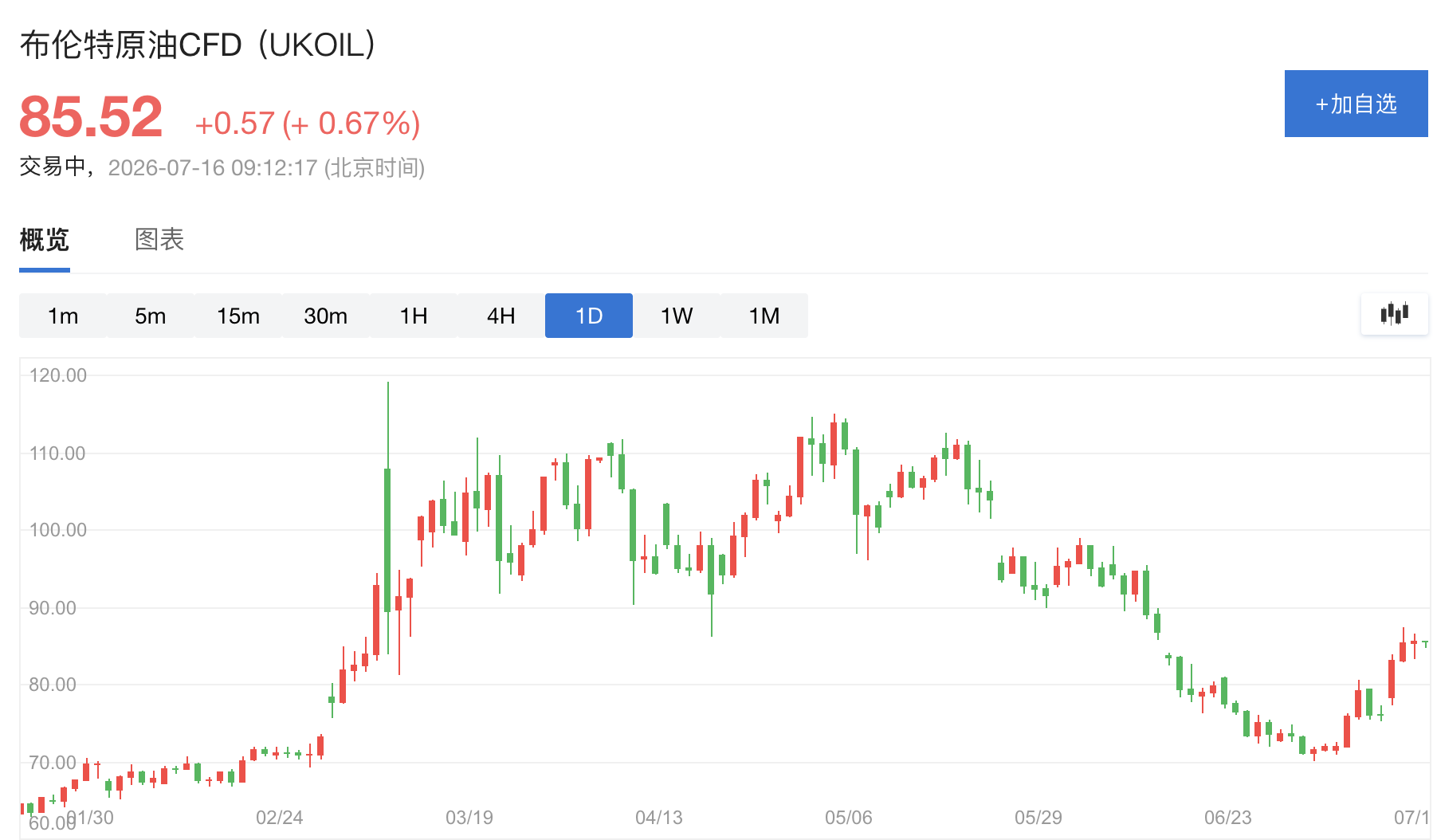
- Key Points: Driven by a renewed sell-off in semiconductor stocks and escalating geopolitical risks in the Middle East, Asia-Pacific markets faced broad pressure on Tuesday. South Korea's stock market plunged over 7%, triggering a circuit breaker, while Brent crude oil rose for the fourth consecutive day, breaking through $85 due to the heightened tensions in the Middle East.
- Key Factors:
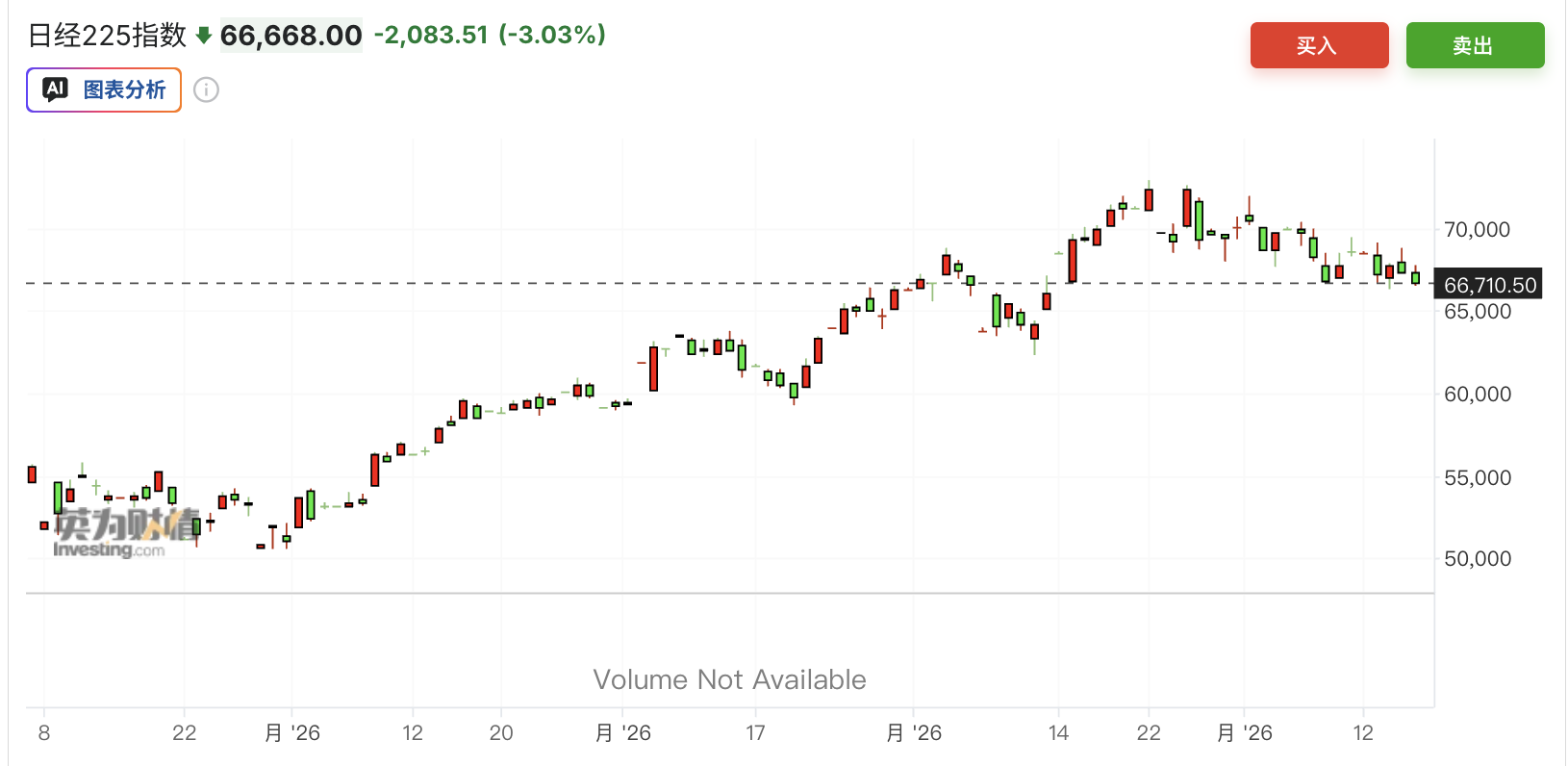
- Semiconductor sector was the core driver of the decline: The Kospi index in South Korea fell over 7%, with SK Hynix and Samsung Electronics contributing the bulk of the losses; Japan's Kioxia Holdings dropped over 13%, causing the Nikkei 225 to fall as much as 3%.
- Sustainability of AI trading questioned: The market demands stronger evidence that AI capital expenditures can translate into sustained profit growth. ASML's raised sales forecast and TSMC's strong data failed to support a rally in chip stocks.
- Circuit breaker triggered in South Korea: The Kospi 200 index futures fell over 5%, prompting the exchange to activate the "sidecar" mechanism to halt program trading; regulators plan to introduce measures targeting leveraged ETFs.
- Bank of Korea raises key rate by 25 basis points: The benchmark rate was increased from 2.50% to 2.75%, in line with market expectations.
- Rising Middle East tensions boost oil prices: The temporary peace agreement between the U.S. and Iran collapsed amid disputes over control of the Strait of Hormuz; Brent crude rose for a fourth consecutive day, breaking above $85, with markets worried about potential energy supply disruptions.
- Inflation data moderates rate hike expectations: The U.S. June PPI came in below expectations, pushing up Treasury bond prices as traders lowered their expectations for the magnitude of Fed rate hikes this year; however, upside risks to oil prices could complicate the monetary policy outlook.
Original Title: "Semiconductor Sell-Off Sends Shockwaves Through Asia-Pacific Markets, South Korean Stocks Plunge 7% Triggering Circuit Breaker, Brent Oil Rises for Fourth Straight Day to Top $85"
Original Author: Zhao Ying
Original Source: Wall Street CN
A fresh wave of selling in semiconductor stocks weighed on Asian markets, reigniting questions about the sustainability of the AI trade. Meanwhile, escalating tensions in the Middle East pushed oil prices higher for a fourth consecutive day.
South Korea's Kospi index extended its losses to over 7% on Wednesday, with SK Hynix and Samsung Electronics contributing the bulk of the decline. Tokyo-listed Kioxia Holdings plummeted more than 13%, while Japan's Nikkei 225 index at one point widened its loss to 3%. This sell-off dragged the MSCI Asia-Pacific stock index down 1.5%, snapping a two-day winning streak.
At the same time, Brent crude oil rose for a fourth straight day, breaking above $85.25 per barrel. Fresh U.S. airstrikes against Iran intensified market concerns over potential disruptions to Middle East energy supplies.
The chairman of South Korea's Financial Services Commission stated that authorities will soon announce measures related to leveraged ETFs, in response to controversy that such products linked to Samsung and SK Hynix are amplifying stock market volatility. Additionally, the Bank of Korea raised its benchmark interest rate from 2.50% to 2.75%, in line with market expectations.
Chip Stock Sell-Off Intensifies, Resilience of AI Trade Tested
The semiconductor sector continued to face pressure, serving as the core driver of the current decline in Asian stock markets.
After months of significant share price appreciation, investors are now demanding stronger evidence that the surge in AI capital expenditure can translate into sustained earnings growth across the semiconductor supply chain. Bloomberg strategist David Savage noted, the market's lukewarm reaction to ASML's stellar earnings report has deepened a troubling trend—strong preliminary results from Samsung Electronics and robust sales data from TSMC have so far failed to provide support for the increasingly fragile rally in chip stocks.
ASML had already raised its full-year sales forecast for the second time this year and, according to a report from The Information citing four sources, plans to raise prices on its chipmaking equipment. Despite this, the market response remained tepid. TSMC, set to report earnings later that day, is viewed as the next key milestone for assessing progress in AI infrastructure buildout. David Savage noted that TSMC, as Asia's most valuable company, faces extremely high expectations, and whether it can reverse the overall regional market sentiment remains to be seen.
South Korean Market Triggers Circuit Breaker, Regulators Respond Swiftly
The severity of the South Korean stock market decline triggered market protection mechanisms. Futures on the Kospi 200 index fell more than 5%, prompting the Korea Exchange to activate a "sidecar" mechanism, suspending program trading on the Kospi. The Nikkei 225 index at one point widened its loss to 3%.
The statement from the chairman of South Korea's Financial Services Commission reflects regulators' heightened vigilance over market volatility. Leveraged ETFs linked to Samsung and SK Hynix have recently been seen as amplifying share price swings to some extent, and authorities have pledged to roll out countermeasures as soon as possible. The Bank of Korea also announced a 25-basis-point rate hike on the same day, raising the benchmark rate to 2.75%, in line with market expectations.
Middle East Tensions Escalate, Oil Prices Continue to Rise
Geopolitical risk has emerged as another major driver pushing oil prices higher.
The temporary peace agreement between the U.S. and Iran, signed about a month ago, has nearly completely broken down over the past week, with both sides locked in a dispute over control of the Strait of Hormuz. A vast majority of energy exports from Saudi Arabia, Qatar, the UAE, and other countries must pass through this strait. Trump stated that he would intensify bombing until Iran stops attacking vessels in the Strait of Hormuz and agrees to open the waterway.
According to Xinhua News Agency, a spokesperson for Iran's Islamic Revolutionary Guard Corps posted on social media in the early hours of the 16th, stating that Iran's current actions are focused on destroying the "offensive infrastructure" of the U.S. in the region, with the next steps to follow. The spokesperson wrote, "The enemy should not think they can maintain the current state of combat and drag the war into a war of attrition."
David Russell of TradeStation commented: "The Fed has no immediate pressure to raise rates, but over the longer term, oil prices are the dominant factor. The energy sector propped up the market in June, but if the Strait of Hormuz remains closed, that history could soon become a thing of the past."
Inflation Data Eases Fed Rate Hike Expectations, Bond Market Strengthens
Amid the turmoil in stock and oil markets, the bond market benefited from cooling inflation data.
U.S. Producer Price Index (PPI) for June came in below expectations, pushing U.S. Treasury prices higher on Wednesday and prompting traders to further scale back expectations for the scale of Fed rate hikes this year. Government bonds in Australia and New Zealand also strengthened in sympathy. The yield on the U.S. two-year Treasury note continued its retreat from 2026 highs.
The core contradiction confronting the market currently is this: softer inflation data gives the Fed room to hold steady, but the upside risk to energy prices stemming from the deteriorating situation in the Middle East could, over a longer timeframe, reopen the valve of inflationary pressure, complicating the monetary policy outlook once again.


