






U.S.-Iran Talks Revived, Oil Prices Fall Below $80, How Will U.S. Stocks Perform Next Week?


- Key Thesis: Over the weekend, U.S.-Iran negotiations reversed from a cancellation to substantive progress, causing oil prices to fall below $80 and reshaping inflation expectations. The hawkish stance of new Fed Chair John Walsh gains breathing room amid the oil price decline. Macro risk appetite is expected to see a moderate recovery over the next 2-4 weeks, with risk assets like Bitcoin potentially rising in tandem with U.S. stocks.
- Key Factors:
- U.S.-Iran talks reversed course through mediation by Qatar and Pakistan, with both sides entering technical consultations under a 60-day framework covering core issues such as nuclear program dismantlement and Strait passage. Market sentiment subsequently rebounded strongly.
- Brent crude broke below $78.96, with WTI falling to $76.05, representing a weekly decline of over 8.5%. Driving factors include the return of Iranian crude to the market, OPEC production increases, and weakening Chinese demand expectations, resulting in a permanent daily demand loss of 200,000-600,000 barrels.
- New Fed Chair John Walsh delivered a strongly hawkish signal at his first FOMC meeting. The dot plot showed 9 of the 18 committee members expect at least one rate hike this year, with market pricing for a rate hike this year rising to 57%.
- SpaceX went public with the largest-ever IPO ($75 billion), closing its first day up 19.2%. However, valuation disputes are significant, with wide divergence in price targets (Morningstar only $63). The current stock price has pulled back from its high of $225 to around $185.
- Key next-week watchpoints include PCE inflation data, U.S.-Iran negotiation progress, Walsh's speech, and SPCX's stock price trend. A decline in PCE could provide the central bank with grounds to refrain from rate hikes, supporting risk asset valuations.
Overview
Over the weekend, global investors experienced a dramatic plot twist. Last Friday, news of the abrupt cancellation of talks in Switzerland triggered a broad sell-off in cryptocurrencies and stock index futures as markets opened on Monday (June 22). However, by this afternoon, the situation took a sharp turn: mediators Qatar and Pakistan both confirmed that high-level US-Iran negotiations at the Bürgenstock Resort in Switzerland had reached substantive progress and would move to the next phase of technical talks. The market's tension immediately eased, with US stock futures swinging from losses to gains, both Brent crude and WTI crude falling below the $80 mark, and Asia-Pacific stock markets staging a deep V-shaped recovery.
This article will systematically analyze how falling oil prices are reshaping inflation expectations and highlight the key points to watch in U.S. stocks next week, taking into account the aftershocks of SpaceX's record-breaking IPO from last week and the hawkish policy signals from new Federal Reserve Chair Kevin Warsh.

Key Takeaways
Qatar and Pakistan confirmed substantive progress in US-Iran talks in Switzerland, with both sides entering a 60-day framework for technical consultations
Brent crude fell below $78.96 this week, with WTI dropping to around $76.05, the lowest level since March this year
The decline in oil prices directly compresses inflation expectations, providing breathing room for the Fed under Warsh
SpaceX (SPCX) completed its record-breaking IPO on June 12 at $135 per share, closing the first day up 19.2%; as of June 22, the stock is trading around $185
New Fed Chair Warsh delivered hawkish signals in his first press conference, with 9 FOMC members expecting at least one rate hike this year
U.S. stock futures rebounded from Monday's opening slump, with an overall recovery trend this week
Major Plot Twist: Why the US-Iran Talks Were "Resurrected"
The entire past weekend saw market sentiment swing back and forth enough to exhaust any trader.
Last Friday, the Swiss Foreign Ministry confirmed the cancellation of scheduled US-Iran technical talks, immediately pressuring crypto and equity assets, with Bitcoin and major stock index futures showing a clear decline over the weekend. The core logic behind market concerns was straightforward: if negotiations break down, tensions in the Strait of Hormuz will tighten again, restricting Iranian oil flows and tightening global energy supply expectations.
However, on the afternoon of June 22, the situation reversed. According to a report from Al Jazeera, mediators Pakistan and Qatar both confirmed that US and Iranian negotiators had reconvened in Switzerland, with the talks concluding in a "positive and constructive atmosphere." U.S. Vice President JD Vance also traveled to Bürgenstock and stated that "significant progress has been made in the past few hours."
According to the previously signed Islamabad Memorandum of Understanding (MoU), the core topics of these technical talks include: the complete dismantlement of Iran's nuclear program, guaranteed freedom of navigation through the Strait of Hormuz, and Iran ceasing funding for regional proxy forces. The two sides have a 60-day negotiation window, which can be extended by mutual agreement.
The market reacted immediately. After a deep pullback during the Asian session, U.S. stock index futures began to stabilize and rebound as news of the talks emerged.
Oil Falls Below $80: What Does It Mean?
The trajectory of oil prices serves as the most compelling thermometer for the current macro narrative.
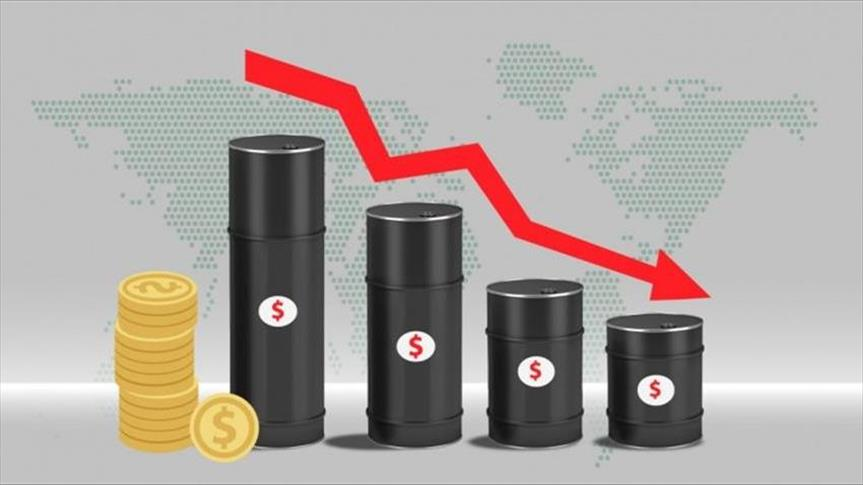
According to a CNBC report, Brent crude fell to $78.96 this week, its first close below $80 since March this year, while WTI dropped to $76.05. The single-week decline exceeded 8.5%, nearly wiping out all the gains accumulated during the US-Iran conflict period.
Real-time data from Trading Economics shows that as of June 22, WTI was quoted around $77.54, with a cumulative monthly decline of over 17%, though still about 13% higher year-over-year.
There are three core drivers behind the ongoing decline in oil prices:
First, Iranian oil is returning to the market. After the Strait of Hormuz reopened for transit following the MoU's implementation, Iran has increased its crude oil shipments to the highest level since the start of the conflict. The spot discount for Iranian light crude exported to China has widened to between $2.5 and $5 relative to Brent.
Second, OPEC members are collectively increasing production capacity. Kuwait has lifted its force majeure status on production, and tankers from major producers like Saudi Arabia have resumed shipments after the strait reopened.
Third, demand expectations from China are weakening. OilPrice.com cited analyst estimates that some Chinese transportation fuel demand damaged during the conflict may not return. Rystad Energy estimates permanent daily demand losses of approximately 200,000 to 600,000 barrels.
The direct impact of falling oil prices on inflation expectations is that energy is one of the core transmission channels for CPI. If oil prices remain stable or continue to fall at current levels, it could provide the Fed under Warsh with the breathing room to hold off on rate hikes, thereby supporting risk asset valuations.
The Warsh Effect: The Hawkish New Chair Keeps the Market on Edge
Against the backdrop of the dramatic reversal in US-Iran talks, another major storyline cannot be ignored: the policy uncertainty brought by new Federal Reserve Chair Kevin Warsh.
Warsh was confirmed by the Senate on May 13, 2026, with a 54-45 vote, becoming the 17th Chair of the Federal Reserve—the most contentious confirmation vote in modern Fed history. He presided over his first FOMC meeting on June 17 and stated clearly in the press conference: "We've missed our inflation target for five years. This time, we will correct it."
The key signal from this meeting came from the dot plot: among the 18 FOMC members, 9 expect at least one rate hike this year, a figure reported by PBS News as the most intimidating number from this meeting. Warsh himself deliberately avoided submitting his own interest rate projections, but his hawkish rhetoric clearly conveyed the priority: suppressing inflation comes first, easing is not on the horizon.
Analysis from Charles Schwab indicates that as of May, the CME FedWatch Tool showed the implied probability of a rate hike this year had risen to 57%. The Fed's current benchmark interest rate remains in the 3.5% to 3.75% range.
In this context, the significance of lower oil prices is amplified: if inflation shows marginal improvement due to falling energy costs, it could provide Warsh with the justification to "not raise rates," thereby avoiding additional pressure on equity markets.
SpaceX IPO Aftershocks: After the Biggest Listing Ever, Where to Next?
Another event influencing market sentiment last week was SpaceX's public listing.
According to CNBC's live IPO coverage, SpaceX (NASDAQ: SPCX) priced its IPO at $135 per share on June 12, closing the first day at $160.95 for a 19.2% gain. The fundraising size was approximately $75 billion, setting the record for the largest IPO in human history, with its market capitalization briefly exceeding $2 trillion.
However, after this initial frenzy, signs of market rationality returning are evident. Investing.com shows that as of June 22, SPCX is quoted at $185.00, down from the previous day's close of $191.82, with an intraday low of $172.11. Previously, SPCX had hit an all-time high of $225.64 on June 16, before retreating along with the broader market.
Controversy centers mainly on valuation. SpaceX reported a net loss of $4.3 billion in the first quarter of 2026, while Morningstar's discounted cash flow model gives it a target price of just $63. However, NewStreet Research has a target price of $165, arguing that SpaceX holds a "lead of at least 10 years" in launch capabilities.
For investors looking to participate in SpaceX-related opportunities, the MEXC platform offers trading in SpaceX tokenized stock (SPCXX), allowing global users to participate directly without needing a U.S. brokerage account.
Start Trading SpaceX Tokenized Stock
Key Market Events to Watch Next Week
Given the macro backdrop above, the following milestones are worth watching closely:
PCE Inflation Data (expected later this week): As the Fed's preferred inflation gauge, this data will directly influence the probability assessment of a rate hike by Warsh. If the year-over-year PCE growth rate shows a marginal decline, markets may get a brief respite from hawkish fears.
Progress in US-Iran Technical Talks: If the next phase of talks within the 60-day framework proceeds smoothly, it will continue to suppress oil prices and support sectors like airlines, shipping, and consumer goods. However, any new hiccups in the talks could quickly reignite the risk of an oil price rebound.
Public Comments from Warsh: Warsh has stated he will streamline the Fed's communication frequency, but any public remarks will still be magnified and scrutinized by the market. Watch for any further strengthening of the rate hike signal.
SpaceX (SPCX) Stock Price Movement: Technically, SPCX is currently in a corrective phase from its highs. The $186 to $190 range constitutes a key short-term resistance level. If overall market sentiment improves, there is potential for a technical rebound.
Crypto Market Correlation: The positive and negative news flows regarding the US-Iran situation this week have both impacted the crypto market emotionally. As macro uncertainty marginally decreases, institutional investors' willingness to allocate to risk assets like Bitcoin could marginally improve.
Exclusive Analysis from the MEXC Crypto Pulse Research Team
The dramatic reversal in the US-Iran talks reveals a deep characteristic of current market operations: the short-term effects of geopolitical events are being amplified by algorithms and high-frequency retail sentiment, but the mean-reversion speed of fundamental logic is also accelerating simultaneously.
Looking at the oil price trajectory, Brent breaking below $80 reflects both supply-side logic and the market's repricing of the structural change of "Iranian oil returning to the supply chain." However, the permanent demand loss from China (approximately 300,000 barrels per day) suggests that even if geopolitical risks are completely cleared, oil prices are unlikely to return to this year's highs, which is positive for the long-term downward trend of the inflation core.
At the Fed policy level, there is an inherent tension between Warsh's hawkish stance and his belief in AI productivity. In the short term, if low oil prices lead to an unexpectedly sharp decline in CPI in the second half of the year, Warsh could easily use "improving inflation trends" as a reason to delay rate hikes, or even pave the way for rate cuts in 2027. This path represents a potential positive catalyst for risk assets, especially tech stocks and cryptocurrencies.
The SpaceX IPO provides an important market signal: retail investors' enthusiasm for "narrative-driven" assets remains strong, even when fundamentals are highly debatable. This sentiment migration effect is worth watching—as SPCX pulls back from its highs to find support, some diverted capital may flow towards the crypto market seeking higher volatility premiums.
Our core judgment is: Over the next 2 to 4 weeks, assuming no major reversal in the US-Iran talks, macro risk appetite is expected to maintain a moderate recovery. Bitcoin and major altcoins have a probability of strengthening alongside U.S. stocks, but one must be wary of instantaneous volatility caused by any unexpectedly hawkish statements from Warsh.
FAQ
Q1: What would the breakdown of US-Iran talks mean for the cryptocurrency market?
If talks face a major reversal, expectations of another closure of the Strait of Hormuz would push oil prices higher, exacerbating inflation concerns. This would increase the probability of a Fed rate hike. This combination typically pressures risk assets, including Bitcoin and Ethereum, as higher interest rates compress the valuation premium of high-risk assets.
Q2: Brent crude falling below $80 – is it a buying opportunity or a signal of further decline?
In the short term, if US-Iran talks progress and Iranian oil continues to flow to the market, further downward pressure on oil prices remains. However, if negotiations hit another snag, oil prices could quickly rebound. It is recommended to use an event-driven framework to determine direction rather than purely technical operations.
Q3: What is the impact of Kevin Warsh's hawkish stance on the cryptocurrency market?
A higher interest rate environment usually suppresses the relative attractiveness of non-yielding assets like Bitcoin. However, historical data shows that the trajectory of inflation expectations themselves is more critical than the absolute level of interest rates. If falling oil prices lead the market to believe inflation is under control again, crypto assets may complete their price discovery before an actual rate hike occurs.
Q4: After SpaceX's listing, how can I participate in related opportunities on MEXC?
MEXC offers SpaceX tokenized stock (SPCXX). Users can register an account on MEXC and start trading directly without needing a U.S. securities account. It supports 24-hour trading and has a low entry barrier.
Q5: Can the deep V-shaped rebound in Asia-Pacific stock markets be sustained?
Asia-Pacific markets typically react to geopolitical news with high elasticity but limited sustainability. If this week's PCE data and US-Iran talks both release positive signals, the rebound momentum in indices like South Korea's Kospi and Japan's Nikkei could extend into early next week. However, technical resistance at local highs should not be ignored.
Q6: Where can I trade crypto assets linked to crude oil and US stock futures?
On MEXC, users can trade assets linked to crude oil prices and US stock-related products through contract trading and tokenized stock features, offering global access and zero-threshold account opening.
Disclaimer
This content is for informational and educational purposes only and does not constitute any investment advice or financial consultation. Trading in cryptocurrency and financial markets carries high risk, and prices can fluctuate significantly. Past performance does not guarantee future results. Investors should make independent judgments based on their own financial situation and a full understanding of the risks involved. The MEXC Crypto Pulse team assumes no responsibility for any losses incurred from relying on this content.


