






Selling U.S. Treasuries, Buying Japanese Bonds: Wall Street Braces for "Capital Repatriation from Japan"


- Core Thesis: As Japanese government bond (JGB) yields surge, global investors are wagering that Japanese institutions will significantly reduce their holdings of approximately $1 trillion in U.S. Treasuries, with capital flowing back into Japan's domestic bond market. This could create major shocks for global financial markets.
- Key Factors:
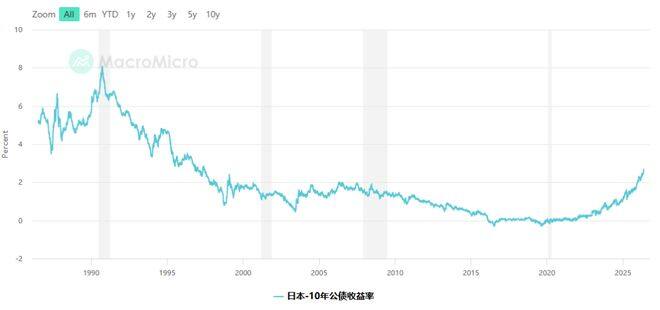
- Japan's 10-year government bond yield has risen to 2.73%, a 28-year high; the 30-year yield broke through 4% for the first time, signaling profound changes in the market interest rate environment.
- Japanese investors hold roughly $1 trillion in U.S. Treasuries, making them the largest foreign holders of U.S. debt, implying a massive potential scale for capital repatriation.
- The Bank of Japan has raised its policy rate to 0.75% and may continue to hike, while gradually tapering its quantitative easing program, significantly boosting the attractiveness of domestic bonds.
- Data shows preliminary signs: Japanese sovereign bond funds saw a net inflow of approximately $700 million in March, a single-month record, although Japan was still a net buyer of about $50 billion in foreign bonds over the past 12 months.
- Analysts warn that Japan's fiscal expansion could pressure JGB prices lower. Furthermore, as yields are expected to continue rising, investors' willingness to buy remains weak for now, meaning a large-scale repatriation has not yet occurred.
Original Author: Long Yue
Original Source: Wall Street Sights
Japan's government bond market is undergoing dramatic shifts not seen in decades, prompting global asset managers to re-evaluate a long-overlooked risk: could Japanese investors, holding about $1 trillion in US Treasuries, repatriate their money?
According to the latest report from the Financial Times, several investment institutions have begun preparing for a large-scale repatriation of Japanese capital, betting that Japanese investors will gradually sell US Treasuries and instead buy Japanese Government Bonds (JGBs) with continuously rising yields.
JGB Yields Surge to Multi-Decade Highs
On Friday, the benchmark 10-year JGB yield rose to 2.73% during trading, its highest level since May 1997.
Meanwhile, the 30-year JGB yield breached 4% for the first time—a level never reached since this maturity bond was first issued in 1999. The 5-year and 20-year JGB yields also hit new record highs earlier this week.
Japan's Finance Minister Satsuki Katayama told reporters on Friday that yields in major global bond markets are all rising, adding, "These dynamics interact, creating a compounding effect."
Analysts expect JGB yields to continue climbing. The Bank of Japan raised its policy rate to 0.75% in December last year, the highest in three decades, and the market widely expects a further 25 basis point hike to 1% this June.
The Trillion-Dollar Logic for Repatriation
Understanding this bet requires first understanding why Japanese investors hold such vast assets abroad.
For decades, Japan maintained ultra-low interest rates, offering almost no returns on domestic bonds. In pursuit of yield, Japanese institutional investors—including insurers, pension funds, and banks—ventured overseas on a massive scale, buying US Treasuries, European bonds, and various global assets.
Currently, Japanese investors hold approximately $1 trillion in US Treasuries, making them the largest foreign holders globally, far surpassing any other country.
Now, with JGB yields rising sharply, this logic is reversing. Mark Dowding, Chief Investment Officer at UK asset manager BlueBay, directly highlighted this shift. BlueBay launched its first-ever Japanese bond fund this March.
Dowding stated, "New funds will no longer be allocated overseas. Not to US corporate bonds, not to US Treasuries—they will come back to domestic Japanese allocations."
Funds Beginning a 'Trickle' Back Home
Market data shows signs of capital repatriation have already emerged, albeit on a small scale.
According to fund monitoring firm EPFR, investors poured a net approximately $700 million into Japanese sovereign bond funds in March, the largest single-month inflow on record for this category. Net inflows for April were $86 million, returning to recent normal levels.
Matt Smith, a fund manager at Ruffer, offered a more direct assessment. He said, "Pressure is building—long-end domestic yields are rising, and the signal from institutions is also 'bring your money back to Japan.' We think yen appreciation will happen slowly at first, then suddenly accelerate."
Smith added that Ruffer currently holds a long yen position as a core hedging tool. "Once market turmoil occurs, especially centered on US credit markets, Japanese investors will bring capital back home, and the yen will strengthen."
Repatriation Not Yet Large-Scale, JGBs Themselves Have Concerns
However, analysts caution that Japanese institutional investors are still net buyers of foreign bonds.
Abbas Keshvani, Asia Macro Strategist at RBC Capital Markets, noted that while JGB yields have "ostensibly offered investors better compensation," Japanese investors still net purchased approximately $50 billion of foreign bonds over the past 12 months.
The reason lies in the uncertainty of the JGB market itself. Japanese Prime Minister Shigeru Ishiba won an election in February, with campaign promises including expanded government spending and subsidies to counter inflationary pressures. Analysts increasingly warn that the government will be forced to compile a supplementary budget later this year, which would further depress JGB prices and push yields higher.
Keshvani stated, "Supply-demand dynamics all point to yields continuing to rise. As an investor, if you know yields will keep climbing, it's hard to have the desire to buy now."
Previously, the Bank of Japan was the market's most important buyer, purchasing large amounts of JGBs through quantitative easing and yield curve control policies. As the BOJ gradually exits, the market is reverting to traditional supply-demand logic, leading to significantly increased volatility in JGB prices.
What This Means for the US Treasury Market
The potential scale of Japanese capital repatriation means the US Treasury market must take this risk seriously.
Japan is the largest foreign holder of US Treasuries, with a position of about $1 trillion. Once Japanese institutional investors begin systematically reducing holdings, the impact on the supply-demand dynamics of US Treasuries will be substantial.
Currently, Wall Street's bets are more of a forward-looking positioning than a reaction to events that have already occurred. But as JGB yields continue to climb—analysts see a 10-year JGB yield reaching 3% later this year as a realistic target—the logic of this bet will become increasingly clear.





