Hong Kong IPO subscriptions have become the new battleground for Shenzhen’s crypto “airdrop hunters”


- Core Thesis: Driven by the high returns of the Hong Kong IPO subscription market in 2026, professional cryptocurrency "airdrop" studios in Shenzhen, such as the Arez team, have massively shifted their focus to Hong Kong IPO subscriptions. By utilizing account matrixes, margin leverage, and channel rebate models, they achieve higher certainty and faster capital turnover.
- Key Elements:
- In Q1 2026, Hong Kong IPO fundraising reached HK$109.9 billion, surpassing Nasdaq and the New York Stock Exchange to rank first globally. Over 80% of new listings closed higher on their debut day, with an average gain exceeding 38%.
- A typical example, Sigenergy, doubled on its listing day. The application fee was HK$32,700, and securing one lot could yield a maximum profit of over HK$34,000. Within a week, three newly listed stocks all avoided falling below their issue price.
- The Arez studio employs a strategy of selecting high-application-fee stocks. In April, by using margin leverage to subscribe to IPOs like Sigenergy and Qunhe Tech, they netted nearly HK$1 million in half a month, with a capital turnover cycle of only 7-10 days.
- The studio has adopted a dual transformation model: proprietary account subscriptions on one hand, and customer acquisition rebates (CPA) for banks and brokerages on the other. The gross profit per individual client can reach HK$3,000-5,000, generating a stable monthly cash flow of approximately HK$100,000.
- Emerging "on-chain Hong Kong IPO subscriptions," such as the StableStock project, allow users to participate directly in Hong Kong IPOs via USDT/USDC and KYC. In February 2026, its trading volume grew by 206% month-over-month.
A vibrant city always attracts ambitious people, and Shenzhen is exactly that kind of city.
Over forty years ago, Shenzhen was just a stretch of rice paddies and a few fishing villages on the east bank of the Pearl River Estuary. But in the subsequent four decades, it transformed Huaqiangbei into the world's largest distribution hub for electronic components, turned Dafen Village into a global oil painting factory, and became the birthplace of Huawei, Tencent, DJI, and BYD. In this city, there are countless individuals who have profited from arbitrage opportunities arising from information asymmetry, liquidity, and regulatory gaps.
Arez is a quintessential example of a Shenzhen native like that.
In his early thirties, he and a friend run an airdrop farming studio in an office building in Nanshan. In 2023, they earned substantial profits for their team through the Arbitrum, Starknet, and LayerZero airdrops. At their peak, he managed thousands of on-chain addresses, handling scripts, IP proxies, KYC resources, and capital rotation.
A year ago, when BlockBeats interviewed Arez for the article "Anti-farming Intensifies, Yet Smart Farmers Still Earn Tens of Thousands Monthly?", his studio, while having a dedicated team for Hong Kong IPO subscriptions, was still primarily focused on crypto airdrop farming.
However, starting in the second half of last year, Arez's studio made the decisive shift to focus entirely on Hong Kong IPO subscriptions.
Hong Kong IPO Subscriptions: From "Early Spring" to "Bull Market"
To understand why Arez's studio pivoted, one must first appreciate how lucrative Hong Kong IPO subscriptions have become.
Since the beginning of 2026, over 80% of newly listed shares on the Hong Kong stock market have closed higher on their debut day, with an average first-day gain exceeding 38%.
By the end of the first quarter, Hong Kong completed 40 new IPOs, with total fundraising reaching HKD 109.9 billion. This surpassed major global exchanges like Nasdaq (21 IPOs) and the New York Stock Exchange (15 IPOs), securing the top spot globally for IPO fundraising in Q1.
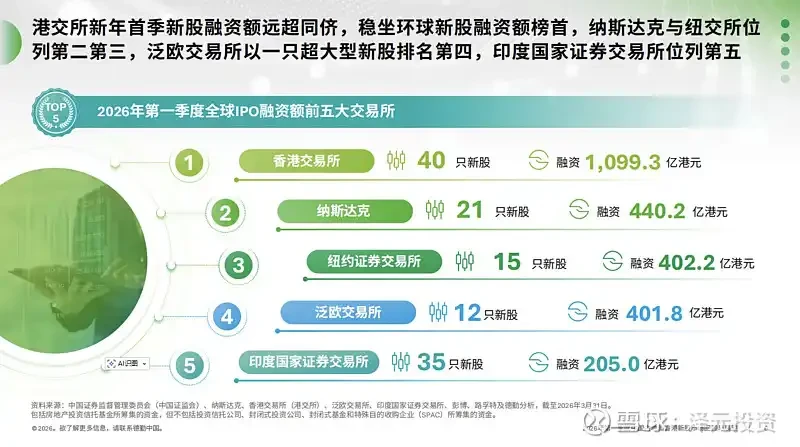
Source: Xueqiu
The market leaders were almost exclusively hard-tech companies. On the first trading day of the year, January 2nd, Biren Technology became the first domestic GPU company listed in Hong Kong. Its IPO price was HKD 19.6, with public offering oversubscribed by 2346.5 times, and shares surged 75.82% on debut. On January 9th, MiniMax soared 109.1% on its first day, reaching a market cap exceeding HKD 100 billion. On February 13th, Haizhi Technology Group surged 242.20% on its listing day.
Then came the most frenzied three days in April, leaving a deep impression on Arez. IPOs listed from April onwards have been even more extreme, with all shares rising and none falling below their issue price.
On April 16th, Sigenergy officially listed. Founded by ex-Huawei entrepreneurs in the distributed energy storage sector, its revenue skyrocketed from RMB 58 million to RMB 9 billion in two years. Its share price doubled on the first day, with each winning lot potentially netting over HKD 34,000. The entry cost was HKD 32,700, and investors doubled their money in a single day. The entire IPO subscription circle in Shenzhen was buzzing that night. The very next day, April 17th, Qunhe Technology and Changguang Chenxin debuted simultaneously. Qunhe Technology, the first IPO among the "Six Little Dragons of Hangzhou," surged 144% on day one and nearly quadrupled within two trading days. Changguang Chenxin, listing the same day, rose 75% on debut and hit a peak over 145% above its issue price a few days later.
Three days, three new stocks, each one making successful bidders ecstatic.
According to LiveReport Big Data statistics, from the start of 2026, assuming one winning lot per IPO sold at the opening price, the notional profit (excluding fees) from Hong Kong IPO subscriptions has already exceeded HKD 128,000.
This is no longer just an "early spring" for Hong Kong IPOs; it's a full-blown "bull market."
Shenzhen's Airdrop Farmers Pivot to Hong Kong IPOs
According to Arez, his studio is not alone. Several other airdrop farming offices in Shenzhen that he knows of either already had a Hong Kong IPO subscription arm or shifted most of their focus to it from the second half of 2025 onwards.
"We mainly have two strategies," Arez told BlockBeats. "One is to create our own account matrix to subscribe to new stocks and earn IPO allocation profits. The other, which we learned this year and are now practicing, involves collaborating with mainland channel partners and Hong Kong tour groups to refer new clients to banks and brokerages, earning CPA commissions per head."
Netting a Million in April
Let's review Arez's operations during that wildest week in mid-April 2026.
When subscribing for himself, Arez analyzes new stocks based on several key criteria: strong fundamentals, high market sentiment, large-cap status, low issue valuation, and high oversubscription multiples.
"Take Sigenergy recently – it perfectly hit every single criterion." Sigenergy operates in the energy storage sector (strong fundamentals), boasts an ex-Huawei founding team (market sentiment and narrative), and had a large-cap fundraising of HKD 4.4 billion.
"Most importantly, Sigenergy had a high entry cost. The issue price was HKD 324.2 per share, with each lot comprising 100 shares, requiring HKD 32,700 to subscribe for one lot. A high entry cost means fewer retail participants and a higher allocation rate," Arez explained.
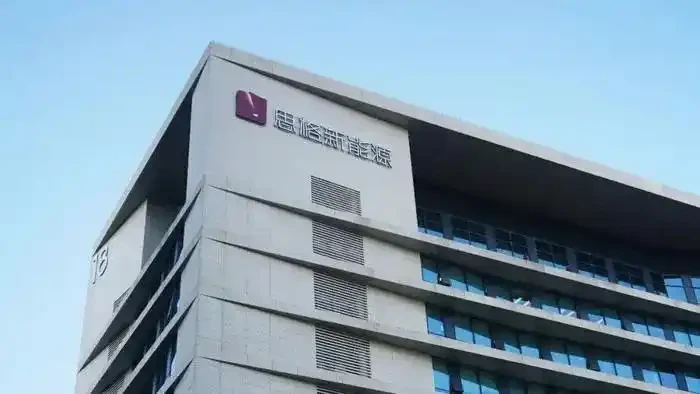
On April 8th, Sigenergy began its book-building. That morning, Arez and his partner held a meeting, both strongly in favor of the IPO, deciding to subscribe at the maximum level for each account using margin financing.
The following days were hectic for Arez's team, "but when the allocation results were announced, our luck was quite good."
During the grey market session from 16:15 to 18:30 on April 15th, Sigenergy's shares surged over 81%, resulting in a notional profit of HKD 26,000 per winning lot. Arez sold most of his position during the grey market to lock in initial gains. The next day, the stock opened at HKD 581, and the remaining positions were fully sold within half an hour. Then came the "double whammy" of Qunhe Technology and Changguang Chenxin on April 17th.
Arez's studio netted nearly a million Hong Kong dollars in less than half a month.
Compared to the profits from the Arbitrum airdrop in 2023, which were in a similar order of magnitude, the ARB project took a full 14 months from initial interaction to token distribution.
A typical airdrop farming project takes an average of 12-18 months from initial interaction to token distribution. During this period, capital is locked up, ETH might halve in value, and the project team could delay.
The Hong Kong IPO market, however, sends a completely opposite signal: short cycle, fast feedback, high certainty. The entire process from IPO book-building to listing is only 7 to 10 days.
Turning Account Opening into a Recurring Business
Browse platforms like V2EX, Zhihu, Xiaohongshu, Xianyu, or Telegram, search for terms like "Longbridge cashback," "Futu invitation code," or "Tiger Brokers channel rebate," and you'll find a CPA distribution market more mature than affiliate marketing.
"Typically, brokerages offer a minimum rebate of HKD 500 to channels. On the internet, we usually rebate HKD 250 to the customer, and the rest is our intermediary net profit," Arez explained. He likened IPO subscription to his primary business, while earning referral commissions is a passive side income.
Arez also revealed to BlockBeats: "An intermediary with stable channels can achieve a comprehensive income of HKD 1,500 to 3,000 per referred client."
Data shows that in Q1 2024, HSBC Hong Kong added 130,000 new retail customers. By Q1 2025, this figure had surged to 300,000. This account-opening boom has spawned a massive agency ecosystem. For instance, the service fee for opening an HSBC Hong Kong account in person in Hong Kong is RMB 1,200, while processing it from mainland China costs RMB 2,500.
At the start of 2026, Arez's studio also established a "Hong Kong trip for bank card + brokerage account opening" team. Their pricing was moderate, charging RMB 2,000-3,500 per client for the complete process (2 Hong Kong bank cards + 3 brokerage accounts). The gross profit per client was around HKD 3,000-5,000.
"The process is just like a tour group: gather at a designated point in Shenzhen, cross the border together, provide full escort, execute according to the schedule, and rotate visits to bank branches in Central, Yuen Long, and Tsuen Wan," Arez told BlockBeats.
They even partnered with some tour groups to include visits to Victoria Harbour and Tsim Sha Tsui attractions in the itinerary. Handling just 5 clients a month generates a stable cash flow of around HKD 100,000.
This amount isn't huge. But compared to the uncertainty of airdrop farming – waiting 18 months for a token distribution – the reliable monthly cash flow is one of the key reasons the studio was willing to pivot.
On-Chain Hong Kong IPO Subscriptions: The Next Trend
During recent conversations with friends, BlockBeats discovered another emerging trend: on-chain Hong Kong IPO subscriptions.
Users simply need a wallet, deposit USDT/USDC, complete KYC, and they can directly buy and sell Hong Kong stocks on-chain, including participating in Hong Kong IPOs. StableStock is one such project.
By partnering with a licensed brokerage called HabitTrade to secure the underlying trading channel, StableStock holds 1:1 real shares of US and Hong Kong stocks in custody with institutions like Coinbase Institution and SafeHeron, then issues corresponding tokenized stock assets on-chain. This has organically spread within the circles of seasoned on-chain players.
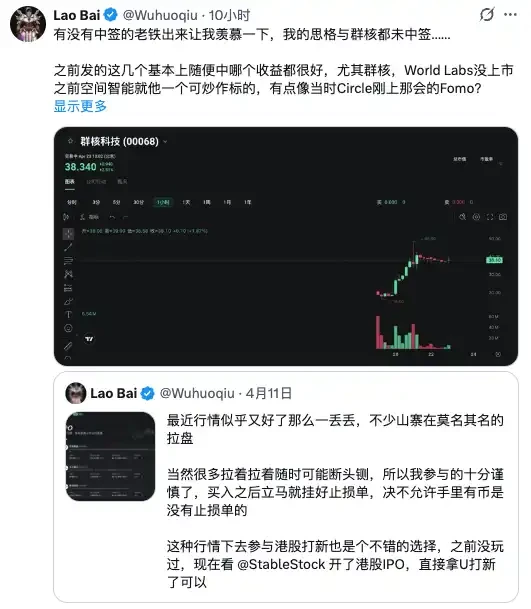
In February 2026, the platform's trading volume grew 206% month-over-month, roughly three times the volume in January, exceeding the total volume of the previous three months. A significant portion of the driving force behind this upward slope comes from on-chain arbitrage players, like Arez, who have been attracted by the Hong Kong IPO subscription boom.
As the frenzy for Hong Kong IPO subscriptions intensifies, the "on-chain Hong Kong IPO subscription" track is set to become increasingly lively.