






War insider trading involved a total of 5 individuals, with the one who made the most being arrested


- Key Takeaway: The U.S. Department of Justice has initiated its first criminal prosecution for insider trading on a prediction market, arresting active-duty Army Staff Sergeant Gannon Ken Van Dyke for using classified information to place bets on Polymarket regarding the capture of Venezuelan President Nicolás Maduro, netting over $400,000 in profits. This case underscores the deterrent power of law enforcement through the immutability of on-chain data.
- Critical Elements:
- Van Dyke used prior knowledge from his involvement in operational planning. In December 2025, he registered an account and accurately placed bets on outcomes such as "Maduro steps down" and "US military enters Venezuela," with a principal of approximately $30,000, yielding profits exceeding $400,000.
- After the arrest, he withdrew funds, transferred assets, and changed his email address to destroy evidence on the day of the operation. However, on-chain data was identified and made public by the media (PolyBeats) within 24 hours of the event, becoming key evidence in the DOJ's investigation.
- The DOJ indictment states that trading on prediction markets using material non-public information is illegal. Van Dyke is the first case formally prosecuted for insider trading on Polymarket, with an interval of nearly four months between his position opening and his arrest.
- Four other anomalous accounts, earning between $34,000 and $145,000, were not prosecuted. Reasons include lower profit amounts, difficulties in identity verification (non-direct participants), and the possibility that their information sources were not first-hand.
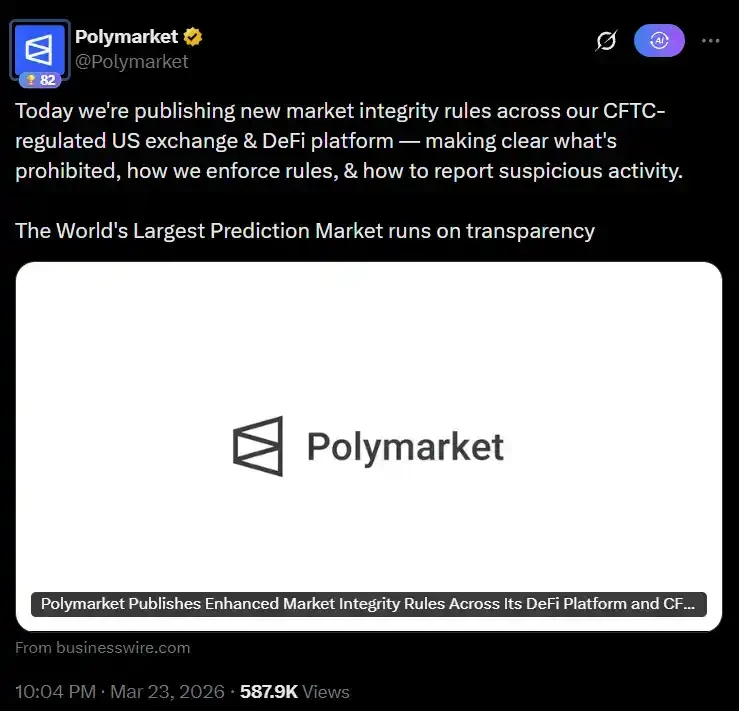
- Following this incident, Polymarket released an enhanced Market Integrity Policy in March, explicitly prohibiting trading based on confidential information or the ability to influence event outcomes. The platform also stated it proactively reported Van Dyke's activities to law enforcement.
On April 24, Eastern Time, the U.S. Department of Justice announced the arrest of active-duty Army Special Forces Sergeant Gannon Ken Van Dyke.
According to the indictment unsealed by the DOJ on the same day, Van Dyke was involved in an operation on January 3 of this year to capture Venezuelan President Nicolás Maduro from the presidential palace in Caracas.
Reports indicate that Van Dyke wagered on prediction markets just before the operation that Maduro would be captured, earning over $400,000. Although the reports did not disclose specific account details, based on the betting direction and profit amount mentioned, we were able to identify the account 0x31a5.
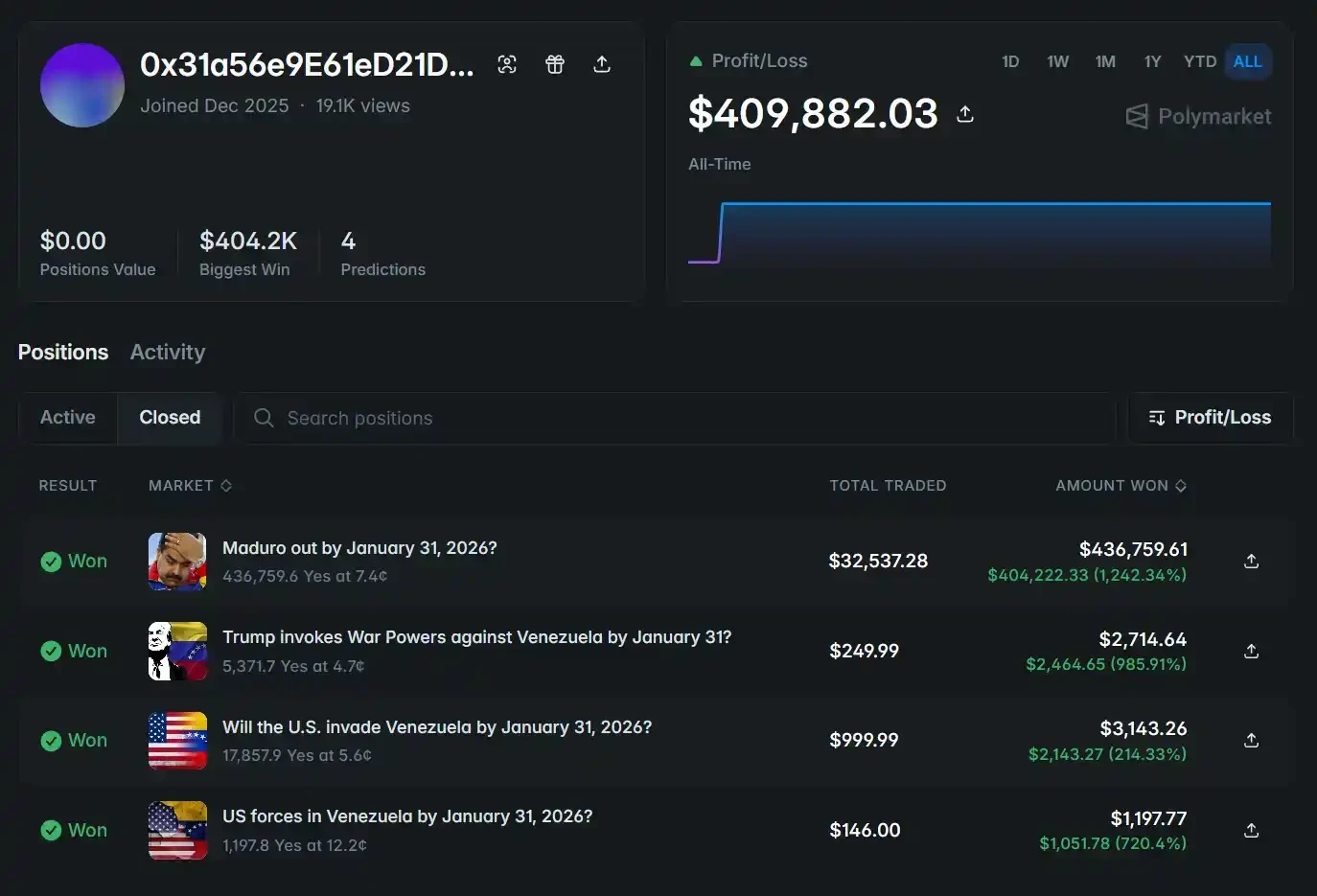
This is precisely one of the five insider accounts highlighted by PolyBeats in two consecutive reports on January 4 and January 7.
Reviewing Van Dyke's Account Activity
Let's rewind the timeline to January 4 of this year.
Following Maduro's capture, PolyBeats meticulously parsed the on-chain data, identified five accounts, and published a report within 24 hours of the operation's conclusion. For details, see: "They Missed Out on $2 Million Because Maduro Wasn't Going to Spend New Year's at Home"
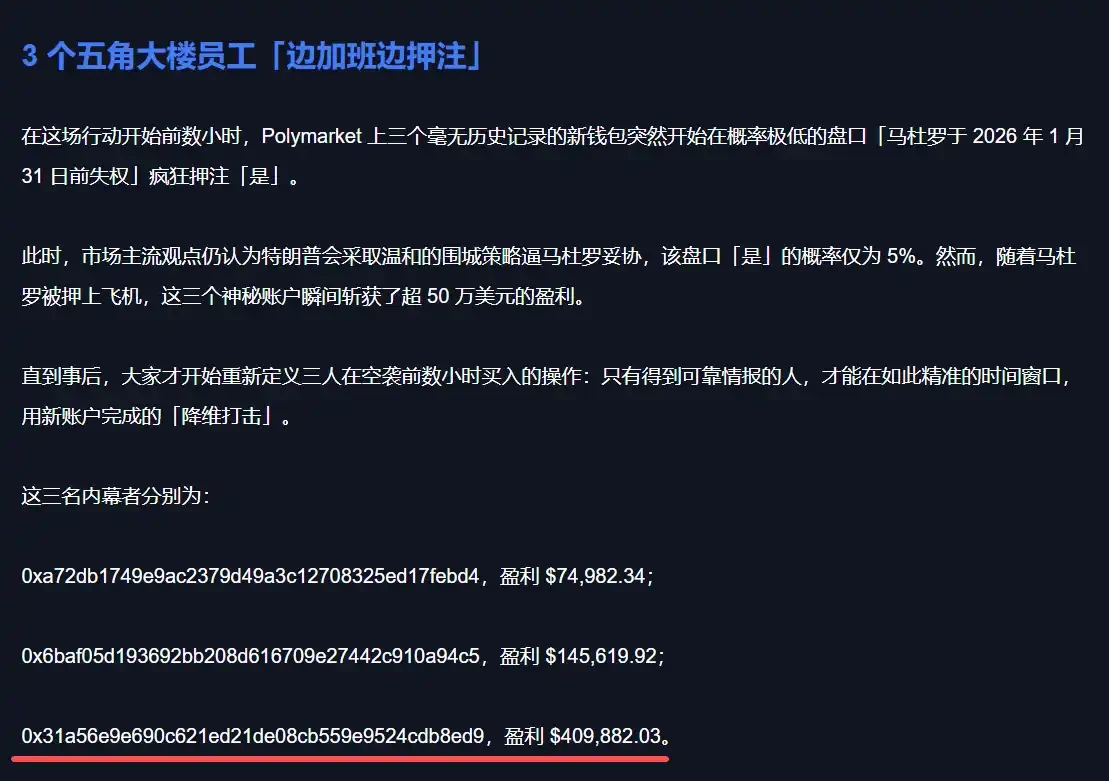
Among them, Van Dyke's account was the most profitable of the five. The account was registered on December 26, 2025, and subsequently placed a series of bets highly correlated with the capture operation, involving topics like "Maduro Steps Down" and "U.S. Military Enters Venezuela," with a total principal of approximately $30,000 and total profits exceeding $400,000.
On the day of the operation, the account withdrew most of its funds, transferred them to an overseas cryptocurrency account, and then funneled them into a newly opened brokerage account.
On January 6, three days after the operation, media outlets began reporting on anomalous transactions related to the event on Polymarket. That same day, the account requested deletion from Polymarket, citing an inability to access the registered email address. Concurrently, the registered email for his cryptocurrency exchange was changed to an anonymous email secretly created on December 14.
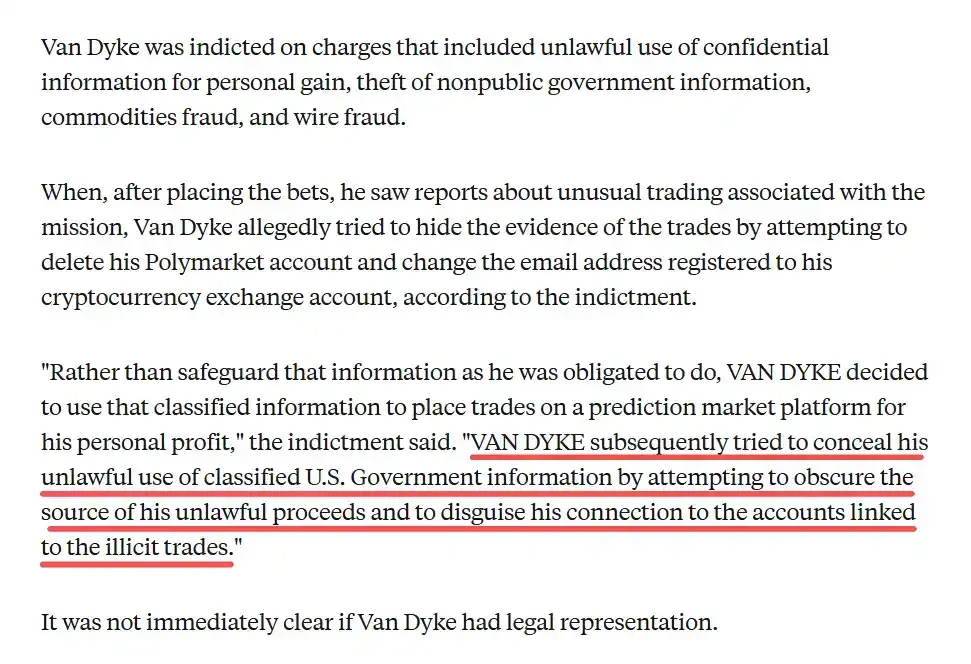
New account, precise position building, withdrawal on the event day, and subsequent attempt to erase traces—this modus operandi is exactly the anomalous pattern we highlighted in our January review.
Today, the DOJ gave this address a name: Gannon Ken Van Dyke.
More Than One Person Involved
Van Dyke's arrest marks the first time the DOJ has formally prosecuted a case of insider trading on Polymarket. However, the story has never been about just one person.
In two reports from January, PolyBeats identified a total of five accounts. Besides Van Dyke, there has been no official investigation into the remaining four accounts:
0xa72db1749e9ac2379d49a3c12708325ed17febd4, profit: $74,982;
0x6baf05d193692bb208d616709e27442c910a94c5, profit: $145,619;
0x168b100d7a6620a2f49a455344c2c006eaf1714b, profit: ~$34,000;
0x168b100d7a6620a2f49a455344c2c006eaf1714b, profit: ~$54,000.
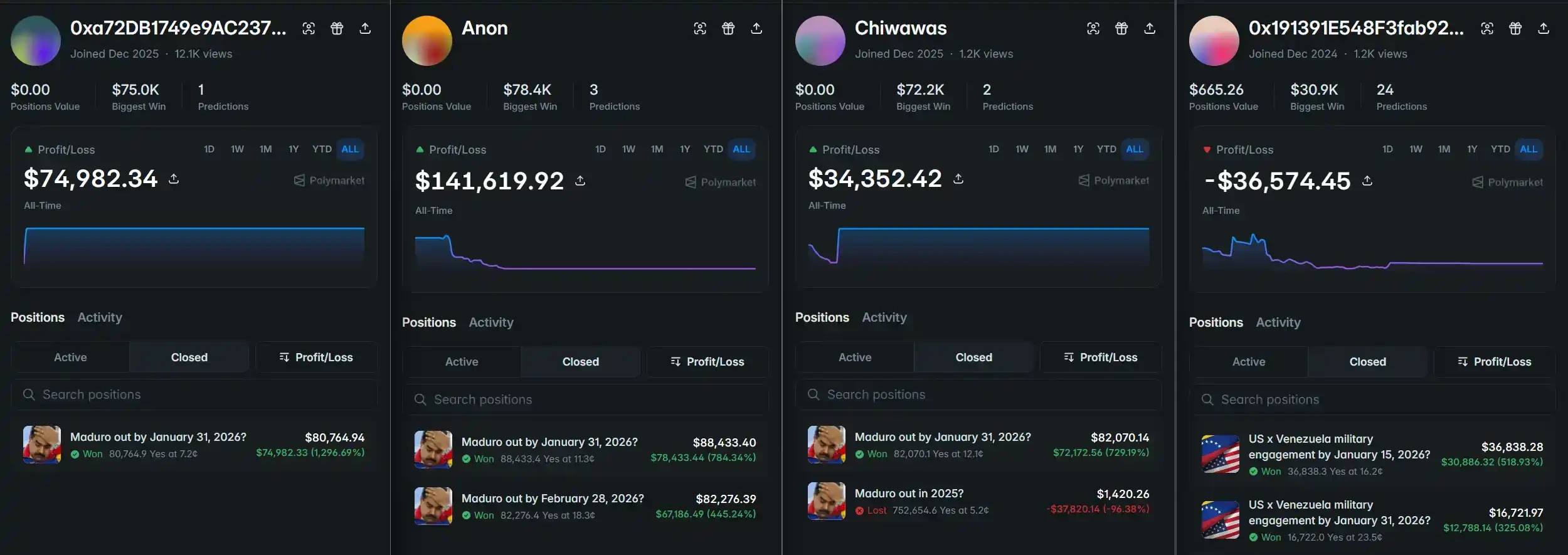
Why haven't these four accounts been apprehended yet?
The most straightforward layer is the profit amount. Van Dyke's profit of nearly $410,000 was the highest among the five, making him the clearest enforcement priority.
A more critical layer is identity. Van Dyke is an active-duty soldier who signed a non-disclosure agreement and directly participated in the operational planning, meaning his identity verification path was extremely short. The true identities and information sources of the other four accounts remain unclear. If they obtained second-hand information, the legal boundaries would be far more ambiguous, significantly increasing the difficulty of prosecution.
Another layer involves the boundaries of Polymarket's reporting system. The platform claims it proactively identified and reported Van Dyke to law enforcement. However, the other four accounts, which also exhibited anomalous behavior, were apparently not reported. The platform has offered no explanation for this discrepancy.
Nevertheless, one factor is changing this landscape.
In March of this year, Polymarket released an enhanced version of its market integrity rules, explicitly prohibiting three types of behavior: trading based on information required by law to be kept confidential, trading based on others' insider information, and participation in related markets by individuals capable of influencing the event's outcome. Alongside the implementation of these rules, this DOJ indictment sends a clear signal to everyone: the platform is willing to cooperate with investigations, records on the blockchain will not disappear, and investigations themselves can span several months.
Nearly four months elapsed between Van Dyke's position building and his arrest. For the other four accounts, and for anyone holding an informational advantage and attempting insider trading on prediction markets, this arrest may be just the beginning.


