Strive Buys Strategy Stock, Bitcoin Treasury Companies Begin Interlocking


- Core View: The article reveals that publicly listed companies, represented by Strive and MicroStrategy, are financing through the issuance of high-yield preferred shares to continuously accumulate Bitcoin, forming a mutually nested, highly Bitcoin-price-dependent "matryoshka doll" financial structure, with systemic risks accumulating.
- Key Elements:
- Strive announced using over one-third of its treasury ($50 million) to purchase MicroStrategy's Bitcoin-collateralized preferred shares (STRC), aiming to obtain interest yields higher than Treasury bonds.
- Both companies finance by issuing high-yield preferred shares (e.g., Strive's SATA at 12.75% APY) and use the proceeds to buy Bitcoin, creating a cycle of "financing - buying Bitcoin - paying interest."
- The sustainability of this model entirely depends on Bitcoin's price not falling significantly; otherwise, they face difficulties in interest payments, creating chain-reaction risks.
- Strive's own stock price (ASST) has fallen 97% from its peak, with its market capitalization far below the net asset value of its Bitcoin holdings, indicating market skepticism about its business model.
- The number of publicly listed companies adopting this "Bitcoin treasury strategy" has surged from less than 30 before 2025 to over 200, showing this model is being widely replicated and interconnected.
Original Author: Kuli, TechFlow
On March 11, a company called Strive announced several things.
It increased its Bitcoin holdings by 179 BTC, bringing its total holdings to 13,311 BTC, valued at approximately $930 million. It raised the dividend rate on its own preferred stock, SATA, to 12.75%. And, it spent $50 million to buy Strategy's preferred stock, STRC.
$50 million, representing over one-third of Strive's corporate treasury.
What does Strive do? It hoards Bitcoin. What does Strategy do? It also hoards Bitcoin.
This situation has become: a Bitcoin-hoarding company is using one-third of its own money to buy stock issued by another Bitcoin-hoarding company.
Strive's Chief Risk Officer, Jeff Walton, posted a tweet saying STRC is a "high-quality credit product with good liquidity and a superior risk-reward profile compared to traditional fixed income." Translation: We think this is better than Treasury bonds.
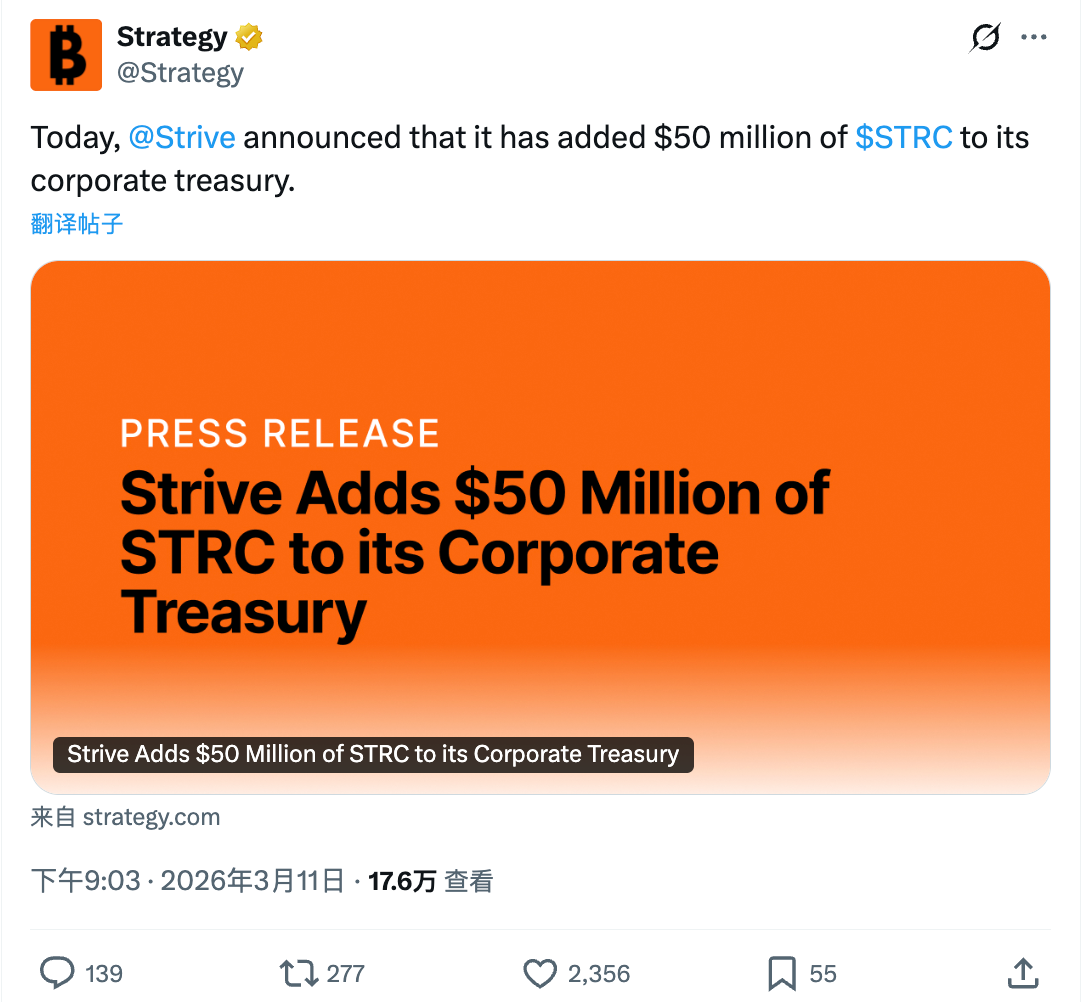
He also did the math, stating that if this $50 million were invested in U.S. Treasury bonds, the annual interest would be a few million dollars. By buying STRC, the annualized return could be $3.9 million higher.
Sounds like a good deal.
But think about it carefully: where does the money for Strategy to issue STRC come from?
Strategy raises funds by issuing STRC and uses that money to buy Bitcoin. STRC can pay you interest, provided Strategy's Bitcoin holdings don't drop too sharply.
Therefore, the underlying logic of Strive's investment is: My hoarded Bitcoin will rise, his hoarded Bitcoin will also rise, and only if his Bitcoin rises can he pay me interest, which I then use to buy more Bitcoin.
This isn't called diversification; it's called nesting dolls.
In Case You Didn't Know Strive
Many people know about Strategy (formerly MicroStrategy), but few know about Strive.
But now, this company holds 13,311 Bitcoin, valued at approximately $930 million, just surpassing Tesla's holdings and ranking around tenth globally among publicly listed companies.
Strive's founder is Vivek Ramaswamy, a second-generation Indian immigrant, Harvard undergraduate, Yale Law School graduate. In 2022, he and a high school classmate founded Strive in Ohio, focusing on asset management and launching ETF funds.
Early investors included PayPal co-founder Peter Thiel and hedge fund manager Bill Ackman.
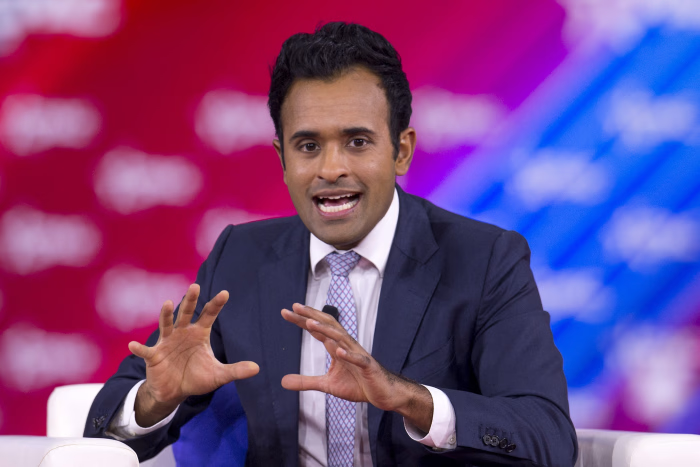
Within a year and a half of launch, its assets under management exceeded $1 billion. But Vivek didn't stay long, resigning in early 2023 to run for U.S. President. He lost the Republican primary to Trump, and this year switched to running for Governor of Ohio. Interestingly, both Trump and Musk have endorsed him...
After Vivek left, the CEO who took over is Matt Cole, who previously managed $70 billion at the California Public Employees' Retirement System, coming from a traditional finance background. But last year, he made a rather unconventional decision.
In September 2025, Cole announced Strive's transformation from a fund company into a "Bitcoin treasury company." In one move, it spent $675 million to buy over 5,800 Bitcoin at an average price of $116,000. In the same month, it announced the acquisition of another listed company, Semler Scientific, bringing its post-merger Bitcoin holdings to over 10,000 BTC.
Half a year later, today, its holdings have grown to 13,311 BTC.
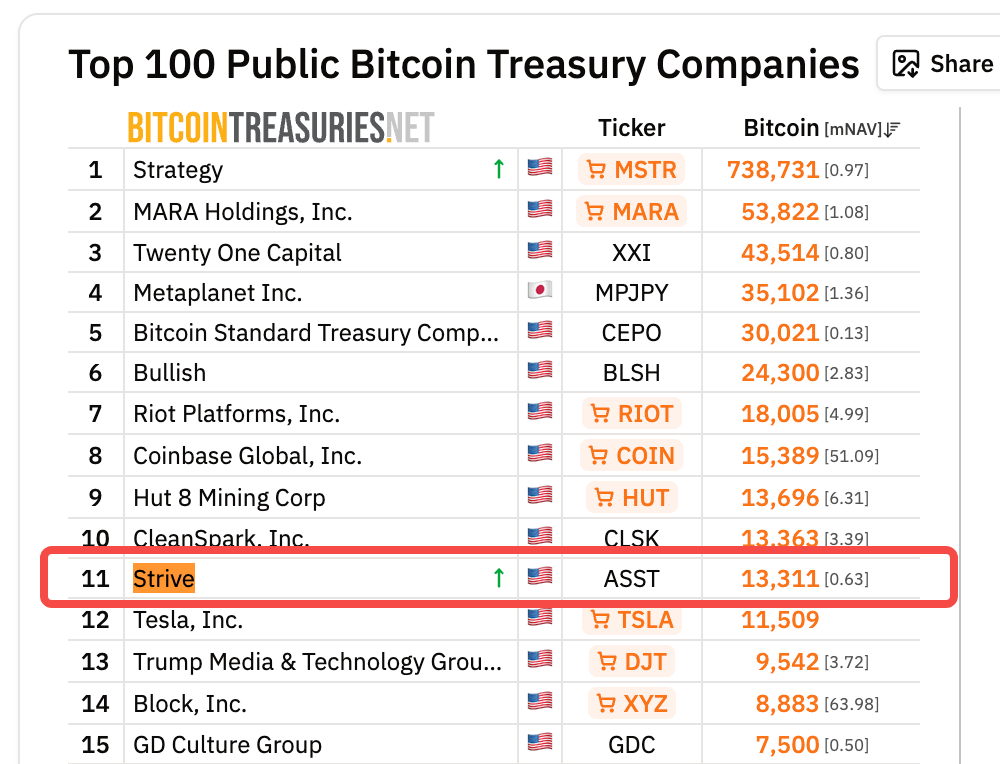
A fund company founded in 2022 became one of the world's top ten corporate Bitcoin holders three years later. The speed is fast, so fast it raises a question:
What money was used to buy these Bitcoins?
Nesting Doll Stock Issuance
Where did Strive get the money to buy Bitcoin? From issuing stock.
Last November, Strive issued a type of preferred stock called SATA. Investors buy it, and Strive pays quarterly interest, currently at an annualized rate of 12.75%. The raised money is used by Strive to buy Bitcoin.
This playbook wasn't invented by Strive. The inventor is Michael Saylor.
Saylor's company, Strategy, holds over 730,000 Bitcoin, making it the world's largest corporate Bitcoin holder. Last year, he launched a similar product called STRC. Investors buy it, and Strategy pays interest, currently at an annualized rate of 11.5%. The raised money is also used by Strategy to buy Bitcoin.
Up to this point, the two companies were playing their own games, with the same logic, independent of each other.
But the transaction on March 11 connected these two lines. Strive spent $50 million to buy STRC.
The chain now looks like this:
Strategy issues STRC to raise money to buy Bitcoin. Strive buys its STRC to earn interest. Strive then issues its own SATA to raise money, continuing to buy Bitcoin and STRC.
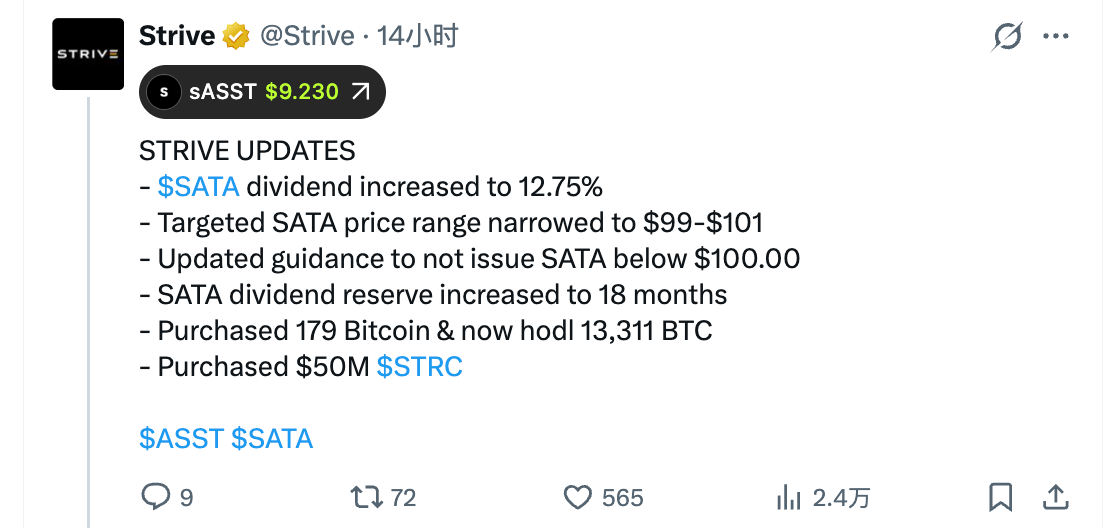
One layer nested within another, each layer paying investors double-digit interest, each layer's confidence in paying that interest stemming from the same thing: Bitcoin must not fall sharply.
If Bitcoin rises, everyone makes money. If Bitcoin falls, everyone's interest payments are at risk, but no single layer can stop losses independently because your asset is someone else's liability.
Three layers of products, three layers of interest, three layers of investors. Underneath it all, one asset: BTC, which must not fall.
Meanwhile, Strive's own stock, ASST, had a 52-week high of $268 and is now below $9, a drop of 97%. On the day it announced buying STRC (March 11), the stock price only rose by 5.52%.
In late October last year, ASST once fell below $0.80, nearly 50% below the net asset value of its Bitcoin holdings.
So the picture is this: a company holding $930 million worth of Bitcoin has a market capitalization of just over $500 million. Its stock price has fallen 97% from its peak. But management is doubling down—buying more Bitcoin, buying STRC, raising SATA's dividend rate.
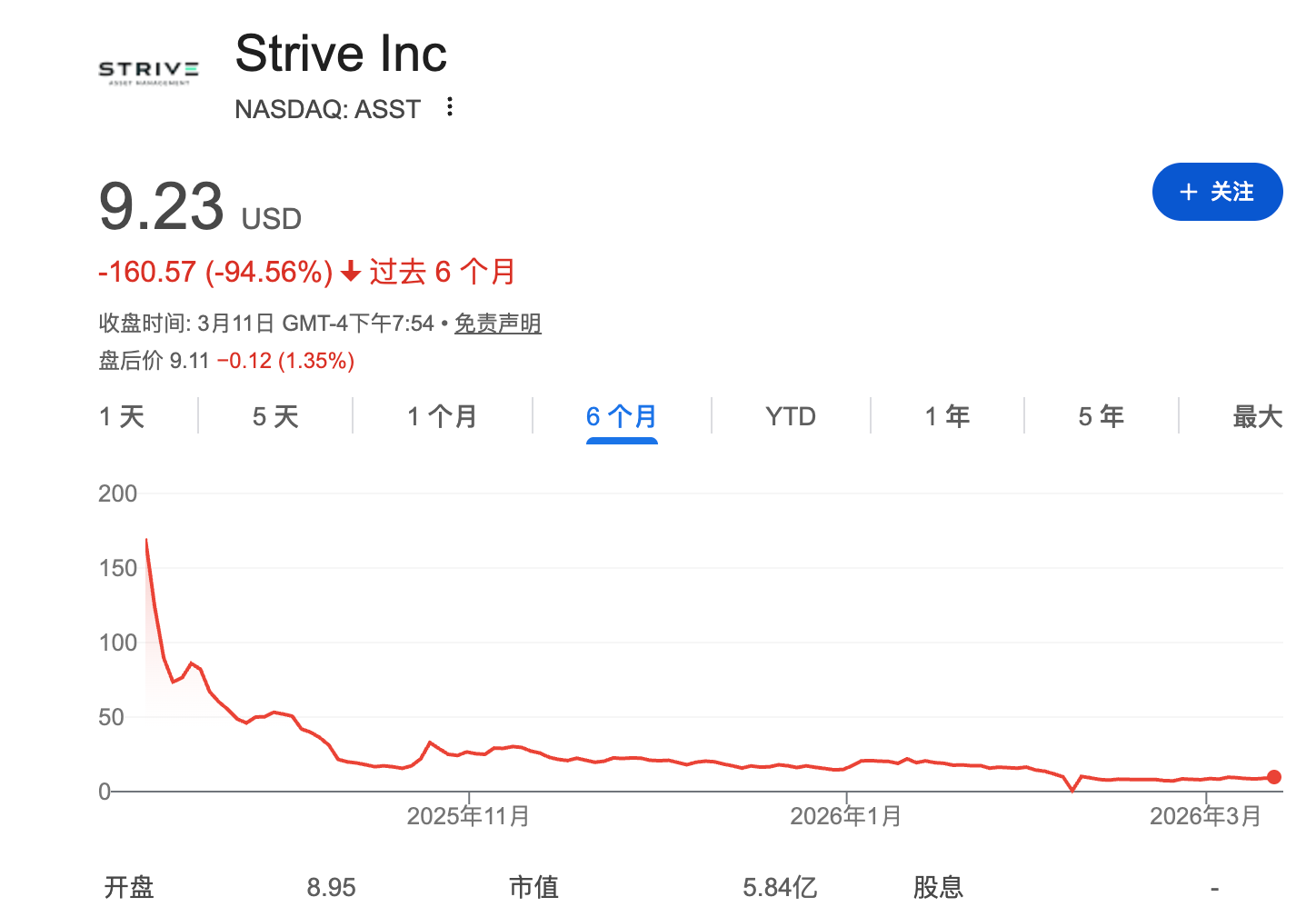
However, Strategy's own stock, MSTR, has been declining for eight consecutive months this year. Bitcoin has retreated significantly from last year's highs.
But everyone on this chain is doubling down.
Strategy bought 66,000 new Bitcoins in the first two months of this year, more than in any full year before. Strive, while increasing its Bitcoin holdings, also spent $50 million on STRC. SATA's dividend rate has been raised from 10% at issuance to 12.75%. STRC's dividend rate has also been raised from 10% to 11.5%.
Rates keep going higher, meaning it's getting harder to retain investors, so the price has to be increased.
Data shows that there are now over 200 publicly listed companies globally that have announced adopting a "Bitcoin treasury strategy." Before 2025, this number was less than 30.
Saylor invented a new playbook, and 200 companies copied it. Now, they are starting to buy each other's issued products.
When everyone's bets are on the same table, the difference between "structured finance" and "concentrated gambling" might just be a few extra arrows drawn on a PowerPoint slide.