After Mainland China's Document No. 42 Sets the Tone, What is the Best RWA Token Standard?


- Core Viewpoint: The 42nd document issued by the People's Bank of China and seven other departments formally recognizes and regulates the tokenization of real-world assets (RWA), separating it from virtual currency regulation and providing a path for compliant development. However, the key to RWA's success lies not only in regulatory clarity but also in whether its technical standards and product design can truly meet market demand, enhance asset liquidity, and optimize user experience.
- Key Elements:
- Regulatory Clarity: Document No. 42 clearly defines RWA and establishes a filing and compliant application path for it, marking the formal recognition of this business model by regulators and its differentiated management from virtual currencies.
- Market Status: The scale of on-chain RWA assets has grown 5-fold within a year, reaching $23.7 billion, becoming a market that cannot be ignored, with bonds and stocks being the primary application scenarios.
- Standard Evolution: The industry has evolved from attempts like HK ABT, ERC-3525/3475, which followed a "standards first, business later" approach, to successful practices like AAVE's aToken and Lido's stETH, which follow an "application first, optimization later" model, with the latter focusing more on market adaptability.
- Key to Success: The success of aToken (scaled balance mechanism) and stETH (daily automatic rebase) lies in ingeniously solving issues related to on-chain yield generation, user experience, and wallet compatibility, rather than pursuing overly broad and comprehensive standards.
- On-Chain Stock Exploration: Platforms like Ondo and xStock use a "on-chain shares + Multiplier scaling" Rebase mechanism for stock tokenization and have gained support from mainstream DEXs and wallets, aiming to leverage the 24/7 trading feature of blockchains to achieve global liquidity and price discovery.
- Core Value: The true value of RWA lies in utilizing blockchain technology to achieve asset fractionalization, enhance liquidity, increase transparency and automation, and fill the time and liquidity gaps in traditional financial markets.
On February 6, 2026, the People's Bank of China, in conjunction with eight other departments, once again issued the [Yin Fa (2026) No. 42] document. There has already been much market interpretation. This article aims to provide a more vertical analysis by combining it with the current state of the RWA (Real World Assets) and on-chain markets.
Looking at on-chain data, from early 2025 to early 2026, on-chain RWA-type assets surged fivefold, reaching a scale of $23.7 billion, a market that can no longer be underestimated.

1. How to Understand Document No. 42
In the author's view, reading the original text together with the attached document "Regulatory Guidelines on the Tokenization of Domestic Assets for Overseas Issuance of Asset-Backed Securities" reveals a lot. The core point is that Document No. 42 dedicates significant space to defining and regulating "Real World Asset Tokenization" (RWA). This essentially amounts to the regulatory authorities formally acknowledging RWA as a business model and providing a path for compliant application and filing.
There are three key pieces of information. I will present them in the original text and then interpret the context.
First, the precise definition of RWA:
"Real World Asset Tokenization refers to the activity of using cryptographic technology and distributed ledger or similar technologies to convert ownership, income rights, and other rights of assets into tokens (or other equity, debt instruments with token characteristics) for issuance and trading."
With the definition established, how is it applied? The text continues:
"Activities related to specific financial infrastructure, approved by the competent business authorities in accordance with laws and regulations, are exempted."
So, who specifically can participate? Therefore, there are also clear procedural regulations for applying and utilizing RWA assets:
The domestic entity with actual control over the underlying assets must file a record with the China Securities Regulatory Commission (CSRC), submitting materials such as a filing report and the complete set of overseas issuance documents, fully explaining information about the domestic filing entity, underlying asset information, and the token issuance plan.
Therefore, in the author's view, combining these points, it can be said that RWA assets have been clearly separated from virtual currencies, which were previously strictly targeted, and the two are not subject to the same management framework.
The significance also lies in fully addressing the previous regulatory gray area. After all, the biggest obstacle for domestic Chinese assets to go global via RWA tokenization was not a technical or market problem.
Furthermore, RWA tokenization largely follows the existing securities regulatory framework. This also benefits financial institutions, as they can legally and compliantly engage in RWA business. Objectively speaking, RWA issued by standard financial institutions is a good way to prevent and eliminate risks.
Under such constraints in mainland China, arbitrary asset issuance can be avoided. Treating RWA like a Meme would instead damage the market.
2. The Evolution of Global RWA Standards
Alongside the regulatory definition in mainland China, how is the current global RWA market developing? Once regulatory issues are alleviated, subsequent application becomes a reality that must be faced directly.
In fact, the current market has long been in an era of chaotic token standard battles.
This complexity has led to industry-wide compatibility challenges for RWA. Let's delve into the current mainstream token application standards for RWA.
This article will start with HK ABT (asset-backed token) from 2022, move to ERC-3525 and ERC-3475 centered around bonds, then to AAVE's aToken, stETH, and AMPL from the DeFi era, and finally examine how leading on-chain stock platforms like Ondo and xStock handle the characteristic migration for stock tokenization.
2.1 HK and ABT
The Hong Kong government's "Policy Statement on Development of Virtual Assets in Hong Kong," released on October 31, 2022, highlighted asset-backed tokens (ABT).
Conventionally, tokens are categorized into four major types, distinguished by their purpose and source of value.
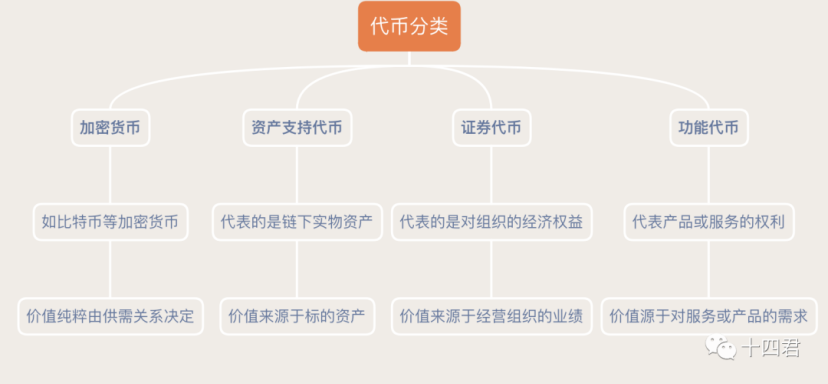
In fact, the thinking behind the mainland document and Hong Kong's past practices are continuous. They both necessarily involve off-chain physical assets or rights as the underlying value.
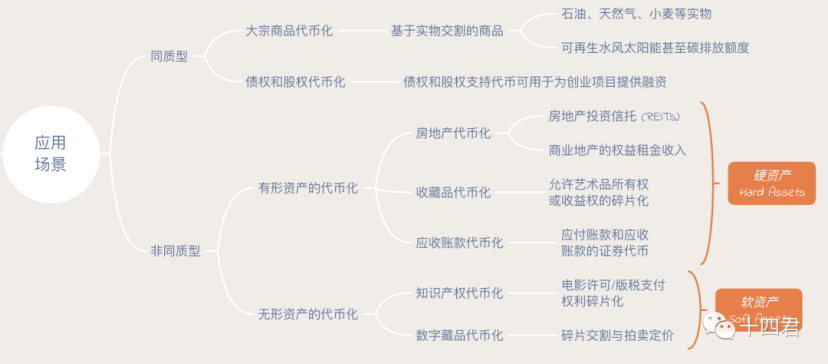
In this way, through compliant tokenization, on-chain characteristics enhance the assets:
- Fractionalization: Refers to dividing property rights into smaller units for easier trading, pricing, and circulation.
- Liquidity: Defined by the speed at which an asset can be converted to cash, with order books broadcast and shared on-chain.
- Cost Efficiency: When trading based on blockchain smart contracts, costs associated with external third parties are eliminated or significantly reduced.
- Automation: Blockchain-based smart contracts do not require these manual interactions, providing a trusted technological foundation.
- Transparency: One of the most notable features of on-chain transactions is immutable record-keeping.
From the audience's perspective:
- For institutions, the splitting and conversion of large orders bring efficiency and cost benefits from fractionalized liquidity.
- For users, it provides a transparent and automated trusted environment to ensure their rights and interests.
The most intuitively valuable applications currently are stocks and bonds, as both can perfectly adapt to the aforementioned advantages of liquidity, automation, and fractionalization.
3. Bond Scenario Standards: ERC-3525 and ERC-3475
This type of asset saw significant activity around the time of HK ABT. The industry standards that emerged are ERC-3525 and ERC-3475:
- ERC-3525 focuses on the management of semi-fungible tokens, perfecting the numerical-level combination and splitting of assets, emphasizing the on-chain migration of traditional financial assets.
- ERC-3475 focuses on the definition of semi-fungible tokens, providing more standardized definitions for contracts with low standardization, emphasizing the on-chain migration of traditional commercial contracts.
Objectively speaking, these two standards are not widely applied. This is because they were standards first, business later, rather than standards summarized from existing business practices. Consequently, their actual influence has diminished (far less than aToken and stETH, which will be discussed later).
In the author's opinion, this is because the original intention behind such design standards aimed for comprehensiveness. For example, ERC-3475 (as shown below) is a representative of being all-encompassing, which directly leads to high barriers to user understanding and high barriers to app adaptation.
Ultimately, taking too big a step, writing everything equals writing nothing, and it's understandable that there are few market applications.
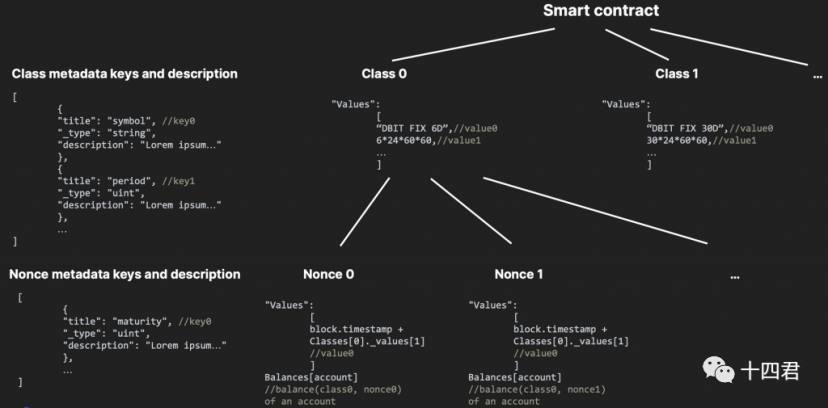
For a detailed interpretation, see: Reviewing the Five Major Token Standards: Are They Sufficient to Support Hong Kong's Web3 Development Pilot?
4. Bond Scenario Applications: aToken & stETH
Instead of the "standard first, application later" type, let's look at the model of "application first, standard later."
4.1 Real-Time Compound Interest Model: Aave's aToken
Aave is a top-tier DeFi infrastructure in the Web3 industry, facilitating on-chain asset staking, lending, and yield generation. aToken is the staking certificate, with its core functions as follows:
- Proof of Deposit: Holding aToken is equivalent to the user owning a corresponding amount of assets in the Aave protocol, and these assets automatically accrue interest over time.
- Lending Mechanism: aToken can be used to evaluate a user's deposit amount and determine their borrowing limit.
- Automatic Interest Distribution: The quantity of aToken automatically increases based on the current deposit interest rate.
- Transferability and Liquidity: Users can transfer or collateralize aToken in other protocols to obtain more yield or use them in other DeFi products.
Looking at it this way, each point is also the path RWA must take in the future.
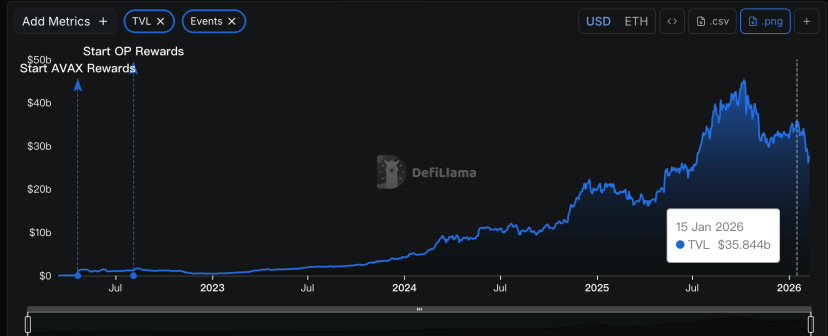
Examining its current market status, it continues to thrive. The total value of aToken assets has reached approximately $30 billion.
Why is aToken so successful?
Clearly, with nearly 100% growth annually, it can be called a model of success.
Ultimately, it's because aToken is already very well-adapted to the existing market. Originating from Aave, they understand that adaptability is a key path for development in the blockchain market. The two standards mentioned earlier ultimately got stuck on adaptability, as existing asset dashboards and wallets found it difficult to integrate with such asset types.
Adaptability is not a simple term because it has a key problem to solve: if on-chain assets cannot generate yield, a significant part of their practical meaning is lost.
But if they are to generate yield, how should this interest be given to users?
After all, everyone's staking duration is different, and the staking interest rate for each period varies. Different assets have different market demands, leading to different lending spreads.
If interest is simply transferred to users periodically, the project's costs and management complexity would increase significantly, ultimately passing the cost to users.
Some argue this is an on-chain performance issue, leading to the creation of new high-performance public chains to rival Web2 server performance, but they then face the cost of user migration.
Aave's answer is to embed the interest within users' daily transactions.
aToken essentially uses a Scaled Balance mechanism to calculate the user's actual balance:
Liquidity Index = Initial Index × (1 + Interest Rate × Time)
This logic ensures that interest is automatically calculated and accumulated during transfers (whether sending or receiving), triggering new minting events to increase the supply.
For the project, this reduces one distribution transaction. Users see their interest accumulate almost imperceptibly; even if not seen, it is calculated in the next operation, so there is no loss.
This clever design, requiring just a few lines of code, is very native in its thinking.
Moreover, this line of thinking paved the way for the inheritance and evolution of subsequent on-chain asset standards like stETH, Ondo, and xStock.
4.2 Rebase Model: Lido's stETH
Building on the previous interest model, stETH simplifies the logic of staking and withdrawal, moving away from interest + time accumulation to a more streamlined share-based model.
stETH = User's Staked ETH Amount * (Protocol Total Assets / Internal Total Shares)
You might wonder, how can it have no interest? It's all staking for yield. Someone else staked for 1 year, I stake for 1 day; shouldn't the shares change?
This is due to Lido's daily automatic rebase mechanism. For example:
- Suppose I bought 1 ETH a year ago and joined a total staking pool of 100 ETH. My share is 1%.
- Lido daily retrieves staking rewards from the Ethereum Beacon Chain and executes a rebase on the protocol.
- When I withdraw after a year, I naturally get 4% (assuming 4% APR).
- If I buy this 1% share on the last day, I am buying based on a share that has accumulated costs for nearly 364 days, approaching 104% of the original cost, and can only benefit from one rebase.
Why design it this way?
Because making stETH's yield automatically credited daily, without waiting or manual claiming, is its greatest convenience.
The previous aToken required a transaction to realize the yield, while stETH allows daily automatic balance updates, making it easy for various wallets to be compatible.
This ultimately allows users to see the interest increase on their balance sheet, aligning with our conventional concept of saving money: interest automatically credited daily, providing peace of mind.
Comparing the two, it ultimately comes down to different scenarios.
Aave is lending, with interest rates fluctuating significantly in real-time; high-rate periods can yield a day's worth equal to a month. In contrast, Lido's fixed income is smooth and steady, less concerned with one day's interest, allowing for further optimization of the user experience.
Are these two suitable as token standard approaches for the RWA era?
The author believes neither is perfectly suitable, but they offer valuable lessons. Let's look at today's final protagonist: the on-chain stock model.
5. On-Chain Stock RWA Scenario
Although not large in the overall RWA total value market ($900M vs $27B), due to the characteristics of stocks, it is one of the most promising scenarios for trading liquidity and on-chain application imagination.
The main players here are: Ondo and xStock.
We can see that over the past six months, some of the top DEXs and wallets in the market have been investing here. Objectively speaking, these leading platforms seem to have a surprisingly consistent judgment regarding future trends.
- 2025.7.1 Jupiter supports xStock trading and begins large-scale promotion.
- 2025.9.25 Solana officially launches a new RWA Twitter account.
- 2026.1.22 Jupiter partners with Ondo Finance to list over 200 tokenized stocks.
- 2026.1.24 Binance Wallet supports Ondo asset trading in professional mode.
- 2026.2.3 MetaMask launches tokenized U.S. stocks and ETFs, stating the market is shifting on-chain.
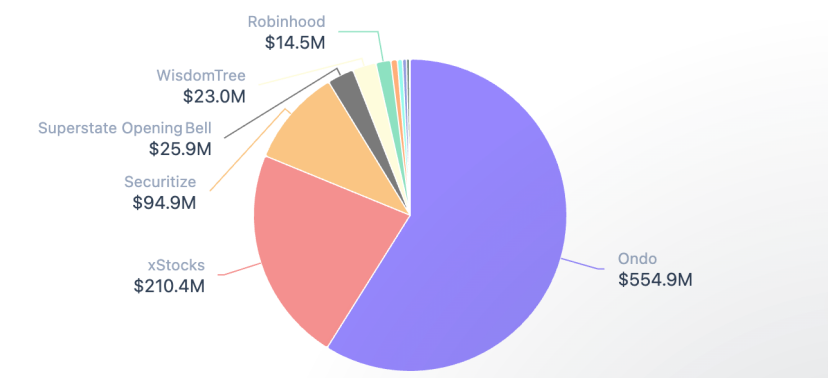
They are actually based on a share-based Rebase model, specifically an "On-Chain Shares + Multiplier Scaling" Rebase mechanism.
On the Solana chain, this mechanism is an extension within its mainstream Token-2022 standard. Each token can have a parameter called Multiplier set by the project. The balance users hold is called the raw amount, meaning the share.
Then, in scenarios like stock splits, reverse splits, or dividend distributions, the project dynamically adjusts the Multiplier parameter in the token metadata, modifying the display amount multiplier.
This creates a divide. Users with wallets that don't support this parameter might feel something is off with their assets. Supported wallets will show the UI amount, i.e., the amount displayed on the client.
6. Summary and Reflections
The preceding text, spanning over four thousand words, has reviewed the leading players and evolutionary paths in both mainstream on-chain asset tokenization and real-world asset tokenization.
Various localized reflections have been mentioned in each section. Now, it's time to return to the theme of "cold thinking."
Because, looking over a longer timeframe, RWA has been around for nearly 10 years.
- Early Exploration, 2016-2019: The experimental phase of asset tokenization was primarily stablecoins.
- Initial Institutional Phase, 2020-2022: RWA entered the DeFi lending space, i.e., the Tokenized Stocks attempted by Binance/FTX, which were shut down not long after.
- Compliance Phase, 2023-Present: Compliance began to clarify. Some RWA assets expanded rapidly (stablecoins, U.S. Treasuries, etc.), and new asset types and platforms gained traction.
Therefore, in the author's view, the mainland's definition of RWA is objectively positive, but not entirely positive. It could even be said to be a belated notification. Furthermore, Hong Kong previously introduced a similar system, ABT, but has it developed significantly?
Clearly, compared to the state in the other hemisphere, it hasn't gained much traction. This is closely related to Hong Kong's very cautious management and licensing approach. Whether to act boldly