Don't just focus on the RWA track, the oracle track is also worth paying attention to.



Original author: Asher Zhang, BitpushNews
On July 24th, Worldcoin, a cryptocurrency company founded by Sam Altman, CEO of OpenAI, announced the launch of the WLD token, which received a warm welcome in the market. It accelerates the expansion of on-chain credit by establishing an on-chain ID. This will greatly promote the development of credit oracle. So, what are the application scenarios for credit oracles? And what are the mainstream oracle projects in the cryptocurrency market?
Why is the oracle track worth attention?
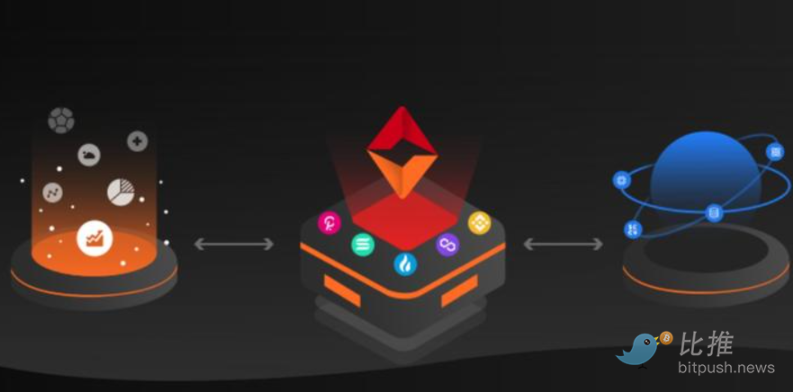
Real-world assets (RWA) are essentially introduced into the blockchain to become on-chain assets, further transforming off-chain transactions into on-chain transparent transactions. In the process of transactions, off-chain data needs to be transmitted to the blockchain, and this is where oracles become indispensable. Oracles are a technology that brings real-world data into the blockchain, used to obtain and verify external data on the blockchain. In the previous bull market cycle, Chainlink, a leading oracle, saw a sharp rise mainly benefiting from the "DeFi Summer." Recently, the RWA track has become very popular, with various real-world assets being brought onto the chain, further increasing the demand for oracles. Therefore, in the future, when the RWA track becomes extremely hot, the oracle track is worth paying attention to.
In addition to the RWA track, oracles in specific areas are also worth attention. For example, L2, credit, NFT, and DID all have potential opportunities. L2 oracles mainly consist of native solutions in the op/zk ecosystems, with low latency and security being the core concerns, and cheap price feeds being relatively secondary. Credit and DID oracles are more likely to explode in the next bull market, as will be mentioned later.
How to classify the oracle track?
The oracle track is actually a very extensive track, and it can be classified differently according to different scenarios and other factors.
In terms of oracle form, it can be divided into software oracles and hardware oracles. In terms of data sources, it can be divided into centralized oracles and decentralized oracles. Centralized oracles usually integrate data from only a single trusted third party, such as government departments, official institutions, reputable companies, etc. Decentralized oracles refer to oracles with distributed consensus mechanisms, also known as consensus oracles.
In addition, there are also oracle machines and TWAP. An oracle machine is a special form of decentralized oracle, where the node network consists not only of regular nodes, but also of certain trusted institutions as nodes, such as dYdX and 0x, which are included in the node network of MakerDAO's v2 version of the oracle machine. TWAP is a price oracle introduced by Uniswap. Its data source is entirely based on the transaction data of the Uniswap protocol itself, and the data retrieval and processing are also done entirely on-chain. The principle of TWAP is based on the token price at the last transaction of each block, combined with the block time, to calculate the total sum of a token's prices throughout the history of the protocol, so that an average price can be recalculated for use.
What are the mainstream oracle projects?
Chainlink
Chainlink is a leading project in the field of decentralized oracles, providing middleware that allows blockchain smart contracts to call external data. Chainlink is the world's first decentralized oracle, with clients including Google Cloud and Oracle, among other top internet companies. Compared to other oracle projects, Chainlink's fees are relatively high.
Band Protocol
Band Protocol is an oracle project running on the Cosmos blockchain. Band's most distinctive feature is its cross-chain oracle solution, which extracts data from web-based APIs. Compared to Chainlink, Band Protocol is cheaper and can directly access external data, but the Band Protocol ecosystem has relatively few projects.
UMA
UMA is an economics-driven oracle. The project has two main technical features: the Data Verification Mechanism (DVM), which is a decentralized oracle service, and priceless financial contract design for creating synthetic tokens. The DVM designs a mechanism to ensure that the cost of attacking the oracle exceeds the potential profit. Priceless financial contracts can function without on-chain price feeds, and by minimizing the use of on-chain oracles, they reduce the frequency and scope of oracle attacks.
API 3
API 3's oracle solution allows APIs (data providers) to operate their own oracles, without intermediaries such as ChainLayer and LinkPool.
Tellor
Tellor combines PoW mining and PoS staking hybrid mechanism to provide secure and decentralized data for DeFi protocols. The drawback of Tellor is that it cannot retrieve data in real-time, and storing data on Ethereum is relatively expensive.
NEST
NEST is a distributed price oracle that generates prices through bilateral quotes from miners, which are then directly generated on-chain if validators perceive a deviation between the quote and the market price, allowing for arbitrage. In contrast, other oracles represented by Chainlink form oracle data by "feeding data" from distributed nodes to on-chain contracts.
Other oracle projects include the aggregated cross-chain oracle PlugChain, as well as the decentralized oracle ADAMoracle that supports wide-area node feeding.
How will the oracle track develop in the future?
Currently, the most criticized aspect of oracles is the credibility of the data source. This is because many oracles still use off-chain data, which is generated under a centralized mechanism. Perfect oracles still have a long way to go, and the solution proposed by Vitalik, the founder of Ethereum, seems to be more practical. Vitalik proposed a proposal titled "Can Oracles Participate in Common Staking? How Can Class RAI Systems Safely Support the Staking of ETH", which is expected to address potential risks in the malicious behavior of oracles and is relatively easier to implement. In this article, Vitalik proposes three solutions: 1. Oracles as stakers; 2. Oracles as 2-of-2 stakers; 3. Gradually secure semi-trusted oracles. These three solutions have their own advantages and disadvantages in terms of implementation difficulty, prevention of bad oracles, protection of adverse CDP holders, and oracle operating will. However, Vitalik states that solution 1 seems to be more easily implemented in the short term and will become an interesting supplement to earn other staking income. But solutions 2 and 3 seem to require less trust and are more durable, have a lower level of trust in oracles, and better maintain the decentralization of staking. Therefore, in the long run, Vitalik leans towards choosing the latter two solutions.
From the perspective of application areas, with the expansion of on-chain credit, credit oracles may be the most worth paying attention to in the next bull market. So, in which application scenarios are credit oracles likely to land first? They are most likely to focus on seven major application scenarios: legal identity proof, social identity proof, creation proof, funding proof, social reputation proof, personality proof, and interaction proof. Among them, the most worth paying attention to are social identity proof, creation proof, and social reputation proof.
Outlook for the oracle track
As a bridge between the blockchain and the real world, oracles are still in the early stages of development. In the future, more efficient and secure oracle solutions will continue to emerge; and with the development of the blockchain industry, more assets and application scenarios will be added to the chain, expanding the application areas of oracles, such as finance, insurance, supply chain, Internet of Things, etc. In addition, cross-chain interoperability is also the most important trend in the current blockchain industry, so it is highly likely that oracles will achieve cross-chain data transmission and verification between different blockchain networks in the future, breaking the existing isolation and improving the liquidity and efficiency of the entire blockchain ecosystem.