






The development status of MakerDAO, shifting from classical DeFi projects to RWA, what is it?


Original Author: Jiang Haibo, PANews
Maker is transitioning from a classical DeFi protocol to the direction of RWA (Real World Assets). After raising the DSR (DAI Savings Rate) to 3.49%, it finally allows ordinary users to earn profits from US government bonds through top DeFi protocols.
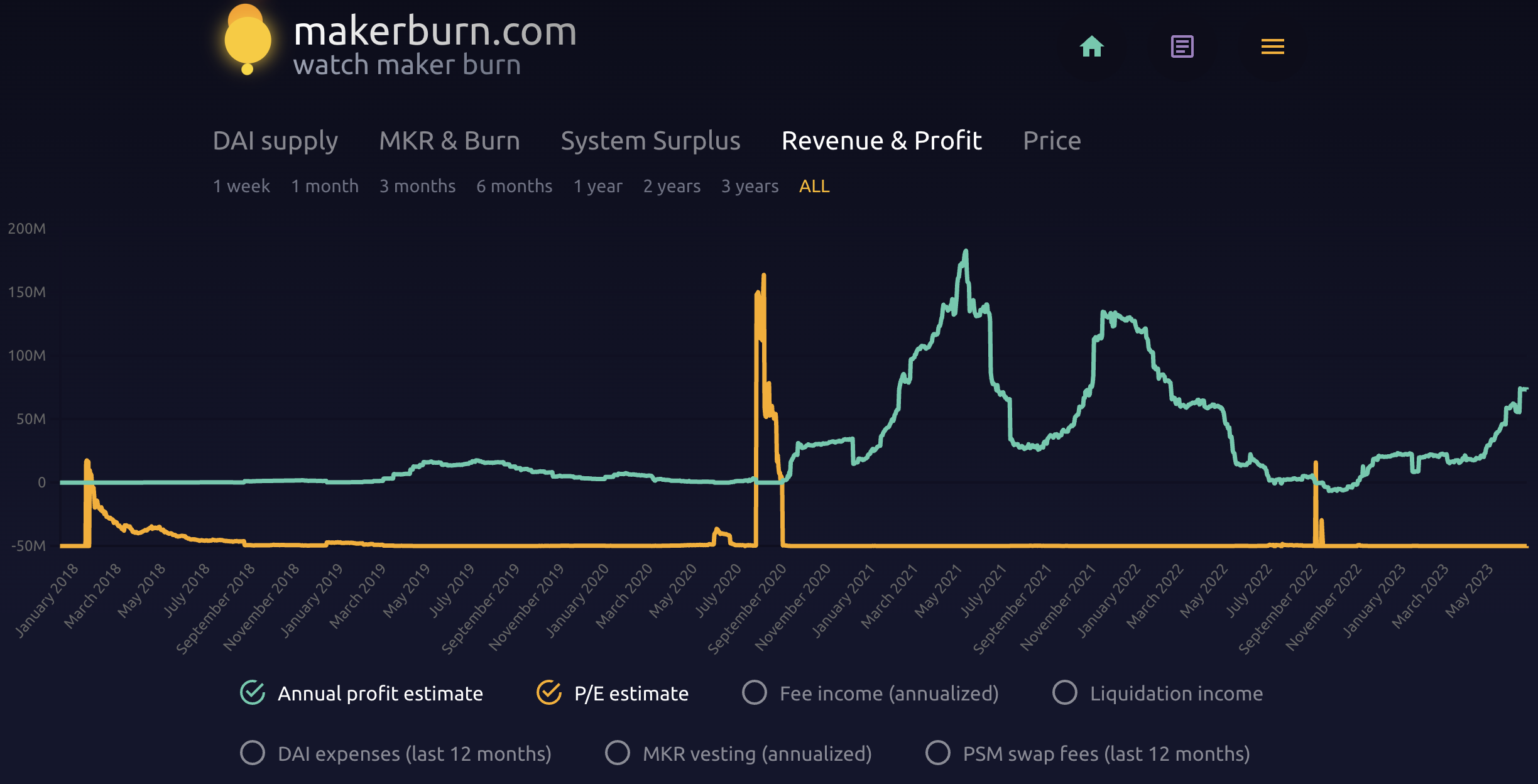
Recently, MakerDAO has shown excellent performance in various data. According to the data from makerburn.com, as of June 29th, Maker is expected to generate a profit of $73.67 million per year, which is the highest value in over a year. The current P/E ratio is 8.43, also the lowest in history, making it competitive among DeFi projects.
Various Data in Maker
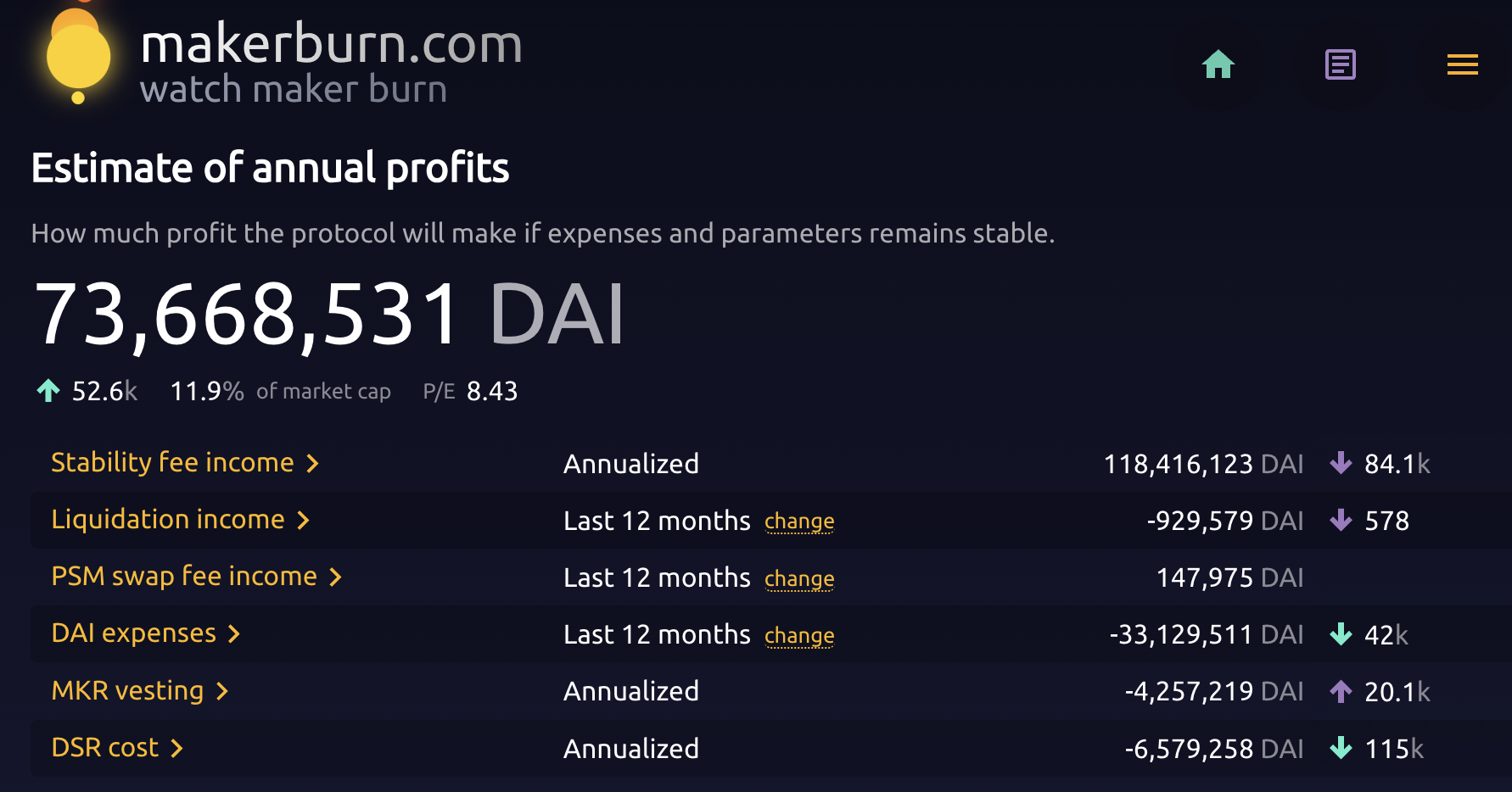
As shown in the following figure, MakerDAO is expected to generate a net profit of $73.67 million in a year. Based on the current data, Maker's annual stable fee (including RWA) income is expected to be $118 million, expenses in MKR equivalent to $4.26 million, DSR expenses forecasted at $6.58 million, liquidation expenses in the past year at $0.93 million, PSM transaction fee income at $0.15 million, and DAI expenses at $33.13 million.
Expected returns from Maker and crypto-backed lending are increasing. On one hand, Maker has been increasing its investment in RWA over the past year. With short-term US bond yields exceeding 5%, Maker is using over $2 billion of stablecoin reserves to purchase US bonds or generate income through other means (Coinbase Custody and GUSD PSM).
On the other hand, the rise in US bond yields has prompted Maker to increase the minimum interest rates for DSR and crypto assets such as ETH and stETH from 1% to 3.49% on June 19th. Therefore, the expected returns from borrowing DAI through overcollateralized crypto assets in Maker have also increased recently.
In addition, a series of cost reduction and efficiency improvement measures are being implemented as part of the Maker Endgame Plan. As of June 29th, this month's DAI expenditure is only $1.9 million, compared to an average monthly expenditure of about $5 million from March to May this year. Since the DAI expenditure refers to the actual expenditure in the past year, this data has not yet been reflected in the increase in profits.
Transformation of Maker's Position with Circle and other Stablecoin Issuers
A year ago, 51.7% of DAI issuance came from USDC in PSM, which led to criticism of Maker for bearing centralized risks of USDC without capturing the value. Meanwhile, Circle, the issuer of USDC, used the dollar reserves for purchasing US bonds to generate income. With the progress of Maker in RWA, this situation has changed, and currently only 8.8% of DAI collateral is USDC in PSM.
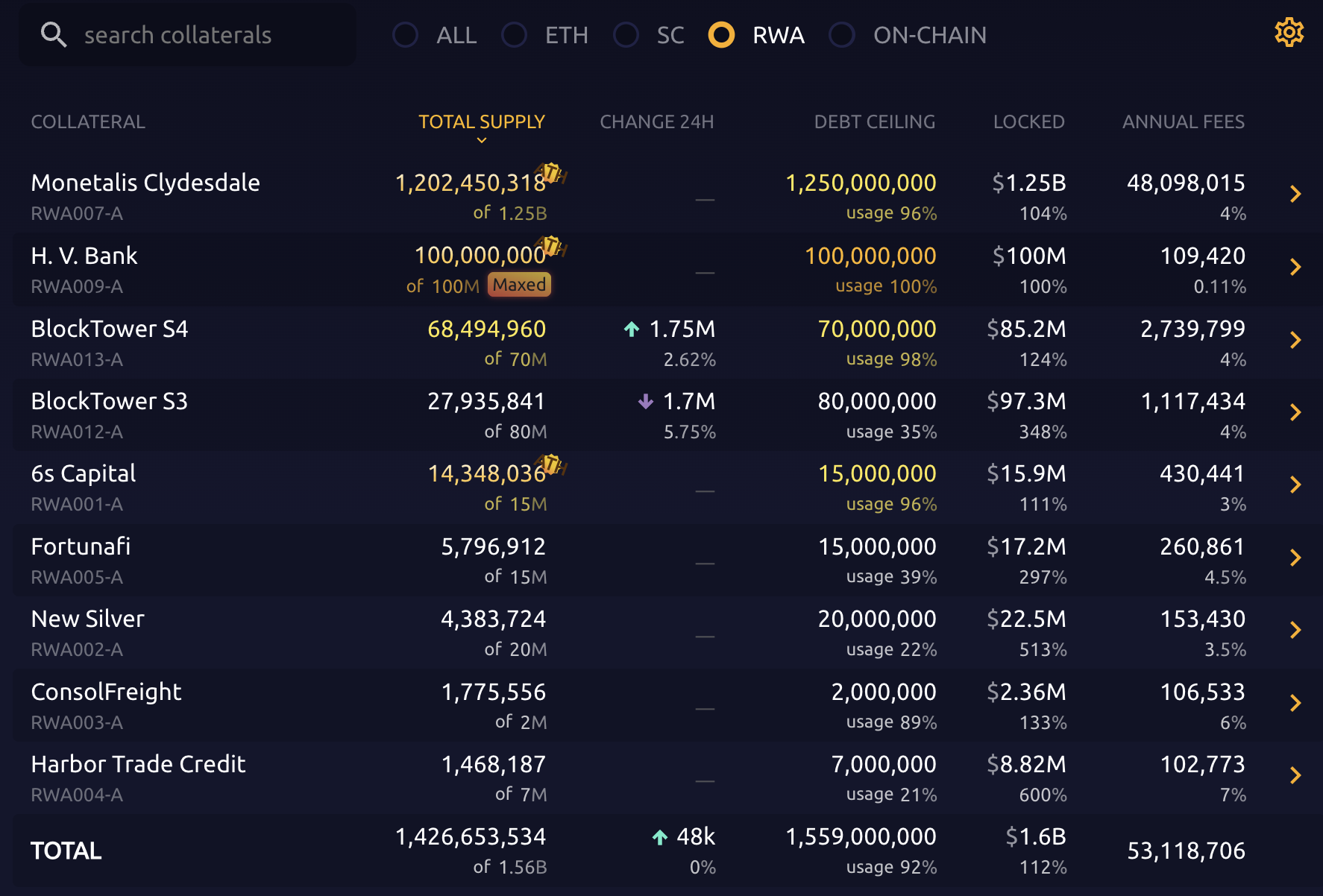
The RWA page of Makerburn displays that the DAI minted by RWA achieves 1.42 billion, generating approximately $53.11 million in revenue per year. In addition, according to RWA 014 stored in Coinbase Custody, the 500 million USDC generates an annual income of about $13 million; the 500 million GUSD in the PSM generates an annual income of about $10 million.
Currently, the unused stablecoins in the PSM include 500 million USDP and 414 million USDC. The USDP and GUSD in the PSM have reached the set limit of 500 million, with Maker PSM holding 50.5% and 88.5% of the total circulation of these two stablecoins respectively.
Due to concerns about centralization and security issues, Maker has planned to lower the limits of USDP and GUSD in the PSM. USDP will be used in RWA 015, and the upper limit of GUSD in the PSM may be reduced to $110 million.
Maker will first redeem stablecoins such as USDC in PSM for US dollars before using them to purchase US Treasury bonds, a process that has also accelerated the reduction in the issuance of USDC over the past year. As Maker PSM is already the major holder of USDP and GUSD, reducing or even discontinuing these two stablecoins would have a greater impact on their issuers.
During periods when short-term Treasury bond yields exceed 5%, Maker will increase the DSR to 3.49%. Holders of stablecoins such as USDC can exchange them for DAI at a 1:1 ratio through PSM, and Maker will then redeem these stablecoins for US dollars to purchase Treasury bonds and achieve higher returns, potentially creating a win-win situation.
Adjustment of Buyback and Burn Rules
Recently, apart from the growth of business, the positive aspects of Maker governance token MKR also include potential adjustments to the buyback and burn rules.
In addition to governing the MakerDAO system, MKR also acts as a tool to maintain system stability. When the system debt exceeds the system surplus, new MKR tokens need to be sold to offset the debt. When the surplus funds of the Maker protocol exceed a certain upper limit, revenue is used to buy back and burn MKR tokens.
Maker has a "surplus buffer" in place, where protocol profits (DAI from stability fees and liquidation penalties subtracted from all expenses) are reserved. According to the current rules, MKR buybacks and burns are initiated when the funds in the surplus buffer reach 250 million DAI. The current surplus in the protocol is 70.5 million US dollars, and approximately 180 million US dollars in profit is needed for the next buyback and burn process.
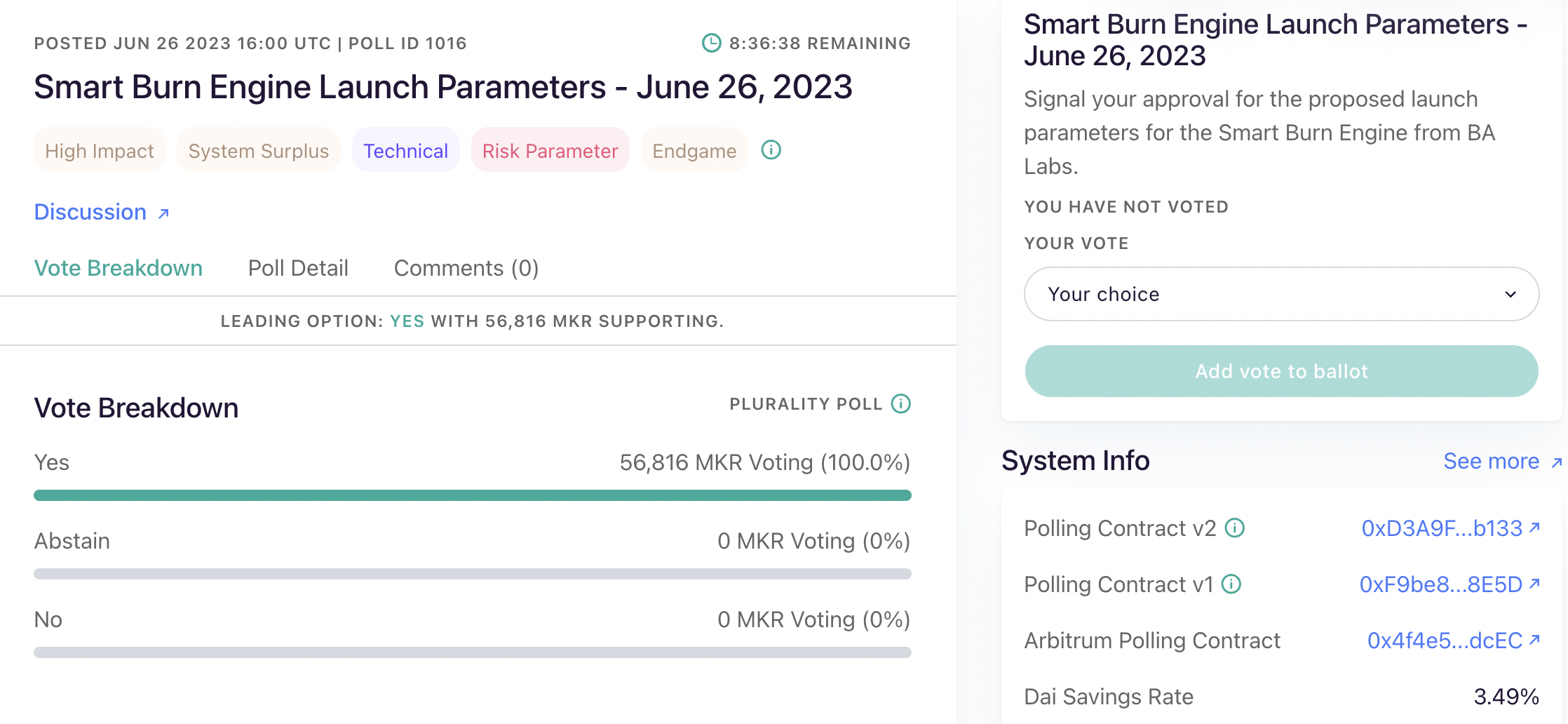
On June 26, the Maker forum conducted a nominal survey vote on the "Smart Burn Engine Launch Parameters," aiming to change the current buyback and burn rules. The new governance plan will set the upper limit of the surplus buffer to 50 million DAI. When it exceeds this limit, the Smart Burn Engine will automatically use DAI to buy MKR in the DAI/MKR trading pair on Uniswap V2. The acquired MKR and DAI will be used to provide liquidity in the MKR/DAI trading pair on Uniswap V2, and the LP tokens will be transferred to addresses owned by the protocol.
As of June 30, the nominal survey vote has ended with a approval rate of 100%. If this proposal passes and becomes effective in the subsequent execution vote, the surplus will be directly used to purchase MKR since it already exceeds the new limit.
Limitations and Opportunities for Maker's Development
The investment in RWA by Maker has consumed a significant amount of funds in PSM, leaving few stablecoins in PSM. This may be one of the reasons why Maker significantly increased the DSR, hoping to attract more funds with higher interest rates. However, the increase in DSR may also reduce Maker's competitiveness in collateralized borrowing and lending with crypto, limiting Maker's future development.
1. Continual Decrease in DAI Supply
According to the data from Glassnode, the supply of DAI has been decreasing over the past year, dropping from 10.3 billion in February 2022 to the current 4.68 billion, a decrease of 54.6%. The size of DAI determines the upper limit of the Maker protocol, and DAI minted through overcollateralization provides continuous stable fee income for Maker. Most of the reserves in DAI minted through the PSM have also been used to purchase government bonds, generating income. The decrease in DAI supply has a negative impact on Maker.
2. Increase in DSR deposits
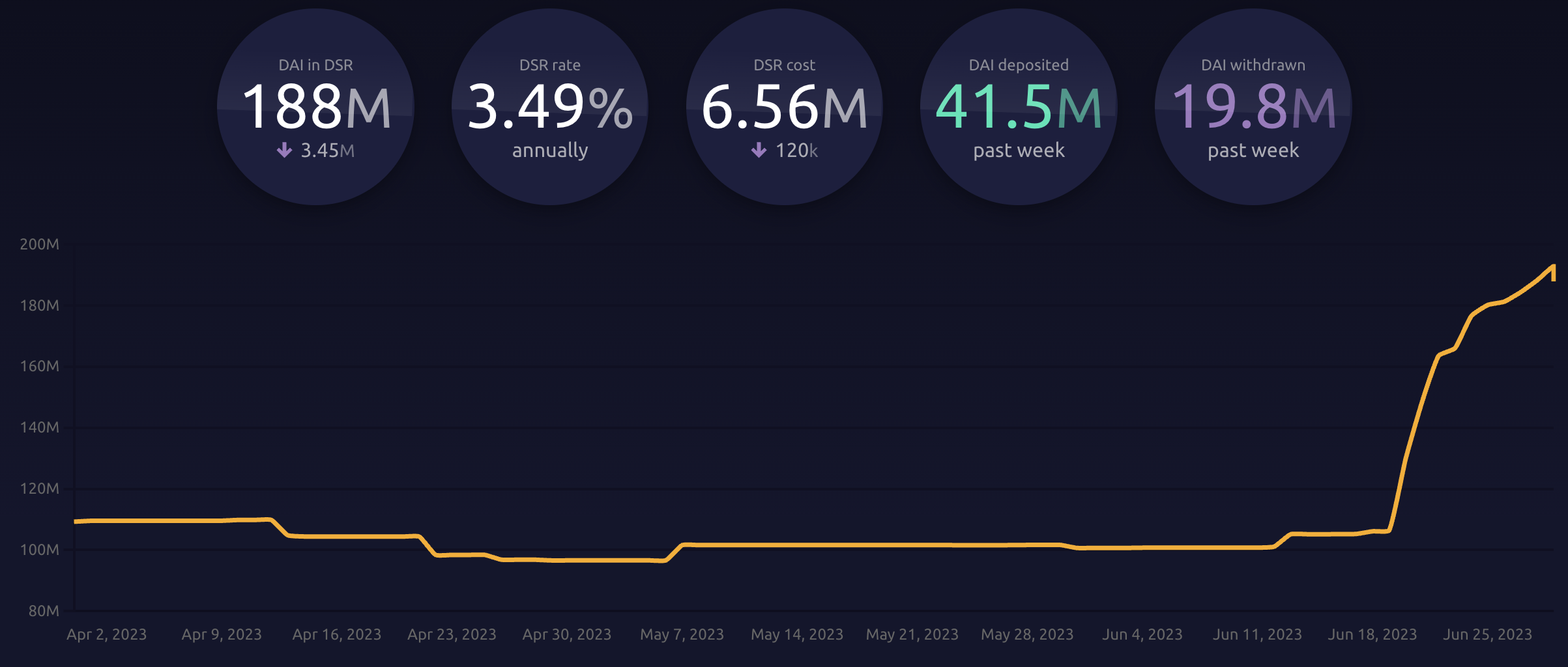
In addition to minting stablecoins, Maker also shares part of the protocol's income with stablecoin holders through the DSR contract, which is an expense for Maker. After the interest rate in the DSR increased from 1% to 3.49%, deposits in the DSR increased from 106 million DAI to the current 188 million DAI, leading to an increase in this expense for Maker.
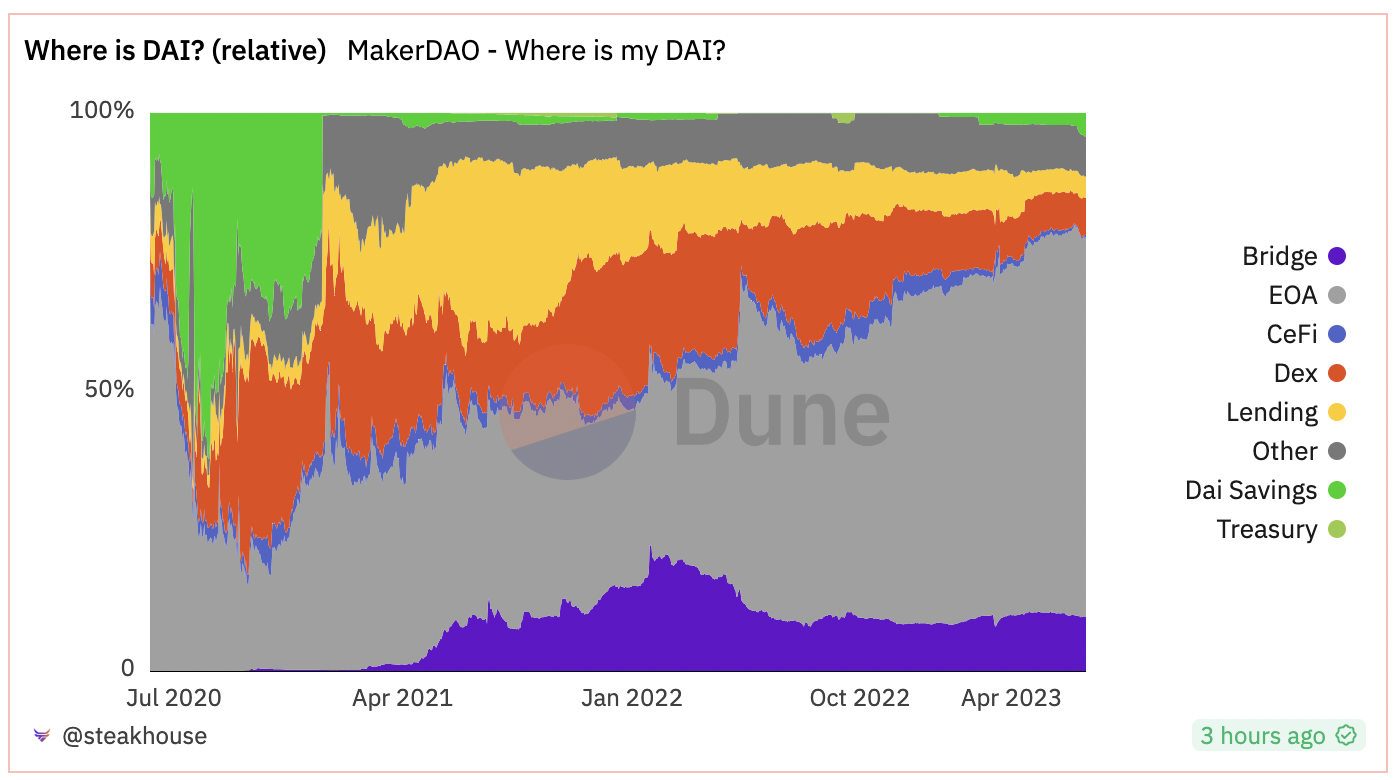
According to data from Dune@steakhouse, 67.9% of DAI is held by external addresses. The address with the most DAI holdings, according to Etherscan, is the PulseX:Sacrifice address controlled by the Pulsechain team. If holders of this type of DAI increase their deposits in the DSR, it will increase Maker's expenses.
3. Stablecoin Reserve Decline and Potential Growth
As mentioned earlier, the proportion of DAI minted through USDC via PSM has decreased from 51.7% to 8.8%, and the remaining portion must also ensure sufficient liquidity for the normal redemption of DAI. At the same time, the amount of funds available for investment in RWA through USDP and GUSD in PSM will also decrease significantly in the near future.
With the increase of DSR, Maker's competitiveness in on-chain stablecoin deposits will increase, which may attract new users to mint DAI through PSM with USDC to obtain higher yields. The deposit interest rate for DAI on Aave is 2.6%, USDC is 2.83%, and USDT is 2.69%, all lower than Maker's DSR rate. If the funds for minting DAI using USDC increase through PSM, the funds Maker uses to purchase US treasuries will also increase, increasing the revenue of the protocol and forming a win-win situation.
4. Opportunities from Liquidity Collateralization
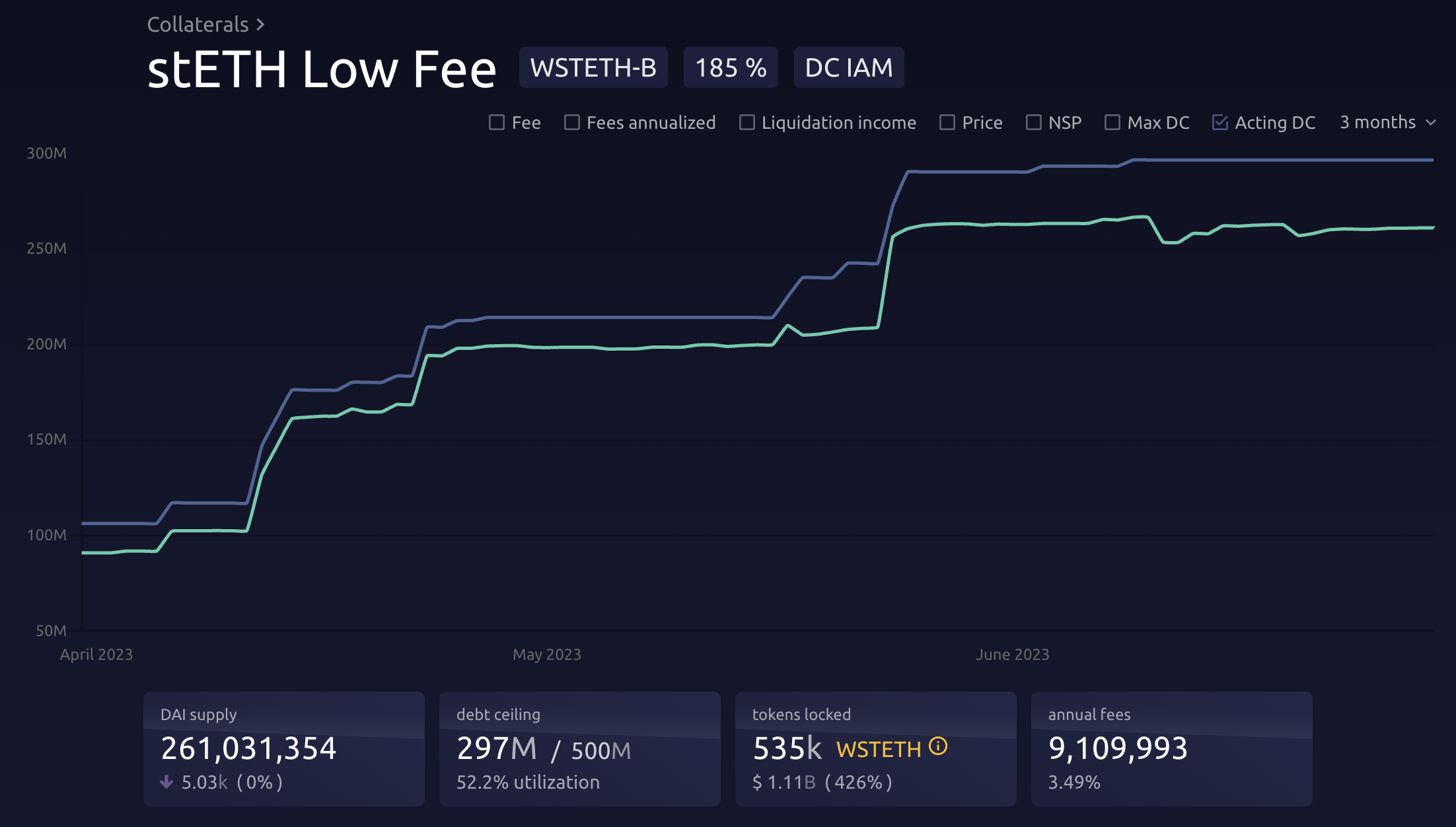
Although the issuance of DAI is declining, certain collateral-issued DAI, such as wstETH, is still rising. In the past 3 months, the amount of DAI minted by the wstETH-B Vault has increased from 90.87 million to 261 million; the amount of DAI minted by the wstETH-A Vault has increased from 181 million to 201 million. During the same period, the amount of DAI minted by the ETH-C Vault has decreased from 295 million to 290 million, without a significant decrease. This indicates that the newly added collateral in the wstETH Vault does not come from the funds originally in the ETH Vault, but rather new funds have entered.
5. Influence of SubDAOs like Spark
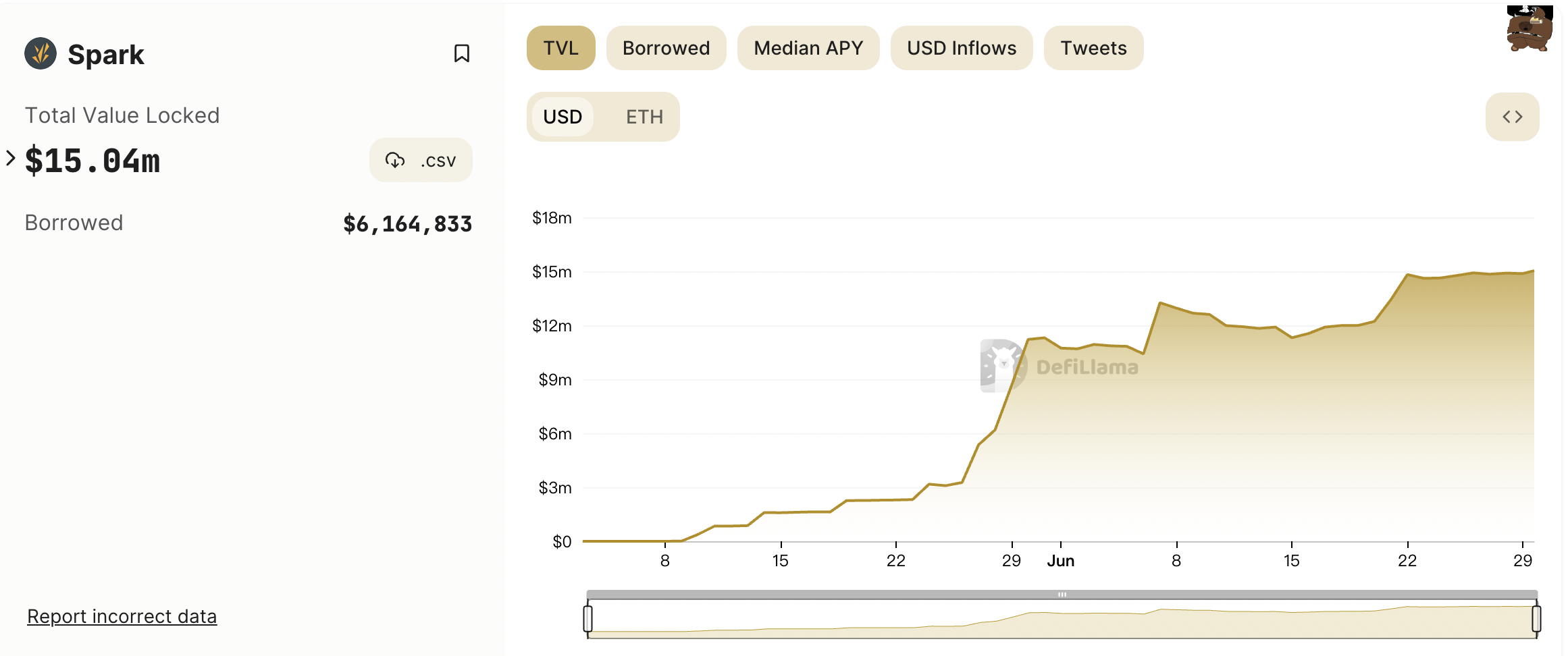
The first SubDAO of MakerDAO, Spark, has already gone live. DeFiLlama data shows that Spark's TVL is currently $15.04 million and is growing. Due to the special composability brought by Spark, DAI deposited in the DSR can also be used as collateral, further improving capital utilization.
Summary
Maker is transitioning from a classical DeFi project to RWA. The recent adjustments to DSR and interest rates for crypto collateral loans such as ETH and stETH will further enhance Maker's competitiveness in RWA and weaken its competitiveness in crypto collateral loans.
During this business transformation, stablecoin issuers such as Circle face significant competition and may have to consider distributing more profits to stablecoin holders. For USDP and GUSD, Maker's PSM holds over 50% of these stablecoins, and adjustments to the PSM ceiling for these two stablecoins will be detrimental to their issuers.
Due to the limited funds available for RWA, this may also be an important reason for Maker's recent increase in DSR. If it can attract more funds, the investment amount in RWA may continue to grow in the future.
The MakerDAO forum is currently voting on a proposal to change the buyback and burn rules. The current surplus exceeds the limit of the new rules, and if the new rules are implemented, buybacks will commence, which will benefit MKR.


