






Experience Web3.Unity and review GameFi's exploration path


Recently, the Web3.Unity SDK under chainsafe launched an update, which not only integrates the entry of regular token interaction, but also has built-in platforms such as login and asset trading. The author tries to access the SDK of web3.Unity from the perspective of a novice unity developer. Combined with the development of major events of gamefi and DeGame to make a comprehensive evaluation.
first level title
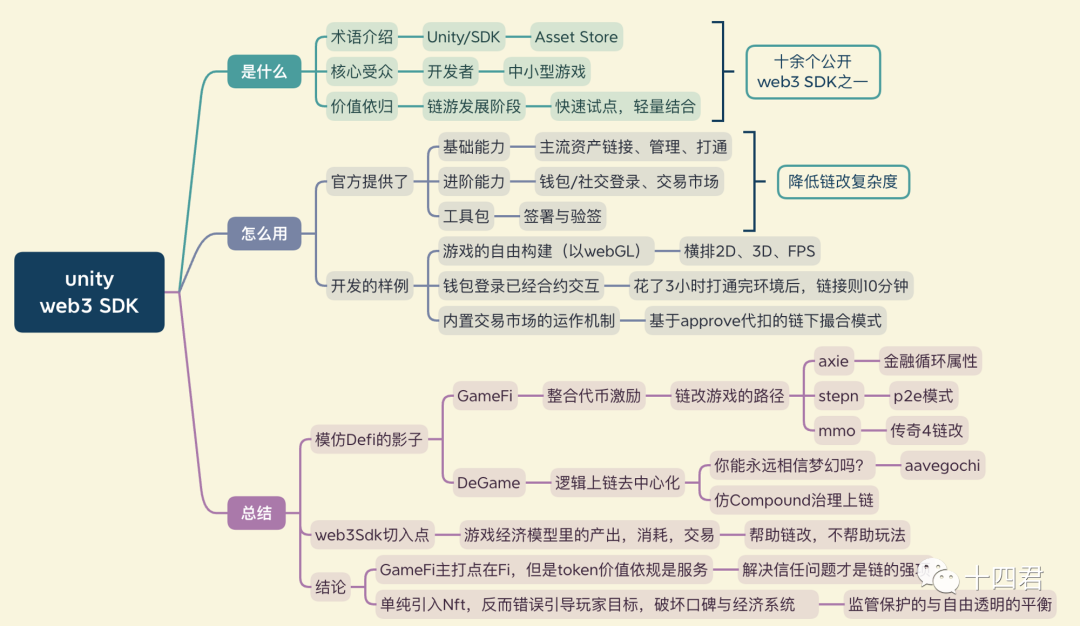
What is web3.unity SDK?
Among them, SDK is the abbreviation of Software Development Kit (Software Development Kit). It is a collection of tools and resources for developing software packages, applications, etc.
The Unity Asset Store is an online marketplace operated by Unity Technologies that provides a variety of digital artwork, tools, and resources for developing games and applications. Developers can buy or sell various types of digital assets in the Asset Store, such as 3D models, textures, sound effects, code, plug-ins, and editor extensions.
secondary title
Why is there a need for a unity plugin for web3?
The SDK itself is a tool attribute, so the core audience of this web3.unity is developers, and the purpose is to reduce the learning cost of game developers for chain knowledge. For traditional game development, the most important languages for rendering efficiency are C++ and C#, which are relatively different from the main js/go/rust/python development stacks in the blockchain community. Therefore, from the signature From the algorithm to the wallet and contract interaction, there will be many missing code tools.
In the Unity Asset Store, many well-known companies such as Little Fox, infura, Truffle, or the public chain have launched SDKs for partial function access, and the web3.unity described in this article has not yet been fully verified and included in the Store. But the source code package can already be imported for trial use.
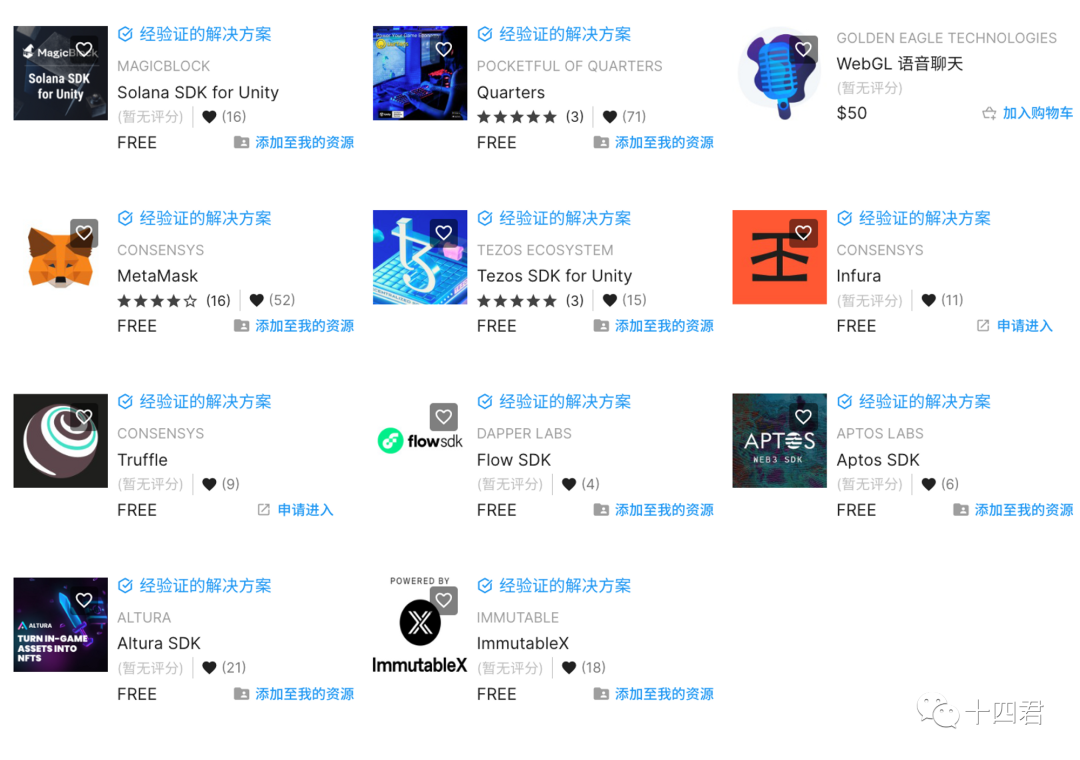
The homogeneity of these SDKs is relatively high, and they all provide code-encapsulated entrances around the necessary tools for GameFi direction chain reform. Taking web3.Unity as an example, the core functions it provides are as follows
Implement custom interaction of multiple asset tokens in the game (ERC 20/721/1155)
Convenient access to the cross-game trading market in the game
Provides a variety of NFTMint solutions
Provide wallet login, social login and other packages
Multi-network support, package of commonly used tools for signature verification
Although the above functions are very simple in the eyes of blockchain developers, many chain-changing games in the past were mostly developed by people who were more native in web3, and lacked in gameplay. Nowadays, more and more SDKs that are easy for game developers to access the blockchain are to allowsecondary title
How does the game access web3.Unity?
The author is not a Unity expert, so it took a lot of time to connect to the SDK in the configuration environment, but I can clearly feel the lightness of the connection when I step into the actual development.
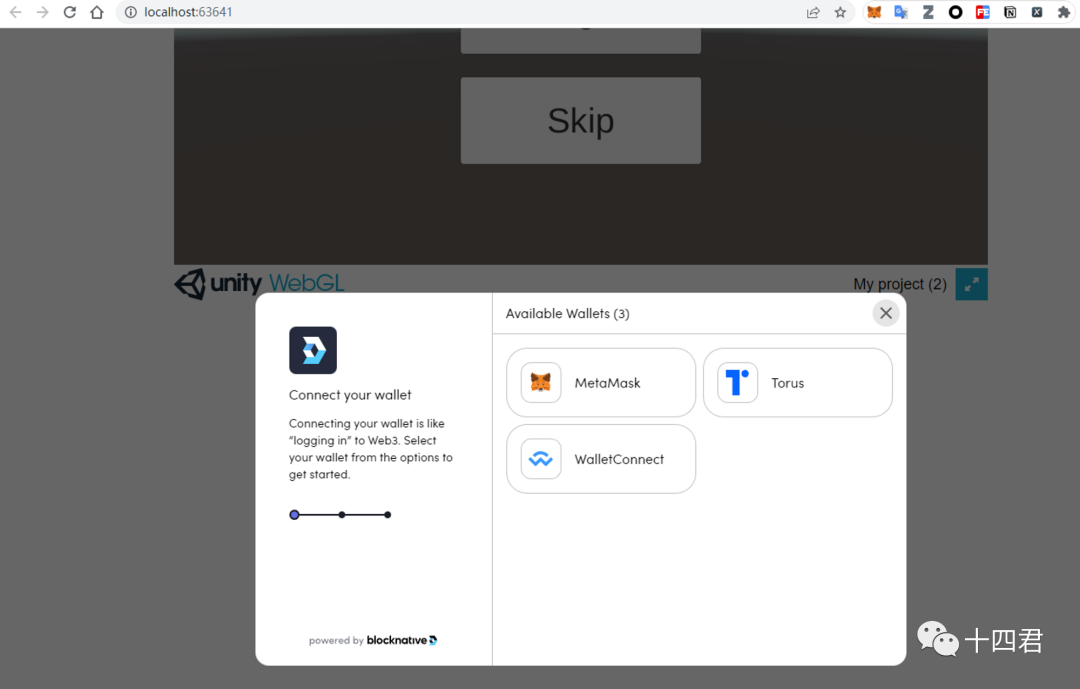
The picture below is to wake up the wallet to log in through webGL
The following figure is an event triggered by binding a click to a button, the effect is to change the text of the button to the name of a token contract on the chain
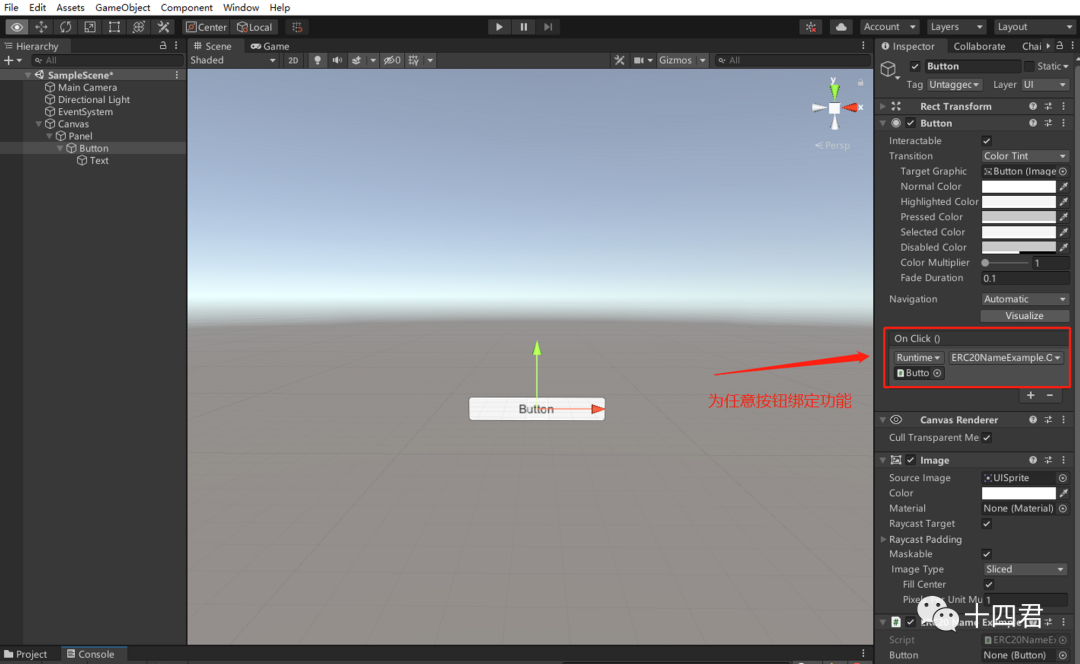
The actually written Onclick() code is also very simple, only 4 lines
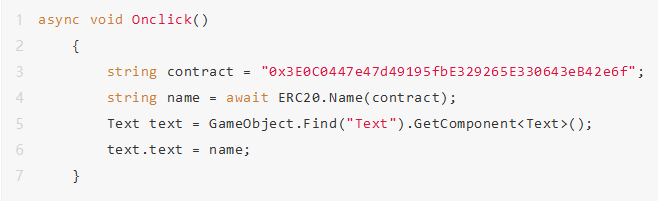
The relatively eye-catching function in this SDK is the integration of the NFT trading market part.
According to the official documentation, it is implemented using the EVM.CreateApproveTransaction class method of the web3.unity SDK
It basically revolves around the mode of order book matching under the chain. The general logic is that the official provides a centralized background consistent with Opensea, X2y2, etc., and the Approve here is to authorize the execution of transaction agreements such as seaport.
Obviously, if you buy and sell assets in the game, you need to jump to external web platforms such as os to conduct transactions.
EVM.GetNftMarket Get all listed NFTs in the game
EVM.CreatePurchaseNftTransaction specifies the NFT and quotation in the game to execute the purchase
These preset functions can well reduce the complexity of NFT trading, In fact, not to mention game side developers, developers who are familiar with the contract, it takes a lot of time and is error-prone to perform functions such as uploading and unloading purchases and collections separately from the opensea web portal.
The mechanism of the mainstream trading model can be extended reading
secondary title
GameFi’s Handan Learning to DeFi
From the earliest cryptokitties to Axie and Stepn, which successfully broke the circle, I understand that this is the era of exploration of web3 on the game track. That's it.
After seeing the success of DeFi, it inspired other on-chain application developers to pour into the social game and other tracks, just as the name of DeFi is derived fromThe "De" representing decentralization is composed of two parts followed by "Fi" representing finance, so the current core design ideas of web3 games also distinguish these two paths
Integrate token incentives in DeFi to form GameFi
Drawing on the characteristics of DeFi decentralization, putting the core logic on the chain is also called a full-chain game DeGame
The former focuses on the chaining of the economic system and strengthens the ability to transfer and circulate assets, while the latter focuses on the chaining of game logic, improving the openness, transparency and auditability of the game, and accepting proposals and governance from players themselves.
secondary title
Looking at the economic chain reform from Legend 4
Mir 4 (Legendary 4) of South Korea’s Wemade Company was sought after by new and old players around the world as soon as it went online in August 21. The net income of 4 Q2 1 was 337 million US dollars, reaching 140 W online at the same time, and 600 W of monthly active users. , the application of asset chain reform to realize the economic cycle of big R-middle R-gold diggers.
Although there are relatively good data, the difficult-to-adjust relationship between supply and demand caused the economic system to collapse a year later. Among them, it was revealed that Wemade adjusted the net income data of 2021 Q4 through the sale of Wemix tokens. Even so, it lost the follow-up player group The influx makes it difficult to control the highly volatile game assets smoothly, and it also makes many participants feel that Play to Earn is finally going to Play to Ponzi.
Looking back on history, the most durable economic system is Fantasy Westward Journey. The core of its stability comes from the point card system, which controls the minimum cost of supply, so that the generation of a high-level equipment is not only random, but also has a large amount of basic resources. The investment cycle (capital + time), so the terminal game version using point cards has achieved stable economic value preservation for up to 20 years, while the mobile game version does not implement point cards and its assets will not maintain value.
In the ups and downs of Legend 4, there are not only the official outrageous operations, but also the directional problem of the game itself to improve the liquidity of the chain. Even if there is such a grand ideal as cross-game asset sharing, if you pay attention to the essence The value of game assets is derived from services.
secondary title
How to evaluate web3.Unity
Combining the retrospect and summary of the web3 game track just now, the author believes that the game path focusing on Fi has not yet found a sufficiently robust economic model, and it has not proved that the blockchain reform through Fi is better than traditional games.
And web3.Unity SDK can be said to be very friendly to game developers, but it is not more friendly to game design.
In the financial cycle of the game, he can easily help the output, transaction, and consumption parts in the figure below
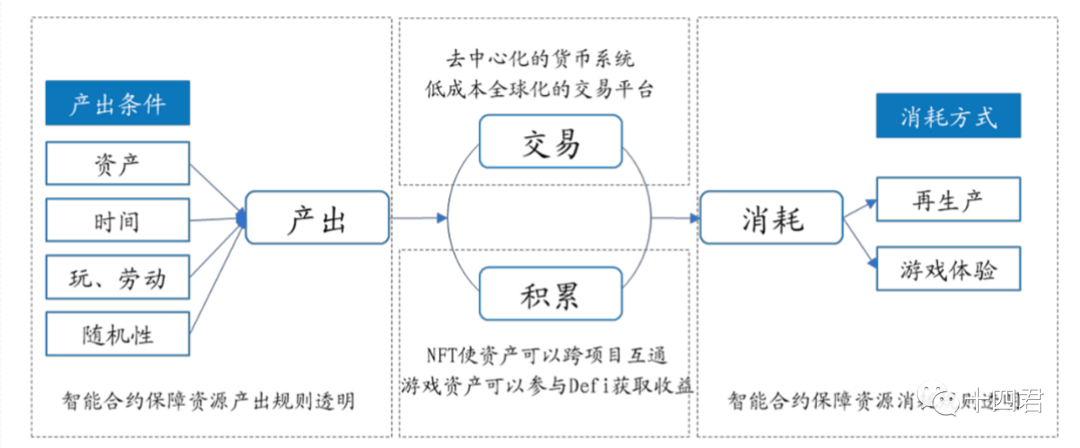
However, he also introduced the volatility on the chain at the same time. Although the volatility itself is not completely negative for the game, many games also use asset depreciation to adjust the announcement of new equipment to increase revenue.
The key point is that the introduction of excessive financial attributes during the period when the gameplay itself is not perfect will make the players who come here wrong.
Looking back at last year's Elden Circle, it is rare to see the well-deserved best game of the year. As a soul game, it requires players to have a super high reaction speed and exploration ability, so this type of game has always been a niche group. Through Several classic works such as Sekiro and Nioh have gradually influenced players over the years, and finally achieved a breakthrough in cognition through the low-difficulty open world law circle.
In this process, if the player holds the idea of making money by clearing the level at the beginning, what the busy gold hunters will only see is the payback cycle and ROI. Even in many high-volume games, players do not participate in the game and only buy and sell tokens. It is also possible to sell the coins directly when they are unlocked, which will damage the game ecology, which is unfair to those who play the game seriously.
The plug-in of unity+web3 is simple and easy to use. It is also expected that in the future, people who prefer to play games can design a game that combines the advantages of the chain. After all, for games, making money is only a process, and entertainment is the purpose.
secondary title
Can the DeGame evoke new opportunities?
At present, mainstream GameFi products have basically not made any "decentralization" efforts at the product level. The core business logic is still fully constructed in a centralized manner, and the project party holds unrestricted power in the game.
Therefore, corresponding to Fi is a full-chain game with game logic on the chain, which is completely opposite to the web3.unity studied today.
Full-chain games have the advantages of high openness, composability, high decentralization, and easy verification of business logic.
In terms of openness, the value of props for traditional chain reform will dissipate as the game party runs away. This will be appropriately alleviated in DeGame. As long as the player group is large enough and the gameplay itself is correct, there will always be new developers To obtain this batch of accurate user portraits, it is like the original war 3 going to data, then going to LoL and then doing mobile game transplantation.
In terms of governance, players are the ones who understand the needs better, so it is very possible to reproduce the example of Compound in DeFi. The governance proposals he uses for voting are not in text form, but are submitted in code that can be directly executed by the computer. After the vote is passed, the governance contract will be automatically deployed according to the written logic. This purely on-chain governance process can eliminate the trust assumption that the team strictly enforces the voting results, and achieves a true sense of trustlessness.
The ideal is beautiful, but so are the difficulties. The core bottleneck lies in the low performance of the blockchain and the difficulty of developing smart contracts in game logic.
first level title
finally
Although looking back on this unexciting chain game exploration process brings a little pessimism, but objectively speaking, the attempts of most games are incomplete.
Many of the Ponzi GameFi kits coming out in 2021 were built and launched within three months.
Many P2E games in 2022 can be designed, developed and operated in almost 6 months.
How reliable are the conclusions based on such market trials? A good MMO game often requires a longer period of design and polishing, and constantly adjusts parameters during operation to achieve a dynamic balance in the game's economy, character props/attributes, etc.
There is neither a fun game nor a suitable player group, so how can we expect to have a good game that breaks the circle?
So when we build a Web3 project, its core goalIt should not be a simple chaining of assets or issuance of coins, but hope to use blockchain technology to better solve the trust problem that was difficult to solve before. In the game, you need to trust both the opponent and the game, so that the game account and assets in web2 actually belong to the farce of the project party. Starting from reducing the cost of trust is the fundamental basis of web3 value.
You are welcome to leave a message to the author from the backstage of the official account to discuss issues in the web3 industry
Like and follow 14, bring you value from a technical perspective


