






Who can stand out in the highly competitive Layer 2 track?


Ethereum, the second largest blockchain in the world, has faced scaling challenges for years. With more and more decentralized applications (Dapps) being built on the platform, handling the increasing number of transactions and data storage needs has become more urgent than ever. This is what Ethereum's second-layer solution, or "Layer 2" or "L2", does. These solutions aim to provide a scalable, efficient and low-cost infrastructure for Dapps built on Ethereum.
first level title
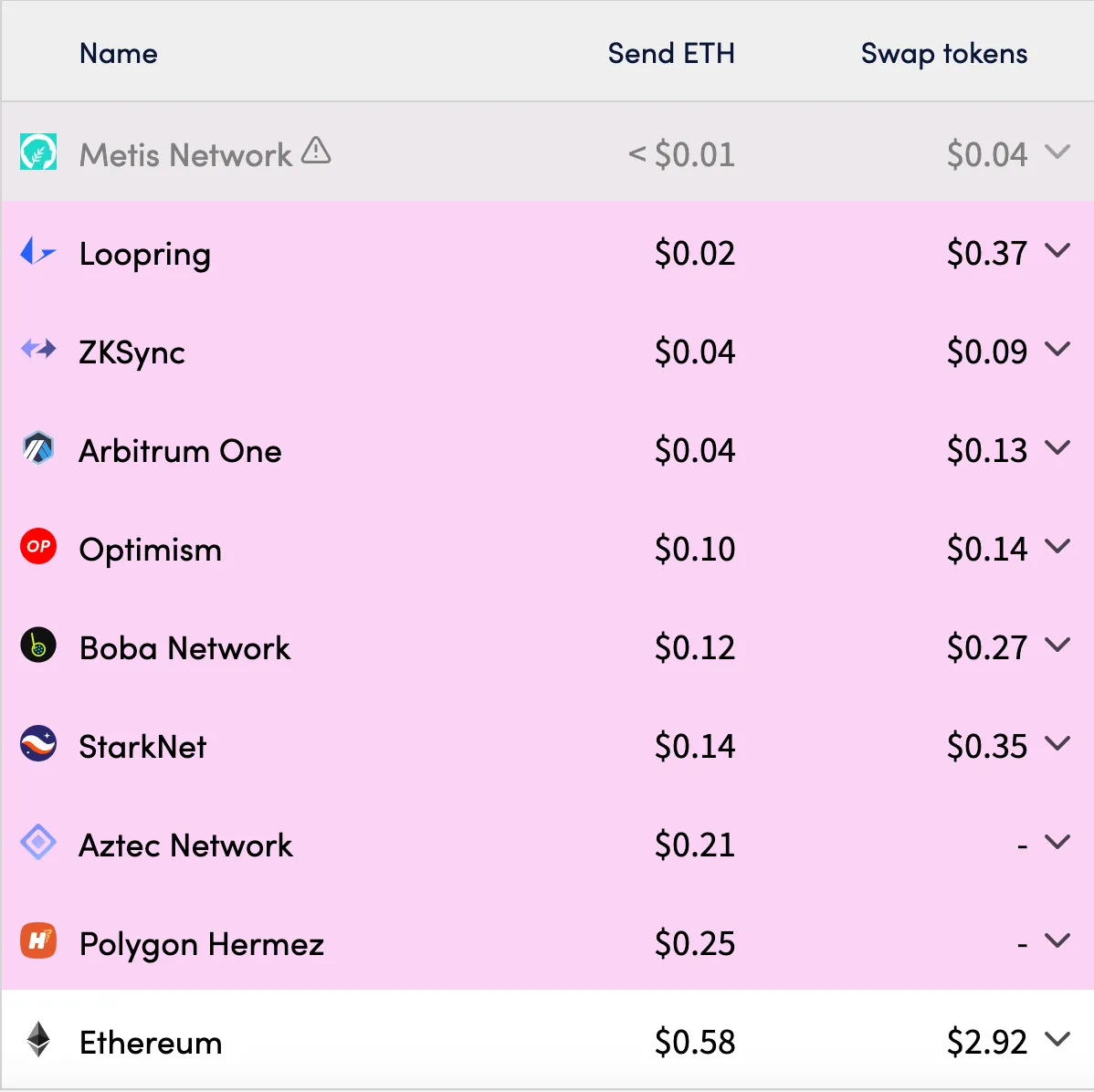
The concept of Layer 2
With the development of blockchain technology, people began to propose a new concept - "Layer 2". So, what is Layer 2?
Layer 2 is an important concept in blockchain technology. It refers to building a new layer of protocols on the basis of blockchain to increase the processing capacity and transaction speed of blockchain. To put it simply, it is to add an additional layer of "highway" on top of the blockchain to make transactions faster and more convenient.
Unlike the traditional Layer 1 (Bitcoin, Ethereum, etc.), the Layer 2 protocol does not make any modifications to the underlying blockchain, but achieves high-speed transactions by establishing a protocol on the upper layer. Therefore, the Layer 2 protocol can greatly increase the transaction speed of the blockchain dozens of times, and can also significantly reduce transaction costs.
The advantage of the Layer 2 protocol is that it can handle more transactions while also ensuring the security and reliability of the transactions. In addition, because the Layer 2 protocol is built on top of existing blockchain technology, its development and deployment costs are relatively low, and it is easier to be widely used.
first level title
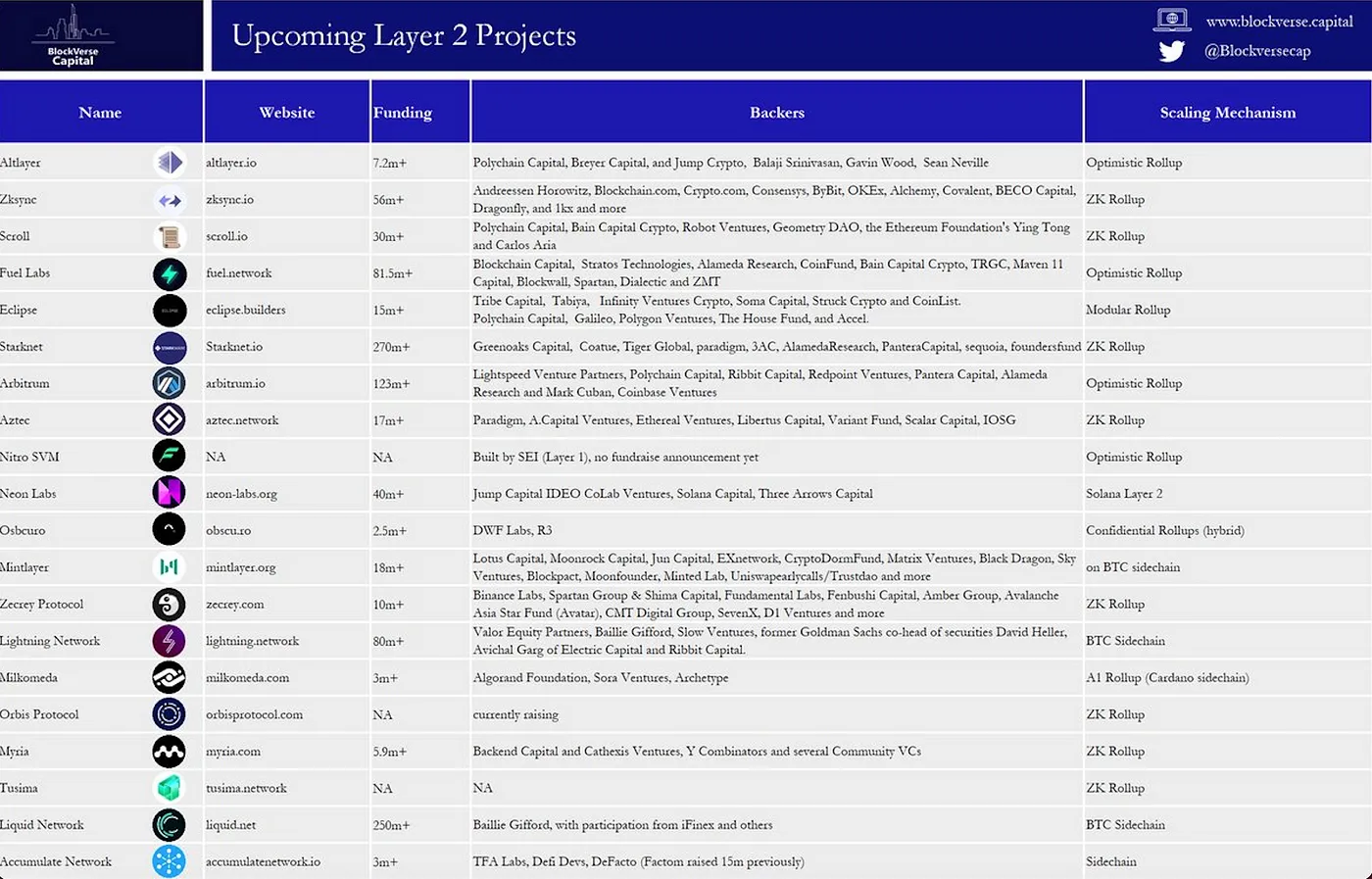
Representative project
Arbitrum
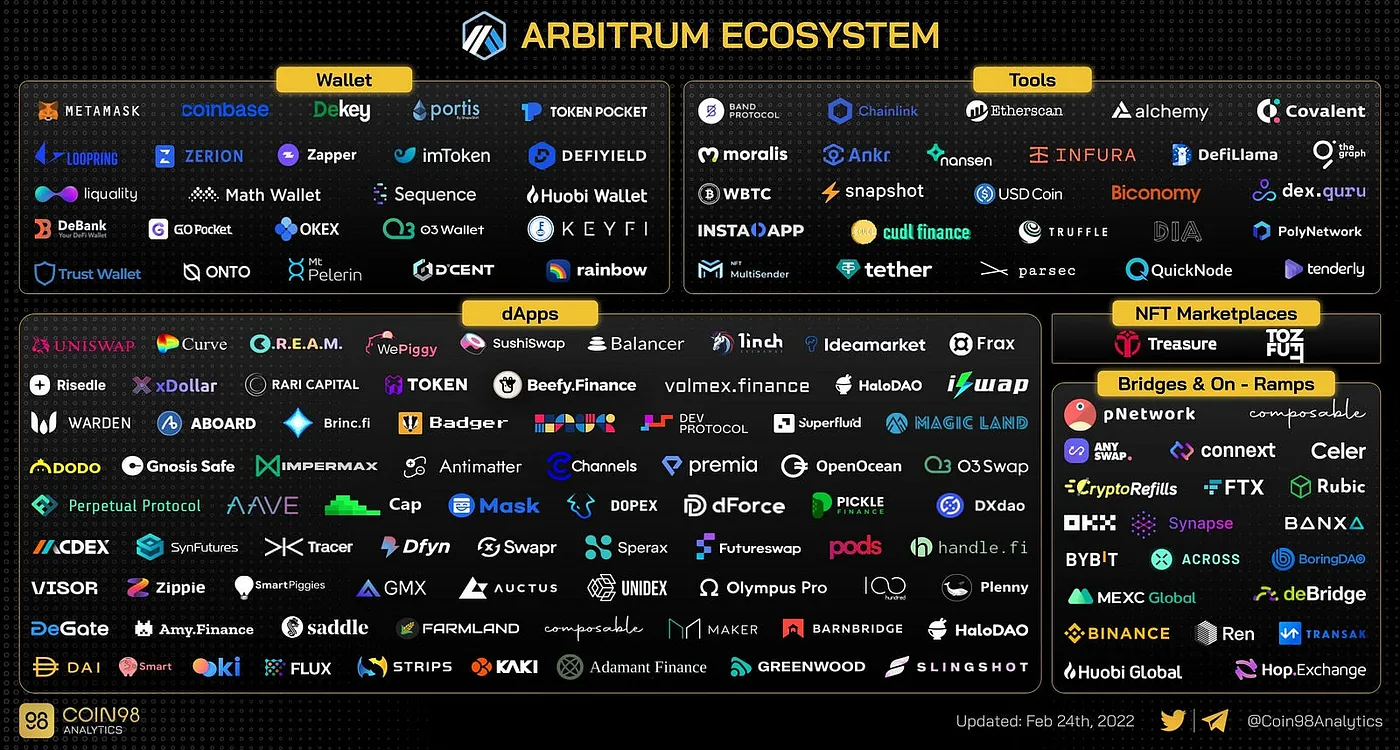
Arbitrum is a Layer 2 solution designed to solve Ethereum's scalability, speed, and privacy issues. It uses Optimistic Rollups to process transactions off-chain before submitting them to the Ethereum mainnet. This reduces gas costs, increases scalability, and enhances privacy. Arbitrum allows for the creation of smart contracts that allow developers to build new projects on top of Layer 2 protocols. Network effects drive the success and adoption of cryptocurrencies.
Since the launch of Arbitrum in August 2021, the ecosystem has grown exponentially, with many projects launching and migrating to the network. Arbitrum has surpassed Binance Smart Chain to take second place in terms of daily and weekly trading volume. However, the total value locked is still lower than Ethereum, Binance Smart Chain and Tron. The Arbitrum team cleverly took advantage of the airdrop speculation to maintain the heat and increase the volume and number of transactions.
Optimism
Optimism is an Ethereum-based second-layer solution that uses the Optimism Rollup mechanism to improve network scalability and efficiency. As its name indicates, it is the originator of the Optimism Rollup idea. Its transaction confirmation speed is very fast, and the fees are also very low, so Dapps built on Optimism can achieve efficient and low-cost transactions. Optimism also provides a fully compatible Ethereum environment, allowing developers to easily migrate existing Ethereum Dapps to Optimism.
Loopring
Loopring is a second-layer solution focused on decentralized exchanges (DEXs), designed to provide scalable and efficient infrastructure for DEXs. It uses a zero-knowledge proof mechanism to confirm transactions, enabling Dapps built on the Loopring network to achieve faster and more private transactions. At the same time, Loopring also provides a highly flexible transaction structure, allowing developers to build various types of DEX applications according to their own needs. But it is a pity that Loopring is currently focused on transactions and has no idea of making it a general-purpose blockchain.
zkSync
zkSync is an Ethereum-based second-layer solution that utilizes zero-knowledge proof mechanisms to improve network scalability and efficiency. Its core idea is to extract the transaction confirmation process from the Ethereum network, so as to reduce the time and cost of transaction confirmation. Dapps built on zkSync enable faster and more efficient transactions while enjoying the security and programmability of Ethereum smart contracts.
Aztec Network
first level title
Future trends
Layer 2 is an important field of blockchain technology, and its main purpose is to solve the expansion and performance problems on public chains such as Ethereum. In the future, the development trend of the Layer 2 track can be summarized into the following three aspects:
Continuous innovation and improvement in technology
Currently, Layer 2 technologies mainly include state channels, side chains, and Rollups. In the future, with the continuous innovation and improvement of technologies, these technologies will be continuously optimized and improved to improve their performance in terms of performance, security and scalability. For example, state channels can improve their efficiency and security by introducing more optimization algorithms and protocols, and Rollups can be further subdivided into different variants such as OP series and ZK series to meet the needs of different application scenarios.
Especially after Ethereum turned to PoS, under the support of Lido, Coinbase, Ebunker and other mining pools, the stable block production of Ethereum also allowed L2 to flex its muscles. Many L2 features cannot be upgraded by Ethereum in the PoW era.
Continuous expansion and deepening of application scenarios
Currently, Layer 2 is widely used in various fields such as DeFi, games, NFT and payment. In the future, with the continuous development and improvement of Layer 2 technology, its application scenarios will continue to expand and deepen. For example, Layer 2 technology can be applied to areas such as asset management, insurance, supply chain management, and digital identity to realize more blockchain application scenarios.
The gradual maturity and improvement of the ecosystem
Currently, the Layer 2 ecosystem is still in its infancy and needs to be continuously developed and improved. For example, a better developer community and user community can be established, better development tools and application interfaces can be provided, and a more stable and reliable Layer 2 infrastructure can be built.
Ebunker official website: https://www.ebunker.io
Ebunker official website: https://www.ebunker.io


