






Understand Polygon ID in one article: I want to build a Web2 experience-level Web3 identity system


Recently, Ethereum expansion solution provider Polygon announced the launch of the Web 3 identity system Polygon ID, which will be integrated into Polygon zkEVM to build a unified on-chain privacy expansion service.
In addition, Polygon ID will also launch an identity SDK and wallet dApp development interface so that more applications can be connected to it. As of now, Nothing mobile phone, unsecured lending agreement PULP and decentralized accommodation booking project Decentral Couch, as well as Kaleido , Fractal and Collab.Land all already support Polygon ID.
Polygon ID will be encapsulated based on iden 3, a decentralized identity protocol using zero-knowledge proof technology, which allows verifiers to check whether personal credentials are valid without obtaining personal data, so as to facilitate the migration of real-world identities to Web 3 Protect user privacy and meet regulatory requirements such as KYC/AML.
first level title
On-Chain Privacy First Steps
Polygon ID wants to achieve the privacy of the whole process, so it must start with identity verification. Starting from the interaction process between dApp and users, Polygon ID enables any organization to issue verifiable credentials (VC, Verifiable Credentials) about users, and any dApp can use a set of standards to verify the validity of the proof.
If two-way privacy protection for users and dApps is to be achieved, data sources and identity categories must be classified to ensure that no matter what type of data, the validity of the proof can be guaranteed in any identity calling scenario. Data can be divided into on-chain and off-chain data, and identities can be divided into real-world IDs and native DIDs, wallets, and domain names on the chain. For example, the entity association between a government-issued ID card and a giant whale address is different. Types of data and identity formats.
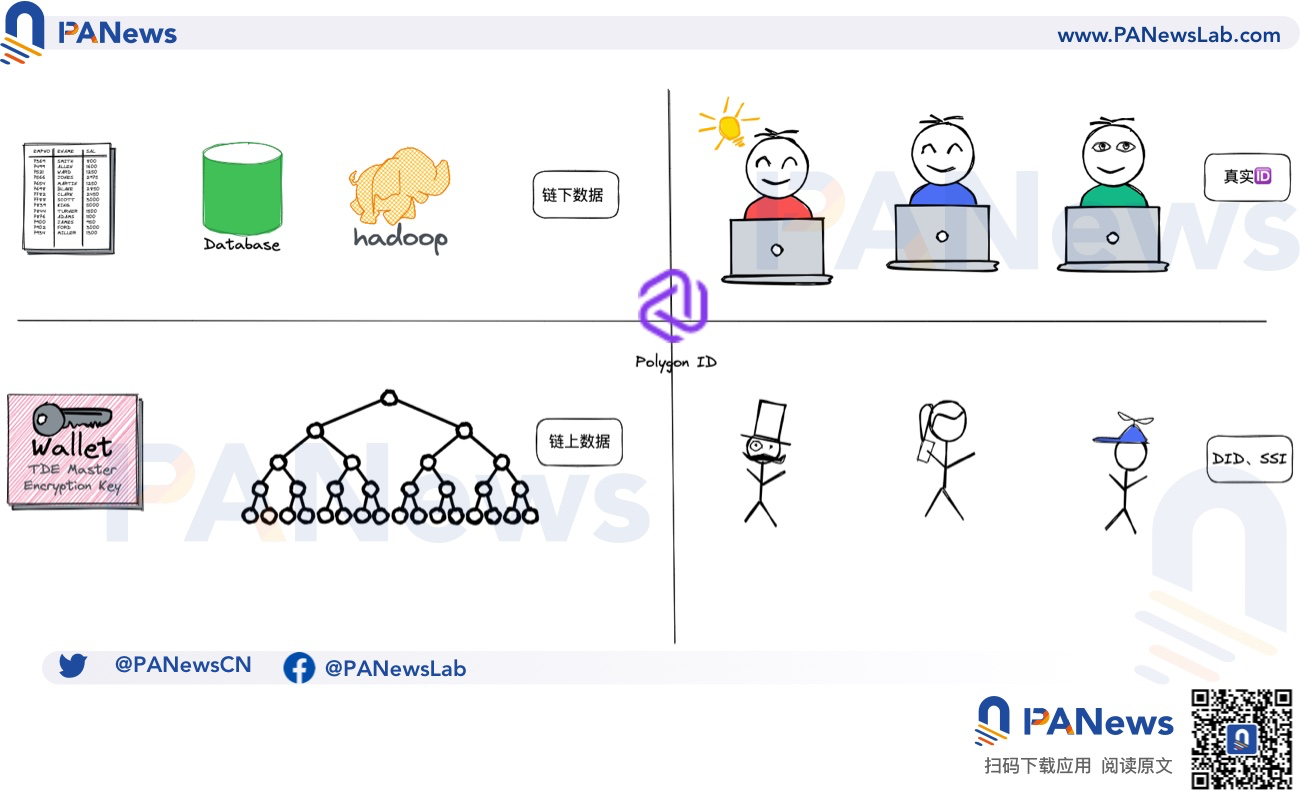
The role of Polygon ID is to concatenate different identities and data, and use ZK technology to ensure its privacy and security. Each identity can be standardized, called DID (Decentralized Identifier), and then represented by Verifiable Credentials (VC), and passed to different requesters after being encrypted by ZK, such as identity transfer, account login, Wallet address confirmation, etc., and conforms to the DID format of W 3 C, so as to facilitate the expansion of subsequent application scenarios.
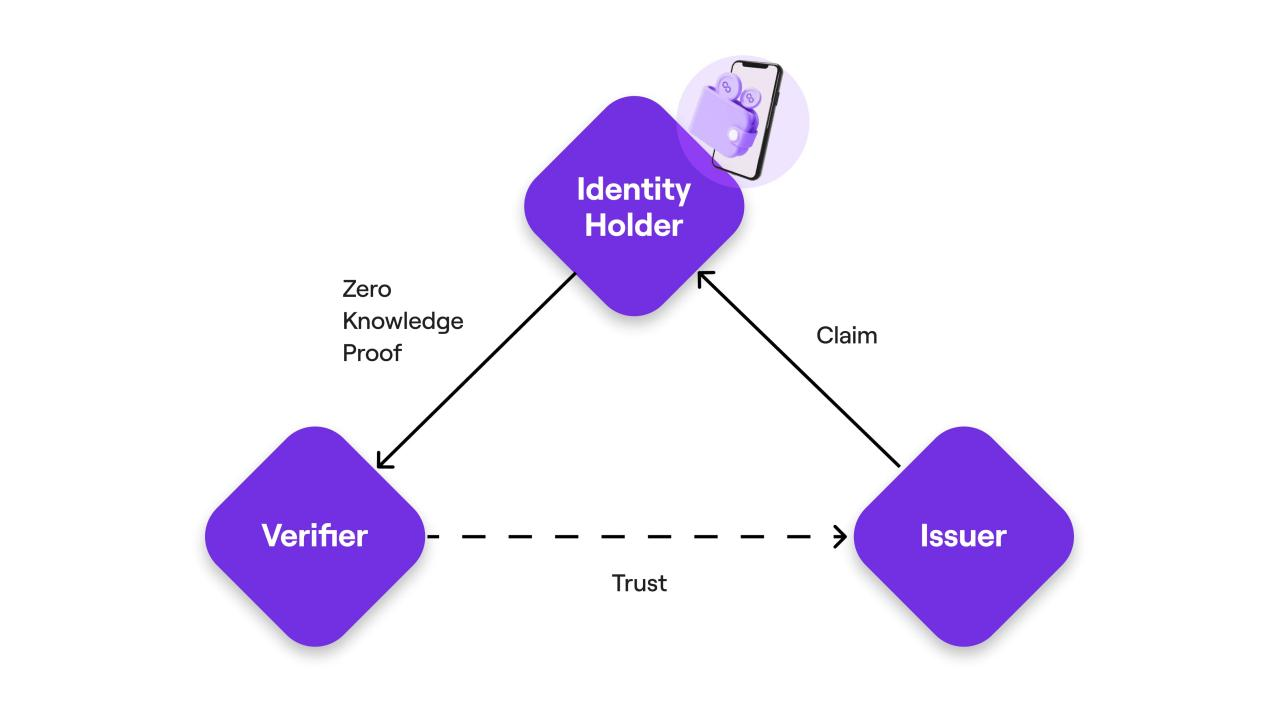
Polygon ID can be deconstructed into three parts, which are Issuer (issuer), Identity Holder (verifiable credential holder) and Verifier (verifier). The functions of each part are as follows:
Issuer: Any entity that issues a certificate to the holder, and the certificate is cryptographically signed by the issuer and delivered to the verifiable certificate holder.
Dentity Holder (Verifiable Credential Holder): The identity information authorized by the issuer to the holder. When the verifier requests identity information, the holder encrypts the identity information through ZK technology and sends it out, and the verifier returns a pass or negative result after checking, and there is no need to detect identity data throughout the process.
Verifier: Verifies the proof provided by the holder. Sufficient trust must exist between the verifier and issuer, and encrypting a proof is not equivalent to confirming the authenticity of its content. For example, the issuer can be a government agency, the verifier can be a business, the holder can be a job applicant, and the proof can be a college diploma.
An identity layer on top of Ethereum
Just like Polygon zkEVM came through the acquisition of Hermez, Polygon ID is also a secondary package based on iden 3. iden 3 defines the methods for parties to communicate and interact with each other, and Polygon ID is an abstraction layer that enables developers to build dApps in an easy way, and is open to any Web3 wallet, which can be added with the Polygon ID Wallet SDK Similar functionality.
Taking the wallet as an example, Polygon ID allows users to be the sole custodian of the private key, can control the exposure of their own data, and also abides by the self-sovereign identity (SSI) principle. The smart contract interacts with the verification data encrypted by ZK. The holder does not need to apply to the issuer or verifier when using the certificate, and the issuer cannot track its flow and interaction after issuing the verifiable certificate (VC).
Verifiers can set standards by calling smart contracts, and Polygon ID can automate audits of on-chain or off-chain data. For example, information generated by one issuer can be used by multiple verifiers without individually requesting permission. And the holder can also collect multiple certificates from different issuers in one wallet to build their own certificate system, just like collecting ID cards, social security cards and driver's licenses to build their own multi-dimensional identity system.
Polygon ID aims to be an identity layer on top of Ethereum. DID is the intersection of the real world and the environment on the chain, and the current problem is that there is no consensus on the form of DID. At least there are decentralized domain names such as VC (Verifiable Credentials) and ENS mentioned above, and wallets. Address and five forms such as SBT (soul-bound token) and Stealth address (privacy address) proposed by Vitalik.
At the same time, Polygon ID released a series of self-sovereign identity (SSI) development kits, including 4 new tools such as validator SDK, issuer node, wallet SDK and wallet application. Developers can integrate decentralized identity into existing Web 2 or Web 3 applications and meet existing compliance requirements in a Web 3 native way,
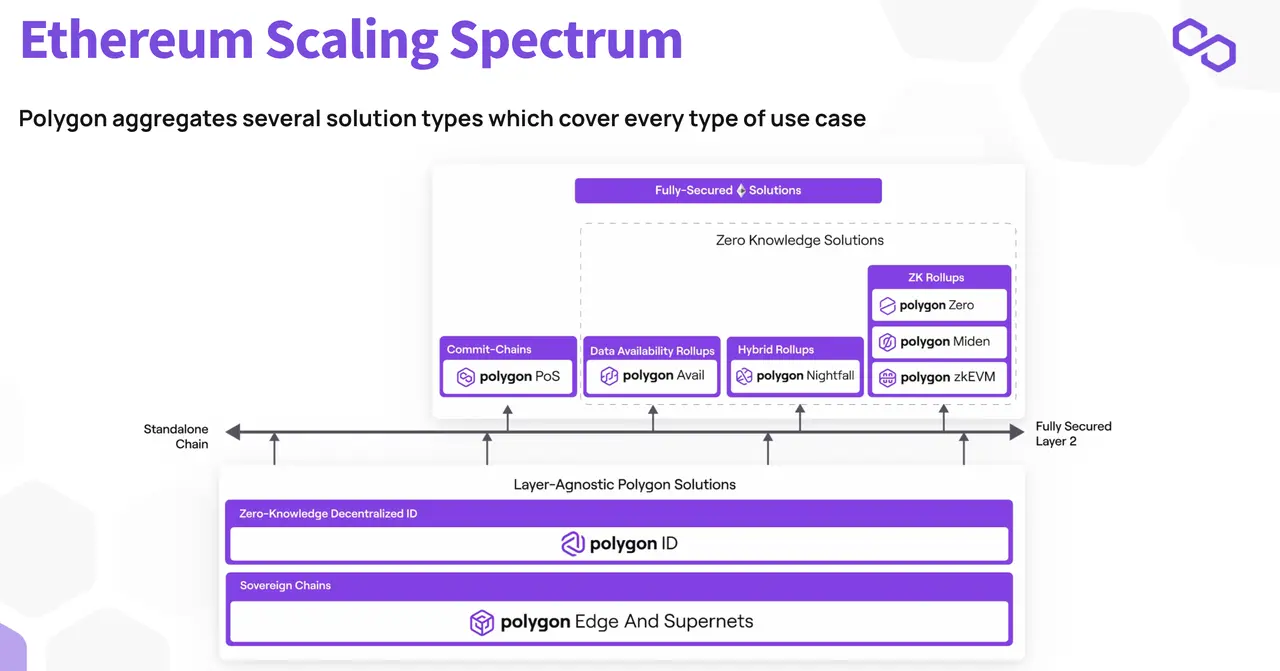
The Polygon ID is located close to the underlying Ethereum protocol, and can be invoked by Polygon PoS, Avail, Nightfall, and various ZK Rollups solutions. The Wallet service will be launched as its unified identity solution to enhance users on the chain. The sense of belonging of the Polygon system; with the support of the Polygon ID Wallet SDK, developers of non-Polygon systems can also build their own wallet solutions to promote the entire Ethereum ecosystem into the era of identity privacy.
epilogue
epilogue
The identity system developed based on Polygon ID can communicate with each other between different EVM compatible chains and L2, and DeFi applications such as on-chain reputation systems, credit lending, and RWA (real world assets) can all innovate existing models.
Moreover, the DID track can meet the needs of mainstream groups. Web 2 violations of user privacy are common occurrences. Polygon ID, an identity infrastructure, allows anyone to become an issuer, verifier, or holder of Web3 identities, changing the status of major companies and institutions. Possession and misuse of personal data by centralized entities.


