The tide rises from Hong Kong, and Hong Kong enters the era of Web3.0


Foreword:Foreword:
Recently, affected by the series of chain reactions brought about by the previous bankruptcy of FTX, crypto-asset-friendly countries in Asia have tightened the supervision of crypto-assets. Cryptocurrency investors in South Korea, Singapore and Japan were the largest users of the now-defunct FTX exchange, based on the number of monthly unique visitors from January 2022 to October 2022, according to a report from CoinGecko. According to relevant data, the total traffic of these three Asian countries during this period accounted for 15.7% of FTX's total traffic, and South Korea had the highest number of monthly unique users.
first level title
01. The new attitude of Japan and South Korea has changed, which originated from the FTX thunderstorm
On January 10, 2023, South Korea's National Tax Service (NTS) raided the domestic and international transactions of Bithumb Korea, South Korea's largest exchange by trading volume, and Bithumb Holdings, which operates local cryptocurrency exchange Bithumb, and its affiliates. Similarly, exchanges that have obtained Japanese licenses have all withdrawn from the Japanese market one after another. Among them, the United States-based cryptocurrency exchange Kraken has stated that it will cease operations in Japan after January 1 and will deregister from the Financial Services Agency (JFSA) on January 31.
Japan and South Korea, which once actively embraced Web3.0, are now restrained.
However, the change in Singapore is more obvious. Previously, Singapore’s inclusive and open attitude towards blockchain technology and financial innovation has attracted many companies and investment. According to a report released by KPMG, in 2021 alone, investment in cryptocurrency and blockchain companies in Singapore surged to US$1.48 billion, 10 times that of 2020, accounting for about 50% of the total in the Asia-Pacific region in 2021.

However, Singapore sovereign fund Temasek Holdings lost $275 million due to the collapse of cryptocurrency exchange FTX. Singapore's Deputy Prime Minister and Finance Minister Huang Xuncai said: Temasek's losses are huge, and Temasek has launched an internal review by an independent team to study and improve its processes and learn lessons for the future.
On November 30, 2022, Lawrence Wong stated in Parliament that Singapore has no plans to become a hub for cryptocurrency activities, but to become an "innovative and responsible digital asset participant." Police in Singapore are investigating Binance, the world's largest cryptocurrency exchange, for possible violations of payment services laws. While Singapore allows retail investors to invest in cryptocurrencies, the Singapore government’s focus will be on sound regulation, drawing lessons from recent experience, and continuing to remind and educate the public. At the same time, it reiterated that the government and MAS have distinguished development innovation from cryptocurrency speculation, and they discourage retail participation.
When they tend to "strong regulation", Hong Kong has chosen to "run in the opposite direction" and actively embrace encrypted digital finance.
first level title
02. Chaoqi Xiangjiang actively embraces Web3.0

On October 31, 2022, Hong Kong, China officially released the "Policy Declaration on the Development of Virtual Assets in Hong Kong" (hereinafter referred to as the "Declaration"). This declaration officially announced to global investors and entrepreneurs that Hong Kong, China will develop into a global virtual asset. Asset-centric and Web3.0-centric determination.
The manifesto was released on the first day of Hong Kong FinTech Week 2022. On this most important day of Hong Kong’s financial industry, almost all the guests invited by Hong Kong, China are people in the industry related to Web3 and encrypted finance—from senior officials of the SAR government such as the Financial Secretary of Hong Kong, China, the President of the Hong Kong Monetary Authority, to Xiao Yi, co-founder of Animoca Brands, Sam, co-founder of FTX, and executives from Citibank and Tencent Financial Technology, almost all the guests were discussing the development of Web3.0 in Hong Kong, China.
The content of the declaration also clarifies the attitude and basic tone of the entire Hong Kong government towards Web3 and encrypted finance: embrace NFT (non-homogeneous token), embrace stable currency, embrace DLT (distributed ledger technology), embrace Web3 and Metaverse.
In addition, the government and regulatory agencies are also conducting a number of pilot projects to test the technical advantages of encrypted assets and explore their further application in the financial market, including the issuance of NFT for proof of attendance at the Hong Kong Fintech Week; the issuance of green bond tokens issued by the government for subscription by institutional investors; and the cross-border application of the central bank's digital currency eHKD.
On January 12, 2022, the Hong Kong Monetary Authority released a discussion paper on incorporating stablecoins into the regulatory framework, and on January 31, 2023, released the "Summary of the Discussion Paper on Encrypted Assets and Stablecoins" and stated that Regulatory arrangements are expected to be in place in 2023/24.
On February 16, the Hong Kong Special Administrative Region government announced that it had successfully sold 800 million Hong Kong dollars of tokenized green bonds under the government green bond program, which is the first batch of tokenized green bonds issued by the government in the world. As the first batch of tokenized bonds governed by Hong Kong law, this issuance demonstrates that Hong Kong can provide a flexible and convenient legal and regulatory environment for innovative bond issuance forms. The successful issuance of tokenized green bonds marks a milestone in Hong Kong's strengths in combining the bond market, green and sustainable finance, and fintech.
first level title
03. The capital of encryption, the opportunities and dangers of Hong Kong
On the evening of February 20th, the Hong Kong Securities Regulatory Commission launched a consultation on the proposals for the supervision of virtual asset trading platforms (public consultation). A central virtual asset trading platform that actively promotes it needs to be licensed by the China Securities Regulatory Commission. A 12-month transition period is proposed to comply with the new regulations.
If so, this new licensing regime for central virtual asset trading platforms that provide non-security token trading services will come into effect on June 1, 2023. This also means that operators of virtual asset trading platforms (including existing platforms) that plan to apply for licenses should start to review and modify relevant systems and monitoring measures to prepare for the new system. Operators who do not intend to apply for a license should start preparing for the orderly termination of their operations in Hong Kong.
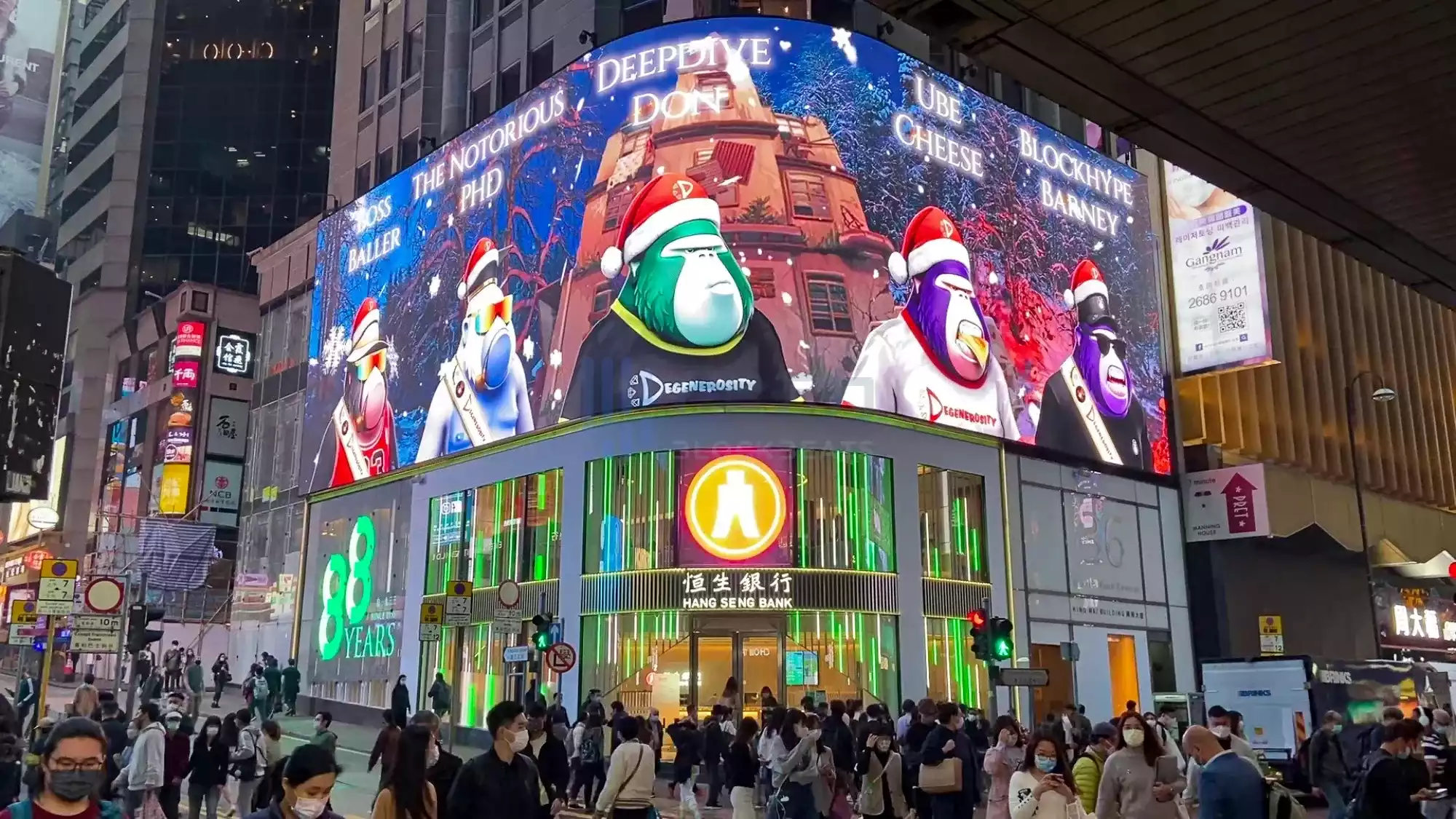
As soon as this news came out, there was a frenzy in the currency circle, which triggered a wave of skyrocketing "Hong Kong concept currency". Obviously, behind this skyrocketing price undoubtedly heralds the transfer of confidence among crypto investors. At the same time, it also caused many virtual asset trading platforms to move frequently, and Hong Kong issued a gesture of "applying for a license" to enter the market, and many high-quality blockchain projects went to Hong Kong to lay out their ecology.
For example, on February 15th, Conflux Network announced on its official Twitter that it has reached a cooperation with China Telecom and plans to launch the first BSIM pilot project in Hong Kong later this year. As a new public chain focusing on the aggregated cross-chain oracle track, PlugChain supports Hong Kong's active embrace of Web3.0 ecological development, and also attaches great importance to the official ecological layout in the Asia-Pacific region. In the future, PlugChain will negotiate with the Hong Kong government on Hong Kong dollar stable currency and infrastructure cooperation.
On February 20, Justin Sun, a member of the Huobi Global Advisory Board, announced that Huobi is applying for a Hong Kong cryptocurrency trading license. Justin Sun also revealed that Huobi will launch a new exchange, Huobi Hong Kong, in Hong Kong, and the new entity will focus on providing trading services for institutional investors and high-net-worth individuals in Hong Kong. In addition, some project parties and institutions also announced that they are applying for licenses related to encrypted assets in Hong Kong, including OKX, Bitget, and Hippo Financial Services Limited, a trust service provider of Gate Group.
Cameron Winklevoss, co-founder of cryptocurrency trading platform Gemini, recently tweeted, “The next round of bull market will start from the East, which will remind people that cryptocurrency is a global asset class. The West, actually referring to the United States, only Two choices: take it or be left behind.Governments that do not provide clear rules and sincere guidance will miss out on the greatest period of growth since the rise of the commercial internet and will miss out on shaping and becoming the financial foundation of the future of this world (and beyond) opportunities in the foundational part of the facility."
It is not difficult to find that Hong Kong has been embracing Web 3.0 since last year, making crypto investors bet on Hong Kong from the recent US SEC’s heavy blows to cryptocurrency exchange Kraken, BUSD issuer Paxos, and Binance. Such as the eastern encryption-friendly regions, from the perspective of regulatory policies and the active layout of the cyberport industry this year.
Hong Kong is quietly becoming the center of Eastern Web 3.0.
However, Hong Kong also faces challenges in becoming a Web3.0 hub. One is that the existing regulatory framework designed for traditional assets may not be suitable for rapidly developing digital assets and cutting-edge technologies."Hong Kong Digital Asset Regulation"Same business, same risk, same rules
This principle means that traditional financial regulation also applies to digital assets. Just the high barriers to obtaining a license have made it a more favorable playing field for established institutions. But innovation often comes from the unpredictable "grass roots". Therefore, how to create space for bottom-up innovation is an urgent problem to be solved.
Also, while Web 3.0 is fundamentally a tech movement, Hong Kong is not a tech hub with the same resources as Shenzhen or Silicon Valley. Therefore, Hong Kong also needs a differentiated technical infrastructure for digital assets.
The security of digital assets is different from that of traditional assets. Their on-chain nature means that digital assets cannot rely on a closed security system like traditional finance. Licenses or regular audits cannot ensure the safety of client funds on a centralized platform. Advanced technologies like multi-party computation are needed to give asset owners full control or co-management of their assets.
More importantly, in order to comply with new regulations, institutions also need solutions that can achieve distributed private key management and fund isolation. Custody, institutional wallets, and digital security are just some examples of the infrastructure required for a digital asset ecosystem.
Conclusion:Conclusion:
In short, although Hong Kong has the ability to become a virtual asset center in Asia to a certain extent, whether it can truly lead the development of the virtual asset industry in Asia still needs to be seen how the Hong Kong government will carry out research in a proactive manner in a special way to promote the virtual asset industry in the future. Responsible research and innovation of assets, accelerate industrial development, and effectively respond to opportunities and challenges brought by new assets.

In the future, I hope that as mentioned in the "Hong Kong Declaration": "Through a consistent, clear and clear comprehensive regulatory framework, it will help to lay a solid foundation to meet the financial innovation and technology brought about by the rapid development of global virtual assets." develop."