






Inventory of 60 new public chains in the year, the next round of bull market is among them (Part 1)


According to the latest statistics from GlobeNewswire, the global market for blockchain technology will be US$3.4 billion in 2022, and will reach US$19.9 billion by 2026, growing at a compound annual growth rate of 43%.
Blockchain technology is becoming more and more important today.From concept first to application implementation, this technology not only brings disruptive experiences such as NFT and Metaverse to users, but also empowers traditional industries such as finance, social networking, and sports, greatly expanding the boundaries of its development. Although the global economy is struggling under the macro headwind this year, and the encryption market is also affected by it, it is gradually entering a cold winter, but benefiting from the increasing popularity of blockchain and related technologies in digital identity, payment, transaction and other applications, the growth trend in the encryption field is expected to continue .
As the most important underlying infrastructure in the encryption field, the public chainHow to prepare for a rainy day and build a public chain platform will have the opportunity to create a more complete and rich Web3 ecosystem in the future.Looking back at the public chain projects in the last round of bull-bear transition in the encryption industry, it is not difficult to find that, such as Solana, Cosmos, and Avalanche, public chain projects that have exploded by tens of times or hundreds of times are all accumulated since the birth of the bear market headwind, and they seized the opportunity to stand out in the bull market , followed by rapid expansion, the market value of these public chains at the peak of the bull market exceeded $300 billion.
Before introducing the new public chain, let us review the existing public chain development pattern. In 2022, Ethereum will be "one-of-a-kind", and around the scalability of Ethereum, a compatible EVM-based public chain has emerged. At present, the EVM-based public chain has formed a huge encrypted ecological island group. In the entire public chain ecology It counts. Instead of EVM-based public chains such as DFINITY, Polkadot, Flow, etc., technological innovations are carried out from multiple perspectives, each shining brilliantly. Interested developers can be found at"Interpretation of the development pattern of the public chain, "a hundred chains contend" may be the general trend"Learn more about the development pattern of the public chain in this article.
Understand the opportunity to better grasp the opportunity,In this round of bear market, which new public chain projects should we pay attention to? What development opportunities can be seized? This article will give you a systematic inventory of about 60 new public chain projects from L0, L1, and L2 this year.first level title
2022 New Public Chain Highlights
A few things you need to know about the 2022 new public chain:
Upstarts of the Move series are coming
Dedicated chains for games, metaverse, DeFi, privacy, etc.
The modular blockchain is born
Break the "isolated chain" and cross-chain everything
DAO chain returns ownership to community users
The fourth-generation public chain may break through the "impossible triangle dilemma of blockchain"
first level title
60 New Public Chains in 2022 (Part 1)
Starting from the logical architecture of the blockchain, the public chain can be divided into three layers: Layer 0, Layer 1 and Layer 2. in particular:
Layer 0 corresponds to the "transport layer".This is where the Internet and hardware are connected, and it allows blockchains to interact with each other. For example, both Polkadot and Cosmos have created a cross-chain interoperable ecosystem at this layer. Also, being at the very bottom layer, developers don't need to start from scratch over and over again, as long as they are built using the same layer 0, many features are readily available.
Layer 1 corresponds to "data layer, network layer, consensus layer, incentive layer".This is where data is processed and transactions are processed on the blockchain, block dispute resolution and other technical operations are processed. Ethereum is the most famous layer of public chain, but the most important problem facing this layer of public chain is how to overcome the "impossible triangle dilemma", that is, decentralization, security and scalability. Although Ethereum tries to solve the problem by upgrading through Merge, so far, no public chain seems to be able to solve this problem well.
Layer 2 corresponds to "application layer, contract layer".This is a third-party integration used in conjunction with Layer 1, mainly to improve the scalability and throughput of the blockchain. Currently, Layer 2 technical solutions include three types: State Channel, Rollups, and Plasma. Among them, the Rollups scheme is favored by the Ethereum community, and it is divided into two types: Zero-knowledge Rollups and Optimistic Rollups.
In addition, Layer 3 is the client application layer. Considering that the scalability and throughput of Layer 2 still cannot meet the development needs, it has resulted in the translation of combined operations between layers and the same layer to customized Layer 3, which is no longer part of the It is in the category of blockchain logic technology, and the Layer 3 chain is still in the stage of technical conception, so it is not classified.first level title
Layer 0
secondary title
LayerZero cross-chain lightweight
LayerZero introduces Ultra Light Node (ULN), a chain-wide interoperability protocol designed for passing lightweight messages across chains. LayerZero provides authentic and guaranteed message delivery through configurable trustlessness, relying on two parties to transmit messages at the on-chain endpoints ORACLE and RELAYER. LayerZero supports cross-chain state sharing, bridging, lending, swapping, governance, etc. Funding: Over $135 million.
secondary title
Wormhole connects everything
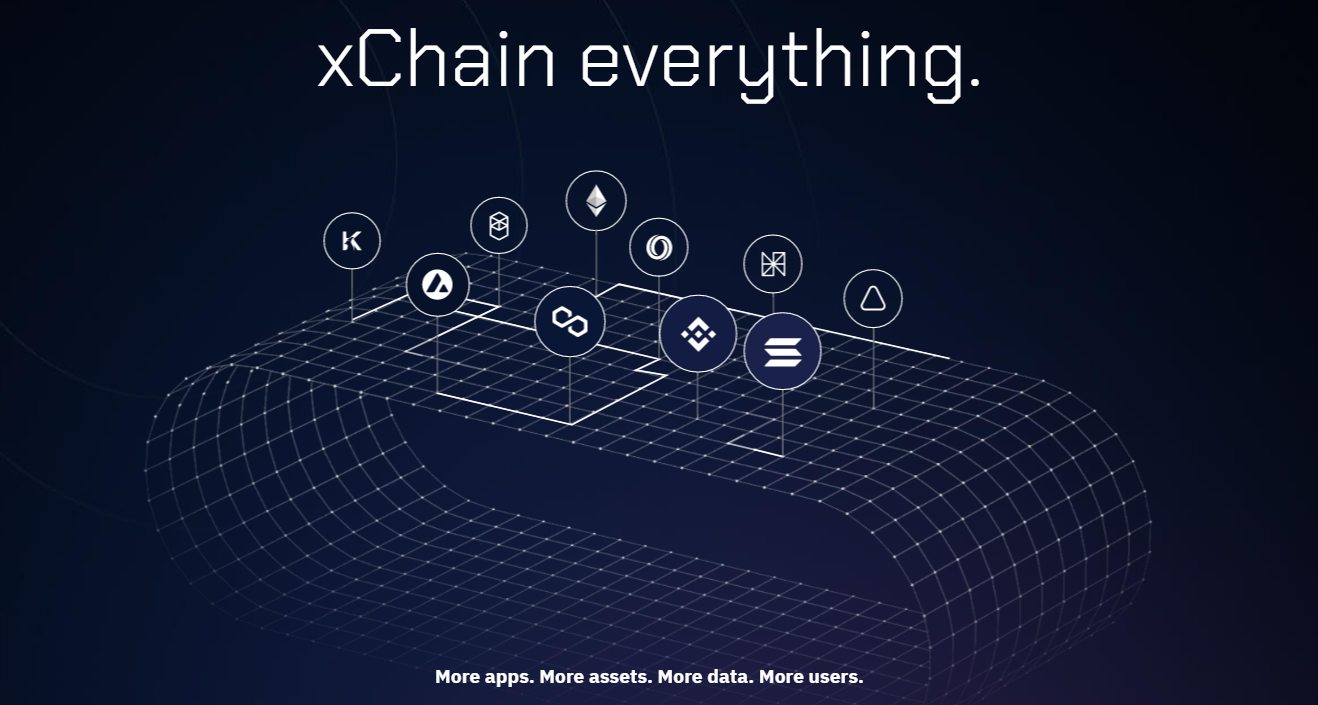
Wormhole leverages the power of universal messaging and a single SDK to make xChain richer than ever with an interoperability protocol, further exploring more about how to expand the user base through xChain. The protocol has a total transaction volume of over $35 B with millions of messages successfully transferred. Currently, thousands of messages are submitted every day. This month, Wormhole made its first attempt to connect to the Cosmos ecosystem to achieve cross-chain federation.
first level title
Layer 1
secondary title
Move is a new public chain with strong attack
After several rounds of strong financing this year, Aptos and Sui, the Move-based public chains, have taken a total of nearly 500 million US dollars in investment from leading VCs including a16z against the market. Their popularity and popularity have risen rapidly, and they have become a rising star in the cold winter of encryption. We used to be$1,200 an Hour for Developers? This article takes you closer to the programming charm of the Move language! "The article introduces the charm of the Move language, and"Aptos VS Sui, Inventory of the Innovation Similarities and Differences of the Two New Move-based Public Chains"text
Sui
Sui is the first permissionless Move-based blockchain designed from the ground up to empower creator developers to build experiences that cater to the next billion users in Web3. The high throughput and low latency performance of Sui will be more suitable for building rich and dynamic on-chain assets from games to finance. Financing of about 336 million US dollars.
URL:https://sui.io/

Aptos
Aptos can be said to be the public chain with the fastest development progress and ecosystem start among Layer 1 of the Move series. Although it is not a new chain this year, it has achieved qualitative development this year. Aptos is a blockchain network designed for billions of people to use decentralized applications. It is committed to redefining the products and applications of Web3 user experience. It is highly scalable, modular, and intelligent through the Move language architecture Contract, reached a developer-friendly environment. The mainnet is currently online. Financing: 350 million.
secondary title
text
Oasys Architecture for Gaming
Oasys Architecture is specially designed for game developers. By combining the best public L1 and private L2 blockchain technology solutions, this unique architecture consists of a multi-layer structure Hub-Layer, which is highly scalable. It can provide users with high-speed, zero gas fee experience. Funding: $20 million+.
text
Caduceus focuses on the Metaverse
Caduceus is the world's first blockchain dedicated to Metaverse development. It is a distributed ledger-based platform with unique technology to more efficiently deploy and run Metaverse applications, P2P communication, IPFS storage and more loads are on the Caduceus Metaverse protocol. It puts the tools in the hands of creators to disrupt the entire worlds of travel, education, social, film and TV, gaming and entertainment. Funding: $4 million+.
text

Sei DeFi Protochain
Sei is the first dedicated blockchain for trading, giving exchanges an edge with native order matching engines, front-running protection, and multi-level order bundling. With a transaction speed of 600 milliseconds, it is the fastest chain on the market today. Funding: $55 million+.
text
Onomy cross-chain DeFi
Onomy is a layer 1 blockchain built using CosmosSDK, using the inter-blockchain communication protocol to bridge with other Cosmos ecological project chains, and is committed to obtaining CEX experience on the chain. At present, Onomy provides tracks for a large number of US dollar foreign exchange markets to access DeFi every day, and has a complete ecosystem across Arc Bridge Hub, Access Mobile Wallet and Onomy Exchange. Funding: $15 million+.
text

Modular Blockchain
Celestia
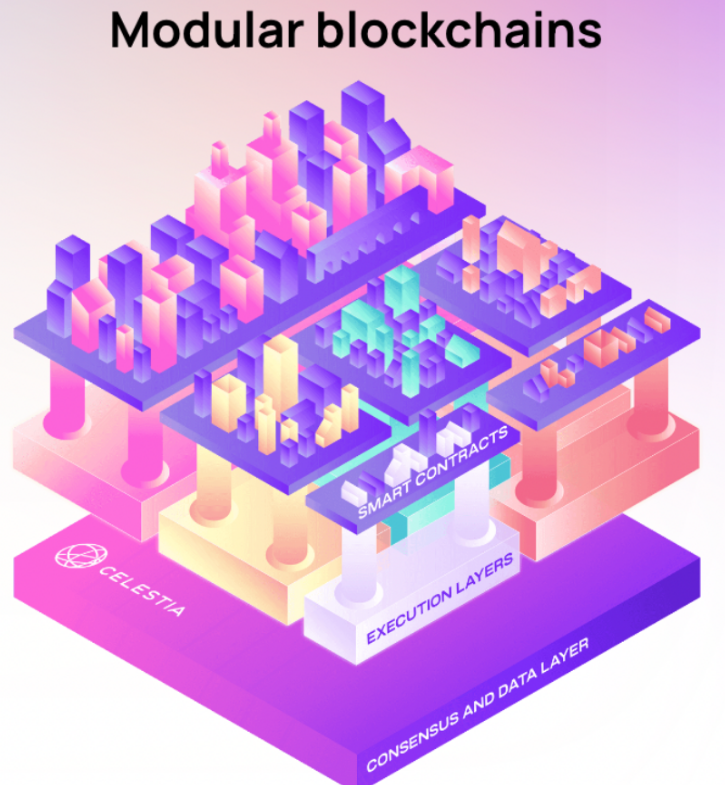
Celestia is the first modular blockchain network that allows sovereign blockchains to break away from the constraints of a single architecture, so they can be flexibly and freely built on their own terms, designed to be easily deployed by anyone with minimal overhead own blockchain. Funding: More than $56 million.
secondary title
text
Unit
Unit connects creators and communities on the decentralized marketplace through powerful, secure and user-friendly tools, which will be used to create and manage the economic infrastructure of DAOs, leveraging the power of Web3 to elevate businesses or brands to a new level level. It is a layer 1 blockchain built using the Substrate framework with funding from the Web3 Foundation. Funding: $13 million+.
text
0 L
0L is the new layer 1 blockchain protocol. It is open, permissionless and community-governed, combining state-of-the-art blockchain technology with truly decentralized governance. 0 L Network is an open source fork of Diem, a community-driven project using the Move programming language, focused on collective contribution and co-construction.
secondary title
text
Anoma
Anoma is a privacy-preserving protocol, "The network should benefit the public, not an industry that turns the public into a commodity." It enables any digital representation of value to be used as a means of exchange, payment, or trade, unlocking a A new way of economic construction.
text
Partisia
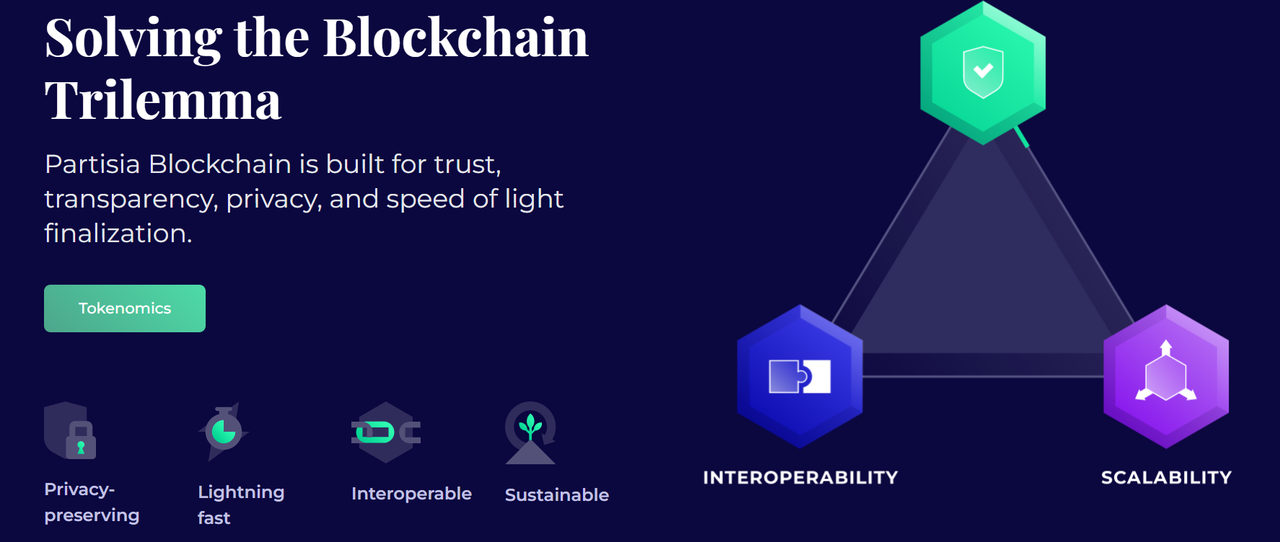
Built for trust, transparency, privacy, and high speed, Partisia's mission is to build a Web3 infrastructure with no single point of trust for universal coordination of public and private information, used by all applications on all platforms. Providing an additional layer of data protection on the blockchain, users can control access to their data through ZK Computations. In addition, Partisia is green and environmentally friendly, consuming only one-thousandth of the energy required by traditional blockchains. Funding: $45 million+.
text
Aleo
Aleo is the first platform to offer fully private applications. They do this by utilizing a decentralized system and zero-knowledge cryptography to secure user data on the network. Funding: $228 million.
text
Worldcoin
Worldcoin is building what it calls the Privacy Preserving Proof of Identity Protocol (PPPoPP). Become the world's largest and most inclusive crypto network by making Worldcoin available to everyone for free. Its vision is to connect the first billion users in a jointly owned encrypted network. Funding: More than $125 million.
secondary title
text
Redbelly
Redbelly is uniquely suited for assets in regulated markets, balancing for the first time the enforceability and social license of regulated markets with the speed and efficiency of blockchain. All participants on The Redbelly Network are identified through our network of off-chain digital identity providers. Financing: More than $3.6 million.
secondary title
text
ZetaChain
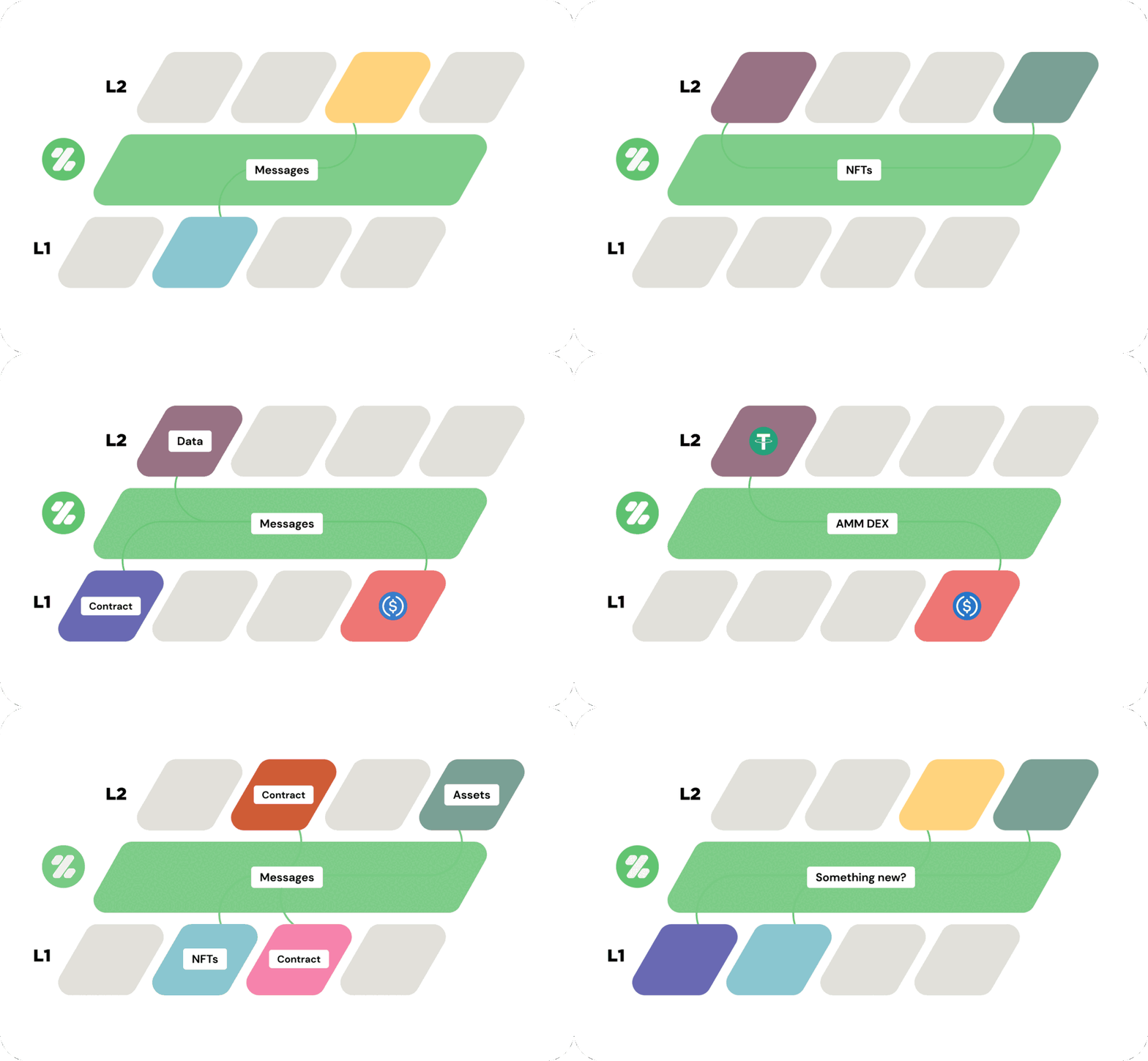
The world's first and only blockchain that connects everything. It facilitates cross-chain and cross-layer value transfers, messaging, and smart contract invocations — enabling for the first time full-chain dApps (odApps) that can leverage liquidity on multiple networks and read and update status. ZetaChain is the base layer for a multi-chain future. The novel blockchain enables multi-chain functionality without the use of bridges or wrapper tokens, and enables easy deployment of omnichain-dApps or odApps. These applications can manage and connect data and value across all smart contract platforms as well as non-smart contract platforms. Supports message passing between the whole chain, general smart contracts and any blockchain. They solved the problem of "cross-chain" and "multi-chain".
secondary title
text
Subspace
Subspace's fourth-generation blockchain built for the next wave of crypto developers. It uses advanced technology to solve the blockchain trilemma without sacrificing security and decentralization, archives the history of the blockchain ecosystem, and enables simple, safe and credible bridges between networks to achieve True interactivity. Interaction with Polkadot and Kusama networks is currently supported. Funding: $33 million+.
text
Quai
Quai Network is a proof-of-work blockchain network, the fastest and most secure blockchain, creating the only decentralized solution scalable to all global commerce, enabling users to Enjoy fast transaction times below. Capable of processing thousands of transactions per second, the Quai network is a scalable proof-of-work solution that is about to be ready for the mainnet launch.
text
PraSaga
State-of-the-art next-generation layer-1 blockchain - designed to avoid the limitations faced by other blockchains and fully supported by a global community ecosystem. Eliminating smart contracts, SagaPython™ has been developed to empower developers. In addition, the hashing power of each chain is 100 times or more higher than that of Bitcoin blocks and the energy consumption is reduced by 100 times or more. A truly innovative solution to the problems faced by other layer 1 blockchains. Funding: Over $4 million.
text
Minima
Minima aims to be accessible to as many people as possible. It is the world's first fully decentralized blockchain, the only blockchain that is completely controlled by users, and the only blockchain that runs completely on mobile phones. It can exchange value with anyone without an intermediary. Currently, hundreds of thousands nodes are validating and building the network. Funding: $5.6 million.
text
secondary title
text
5 ire
5 ire is designed with economic and environmental sustainability at its core. They are one of the fastest growing unicorns in India, supported by a community from all over the world. It has the advantages of interoperability, high throughput and low fees, and the ability to send assets, collectibles or files to any chain, mobile number or Web3 address. The project vision is to make blockchain sustainable and accessible to more than 1 billion people by 2030. Funding: $250 million+.
first level title
Set sail against the wind, the original intention of the new public chain remains unchanged
The crypto space has had a turbulent year as the bear market looms. However, from the perspective of the development of emerging public chains, Web3 is still releasing its unique charm on a global scale.The public chain is the most important basic component in the blockchain field. In 2022, the trend of one superpower and many strong Ethereum has not been broken, but the new public chain is going against the wind and springing up like bamboo shoots after rain.
The above has introduced the development of the annual Layer 0 and Layer 1 new public chains. First, a cross-chain project introducing ultra-light nodes appeared on Layer 0,This means that the security of cross-chain interoperability will be greatly improved. Currently for cross-chain bridging and messaging, almost all existing approaches fall into one of two broad categories. The first is to form a consensus, form an intermediate chain, and verify and forward messages between chains. Due to the low cost, most projects will adopt this method. The second is to run a light node on the chain, which is very secure but very expensive. Looking forward to the development and growth of the ecology in the later stage of the project, it may be able to break the problem of blockchain islands.
This year, the competition on the Layer 1 public chain track is still very fierce. In general, although their respective technologies are different, we can find several commonalities:
First, the development of the new public chain has jumped out of the traditional narrative.
The new public chain is no longer satisfied with simply solving the impossible triangle dilemma of the blockchain. In addition to insisting on solving security and scalability issues on the basis of decentralization, they have found other ways to help the Web3 industry develop better;
Second, the transformation of the consensus mechanism is the general trend, and the public chain pays more attention to green environmental protection.
This is also inseparable from the vigorous "green blockchain" action this year. Everyone hopes to reverse the bad impression that the blockchain "destroys the environment", and even a dedicated environmental protection public chain has emerged, which has been sought after by the global community;
Third, except for a few public chain upstarts, the financing of most public chain projects is not optimistic.
We know that the development and growth of the public chain, especially the Layer 1 public chain, is not achieved overnight. Its early stage of development is an arduous process that requires intensive financing, talents, and time investment. Affected by the cold winter of encryption, at the critical moment of market tightening, financing support may be insufficient, and many of these new public chains will soon usher in a round of reshuffle.
However, high-quality projects can pass through the waves of time and get out of the encryption winter with technological innovation. They may become the next unicorn star with a hundredfold growth. Let us wait and see. This article is the first article of the 2022 new public chain inventory. In the next article, we will focus on the development of Layer 2 public chains. Please stay tuned.


