Analyze the deep-seated reasons for traditional brands to accelerate their entry into Web3



Original source: metavise
Compilation and arrangement: Baize Research Institute
Web3 has the power to revolutionize the way brands and customers connect with each other. Many brands are already experimenting with using NFTs and metaverses to increase brand awareness and consumer loyalty in a way that traditional social media and e-commerce channels simply cannot.
NIKE, Panini, and Vodafone were the first to recognize the value of NFTs, while luxury brands such as Gucci, Balmain, Prada, and Balenciaga have launched their own NFTs.
"How do you integrate business with Web3?" This is a question we are often asked by traditional organizations.
first level title
Talent and Human Resources
Motivate and coordinate a global pool of on-demand talent
There are two key factors for traditional organizations/enterprises wanting to support Web3: ownership and decentralization.
The emergence of organization-native tokens that can be traded with other cryptocurrencies, fiat currencies, makes it easier for organizations to motivate and pay talent from all over the world for one-time, short-term and long-term tasks.
As organizations become more distributed than ever, leveraging a global talent pool can help organizations source the right talent at the right time, keep their cost base low and optimize output.
For example, I contributed five articles to Global Coin Research, an investment DAO (Decentralized Autonomous Organization) that invests in early-stage blockchain startups.
Instead of a fixed payment, I received 100 GCR tokens, which equate to about $370 at the time of writing (about $75 per article). This gives GCR an edge over traditional competitors, who have to pay talent a fixed salary or incentivize them solely through "exposure."
Encourage staff
Similar to the previous point. Tokens can be used not only to pay employees, but also to incentivize long-term work. The longer a person works in an organization, or the more work done, the more tokens can be unlocked.
first level title
Operations and Technology
governance and decision making
When organization tokens are used in conjunction with voting tools like Snapshot, tokens can be used to vote on important decisions. This way, voting is truly secure, transparent, and the results immutable. You can also write rules for how many people voted, what type of voters they voted for, and when polls close.
Opening up your core team, customers, partners, and community to the ability to influence decisions can be an important selling point for them to agree to work with you or use your product.
Remote work and team cohesion
Some pundits predict that in the future we will spend more of our work time in virtual worlds, connecting with globally distributed colleagues in virtual worlds on metaverse platforms like The Sandbox.
first level title
finance and investment
money management
Tools like Llama provide financial management services for decentralized organizations.
what does that mean? Well, Web3 organizations often raise millions of dollars in funding, and managing those funds comes with a lot of responsibility. Fund management involves determining budget allocations, asset diversification strategies, lending strategies, and internal and external governance.
To raise funds
Many brands, especially independent creators, are realizing the powerful financing utility of Web3. Whether issuing social tokens or NFTs, brands can raise millions of dollars overnight to fund ideas, products, communities, and philanthropic initiatives.
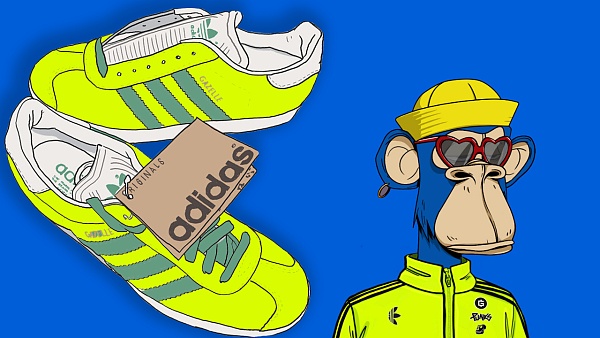
NFTs can be used to raise funds and build stronger communities with customers, fans. Adidas, for example, has raised $22 million by recreating purchased Bored Ape NFTs.
On the other hand, indie creator Alex Masmej raised $20,000 by selling his social token SALEX to fund his move to San Francisco. Token holders will share in the future benefits and decide the creative direction of Alex.
Consortium creation and management
Raise funds and manage the distribution of funds in a safe, fair and transparent manner, which can be useful for brand partnerships, joint investments in on-chain and off-chain assets (or crypto and non-crypto startups), and joint ventures.
Investment and asset diversification
A) Buy, hold and trade cryptocurrencies, NFTs
It’s no secret that the crypto market is volatile — at least for now.
Despite its ebbs and flows, cryptocurrencies, like the broader financial markets, appear to be on the rise over time and can be a convenient investment or part of an organization's diversification strategy. NOTE: THIS IS NOT FINANCIAL ADVICE
B) Pledge cryptocurrency
In addition to buying and holding cryptocurrencies, tokens can also be staked, and if executed properly, staking can offer organizations the opportunity to generate significant passive income outside of product and service sales.
C) Investing in cryptocurrency funds (investing in DAOs, index funds, etc.)
Crypto startup investment funds like Flamingo DAO and Global Coin Research have easy access to the deal flow normally only available to top VC funds, and exposure to the high-risk, high-reward opportunities that come with early-stage startups.
governance
governance
Vote on governance decisions
See #Governance and Decision Making#
Strengthen security with multi-signature contracts
Authorization can be assigned for different types of decisions.
Multi-signature contracts, similar to multi-signature bank accounts, require multiple people to co-sign transactions in a wallet.
Given the private-key nature of wallets, and the fact that transactions are presented on a public blockchain for all to see, this provides more transparency for decentralized organizations, even those using Web3 in some part of their business.
intellectual property
The blockchain can serve as an IP registry where intellectual property owners keep their digital certificates.
automatic distribution of royalties
Intellectual property on the blockchain can be used to capture royalty triggers and events (such as the streaming of a song), and generate and distribute royalties to intellectual property holders.
Not only that, but subsequent sales rights can be encoded into smart contracts. For example, if I create and sell NFTs, I can also earn a percentage of subsequent sales.
first level title
product
Incentives from the public
Let's face it - most innovation initiatives within companies struggle to get off the ground, bureaucracy often gets in the way, but sometimes a lack of 'out of the box' thinking or a customer-centric mindset can also kill a lot of effort .
However, if you use tokens or NFTs, then you can better mobilize innovators from around the world to help your organization innovate business models.
This is exactly what many Web3 native organizations are doing. For example, the blockchain protocol Polkadot offered nearly 1 million native tokens as a reward DOT to support developers in building an ecosystem.
Financing of new products and growth initiatives
Raising funds for new products can be difficult for traditional organizations—especially when the new product strays away from the core business.
But with the emergence of the token economy, brands can use social tokens, or NFTs, to raise funds for new products, and users can invest in exchange for early access, distribution of future revenue, and lifetime access to products.
Build on-chain products at speed and scale
Building a distributed team of developers on a blockchain can provide organizations with advantages in terms of development speed, delivery scale, and geographic reach.
first level title
marketing
Influencer and Brand Partnerships
Collaborating with influencers has become big business in the Web2 world - especially on Instagram. But when it comes to the Web3 world, the results of working with influencers can be huge.
For example, The Sandbox aggressively courted influencers like Snoop Dogg to its metaverse; Fortnite teamed up with rapper Travis Scott for an in-game 10-minute concert that attracted 12 million simultaneous viewers.
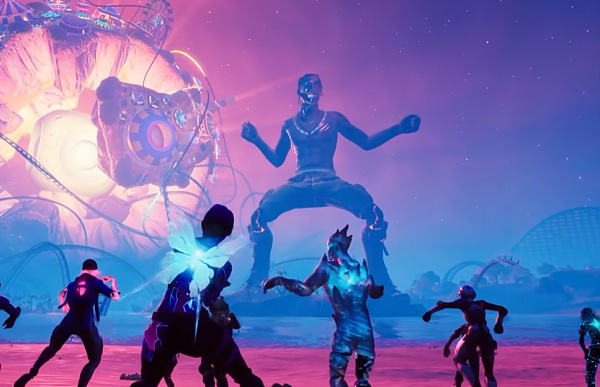
Whether it’s collaborating at events in virtual worlds (like Decentraland, The Sandbox, Ethereum Towers), or collaborating on NFTs, there are countless ways to get influencers interested.
Partnering with influencers (musicians, actors, social media personalities, influencers, etc.) is a great way to position your brand and expose it to a whole new audience.
Encourage sharing and dissemination
Ever since the advent of social media and the "share" button, we've been used to sharing content with friends and colleagues to resonate.
But when we share content, we’re actually helping content creators get the word out for free — whether it’s a social media influencer or a YouTuber.
Creators owe fans a push.
This is exactly what Web3 Social Media Minds is building: rewarding users with tokens for posting, sharing and broadcasting, liking content.
How good this incentive is remains to be seen - but it shouldn't be hard to see how people would enjoy earning tokens for completing these actions.
advertise in the metaverse
Traffic is always going to be monetized — whether it’s a busy highway, an Instagram feed, or now, in a virtual world.
Advertisers looking to make a splash can take advantage of virtual world lands like The Sandbox, Decentraland, Crypto Voxels, and more to get their brand in front of their target audience.
However, it's still early days for most of the Metaverse. Currently, advertisers can reach a larger audience with a lower "per-click" cost through the Web2 platform.
In the future, it will be interesting to see how advertising in the virtual world plays out. Billboards are a great way to do it, but what about placing ads on Snoop Dog's avatar? That would be more effective.
"Vampire Attack"
Earlier this year, when the NFT marketplace LooksRare launched a "vampire attack", it showed us such a strategy.
Given the open and transparent nature of transactions on the Ethereum blockchain (or any blockchain for that matter), LooksRare can directly target users of rival and leading NFT marketplace OpenSea.
Anyone who trades more than 3 ETH on OpenSea between June 16 and December 16, 2021 can claim 125 SLOOKS tokens (about $600 at the time) for free if they sell NFTs on LooksRare.
LooksRare effectively airdropped $400 million worth of its native token, LOOKS.
In just three weeks after going live, the platform had more than 25,000 users and completed more than $2 billion in transaction volume, although some of the transaction volume was supported by users who traded with themselves for transaction rewards of.
This is the big difference between Web2 and Web3.
Web2 organizations keep their customer information in a CRM, private database or email marketing database.
While Web3 organizations may still do so, their user information is public on the blockchain, which presents a new marketing opportunity for traditional organizations wanting to use Web3.
Improve brand awareness and brand positioning (especially Gen Y and Z)
According to research firm Statista, NFT users are largely made up of Gen Y and Gen Z.
So, moving into virtual worlds or Web3 is a sign that a brand is somewhat market-leading, and is a nod to the fact that a brand might want to target a younger audience.
This can also be an opportunity for "old" brands to reshape the public's perception of them.
For example, in terms of traditional organizations, Anheuser-Busch's Budweiser has been an active adopter of NFTs, releasing thousands of NFTs to celebrate the launch of their new beer, Bud Light Next.
demo product
ASX-listed cannabis manufacturer Creso Pharma is using The Sandbox virtual world to showcase its cannabis cultivation facility in Nova Scotia, Canada.
educate target audience
Cannabis maker Creso Pharma has also said it will use its Metaverse experience to educate existing users, potential customers, partners and investors about the cannabis growing process.
Given that all things Web3 are somewhat complicated, most Web3 organizations provide countless educational materials such as blogs, podcasts, videos, and AMAs to help more people enter the world of Web3.
first level title
Sale
Explore new revenue streams
Many new Web3 revenue streams are emerging that organizations can take advantage of, including:
>Selling NFTs (Adidas earned $22 million by recreating and selling their BAYC NFTs)
>Sell membership content and community access (communities may be in Metaverse, Discord servers, or more traditional forms of content)
>Brands that build strong communities around NFTs are also likely to generate significant revenue from online or offline events.
Unlock "Super Fans"
Inspired by the enthusiasm of lead singer M Shadows, the heavy metal band Avenged Sevenfold bought land in the virtual world of The Sandbox and designed NFTs of its music clips this year.
Fans can mint NFTs for 0.1 ETH to gain priority access to virtual concerts, membership content, exclusive merchandise, and more. There are also "dates" with band members, such as playing golf.
This is an opportunity for musicians to reinvent the fan club experience and build stronger relationships with superfans — something many musicians are using NFTs to explore.
Also, this can be extended from music to any brand with a following. For example, a brand like Apple could issue its own NFT. Let’s say, giving superfans access to Apple announcements, exclusive events, or priority service at the Apple Store.
Encourage participation and use of products/services
The NFT market LooksRare we mentioned in the previous article issued short positions, providing users with a more compelling difference than OpenSea. The latter charges a 2.5% commission on all transactions on its platform - effectively operating like a centralized organization.
However, LooksRare redistributes 2% of the commission to traders - converting a portion of the commission into trading rewards for users.
While the "Giant Whale" on LooksRare has been trading NFTs with...self for lucrative rewards. However, this problem can be eliminated over time. Motivating people to use your product - effectively rewarding them - is a distinct advantage.
Provide downstream royalties on subsequent product sales
When minting NFTs, you can set the commission percentage you get from downstream sales. For example, you sell it for 1 ETH, but then you get 10% of subsequent sales of the NFT for life.
distribute
distribute
Proof of Origin (POP) and Proof of Ownership (POO) for physical goods
NFTs could effectively help combat the massive counterfeit market, estimated to be worth around $1.7 trillion in 2018.
Early use cases for NFTs for POP are from the luxury sector, such as NIKE sneakers. In fact, back in 2019, Nike filed a patent for a shoe tokenization system on the Ethereum network.
Imagine getting an NFT for every pair of NIKE shoes you buy, which you can use to verify the shoe's authenticity. Likewise, NFTs can be used as proof of provenance when you sell your shoes to others on the second-hand market.
Secondary marketplace for physical and digital goods sales
As mentioned earlier, NFTs—whether purely digital goods or digital certificates for physical goods—make it easier to sell items online, pay for them, maintain transaction history, verify provenance, and verify ownership.
Brands may set up their own NFT marketplaces, or collect a small fee from sales on third-party marketplaces.
Brands can earn commissions on downstream sales if they choose to do so, which in the case of NIKE could mean an additional $20 for each downstream sale of its shoes.
Supply Chain Physical Commodity Monitoring
Blockchain can help manage supply chains more efficiently by helping to record prices, dates, locations, quality, certifications; and traceability, improving visibility and compliance in outsourced product manufacturing.
first level title
customer relations
Metaverse experiences and events
Hip-hop icon Snoop Dog caused a stir when he announced he would be "inside" the virtual world of The Sandbox. The Snoopverse was popular as part of an alpha release of The Sandbox, offering fans and visitors an immersive experience.
However, to access the Snoopverse, users need to purchase a pass NFT.
Member Content (Gated Content)
Brands, artists and creators can offer their customers and fans exclusive membership content - music, Metaverse experiences, games, videos, podcasts, articles, AMAs, video calls, books, offline events and more.
This gives brands a whole new way to engage with their communities.
Gated Community
Communities are at the heart of online organizations.
And a gated community should provide some utility to token holders. For example, owning 500 GRC tokens will give you access to numerous early stage investment opportunities listed in the Global Coin Research Discord channel.
One of the most popular communities in the early days of Web3 was Friends With Benefits. You need to hold 75 SFWB tokens to gain access to this community of movers and influencers.
Reward early users and shareholders
Creso Pharma, introduced earlier, plans to reward its long-term shareholders with free NFTs as part of an upcoming NFT campaign. NFTs will have utility and some monetary value, so shareholders are effectively rewarded for supporting the organization.
It has become standard practice for Web3 native organizations to "airdrop" tokens and NFTs to early backers.
NFT as a ticket/access mechanism
NFTs can be used to access gated events both online and offline. Brands like Yellowheart make tickets into NFTs, which fans need to hold to access concerts they've produced for bands like Maroon 5 and Kings of Leon.
P2E: Play-To-Earn (earn while playing)
The core idea behind P2E is that the more you play, the more tokens and NFTs you earn.
On average, players of the blockchain game Axie Infinity are making money (between $10 and $20 per day, up to $500 per month), and given that most of them are Filipino teens earning an average monthly salary of about $1,000, that’s great Not a bad thing for teenagers.
But does getting paid ruin the fun? Will gaming become a job?
That remains to be seen.
Development and nurturing of partnerships
Brands can use Web3 to create stronger connections with partners. For example, brands could showcase their partners at their own Metaverse events, or they could airdrop NFTs to partners.
You can loan increasingly expensive Metaverse land to partners for free so they can easily host their own events.
The Metaverse is indeed in its early stages, but the above use cases are just the tip of the iceberg.
S2E: Share-To-Earn (share to earn)
See #encourage sharing and dissemination#
C2E: Creat-To-Earn (Creation is to earn money)
In the previous article, we introduced Play-to-Earn (P2E). C2E is an evolution of this model, aimed at creators.
In Web2, all but the top 0.1% of creators earn very little.
>A typical YouTube video only earns about $6 per 1,000 views.
>The typical Spotify artist makes about $3.50 per 1,000 plays.
>Instagram users get nothing from the plethora of content they feed the platform.
As the decentralized social platform Only1 puts it, through C2E, "participants can produce their own content, mint the content into NFT and monetize it".
Music NFT is an obvious revolutionary use case. Music is issued directly on the blockchain in the form of NFT, without an intermediate platform, to better monetize music.
But that's not the only usage - Web3 media organizations are paying writers and podcasters tokens for their contributions.
L2E: Learn-To-Earn (Learning is making money)
The L2E model is another derivative of the P2E model, which can further motivate you to learn. This particular model dates back to 2015, when Gunnar Stefansson established Tutorweb to enable students in Iceland and Kenya to learn to earn his issued tokens.
Today, L2E is being used by organizations such as Rabbithole, which focuses on Web3 education. For example, you can learn "How to use Token Swap Protocol" to earn 100 SXP tokens.
U2E: Use-To-Earn
Using the Web3 native browser Brave, you can get some native token BAT. Although the income is not obvious, using Brave is better than Google for nothing, which even violates your privacy rights?
According to the "Notice on Further Preventing and Dealing with the Risk of Hype in Virtual Currency Transactions" issued by the central bank and other departments, the content of this article is only for information sharing, and does not promote or endorse any operation and investment behavior. Participate in any illegal financial practice.
risk warning:
According to the "Notice on Further Preventing and Dealing with the Risk of Hype in Virtual Currency Transactions" issued by the central bank and other departments, the content of this article is only for information sharing, and does not promote or endorse any operation and investment behavior. Participate in any illegal financial practice.