Talking about the gorgeous epic of the World Wide Web: Is Web3.0 a technology gold mine or a tulip bubble?


On December 9, 2021, a Congressional hearing on the future of Web 3.0 was held. Six encryption companies including FTX, Circle, and Coinbase made strong statements in front of members of Congress for new species such as "cryptocurrency" and "Web 3.0" , calling for regulation.
Among them, Brian Brook, the CEO of BitFury, dressed in a black suit and brown-rimmed glasses, gave a 5-minute explanation of the ins and outs of Web 3.0, because his statement is clear and easy to understand without a word of nonsense , created the "highlight moment" of the conference, and made "Web 3.0" completely popular in the United States.
Mutual tearing, disputes, speculation, sudden wealth, and mass movements are all staged in the Web 3.0 world. Some technological disruptors are emerging, some new social models are being explored, and a dangerous large-scale social experiment has also kicked off.
first level title
01.Web1.0: linking information, sharing the future
In 1989, a British software developer at CERN (European Organization for Nuclear Research) was frustrated with the way scientists were sharing research within his organisation.
Because there were many different file formats, programming languages, and computer platforms, how to quickly find electronic records and use them correctly became a lingering problem for the staff at that time.
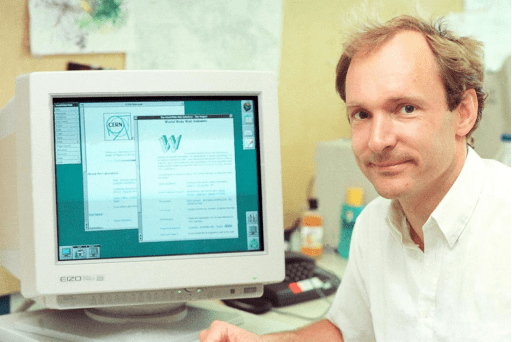
At this time, particle physicist Tim-Berners-Lee (Tim-Berners-Lee) imagined a network system using hypertext - which allows different types of computers to easily share information through a computer network, trying to solve this problem. A pain point. The invention was first documented in 1989.
Hard work pays off, on December 20, 1990, Tim Berners-Lee (Tim-Berners-Lee) released the first website in human history: the homepage of CERN.
The beginning of history is often driven by a trivial matter, just like the butterfly in the Amazon that flaps its wings lightly, which can trigger the subsequent hurricane.
The site was flimsy as a baby, and Tim-Berners-Lee took pains to improve its browser and server code based on feedback from others.
The world's first public website ensued, a simple yet informative website, primarily a basic introduction to networking concepts for those outside of CERN who might be interested in the technology.
On April 30, 1993, CERN (European Organization for Nuclear Research) officially released the underlying technology of the WWW into the public domain, paving the way for the Web to become a royalty-free standard that anyone can use for free.
Web1.0 is slowly entering thousands of households, and it has given wings to dreams for the later commercial Internet to take off.
In 1994, Tim Berners-Lee founded the World Wide Web Consortium (W3C), which is almost as important as inventing the web itself. Without the W3C's open guidance, the web would likely have splintered into many incompatible technologies early on, which would hinder rapid global adoption of the web.
However, it was not the homepages of scientific research institutions or professors that built the first decade of the human commercial Internet world, but hundreds of global news media websites and search engine.
In 1995, Netscape, the most iconic Internet commercialization wave, was born.
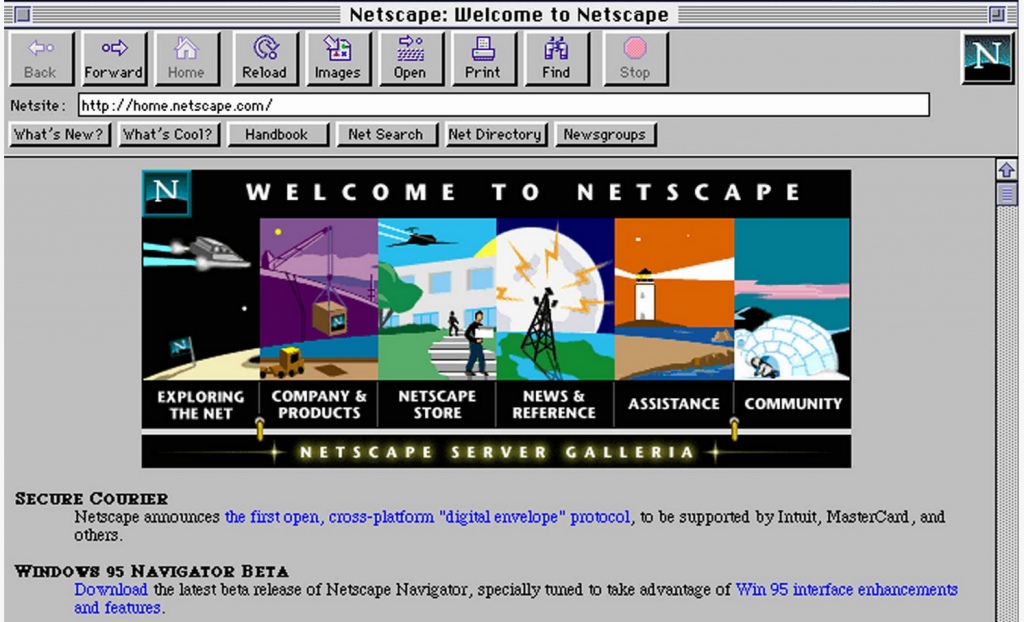
That same year, Microsoft created a web browser for Windows 95. Yahoo! (Yahoo!) was also born, and soon won the favor of venture capital, and the world's first portal started from here.
In 1995, Compuserve, America Online, and Prodigy began providing Internet access. Amazon.com, Craigslist and eBay are launched. Match.com, the first online dating site, is launched. A new technological revolution is pursued by capital, and various projects have sprung up one after another, just like the currency circle decades later.
The Internet became the new darling of capital at that time, and it was also the submachine gun for New Money to attack Old Money.
On August 9, 1995, Netscape's IPO directly ignited the explosive point of the Internet commercialization boom. The opening price of Netscape's stock was 28 US dollars. In just one minute of opening, the stock price rushed to 70 US dollars. The highest price of the day reached 75 US dollars, and the closing price was 56 US dollars.
The "Wall Street Journal" commented that it took GM 43 years to reach a market value of $2.7 billion, while Netscape took only 1 minute. The market frenzy is evident.
In the following year, the browser became the track for many capital competitions, and also started the first battle of Internet commercialization. Relying on its strong financial strength, Microsoft has become a leader in the browser track in one fell swoop and made a lot of money.
In 1997, Netflix was officially established, but its main business is to sell DVDs to users by mail. That's 21 years before it became the world's No. 1 online video giant.
And another search engine giant, Google, was born in 1998, but it is still very weak.
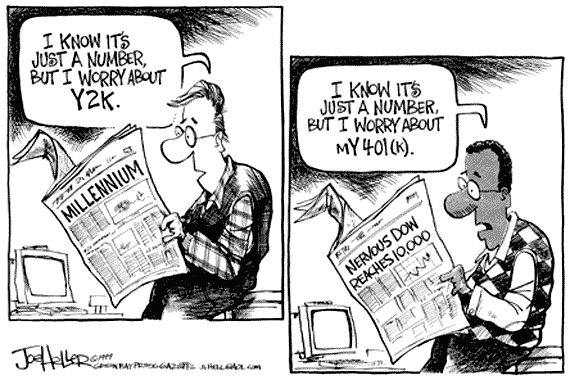
1999 became the craziest year in the history of the Internet, and more than 70% of venture capital in the United States poured into the Internet. In this year alone, more than $100 billion was invested in the Internet in the United States, more than in the previous 15 years combined.
The good times didn't last long, and the Year 2000 Problem became a major event at the turn of the century. Although the Year 2000 Problem (Year 2000 Problem), which made the world feel like an enemy and cost a lot of money, did not explode in the end, the last madness at the end of the 20th century created by the Internet bubble brought a catastrophic collapse to the 21st century !
first level title
02 Web2.0: information interaction, openness and tolerance
Web2.0 is a new concept proposed relative to Web1.0, and it was a hot word in 2003-2004.
However, in terms of "readable and writable" broadly defined by Web2.0, it has already begun to take shape in the 1990s.
In 1997, JornBarger established a blog site called robotwisdom.com, and officially used the term "weblog". This seems to be the earliest form of web2.0.
On August 23, 1999, Evan Williams (Evan Williams) released Blogger, which was the first platform that allowed people to build personal blogs, and allowed users to comment and interact with bloggers. The beginning of .0.

The sprout of Web2.0 is eagerly absorbing the nutrients of the market, but it is also precarious under the bubble of the Internet. With the bursting of the dot-com bubble, the Nasdaq continued to fall to an all-time low of 825.8. It was not until April 2015 that the Nasdaq returned to its highest point of the year.
Fortunately, under the perfect integration of technology and ecology, there is the motivation for Web2.0 to move forward. In 2003, Myspace, Skype, and the Safari web browser arrived. MySpace, in particular, became the most popular social network in 2003, ushering in the mainstreaming of Web 2.0.
In 2004, Chris Sharpley first coined the term "social media".
In the same year, Tim O'Reilly, founder of the concept of open source software and CEO of Reilly Media Company, proposed "Web 2.0", which finally named this new wave of the Internet consisting of blogs, podcasts, SNS, Wiki, etc. It quickly became a recognized mainstream concept in the world.

A single spark can start a prairie fire. In 2004, service providers like Wikipedia and Google had already become the mainstay of the Internet. In China, websites such as Blog Bus and Blog China are already very popular.
In 2007, Williams co-founded Twitter, together with Zuckerberg of Facebook and his Chinese colleagues on the other side of the Pacific Ocean, opened the door to a new world of social networking, video tools, personalized e-commerce and Internet life services .
In the same year, Apple CEO Steve Jobs released the first-generation iPhone, which was officially launched on June 29, triggering a sales frenzy, and was hailed by some media as the "God Mobile Phone", which marked the official opening of the mobile Internet era.
It is also the mobile Internet that pushes Web2.0 to its peak. From typing to voice to short video to live broadcast, from QQ to Weibo to WeChat to Douyin, every form is the result of Internet upgrades and fighting monsters.
If the content acceptance method of Web1.0 is equivalent to watching TV, then the important feature of Web2.0 is the application of smart phones. From television dictating what we receive to smartphones choosing content and enabling communication.
In short, Web 2.0 allows users to be both consumers and content creators, and in the age of Web2, the individual user is the product.
However, when Web 2.0 brings convenience to people's lives, it also exposes problems. We all know that in the era of Web 1.0, we were the ones who absorbed a lot of information from the Internet, but in Web 2.0, the Internet started to collect information from us.
Tech giants like Meta and Google collect data from users to serve targeted ads and content, making more money from their consumer base, and some companies even secretly sell data to third parties without user consent. Three parties.
A series of privacy leak cases have made it difficult to reconcile the conflict between the platform and users. Various pain points such as the Prism incident, Meta leaking user privacy, and Google being accused of quietly tracking users have become lingering haze in the sky of Web 2.0. The root of the scandal is that users provide content and contribute data on the platform, but it does not belong to them.
first level title
Web3.0: value interaction, contract spirit
The term "Web3" was coined by Ethereum co-founder Gavin Wood in 2014. But to get to the root of it, we have to start with the first application of the blockchain—Bitcoin.
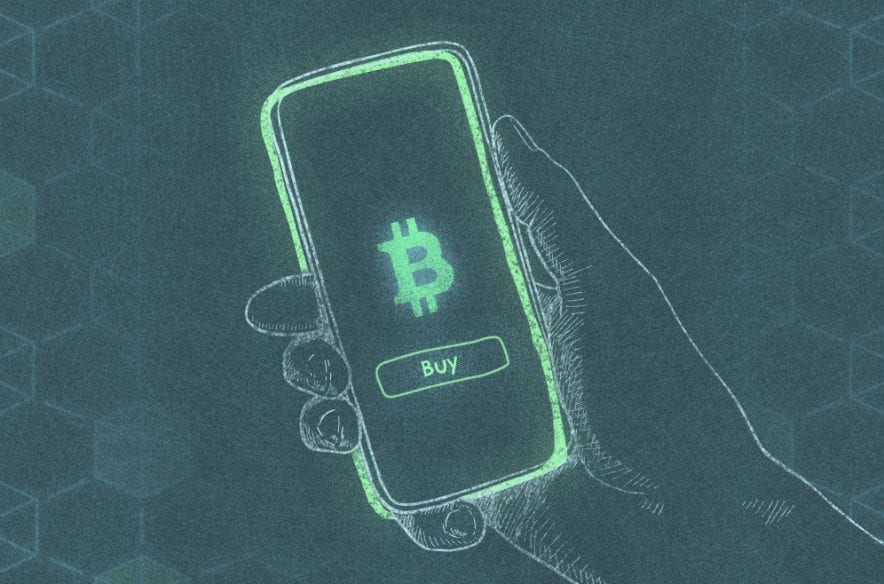
On October 31, 2008, a mysterious figure who called himself "Satoshi Nakamoto" invented Bitcoin and applied the blockchain network design for the first time. People quickly realized that blockchain could be used to carry out all kinds of criminally thrilling financial adventures.
In 2013, ETH was born as the native cryptocurrency blockchain platform Ethereum, and thousands of "alternative coins" emerged on it, setting off a gold rush even crazier than the "gold rush" on the West Coast of the United States in the 1850s hot.
If Web2.0 is compared to the "Internet of Identity", then Web3.0 is the "Internet of Contract", and the essence of the contract is "credible", "fair" and "decentralized". Does this coincide with the blockchain idea?
When it comes to the definition of Web3.0, there are many kinds in the market. Currently, the most recognized statement version of this kind of web3.0 comes from researcher Eshita.
In her opinion: the characteristic of Web1.0 is "readable" (read); the characteristic of Web2.0 is "readable + writable" (read+write); the characteristic of Web3.0 is "readable + writeable". Write + own" (read+write+own). This perfect and advanced expression makes Web3.0, Web1.0, and Web2.0 seem to be an organic whole.

But in the author's opinion, this kind of expression is ultimately explained on a technical level. To use a popular metaphor, Web1.0 is like a slave without land and production tools, who can only survive by working for the landlord; Web2.0 is a farmer without land but with production tools. Tools and landowners obtain income; Web3.0 refers to landowners who have both land and production tools, and what they get is what they get.
However, how to build Web3.0, the market has not given an answer. In other words, so far there is no clear and effective way to quickly bring human beings into the Web3.0 era, but it also means that there are countless possibilities to enter the Web3.0 world.
It is undeniable that many applications initiated by Web3.0 already bear the meaning of "experiment".
DAO, Decentralized Autonomous Organization, is the most basic organizational method of Web3.0. It is formed spontaneously by the people, each organization has a common goal or values, and any decision needs to be completed through democratic votes of members.
DeFi, or Decentralized Finance, is a financial market in the Web3.0 world. It can provide financing, payment, issuance, listing, circulation and other services for Web3.0 applications, including infrastructure for mortgage lending.
The essence of "everything can be NFTized" belongs to the non-homogeneous token assets on the decentralized architecture of Web3.0.
Games, finance, entertainment, search, e-commerce, social networking... almost every application you can think of, there are Web3.0 entrepreneurial projects emerging. There is no doubt that a whole new world is opening up. To understand the rules, there is a fundamental question that cannot be avoided:
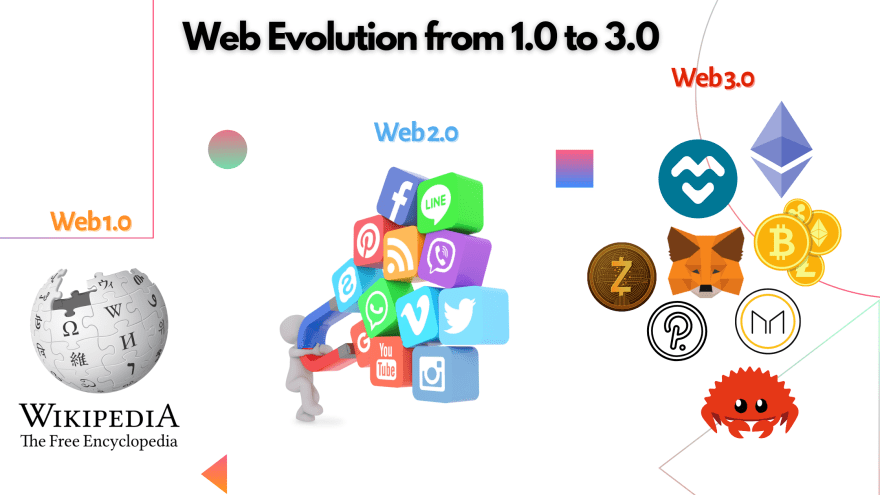
Where is the foundation of Web3.0?
The answer is the public chain. If blockchain technology is the core technology to realize the decentralization of Web3.0, the direct carrier that can reflect its core value is the public chain infrastructure.
Fortunately, in the past few years, the infrastructure layer, centering on the core technology blockchain, decentralized storage, computing, network nodes, payment and other technologies are booming, and a large-scale ecological public chain has appeared on the track, or some A master of technology.
At present, Ethereum is still the most powerful and successful public chain. Its pioneering "smart contract" has pushed its ecology to the pinnacle of prosperity, and it also played the happy song of "DeFi Summer" in 2020. Polkadot, which has better on-chain governance and cross-chain design Substrate chain building functions, and Cosmos, which has a completely open IBC communication protocol, also once became the cross-chain duo.
ChainLink, which focuses on the interaction between the encrypted world and the real world, brings off-chain data to the chain, turning the oracle into the most indispensable middleware in the encrypted world. Last year's dark horse new public chain Solana also took the lead in the ecological explosion of the public chain with its strong TPS.
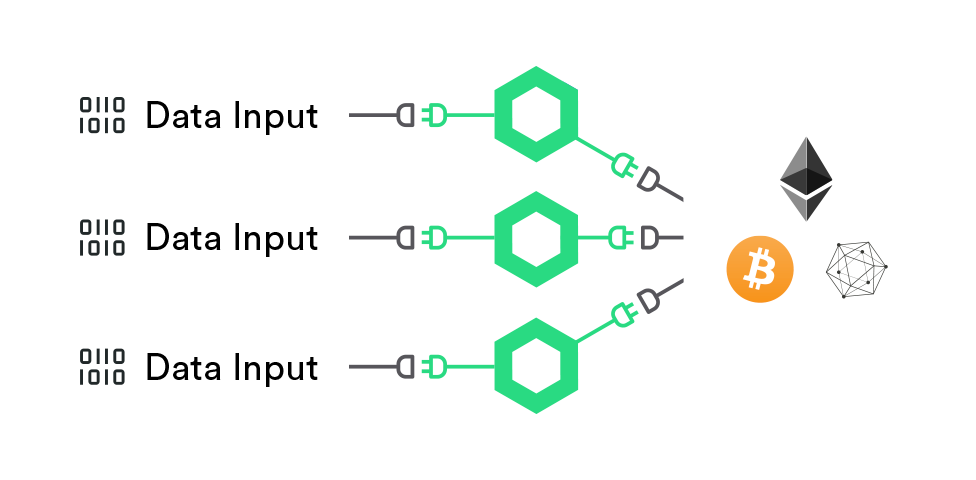
Of course, in addition to the technical carrier - the public chain, the ecological scene at the application level is also the result of its complementarity.
All in all, the public chain, as the infrastructure that triggers revolutions in various fields, has always played the mainstay role in catalyzing the development of Dapps, the DeFi boom and the Web3.0 revolution. The public chain has undoubtedly become a necessary condition for the construction and operation of various Web3.0 .
Obviously, the change that Web3.0 brings to people is to return the value relationship to "who creates, who owns" through decentralized technologies such as blockchain. The content created by the user is owned and controlled by the user, and the value created by it can also be distributed according to the agreement signed by the user and others. The premise of distribution is a fair, fair, and credible "contract". Behind the contract is undoubtedly the "decentralized" technological flame-blockchain.

While we are still struggling with whether Web3.0 is a technology gold mine or a tulip bubble, Web3.0 is getting closer and closer to us...