






Decentralized energy trading? An article takes stock of the application of blockchain in the field of renewable energy


Original source: Paradigm "Research Report: Blockchain Technology in the Field of Renewable Energy"
Original compilation: 黑米@白泽研究院
Under pressure to achieve net-zero carbon emissions by 2050, the energy system is continuing to transform towards decentralization and digitization. Renewable energy sources (biomass, hydropower, geothermal, wind and solar) offer opportunities for energy security, social and economic development, energy access, climate change mitigation and reduced environmental and health impacts.
However, information in energy systems is becoming increasingly complex and decentralized, and centralized structures are inefficient, so adding renewable energy to existing energy systems requires new tools to maintain operational stability and security. In this context, the integration of blockchain technology in renewable energy is key to energy sustainability.
first level title
Features of blockchain
The emergence of blockchain technology and the birth of Bitcoin in 2008 has allowed researchers to explore the benefits of blockchain in various fields such as finance, healthcare, agriculture, energy, etc. As a distributed and digital transaction technology, blockchain can securely store data, as well as execute smart contracts in a P2P system.
Blockchain has the following characteristics: decentralization, permanence and anonymity. User trust in digital systems is not established by a central authority, but by protocols, cryptography, and computer code. So, blockchain greatly increases the possibilities for organizations and individuals to collaborate and interact within these networks.
first level title
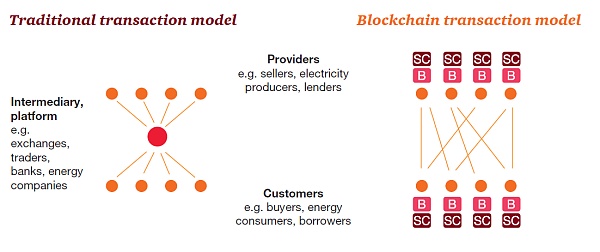
Blockchain in the Energy Industry: Strengths and Limitations
Blockchain technology presents opportunities for the energy industry that can bring about far-reaching changes, but at the same time poses risks to the existing model of the energy industry.
The most important arguments in favor of the use of blockchain technology in energy markets include simplification and automation of processes, greater transparency, and lower transaction costs by eliminating intermediaries. However, there are also some arguments against the use of blockchain technology in the energy market, which include, inter alia, slow transaction speeds, illegal activities, and consumption of energy and resources. In addition, there are fundamental legal issues such as data protection.
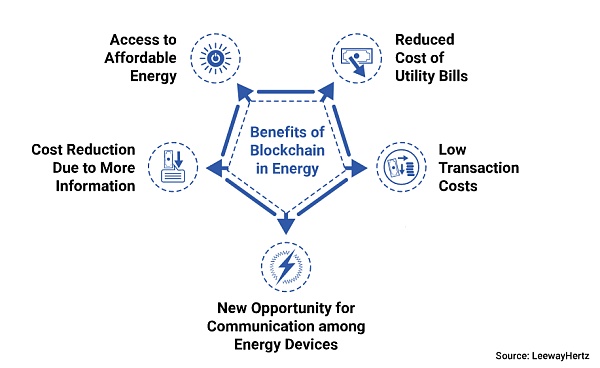
Potential advantages of integrating blockchain in the energy market:
Reduce transaction costs in gas or electricity markets, thereby reducing the need for working capital. Reducing costs is also about providing utilities and grid operators with more information to integrate renewable energy into the grid. Blockchain requires no intermediaries and transactions can be carried out directly, reducing the complexity of the process and the costs associated with it.
New opportunities for communication between energy devices such as water heaters, electric vehicles, batteries, solar photovoltaic installations and the grid operator (smart grid).
Provide affordable energy to underserved communities through a decentralized renewable energy grid.
Energy Efficient Encryption: Encryption converts any data or any information into code to prevent unauthorized access. Encrypting energy saving data and sharing it through blockchain can make the market more secure.
Energy-saving exchange: Blockchain technology seems to have some potential (if energy savings are exchanged for new energy-efficient products that can be purchased), as encrypted energy-saving data can be stored on the blockchain platform to offset electricity bills or purchase additional energy services.
Properly assessing energy savings: The assessment of energy efficiency is difficult because in many cases the benefits of energy efficiency cannot be technically measured or assessed. Integrating blockchain with ICT and process automation can, to some extent, help in assessing energy savings and related benefits.
Increased transparency: Since blockchain is a distributed ledger technology, data can be transmitted securely, tamper-proof, and transparently. Tampering with data shared on a blockchain platform is a very expensive and technically infeasible process.
Improved reliability: If data is stored in a conventional energy system, it is difficult to track and verify it due to the time it takes to collect the information. Since blockchain is a trustless distributed ledger technology, data is stored in different blocks, which can greatly improve the reliability of the entire system.
Increased security and customer trust: Integrating blockchain means customers' energy saving data, information from financial institutions or data related to any stakeholder in the energy market will be encrypted. With smart contract capabilities, blockchain can also automate the process instead of manual, which helps increase customer trust in the system.
Potential positive impact of blockchain on energy company operations:
Billing: Blockchain, smart contracts, and smart meters can enable automated billing for consumers and decentralized small generators. Utilities can benefit from the potential of energy micropayments, prepaid meter payment platforms.
Sales and Marketing: Sales practices may change based on consumers' energy usage, personal preferences, and environmental concerns. Blockchain, combined with artificial intelligence technologies such as machine learning, can determine energy consumption patterns to provide value-added energy products.
Smart grid applications and data communication: Blockchain can be used to connect smart devices, transmit or store data. Smart devices on the smart grid include smart meters, advanced sensors, network monitoring equipment, energy monitoring and management systems, and smart home energy controllers and building monitoring systems. In addition to ensuring secure data transmission, smart grid applications can further benefit from data standardization enabled by blockchain technology.
(A smart grid is an automated electricity network that enables two-way communication transactions between the grid and its customers.)
Grid Governance: Blockchain can provide an integrated transaction platform and optimize flexible resources that would otherwise result in costly network upgrades.
Security and Identity Management: The security of transactions can benefit from blockchain technology. Blockchain can protect privacy, data confidentiality and identity management.
Resource sharing: Blockchain can provide charging solutions for sharing resources between multiple users, such as shared electric vehicle charging infrastructure, data, or shared centralized community storage.
Competition: Smart contracts have the potential to make switching energy suppliers easier and faster. Increased market liquidity could increase competition and potentially lower energy tariffs.
Transparency: Immutable records and transparent processes can greatly improve audit and compliance.
Limitations/challenges of large-scale blockchain mining:
Scalability and power consumption: Due to their design, each transaction on a public blockchain typically requires high power consumption and there can be a long delay before the transaction is confirmed.
Lack of clear and consistent regulation: While various countries such as Japan and Europe have begun to develop regulations on blockchain, the lack of globally harmonized regulations is a major barrier to blockchain adoption in the energy sector. Clear and consistent regulations are needed to govern future distributed energy systems, regulate electricity prices and resolve possible disputes.
Limited grid infrastructure: Optimizing the use of blockchain in the energy sector requires a more interconnected smart grid.
Data Protection: An attacker who controls a large portion of the network can disrupt the recording of new blocks and prevent transactions from completing. This type of attack poses a higher risk for smaller networks, as the processing power required to take over 51%+ of the network would be enormous in a large blockchain.
first level title
Blockchain use cases in the energy sector
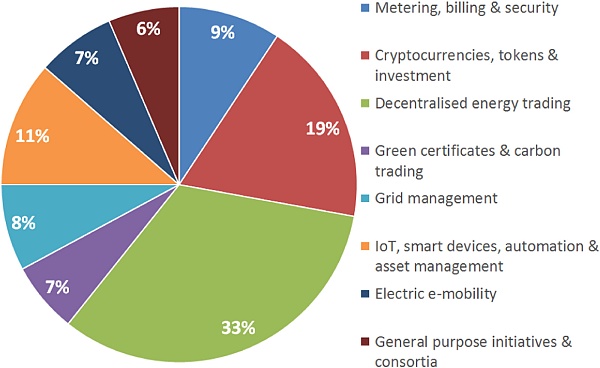
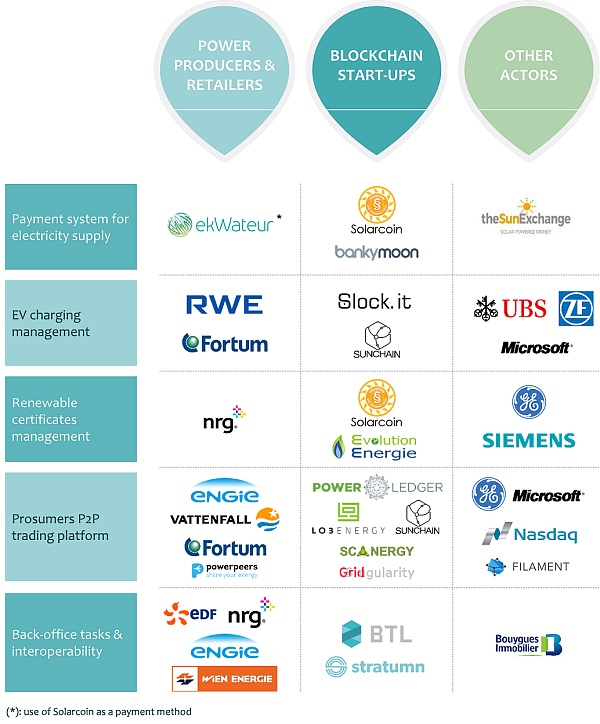
As far as the energy sector is concerned, blockchain technology has proven to be one of the major recent technological breakthroughs. Blockchain use cases can be divided into eight groups according to their purpose and field of activity:
metering/billing and security;
cryptocurrencies, tokens and investments;
Decentralized energy trading;
Green certificates and carbon trading;
grid management;
IoT, smart devices, automation and asset management;
electric car;
Generic measures.
A recent study published in ScienceDirect showed that roughly one-third of use cases are related to decentralized energy trading, which includes wholesale, retail, and P2P energy trading schemes. The second most popular category is cryptocurrencies, tokens and investments, accounting for one in five use cases. This is followed by IoT, smart devices, automation and asset management, and accounting, billing and security, accounting for 11% and 9% of total use cases, respectively. Other items accounted for 6-7% of the total:
Blockchain activity can also be categorized based on the platform and consensus algorithm used. 60% are developing Ethereum-based solutions as a starting point, while 55% have used PoW algorithms.
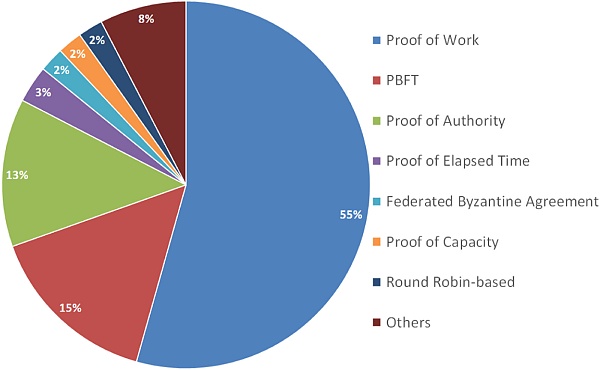
Additionally, most developers are targeting the private blockchain platforms that are most attractive to enterprises. Energy Web, an Ethereum-based blockchain designed for the energy industry, attracts 10% of publicly disclosed projects and is the solution of choice for energy utilities. Other popular platforms include Hyperledger and Tendermint. New projects in the future may turn to more scalable, faster, and more energy-efficient blockchains, exploring blockchain solutions such as PoS or BFT.
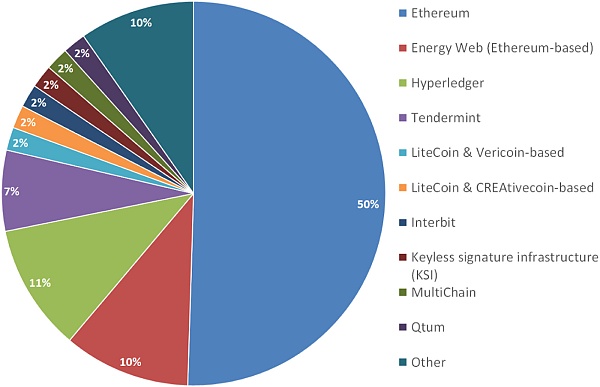
Metering/Billing and Security:
Some developers are exploring the use of blockchain technology in the metering and billing process. When integrated with metering infrastructure, blockchain can automate billing for energy services used by consumers and potentially reduce administrative costs. Blockchain can provide energy production and consumption tracking, inform consumers of the source and cost of energy supplies, and make energy payments more transparent. Additionally, blockchain security features can be used to protect data privacy, identity management.
One of the first blockchain applications in the energy sector is the acceptance of cryptocurrencies to pay for energy and electricity. In fact, more and more companies are accepting crypto payments, including several in the energy industry. For example, BAS Nederland became the first energy company to accept Bitcoin as a new form of payment for electricity bills. Other utilities such as Enercity and Elegant are not far behind. With Enercity, residential customers can make payments over the internet and have bitcoins automatically exchanged for euros. Elegant introduces crypto payments for the delivery of energy services, including gas and electricity.
secondary title
Cryptocurrencies, tokens and investments
Cryptocurrencies are by far one of the most popular and widely understood blockchain applications, with more and more new cryptocurrencies and energy tokens appearing on the market.
Issuing cryptocurrencies specifically for energy applications may have some advantages, since the distribution and use of such cryptocurrencies can be reserved for those who have the greatest interest in the system or provide the most public interest services (for example, in renewable energy applications, if Generators produce the least carbon-intensive energy, and they can be rewarded with more cryptocurrency).
More and more businesses are using cryptocurrencies as a vehicle to attract investment and funding (also known as initial coin offerings). The new cryptocurrency could also be used to reward desired behavior and facilitate investment in renewable energy.
Cryptocurrencies issued to encourage the use of renewable energy include:
SolarCoins: SolarCoin pays people an alternative digital currency for ecological solar energy. It pays one SolarCoin for 1 megawatt of solar energy.
M-PAYG: M-PAYG aims to significantly improve access to renewable energy for people at the bottom of the developing world by digitizing energy access. The M-PAYG infrastructure includes a prepaid solar solution that offers individuals and households the opportunity to earn solar energy through small mobile payments.
Coinfy: Coinfy provides a blockchain-based payment processing and transaction platform that facilitates cross-border transactions. Energy transactions between off-grid solar companies and people without access to energy are possible in developing countries thanks to the lowest transaction fees for cross-border payments on the blockchain.
Specific examples include 4New, a British startup offering an energy token called KWATT. 1 KWATT token represents 1 kWh of electricity per year in a waste-to-energy plant co-located with a cryptocurrency mining farm. Token holders can decide to sell energy from the UK's National Grid or use it to mine other cryptocurrencies such as Bitcoin and Ethereum. Similar to 4New, US-based startup PRTI intends to build a waste-to-energy plant to mine cryptocurrencies.
secondary title
Decentralized Energy Trading
Decentralized energy trading has generated the most blockchain transactions in the energy sector so far.
Some applications are in development, such as:
(1) Wholesale Energy Trading
Blockchain can reduce transaction costs while providing transparent data for multiple parties to access. Blockchain can allow small consumers to participate in energy markets by eliminating intermediaries, reducing transaction costs and possible transaction volumes. The limitations in this regard relate to the scalability and transaction speed that a blockchain system can support. Additionally, a key question is whether commercially sensitive data will be accessible to all consumers?
Blockchain Initiatives for Wholesale Energy Markets:
PONTON aims to develop smart energy product trading solutions for regional markets using blockchain technology. PONTON has partnered with more than 40 European energy trading companies and utilities to develop a P2P wholesale energy trading platform that supports a wide range of physical delivery trading products.
Austria’s largest utility, Wien Energie, has launched a blockchain trial for gas trading with the support of blockchain development firm BTL. BTL has completed a 12-week European blockchain pilot for energy trading, using Interbit, a combination of public ethereum and privately developed software, to improve scalability and support thousands of transactions per second.
BP, Shell, Statoil and VAKT are teaming up to develop a digital trading platform for energy commodities. Transactions involve paper contracts and error-prone back-end processes.
In Singapore, Platinum Energy Recovery is developing an energy commodity trading platform.
Canada's PetroBloq is developing an Ethereum-based trading platform for the oil and gas industry.
(2) Provide a platform for final consumers to access the energy market
Platforms that provide end consumers with access to energy markets can unlock new flexibility services for the grid. In addition, such initiatives can increase consumer awareness and choice of energy supply, and can speed up the transition and increase competition.
Blockchain projects aimed at giving consumers direct access to energy markets:
Grid+ aims to develop a blockchain platform that will give consumers direct access to wholesale electricity markets. Grid+ acts like a retail energy provider, saving energy bills for consumers.
Drift is an energy supply company that aims to provide customers with cheaper electricity prices and more transparent energy bills. Drift combines intelligent algorithms based on artificial intelligence and machine learning, high-frequency trading and blockchain, and applies them to the retail electricity market. Consumers can purchase electricity from local renewable or conventional sources on the P2P market. P2P transactions are recorded and processed by the blockchain.
Romanian energy supplier company Restart Energy has developed a blockchain platform that enables bilateral transactions between consumers and renewable energy producers.
SunContract has launched a decentralized platform for energy transactions between generator providers and consumers in Slovenia. Consumers are free to choose their energy suppliers.
(3) Local P2P energy market
Local P2P energy markets can provide solutions for local energy system optimization that can reduce grid load and delays. Additionally, P2P markets can provide renewable energy producers with an additional revenue stream and potentially lower energy costs for end consumers. But the balance of supply and demand is a key issue that the blockchain system cannot solve alone, and requires a combination of artificial intelligence, machine learning and predictive analysis.
Projects aimed at providing a platform for all energy system stakeholders include:
Bittwatt aims to develop an Ethereum-based digital platform open to distribution and transmission system operators, regulators, energy suppliers, producers and consumers. Blockchain protocols are used to share and synchronize near real-time operational information among stakeholders, enabling decentralized services for energy delivery, balancing, metering and billing. The platform uses artificial intelligence to enable demand response services and market forecasting. In the case of P2P settlements, Bittwatt uses its cryptocurrency BWT.
secondary title
P2P transactions for community projects and microgrids
P2P transactions involve multiple participants buying and selling energy under an agreed contract. Potential use cases in this category include transactions in microgrids, bilateral transactions between producers and consumers, and business-to-business (B2B) energy transactions. This usually involves solar energy, as it is the most commonly produced renewable energy source.
The P2P energy trading market allows participants to save energy costs, reduce the fees paid by participants to distributors (middlemen), and also makes it possible to produce, consume and sell excess electricity, just like a commodity market.
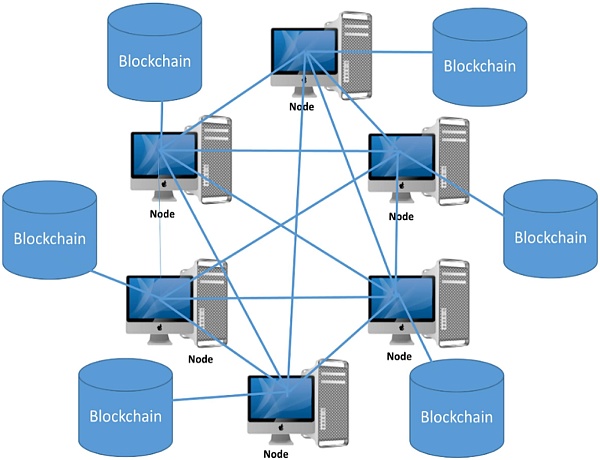
Innovative P2P solutions in renewable energy:
Vandebron is a green energy provider based in Amsterdam, The Netherlands, providing green electricity and conventional natural gas to residential and commercial customers. A company does not produce energy; instead, it sells energy produced by other companies. Vandebron allows participants to trade directly with independent energy producers.
SunContract is a blockchain-based P2P energy trading platform that provides many functions for buying and selling renewable energy. In the EU - Slovenia, the SunContract platform now has more than 5,000 customers. The company's mission is to create a global marketplace for energy transactions where customers can trade directly with each other without intermediaries and allow them to become more "self-sufficient".
PowerLedger uses blockchain technology to create market transactions and clearing mechanisms. In microgrids and distribution networks, renewable energy producers can sell excess energy at predetermined prices.
secondary title
Green certificates and carbon trading
Blockchain technology can be a tool for managing certificates. It offers trust, high levels of security, speed and lower transaction costs along with simplicity compared to today's complex and expensive outsourced management systems.
Several developers are investigating the use of blockchain technology for the automatic issuance and tradable renewable energy (green) and carbon certificates. Current renewable certificates, carbon credits and market structures are fragmented and complex. Due to the high costs associated with this procedure, small energy producers are effectively excluded from applying for carbon credits. Furthermore, the audit process is usually performed manually by a central agency and is prone to error.
Blockchain can automatically issue green certificates, reduce transaction costs, and create a global market for such assets, improving market transparency. The limitation of blockchain in this regard lies in the authentication and verification of the services provided. For example, smart electricity meters integrated with blockchain solutions can automatically verify energy production, but the possibility of interfering with such systems has not been explored.
Initiatives in this regard:
Nasdaq, the world's first stock exchange to explore blockchain technology, has successfully launched a green certificate transaction pilot. Solar producers can obtain certificates issued by Filament, which can then be traded online through Nasdaq's Linq platform.
Veridium has launched an Ethereum-based platform for trading carbon credits through its token TRG.
DAO IPCI is a Russian startup that aims to provide comprehensive services for blockchain-based carbon credit assets.
Evoluton Enerige is experimenting with blockchain to track and certify renewable energy.
secondary title
grid management
Some blockchain developers are working hard to find innovative solutions based on automation and grid management. Potential benefits in this area are the potential for improved balance of supply and demand, better coordinated power distribution, automated verification of grid assets, and increased visibility of resources.
Blockchain faces many challenges here. First, the blockchain system needs to be significantly improved to provide higher throughput and transaction speed, enabling real-time verification; metering systems, grid infrastructure, control and communication systems already deployed in the grid need to be connected to the blockchain. This will result in the creation of massive new data sets that need to be carefully managed and protected from potential cyber attacks.
Initiatives in this regard:
secondary title
Internet of Things, Smart Devices, Automation and Asset Management
One of the most important applications of blockchain technology is related to the Internet of Things technology that is widely used in smart grids.
An IoT-based blockchain infrastructure requires a large number of devices, storage, servers, and a local network to integrate all IoT components into a smart grid. Meanwhile, servers are used to receive data from various sensors, manage the operation of IoT devices, and control different components in the blockchain. Additionally, large amounts of data can be stored in hardware or software storage. Consumers, on the other hand, can interact with the blockchain through their computers to learn about any changes in data transactions.
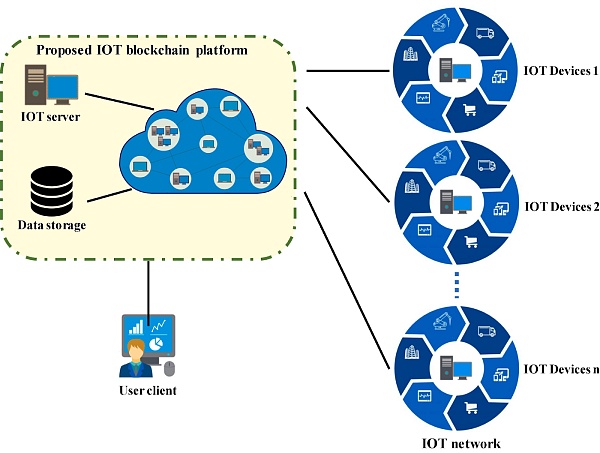
There are already several projects, startups and trials, including:
ElectriCChain is the blockchain solution that powers the SolarCoin cryptocurrency (mentioned in the second use case). ElectriCChain is a non-profit organization actively involved in solar blockchain projects with partners including Bitseed, Chain of Things, Ethereum, Grid Singularity, IOTA.
secondary title
electric car
The decentralized nature of electric vehicles, involving multiple parties (vehicle, driver, charging stations, passengers using on-demand mobility services), is a natural fit for blockchain implementation. The benefits of decentralization include: eliminating the need for a centrally managed EV charging infrastructure, and eliminating pricing between charging stations or transportation providers.
The blockchain solution aims to provide incentives for privately developed electric vehicle charging infrastructure. With this solution, EV owners can achieve greater transparency on their electricity bills and potentially more options when choosing their energy source.
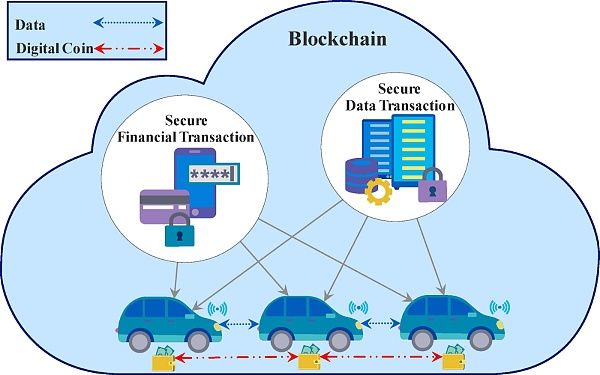
Many companies have explored the use of blockchain technology in electric vehicles:
The Share&Charge platform allows P2P transactions between EV drivers and owners of private EV charging infrastructure. The network of electric vehicle charging stations runs on the Ethereum public blockchain. Users have an e-wallet with access to real-time information on electricity prices and transactions. All transactions can be monitored and tracked by any participant of the network. The platform enables automated billing and can incentivize the building of EV charging infrastructure, as private charging stations can generate a revenue stream by enabling other drivers to charge EVs at their charging points.
secondary title
A common plan to develop foundational technologies
first level title
Major Blockchain Players in the Energy Sector
Top Companies Operating on Blockchain in Energy Market by Revenue:
SAP ($31.7 billion): "Green Energy Tracking and Distribution System" is part of the SAP Cloud Platform blockchain WIPRO-SAP development initiative. The system meets the needs of the fast-growing green energy industry, and also encourages customers to become "producers + consumers", while meeting regulatory requirements for consumption from local green energy.
Acciona ($7.481 billion): This is a Spanish multinational company that together with FlexiDAO created the energy blockchain platform GreenH2chain to ensure that green hydrogen comes from renewable sources and also allows users to verify the green hydrogen value chain in real time from anywhere in the world .
WePower ($23M): An Australia-based blockchain company that connects energy buyers (investors and end users) directly with green energy suppliers, allowing them to pre-purchase energy at below-market prices. The company issues Ethereum-based energy contract tokens, which are sold to customers through an e-commerce platform.
PowerLedger ($5 million): This is an Australian blockchain, software and technology startup working to make renewable energy more accessible. In 2021, the company will migrate its platform from Ethereum to the more energy-efficient Solana.
Summarize
Summarize
Blockchain technology offers a viable solution to the challenges facing renewable energy.
Increased participation in energy trading can have a significant impact by reducing costs and improving efficiency; with the help of blockchain, the grid can reduce inequality, because ordinary people also have the ability to produce and sell energy, "producers are consumers" The role is being strengthened. Ultimately, this will lead to the development of the sharing economy.
Blockchain technology can accelerate grid decentralization and clearly has the potential to benefit energy system operations, markets and consumers. Blockchain technology offers disintermediation, transparency and transaction security, but most importantly, it enables new solutions that enable consumers and small renewable energy producers to play a more active role in energy markets and monetize its assets.
Therefore, blockchain can optimize the renewable energy market. Blockchain, combined with high-speed communications and smart grids, will help us move closer to a digital future of distributed renewable energy generation.
According to the "Notice on Further Preventing and Dealing with the Risk of Hype in Virtual Currency Transactions" issued by the central bank and other departments, the content of this article is only for information sharing, and does not promote or endorse any operation and investment behavior. Participate in any illegal financial practice.
risk warning:
According to the "Notice on Further Preventing and Dealing with the Risk of Hype in Virtual Currency Transactions" issued by the central bank and other departments, the content of this article is only for information sharing, and does not promote or endorse any operation and investment behavior. Participate in any illegal financial practice.


