






Dialogue with Vitalik: Future Outlook and Industry Thinking of Ethereum


Original source: UpOnly
Compilation of the original text: Dong Yiming, Chain Catcher
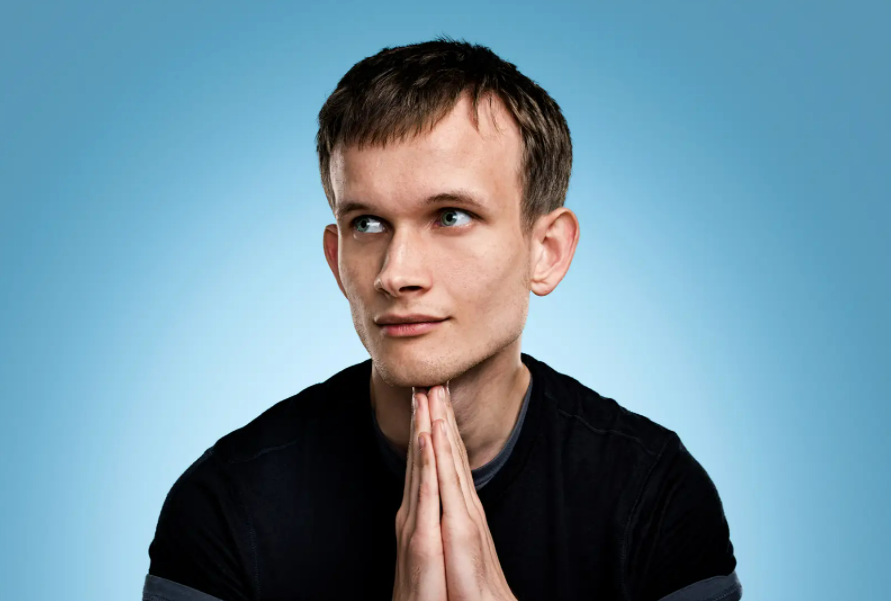
Recently, the encryption video podcast UpOnly invited Vitalik, the founder of Ethereum, to have a dialogue. The hosts are well-known encryption industry KOLCobie and Ledger. They discussed in detail the progress of zkEVM, encryption wallet optimization, NFT prospects, privacy challenges and other issues. The following is Chain Catcher's compilation of this podcast has been partially deleted.
UpOnly: Looking back, is there anything on Ethereum that you think you regret doing that you might have done differently if you did it all over again? Earlier you mentioned that having too many co-founders was one of the problems.
Vitalik:The co-founder thing is definitely a big deal. A few years later, a VC who gave up investing in Ethereum at the time told me that a very important reason was that they knew that a project with 8 co-founders would not work. I think he's right that having 8 co-founders is a big problem because they have very different values and different ideas of what makes a good project and what they want to create.
But the only thing I think he underestimated was that after that, the original structure did collapse, but it turns out that Ethereum has an amazing ability to bounce back.
There are also minor technical issues like we shouldn't be using the Merkle Patricia Tree(Editor's note: Merkle PatriciaTree, also known as Merkle Patricia Trie, is an improved data structure that combines the advantages of Merkle tree and prefix tree. It is used in Ethereum to organize and manage account data and generate transactions. Important data structures for collection hashes.), but use Binary tree from the beginning.
I also wondered what would happen if Ethereum used a different distribution model at the beginning? A more random example — like an airdrop of half or two-thirds of the supply to Bitcoin holders. So what kind of cryptocurrency will it be? Become a Bitcoin fork?
For another example, what would happen if Ethereum did not have a centralized foundation at the very beginning? Then people can participate in the later construction decision of the project by buying in the pre-sale stage, then this will make Ethereum more reliable and neutral, and will it attract more people (who were originally offended by the centralization idea? previous) to participate?
UpOnly:Do you think you'll spend the rest of your life building Ethereum? Or will you choose a successor and do something else yourself, like farming?
Vitalik:I think Ethereum will be an important part of my life for a long time, but I will always do something other than Ethereum, for example, I am trying to write some works now. But I will not force myself to give up working on Ethereum.
UpOnly:We know your parents were also crypto enthusiasts and they got really excited when they found out you were in the industry. They are closely watching the industry every day and participating in the work of this ecosystem. Does this have any impact on you?
Vitalik:This is actually quite strange. You know, like my dad who was an entrepreneur (software company founder) turned crypto influencer. And my mother changed from studying drugs to studying optimistic rollup. I certainly hope they are doing well, and it would also make for a more interesting topic of discussion at our family gatherings.
UpOnly:You once launched a poll on Twitter: If people wake up in 2035 and find that more than 80% of the world's transactions + storage are not in ETH currency, which currency do you hope it will be? There are two options, one is to choose from BTC, USD, ADA, and SOL (the result is that ADA won with 42% of the votes), and the other is to choose from TRON, BNB, CNY and NEO (the result is that TRON won with 42% of the votes). 51.3% win), what is the grand plan behind this poll? Or is this just a piece of spam?
Vitalik:I want to get a sense of what the community values and see if they are paying enough attention to the fact that Ethereum is different from other cryptocurrencies - are some cryptocurrencies more nefarious - they may be more centralized and dystopian than existing business models of. Or are they going to feel that eventually cryptocurrencies will eventually come together -- and I think most people think that's going to be the case.
UpOnly:Does it bother you that people like to say that so-and-so is the Ethereum of China or the Ethereum of other places?
Vitalik:No, I don't think I'm used to people in the crypto community doing crazy things and saying crazy things.
UpOnly:Why do you think NFTs have been so successful at capturing mainstream narratives? If you made a new white paper today, what do you think the future will be like?
Vitalik:People's desire to own digital collections and digital property has been very strong for a long time, and NFT gives people this right. It also attracts more people,Because NFT is also the next mainstream use case of blockchain technology after cryptocurrencies and DeFi.
I know there are African Ethiopian and Latin American artists using NFTs. It's far from perfect, but it's still an effective channel for artists from some non-rich countries to be seen globally.
Regarding the future development of NFT, I would like to give a very random example. Now people will issue certificates to people who have climbed Mount Everest, and people can use this certificate to show off their achievements to others. akin,NFT can also function like a certificate, and it can be traded.If votes can be traded in the future, the Dow could crash very quickly.
Like in traditional democracies, we have a long history of things like secret ballots that are not only done in secret, but you can't prove to others how you voted. If it were possible to be proven true, some people might start forcing the other to vote and democracy would be worse.
UpOnly:What do you think is the biggest research question for Ethereum as a community?
Vitalik:The most important things now are all about software construction and optimization.For example, the working mechanism of PoS, the related concepts of sharding and how it works, such as data availability, samples and how to perform these things and ZK SNARK, we all know how to use these concepts, but there are still many of them that need to be optimized place to make it more effective. There are also MEVs.
UpOnly:What do you think are the biggest hurdles that crypto wallet products need to overcome?
Vitalik:I often remind the general public about wallet security, especially about things like multisig and social recovery. We know that most encrypted wallets have a private key, which is a 32-byte number. If you lose this string of numbers, you will lose the assets in your encrypted wallet, or if your computer is hacked, you may also lose it. Your encrypted wallet.
multi-signaturemulti-signaturesocial recovery
social recoveryThe concept is this: if you have an account, you choose some guardians and form a list of guardians. More than half of guardians have the ability to restore your account. For example, there are 6 guardians in my cold wallet. They are all people I trust very much, but they don't know each other.
The signature of more than 4 guardians can allow the transaction to take place. I also wrote an article about social recovery in my blog vitalik.ca, if you are interested, you can find it. There are still many technical difficulties that have not been overcome, so that it is still difficult for Ethereum users to apply, but I have been working hard to make these technical obstacles smaller.
UpOnly:The single transaction fee on Ethereum is too high for people with small investment portfolios. Think of this as a goal for Ethereum? Do you think there is a solid roadmap to achieve this at scale?
Vitalik:I think achieving this scaling goal requires some sacrifice of decentralization or security or whatever. If we use cross-chain completely. For example, there are different applications and ecosystems on 100 different chains. If one chain is attacked, the entire ecosystem will be threatened by danger.
But when we create multi-chain applications, one chain can recover without the other. Layer2 is getting better and better, there is a lot of work going on here, for example, introducing data compression into optimistic rollup can make it 1.5-2 times cheaper than the original. If full data compression could be applied, optimistic rollups would be as cheap as zK rollups are today (i.e. ten times cheaper).
UpOnly:Yes.
Vitalik:Yes.
UpOnly:How do you feel about the progress of zkEVM? Can you give an example of its application?
Vitalik:I think zkEVM is going very well. People are looking forward to seeing it in action this year, but there are obviously some challenges in terms of optimization and security audits, but I think it's going pretty well. Applying zkEVM in layer1 means that we can use zkSNARK to prove that the execution of Ethereum blocks is correct, which means that not every node in the network has to process every block, and we can see a world——Only one node needs to complete all the computing power, and everyone else only needs to verify this node, so this can save time and money to operate a node.
And applying zkEVM in layer2 means a fully EVM-compatible zk RollUPs - which means it will fully support EVM with no / few modifications to improve efficiency, which will reduce the gas cost Lower because hash functions are harder to prove in zk.
For users, I think that zk rollups are better than optimistic rollups in two points:
First, in optimistic rollups you have a 1 week waiting period to withdraw your assets, while zk rollups do not have this waiting period.Because optimistic rollup relies on fraud proofs, it will trust by default whoever submitted the block, and if a block is wrong, then someone will challenge them for a period of time. In zk rollup, when you submit a block, you submit a block with proof rights. So assuming you build an invalid block, it won't be accepted in the first place either.
Second, the security risk of zk rollup is lower.Assuming that an optimistic rollup needs to process 10,000 transactions per second, only 5 people have the ability to participate in the operation of the node. What if an attacker submits a fake transaction record and knocks down all five nodes? But zk rollup does not allow this to happen at all.
UpOnly:Another question is about security. Now that many institutional investors have entered the DeFi field, do you feel that there are too many risks and interdependencies at present, and a small loophole will cause the entire system to collapse. Do we need to address the way smart contracts cooperate because something buried 5 layers deep could end up being the trigger point for losing tens of billions of dollars.
Vitalik:This is a great question, and the reason I really want to keep these protocols as simple as possible. When I discuss how PoS or sharding will work with the team, I will consider simplifying a line of code as much as possible. There is also a lot of simplification happening because there are many things that can be replicated exactly, like both Optimistic and Arbitrium are EVM chains, and they use the same code that the Ethereum-based layers use.
So you know you have the same thing in the first layer, the same thing in the second layer -- a lot of the same encryption is being reused in a lot of different places, so in four or five different layers, there's It makes sense that many building blocks can be used at the same time.
UpOnly:I was wondering if you think there might be something like a web standard that could be used to secure assets on-chain long-term?
Vitalik:Yeah, I think the standard for this kind of thing is going to keep happening, and over time, everything decentralized has to be upgraded to Layer 2. I recently tried uploading my blog to Mirror, which cost me about $15 in transaction fees. I look forward to the day when ENS will support Layer 2, so my transaction fee will probably shrink to 2 dollars, then maybe 20 cents, and finally 3 cents.
UpOnly:When you bring real privacy to people, what are the risks, and do you think there will be any disputes over this issue in the future?
Vitalik:I think fighting for more privacy is an important challenge and many of us now underestimate the risks of not having it. Just like everything after us will be more encrypted, they will become like twitter to your bank account. We can see how much money someone has sent to another person. If we narrow the scope, we will wonder why this person sent so much money to another person, what is his purpose,It could easily become dystopian.
UpOnly:From an investment point of view, what industry (non-crypto field) would you invest your assets in?
Vitalik: I would choose biotechnology. I think it will develop rapidly in the next 70 years, just like the rapid development of computers in the past 70 years.
UpOnly:Can you tell our audience about your life advice?
Vitalik:My answer is that you can try to become a better person every day than yesterday, for example, you can be more friendly, learn more knowledge, such as start to learn Spanish, mathematics or cryptography, etc. . You can even exercise more. I am working hard to run 20km now.


