Internet blimps are coming to Zanzibar, can World Mobile succeed where Google failed?



World Mobile is launching a high-altitude airship as part of an effort to provide network coverage to two islands in Tanzania.
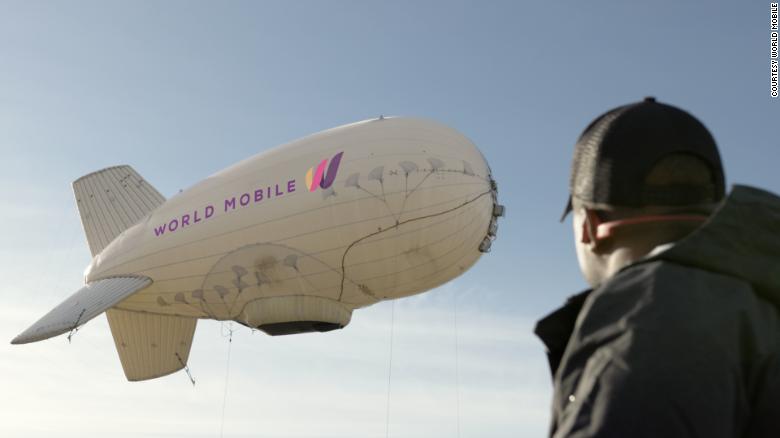
The islands of Zanzibar and Pemba in Tanzania are about to become test sites for the World Mobile (World Mobile) network, and its creators hope that World Mobile (World Mobile) will not only be in Tanzania, but also in sub-Saharan Africa and beyond. Revolutionize the lives of local people through the Internet.
According to the World Bank, only about 20% of Tanzanians have access to the Internet. Even in sub-Saharan Africa, network coverage is limited, high data costs and low digital literacy significantly impact usage. However, this status quo will soon be rewritten by World Mobile's over-the-air technology.
British company World Mobile is rolling out a hybrid network using aerial towers that it says will provide near-zero dead-spot coverage across the islands.
Two solar-powered helium balloons will float 300 meters above land, each covering a range of about 70 kilometers, using 3G and 4G frequencies to transmit signals. The balloons can withstand winds of up to 150 kilometers per hour and can stay aloft for up to 14 days before descending to reinflate. Within hours of inflating, other airboats will be in the air to provide network coverage, ensuring users are never disconnected, the company said.
image description
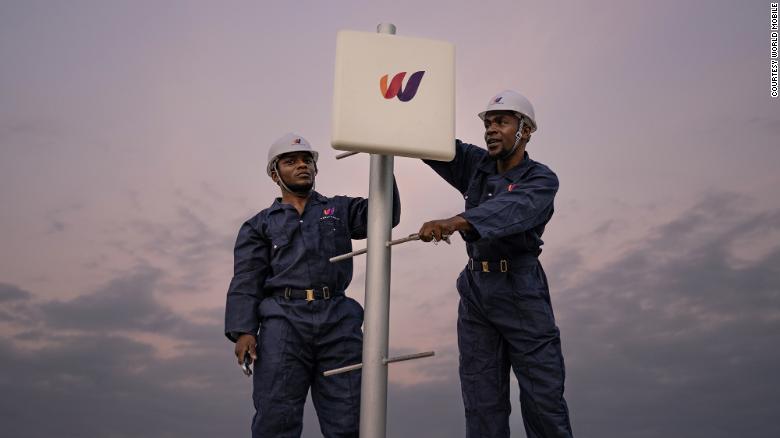
Workers install a World Mobile node
secondary title
Pick up where Google failed
World Mobile aims to succeed where the big guys fail. Facebook's Project Aquila, a network delivery system using high-altitude drones, shut down in 2018. Alphabet's Loon, which uses stratospheric balloons to provide internet connectivity, shut down in January 2021.
The Aquila (High Altitude Drone Network Program) and Loon (High Altitude Balloon Network Program) projects aim to provide network services to remote areas using High Altitude Platform (HAPS) systems. Loon has been used in disaster relief efforts, including after Puerto Rico was hit by Hurricane Maria in 2017, Loon partnered with CNN parent company AT&T, and ran a commercial trial in Kenya in 2020.
Derek Long, head of telecommunications and mobile at Cambridge Consultants, a technology consultancy, said Loon and Facebook failed largely because they couldn't make the economics of the system work. However, "hybrid networks can well overcome this problem by providing high-capacity terrestrial solutions in densely populated areas and low-cost coverage solutions using non-terrestrial platforms."
Long said that while the novelty of the high-altitude craft itself "may create some resistance to market acceptance," if "seamlessly integrated," the hybrid network could be "the best solution to the challenge at hand."
World Mobile is also still experimenting with HAPS (High Altitude Platform) technology, but isn't delaying the rollout of aerial base stations and terrestrial WiFi networks. Micky: "It would be unwise to spend three to four years researching and developing a complete network solution without advancing what we can deploy now."
secondary title
The value of the Internet of Everything
According to Sara Ballan, Senior Digital Development Specialist at the World Bank, in Tanzania, access to the Internet has positive economic impacts at both the individual and national levels.
“For farmers, they can access weather information, market prices, and more convenient payment processes through the Internet. For economies, digital transformation is a driver of growth, innovation, and job creation.” She explained: “Unlocking this This potential is important for society as a whole, especially for the growing cohort of unemployed youth."
Ballan points out that Internet services are only part of the solution: “We are optimistic that (telecommunications) innovations will fill in significant network coverage (in sub-Saharan Africa) within a few years... However, the affordability of Internet service tariffs for the poor remains It is a key issue, which requires continuous innovation in business models to provide cheaper network services."
Micky said that the cost of network deployment in Zanzibar is many times cheaper than traditional telecommunications infrastructure, and World Mobile (World Mobile) aims to provide network services at half the price of existing operators.
World Mobile recently raised $40 million for software development and initial rollout of the network. The company has a network and operating license in Zanzibar, but Micky said he hopes the public will eventually be able to buy 70 percent of the air nodes, run and maintain the network’s node infrastructure and generate revenue from it.
It's an unusual business model in a market dominated by a handful of large multinationals, Long said: "If World Mobile can compete in a market that already has several If you're successful, then that bodes well for the future."
In addition to World Mobile's operating licenses in Zanzibar and Tanzania, Micky expects to receive a license in Kenya early this year, adding that the company has named 18 other countries for its system. World Mobile (World Mobile) has entered a critical year of development, and Micky is very optimistic about the prospects of World Mobile (World Mobile).
Micky: "We built a sharing economy in Zanzibar, proved it in Kenya and Tanzania, and then the rest of the world will be in our pocket."