






Curve Wars: A Brief Analysis of the Development Status of the Curve Ecosystem


first level title
Article translation: Block unicorn
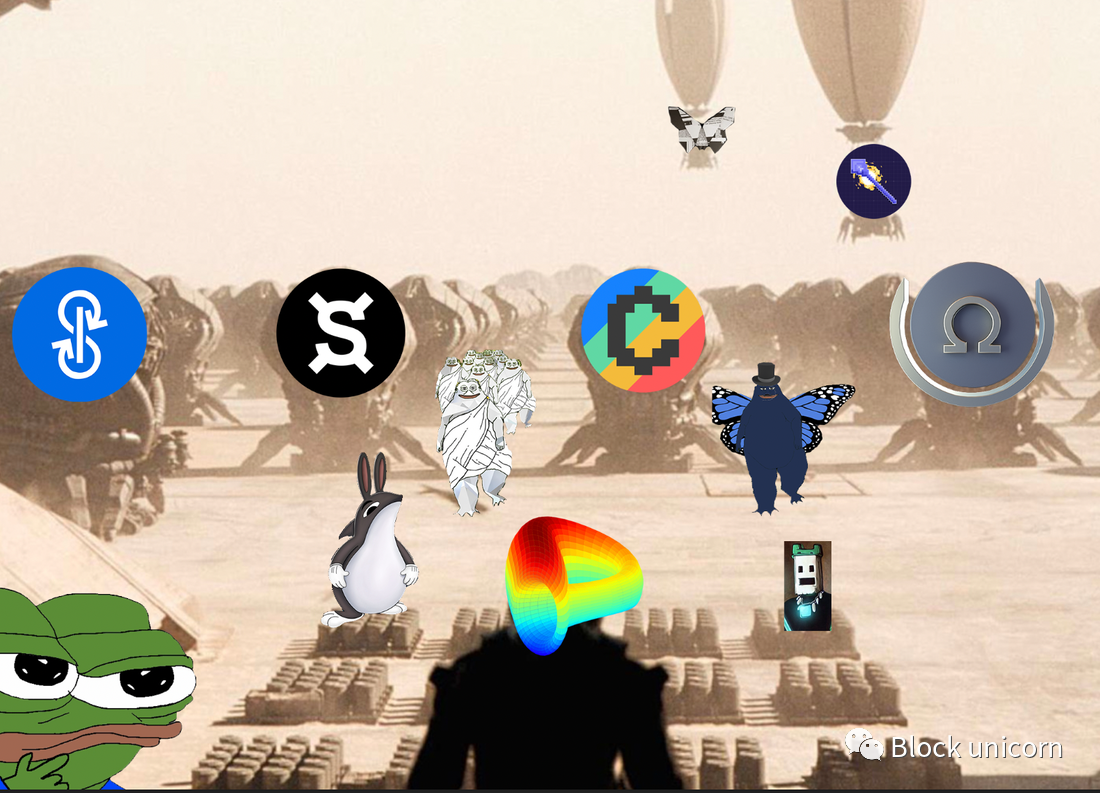
here's a quick story
Before we dive into recent events in the Curve ecosystem, here's a little story time - using metaphors and hyperbole to explain the following in the best possible light.
If you're not interested in that and just want the technical stuff, skip to the next bold headline you see.
In 1936, a geologist named Jean Jacques Dozy discovered an anomaly while exploring New Guinea. Dorsey spotted a strange black rock protruding from the ground with green spots. Surprised by what he found, Dozy mapped out the formation and did some research on it, determined to find whatever goodies (precious minerals) might be lurking beneath his feet. Dozy submitted a report and named his discovery Ertzberg - Dutch for "ore mountain".
Imagine how different things would have been if he hadn't seen this strange rock formation. Wondering if there is a phrase to describe this phenomenon...
Many years passed, and it wasn't until 1960 that Dozy's report landed in the hands of a Freeport Minerals Company executive. Forbes Wilson - the vice president at the time - was fascinated by the ore mountains - and eventually led the expedition to the treacherous summit. Clearly, they liked what they saw.
image description
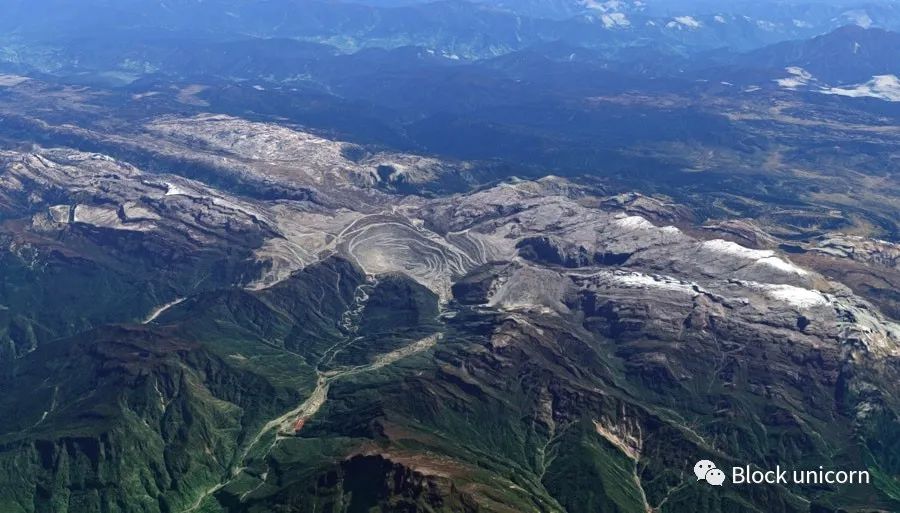
Look at the roads - the roads take years to build themselves
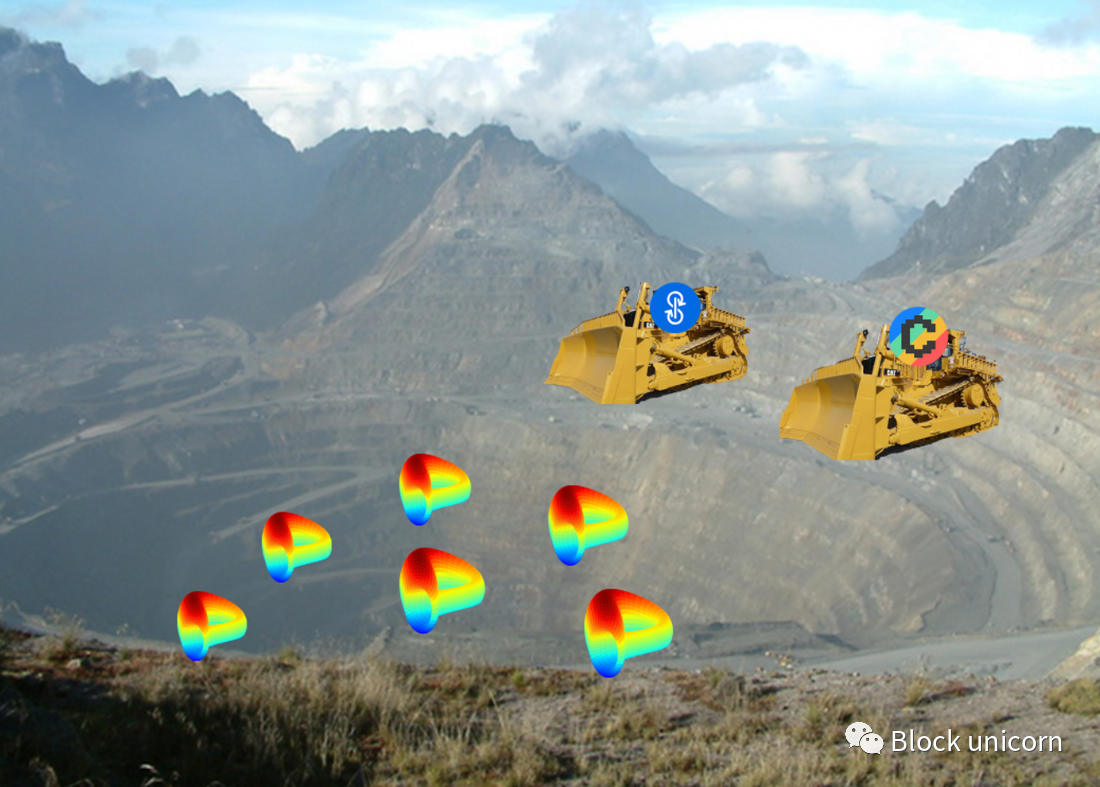
Thirteen years later, the mine is finally open, and after building 116 kilometers of roads, a new town, port and power plant, Freeport is ready to start mining the world's largest gold reserve. The Ertzberg and Grasberg mines have been profitable for many years and have been feats of engineering achievement.
Humanity has won, and we have conquered a true mountain of gold. All it takes is determination and a willingness to look for something out of the ordinary - a real rough diamond, except in this case no diamonds. Oh, and gold is cool too.
Often, the best and most rewarding opportunities come to us after we have tried and failed at a task repeatedly, when we refuse to give up and settle for less than we are worth.
image description
first level title
the war has just begun
"He who controls the spice controls the universe." - Frank Herbert, Dune Films
If you've read my previous posts, you know that the last time I touched on this topic, rumors like the Mochi Finance debacle and the upcoming CVX pump (fortunately it did come) were some of the biggest stories we've ever seen . timeline. It feels like a million years have passed since then, but only three weeks have passed.
This week, the market is doing great. Nearly every DeFi 2.0 token is generating ridiculous volumes, and CRV/CVX has handled transactions gracefully. Hell, it's a total miracle that even YFI pumps.
However, euphoria seems to be out of the picture, as most of the CT participants don't care about the events, ultimately resulting in this brutal war receiving little attention. Aside from influencers like Tetranode, most of this is under the radar, for better or worse.
So, what has changed in the past few weeks, and how has the market reacted to the development of the Curve ecosystem? Let's find out.
For those unaware, whoever has the most CRV wins the game. It's that simple. While we don't exactly know what the game will become--or even why we're playing it--we have a rough idea of it.
Buy tokens at low prices, sell coins at higher prices, do it repeatedly. Decentralized finance (as we all call it DeFi) is a wild west that is still in its infancy, and it will quickly become apparent to anyone who looks just a little behind the scenes. Things can get messy.
Honestly, I didn't expect the war to heat up so quickly. So much has changed in just three weeks (but what seems like an eternity).
CRV and CVX were two of the strongest performing tokens over the past week, and most other DeFi 1.0 and 2.0 tokens also performed well. I will discuss these later in this article, as the price movement is mostly related to what many of these protocols achieve on a daily basis.
There is a strange amalgamation of old and new, with DeFi 1.0 and 2.0 coming together to form DeFi 1.5. At least, that's what I'd like to call it.
But why have so many protocols lost interest in Curve, and what good is it for them? Want to take control of the notorious money-printing Curve? Simple, hold as much CRV as possible and make sure your competitors don't have a chance to buy before you. Simple, right?
"But Convex has already acquired an insane amount of CRV, why bother?" Of course, that may be the case, but that hasn't stopped protocols from throwing their hats - remember our friend vlCVX? There is still an incentive to have vlCVX to control the voting decisions on Convex protocols - because if you haven't figured it out, they are very important and have a lot of influence in the DeFi space.
first level title
like war of the worlds but with tokens
Since my first post, I've learned more about this damned topic than I care to admit. You'd think the so-called Curve Wars would mostly involve reading about Curve and its wonderful native token (I think it's called CRV?), but unfortunately, it required me to read too many of the protocol's documentation and articles.
Let's take a look at some of the most important ones.As mentioned in a previous post, Yearn Finance is an OG protocol that happens to have a lot of money. With a TVL of over $5 billion, Yearn has recently been making waves in the DeFi community thanks to a document detailing the protocol’s revamped token economics. Yearn aims to be a black hole for token buybacks, which has resulted in a pretty good month for YFI holders.
Some of these revisions are very similar to the CRV tokenomics, a development that I didn't expect. After all, Yearn was barely in the Curve Wars conversation earlier this month. Sure, they've aligned themselves with Convex, but that's not news - everyone is buying CVX, and they clearly have the most leverage.
image description
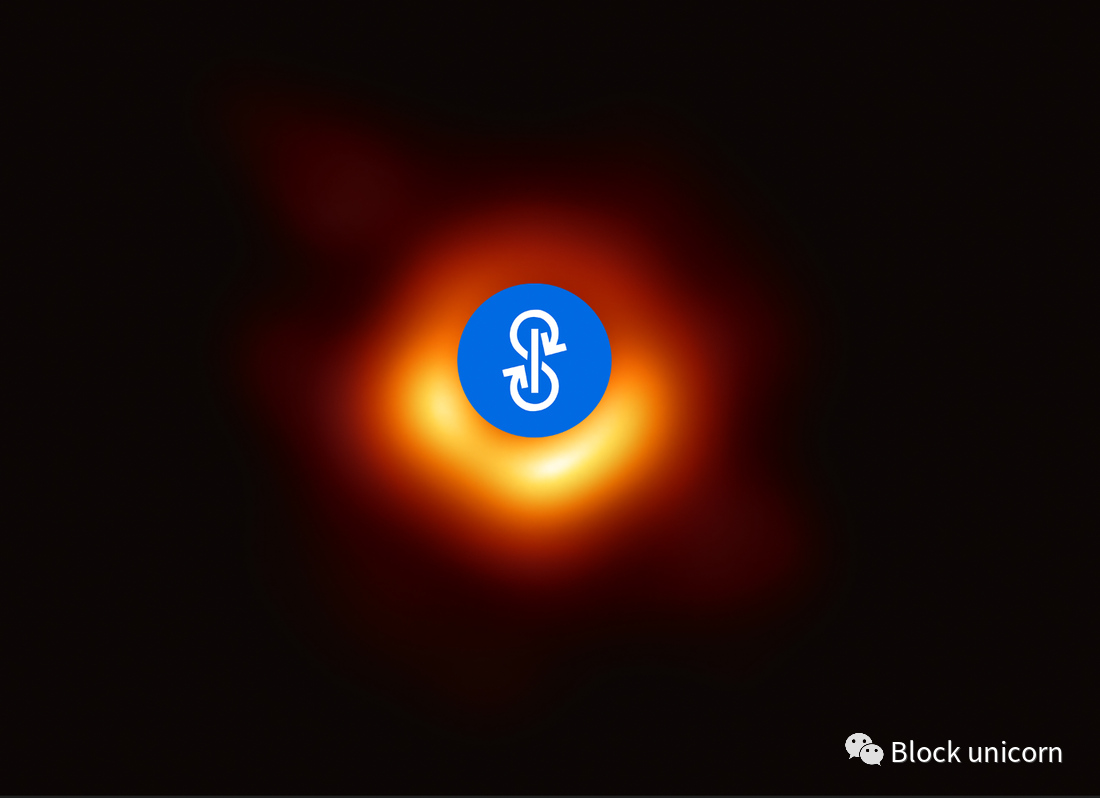
NASA actually took a picture of a real black hole — and here's what they saw
Interested? All of this is very exciting because this is yet another new idea in the DeFi 1.5 space. We've seen the collective boo and boo of the Protocol Owned Liquidity (POL) concept, but few have been able to unleash the voting war opportunity (don't know what it's called).
To summarize Yearn's plan, it's basically an exercise in curve token (Ponzi scheme) economics combined with a beach ball (YFI token) left underwater for long periods of time. The Akka number has increased, everyone is happy, DeFi summer is here.
Let's continue. Introducing the next player in this silly little game, I introduce you toFrax Finance. The incredibly smart and big-brained team at Frax created a "fractional algorithmic" stablecoin (FRAX) - another product that the SEC absolutely loves, I'm sure of it.
Frax aims to replace large amounts of fixed-supply assets and has created a product that offers the best of both worlds - collateral without over-collateralization and algorithmic stability that can scale and grow easily.
Sounds too good to be true, right? How did they achieve such a lofty goal? Frax's governance token is FXS, the Frax Share token, which aims to accumulate value for the protocol in order to provide more support for FRAX. As stated in the documentation, the more FXS rises, the less FRAX is backed: "The market cap of the stock at any point in time establishes an upper bound on how much the token supply can be reduced."
In addition to governance and staking, Frax aims to create the first decentralized and permissionless version of the CPI (Consumer Price Index) managed by FXS holders, called FPI. That lofty goal might make those with a TradFi background (or anyone still rational) jump for it, but it's just another ambitious claim you hear every day on CT - except that Frax can do it.
Before we get too deep, let's go back to another warlord -Olympus DAO. Everyone loves OHM. With four- and five-figure APYs, massive 20% price swings, and juicy bonds, who doesn't love this deal?
In case you don't know, Olympus DAO was the first to come up with the concept of rebasing tokens and POL. Sitting on a treasury of over $800 million, the Olympus DAO has managed to cement itself as one of the pioneers of the DeFi 2.0 movement. Many are touting OHM as the future reserve currency of DeFi and eventually some sort of decentralized Federal Reserve.
How does Olympus DAO do this? let's see
With the release of Olympus Pro, a new concept has emerged in the DeFi world - bonding. In short, users can swap LP tokens or other assets for discounted OHM — thus allowing the protocol to gain liquidity in a more manageable manner. The bonds have a vesting period, which means the agreement no longer has to worry about hiring farmers to jump ship and tank TVL. The name of this new concept is “Protocol-Owned Liquidity as a Service” or POLaaS for short.
One of the first bonds offered by Olympus was the OHM-FXS bond, marking the beginning of a "mutually beneficial relationship," in their words. These protocols have been the two giants of the DeFi 2.0 space, as their unique goals make them the likely behemoths of DeFi's future.
first level title
More deals, this war is huge
Ok, new part, same idea as last one. Another protocol in the mix with OHM and FXS is Dopex, a decentralized options exchange looking to bring derivatives to DeFi. One of their recent features allows Ohmies to earn passive income in a new way: by selling covered call options using gOHM Single-Staking Option Vaults.
If you don't know what a covered call option is, it's basically an agreement between a buyer and a seller wherein the stockholder (or in this case, gOHM) agrees to sell it on a predetermined date and price. In return, the seller of the call option receives an option premium proportional to the risk and likelihood of the event occurring, and limits its upside to that price.
In our example, holders of gOHM can stake their stake and seek additional ROI while regulating crypto derivatives and still rebalancing their OHM. It's a win-win.
One of Dopex's most outspoken supporters is @tztokchad. While I'm still not sure how Dopex fits in, I can say that I enjoy the high-quality imagery of DPX's promotional TZ posts almost every day. I also find the partnerships between all these DeFi protocols very interesting and look forward to reducing liquidity fragmentation as partnerships continue to emerge.
Speaking of liquidity fragmentation, another protocol has an answer to that. Say hello to Tokemak, a team dedicated to generating massive amounts of sustainable liquidity for all things DeFi. By utilizing their reactors — sort of like mini-Curve meters — the people who protocol and manage Tokemak can direct liquidity where they want, reducing the hassle of a whole Curve/Convex collapse.
first level title
The Butterfly Effect
"Invisible and inescapable, like a butterfly flapping its wings in one corner of the globe and changing the weather halfway around the globe with a single movement." - Alice Hoffman, The Snow Queen
After reading a bit about the [REDACTED] cartel (which I'll refer to as the [REDACTED] hereinafter), I knew I had to be stuck. I saved the best for last, because [Redacted] is one of the more interesting protocols I've read, which is impressive considering it's an OHM fork.
Let's start at the top.
[REDACTED] Might be a fork of OHM, but it's different. Backed by its native token BTRFLY (brrrrr), [Redacted] is a new player in the game who won't mess around.
They've raised over $70 million and have a market cap of around $250 million. Believe it or not, a solid team with deep pockets can do a lot, and it seems [REDACTED] will be putting their money to work, as they've bought a ton of CRV, CVX, and OHM. Aiming to be L4 in the developing Curve Wars (yes, you read that right), [REDACTED] hopes to capitalize on the demand for CRV, CVX, and OHM while building an entire Curve ecosystem that can serve as a synthetic long-term.
By playing a more altruistic role in the Curve wars, [REDACTED] wants its treasury to become a black hole, similar to Yearn's situation. By amassing large numbers of these tokens, they can work towards their goal of offering “Voting Escrow as a Service” or ve-aaS for short, an easy-to-remember acronym.
In a way, [Redacted] could be a kind of Convex 2.0 while still being supported by it. Just as everyone currently wants CVX, future protocols and DAOs may fight for BTRFLY, effectively making BTRFLY a proxy for the Curve Gauge voting price. The way this all plays out is kind of weird, and Ponzi economics is only getting weirder.
[REDACTED] presents an interesting opportunity for the market, as OHM forks have been in negative territory since their inception. Now, gOHM holders and Olympus can accumulate value and scale to different branches of DeFi. [Redacted] 100% of the acquired gOHM will be placed in treasury reserves - tokens locked, price increases.
The OHM fork has threatened the image of Olympus, now [Redacted] can help expand the protocol into a multi-chain future - Olympus Pro is already live.
I believe [Redacted] is one of the best ideas coming out of crypto in a while, almost as good as Olympus because they think they share code. By looking at the DeFi space and seeing a clear demand for these tokens, [REDACTED] took the position that many protocols would kill. People are actually giving them money, and then the protocol can be used to buy the most popular currency in the market after coins (yes, I know that's bonds).
first level title
Convex effect
Oh, did I forget to mention Frax's recent collaboration with Convex? What an idiot I am, how could I forget one of the most important announcements of the past, uh, year...
Just as Convex saw an opportunity in the Curve ecosystem, they recently announced they would be accepting deposits from FXS thanks to the continued support of Frax Finance. For users who deposit FXS into Convex, they will receive cvxFXS and entitlement in Frax's FPI airdrop. Currently, staking is not available, but later users will start receiving rewards from veFXS - similar to how staking your CRV on Convex works.
This huge development says a lot, and is probably one of the most optimistic things Convex has ever done. Not only do they have absurd control over Curve, but they're using their reputation and resources to do the same for Frax.
I hope you are as optimistic as I am because I need someone to share the excitement. Seeing this happen, I really wonder if Convex can be stopped, if we are witnessing a form of monopoly right before our eyes.
I'm not even going to look up TVL on Convex because I know it's too much and I'm pretty sure it's only going to continue to grow and absolutely outweigh any gains CVX makes on the way up.
image description
first level title
last game
Having gotten this far, you might be wondering how it all fits together. We're looking at a table full of puzzles, except we're blindfolded and our hands are tied behind our backs as we're forced to read the alphabet backwards.
How can any sane person understand this? Too much information and too little time to act. With so little capital and so many places, what good is an anonymous degenerate?
My best advice is to follow your gut. Seriously, look at all the protocols and coins I mentioned and decide which one feels like the best place to keep your money. Want to earn solid returns with less downside? Go with CRV. Want to go to the moon and buy a BMW? Buy some DPX.
You don't need to have every variant of vlCRVgOHMveDPXvlsSPELLcvx. In my opinion, you can't go wrong with any of these coins. Of course, the size of the bet matters, but almost all of them will give you money - possibly even generational wealth.
DeFi has been in a bear market for too long, and it is finally coming out of hibernation. I'm almost 100% sure these tokens will continue to rise as more people grab the intrinsic value and huge TVL that the protocol has.
Heck, we might even buy some of these tokens early. With so many CTs out of the curve/convex wars, there are probably plenty of smart people out there who haven't bought them yet. Or this could be the top and we're all going to die.
Don't get too crazy, try to think rationally. Many of these coins have risen by insane multiples over the past few months, and there's a good chance you'll end up buying the top. My best advice is to buy in batches, as things can get more volatile from here on out.
I'm still most bullish on CVX, but FXS really has my attention. You can't go wrong with Curve, they have the coolest logos.
I'm also sure a whole new story will surface within two weeks, so don't get stuck holding on to any old bags as this can happen pretty quickly. It’s okay to take profits, so be sure to do it every now and then. You can reinvest them anytime.
It's hard to believe that so much noise could come from protocols scrambling for an AMM that specializes in stable exchanges. Oops! However, this is still the funniest thing to happen in CT (Crypto Twitter) and I have absolutely no idea how it all ends. Super crazy stuff.
As much as I've been looking at this, I'm still no expert, so please let me know if I've screwed up something or left out any super important information. My apologies for the lack of diagrams and tables, but I don't find them really necessary since I'm writing all the time. I'm sure you can find enough content on Twitter that I wanted to offer something different and less serious.
I hope this post helps clear up some confusion, as things have been very busy in the DeFi space lately. Let me know if you want more articles on this topic and share with your friends, thanks for reading.





