Will BTC die suddenly, resulting in a loss of its own property?


If Bitcoin were a student, you could think of it as "starting middle school" given its age. And this year, Bitcoin may have just undergone its first-ever stress test, which, according to JPMorgan, was “mostly positive.”
Bitcoin, like many other assets in the market, endured a period of severe sell-off in March as the global economy began to grind to a halt and investors fled riskier assets due to the coronavirus outbreak. But bitcoin was relatively unaffected, according to the JPMorgan report.
Cryptocurrencies largely survived the March crash, suggesting “longevity as an asset class,” JPMorgan strategists led by Oshua Younger and Nikolaos Panigirtzoglou wrote. Of course, price action suggests that Bitcoin is being used more as a speculative vehicle than as a medium of exchange or store of value.
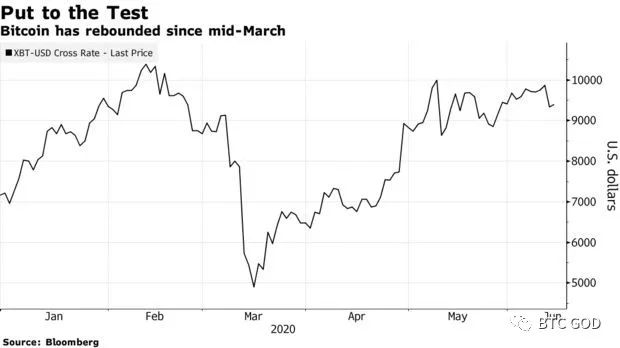
JPMorgan strategists noted that Bitcoin appears to be correlated with riskier assets such as stocks.
That seemed to be the case last Thursday. While the S&P 500 recorded its biggest drop in 12 weeks, Bitcoin also fell 7.8% last Thursday. By last Friday, Bitcoin had rebounded again, recovering about a third of the previous day's losses, and trading around $9,500. Bitcoin has rallied about 75% since mid-March, but is still halfway from its record high of nearly $20,000.
Bitcoin was originally born on Halloween in 2008, when a person named Satoshi Nakamoto published a research paper entitled "Bitcoin: a Peer-to-Peer Electronic Cash System" (Bitcoin: a Peer-to- Peer Electronic Cash System).
Bitcoin is almost 12 years old so far. Strategists say the crash in March may have been the first stress test for bitcoin. They point out that bitcoin's relatively nascent existence means it hasn't experienced a similar market downturn before. Bitcoin has been volatile during downturns, but the same can be said of traditional asset classes, strategists say.
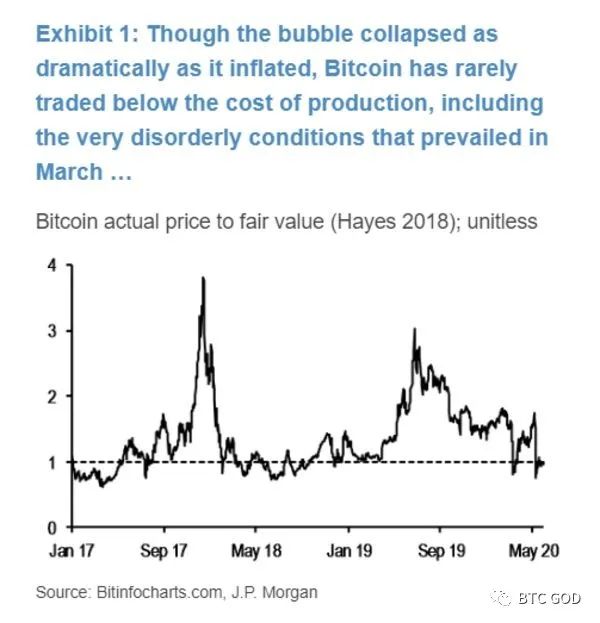
Here are some positives for Bitcoin in this market crash:
At the height of the panic in March, Bitcoin’s valuation was not much different from its intrinsic level, meaning that even when volatility was rising, Bitcoin’s value was only briefly below the cost of mining.
Additionally, there is little sign of a shift to liquidity within the crypto asset class. In other words, during volatile times like March, traders could have flocked to the safety of markets, or to the more liquid parts of the crypto market. But most cryptocurrencies are still falling at the same time during this phase, and this correlation has increased in the past few months.
“This suggests that there is little evidence of run dynamics, or even substantive stratification of cryptocurrencies, even during the March crisis,” they wrote.
Finally, Bitcoin has a more resilient market structure than currencies, stocks, treasuries, and gold. To measure this, strategists look at liquidity, the bid-ask spread that is directly related to volatility. A given transaction may result in a larger price change when orders become thinner, and vice versa. And while Bitcoin saw the worst liquidity drop at the height of the crisis, the disruption unwound itself faster than other asset classes.
[The daily trading volume of bitcoin futures on the exchange fluctuated drastically with the market, hitting a new low on the 13th]
Bitcoin broke through 9,000 for the first time in January. According to the Bitcoin trading platform Bitstamp, this afternoon, Bitcoin fell to 9,000 US dollars per piece, which is the first time since May 27. Although the trend is not good, it is currently supported by returning to 9,000 US dollars bit above. Since the last halving, its price level has been encountering a series of resistance, and the price of Bitcoin is still the highest. It is predicted that the data on the chain shows huge purchasing power, and Bitcoin is approaching "monster action".
According to Skew data, the trading volume of the Bitcoin futures exchange exceeded 20 billion U.S. dollars last Thursday, reaching a recent intraday maximum. On that day, the trading volumes on OKEx, Huobi and Binance were 4.8 billion U.S. dollars, 4.3 billion U.S. dollars and 4 billion U.S. dollars.
image description
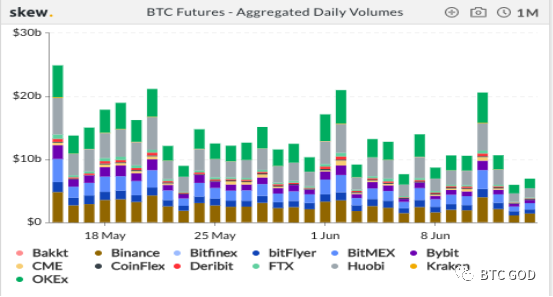
Figure 2: Total daily trading volume of BTC futures on exchanges (US$ billion) -skew
The author believes that from the chart of the daily trading volume of BTC futures on the exchange above, it can be seen that the total daily trading volume is directly related to the volatility of the BTC currency price. Last Thursday (June 11) the BTC quarterly contract price exceeded 10,000 US dollars After that, it fell back quickly, and the trading volume soared that day, and a large number of long positions were liquidated.
[Bitcoin options open interest exceeded $1.5 billion, hitting a new high on the 12th]
image description
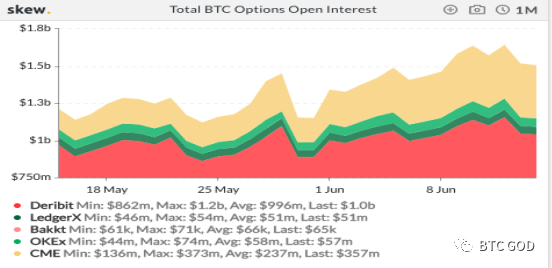
Figure 3: Total BTC options open interest - skew
The author believes that the large increase in Bitcoin options positions can be mainly attributed to the surge in positions on Deribit and CME. Deribit's bitcoin options position has increased by 150% compared to early April; CME's bitcoin options open position also hit a record high on June 10, reaching $373 million, while in early May, the value was only 1300 million, which means that CME's bitcoin options position has increased 26 times in less than a month and a half.
【Market Analysis】
Figure 4: OKEx BTC/USDT Spot Price Daily K-line Chart-AICoin
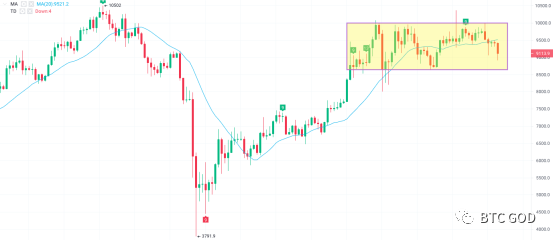
Figure 4: OKEx BTC/USDT Spot Price Daily K-line Chart-AICoin
In terms of operation strategy, we still continue the trading strategy of BTC spot price daily chart-level box shock. If the currency price continues to fall and falls to around $8700, it will usher in a good opportunity for multi-order layout. In view of the current MA20 still maintaining a horizontal trend, the market is still volatile in terms of trend, and it is only necessary to carry out swing operations of selling high and buying low.
On the whole, on the news side, there are uncertainties in the economic outlook of the external market due to the impact of the epidemic prevention and control. The recent new lows indicate that the market is cautious; on the technical side, with the currency price falling again, the market sentiment has weakened in the short term. On the whole, it still continues the operating idea of the box shock last week, and waits for the MA20 to show a clear turning direction.