


LD Capital: Analysis of the upstart friend.tech on the SocialFi track


Original Author: Jill, LD Capital
1. Introduction
friend.tech is a decentralized social platform. This product is built on the second-layer network Base chain launched by Coinbase. It obtains the users Web2 identity through strong binding to Twitter, and achieves the possibility of profit based on this identity. Because in this product, each user can be tokenized, and the users influence can be directly priced by the market.
2. Products
As a social application, friend.tech’s core is the fan economy. Users need to pre-deposit 0.01 E before using the app. ETH will be used as the main payment currency in the app to purchase shares of other users. Shares are the tokenization of user influence. For buyers, the role of purchasing shares is to obtain the permission to talk to the purchased person (friendship). Once the purchase is complete, a one-on-one chat is available. friend.tech To prevent spam, each holder can send three messages, then wait for the other party to reply and reset the limit.
When users enter the app, they can see the most popular users on the homepage. They can also search for users they follow through the Explore button and buy their shares. The initial price for each users share is set based on Twitter data, and there is no cap on share supply. The price of shares will fluctuate with changes in market supply and demand. Therefore, the more popular a person is, the more shares will be purchased, and the shares will be more valuable.
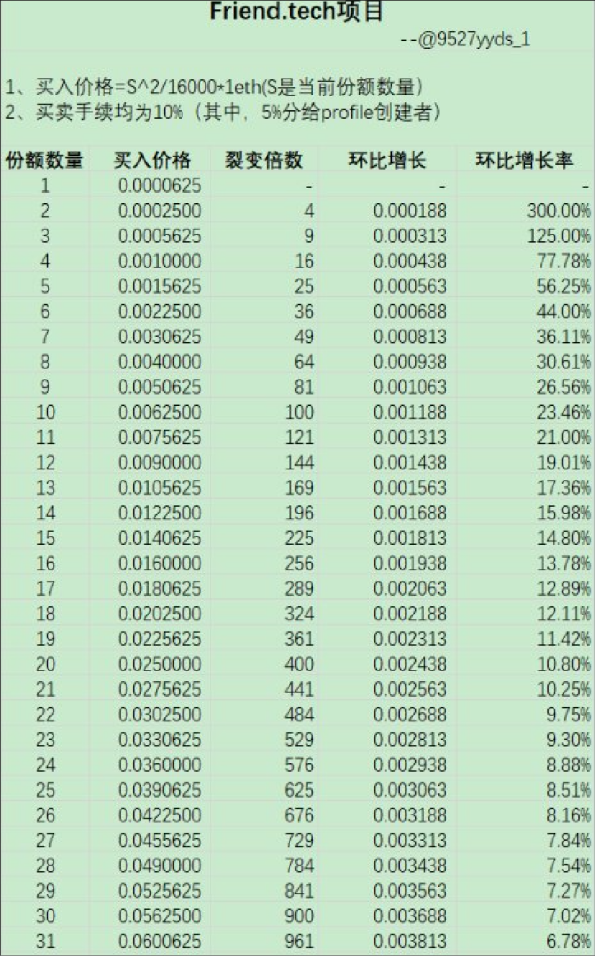
Twitter users @functi0nZer0 and @9527yyds_1 put together a product pricing model that would see prices increase exponentially as shares are sold.
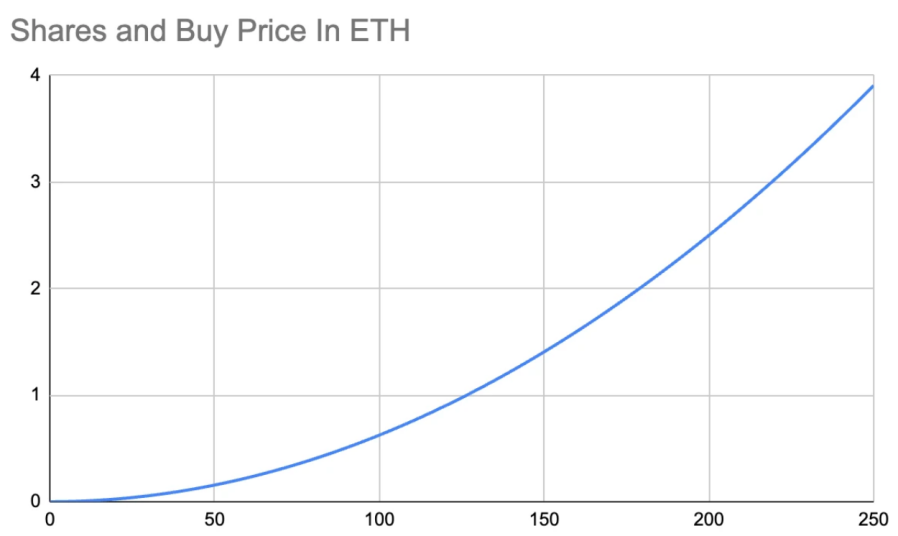
From the picture below, you can see more intuitively that the slope is relatively steep, so the token price can be pulled to a relatively high position in a short period of time. Likewise, once someone starts selling, the price will fall very quickly.
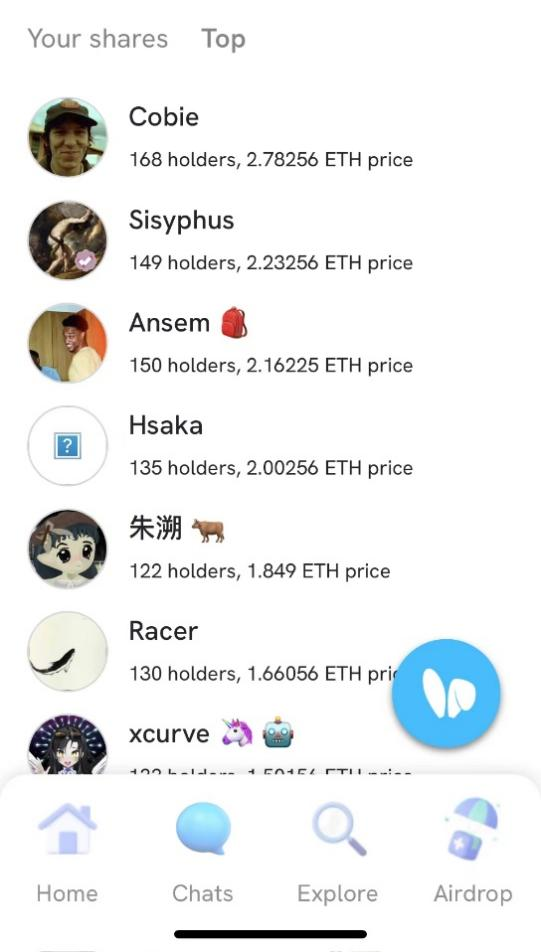
For social influencers (KOLs) whose shares are purchased, there is a 5% “subject fee” for each purchase and sale of their shares. If KOL wants to obtain higher returns, it needs its tokens to be traded more frequently. According to its pricing model, the higher the frequency of transactions, the faster the price will be raised. However, a problem this brings is: because there is no value support, and the fan stickiness is not strong, personal influence tokens Soon you will face a situation of not moving up. Judging from the current trading situation of the top influential tokens in the application, there are only 168 holders of the most influential KOL tokens, but the token price has risen to 2.78 ETH.
3. Financing
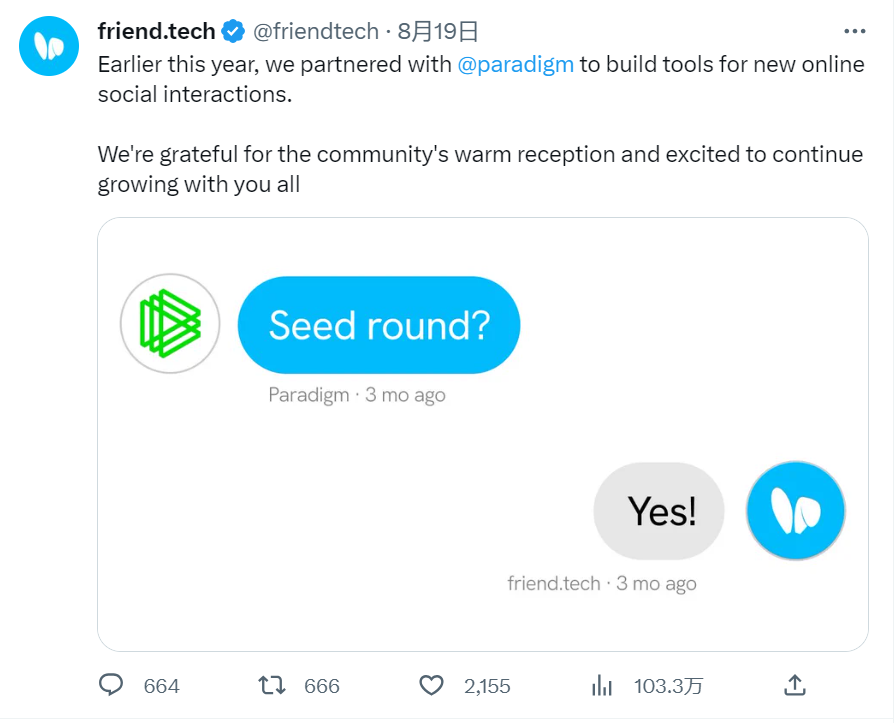
friend.tech announced on Twitter that Paradgm participated in a seed round of financing for an undisclosed amount. And, friend.tech is also partnering with Paradigm this year to build new online social interaction tools.
source:Twitter
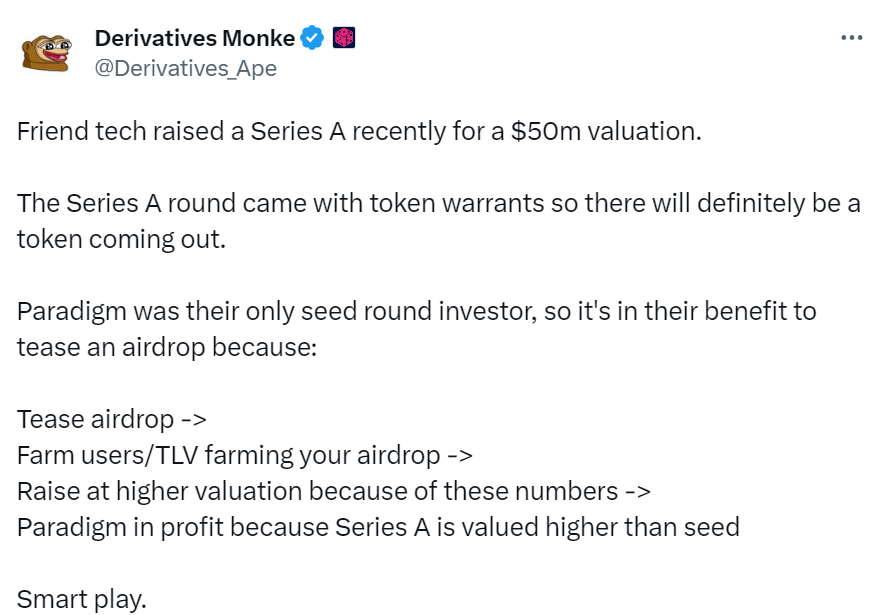
A Twitter user broke the news that friend.tech has completed Series A financing with a valuation of US$50 million. This round comes with token certification, so friend.tech should be able to issue tokens.
source:Twitter
4. Business data
1. User
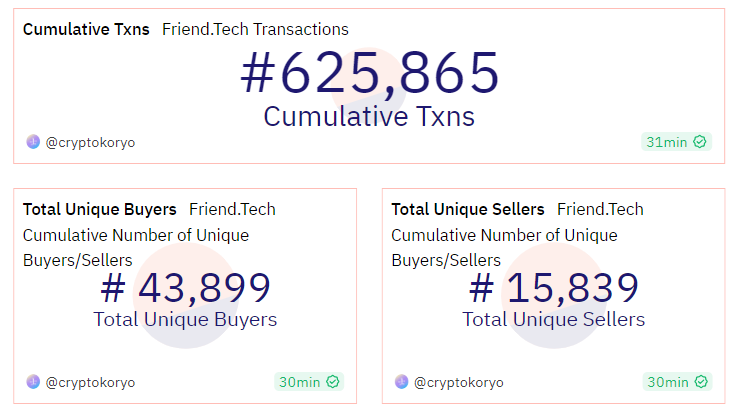
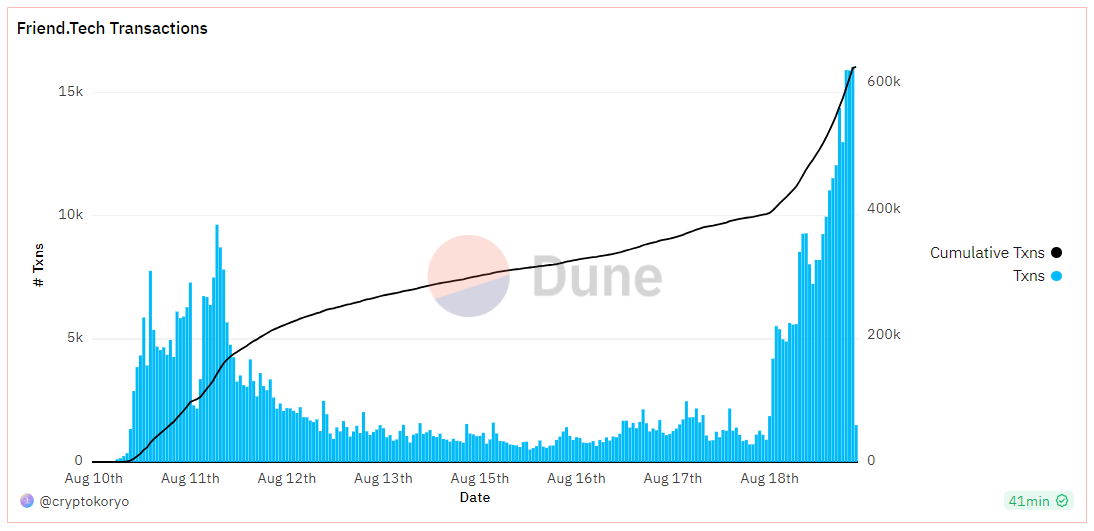
According to the dune data panel, the current cumulative number of transactions on friend.tech has reached approximately 626,000, with approximately 44,000 buyers and 16,000 sellers. On August 18, after friend.tech issued its first airdrop of points every Friday, the number of both parties to the transaction increased significantly.
source:Dune Analytics
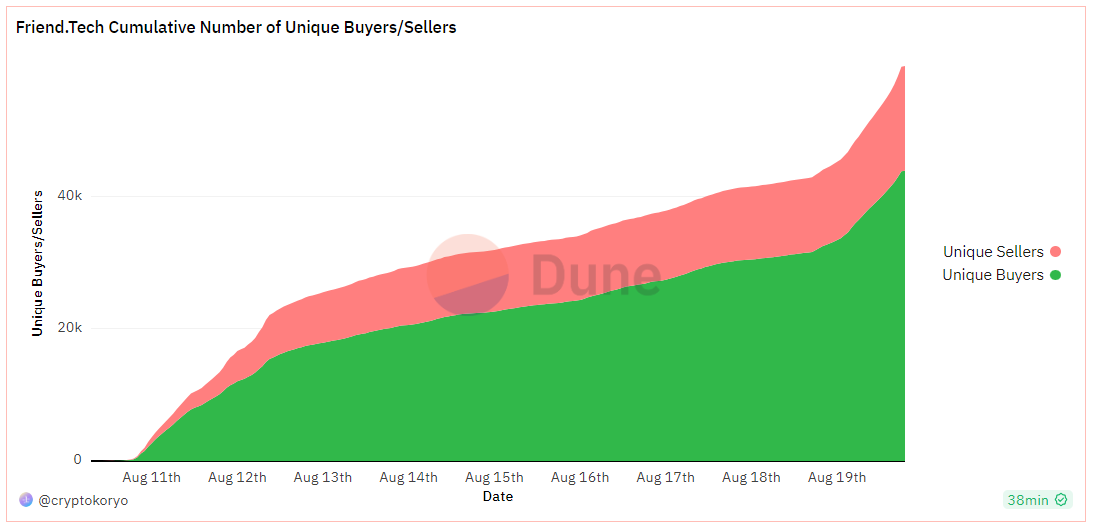
It can be more clearly seen from the number of transactions that on-chain transactions became more active after August 18.
2. Transaction volume
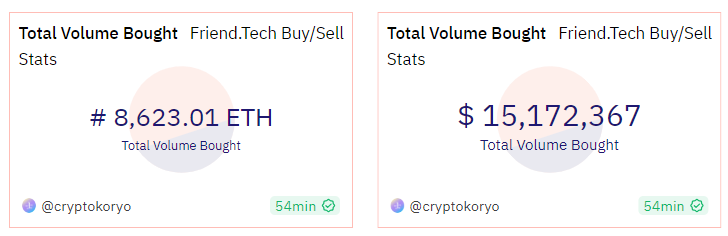
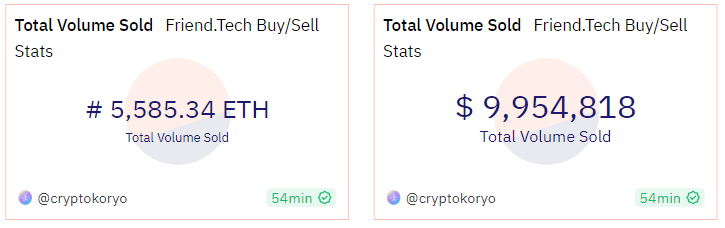
The chart below shows the buyer/seller transaction data: the buyer’s transaction volume amounted to 8,623 ETH, worth approximately $15 million, and the seller’s transaction volume was 5,585 ETH, worth approximately $9.95 million.
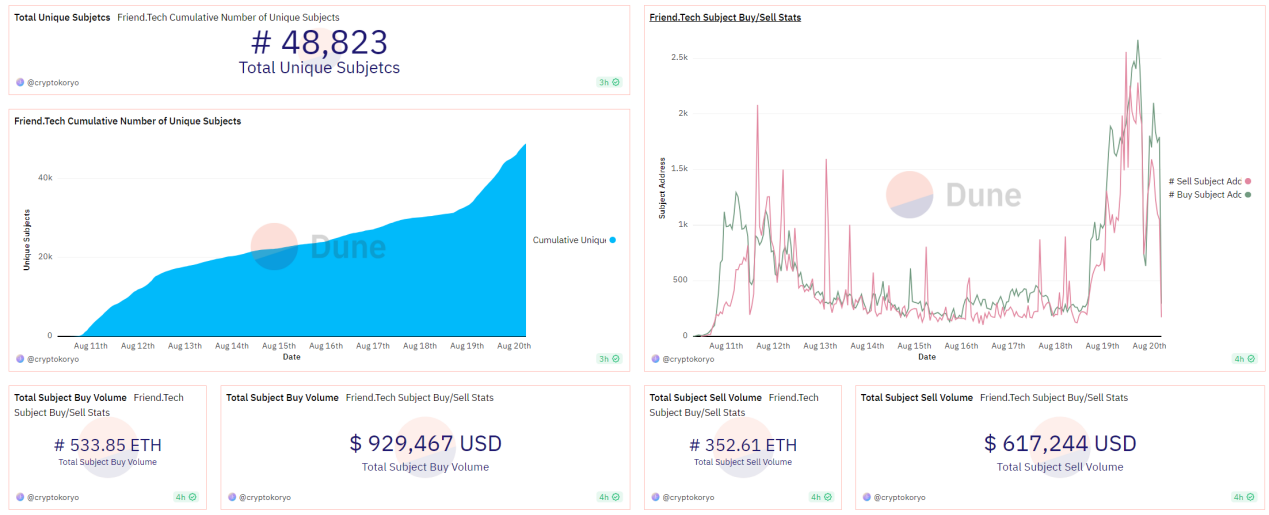
Judging from the target buying and selling data, there are currently about 49,000 trading targets, of which the buying volume is 533.9 ETH and the selling volume is 352.6 ETH.
3. Agreement value
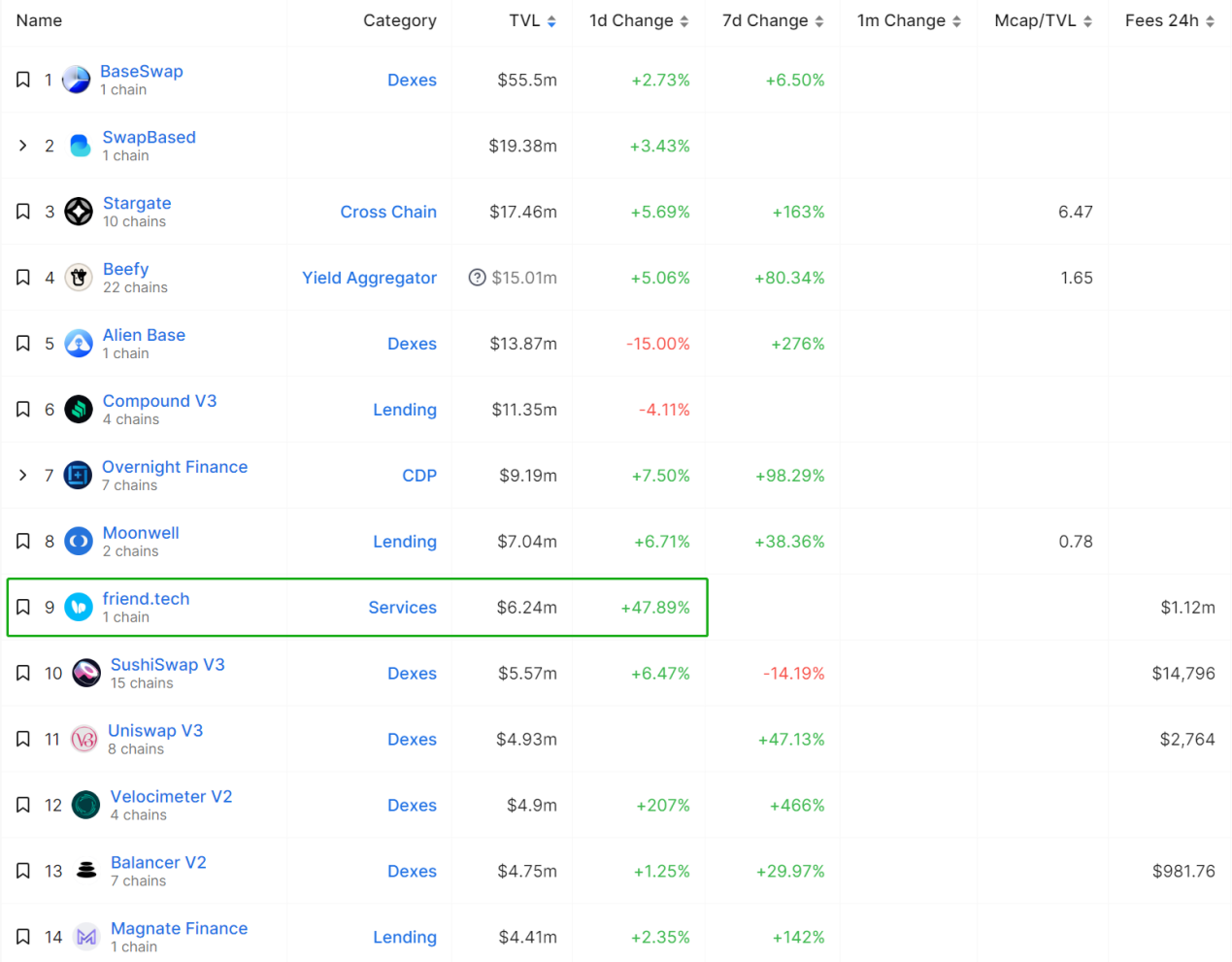
Base chain’s current locked asset value (TVL) reaches US$178 million, and friend.tech’s assets are worth US$6.24 million, ranking 9th on its chain, accounting for 3.5%. As a newly launched social application, its asset growth rate is relatively fast.
source:defillama
According to Dune data panel data, friend.tech’s cumulative transaction volume reached 21,000 ETH, worth approximately US$35 million. When personal influence tokens are traded, a 10% transaction fee is charged, 5% of which is distributed to the person being purchased and 5% to the protocol. The protocol revenue currently amounts to 973.5 ETH, worth approximately $1.63 million.

source:Dune Analytics
5. Project Progress
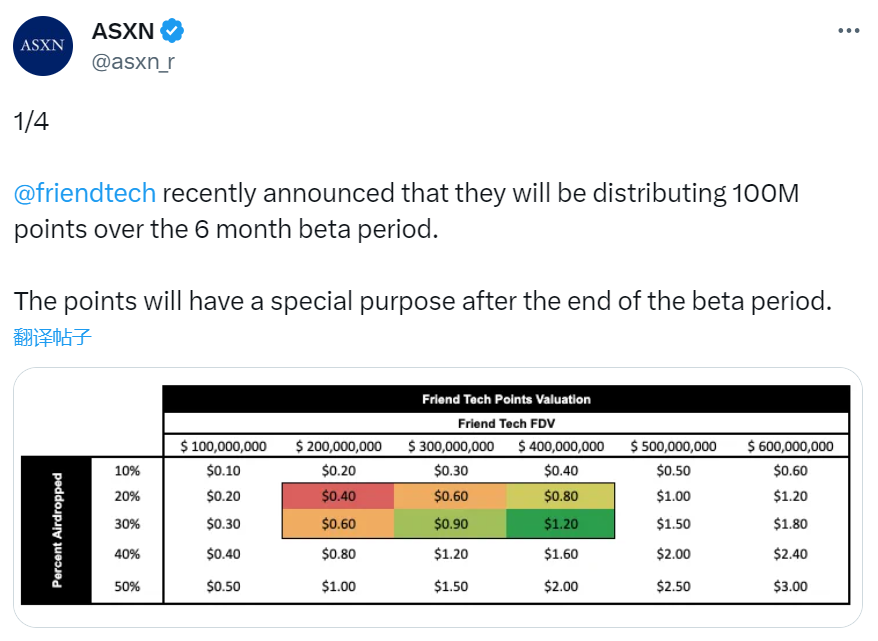
On August 18, friend.tech officially tweeted that it had issued the first point airdrop to 44,000 users. In addition, the team stated that it will distribute 100 million points during the 6-month test phase. An airdrop will be conducted every Friday. The points will be recorded off-chain and will be used for special purposes after the test phase.
friend.tech stated that the airdrop will refer to the users activity before every Thursday, and the standard will be updated every week. Users are not advised to use any particular method to earn Points. friend.tech reserves the right to amend previous point distributions if problems arise.
Based on the proportion of points in the token supply and FDV, some users have predicted the value of points: if FDV reaches 20 million US dollars and the points airdrop accounts for 10%, each point will be worth $0.2.
source:Twitter
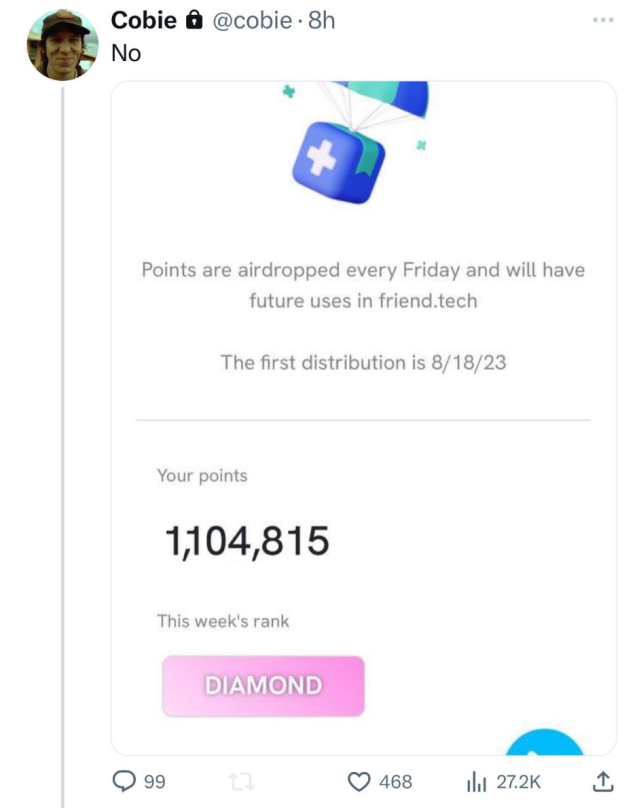
Take @Cobie, who currently holds the largest position in personal influence tokens, as an example. His first point airdrop received 1.1 million. Calculated based on the Series A valuation of US$50 million, if airdrops account for 10%, then each point is worth $0.5, and Cobie’s first point airdrop made a profit of US$550,000.
Summarize
friend.tech is a social application software with fan economy as its core, and its current functions are relatively single. From the pricing model of personal influence tokens, it can be seen that its mechanism design is more FOMO. Based on good airdrop expectations, the current heat is continuing to rise. The number of active addresses of friend.tech is growing rapidly, and the value of locked assets on the chain is also growing rapidly. If we return to the social product itself, fans and KOL cannot be truly connected, and the product growth space is limited and unsustainable.





