






RWAs Lending Agreement Inventory


foreword
foreword
As traditional financial risk-free interest rates rise and DeFi yields fall, investors have flocked to the U.S. bond market. In order to re-expand and expand the market size and provide users with more sustainable and stable income, the DeFi protocol uses RWA as a source of collateral or new investment opportunities.
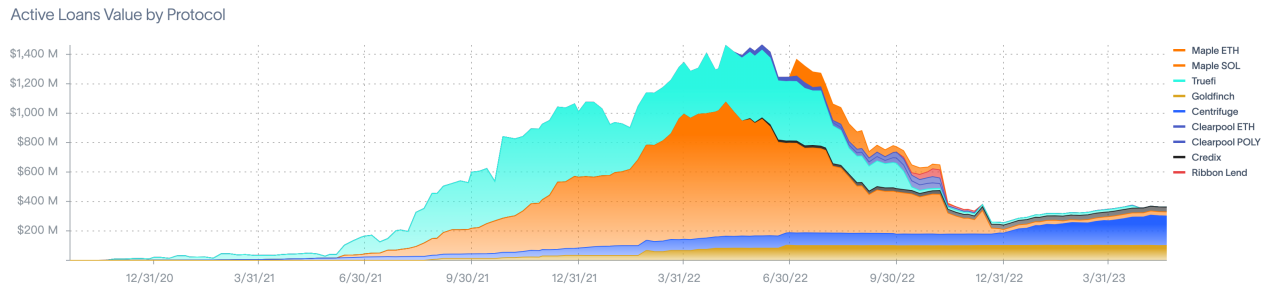
The cumulative borrowing volume of the RWA lending agreement reached 4.4 billion U.S. dollars, and the peak period will reach 1.4 billion U.S. dollars in May 2022. The current RWA lending agreement borrowing amount is less than 500 million U.S. dollars (excluding MakerDAO). Especially in the deleveraging stage in 2022, institutions will withdraw funds in a row, and some lending agreements will have bad debts. Despite increased market attention on the RWA sector, borrowing volumes have not improved significantly. In the past year, the growth of funds in the RWA sector was mainly for the subscription business of U.S. bonds.
This article will mainly introduce the most active lending protocols that access real assets based on the tracking of Nansen and Rwa.xyz, and follow up the developments. These protocols are MakerDAO,Maple Finance、Truefi、Goldfinch、Centrifugeand Clearpool.
image description
secondary title
MakerDAO
Rank#70
MakerDAO is a stablecoin protocol that allows users to pledge encrypted assets to lend out the USD-pegged stablecoin Dai.
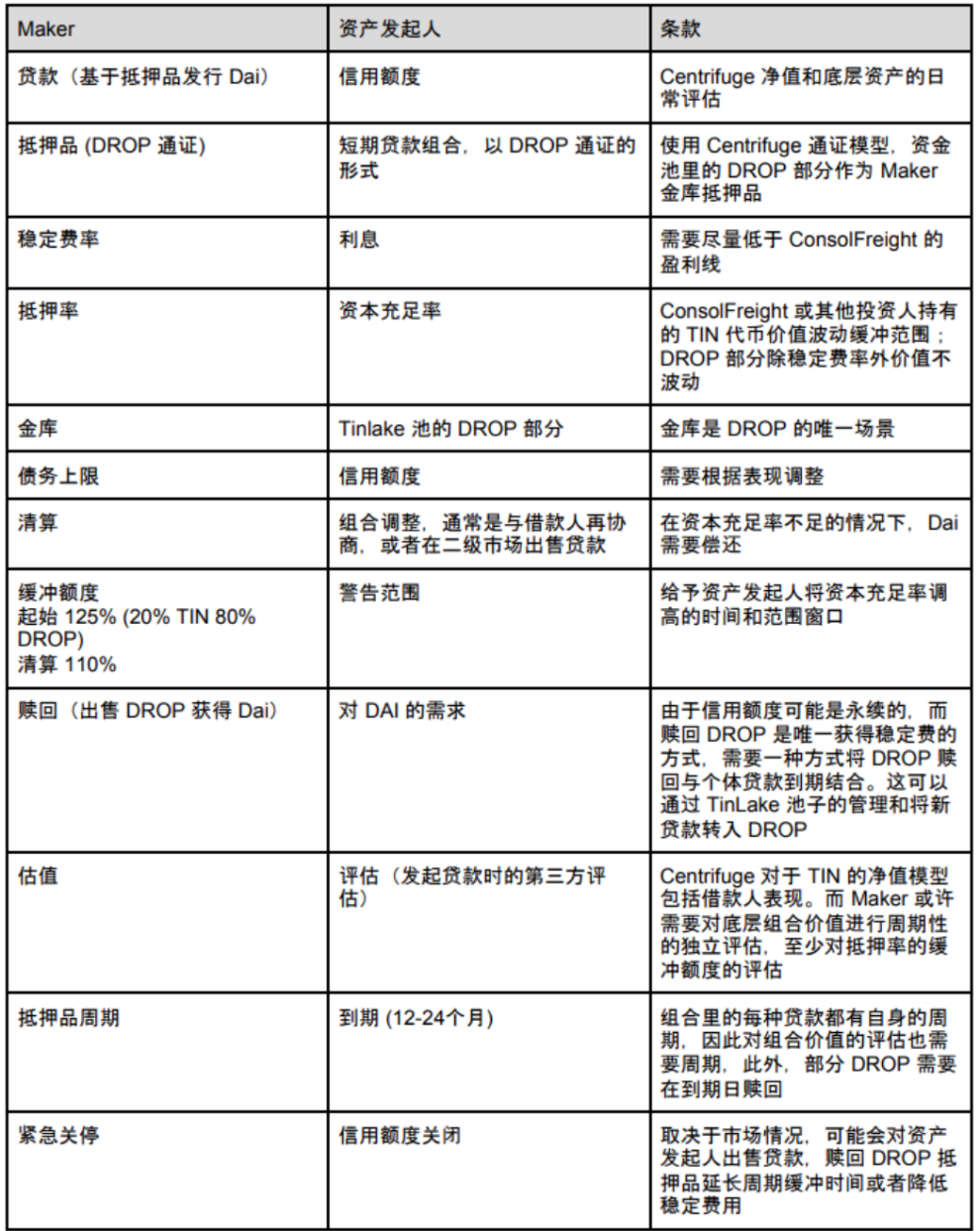
The MakerDAO RWAs section is divided into two parts. One is MIP 21, which supports RWA as collateral for lending, and uses Centrifuge Tinlake as the bottom layer, usually charging a 4% stability fee. The proposal was passed in November 2020. The second is MIP 65, which supports the acquisition of USDC through the PSM module and strategic investment by Monetalis. The initial debt ceiling is 500 million US dollars, and then the debt ceiling will be raised to 1.25 billion US dollars in March 2023. This part of the newly added 7.5 US$100 million will purchase US bonds in 12 installments within the next six months.
image description
Source: MakerDAO blog, LD Research
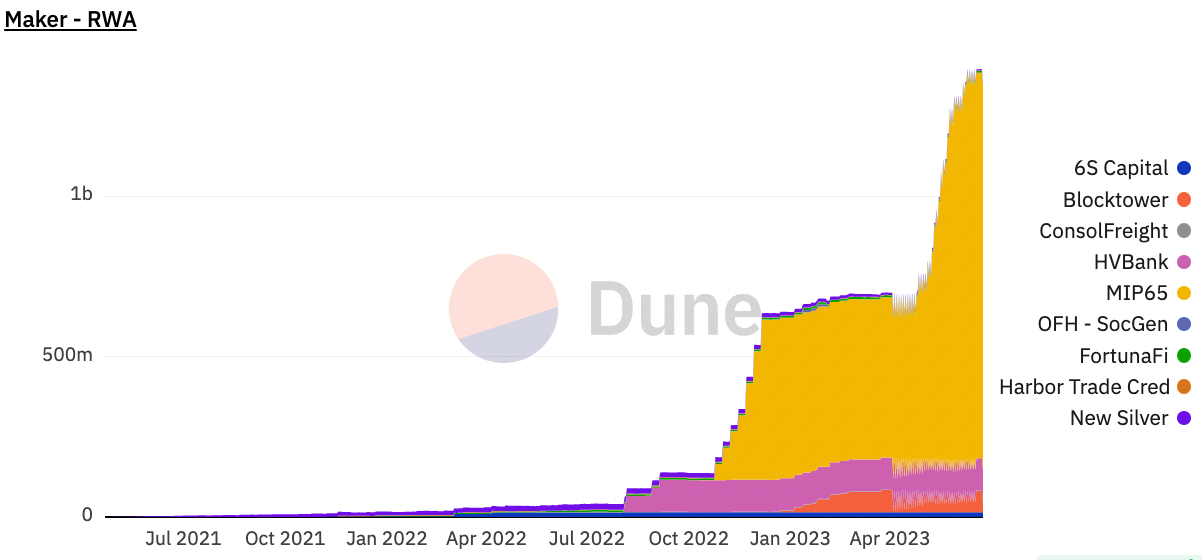
As of June 24, 2023, according to dune data, the MakerDAO RWA business scale is nearly US$1.4 billion, accounting for 41% of MakerDAO’s balance sheet, bringing in US$5.3 million in revenue, accounting for 52.2% of the agreement’s annualized revenue.
token model
Source: dune.com, LD Research
token model
The total amount of tokens is 1 million. Due to the additional issuance (to fill the bad debts of the agreement) and the agreement profit destruction repurchase mechanism during the operation of the agreement, the current actual circulation is 977,631.03.
secondary title
Centrifuge
Rank#257
Founded in 2017 by Lucas Vogelsang, Maex Ament and Martin Quensel, Centrifuge was driven by the Pro FIT program of the Berlin-based investment bank and co-financed for development with the European Regional Development Fund (EFE). On January 29, 2022, Centrifuge won Polkadot's 8th parachain slot auction by locking 5,435,100 DOT.
Its product is Tinlake, which supports users to mortgage assets and generate an NFT for financing. Each asset pool has 2 tokens with different risks, Tin and Drop. Centrifuge charges a 0.4% platform fee.
Centrifuge Tinlake is the underlying layer for MakerDAO RWA collateralized lending. In April 2021, the financial institution New Silver took the lead in establishing a property repair transfer loan pool (fix and flip loans) in its Tinlake contract, relying on MakerDAO as a credit facility to complete the first loan financing.
At the end of December 2022, BlockTower Credit partnered with Maker and Centrifuge to bring $220 million in real-world assets into DeFi. Maker will issue Dai loans backed by these RWAs, Centrifuge will handle on-chain issuance and tokenization, and BlockTower Credit will act as an asset manager.
In February 2023, Centrifuge proposed in the Aave community to introduce real world assets (RWA) into Aave and use them as collateral for the native stablecoin GHO. Centrifuge said it will release a formal proposal once the GHO is ready.
From January 2023 to June 2023, there will be no significant progress on Centrifuge.
token model
token model
secondary title
Maple Finance
Rank#395
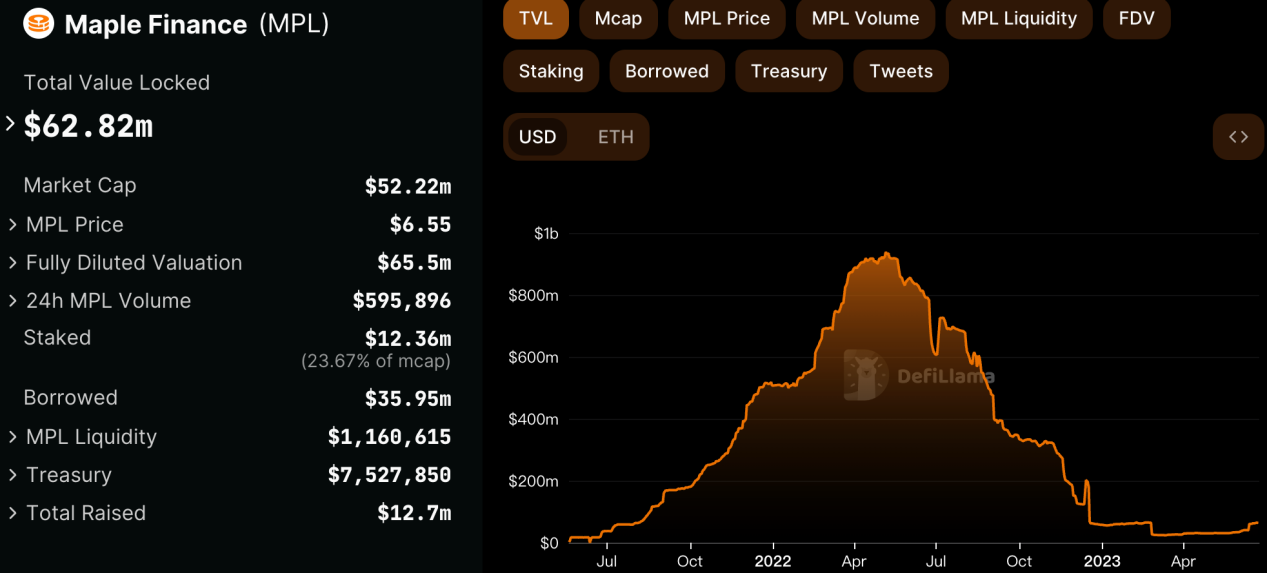
Maple Finance was founded in 2020 and officially launched in May 2021. Its products are launched on the Solana and Ethereum chains. Its main business is to provide unsecured lending services for institutions. In the past, the main users were encryption companies, so in 2022 it will be generated under the deleveraging market environment. $52 million in bad debts.
According to Defillama, March 2023 is the historical low of Maple Finance TVL (24 M), and then the TVL rebounded after the agreement launched a cash management pool for U.S. Treasury bonds in May. Compared with Truefi’s upcoming U.S. debt pool, Maple Finance does not have a minimum subscription amount, but judging from the records on the chain, it is still dominated by large-amount subscriptions. Unscheduled loan pools launched on June 12 to increase protocol flexibility. As of June 24, 2023, Maple Finance TVL reached 62.82 M, of which the RWA segment TVL was 22.83 M.
Maple Finance charges a 0.66% platform fee and a 2.5% fulfillment fee (paid as a percentage of interest when the loan is repaid).
token model
Source: Defillama, LD Research
token model
secondary title
Truefi
Rank#429
Truefi is an unsecured lending agreement for investment institutions created by the TrustToken team in 2020. TrustToken previously created TUSD, but sold that segment to a company called Techteryx in 2020.
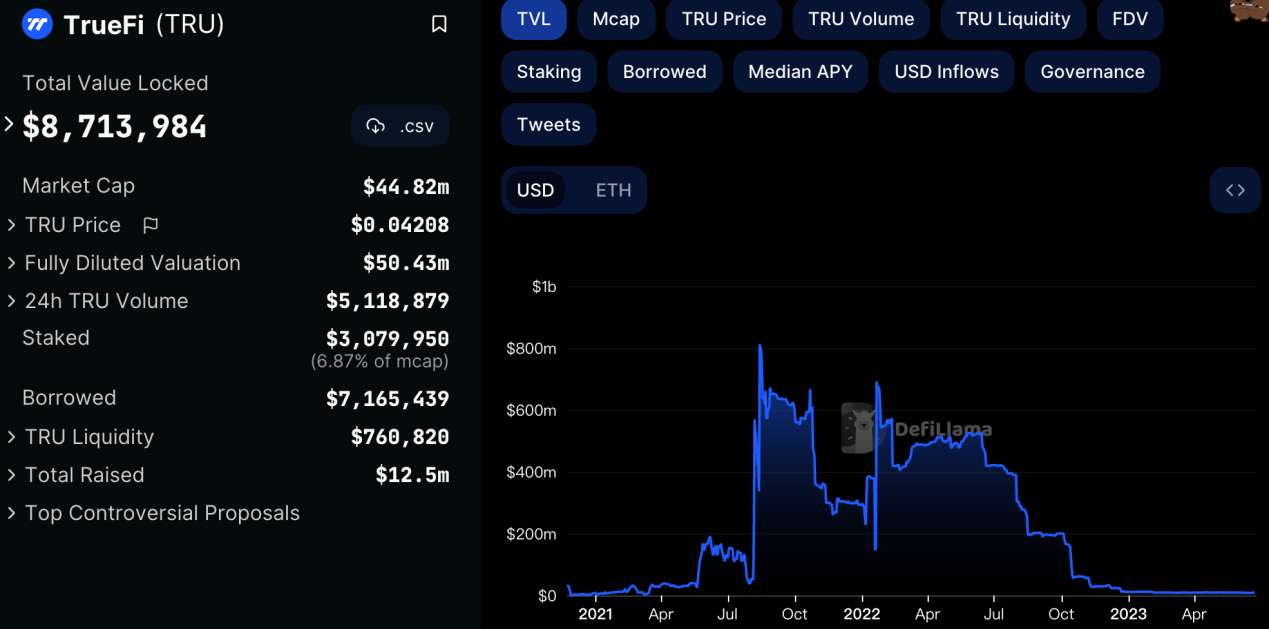
The TVL of the Truefi protocol has shown no signs of rebound after falling below $10 million, and the protocol currently has no active borrowing pools. Adapt 3 r digital is about to open the US bond pool, the minimum subscription amount is 100,000 US dollars, and it is currently in the registration application stage.
The protocol charges a 0.5% platform fee.
image description
Source: DeFillama, LD Research
token model
token model
TRU has a maximum supply of 1.45 billion, a current token supply of 1,198,450,773, a current circulation of 1,061,445,050, and a burn of 251 million tokens. As of May 22, 2023, team statistics, the team, token sales, liquidity rewards and governance have locked up about 140 million tokens.
TRU value capture comes from:
1) Pledge, approve or reject new loans;
2) reserves;
3) Liquidity incentives;
secondary title
Goldfinch
Rank#737
The main business of Goldfinch Finance is to provide loans to entity companies. The target customers are debt funds and financial technology companies and other lending companies, providing them with USDC credit lines.
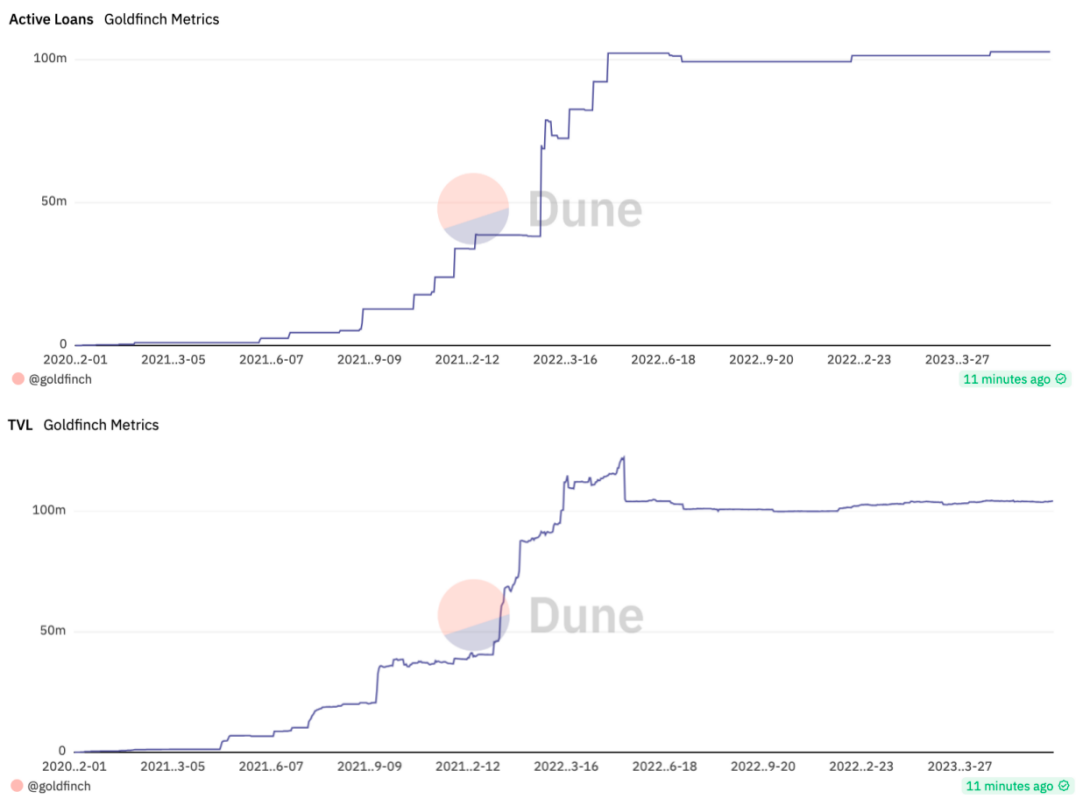
According to dune data, Goldfinch's active loan volume and protocol TVL have basically stagnated since May 2022, and the total loan amount has remained at around US$100 million. The main reason is that unsecured lending requires a detailed investigation of the entity. Usually for institutions, in the bear market stage, it is difficult for lenders and borrowers to match their risk and return assessments.
Goldfinch's income comes from interest paid by borrowers and withdrawal fees generated by LPs, and DAO will charge 10% of the above fees. LPs are required to pay a 0.5% withdrawal fee when withdrawing from the premium pool, which is also allocated to the DAO.
token model
Source: dune.com, LD Research
token model
secondary title
Clear Pool
Rank#960
The protocol will be launched on the Ethereum mainnet in Q1 of 2022. The team members are mainly from traditional financial institutions. The protocol products include license-free pools and license-required pools.
A permissionless pool means anyone can offer a loan, but borrowers still need to go through the team application list. The permissionless pool size is dynamic, with no limit on the amount of liquidity a lender can provide. Borrowers can use the utilization rate/interest rate curve to optimize the size of the fund pool, there is no definite repayment time of the loan, and the interest is dynamically calculated. Its lending method is similar to mortgage lending agreements such as Aave. However, the utilization rate of the pool needs to be kept below 95%. When the utilization rate exceeds 95%, the borrower can no longer borrow. More than 99%, the lender cannot withdraw money, and the borrower needs to repay part of the funds.
Prime is Clearpool's upcoming permissioned pool, built on Polygon, and is currently in the testnet stage. All Prime pool participants are subject to KYC and AML investigations.
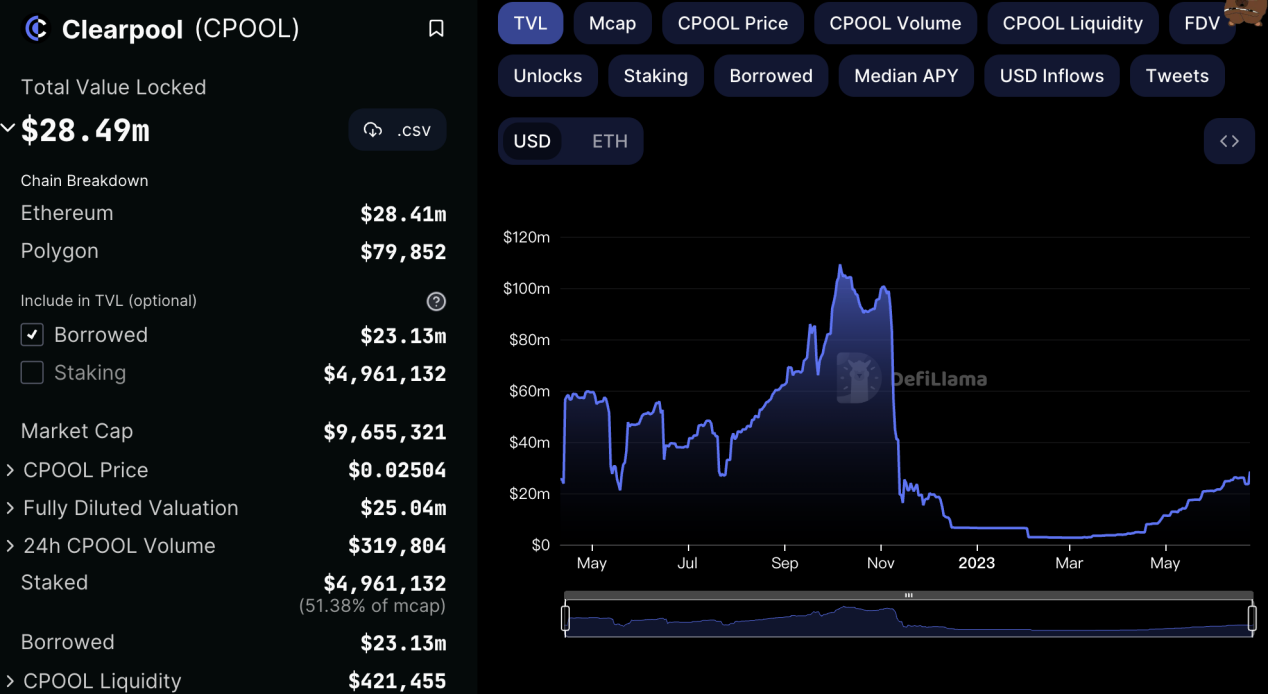
March 2023 is the low point of the agreement TVL (2.6 m), and the current TVL is 28.49 m, but the TVL has entered a slowdown since May.
token model
Source: Defillama, LD Research
token model
The total amount of CPOOL tokens is 1 billion, and the valuation of the public offering round is 40 million US dollars, which is currently in a broken state.
Before January 2024, 3.11% of the total token circulation will be released on the 28th of each month.
Token value capture comes from:
1) 5% of the agreement revenue is used for repurchase;
2) Pledge to get token rewards;
3) Participate in governance.





