Explain the six LSD stablecoin agreements in detail, or trigger a new round of war in LSDFi?


Original author: flowie, ChainCatcher
Original author: flowie, ChainCatcher
The LSD stablecoin agreement may be setting off a new round of warfare in LSDFi.
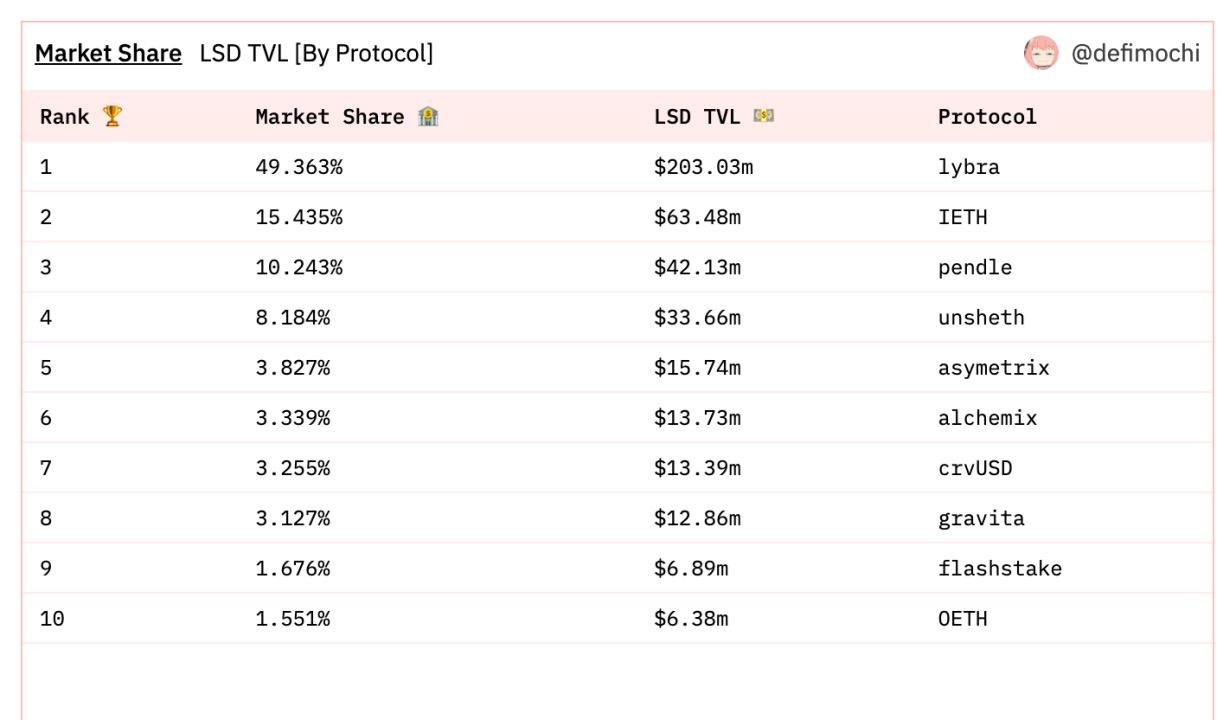
Recently, Lybra Finance, an agreement to mint interest-bearing stablecoins with LST as collateral, has been in the limelight. It was officially launched after the IDO was launched on April 22. In just over a month, its native token LRB has skyrocketed by up to 40 times. The TVL once exceeded 200 million US dollars, and the market share was nearly 50%.
In addition, Curve recently launched a community vote to support wstETH to mint the over-collateralized stablecoin crvUSD as collateral. Liquidity staking Layer 1 blockchain Tenet Protocol, LSD protocols Agility, Raft, etc. have successively launched stable coins supported by LSD. Stablecoins backed by LSD may be becoming a new trend in DeFi that cannot be ignored. This article takes an inventory of the DeFi protocols represented in it, trying to understand the mechanisms and the driving reasons behind the outbreak of trends.
first level title
How does the protocol that supports the LSD stablecoin get a share in LSDFi?
Before understanding the DeFi protocols that support LSD stablecoins, let’s briefly review the major types of stablecoins.
One is a centralized stablecoin that uses legal currency such as the U.S. dollar as collateral, such as USDT and USDC. These stablecoins are usually issued and managed by a central authority and typically maintain a 1:1 collateralization ratio. The second is decentralized over-collateralized stablecoins that use Bitcoin and Ethereum cryptocurrencies as collateral, such as DAI, BitUSD, and sUSD. The mortgage ratio is usually 1: 1.5 or 1: 2, which means that 1 USD of stable coins will be issued. Tokens require 1.5 or 2 USD worth of corresponding cryptocurrency as collateral. The third is algorithmic stablecoins that use algorithms to maintain stablecoin prices, such as Frax and the collapsed UST. These stablecoins usually introduce elastic supply mechanisms and incentive mechanisms to regulate supply and demand and maintain price stability, and the mechanism is relatively complicated.
The role of these well-known stablecoins is to act as a trading medium between legal tender and mainstream digital currencies and to avoid the risk of mainstream digital currency price fluctuations.
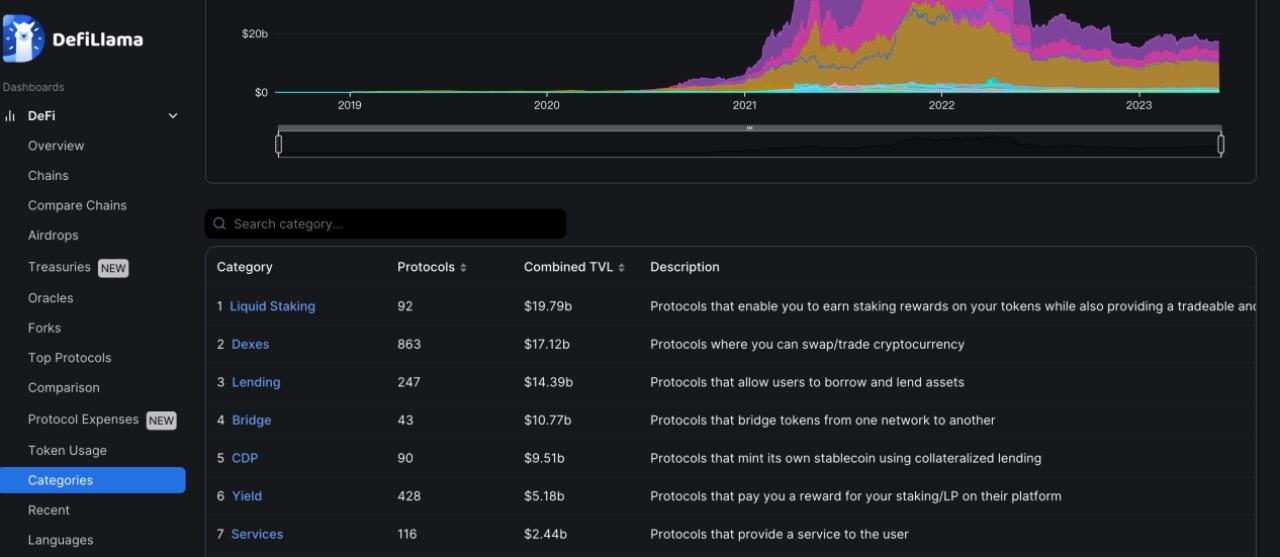
After the upgrade of Ethereum, the LSD market has grown rapidly, and its current TVL market value exceeds 19 billion US dollars, ranking first among all DeFi protocol categories. The huge LSD assets have become one of the most important battlegrounds for DeFi. The stablecoin protocol supported by LSD is trying to get a share of it through a combination of stablecoins, over-collateralization, arbitrage, liquidation and other mechanisms. Judging from the represented projects, one focuses on interest-generating LSD stablecoins, and the other focuses more on interest-free lending of LSD stablecoins.
1、Lybra Financesecondary title
——LSD Interest-earning Stablecoin Protocol
Lybra Finance has launched eUSD, an interest-bearing stablecoin, which is pegged to the U.S. dollar at a 1:1 ratio. Holding eUSD can earn 7.2% APY (annual yield). There are two ways to obtain this eUSD, one is to exchange the mainstream stablecoins held such as USDT, USDC or FRAX into eUSD through a decentralized exchange. The other is to mint eUSD at zero cost by depositing ETH or stETH as collateral in the Lybra Finance agreement. The minimum mortgage rate is 150% (if it is lower, it will be liquidated), and it is best to ensure that it is above 200%.
The mechanism of Lybra Finance to pay users' interest and obtain income is that when users deposit ETH into Lybra, Lybra will automatically convert its pledge into stETH in Lido, and obtain income through pledge. This part of the income Lybra needs to take a commission as a handling fee, and the rest of the income is used for the interest of eUSD holders. The rake is an annual handling fee of 1.5% based on the total circulation of eUSD.
How to calculate this account, Lybra gave an example on the white paper, assuming Alice deposits 135,000,000 USD in ETH and mints 80,000,000 eUSD, Bob deposits 15,000,000 USD in ETH and mints Mint 7,500,000 eUSD, then the current circulation of eUSD is 80,000,000 plus 7,500,000, a total of 87,500,000, and the current collateral is 135,000,000 USD Add $15,000,000 for a total of $150,000,000 in stETH.
Then after 1 year, Lybra generates 150,000,000 USD * 5% or 7,500,000 USD in stETH through LSD,
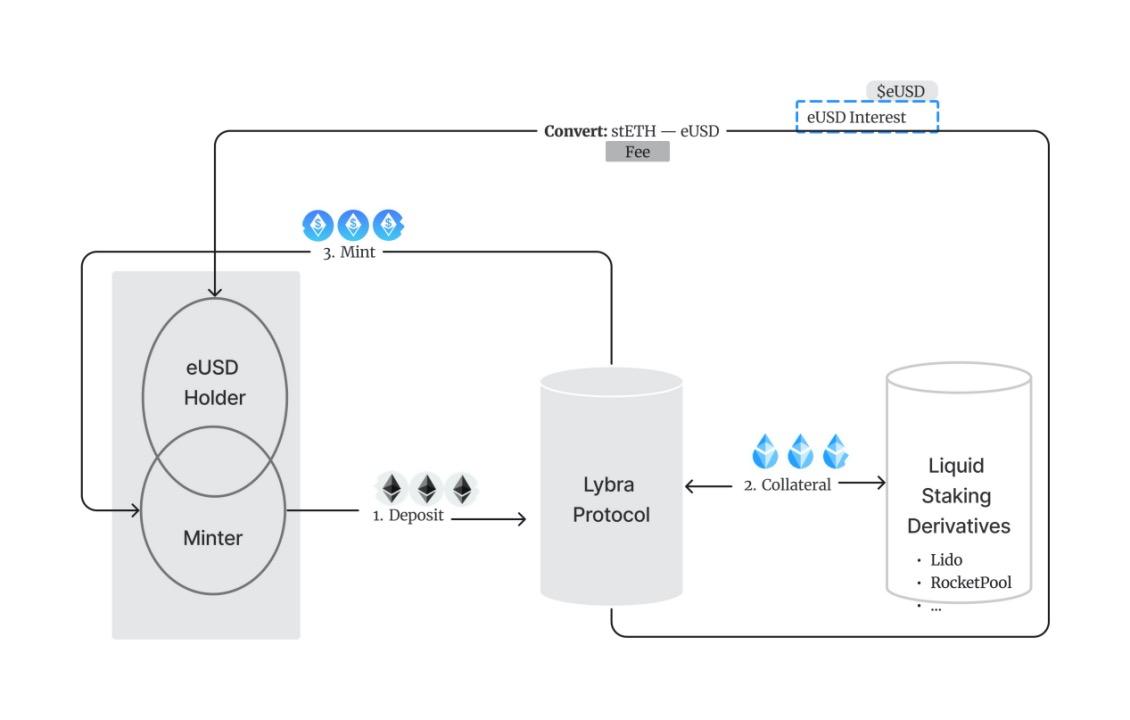
Assuming that Bob uses his 7,500,000 eUSD to purchase increased stETH, the handling fee for the past year is eUSD circulation (ie 87,500,000) * 1.5% = 1,312,500 eUSD, dividend 7, 500, 000 eUSD - 1, 312, 500 eUSD = 6, 187, 500 eUSD, then distribute 6, 187, 500 eUSD to all eUSD holders, and the annualized interest rate is around 7.2%. And for eUSD holders, stable currency deposit income is more insured than the volatility brought about by pledged ETH assets within a year.
In addition to the income mechanism, how eUSD is linked to the US dollar is a key link. Overall, Lybra Finance uses overcollateralization, liquidation mechanisms, and arbitrage opportunities to ensure the stability of eUSD.
First of all, each eUSD requires at least $1.5 worth of stETH as collateral, over-collateralized to reduce the risk of insolvency. Second, the Lybra protocol incorporates a liquidation mechanism to protect the system from undercollateralization. If the user's mortgage rate is lower than the security mortgage rate, any user can voluntarily become a liquidator and purchase the liquidation part of the mortgaged stETH and pay the corresponding eUSD. This mechanism ensures the stability of eUSD appreciation pressure. Recently, Lybra Finance also launched a mortgage rate monitoring function to resist liquidation risks in volatile markets. That is, when the user's mortgage ratio drops below a certain threshold, it will automatically repay part of the user's debt, and once the mortgage ratio returns to a predetermined level, this automatic repayment function will stop.
In addition, Lybra ensures that the eUSD price does not break the anchor by providing users with arbitrage opportunities. If 1 eUSD>1 USD, users can mint new eUSD by depositing ETH as collateral, and then sell the newly minted eUSD on DEX. As more eUSD is sold, the market supply increases, pushing the price back to $1. For users, they can profit from the price difference by buying back eUSD at a lower price or using it to repay loans.
When 1 eUSD < 1 USD, users can buy eUSD at a discounted price in the market, and then exchange it for $1 worth of ETH/stETH within the Lybra protocol. As eUSD demand increases, pushing the price back to $1. And users can hold the redeemed ETH/stETH or sell it, profiting from the difference.
In addition to issuing the interest-bearing stablecoin eUSD, Lybra Protocol also issued its native token LBR, and launched an IDO on April 22, distributing 5 million (5% of the total supply) LBR tokens.
As mentioned earlier, Lybra Protocol obtains all the benefits through staking, part of which is to pay the interest of eUSD holders, and the other part is used as a handling fee, and this part of the handling fee Lybra will be distributed to LBR holders. If the user holds 1% of LBR in the LBR pledge pool, then the user will get 1% of the total transaction fee accordingly.
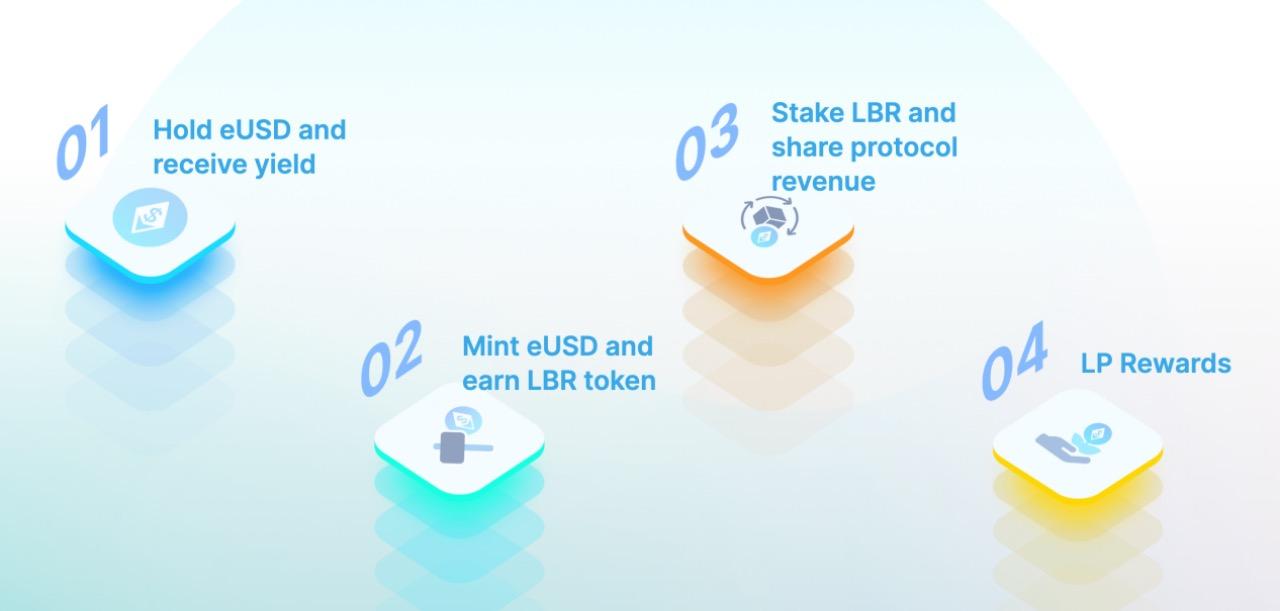
In general, through the Lybra Protocol, users can choose to hold the interest-bearing stablecoin eUSD to obtain interest, mortgage mint eUSD to obtain LRB rewards, or pledge LRB as a way to provide liquidity for LP to obtain income.
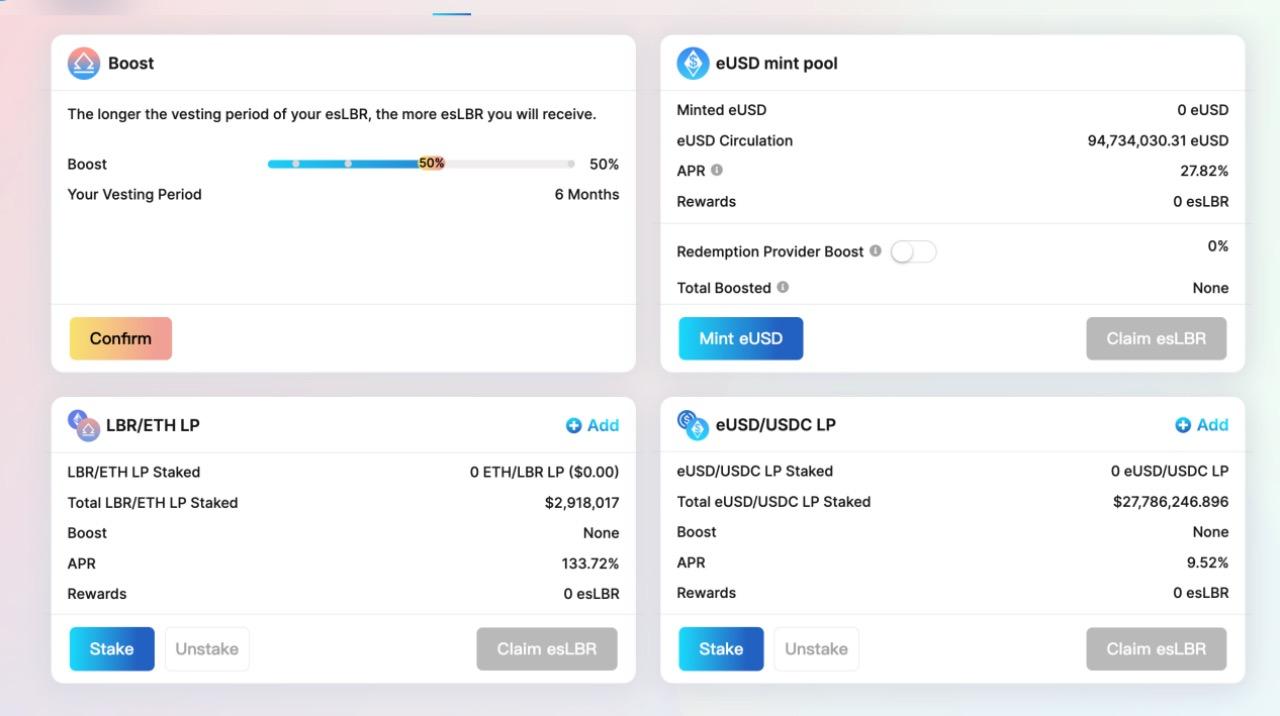
Currently, Lybra's first pool (eUSD mint pool) yields 27.82%, second pool (LBR/ETH LP) yields 133.72%, third pool (eUSD/USDC LP) yields 9.52%, and single-pledged LBR yields 74.56%. Due to the large fluctuations in LBR currency price growth and its protocol income, its yield also fluctuates greatly.
At present, the TVL of Lybra Finance has fallen back to US$182 million (up to over US$200 million), and the price of LRB has also been greatly reduced to US$1.22 (up to over US$4).
The innovative model of Lybra Finance's interest-bearing stable currency and zero-interest lending does provide a solution for groups who need stability and pursue certain pledge returns. But for users, this also means that they have to bear the security risk of an additional layer of contracts, and because of the commission of the agreement, a part of the pledge income needs to be discounted. Although Lybra Finance's TVL and currency prices have skyrocketed in the short term, there has been a recent decline. How Lybra Finance can ensure long-term sustainability is worthy of attention.
Lybra Finance's current team is also anonymous. Recently, because of its rapid rise in data, it has also sparked a lot of discussions. It was speculated that it is a project under Lido, but then Lido clarified that the two have nothing to do with each other, and reminded users to check the project background before interacting.
2、Gravitasecondary title
——LSD interest-free loan stablecoin agreement
Gravita Protocol is a decentralized lending protocol built on Ethereum, which supports users to deposit wstETH (Lido), rETH (rocketpool), blusd (ChickenBonds) to obtain Gravita's native stable currency GRAI as a return, and also supports their mortgage GRAI , used for consumption, or deposited in the stable pool to purchase liquidated LST collateral at a discounted price. Gravita is a fork project of Liquity, and its native stablecoin GRAI is a token with a volatility suppression mechanism similar to Liquity's native stablecoin LUSD.
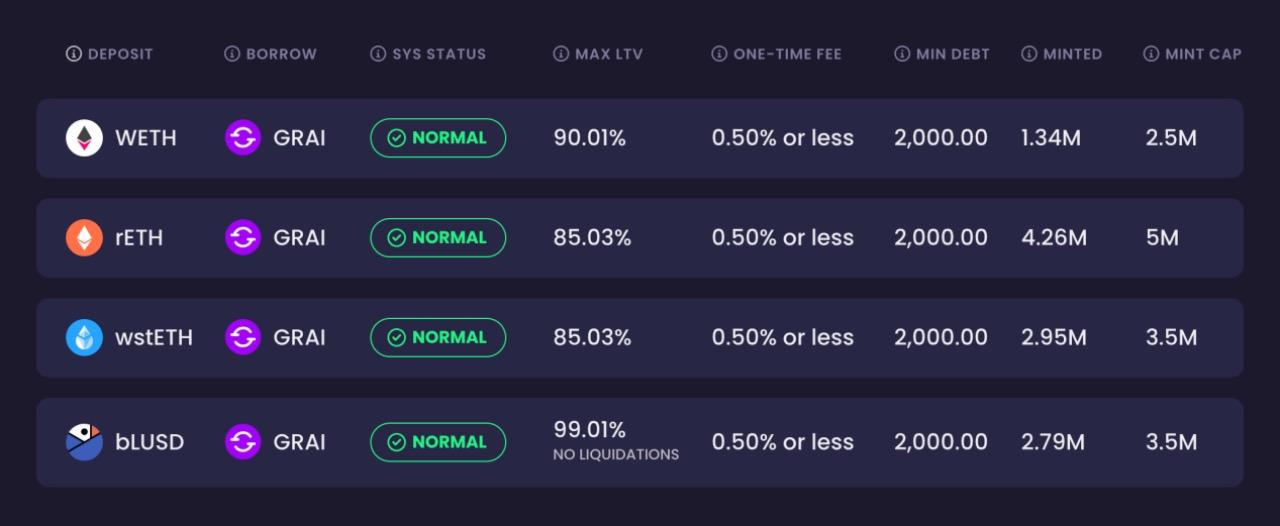
Gravita has set up independent lending pools for each type of collateral to isolate their own risks. Different collaterals have different liquidation lines, and the highest LTV can reach 90%. For example, when the price of ETH is 2000 USD, the user can lend up to 2000*0.9 = 1800 GRAI, and if the price of ETH is lower than 2000, it will be liquidated. Considering the higher risk of LST, the LTV of LST collateral is lower.
Compared with Lybra Finance, which encourages users to hold the interest-earning stable currency eusd to reduce the risk of LST income (aside from an additional layer of contract risk), Gravita focuses more on improving the user's capital turnover rate, using a low-fee mechanism and a liquidation mechanism, Meet the needs of users' capital turnover, especially short-term lending needs.
On the one hand, when the user's LST is used as collateral, the pledged APR should not be affected, but the user can choose to use it in other DeFi to obtain income opportunities by obtaining GRAI through mortgage loans. This means that if the price of ETH remains stable or grows, the LTV decreases over time and the risk of liquidation or redemption for users is reduced.
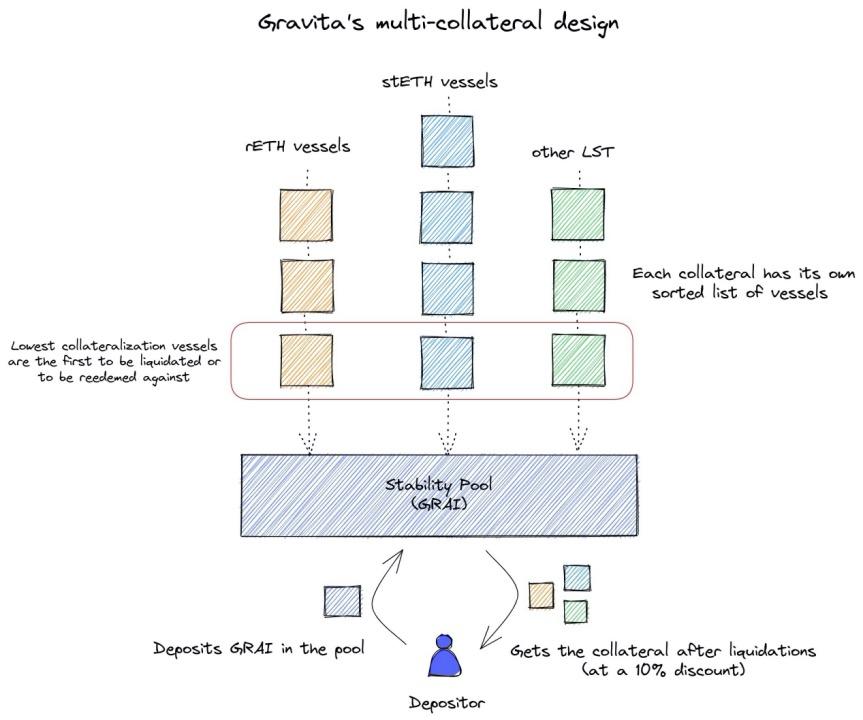
On the other hand, Gravita has a lower rate mechanism and a lower liquidation line than MakerDao. Currently using the Gravita protocol, there is a one-time maximum fee of only 0.5% for positions older than 6 months. When users repay their debts before six months (approximately 182 days) are due, a fixed borrowing fee of 0.5% will be refunded proportionally to the time spent, subject to at least one week's worth of interest. MakerDao has an annual fee ranging from year to year. In addition, Gravita's LTV is about 85%, which translates to a liquidation line of about 116%, while MakerDao has a liquidation line of at least 160%.
At present, Gravita's TVL is also steadily rising to more than 21 million US dollars.
3、Agilitysecondary title
——LSD liquidity distribution platform + aUSD trading platform
Agility's official description positions it as an LSD liquidity distribution platform + aUSD trading platform, aiming to allow LSD holders to obtain higher returns and release LSD's liquidity. However, neither the LSD liquidity distribution system nor the aUSD trading platform has been officially launched yet.
Agility currently supports ETH pledge and generates aETH; it also supports stETH, rETH and frxETH various LSD pledges and generates aLSD. After users obtain aETH and aLSD, they can choose to hold aLSD to obtain the corresponding LSD pledge income; or use aLSD or aETH to participate in the LSD liquidity distribution system to provide liquidity for the selected treasury and obtain income; in addition, they can also pledge aLSD or aETH mints Agility's native stablecoin aUSD for trading or hedging risks.
Here we will focus on Agility's aUSD trading system. aUSD is similar to the eUSD and other stablecoins mentioned above. It is also an over-collateralized stablecoin. Users can mint aUSD by mortgaging aLSD or aETH. Its initial mortgage rate is 130%, and the minimum cannot be lower than 110%, otherwise it will be liquidated.
After users get aUSD, they can trade or hedge, such as long/short ETH, GMX, GNS, Pendle, Gear and other assets, long/short LSD yield, option trading, gambling games, etc. In its roadmap, Agility plans to attract external developers to build more aUSD transaction scenarios, including external application scenarios of aUSD.
The initial high yield allowed Agility to reach a peak of nearly US$500 million (US$487 million) in TVL in the first two weeks of its launch, and the price of its governance token AGI rose from the initial issue price of US$0.04 to US$0.79. But it fell back quickly, and the current TVL is only 2.25 million US dollars, and the price of AGI is only 0.015 US dollars.
4、Prisma Financesecondary title
——LSD Interest-earning Stablecoin Protocol
Prisma Finance is a very early project. Its official Twitter was launched in May. The official website is only a single page with a one-sentence introduction. Its application has not yet been launched, and its team is also anonymous.
But now Prisma Finance has announced the completion of a round of financing, the specific amount is not disclosed, Curve Finance founder Michael Egorov, Convex Finance founder C 2 tP, FRAX Finance, Conic Finance, Tetranode, Llama Airforce, CoinGecko founder, OKX Ventures, DeFiDad , MrBlock, Impossible Finance, 0x Maki, GBV, Agnostic Fund, founder of Swell Network, Adam Cochran, research director of Eden of The Block, Ankr Founders, MCEG, Eric Chen, etc. participated in the investment.
Judging from the only introduction article on Prisma Finance, Prisma Finance will support more LSD assets than Lybra Finance, such as supporting wstETH (Lido), cbETH (Coinbase), rETH (Rocket Pool), sfrxETH (Frax Ether) , WBETH (Binance) as collateral to mint the over-collateralized stablecoin acUSD. Prisma's over-collateralization model supports automatic repayment, allowing the use of Ethereum staking proceeds to automatically repay debts.
As the data growth of Lybra Finance, the LSD stablecoin model, has received a lot of attention recently, Prisma Finance, an early project, not only has a similar model, but also received financing from many well-known institutions. Many users are concerned about the further planning of Prisma Finance, especially the IDO time, but the Prisma Chinese community said that there is no IDO timetable for the time being.
5、Raftsecondary title
——LSD interest-free loan stablecoin agreement
Gravita Protocol supports users to deposit wstETH (Lido), rETH (rocketpool), blusd (ChickenBonds) to get Gravita's native stable currency GRAI in return, and also supports their mortgage GRAI for consumption, or deposit it in the stable pool for Buy liquidated LST collateral at a discount.
Raft, similar to Gravita Protocol, is also a decentralized lending protocol built on Ethereum. It issued the stable currency R, which supports users to deposit R or mortgage stETH or wstETH to borrow R, and obtain pledge income. At the same time, they can also use R to spend in other protocols in the ecosystem to improve the utilization rate of funds. The current minimum mortgage rate is 110%. The user borrows at least 3000 R. Raft currently requires a 00.1% fee.
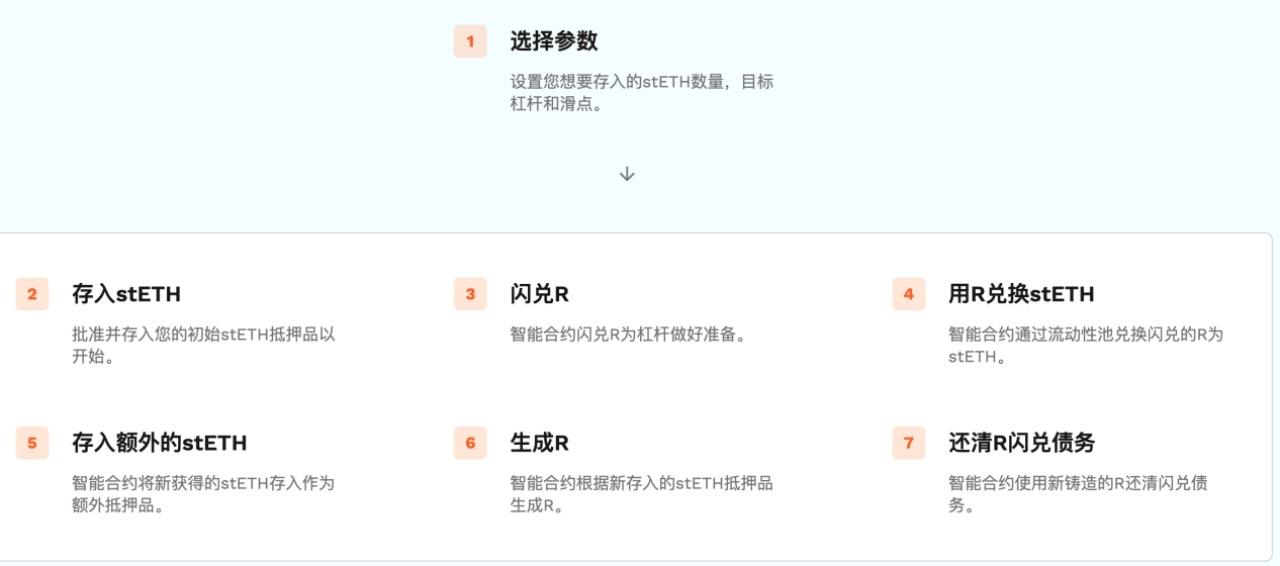
Raft stated that it allows users to obtain up to 11 times leverage on stETH, and at the same time provides users with a very simple operation process. Users only need to set the amount of stETH deposited, target leverage and slippage, and users can follow automatic steps to perform operations. Among them, the maximum leverage Raft is calculated based on the stETH mortgage coefficient in Aave v3 and Maker, and the annual fee is calculated based on the difference between stETH supply APY and USDC borrowing APY on Aave v3 and the DAI stability fee.
Raft went live on June 5, and in less than a day, the current TVL has reached $16.43 million.
6、Tenet Protocolsecondary title
——Liquid pledge Layer 1+ interest-free stablecoin lending agreement
Tenet Protocol is a Cosmos-based EVM-compatible layer 1 blockchain and an interest-free stablecoin lending protocol that provides multiple layers of income opportunities for LSD holders.
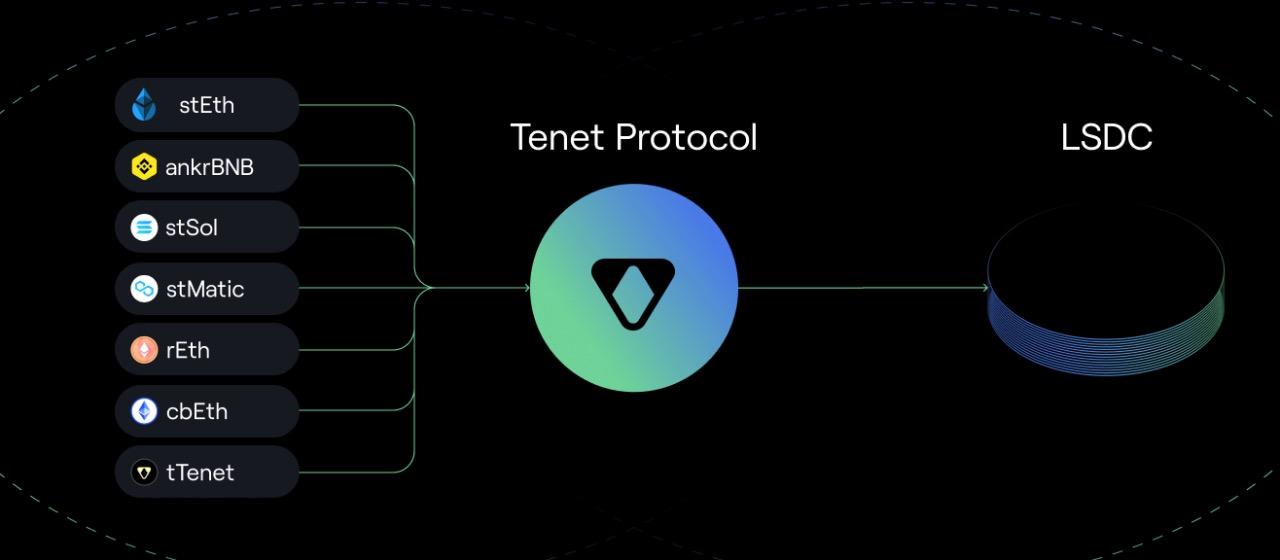
First of all, users can mortgage LSD to Tenet network validators to obtain pledge income. Users can borrow LSDC collateral assets without interest, and deploy consumption LSDC in the DeFi ecosystem in addition to guaranteeing the original LSD asset income; release additional liquidity and utility through LSDC.
In addition, in the stability module, it is also possible to provide liquidity for LSDC pairs, etc., to obtain additional income in the form of liquidation within the Lucidity system, and to obtain Tenet token rewards from the local reward pool. The minimum mortgage rate of LSDC is 125%, and users must borrow at least 500 LSDC. The stablecoin segment of Tenet Protocol is also a fork that builds Liquity. Recently, Tenet Protocol stated that it is building on LayerZero for full-chain expansion.
Tenet Protocol's project team has extensive experience in product and marketing. The CEO of Tenet Protocol, Greg Gopman, is the former CMO of Ankr, the growth director of Kadena, and the co-founder of Akash. COO Dan Peterson is formerly Blockdaemon's Revenue Operations Specialist. CPO Alex Cheng is the former senior product manager of Tendermint-Cosmos and Composable Finance. CTO Dan Lashin was the former CTO of Minter.