


Inventory of Ethereum improvement proposals worthy of attention in 2023


Original Author: Hemi
Original Author: Hemi
The Ethereum developer community is constantly pushing the boundaries of innovation to improve the user experience of decentralized applications (dApps).
EIP and ERC are proposals and formal standards, respectively, aimed at improving the functionality of the Ethereum network.
They also actually represent one of Ethereum's main features: the ability to create and manage custom tokens using various standards.
Standards like ERC-20 for fungible tokens, and ERC-721 and ERC-1155 for non-fungible tokens have played a vital role in the growth and success of the Ethereum ecosystem, with developers creating many unique And innovative dApp.
Ethereum has several other standards that have helped it become a thriving ecosystem, including ERC-777 (a security upgrade to ERC-20), ERC-3643 (a security token standard), and more.
But this is definitely not the end of the road of Ethereum innovation.
In 2023, the latest and most exciting standard is ERC-4337, also known as the "smart wallet" standard or account abstraction. It aims to simplify the user experience and thus promises to be a game changer for blockchain adoption by the next billion users.
In addition, there are 3 other proposals also making waves in the first half of 2023.
ERC-4337: Open the era of no private key
ERC-4337 aims to upgrade the EOA account used by users to a "smart account", enabling the account to operate as a smart contract. This means that each crypto wallet can have customizable authorization logic to suit individual user or application needs.
For this reason, ERC-4337 is often referred to as the "smart wallet" standard, or also as "account abstraction".
Crypto wallets are the entry point for anyone who wants to interact on the blockchain and are one of the main sources of friction preventing mass adoption. Why?
The answer to this question is actually all the advantages of ERC-4337:- Simplified access to:
ERC-4337 provides the possibility to use accounts without storing private keys. Private keys can be stored in the smartphone's standard security module.- Account recovery:
If you lose your phone or private key, you can restore access to your account by contacting a previously specified user (multi-signature) using the social recovery feature. If you don't have a trusted friend, you can also pay a third-party company that provides the service to help you recover your account if needed.- Automatic trading:
ERC-4337 allows automated transactions, including monthly spending limits, AI transactions, and adjusting staking positions. These features allow users to conduct transactions more easily.- Gas-free transactions:
ERC-4337 supports gas-free transactions, which allows dApps such as DeFi, blockchain games, and DAO to sponsor Gas fees for users, making transactions easier for users. This feature also allows users to use dApp tokens to pay Gas fees, which can greatly reduce the cost of using dApps.- Bundle deals:
Every transaction requires a signature. Through account abstraction, transactions can be bundled and multiple transactions sent as one to save time and even gas costs. Similar to a shopping cart, even if it faces 10 markets, it can be packaged in one transaction.- Pre-approved transactions:
Say you're minting multiple NFTs, or playing a game. With Smart Accounts, you can pre-approve transactions based on custom wallet codes and session keys set in advance.
There are many other use cases for ERC-4337, but all of them are to make the user experience of dApp as simple as Web2 application. This is why ERC-4337 is often referred to by the Ethereum community as a "game changer for blockchain adoption by the next billion users".
Although its adoption is still in its early stages, the developer community is vigorously developing new products to unlock the incredible potential of Smart Accounts.
ERC-6551: Make NFT a true on-chain identity
The idea behind ERC-6551 is to link NFTs (ERC-721) and Smart Accounts into token-bound accounts (TBAs) — yes, it’s built on top of the ERC-4337 standard.
ERC-6551 aims to have a corresponding TBA behind each NFT, enabling NFTs to interact with applications, record transaction history, and own on-chain assets (notably, it does not require changes to existing ERC-721) .
For example, Xiao Ming obtained an NFT from a project, and then the project decided to airdrop tokens to NFT holders, and also released a series of POAP for holders to claim.
Scenario A - without using TBA
When Xiao Ming decides to sell his NFT, neither the NFT-related token nor POAP will be transferred to the buyer.
Scenario B - TBA is used
All NFT-related token claims and POAP claims will be recorded in the NFT itself. When NFT is sold, buyers will also see these records, and all related tokens and POAPs will also be transferred to buyers. If these are missing, the value of NFT may also be greatly reduced.
The motivation behind ERC-6551 is to empower NFTs as a form of on-chain identity.
Guess the use case for TBA:
- Characters in role-playing games, accumulating assets based on the passage of time and the actions they take (e.g. nuggets)
- A car in the Metaverse, composed of NFTs as "components"
- A punch pass membership card that grants access to the establishment and records a history of past interactions
- Social media profiles, allowing users to own their content and data
ERC-5507: Refundable token sales, less scams
ERC-5507, sometimes referred to as ERC-721R, because it is an evolution of the ERC-721 standard for NFTs.
Its goal is to add a refund function for both fungible and non-fungible tokens (ERC-20, ERC-721 and ERC-1155): users have the right to refund their purchased tokens before a preset time has elapsed .
The motivation for ERC-5507 is to help prevent Rug Pulls and scams by increasing the accountability of the crypto industry and provide greater protection for buyers. By the way, it will also make tokens following the standard compliant with EU regulations - a 14-day refund period for online purchases.
Some of the highlights and benefits of ERC-5507 are:
- Establish interoperability with various NFT-related applications, such as portfolio explorers and marketplaces.
- NFT marketplaces can place a sign indicating that NFTs are still refundable and provide a link to a website for refundable NFTs.
- Decentralized exchanges (DEX) can provide refund options for tokens.
- Better wallet confirmation dialog.
However, there are also challenges and disadvantages in using ERC-5507: increased gas costs, abuse of the refund policy, difficulty in implementation... These are currently being discussed in the Ethereum community, so it is uncertain whether the EIP will pass (currently in the review period).
It is worth noting that the emergence of EIP-5507 and ERC-5507 reflects the willingness of the encryption industry to solve compliance and investor protection issues.
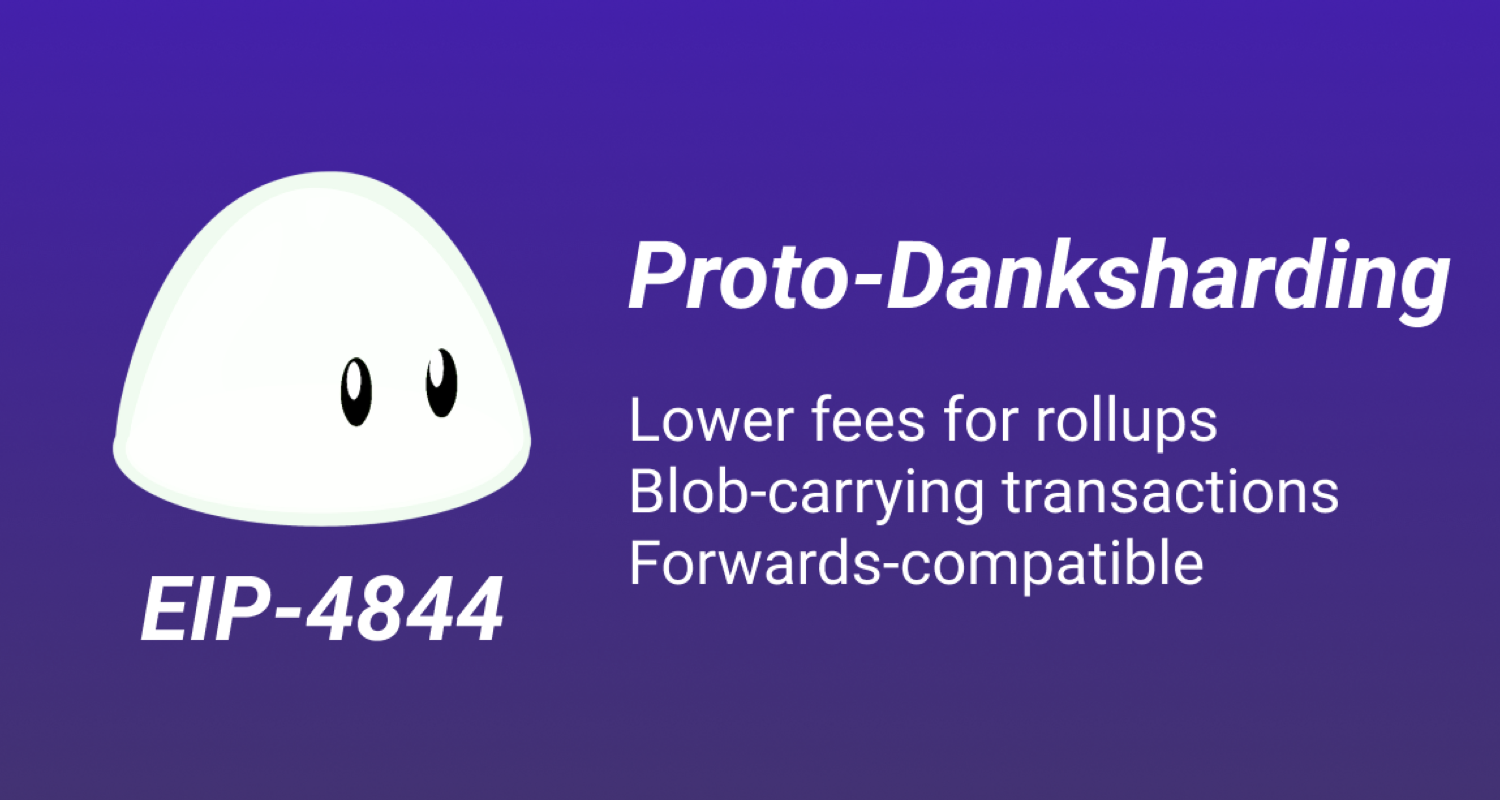
EIP-4844: Preparing for Ethereum Sharding
EIP-4844 is an important Ethereum improvement proposal, a step before Ethereum DankSharding, which aims to realize temporary storage and retrieval of off-chain data through Ethereum nodes to meet the data and storage needs of blockchain applications. need.
The proposal introduces blob-carrying transactions (the transaction format required for sharding), which enable blobs to hold more data without incurring additional costs. A blob is a data type specifically designed for L2 data transfers, blobs are not permanent as the network deletes them after a few weeks.
If successfully activated, EIP-4844 is expected to reduce the transaction costs of L2 rollup solutions (including Optimism and Arbitrum) by 10-100 times.
first level title
Summarize
Summarize
These EIPs and ERCs mentioned above enable new use cases and make it easier for users to interact with dApps - this is especially true for ERC-4337.
risk warning:
risk warning:
According to the "Notice on Further Preventing and Dealing with the Risk of Hype in Virtual Currency Transactions" issued by the central bank and other departments, the content of this article is only for information sharing, and does not promote or endorse any operation and investment behavior. Participate in any illegal financial practice.





