






ConsenSys Deep Dive: The Ultimate Guide to ETH Staking Withdrawals


Original Title: ConsenSys: The Ultimate Guide to Upgrading ETH Staking and Withdrawal in Shanghai
Original source: ConsenSys
Summary
Summary
Ethereum is going through a period of rapid infrastructure development. Since 2015 the Ethereum blockchainfirst implementationSince its launch, it has experiencedseriesPlanned technology upgrades. Every upgrade makes Ethereum'svisionTaking it further into focus - becoming the open, decentralized, trusted, permissionless, programmable infrastructure layer upon which the future of the internet, the economy, and much of our digital life is built.
September 2022,ethereum mergerUnifies the consensus and execution layers of Ethereum. This is a pivotal moment in the history of Ethereum that brings manyimportant improvement, including reducing the carbon footprint of the network99.95% . By switching to a proof-of-stake consensus mechanism, the merger changes the way value is accumulated across the Ethereum network and reduces new ETH issuance by a staggering88% . Before the merger,EIP-1559 The introduction of Ethereum made Ethereum transactions more efficient by changing Ethereum's gas fee system from a bidding system to a two-part system - a standard base fee per block (burned by the protocol), and a user can An optional tip (priority fee) to pay to expedite transactions. Combined, combinedEIP-1559 The burn rate has led to the most deflationary moment in the history of Ethereum and strengthened the security of the network.
Now, the Ethereum community is rallying behind the next planned upgrade on the roadmap - the Shanghai/Capella upgrade. It’s dually named because it’s the first simultaneous upgrade of Ethereum’s execution and consensus layers, and it’s highly anticipated because it will enable pledged ETH withdrawals.
In particular, this upgrade will enable ETH staked at the consensus layer to be withdrawn to Ethereum execution addresses for the first time since ETH staking became possible in December 2020.
The activation of withdrawals addresses another “unknown” in Ethereum’s roadmap — potentially encouraging more validator participation and promoting further decentralization and security on the Ethereum network. By increasing the portability of staking, withdrawals will lead to increased competition among staking providers—potentially driving further innovation in the industry and progressively lowering barriers to entry.
Stakers using third-party staking services will have the opportunity to (re)evaluate how and where to stake their ETH based on factors such as reward maximization, validator performance, user experience simplicity, and fees.
Independent staking (operating Ethereum validators independently) brings the most decentralization and security benefits to the network, but remains challenging for most retail stakers due to associated technical and operational requirements. Those looking to stake without this operational overhead can choose from a number of different offerings, ranging from fully custodial and centralized providers, to non-custodial, decentralized protocols. It is the responsibility of each staker to choose a partner who aligns with values and is confident in maintaining the properties of Ethereum that stakers value, whatever those properties may be. Collectively, stakers are the guardians of the value of Ethereum.
The Shanghai/Capella upgrade is expected to be a major event for Ethereum. It will have several implications for stakers, the Ethereum staking ecosystem, and DeFi more generally:
Partial and full withdrawals will give long-term stakers access to funds that have been locked for more than two years. However, early stakers have demonstrated their faith in Ethereum, and they may be more inclined to stake this newfound liquidity rather than take profits.
By reducing the liquidity risk of staking ETH, withdrawals can inspire confidence in the liquidity staking protocol and make ETH staking a more attractive opportunity in general, especially for typically risk-averse institutions.
secondary title
author
Andrew Breslin,Product research and development
Michiel Milanovic, DeFi Market Analyst
Simran Jagdevsecondary title
contributor
Ben Edgington, Chief Product Owner, Protocol Engineering Department Mikhail Kalinin, Principal Researcher, Protocol EngineeringRoberto Saltini, Principal Investigator of Protocol EngineeringKuhan Tharmananthar, Head of Product at Codefi StakingMatthieu Saint Olive, Senior Product Manager, Codefi StakingAbad Mian, Chief Product Manager of MetaMask StakingJohann Bornman, Group Product Owner, MetaMask AgencyMatt Nelson, Hyperledger Besu & Web3 Signer Product ManagerNicole Adarme, Head of Institutional Marketing, Tsvetan Mitev, Senior Graphic Designer Profile
Ethereum is the infrastructure layer upon which the future of the internet, the economy, and much of our digital life is built. Supporting our digital future on a global scale requires improving the scalability and security of Ethereum while maintaining the decentralization of the network; in other words, addressingThe Blockchain Trilemma。
The solution - no easy task - is expected to be delivered in six phases.The Merge, the Surge, the Scourge, the Verge, the Purge, and the Splurge. Each phase of the Ethereum roadmap is largely independent of the others and proceeds in parallel.
Ethereum's latest upgrade,ethereum merger, has been successfully executed on September 13, 2022. The merger refers to the union of the Ethereum Execution Layer (EL) and Consensus Layer (CL), which marks Ethereum's transition to a Proof-of-Stake (PoS) consensus mechanism. This move away from the energy-intensive Proof-of-Work (PoW) consensus mechanism reduces Ethereum’s annualized energy consumption by more than99% .
The merged Ethereum operates as a single blockchain and consists of two layers: the execution layer is where Ethereum transactions are processed and broadcast to the rest of the network, while the consensus layer runs Ethereum's PoS consensus algorithm and handles transaction settlement and the final result.According to Vitalik Buterin, this upgrade brings us more than halfway into Ethereum's broader roadmap.
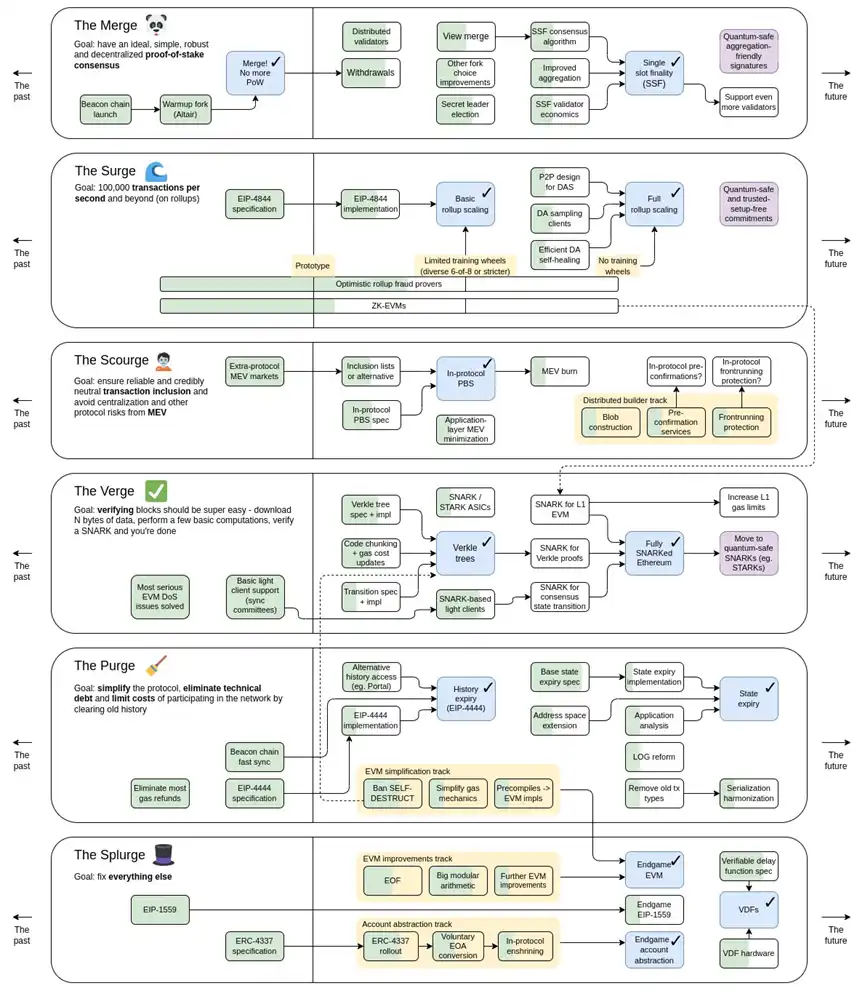
Figure 1. Ethereum roadmap. Source: Twitter, Vitalik Buterin
Next is the Shanghai/Capella upgrade, where the former is the name of the EL upgrade and Capella is the name of the CL upgrade. A key outcome of the Shanghai/Capella upgrade is that it will enable withdrawals of staked ETH.
Stakers who currently have locked ETH (i.e. validator balances) on Ethereum CL will be able to withdraw it to an Ethereum execution address. An execution address is a standard address on the Ethereum mainnet that users are familiar with.
This report aims to place the Shanghai/Capella upgrade in the broader Ethereum roadmap and outline three key functions it implements: updating validators' withdrawal credentials, partial withdrawals, and full withdrawals.
first level title
What is the Shanghai/Capella upgrade?
As mentioned above, Ethereum’s next planned upgrade is called both the Shanghai upgrade and the Capella upgrade. Shanghai/Capella is dually named because it is the first simultaneous upgrade of Ethereum's EL and CL. In principle, it is not mandatory to upgrade both tiers at the same time, so for the sake of precision we will use the respective names of EL and CL upgrades.
As the first simultaneous upgrade of Ethereum EL and CL, Shanghai/Capella will also be the first Ethereum fork triggered by a specific timestamp. With the exception of merges, all previous forks were triggered by reaching a specific block number. Switching to timestamp-triggered forks allows EL and CL to be upgraded synchronously.
In addition to withdrawals, the Shanghai/Capella upgrade will also provide some minor technical improvements to the Ethereum Virtual Machine (EVM).
However, due to withdrawal, orEIP-4895 , is the key functionality provided in the upgrade, and this report will focus on this issue.
first level title
The Role of Stakers in Ethereum Governance
At its core, Ethereum's value lies in the decentralized network of validators who work together to build and secure the Ethereum blockchain, and the broader social layer of the Ethereum community. It is this decentralized, permissionless community of contributors that gives rise to Ethereum's trusted neutrality, censorship resistance, openness, immutability, and near-unhackable security. For this reason, running Ethereum validators independently, also known as independent staking, is considered the gold standard for Ethereum staking, as it brings the greatest benefits to stakers and decentralization of the network.
Independent stakers are vital to the network by ensuring that no single entity has disproportionate power over decisions made across Ethereum. something likeETHStakersuch communities asethdoandBesuandTekuSuch dedicated execution and consensus layer client teams are making it easier for a growing number of Ethereum community members to independently run an Ethereum validator.
That said, running a validator independently presents technical, operational, and financial barriers for some users. These types of Ethereum stakers have many options through which they can stake, including options likeCodefi Stakingsuch non-collateralized service providers, and throughMetaMask StakingThe top liquidity staking protocol available.
While stakers can delegate the operational aspects of running a validator to a third party, the onus remains on them to choose a partner who shares their values in order to maintain the characteristics of Ethereum that stakers value. Where these people choose to stake, and with whom, has a critical impact on the decentralization of Ethereum.
Despite being a community-governed system, implementing the Ethereum roadmap requires major infrastructure changes and therefore important decisions to be made. In order to make these decisions, a strong decentralized governance process is required to achieve consensus among affected stakeholders; in other words, to achieve consensus among every Ethereum community member.
Governance in Ethereum happens off-chain, meaning that decisions are made through an informal social discussion process. If the community reaches consensus, the changes are implemented in the code.Ethereum communityEvery member of Ethereum participates in the governance process of Ethereum, including various types of stakers. Stakers are the guardians of the Ethereum network. By independently staking or distributing their shares to partners with the same values in a non-staking manner, pledgers can use their pledges to "vote" and influence the future direction of Ethereum.
For most Ethereum stakers, the Shanghai/Capella upgrade provides the first opportunity to change how and with whom they initially decided to stake. This provides an opportunity for stakers of all kinds to consider their personal value, the value they want Ethereum to embody, and stake in a way that reflects that value. Those in a position to do so should consider independently running a validator if their goal is to be self-sovereign and contribute to Ethereum's decentralization. Others can “vote with their stake” through a partner with like-minded values. In this way, the Ethereum community as a collective can protect what makes Ethereum the decentralized trust infrastructure for our global digital future.
first level title
What is withdrawal?
We know that the key outcome of the Shanghai/Capella upgrade is to allow stakers to withdraw their staked ETH, but more specifically, it will provide three key features related to withdrawals.
1. Ability to transfer Ethereum validator’s withdrawal certificate from old0x 00-Type(derived from BLS key) updated to newer0x 01-Type(derived from Ethereum address).
2. Partial withdrawals, or consensus layer rewards earned by periodically and automatically "looting" from an active validator's balance (more than 32 ETH).
3. Withdraw in full, or withdraw the entire balance of an "exited" validator.
While partial and full withdrawals are different operations, it is worth briefly pointing out some commonalities between them.
originoriginthe same as ever.
Additionally, there is a single, automatic withdrawal process for both partial and full withdrawals. Every 12 seconds (each slot), the protocol "sweeps" Ethereum's validator set and determines the top 16 validators eligible to make some or all withdrawals. A maximum of 16 withdrawals can be processed per slot, however, full withdrawals are slower to process as they need to "exit" the validator first and have an additionalDelay。
Finally, there will be no gas cost associated with performing partial or full withdrawals. While both partial and full withdrawals will result in the balance of the Ethereum address being credited with the withdrawal amount, they are not transactions processed by Ethereum's EL. Instead, withdrawals are consideredsystem level operation, or account balance top-up, which works like a [coinbase transaction](https://www.javatpoint.com/coinbase-transaction#:~:text=A coinbase transaction is the,also sent in this transaction.). Since each block only allowssecondary title
Update withdrawal certificate
Activating a new Ethereum validator requires submitting a request to Ethereum'sdeposit contractDeposit 32 ETH, and a payload of other data. Part of this data payload is aWithdrawal certificatefield that defines where the validator's withdrawal balance is sent.
Currently, Ethereum validators may have two versions of withdrawal credentials, which are determined by theirwithdrawal prefixto distinguish, namely:0x 00-type,or0x 01-type。
Only validators with 0x 01-type credentials are eligible to withdraw part or all of their balance. This is due to technical differences between these withdrawal voucher types. That is, 0x 00-type credentials come fromBLS public key,and0x 01 -type certificate points to a standard Ethereum address.
As mentioned earlier, the Capella upgrade makes it possible for ETH (i.e. validator balances) “locked” on Ethereum CL to be withdrawn and credited to an Ethereum address on EL. To do this, the withdrawn validator must have a corresponding Ethereum execution address whose withdrawn balance is sent. In short, 0x 01-type withdrawal vouchers provide this corresponding execution address, while 0x 00-types do not.
As of February 20, 2023, approximately 58% of active Ethereum validators have 0x 00-type withdrawal credentials. When the Beacon chain launches in late 2020, 0x 00-type credentials are the only option available, with newer 0x 01-type credentials until 2021Marchwas introduced. Therefore, all validators activated before this date have 0x 00-type credentials.
As can be seen in Figure 2, about 20% of newly activated validators still have their withdrawal credentials set to the old 0x 00-type. This could be due to independent stakers or institutions using outdated guidelines for activating validators, or it could be a deliberate decision by stakers who wish to avoid any potential tax implications of automatically receiving liquidity from partial withdrawals. Please note that in many jurisdictions the tax implications of pledges have not been clearly defined and this is not tax advice. Tax rules vary by jurisdiction and a certified professional in your jurisdiction should be consulted for advice.
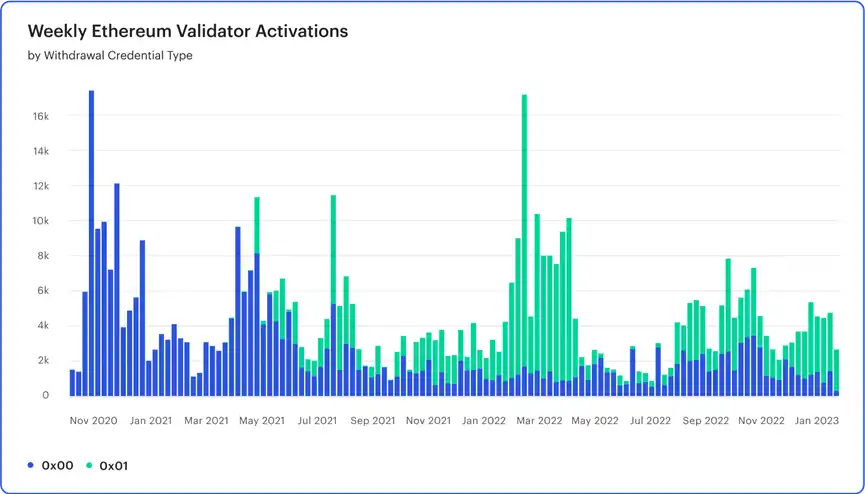
Figure 2. Weekly beacon chain deposits by withdrawal credential type. Sources: ConsenSys, Dune Analytics, @DataAlways
For 0x00-certified validators, the Capella upgrade includes an operation to update their withdrawal credentials to 0x01-type. Doing so requires owners of validators with 0x 00-type credentials to use their existing withdrawal credentials (BLS key) to sign and passConsensus layer clientSubmit to Ethereum's CLsecondary title。
processing time
According to the Ethereum consensus specification, the speed at which 0x 00-type credentials can be updated to 0x 01-type credentials is limited to16 per block(every 12 seconds). However, validators of 0x00-type credentials should not feel pressured to renew by any specific date unless liquidity is needed immediately, as they will continue to accrue rewards, just as they did after the Beacon chain launched.
partial withdrawal
partial withdrawal
Partial withdrawals are periodic "write-offs" to validator balances above 32 ETH. This will happen automatically on any validator: there is a withdrawal voucher of type 0x 01- and isactive, and have a validator with a balance of more than 32 ETH.
Partial withdrawals are beneficial to stakers, as they can often receive the CL staking rewards earned by their validators (less any penalties) without incurring any gas fees, or having to withdraw from their validators. Additionally, due to an Ethereum validator'sEffective Balance Limitsecondary title
processing time
Active validators with 0x 01-type withdrawal certificates can expect their validator balances to be partially withdrawn every 2 to 5 days following the Shanghai/Capella upgrade. This is the expected time it will take for an automated "sweep" to scan Ethereum's active validator set and process withdrawals for those who qualify. A range is given, not an exact number, because it is unknown how many validators with 0x 00-type withdrawal certificates will be updated to 0x 01-type withdrawal certificates immediately after the upgrade.
secondary title
Withdraw all
A full withdrawal is a withdrawal of the entire balance of a "retired" validator. The prerequisite step of exiting a validator requires specific manual steps. However, for any validator, the withdrawal process happens automatically: there is a withdrawal certificate of type 0x 01- and hasquit。
Some other PoS-secured blockchains have an "unstake" period, which is a fixed period after submitting a withdrawal request that stakers must wait before receiving their previously staked assets.
secondary title
processing time
The process of performing a complete withdrawal is divided into two parts. First, validators must start from Ethereum's consensus layerquit. The validator is then subject to the same automatic withdrawal process as performing a partial withdrawal, but with the addition of aDelay。
In short, a full exit of a validator is expected to take at least 28 hours. This is the absolute minimum time required to exit a validator (5 durations, or 32 minutes) and the absolute minimum time for a validator to become a full withdrawal (256 durationsfirst level title
validator exit process

Figure 3. Authenticator exit process. Source: ConsenSys
Figure 3 depicts the high-level steps required to exit an active validator. Let's briefly talk about each step.
oneActiveValidators, with 0x01-type withdrawal credentials, propose and validate blocks as expected. Verifier'sprivate keyused to signvoluntary withdrawal(VE) operation, whilesigned VE(via CL client) CL submitted to Ethereum. Each session processes at most16 VEs (every 12 seconds). Once the VE operation is processed, and after at least5 durations(32 minutes) delay, the status of the validator will be updated from active toquitstate. At this point, the exiting validator is assigned an exit duration (i.e. the duration for which the validator will be retired) and officially enters the exit queue. Although the validator has now signaled to exit, it must still perform all validator duties (i.e. block proposals and attestations) until it is processed through the exit queue. The length of the exit queue depends on the total number of active Ethereum validators and the number of validators already in the queue. After a validator is processed through the exit queue, its status is updated from exiting toquitsecondary title
Validator exit rate limit
becausesome reasons, it is important that the validator set of the PoS protocol does not change too quickly. Therefore, validator exits are rate-limited by the exit queue. The duration of the exit queue is protocolChurn limitfunction, and the number of validators to exit before interested validators.
Churn limit is a variable that defines the maximum number of validators that can exit per epoch (every 6.4 minutes), and is given by the following expression:
Churn Limit =max( 4, active_validators/65536)
According to the expression above, the churn limit will be 4 until there are 327680 active Ethereum validators, at which point it will become 5. After that, every 65536 newly activated validators (Churn limit quotient), the drain limit will increase by one.
As of February 23, 2023, approximately525000 active Ethereum validators. From Figure 4 and Figure 5, we can see that the current churn limit is 8, which means that 1800 validators can be withdrawn per day (see Figure 4).
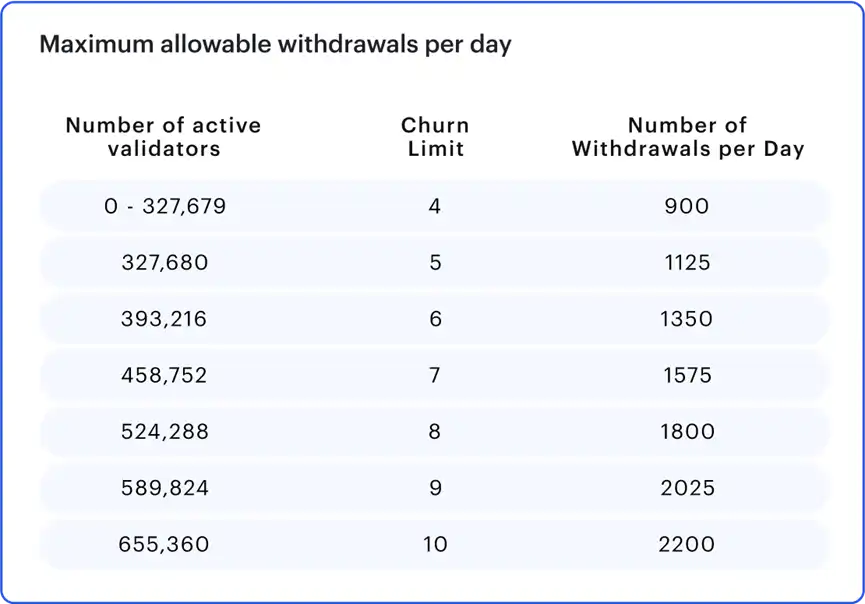
Figure 4. The maximum withdrawal amount allowed per day. Source: ConsenSys
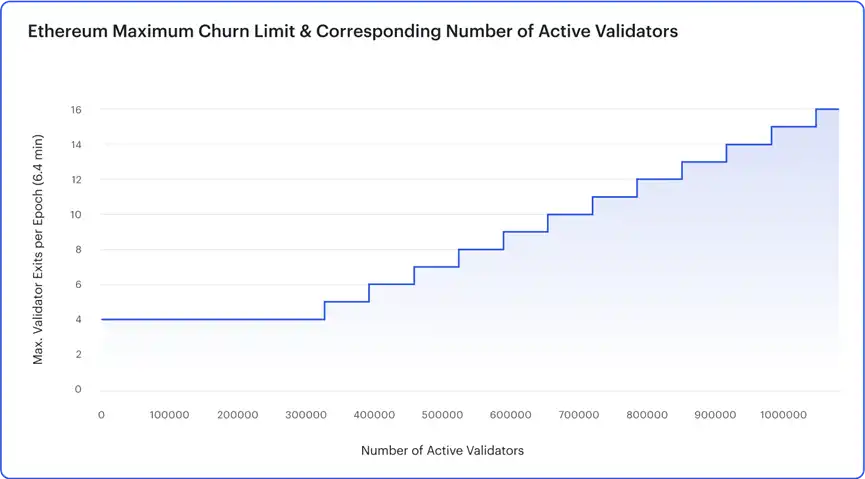
Figure 5. Ethereum maximum drain. Source: ConsenSys
Plotting the historical number of active Ethereum validators against the corresponding churn limit yields Figure 6.
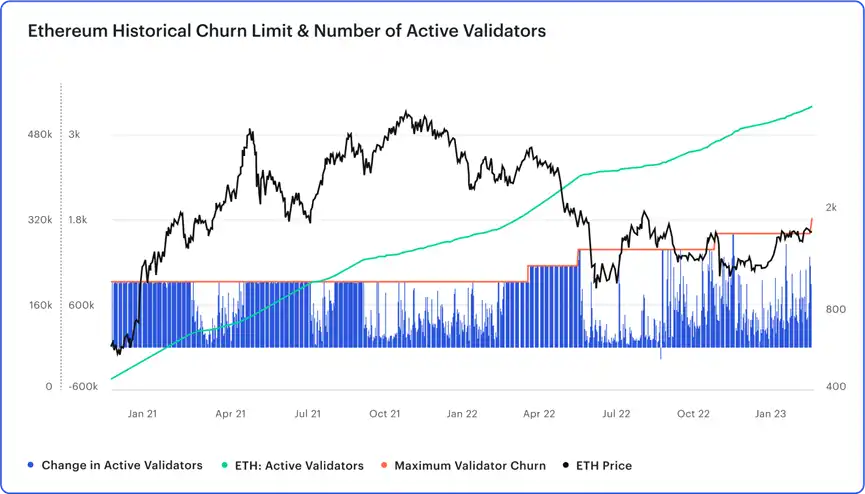
Figure 6. Changes in active Ethereum validators. Source: ConsenSys, Glassnode
secondary title
*Exit Queue Duration (days) = (((#_of_validators_to_be_exited)/(churn_limit)) 6.4 mins)/60/24
Full withdrawal process
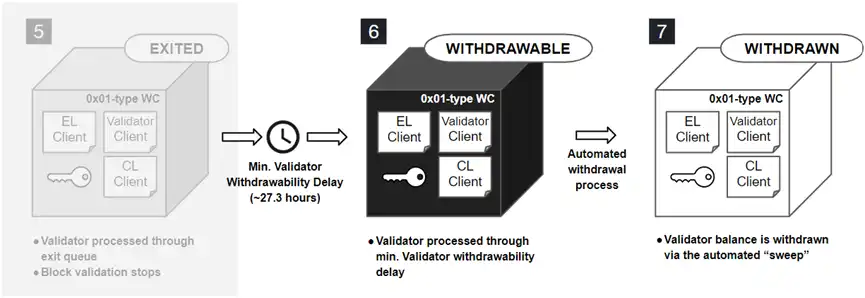
Figure 7. The entire withdrawal process. Source: ConsenSys
in the validator byquitAfterwards, before it can be fully withdrawn, there are two more steps:
Exited validators also experience a delay of 256 epochs (27.3 hours) before their status is updated from exited to withdrawable, calledMinimum validator withdrawability delaysecondary title
Full Withdrawal Rate Limits
As mentioned above, all withdrawing validators must wait 256 epochs (27.3 hours or 1.1 days) until they become withdrawable. Once validators can withdraw funds, the speed at which full withdrawals are processed is limited to each16 withdrawals, by the same automatic "sweep" process that handles partial withdrawals.
Thus, the following expression gives the maximum time (in days) that any exiting validator should wait before its balance is fully withdrawn:
*Max. Time from Exit to Withdraw (days) (((withdrawals_eligible_validator_count/16) 12)/60/60/24) + 1.1 days
first level title
How does the Shanghai/Capella upgrade affect the Ethereum staking ecosystem?
We saw above that the Shanghai/Capella fork is poised to “unlock” staked ETH from the consensus layer and make it available for withdrawal to Ethereum execution addresses. Withdrawals will have wide-ranging effects on the entire Ethereum staking ecosystem—from ETH’s liquidity supply to the competitiveness of Ethereum staking providers.
secondary title
Liquid ETH Supply
Here we will try to understand how ETH's liquidity supply will likely be affected by partial and full withdrawals in the first few days after the Shanghai/Capella upgrade.
secondary title
Before withdrawal
Before we can reason about how partial withdrawals might occur, we need to understand the current, pre-withdrawal state of Ethereum's active validator set.
As of February 23, 2023, approximately16.8 METH is pledged, accounting for 10% of total ETH supply14.6% . These pledged ETH are stored in more than525000 In the hands of validators, the average balance of validators recently exceeded 34 ETH. This shows that, so far, the average Ethereum validator has accumulated about 2 ETH in CL rewards, and after the Shanghai/Capella upgrade, more than 1 million ETH may become liquidity through partial withdrawal.
we can introduceTripolirightData AlwaysanalyzeanalyzeTo refine our understanding, Ethereum validators are further divided into three related subgroups. 0x 00 certified, Lido 0x 01 certified, and non-Lido 0x 01 certified. Having a more granular understanding of these specific validator subgroups will help qualify our fractional withdrawal model for two main reasons.
First, we know that only 0x 01 certified validators are eligible to withdraw partial funds immediately, so the total amount of ETH that a partial withdrawal will "unlock" depends on how many 0x 00 certified validators update to 0x01 Authentication.
Second, we know that Lido (like all liquidity staking protocols) may re-deposit and stake ETH withdrawn from their validators as part of the withdrawal process. This is because doing so maximizes the rate of return on Lido's liquid collateral token, stETH. Knowing this, we can discount in our model the ETH received from partial withdrawals from Lido validators, since these ETH are likely to be immediately re-staked.
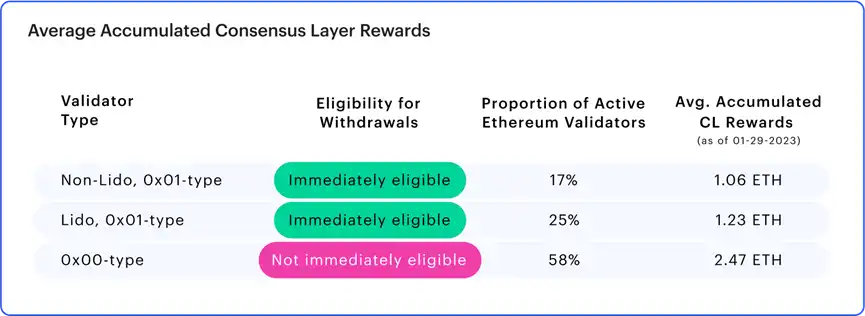
Examining the withdrawal certificates of the Ethereum active validator group through the lens of these three groups, it was found that 58% had 0x 00-type withdrawal certificates. Of the remaining 42%, with 0x01-type withdrawal credentials, roughly 61% (or 25% of all Ethereum validators) are operated by the Lido validator group.
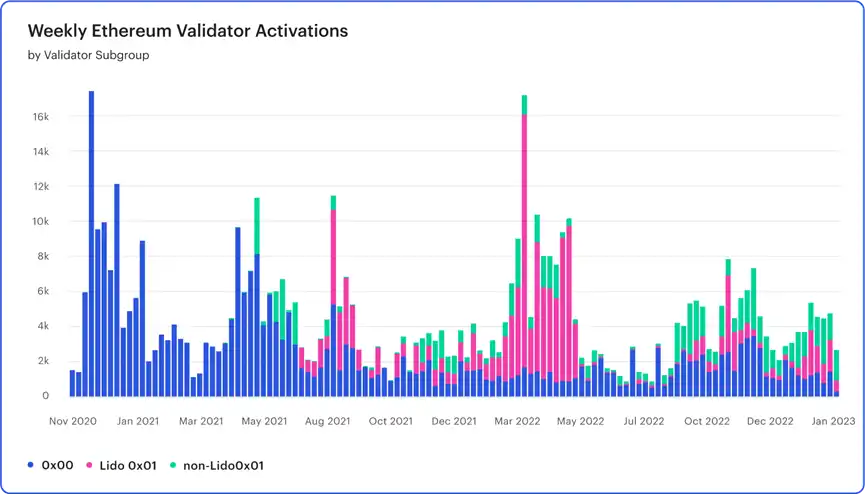
Figure 8. Ethereum validator withdrawal credentials. Sources: ConsenSys, Dune Analytics, @DataAlways
Dividing the total cumulative rewards for each group by the number of validators in each group gives the average cumulative CL reward for a typical validator in each group (see Figure 9 for data as of January 29, 2023).
secondary title
partial withdrawal
partial withdrawal
Knowing the relative proportions and average cumulative CL rewards of our three subgroups of validators, we can begin to reason about how partial withdrawals might work. Let's consider the first block added to the Ethereum blockchain, right after the Shanghai/Capella upgrade.
Since validators without 0x 00 certificates are updated to 0x 01 certificates at this time, the first block will include 16 partial withdrawals consisting entirely of validators currently set with 0x 01 certificates. Of these 16 validators, we can assume that 61%, ie 9-10 are operated by Lido and the remaining 6-7 are non-Lido 0x 01 certified validators. If the above is true, then the first block after the Shanghai/Capella upgrade will "unlock" about 18.6 ETH (about 11.7 ETH from Lido 0x 01 certified validators, about 6.9 ETH from non-Lido 0x 01 certified verifier).
While the partial withdrawal of the first block was being processed, theWithdrawal certificate change informationThe credentials of the first 16 0x 00 certified validators will be updated to type 0x 01, making them eligible to be partially withdrawn. Each block, the composition of partially withdrawn validators will change to include more validators with previous 0x 00 certifications. Since 0x 00 certified validators are older on average and have accumulated more CL rewards, this will lead to a gradual increase in the total amount of ETH withdrawn per block.
asTripoliAs noted, where the ETH profile extracted per block peaks, “depends on what percent of 0x00 validators immediately switch their certificates, but in the most extreme case all 0x00 validators require Instead, the profile will peak after 70 hours, with partial withdrawals of approximately 37.34 ETH per block - 3.01 ETH of which are from Lido validators."
The following is fromData AlwaysAn animation showing how much ETH would be unlocked for the first "sweep" of Ethereum's active validator set under four different scenarios. Under the assumption that 25%, 50%, 75%, and 100% of 0x00-certified validators immediately update to 0x01-certified, the amount of ETH unlocked, the duration of the sweep, and each The proportion of validator subgroups.
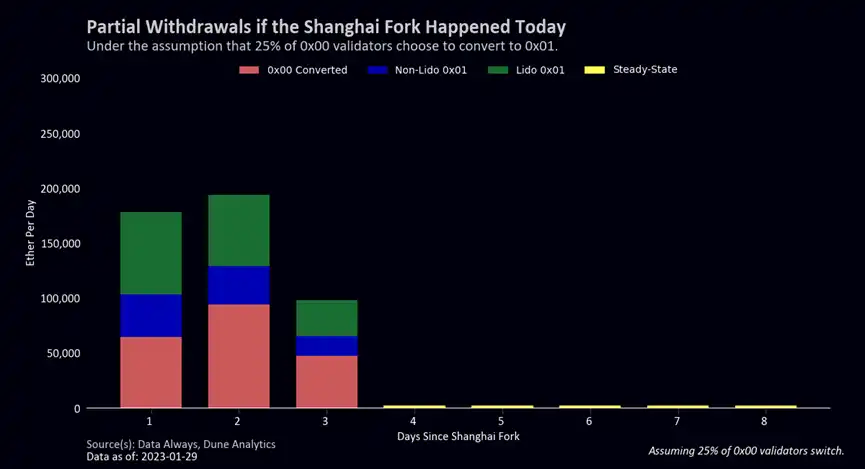
Figure 10. Partial withdrawals if the Shanghai fork happened today. Source: Data Always
Withdraw all
As of February 23, 2023, there have been920 people quit voluntarily, indicating that these validators intend to quit completely. In addition, in order to address the United States Securities and Exchange Commission’s (SEC) recentKrakenProposedcharge, the centralized exchange agreed to pay a $30 million fine and cease its staking services in the United States. fromHildobbydata shows that Kraken validators account for all active Ethereum validators7.3% above. While it's unclear if all Kraken validators would need to withdraw completely, in the most extreme case this would result in 38,000 validators (1.2M ETH) being withdrawn shortly after the Shanghai/Capella upgrade went live . Assuming the protocol has a drain limit of 8, it would take over 20 days to process a full withdrawal of that amount.
Beyond that, any estimates of the number of validators that will exit entirely are pure guesswork.
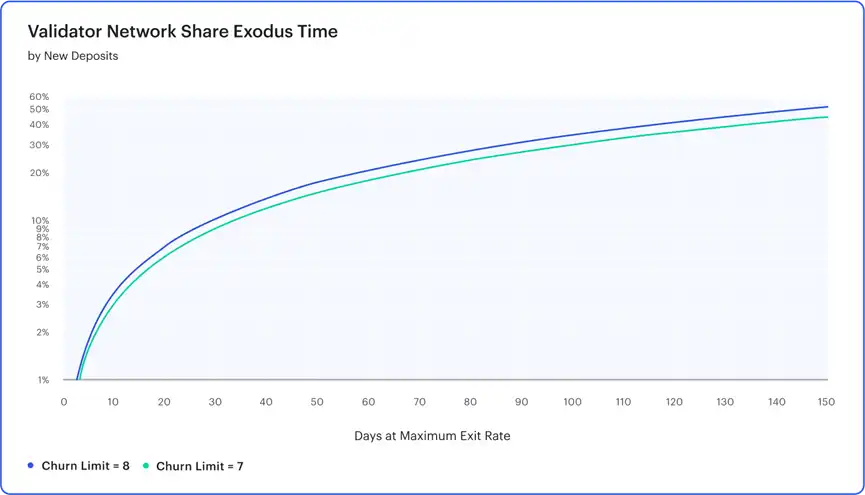
Given that the pace of new validator activations and the timeline for the Shanghai/Capella fork are still unknown at the moment, the churn limit for Ethereum could be 8 when Shanghai/Capella goes live. This would suggest that there could be as many as 1800 validators (or about 57600 ETH) were fully withdrawn. asTripoliAs noted, if a queue for activating new validators is formed that is also the queue for all withdrawals, this "deque will lock the churn limit and the number of active validators at a [fixed] value until one side of the queue dies ".
The diagram below (from*Data Always* forks and adjustments) simulated how long it would take to process a full exit for different percentages of the active Ethereum validator set. The diagram assumes a frozen churn limit of 7 or 8 (i.e. validator exits matched with new activations). A further limitation of this analysis is that it is done at daily step intervals, and it does not take into account the validator exit process, the minimum validator withdrawabilityDelay, or partially withdrawn.
first level title
competition and innovation
For most ETH stakers, the Shanghai/Capella upgrade offers the first opportunity to change how and with whom they initially decided to stake. The increased portability of staking after withdrawals could initiate a massive redistribution event that drastically changes the market share distribution of the entire Ethereum investment industry.
Both incumbents and new entrants to ETH staking have recognized the risks and opportunities that come with withdrawals, and it is clear that the industry will become increasingly competitive. This competition is expected to drive rapid technological and business model innovation, especially in liquidity staking protocols.
secondary title
user experience
secondary title
retail
fromHildobbydata show that, at the time of writing this report, in approximately16.8 Mof ETH pledged, more than75 % is staked through an identifiable intermediary on the chain. These intermediaries can be liquid staking protocols (accounting for nearly 32% of all staked ETH), centralized exchanges (accounting for 28%), or illiquid staking pools/service providers (accounting for 16% of all staked ETH ). The remaining 24% of Ethereum validators are operated by unidentified entities, most likely independent stakers.

Figure 12. ETH staked by category. Source: ConsenSys, Dune Analytics, @Hildobby
Liquid staking is often the preferred staking method, especially among retail stakers. This is primarily due to the simplified, single-transaction user experience offered by the Liquidity Staking Protocol, and the Liquidity Staking Tokens (LSTs) that users receive for their deposited ETH. This LST provides stakers with a limited form of liquidity on their staked positions and allows them to re-collateralize their staked positions elsewhere in DeFi to increase their returns.
For those new to ETH staking, even staking via a liquid staking protocol, there are some user experience (UX) hurdles. First, users need to access multiple different protocol interfaces and rely on data from unfamiliar sources for comparison before selecting a provider. Once users stake, they will receive an LST representing the principle amount they staked and the accumulated rewards. However, these LSTs can be implemented by different providers, making tracking one's earned staking rewards a cumbersome and confusing process. In early 2023, two exciting ETH staking products launched to address these user experience issues.
MetaMask StakingProvides users with the ability to stake ETH to Lido or RocketPool from MetaMask's portfolio dapp. The familiar MetaMask interface is accompanied by useful information about Ethereum staking. In addition to connecting users to top-tier liquidity staking protocols, MetaMask staking’s reward tracking interface provides users with an estimate of the rewards they’ve received from staking positions.
Additionally, other structured products are emerging that offer users the opportunity to acquire a diversified basket of LST. One such product is Index Coop's diversified staked ETH (dsETHsecondary title
mechanism
There are of course exceptions, and those with more than 32 ETH may prefer to use a staking-as-a-service provider rather than a liquid staking protocol for the following reasons:
Works directly on validator operators (no intermediaries) with increased security and reliability
Traceability between staked funds and specific validators
Stronger operational assurances (such as SOC 2 compliance)
Greater control over the exact infrastructure setup of each validator
lower cost
Better financial and tax reporting
For example, likeCodefi StakingSuch pledged providers promise increased security and reliability (SOC 2 Type II certification), while reducing the highly correlated risk of outages. Codefi mitigates these risks with a validator infrastructure distributed across multiple cloud providers, regions, Ethereum clients, and MEV relayers.
Like retail users, institutions must compare and choose between multiple options and face a disjointed user experience across different staking providers.
Other emerging innovations that institutions should keep an eye on are institutional-focused liquid collateralized tokens from Liquid CollectiveLsETH, and Stakefish'sVerifier NFTfirst level title
Liquidity Staking Infrastructure
Anticipating the risks and opportunities associated with withdrawals, liquidity staking companies have been developing upgrades to their core protocol infrastructure. These upgrades are meant to improve their service to users and the wider Ethereum community.
secondary title
upgrade existing facilities
Lido V2
Lidois currently the most dominant liquidity staking protocol on Ethereum, gaining over 29% of the16.8 METH pledged. Throughout the history of the protocol, Lido has had a single, permissioned validator set.
Currently, this set of validators consists of30 Composed of professional validator operators, they are able to activate new Ethereum validators without any capital requirements and no security deposit, provided by the validators themselves. This highly scalable model, combined with StETH's extensive DeFi integration, has led to Lido's massive success. However, with Lido's stake approaching one-third of all staked ETH, it has led to an uproar in the Ethereum community.famouspersonrightofofto worry about。
Recently, the agreement announced theLido V2, as an important step towards further decentralization. At the heart of Lido V2 are two major upgrades: the withdrawal and staking routers.
withdraw money
Lido's implementation of withdrawals has yet to be confirmed, but the protocol has released aproposalFor community review and feedback.
In short, Lido proposes a two-step "request-claim process" for StETH holders. Users submit withdrawal requests to the protocol and receive an NFT representing their position in a specific Lido queue. Interestingly, these NFT queue slots will be tradable, allowing users who need instant liquidity to "jump the queue," perhaps by paying a premium. The protocol then calculates the stETH:ETH redemption ratio for each request, reserves the amount of ETH required to satisfy the request, and burns a corresponding amount of stETH.
Liquidity to facilitate withdrawals may come from EL rewards, partial or full withdrawals from Lido validators, new user deposits, or a combination of these sources. Once the reserved liquid ETH is available, users can claim this ETH.
secondary title
Pledge Router
Fundamentally, Lido V2 moves the protocol away from having a single, permissioned set of validators, and instead incorporates multiple distinct subsets of validators, called modules.Pledge Routeris the core part of the infrastructure that will coordinate how new users' deposits to Lido are allocated to the different modules. Initially, Lido DAO will set a target percentage that each module can support all active Lido validators.
Rocket Pool's Atlas Upgrade
Rocket Pool's Atlas Upgrade
November 2021,Rocket PoolIntroduce minipools to the Ethereum staking ecosystem. Mini pools reduce the capital requirements for running an Ethereum validator by 45%. Running a Rocket Pool minipool requires only 17.6 ETH (16 ETH security deposit, plus 1.6 ETH worth of RPL collateral), while the usual requirement is 32 ETH.
What makes Rocket Pool different as a liquidity staking provider is that its validator set is permissionless, meaning anyone who meets the minimum deposit requirements can operate a mini-pool. This margin requirement is critical to the health of the protocol and the competitiveness of rETH tokens, as it aligns the incentives for mini-pool operators and rETH token holders. If a mini-pool were to be slashed, the operator's 16 ETH margin and 1.6 ETH worth of RPL collateral would be lost before any rETH token holders. This design incentivizes mini-pool operators to do their best and ensures that rETH token holders' staked funds are 110% insured.
Rocket Pool's high margin requirements prevent it from scaling as quickly as its competitors' permissioned validator sets. Throughout its history, the protocol has seen multiple instances where the rETH deposit pool has reached its maximum capacity (currently 5000 ETH). This forces would-be depositors to wait for new mini-pools to be activated by groups of permissionless validators, buy rETH on the secondary market, or stake on Rocket Pool’s competitors.
In the coming months, Rocket Pool plans to launch its high-profileAtlasupgrade. Among other things, the upgrade aims to process withdrawals and improve the scalability of the protocol.
withdraw money
Liquidity to support withdrawals will come from the protocol’s deposit pool, as well as a portion of ETH for liquidity via partial withdrawals from Rocket Pool validators.
Since mini-pool operations are permissionless, the protocol has no ability to force operators to withdraw and withdraw their validator balances. In the event that RETH redemptions drain the liquidity of deposit pools and partial withdrawals, the protocol will rely on open market arbitrage opportunities to incentivize mini-pool operators to exit and fully withdraw their validators.
scalability
scalability
To scale more efficiently, Rocket Pool's Atlas upgrade will reduce the minimumMargin Requirements, from 16 ETH and an RPL worth 1.6 ETH, to 8 ETH and an RPL worth 2.4 ETH. This would reduce the capital required to operate an Ethereum validator by 67.5%, from 32 ETH to only 10.4 ETH. This would also reduce the current The mini pool operator was able to split their 16 ETH mini pool into two 8 ETH mini pools, effectively doubling the rETH minting capacity of each mini pool operator.
Additionally, the Atlas upgrade will also provide independent stakers with 0x 00-certified validators an opportunity to join the protocol by updating their validator’s certificates to Rocket Pool’s smart contracts. By doing this, soloists will be able to split their 32 ETH validators into 4, 8 ETH mini pools. This will allow them to support the minting of 96 rETH, greatly increasing the ability of the protocol to meet demand for new rETH, and also improving the earning potential for individual stakers.
As the protocol’s ability to support rETH demand is expected to increase substantially, the rETH deposit pool will increase from 5,000 ETH to 18,000 ETH. This will also help deepen the liquidity provided by the protocol, making rETH redemption possible.
No timetable was provided for the rollout of the Atlas upgrade, but it is expected to be around the time of the Shanghai/Capella upgrade.
StakeWise V3
StakeWise is currently on Ethereumfifth favoriteLiquidity pledge agreement. Historically, StakeWise's main product has been the StakeWise Pool, which, like Lido, has featured a licensed validator group and a 10% commission on staking rewards earned split equally between the StakeWise DAO and the validator group.
However, in September 2022, StakeWise Labs proposed a major protocol upgrade in response to the increasing risk of centralization within the ecosystem. This upgrade is calledStakeWise V3, can be considered divided into two parts, or two layers.

Figure 13. User Journey in StakeWise V3 S. Source: StakeWise
Vaults and VLT Tokens
The first layer involves a marketplace of "vaults" or deposit pools that provide stakers with full control over their ETH. Each vault is essentially its own pool that can be set up unconditionally by anyone, from an individual staker to a professional validator operator. The creator of the treasury can customize some parameters of the fund pool, including who can deposit to the fund pool, who can participate as a validator operator, the fee structure of the treasury, etc. Users can browse the available vaults through StakeWise's user interface and stake in whichever vault(s) fits their needs. To help users make informed decisions, each vault is evaluated against a set of transparent criteria and assigned a score on the StakeWise UI.
When stakers make deposits into specific vaults, they are issued a corresponding amount of VLT tokens in return. VLT tokens are repriced ERC-20 tokens, meaning their value relative to ETH increases as the vault earns staking rewards. VLT tokens are unique to the vault that issued them and accrue rewards based on the performance of that specific vault's validator set. This means that only VLT tokens issued by the same vault are interchangeable.
Overcollateralized Staked ETH (osETH)
The second layer of StakeWise V3 is the introduction of the protocol's liquid collateral token, osETH. VLT token holders can mint osETH, or over-collateralized pledged ETH, by depositing their VLT tokens into the: Collateral Contract. It is worth noting that the value of osETH tokens that can be minted will always be less than the deposited The value of the VLT token. Like a Collateralized Debt Position (CDP) in the MakerDAO system, each osETH miner will have a unique loan-to-value metric reflecting their utilization of VLT when minting osETH. Maximum allowed loan-to-value metric It is expected to be around 90%, reflecting the amount of VLT tokens a miner can liquidate while still earning their staking rewards for staking 100% of their ETH to a specific vault.
Like the VLT token, osETH is a repriced ERC-20 token. However, unlike VLT tokens, osETH tokens are not tied to validators for a particular vault. Instead, osETH tokens accrue rewards at the average rate of all validators across all vaults in the StakeWise v3 system. While this removes traceability between a user's deposit and a specific set of validators, it means that all osETH tokens are fungible and widely usable across DeFi.
secondary title
new entrant
Several additional liquidity staking protocols, each with unique and interesting products, have already launched or are scheduled to launch on Ethereum mainnet in the coming weeks and months. Let's explore some worthwhile





