






What happened to the encryption projects that encountered supervision in those years?


In recent days, frequent regulatory interventions have once again plunged the encryption world into shock.
The CFTC charged Binance with providing derivatives trading services to U.S. citizens without authorization and failing to comply with anti-money laundering (AML) laws and anti-terrorist financing (ATF) regulations. Coincidentally, the SEC also formally prosecuted Sun Yuchen, the founder of Tron and a member of Huobi's global advisory committee not long ago, accusing him of allegedly illegally selling securities, defrauding and manipulating the market.
Of course, it is not new for crypto companies to be sued by U.S. regulators. Similar incidents have occurred frequently in the past few years. But most of the businesses that came under the scrutiny did not shut down under the pressure and, in fact, many of them continued to operate.
secondary title
Fine Settlement, Minimal Impact
Penalty date: September 2019
Regulator: SEC
Project: EOS
Result: $24 million settlement
In September 2019, the SEC filed a complaint against Block.One, which alleges that Block.One provided investors with false and misleading information about EOS and accused EOS of being an unregistered security.
Soon, on September 23, the SEC reached a settlement with Block.one, and Block.One agreed to pay a civil penalty of $24 million. And this fine is negligible for Block.one, which holds huge funds. The fundraising was as high as 4 billion, but the fine was only 24 million. There was a joke in the community that "this is not punishment but encouragement".
The impact of this lawsuit has a huge impact on Block.one. Because the settlement not only means that the previous token sale will no longer be subject to sanctions, but the SEC has also granted Block.one an important immunity for future business. This means that under the background of the times at that time, EOS has entered relative compliance faster than other tokens. At least at the point of token issuance, EOS no longer has the regulatory risk of the SEC.
image description
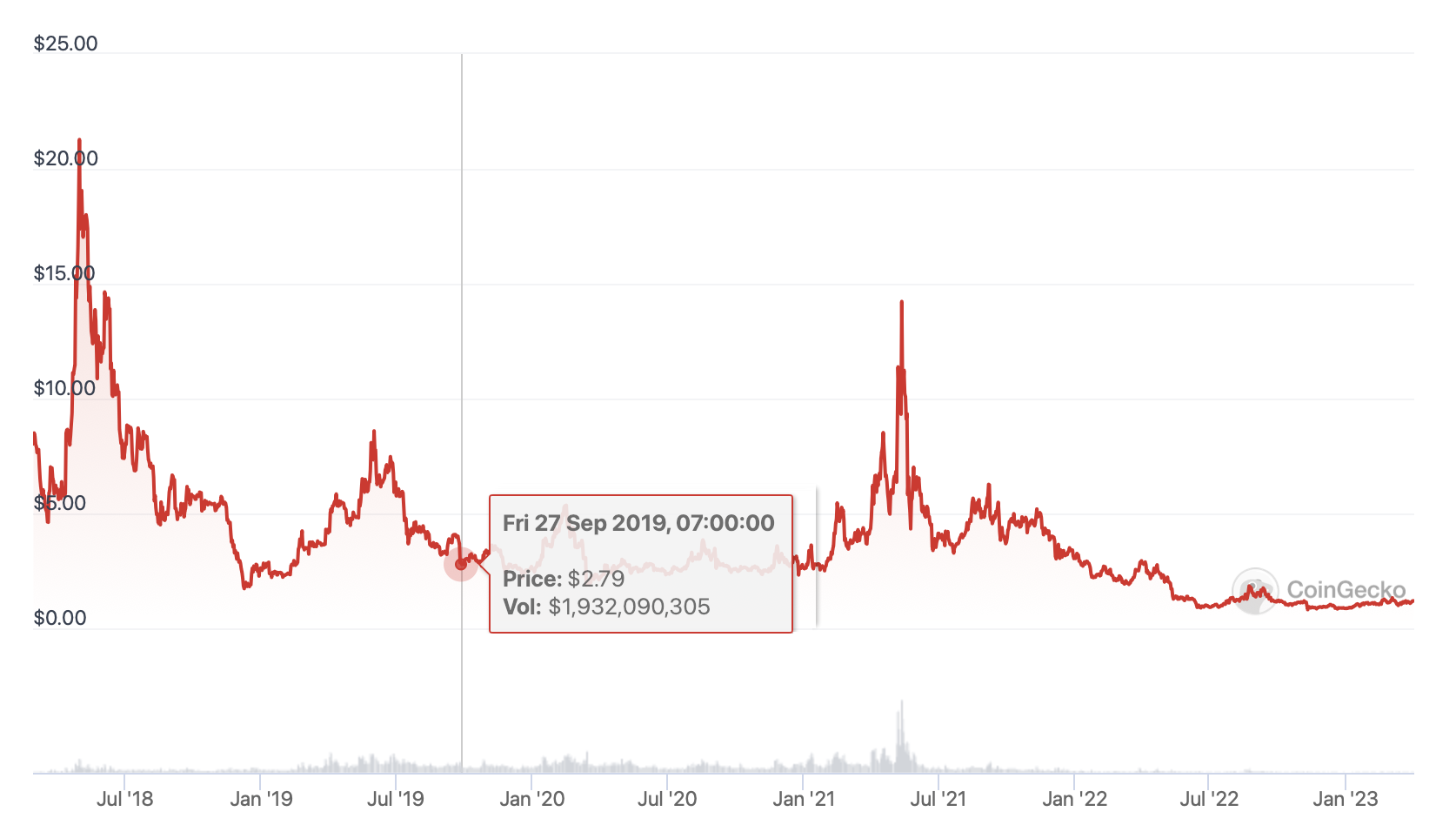
(In the long run, the price of EOS did not rise significantly after the settlement)
But unfortunately, due to various reasons, the former "Ethereum Killer" has not achieved considerable development despite being protected from further regulatory "strikes".
Other cases:
In March 2021, Coinbase reached a $6.5 million settlement with the CFTC. Previously, the CFTC had accused Coinbase of improperly reporting trading volumes and “self-trading” practices. Affected by this incident, Coinbase postponed the listing originally planned for March to April. Since then, Coinbase has opened up its stock price myth, and its development has not been affected by this incident.
secondary title
Does not affect the main business, some businesses are blocked
Penalty date: February 2023
Regulator: SEC
Project: Kraken
Result: Staking service shut down
In February of this year, Kraken was investigated by the SEC. The SEC accused Kraken of offering unregistered securities to users because the ETH pledged products it provided to users were securities. In the track of ETH pledge, Kraken has also become the first head encryption company to be sanctioned.
But soon, after just a few days, the situation made a new step forward.
On Feb. 9, the SEC announced a settlement with crypto trading platform Kraken. Kraken will pay a $30 million fine to settle the SEC's charges. At the same time, two Kraken subsidiaries will immediately end their crypto staking services to U.S. customers. User deposits will be released after the “Shanghai upgrade” of the Ethereum network takes effect. Afterwards, U.S. clients will not be able to pledge new assets, and Kraken will set up an independent subsidiary to provide staking services for non-U.S. clients.
And within the supervision, the attitude towards Kraken is not consistent. SEC Commissioner Hester Peirce issued a document on the SEC's official website, expressing objections to the SEC's closure of Kraken's US pledge service. According to Peirce, "using enforcement actions to tell people what the law is for an emerging industry is not an effective or fair way to regulate". Peirce called enforcement actions like the SEC's "paternalistic and lazy" approach to regulation.
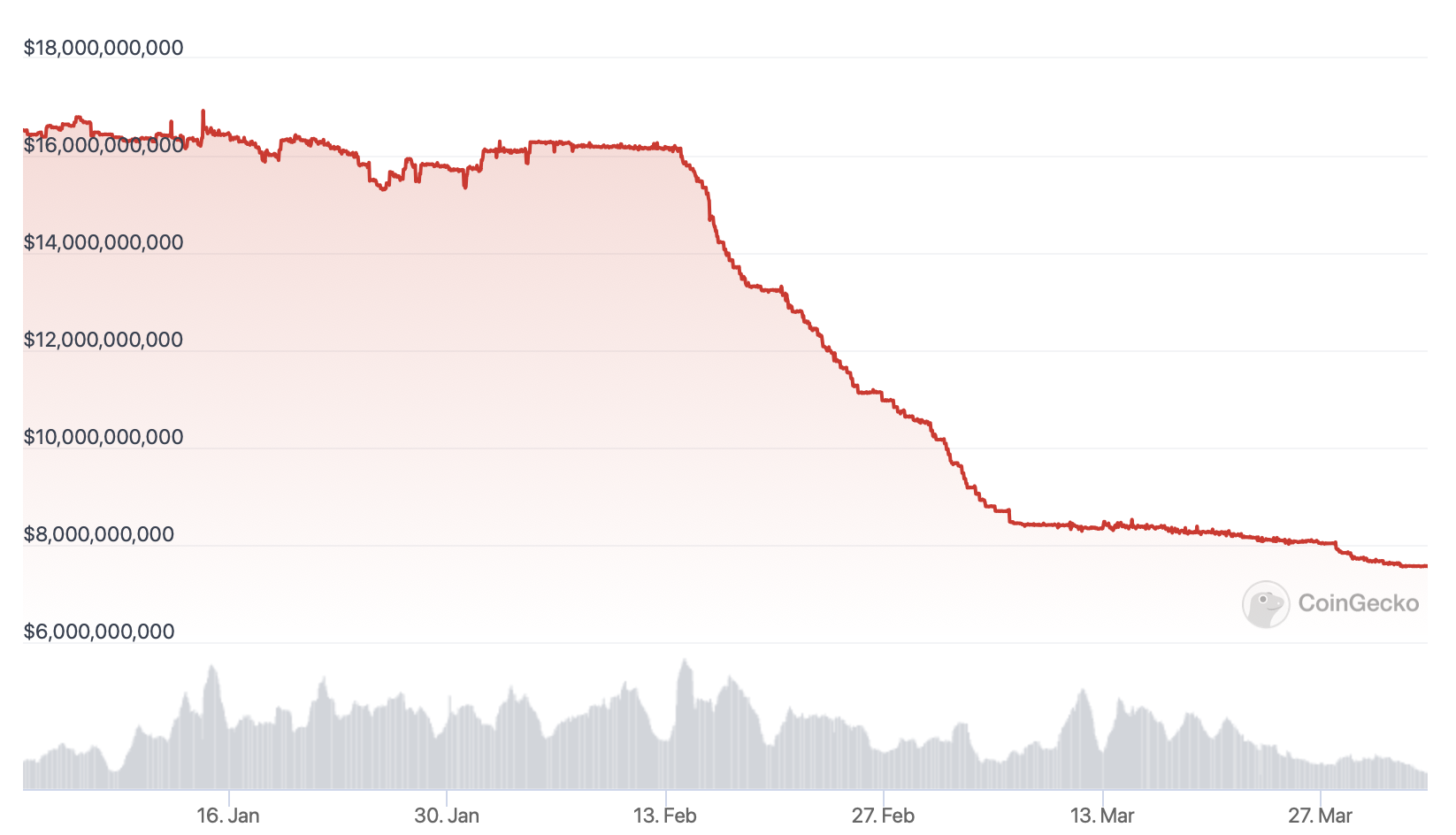
Dune data shows that before closing the pledge, 1,233,696 ETH were pledged through the encryption exchange Kraken, accounting for 7.42% of the total ETH pledge, and its pledge volume market share ranked third.
After closing the pledge, although Kraken lost this emerging business, the main operation has not been affected.
Other cases:
In August 2021, BitMEX reached a settlement with the US Commodity Futures Trading Commission (CFTC) and the Financial Crimes Enforcement Network (FinCEN), and BitMEX agreed to pay $100 million to resolve the allegations.
secondary title
Shut down completely, project declared dead
Penalty date: October 2019
Regulator: SEC
Project: Telegram Open Network
Result: shutdown refund
In December 2017, Telegram announced its own blockchain project, Telegram Open Network (TON). And announced the cryptocurrency GRAM circulating on TON, hoping to establish a blockchain network that can benchmark against Ethereum. In February 2018, Telegram announced the completion of $850 million in token financing. In March of the same year, it announced the completion of the second round of fundraising of US$850 million. The two rounds of financing totaled US$1.7 billion, setting a new record for financing on behalf of the project.
In October 2019, the SEC suddenly announced that it would take "urgent action and obtained a temporary restraining order" against the two entities behind the TON network. It also accused GRAM of being an unregistered security and illegally selling it to U.S. investors.
So far, TON has started a long judicial process. The launch of TON's mainnet has also been delayed several times. In April 2020, TON announced that it would refund investors a total of $1.224 billion. In May, TON announced the termination of the project, "Today is a sad day for Telegram and for us. We announce that we will terminate our blockchain project".
Interestingly, this project came to an end, but TON did not disappear, but was revived in a different way.
The Open Network (TON) is an alternative successor to Telegram Open Network (TON). Based on the same technology as Telegram Open Network, the community launched another network, The Open Network. This is also the TON we see today.
According to Coingecko data, the current market value of TON is 3.3 billion US dollars, ranking 23rd in market value. After shutting down, TON was inherited in an alternative way, and it seems to survive quite well.
Other cases:
In February 2023, the SEC filed a lawsuit against BUSD issuer Paxos, claiming the stablecoin was an unregistered security. NYDFS subsequently followed up, stating that Paxos could not manage the stablecoin in a "safe and secure" manner. NYDFS ordered Paxos to stop issuing BUSD and only allow redemptions. Since then, the market value of BUSD has dropped rapidly within a few days, and this leading stablecoin, which was once expected to compete with USDT for the supremacy of stablecoins, quickly disappeared.
secondary title
A long stretch with results pending
Penalty date: December 2020
Regulator: SEC
Project: Ripple
Result: pending
In December 2020, the SEC officially released the indictment against Ripple and its founders Bradley Garlinghouse and Christian A. Larsen. The SEC charged that Ripple obtained more than $1.38 billion in funds through the sale of XRP, violating the registration requirements of the securities laws.
Ripple’s clear statement has brought a protracted and high-profile legal dispute to the encryption world. Ripple CEO publicly stated: “We will actively fight this battle in court and win to clarify the rules of the United States. "
In January of the following year, American exchanges such as Binance.US, Bittrex, and Coinbase all suspended trading on XRP, which dealt a major blow to the price of XRP.
To this day, this judicial dispute has not yet come to an end, and the final result of Ripple is still unknown.
image description
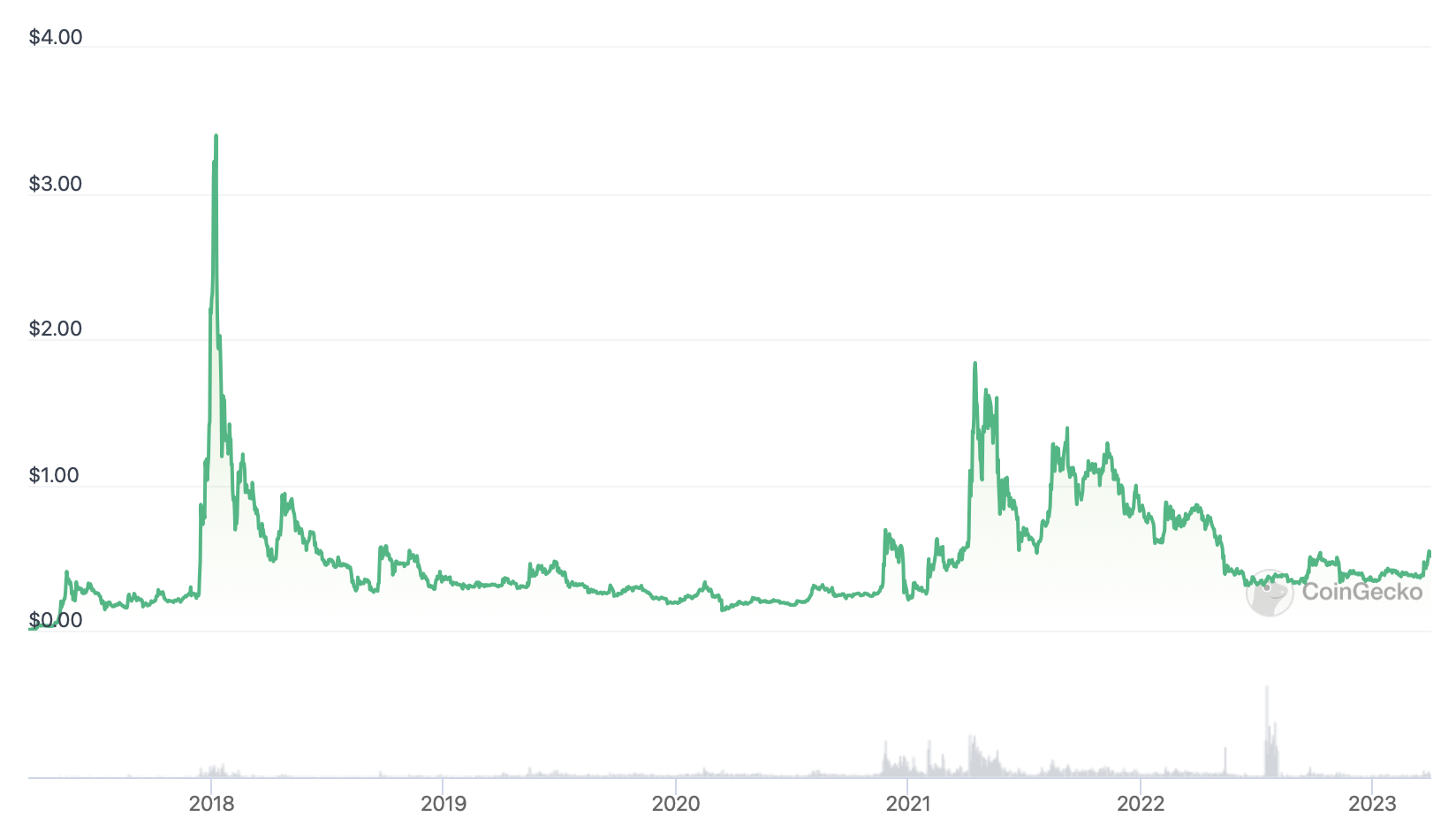
(XRP price movement)
Although the price of XRP has stagnated for many years, judging from the trend, the judicial disputes in 2020 have not prevented XRP from rising rapidly in the bull market in 2021.
As for the stagnation of the XRP currency price, it is difficult for us to say how important the SEC has played in it. Odaily was in"Eight-year sell-off is coming to an end, how much money did Ripple's ex-CTO cash out?" "According to the analysis in the article, Ripple’s first CTO, Jed McCaleb, is the biggest sell-off of XRP. He sold a total of 9 billion XRP over a period of eight years. And there is a correlation between its selling behavior and the market performance of the XRP currency price.
In the long judicial disputes, encryption companies continue to stand on the side of Ripple, and Coinbase is also against Ripple.give a helping hand, to help it confront the SEC head-on.
Because of the pending judicial lawsuit, Ripple does not seem to be shaken except for the cost of the lawsuit, and the monetary cost of the lawsuit is not a fear for the behemoth Ripple. The development of its project and the performance of tokens come more from the project itself.
At the end of 2022, Ripple announced its own EVM side chain, which will further integrate into the huge EVM ecosystem on the chain. So far, the lawsuit has had a profound impact on Ripple, but its impact on Ripple is not so "significant."
After reviewing many cases, the SEC and CFTC have different levels of supervision on encryption companies, and encountering supervision does not mean "sentenced to death". Most cases are settled with the payment of fines.
Although the intervention of US regulatory agencies may cause short-term market turmoil, in the long run, this may only be a necessary stage on the road to compliance, and there is no need for excessive panic.





