Huge sell off? 17 million ETH will be released after the upgrade in Shanghai?


Original source:
Original compilation: Biteye core contributor Crush
Original source:Biteye
There are always currency media and some individuals spreading FUD, claiming that 17 million ETH (28 billion U.S. dollars) will be canceled during the Shanghai upgrade.
first level title
01 Background introduction

Shanghai is an upgrade to the ETH execution layer, while Capella is an upgrade to the consensus layer or Beacon Chain, namely Shapella.
(Translator's Note: The Beacon Chain is the core of the Ethereum 2.0 system. It is a brand-new proof-of-stake (PoS) blockchain that was born to solve the consensus problem.)
However, since these upgrades will happen at the same time, the Shanghai upgrade usually refers to both. Although there are other EIPs in this Shanghai upgrade, the most important thing is ETH withdrawal.
(Translator's Note: EIP stands for Ethereum Improvement Proposal, Ethereum Improvement Proposal, which is a standard for proposing potential new features or processes for Ethereum.)
Since the launch of the beacon chain in December 2020, although validators can pledge ETH, they cannot withdraw cash, which has put a lot of pressure on EF-based developers.
(Translator's Note: EF, Ethereum Foundation, Ethereum Foundation, a non-profit organization registered in Switzerland, dedicated to supporting Ethereum and related technologies.)
first level title
02 Format of Withdrawal Credentials
Due to the design of Merge and the integration of Beacon Chain and ETH, all validators need to update their withdrawal credentials to 0x 01 format in order to withdraw.
According to ETH code developer @benjaminion_xyz, there are 302,154 validators in the 0x 00 format, compared to 186,722 validators in the 0x 01 format.
After the Shanghai upgrade, the ETH network will process 16 full or partial withdrawals per block.
And these blocks are generated every 12 seconds. If there are 500,000 validators on the beacon chain who need to withdraw money, it will take about 104 hours to process these withdrawals.
Please note that the validator's withdrawal credentials must be in 0x 01 format, otherwise the withdrawal will not be completed.
first level title
03Withdrawal rules
Ethereum withdrawal is divided into "partial withdrawal" and "full withdrawal". The validator node needs to be online, the withdrawal voucher is in the format of 0x01, and the maximum number of withdrawals per Epoch for partial withdrawals is set to 256. When the user meets these conditions, he can apply for withdrawal.
After the user applies for withdrawal, the ETH applied for withdrawal will be locked for a period of time before being withdrawn. During this period, 4 Epochs are currently set, which is about 24 minutes.
first level title
04Data analysis
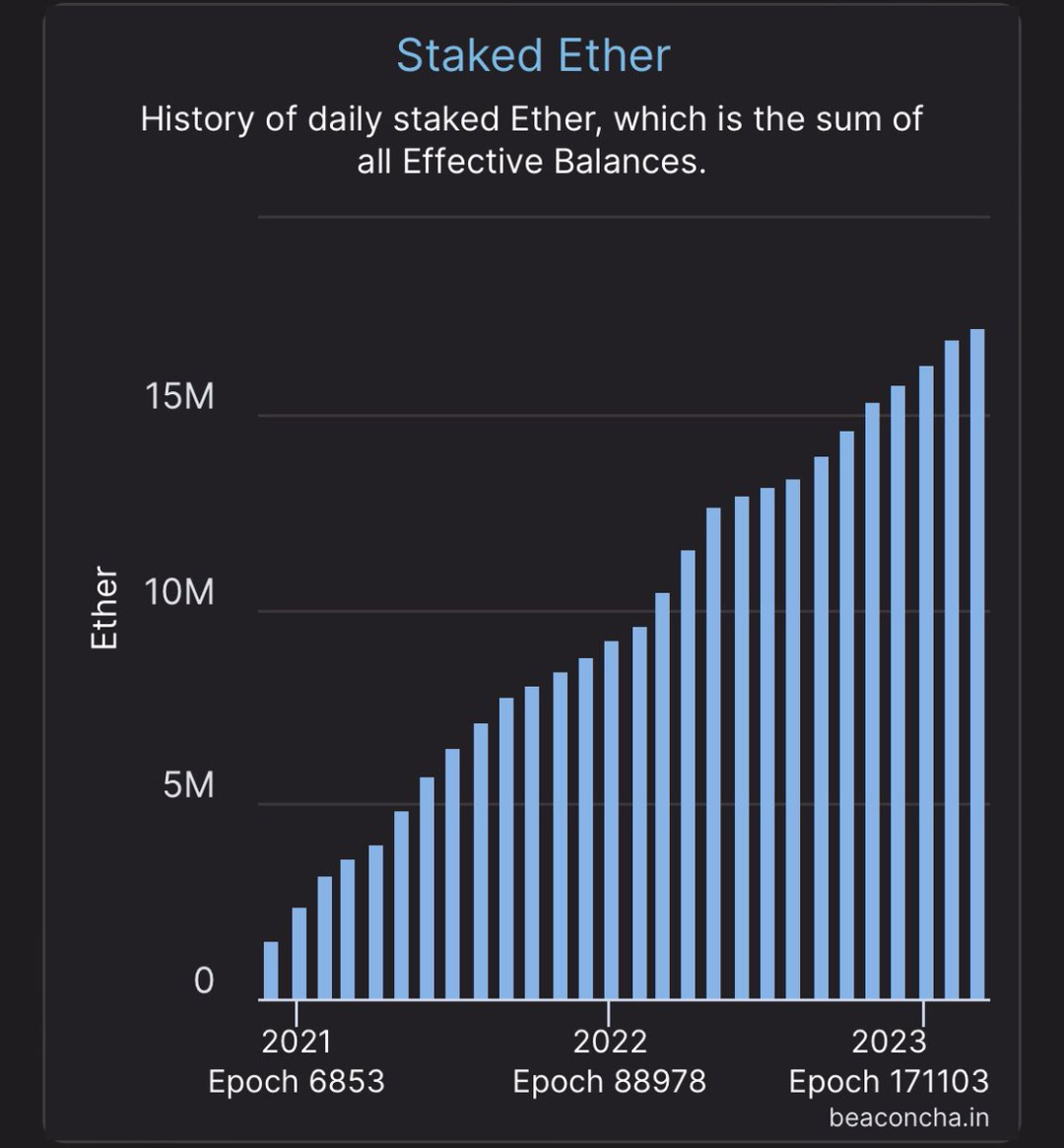
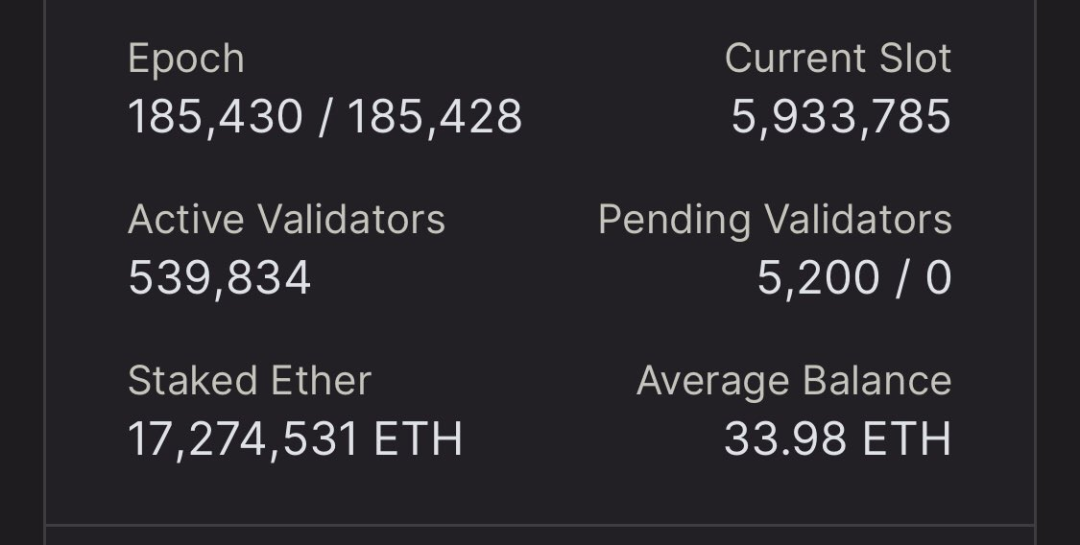
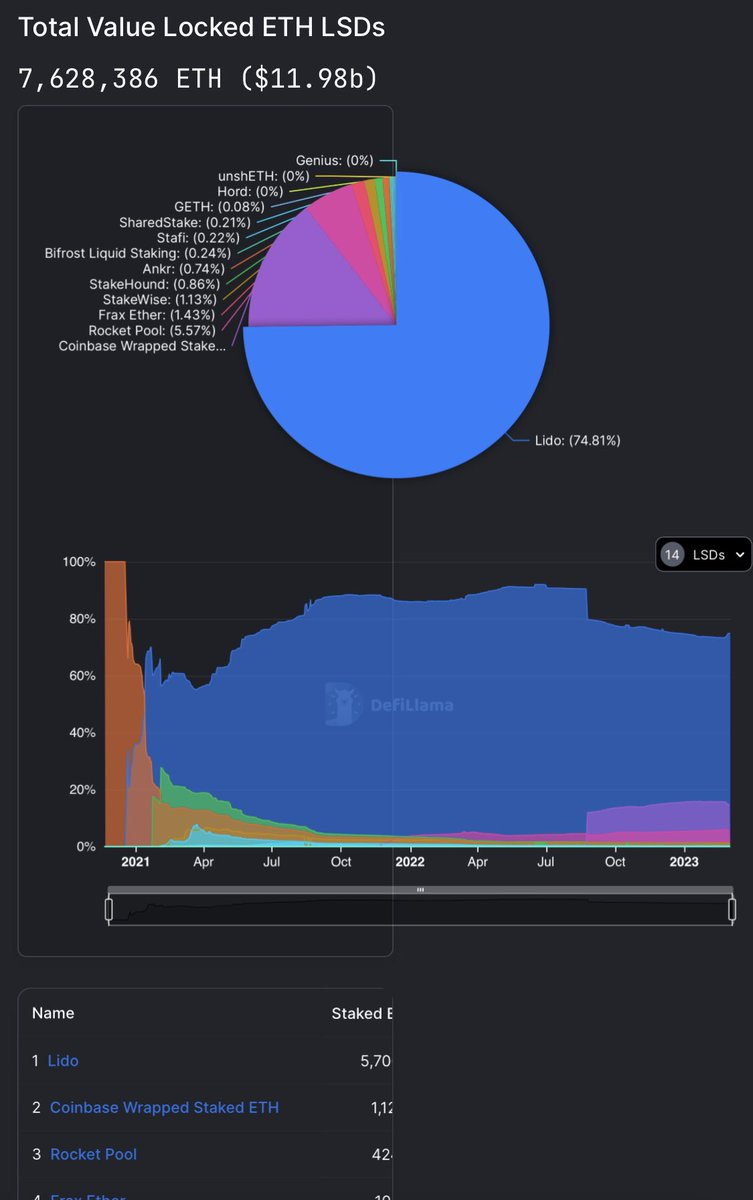
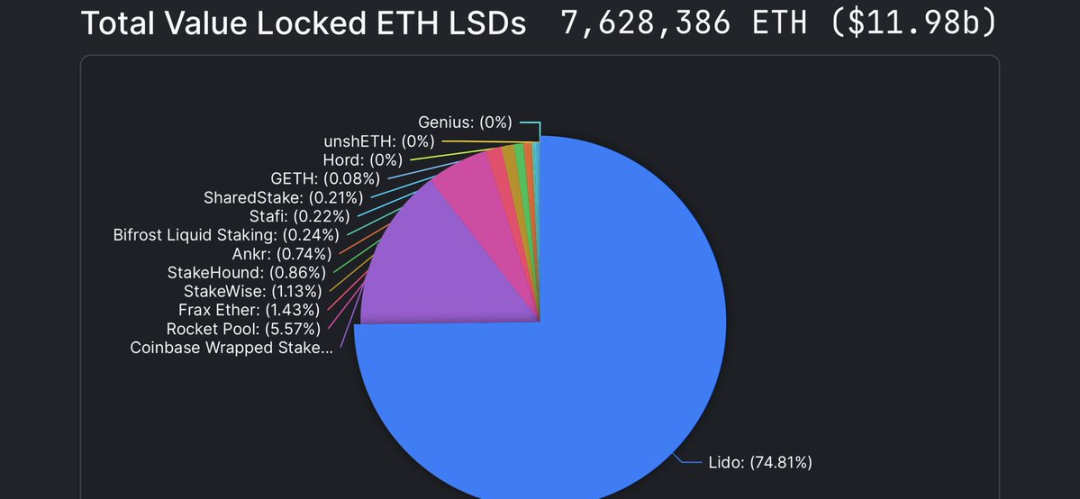
At present, 17.2 million ETHs are mortgaged on the beacon chain, but according to the data of Defillama, LSD has mortgaged 7.6 million ETHs, excluding these 7.6 million, now, let us do some simple mathematical operations:
17,200,000-7,600,000 = 9,600,000
The question is, will the 9.6 million ETH be withdrawn?
Let's look at the previous data, according to the data obtained by Etherscan from the beacon chain contract, the total amount of ETH staked in December was 1.4 million ETH.

According to data from CoinGecko, from Dec. 1 to Dec. 31 when the Beacon chain went live, the average price of ETH was $681.10.
Given ETH's current price of $1,570, all 1.4 million ETH staked in December are currently in profit.
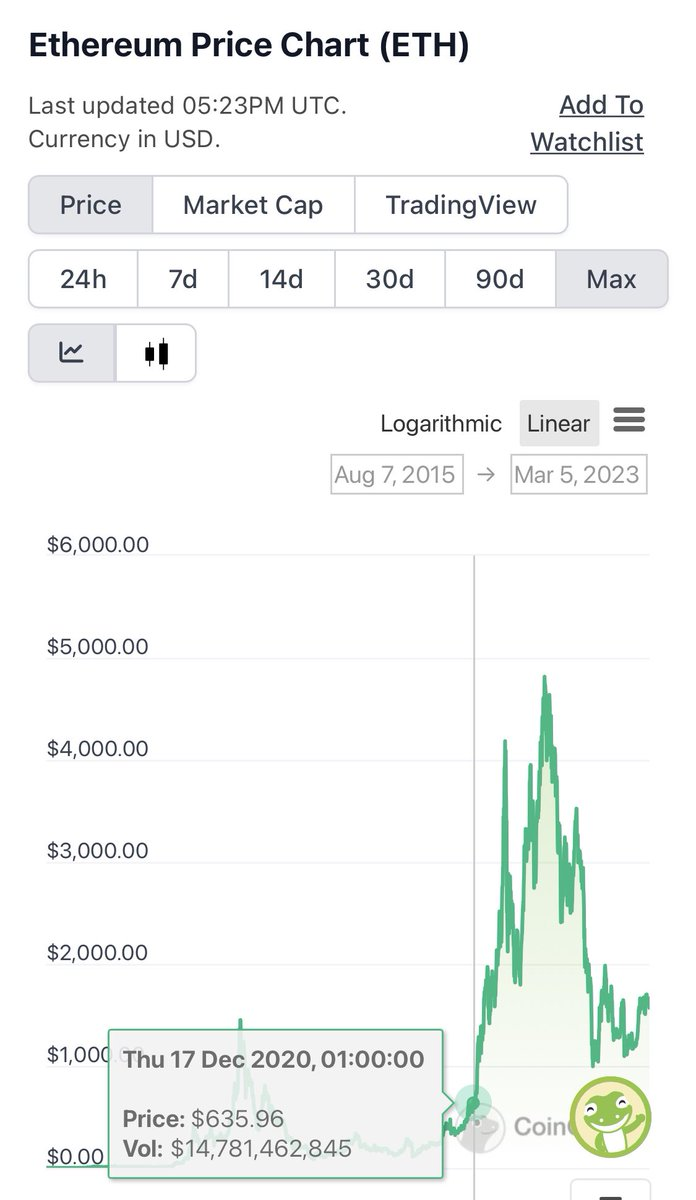
But the question remains, will the 1.4 million ETH be unstaked? At least as of now, 1,084 validators have exited the Beacon chain.
Once the Shanghai upgrade is complete, 34,688 ETH (1,084 validators) will be automatically unstaked.
Of the 1,084 validators, 864 left voluntarily and 220 were eliminated. From this data, it appears that only a small percentage of validators (884 out of 500,000) left voluntarily, while the rest may be long-term bullish and enjoy the benefits.
With 1.4 million ETH staked when the beacon chain staking was announced in December 2020, there was no news of any withdrawals and no fear of a sell-off of ETH.
Based on psychoanalysis, many of these stakers appear to be long-term bullish on ETH and looking to accumulate more.
But now things get even more interesting, as staking pools and centralized exchanges (CEXs) also want to get a piece of the action.
Through my research, I found that Defillama and Etherscan have conflicting data on liquidity staking.
Defillama sees Coinbase as liquid staking.
CEX:Some CEXs use liquid ETH, while others follow the same design as staking pools, e.g. stakers do not get withdrawals immediately and need to lock stakes, etc.;
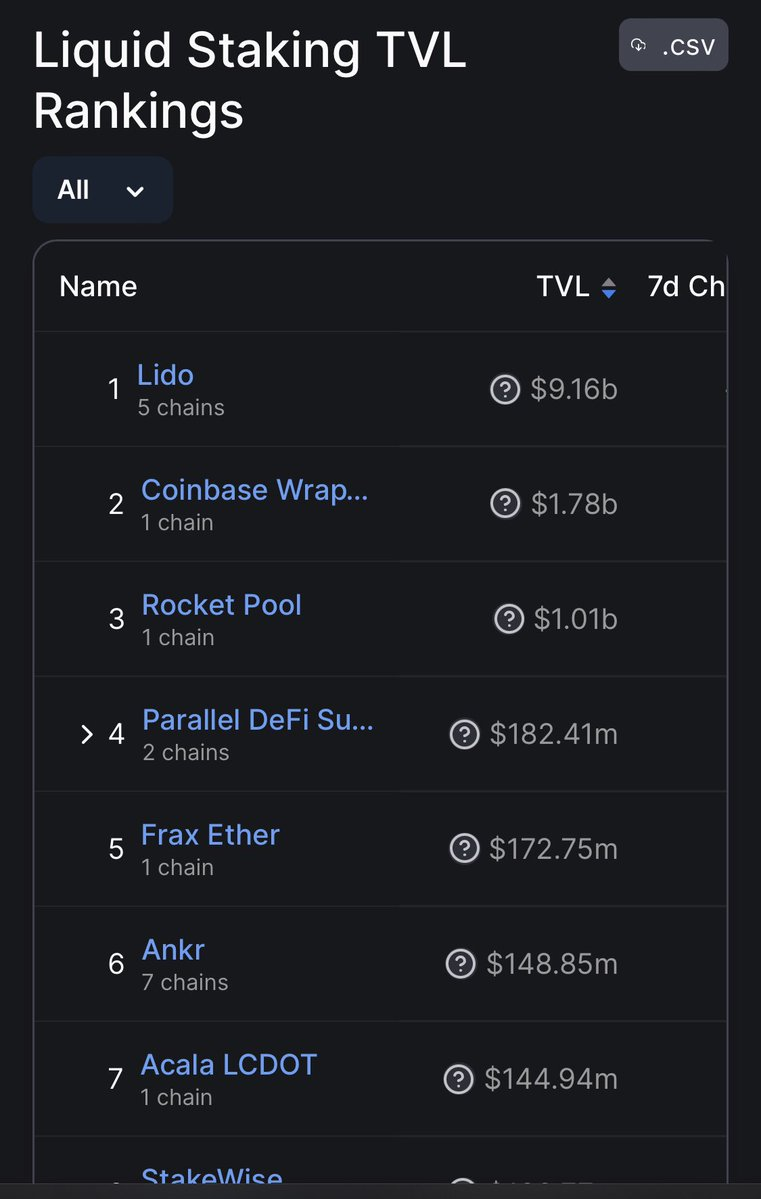
As a result, there will be less selling pressure.
Staking pool:As mentioned above, its selling pressure will be less;
Liquidity pledge:There is no selling pressure.
(Translator's Note: At present, the exchange rate between the pledge certificate and ETH is stable, and the liquidity is sufficient, enough for users who want to withdraw from the pledge to leave early.)
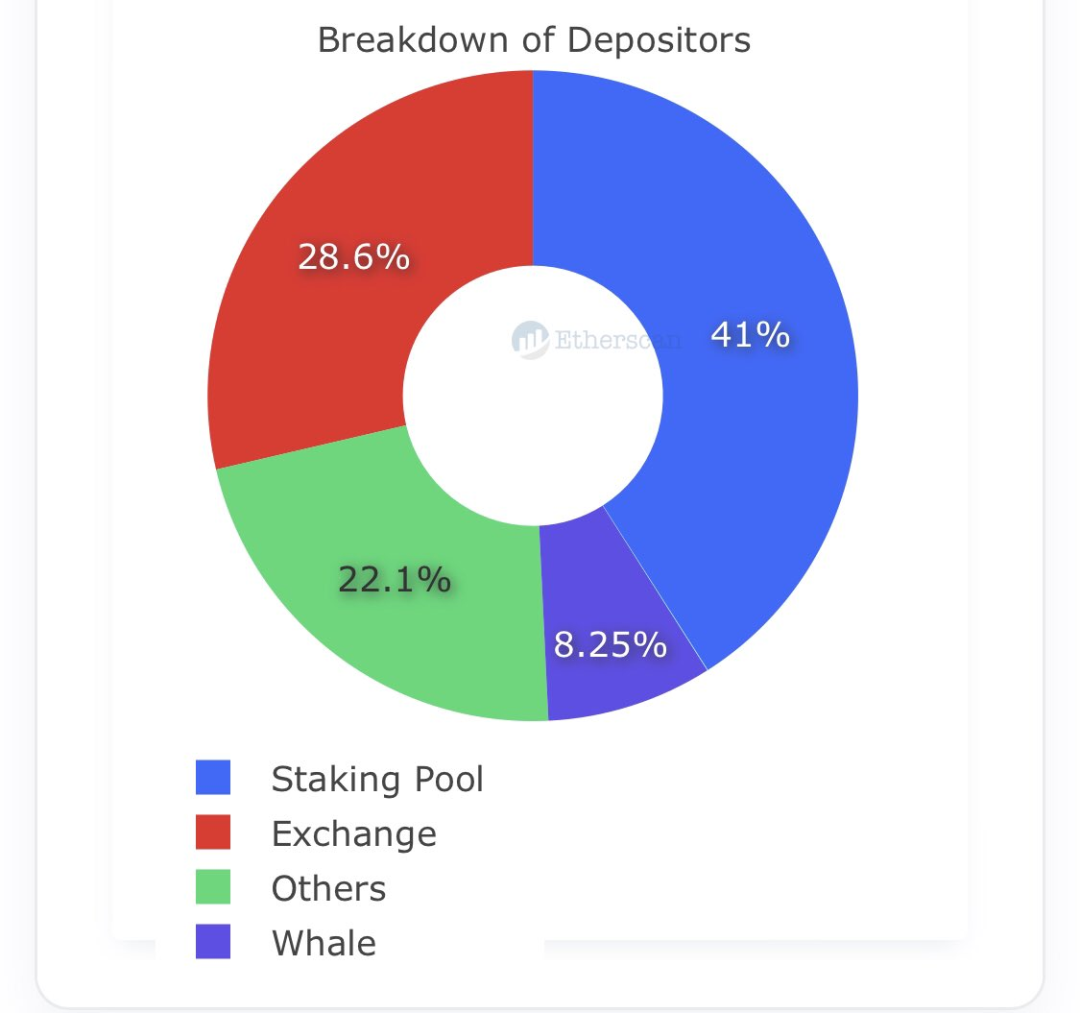
According to the image, we can see that both staking pools and exchanges account for 69.6%.
That's 69.6% of 17 million, or 11.9 million ETH.
If we subtract 11.9 million from 17.2 million, we are left with 5.3 million ETH, which is the share of whales and others.
Whales are betting a lot, so they are long term holders and very bullish, although some will sell, it doesn't affect the general trend.
How much ETH will they sell? No way of knowing, and no one can tell.
But are withdrawals instant? No, there will be a queue for withdrawals, and there will be many rules and restrictions.
Where will the withdrawn ETH go? Flow to where there is more yield, and everyone wants more yield.
Translator's summary:
Although the media and some KOLs will exaggerate the panic of 17 million ETH smashing, but through the author's analysis, it is not difficult to see that excessive worry and panic may be unnecessary.
1. Most of the pledge users are in a profit-making state. They are more optimistic about the future of Ethereum and will not take out their pledge easily;
2. The withdrawal of Ethereum is not unlimited. For example, time waiting, withdrawal certificate format and other requirements are required, which can prevent ETH from being withdrawn and sold in large quantities in a short period of time;
3. Due to the sufficient liquidity of centralized exchanges and pledge pools, enough pledge users to exit the market early, and the proportion of the two far exceeds that of whales and others, and whales are also long-term holders of heavy positions, so the overall risk of selling pressure is still high Small.