The LSD war is heating up, will Stader be the next potential stock?


Original compilation: 0x11, Foresight News
Original compilation: 0x11, Foresight News
The LSD wars are heating up rapidly. If you're looking for the next hidden gem💎, I have the biggest Alpha of the year for you. Stader could be a game changer for staking.
In this tweet, I will introduce:
Liquid Staking Challenges
ETHx Design
SD Token Economics
Liquid Staking Challenges
Liquid staking has always been an important area of the Ethereum ecosystem, but it faces some major challenges: centralization 🔴 and scalability ↔️.
centralized
scalability
scalability
Due to the high staking threshold of Ethereum, it is difficult for LSD services with unlicensed nodes to meet the needs of ordinary users.
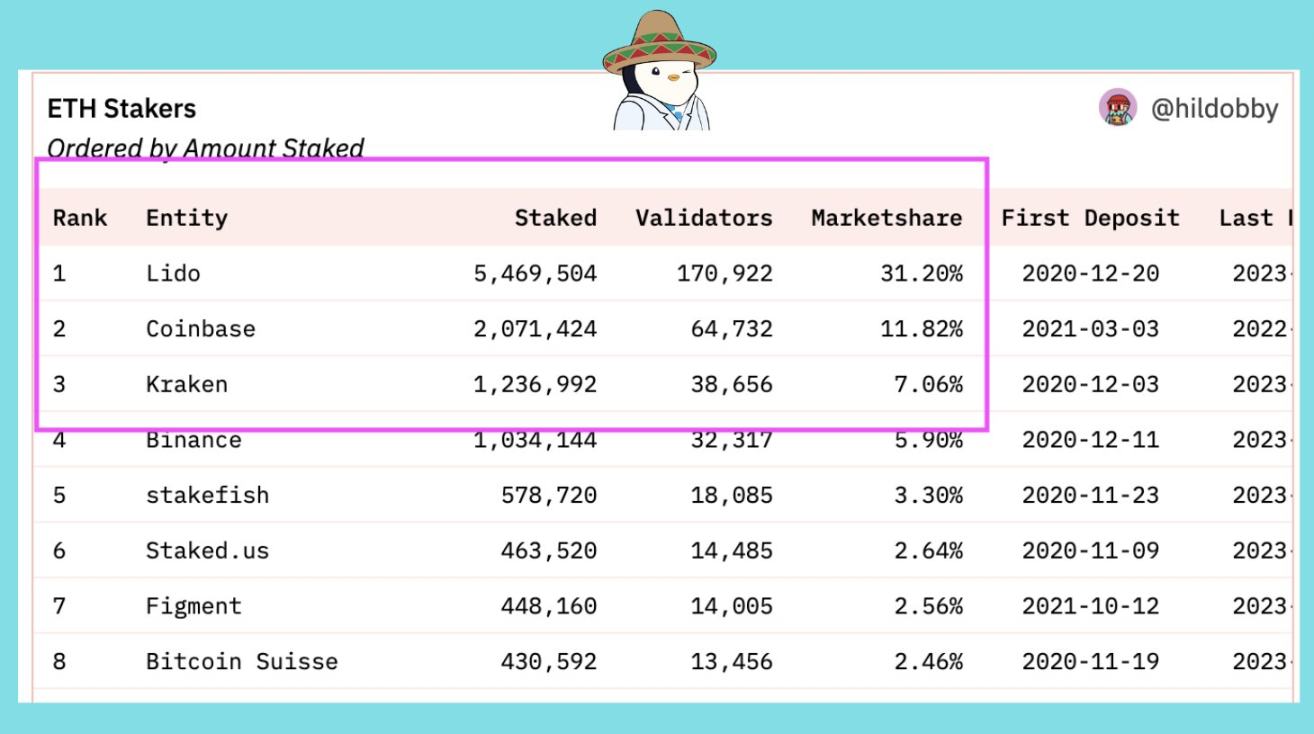
To solve these problems, Stader, a multi-chain liquidity staking protocol, introduces "ETHx", which greatly reduces the threshold for unlicensed node operators, requiring only 4 ETH.
How does it do it? The answer is: multi-pool architecture and distributed validator technology (DVT).
ETHx Design
multi-pool architecture
Whenever a user deposits ETH, the Stader Pools Manager will mint ETHx in return and deploy the deposited ETH to one of the following staking pools:
Permissionless staking pool 🆓
DVT Staking Pool🚚
Permissioned Staking Pool🔒
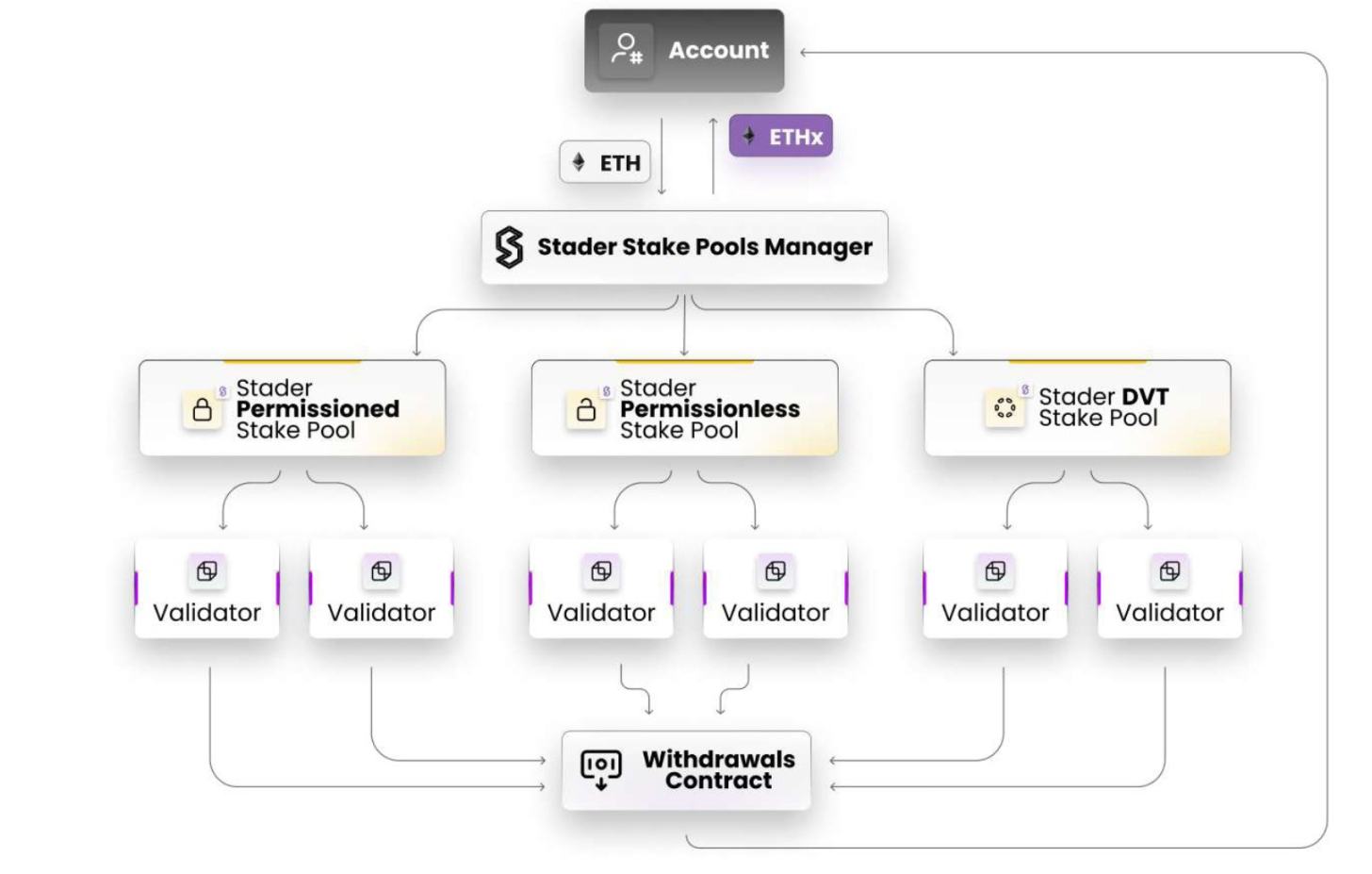
Permissionless Staking Pools
The permissionless model means that no whitelist is required to run nodes. In this pool, Stader allows nodes to operate with the lowest margin requirement (4 ETH) among peer competitors. But how is this possible?
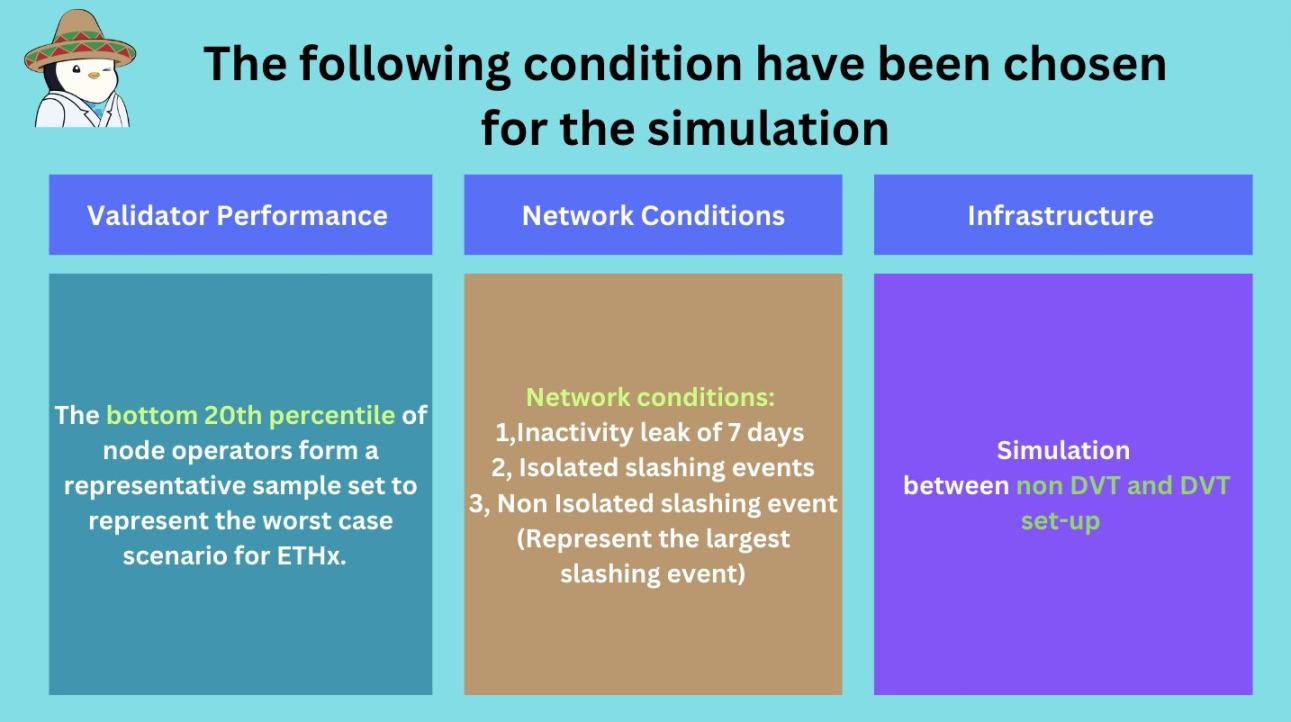
Working with SSV, Stader simulated extreme operating conditions and concluded that 4 ETH is sufficient to cover all key tail risks, including
Poor validator performance
idle leak
Related cuts
DVT plays an important role in these situations.
Distributed Validator Technology (DVT)
DVT allows the responsibilities of validators to be distributed among multiple nodes. Therefore, even if one of the machines goes offline or fails, validators can continue to operate without interruption.
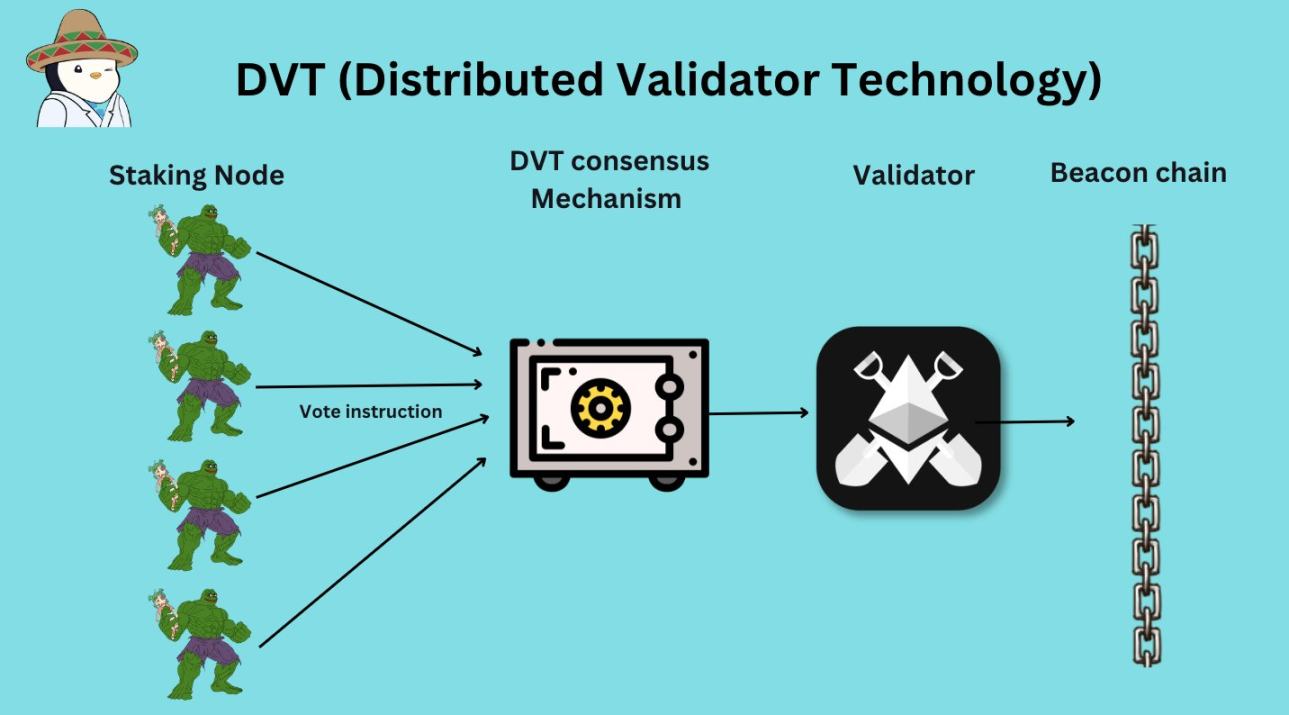
By taking advantage of DVT's high fault tolerance and reducing the possibility of slashing, Stader reduces the required deposit for permissionless nodes to 4 ETH. (Learn about DVT, pleaserefer to。)
The implementation of DVT can enhance the decentralization and scalability of LSD. Thanks to the lower barrier to entry, more validators can safely join the network.
However, the consequences of the collusion attack and the circumstances under which the cuts actually occurred are unclear.
Permissioned Staking Pool
Token Economics
Token Economics
The ETHx token economic model has two phases.
The first stage
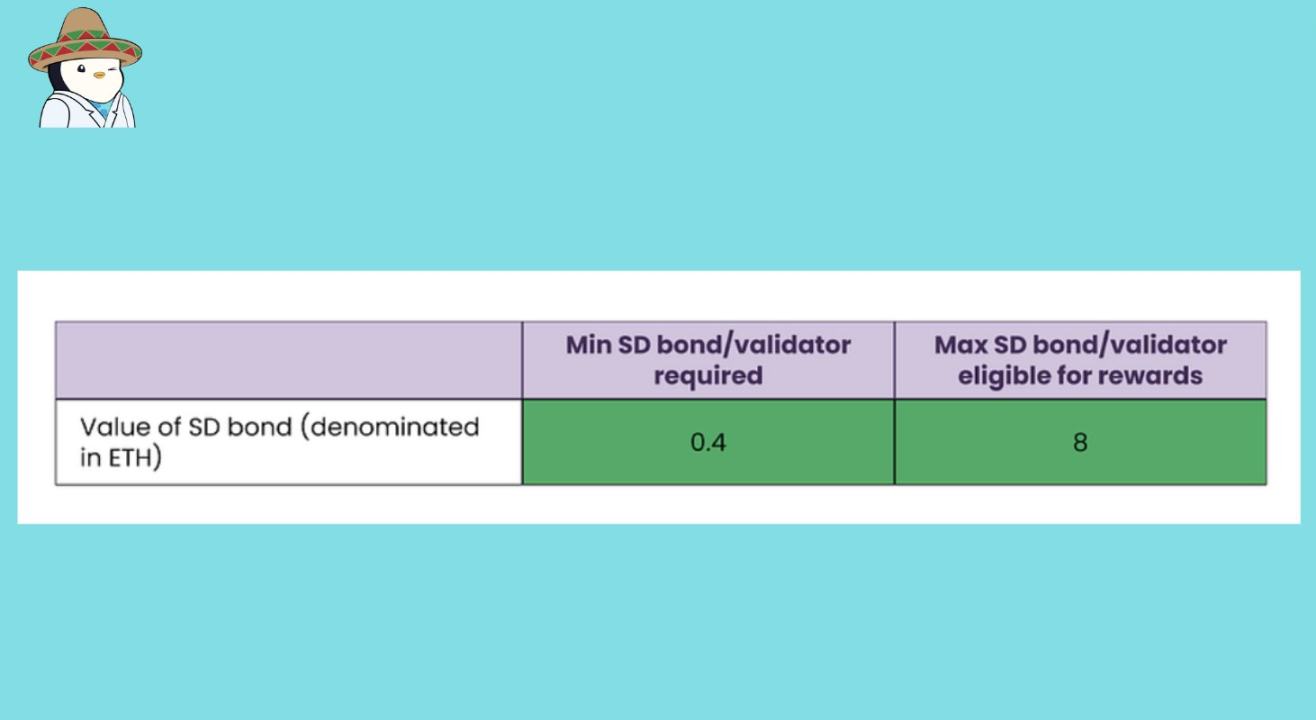
To run a node for Stader, each validator must deposit 4 ETH and SD tokens worth 0.4 ETH as collateral.
Additional staked SD acts as a protection mechanism in case slashing happens, similar to @Rocket_Pool.
SD Incentives
To incentivize node operators, Stader will issue SD tokens worth approximately $1-2 million to validators in the first year.
The number of SD incentives depends on the SD ratio that the node operator pledges every month (each validator can pledge SD tokens worth 8 ETH at most).
In addition to SD staking incentives, users can also get a 5% commission from staking rewards generated by 28 ETH staked by other users.
informationinformation)
second stage
learn morelearn more)
ETHx staking will drive demand for SD tokens as it is one of the requirements to run a node. As @NagatoDharmapointed outOriginal link