ETH Weekly | Coinbase Launches L2 Network Base Testnet Based on OP Stack; LayerZero Launches Test Bridge to Realize ETH and GETH Swap (2.20-2.26)


1. Overall overview
1. Overall overview
Coinbase announced the launch of the Ethereum L2 network Base testnet. It is reported that Base is built on the OP Stack and cooperates with Optimism. It is a secure, low-cost, developer-friendly Ethereum L2, aiming to introduce the next billion users to Web3. Base will be positioned as the home of Coinbase's on-chain products and an open ecosystem that anyone can build. The Base mainnet will be released later.
Second, the secondary market
Second, the secondary market
1. Spot market
image description
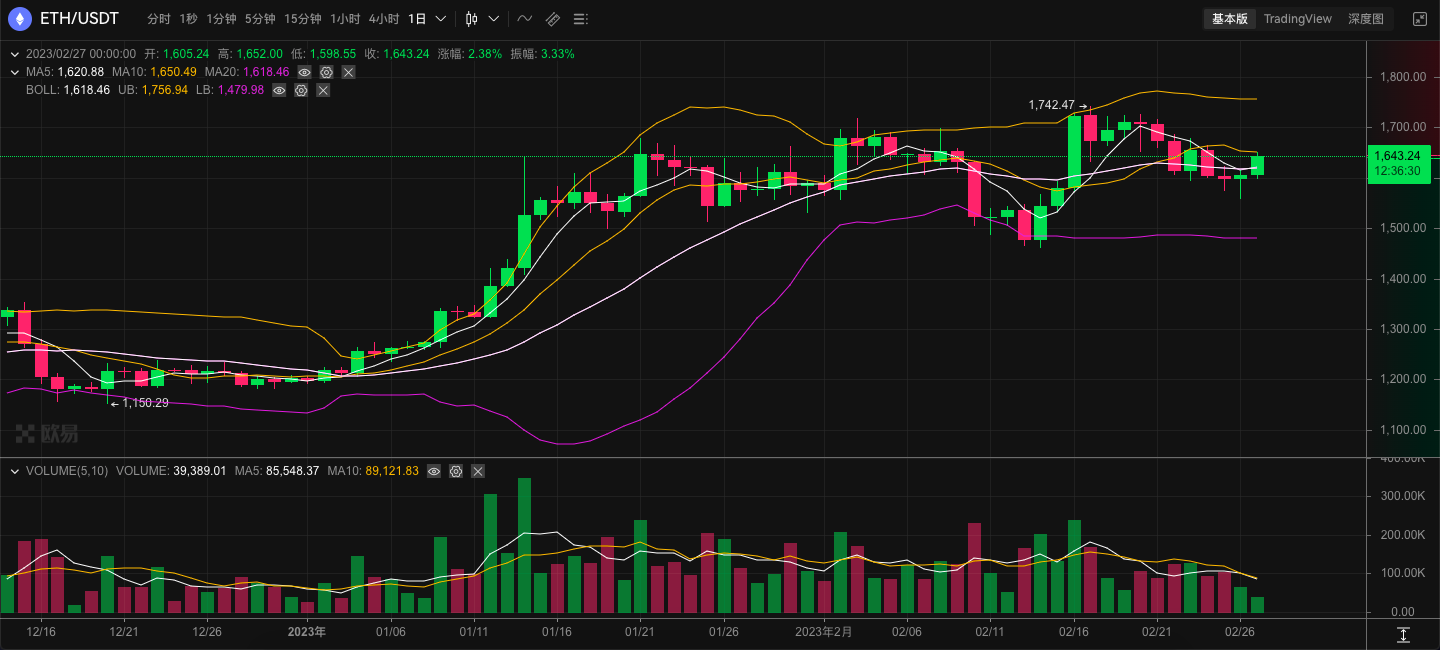
ETH daily chart via OKX
The daily chart shows that the price is currently consolidating around $1,650, and the support level is $1,600. In the short term, the price may continue to test $1,700 upwards; if the support is valid, it is expected to continue to hit $1,800.
2. Network operation
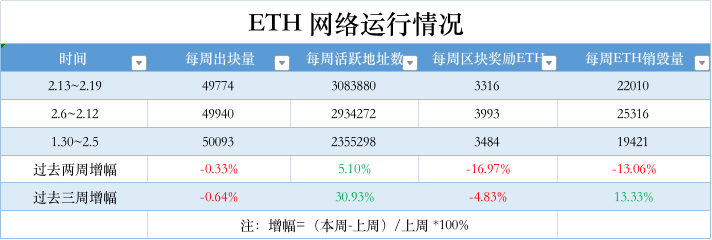
etherchain.org3. Large transaction
3. Large transaction
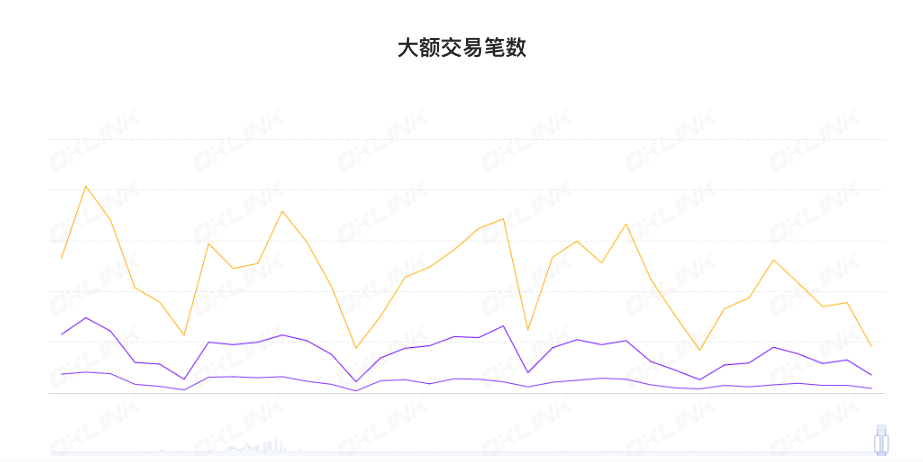
OKlink data4. Rich list address
4. Rich list address
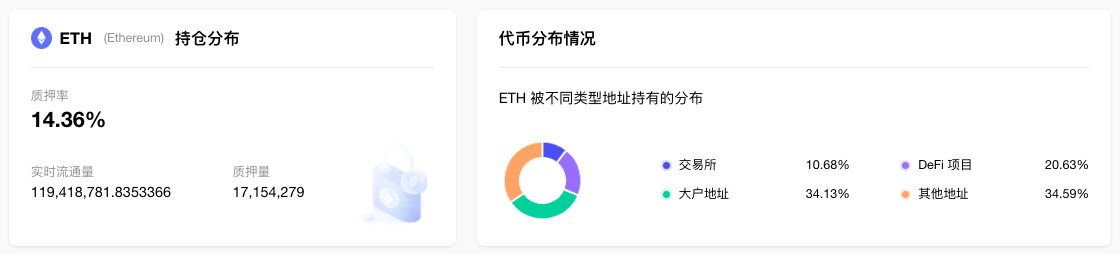
OKlink data3. Ecology and technology
3. Ecology and technology
1. Technological progress
Ethereum developers announced that they will activate the Shapella upgrade on the Sepolia testnet on February 28
According to the latest official announcement, the core developers of the Ethereum blockchain plan to upgrade Shanghai+Capella on the Sepolia test network at epoch 56832 on February 28.
Shanghai+Capella, also known as Shapella, is designed to allow ETH withdrawals from network validators, a feature that was not enabled during the network’s transition to PoS consensus (the “merge”). This upgrade combines changes to the execution layer (Shanghai) and the consensus layer (Capella).
To finalize the upgrade in March, the developers plan to conduct multiple stages of public testing. Coming soon on Sepolia is the second public testnet to deploy the upgrade. Earlier this month, Shapella was tested on the Zhejiang testnet. After deploying Shapella on the Sepolia testnet, developers are expected to move to the Goerli testnet in early March for the final phase of testing before the mainnet launch.
According to the official blog, the Ethereum pledge protocol Swell Network will update the functions of the protocol on the Ethereum mainnet in April, including incentivizing the liquid pledge token Swell Ether, realizing fully composable and replaceable liquidity, and audited nodes. Carrier sets, purpose-built vault policies, and more. Until then, pledged deposits will continue to be put on hold.
2. Voice of the Community
(1) Ethereum core developers: only 0.04% of Ethereum validators have been removed since 2020
According to Ethereum core developer Superphiz, since the launch of the beacon chain on December 1, 2020, the Ethereum ecosystem has only cut 226 validators, accounting for only 524,060 validators. 0.04%. One of the largest slashing events occurred on February 4, 2021, when 75 validators from staking infrastructure provider Staked were slashed for producing competing blocks. Staked said the breach of certification was due to a "technical issue."
(2) Ethereum developers: plan to launch a new test network later this year to solve the test network ETH supply problem
Regarding the question of "how to make the testnet ETH easy for application developers to access while taking into account both clients and stakers, and how to make the main project transfer migration and allow composability if moving to a new testnet", Tim Beiko gave The two proposals that come out are to add each ETH address that has a contract deployed on the mainnet, Goerli and Sepolia to the genesis file, and coordinate with the main contract and infrastructure developers to launch on the network shortly after genesis. Tim Beiko is currently seeking input from application layer developers on how to resolve this issue.
3. Project trends
(1) The cross-chain bridge cBridge launched by Celer already supports DERI
(2) EigenLayer, the Ethereum re-pledging protocol, released the V1 white paper. The module list includes MEV, sorting, etc.
According to the official Twitter, the Ethereum re-pledging protocol EigenLayer released the V1 white paper, which describes the key ideas implemented by the core developers in the upcoming first version of the protocol, including a list of potential EigenLayer modules (such as MEV, sorting).
In addition, EigenLayer also launched the EigenLayer Forum to focus on the three topics of EigenLayer protocol, EigenDA development, and middleware development.
(3) PeopleDAO partnered with WTF Academy to trial the Soulbound protocol on the Goerli testnet
PeopleDAO has partnered with WTF Academy, a Web3 open source learning community, to trial Soulbound, a reputation NFT protocol, on the Goerli testnet. The use case is similar to earning course credit. When WTF Academy students complete their program, they are awarded a non-transferable certificate, Proof of Education.
(5) ConsenSys acquires the no-code blockchain development tool platform Hal to improve Web3 notification services
(6) Coinbase Wallet launched the multi-chain test network integration function Coinbase Faucet
(7) Multichain cross-chain infrastructure zkRouter launched on the test network
(8) Obol plans to introduce distributed validators into the Ethereum mainnet this year, and the alpha testing phase has now started
Obol Technologies is bringing its distributed validator technology to the Ethereum mainnet for the first time during an internal alpha testing phase, aiming to make Ethereum safer and more resilient while increasing the number of people running validators at home. The validator consists of four nodes spread across three countries (Ireland, Estonia and Canada). This is the first step in a testing and auditing program for the project, which is expected to have a final public release by the end of the year.
In the short term, Obol will begin a three-week audit on February 27, after which the team will make some fixes and run a second run. This should be done by April or May, the team said. Besides that, Obol is also working on multi-client deployment. It is working with other development teams to incorporate it into what may be called Obol v2. The product doesn't have a firm release date, but it will be after the first major release. Support for multiple clients is designed to further increase the security and resiliency of the network.
(9) Synthetix V3, a synthetic asset issuance protocol, has been deployed to the Ethereum mainnet and Optimism
(10) The Ethereum pledge protocol Swell Network will launch new features such as pledge incentives and composability in April
(11) Optimism launches Superchain page: In the past 2 years, it has saved users 2.69 billion US dollars in chain fees
(12) Wormhole test network has been launched Base Goerli
Chain interoperability protocol LayerZero has launched a test bridge to realize the swap between mainnet ETH and Goerli testnet ETH. The bridge is designed to help developers obtain a sufficient amount of Goerli testnet ETH. The pair is currently hosted on Uniswap and the community is welcome to join LPs. LayerZero stated that this is the first of its series of public products, and more public products will be launched in the future.
4. Borrowing
DeFiLlamaThe data shows that the value of locked collateral on the chain rose from $29.62 billion to $28.97 billion last week, down 2.1% for the week. Specifically, the amount of ETH mortgages rose from 17.63 million to 17.66 million last week, an increase of less than 1%. From the perspective of individual projects, the top three lock-up values are: Lido $9.1 billion; MakerDAO $7.26 billion; Curve $4.61 billion.
4. News
(1) The Ethereum Foundation will allocate a total of US$4.37 million in grants in Q4 of 2022, involving areas such as community and education, and the consensus layer
(2) Coinbase launched the Ethereum L2 network Base test network based on OP Stack
Coinbase announced the launch of the Ethereum L2 network Base testnet. It is reported that Base is built on the OP Stack and cooperates with Optimism. It is a secure, low-cost, developer-friendly Ethereum L2, aiming to introduce the next billion users to Web3. Base will be positioned as the home of Coinbase's on-chain products and an open ecosystem that anyone can build. The Base mainnet will be released later.
In its announcement about Base, Coinbase emphasized that Coinbase is using the experience of the past decade to build crypto products and plans to gradually decentralize the chain over time, "but we have no plans to issue new network tokens."