A Complete Guide to Ethereum Expansion: Principles and Progress of Mainstream Expansion Solutions


Original compilation: aididiaojp.eth, Foresight News
Original compilation: aididiaojp.eth, Foresight News
This article aims to cover complex Ethereum scaling topics in an accessible manner, including:
important terms
Arbitrum
Optimism
Polygon
zkSync
important terms
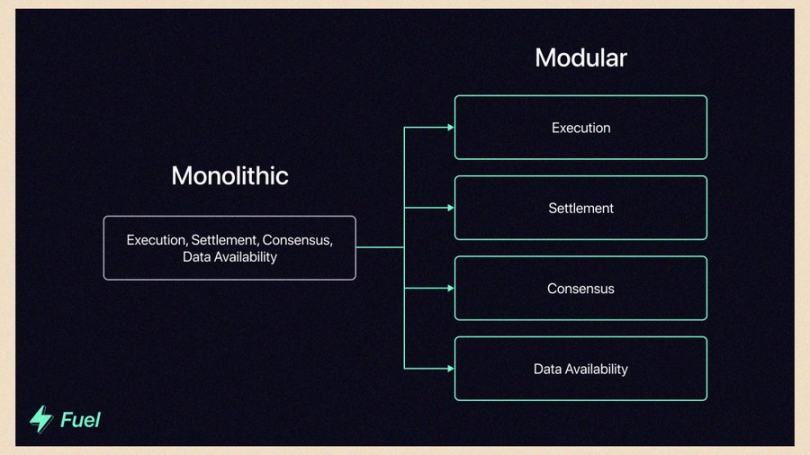
Let's first define modularity. The blockchain can be divided into 4 parts (execution layer, settlement layer, consensus layer and data availability layer), the current blockchain (Ethereum, Solana, etc.) is a single whole, and one network handles all the work. Whereas a modular blockchain is outsourcing one or more of these layers to an external blockchain.
Ethereum Rollups is a separate blockchain that extends and inherits the security of Ethereum. Rollups such as Arbitrum and Optimism are the execution layer, and the Ethereum mainnet serves as its data availability layer, consensus layer, and settlement layer.
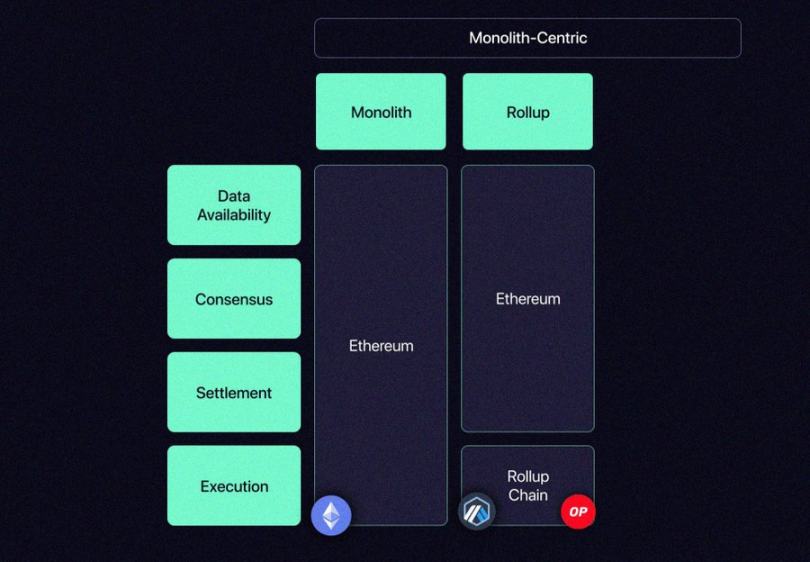
Rollups are of two types:
Optimistic Rollups: use fraud proofs such as Arbitrum and Optimism
zk Rollups: use proofs of validity such as zkSync, Starknet and zk-EVM
Fraud Proof: Information is exchanged between a "Prover" and a "Verifier". All transactions are assumed to be valid and added to transaction batches, which are then reviewed by "observers" to ensure that no malicious behavior has occurred.
Proof of Validity: Proof of Validity is computed on Rollups instead of Ethereum (as opposed to Proof of Fraud). The exchange of information between "prover" and "verifier" relies on cryptography and mathematics. Information is shared, but not disclosed.
A key aspect of Rollups is the sequencer: a sequencer is a designated node responsible for submitting a user's transaction to L2. It further publishes the Rollup transaction package to the Ethereum mainnet to update the state.
Arbitrum
As of now, Arbitrum is using:
A single centralized sequencer that receives user transactions and sends transaction batches back to the mainnet.
A set of "whitelisted" Arbitrum validators read the sequencer's transaction packets and submit an "Arbitrum state root" to the Ethereum mainnet in the form of fraud proofs.

Any validator can challenge the "root of state" settled on the mainnet. As long as there is an honest validator, the correct Layer 2 state will be published on the mainnet.
Previously there were concerns about validators being whitelisted. However, since the Ethereum merger, if no validator submits a "state root" within 7 days, the whitelist feature will be bypassed, significantly improving security.
route map:
Arbitrum deploys Nitro in 2022, significantly reducing communication and execution costs
In the future, sorting will be done by a committee of sequencers instead of a centralized sequencer
Arbitrum may launch a token to improve network security
Optimism
Optimism runs a single centralized sequencer with special rights through which transactions are sequenced and batches are committed. At the same time, the Optimism team is developing their interactive fraud proof system to ensure the correctness of the rollup state.

Therefore, the current fraud proof mechanism has been temporarily disabled, and users can only rely on the sequencer to publish valid rollup states to the Ethereum mainnet.
However, all of this will change with the "OP stack". Let's explore this huge roadmap.
Optimism is not just a Layer 2 Rollup on Ethereum, OP stack is: "A modular open source blueprint for a variety of highly scalable and interoperable blockchains."
Essentially, the OP stack is a framework for building blockchains and Rollups. Developers can combine one or more modules from the OP stack to build interoperable chains, these will be called "OP chains" and can be L2, L3 or something else entirely.
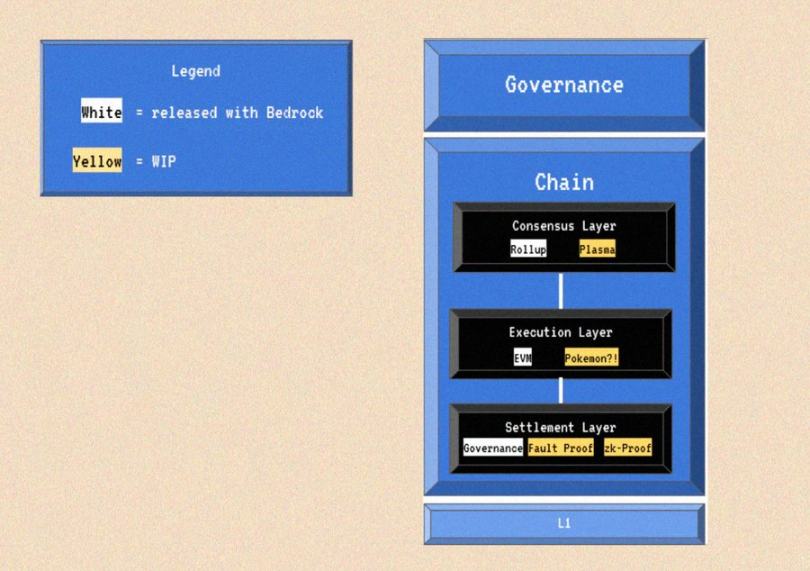
The OP stack will introduce a set of decentralized sequencers that the OP chain can integrate so that they don't have to worry about their own block production, which will allow the introduction of "atomic cross-chain composability" with a high level of interoperability. sex".
The first step in this ambitious roadmap is "Optimism Bedrock", which will achieve:
Ethereum equivalent
lower cost
Modular
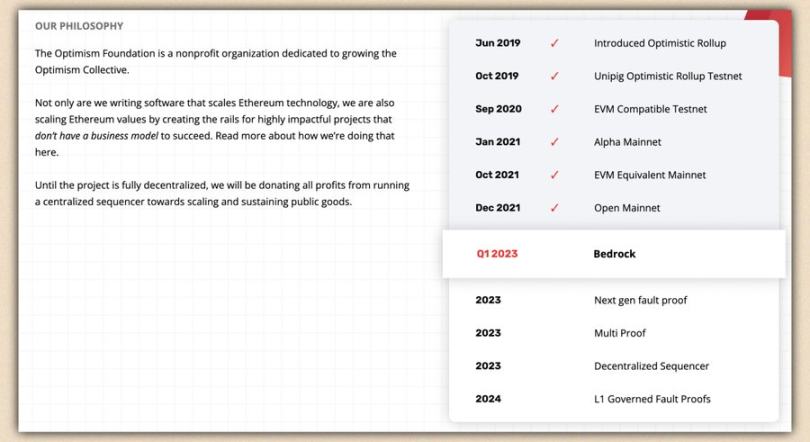
Optimism can technically be a zk-rollup, preparing for the future by being able to replace OP stack components.
Polygon
Polygon was born as a Layer 2 concept, but has since evolved to be more similar to the EVM Layer 1 blockchain. But POS Chain is just one of Polygon's many future projects.

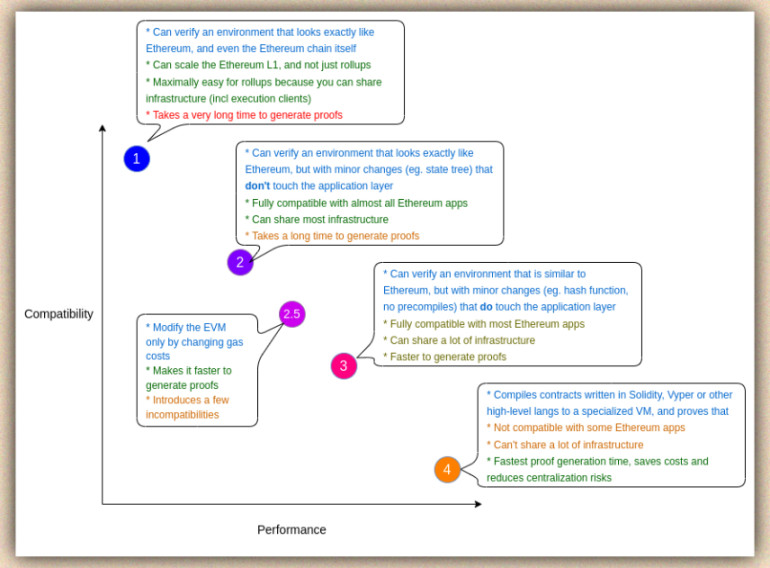
Polygon is building four different blockchains with zero-knowledge structures using proof-of-validity. One is the possibly upcoming Polygon Hermez, which belongs to zk-EVM. zk-EVM can be divided into four categories based on Ethereum compatibility and performance. Polygon's zk-EVM is type 2. Type 2 is more compatible with Ethereum than Type 4, but not as good as Type 4 in terms of performance
Other zk products from Polygon:
Miden (rollup based on STARK)
Zero (custom proof technology)
Nightfall (a privacy-focused rollup)
Polygon is also building a modular blockchain called Avail, which is similar to Celestia in the sense that it acts as a data availability layer.
zkSync
Matter Labs is building zkSync 2.0, a Type 4 zkEVM, and according to some recent information on Twitter, it's not too far away from mainnet launch. zkSync 2.0 has leading performance and scalability, but is less compatible with Ethereum.
In theory, lower compatibility makes it more difficult to implement from a developer perspective, and also challenging to deploy for Ethereum dApps. However, zkSync built multiple solutions including their own virtual machine and programming language.
zkSync 2.0 will be split into two interoperable chains, zkRollup and zkPorter. zkPorter is a "volition", also known as Layer 3, with "off-chain data availability", and data is processed on L2 zk-rollup. This design is said to allow zkPorter's TPS to reach 20,000.
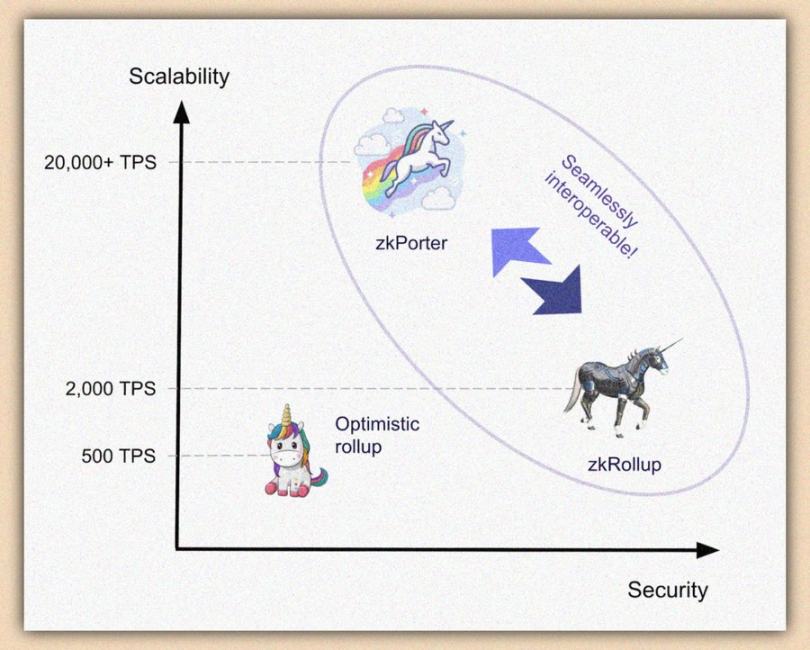
Layer 3 is slightly less secure than Layer 2 due to the extra layer, but is an order of magnitude more scalable. For example, Uniswap deploys their smart contracts on Layer 2, while dApp users use zkPorter (Layer 3), which greatly reduces the cost of fees.
The final piece of the puzzle is the so-called hyperblockchains, Layer 3 networks built on top of and powered by the Layer 2 zkEVM. These hyperchains allow for more scalability and customizability (like Lisk), but are slightly less secure than the Ethereum mainnet.

Original link