Crypto Ecology 2022 Review and Prospect: A Decentralized "Zunyi Conference"


Original Source: Overseas Unicorns
In this issue of "Stairway Plan", Frank and Wilson and everyone review the milestones of encryption ecological technology and products in the past year, and together imagine the future encryption ecology.
First of all, in the past year, the biggest technical milestone in the encryption ecosystem was the Merge completed by Ethereum in September 2022. Why does Frank think that its greatest significance lies not in the energy conservation and environmental protection promoted by the mainstream media, but more like a decentralized " Zunyi meeting"? Why does Vitalik care so much about the social consensus of the Ethereum community?
Secondly, why has the innovation of the blockchain application layer represented by DeFi stagnated since 2021? What are the problems of the existing DEX represented by Uniswap? What kind of product and innovation cycle does the ladder plan see? What is Yu'e Bao in the cryptocurrency field? What product innovations are Frank and Wilson looking forward to in cryptocurrencies?
What are we going to do with blockchain in the future? Why Ethereum's Future Is a Very Expensive "World Computer" Why should the future value of Ethereum be to support running a small number of high-value applications?
Finally, why are the Chinese absent from all the innovations in the encryption ecosystem in this cycle? What does the ladder plan want to do?
The following is the table of contents of this article, and it is recommended to read it in combination with the main points.
👇
01 Ethereum Upgrade: A Decentralized "Zunyi Conference"
02 The stagnation of application layer innovation in the past year
03 Expected innovation
04 Insufficiency of encryption community culture
first level title
secondary title
Environmental protection is not the greatest significance of Ethereum upgrade
Wilson:In the past year, the biggest technical milestone in the encryption ecosystem was the Merge completed by Ethereum in September 2022, that is, the Ethereum mainnet and Proof of Stake (Proof of Stake,"PoS")’s Beacon Chain (Beacon Chain) merger upgrade, which means that as the largest smart contract platform in the encryption ecosystem has officially entered the 2.0 era, its main network no longer uses the same Proof of Work as Bitcoin (Proof of Work,"POW"), Ethereum mining has also become a thing of the past. But for the significance of this merger and upgrade, Frank, you have some ideas that are different from the mainstream media and the Ethereum community, so you can talk about it.
Frank:The mainstream media, including people in the Ethereum community, said: "The greatest significance of Merge lies in the power/energy consumption of the Ethereum network, making the entire Ethereum network more environmentally friendly." It seems that Ethereum is doing this for environmental protection. Merge upgrade like. Yesterday, I went to see Bloomberg’s report on Ethereum Merge, which is the most representative of the professional mainstream media. The title of the report is “Ethereum completed the long-awaited energy-saving upgrade”.
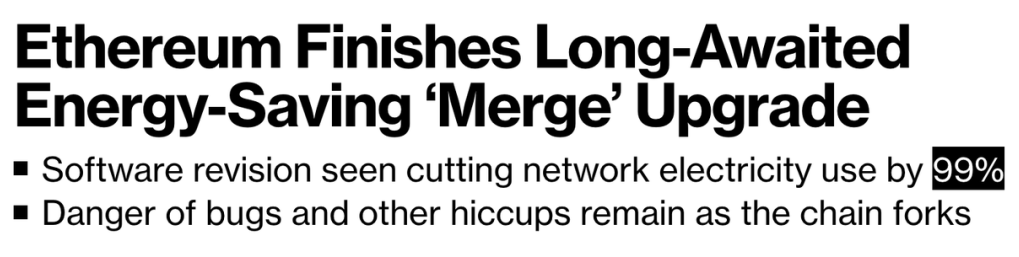
After the Merge upgrade was completed, Vitalik also sent a Twitter: "Merge reduced global power consumption by 0.2%."
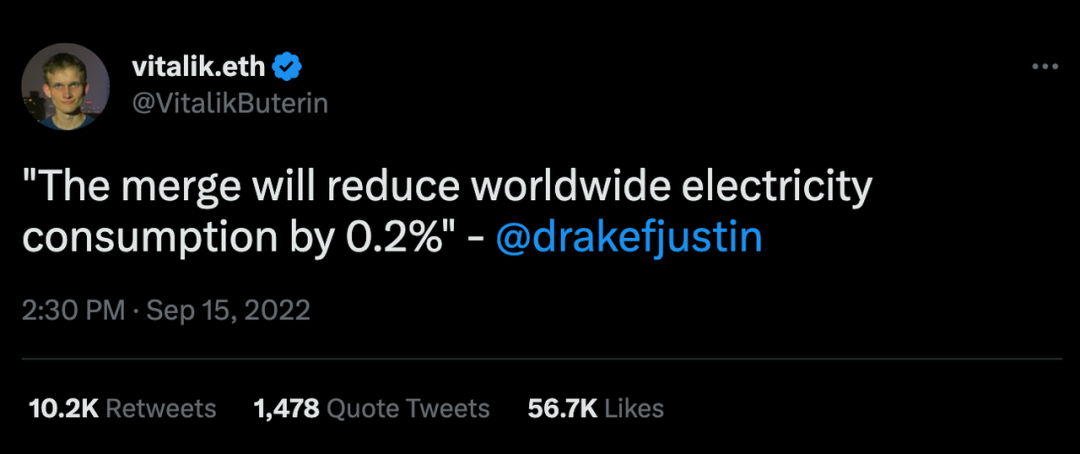
I think the emphasis on the power consumption of PoW in the Ethereum community has misunderstood the actual impact of this upgrade.
·First of all, many people confuse electricity consumption, energy consumption and carbon emissions. Electricity consumption accounts for 20% of global energy consumption; from the perspective of climate change, clean energy power generation produces very little carbon emissions, while fossil energy power generation produces very little carbon emissions. Emissions also account for 20% of global carbon emissions;From the perspective of climate change, clean energy power generation produces very little carbon emissions, and carbon emissions from fossil energy power generation also account for 20% of global carbon emissions. If Vitalik says that Merge reduces global energy consumption by 40,000, it doesn't sound that much.
·Secondly, Ethereum mining will be fully "marketized" by 2022. The energy market is actually a complex regional market. We should not only consider the amount of electricity used, but also the price of electricity used and the source of electricity. The electricity used by miners is not traditional household electricity or industrial electricity. Miners will actively look for the cheapest electricity, which is generally waste electricity from thermal power plants or hydropower in Sichuan.
·Finally, the Ethereum community and mainstream media estimate the power consumption of Ethereum mining to be about 1,000 to 5,000, and the actual data should be closer to the lower limit.
Calculation method of actual energy consumption of Ethereum mining
Frank:I have tried Ethereum mining in 2021 and 2022, so I have some understanding of the power consumption of actual mining.The main reason for the large energy consumption estimated by the Ethereum community and mainstream media is that they do not understand the power consumption ratio of the actual participating mining machines.Under the same computing power, there is a huge difference in energy consumption between a mining machine that consumes less power and a mining machine that consumes more power. After 2020, Ethereum mining has been fully industrialized, and the electricity consumption efficiency of the entire industry is very high. After all, everyone is investing real money. The graphics card of the mining machine I was using was the 5600 series released by AMD in January 2020. Each machine used less than 30 kilowatt-hours of electricity per day. The computing power of the entire mining machine was 320 MH/s. The computing power of the entire network was about 500-1000 TH/s, that is, the computing power of the entire network is equivalent to about 2-3 million mining machines of my level; if the entire network uses my mining machines for mining, the annual power consumption is about It is 20-30 billion kWh, and the global annual electricity consumption is about 2.5 trillion kWh.It accounts for 0.1% of global electricity consumption, which is the lower limit of mainstream media reports, half of the value released by Vitalik, and 1/4 to 1/3 of the data released by Binance.
1 TH/s = 1 million MH/s, H/s is a unified unit to measure the computing power of Ethereum mining machines.
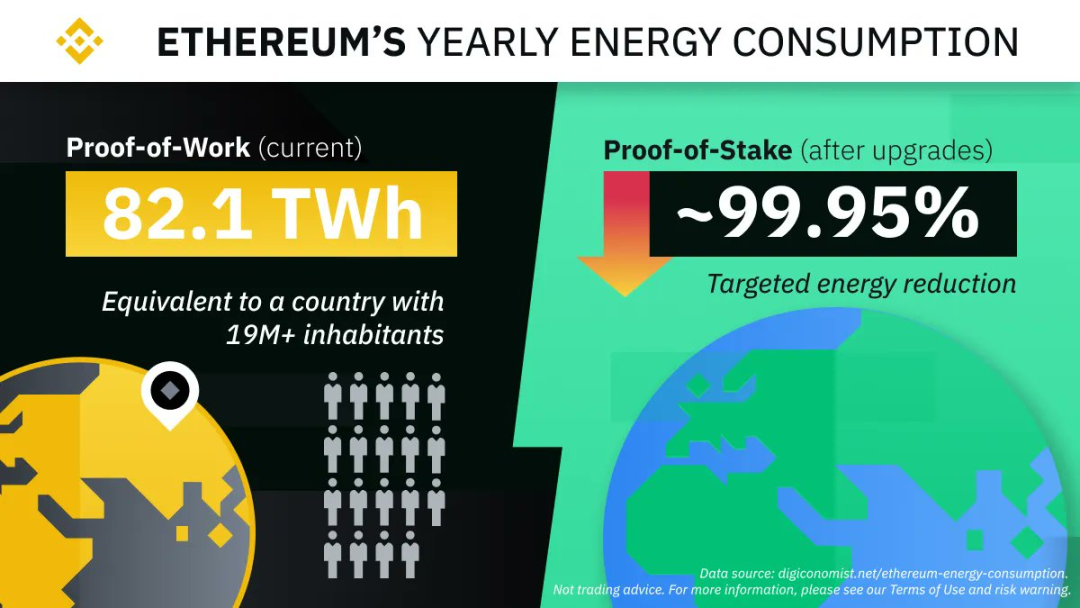
Because most miners have better mining machines than mine, the actual power consumption may be lower, especially in September 2022 when Ethereum will complete the Merge. At the beginning of 2020, the graphics card used by my mining machine is also considered to be a relatively cheap graphics card. Under the same computing power, the power consumption of using the Nvidia 30 series graphics card is 60% of the power consumption of my mining machine. By the second half of 2022, I am relatively sure that the power consumption ratio of my mining machine is biased, that is to say, the actual power consumption of global mining should be smaller than the result calculated using my mining machine. In this way, in September 2022 when Ethereum completes the Merge, it is estimated that the lower limit of Ethereum mining electricity consumption is 10 billion kWh, and the upper limit is almost 20 billion kWh, accounting for 0.05% -0.08% of global power consumption, which is roughly equivalent to 1.5- The electricity consumption of 3 Facebook.
Wilson:It should be that the Ethereum community intentionally or unintentionally exaggerated the energy consumption of mining to win more social capital/people's hearts.
Frank:secondary title
"Zunyi Conference"
Frank: From a historical perspective, the biggest significance of the Ethereum Merge upgrade is that Ethereum has proved that it is an upgradeable blockchain driven by the developer community represented by Vitalik.Ethereum can be said to be two completely different blockchains under the two modes of PoS and PoW. PoS just inherits the state of Ethereum from PoW, but it is completely different from it in terms of design concept and security guarantee. Such a large-scale upgrade, Ethereum has only experienced it during the initial DAO Hack, but the upgrade/hard fork at that time was forced; an active, large-scale upgrade led by Vitalik and the developer community represented by him is unprecedented.Therefore, the long-term significance of this upgrade is similar to the Zunyi meeting, which is essentially a confirmation of the leadership line.
DAO Hack: After The DAO raised millions worth of ETH in a token sale in 2016, The DAO was hacked due to a vulnerability in its codebase. The Ethereum blockchain eventually had to hard fork to restore the stolen funds, but not everyone agreed with this decision, which caused the Ethereum network to split into two different blockchains: the stolen funds were restored, and everyone is now Ethereum and Ethereum Classic used.
This time Merge is an active upgrade. The community has discussed which block to upgrade, and everyone has to upgrade together.Of course, each node can also choose not to upgrade. At that time, ETHW and ETHF supported by Chinese miners were unwilling to upgrade, but the consequence of not upgrading would be the destruction of value. The current market value of ETHW is one thousand two of Ethereum, and the value of ETHF is ten thousand two.Only by choosing to upgrade with everyone can you continue to preserve your own value.
Judging from the market performance of ETH before and after Merge, this upgrade is successful, but in the long run, I think some small hidden dangers may be planted.For example, in the upgrade process this time, the Chinese did not play a key role. During the three years of preparing for the upgrade, Vitalik ran around, but because of the epidemic, Vitalik did not come to China. None of the core developers of Ethereum is Chinese. From the perspective of the decentralization of the discourse system and the diversity of geographical distribution, there are still some deficiencies in the upgrade of Ethereum Merge.
How is such an upgrade accomplished? Merge has revealed that the important upgrade plan of Ethereum was first proposed by the core developers represented by Vitalik. The Ethereum infrastructure and applications such as Circle, Chainlink, Uniswap, and mainstream exchanges are the real voting parties. They use Real money, time and code voting. I think this is the most important point, because there will be many improvements in Ethereum in the future, especially Proto-danksharding that may happen this year, including the implementation of rollup-centric roadmap, Sharding, Modularity, etc., these improvements Both will have a profound impact on the Ethereum network. At least for now, it can be said that these improvements are still driven by relevant people represented by Vitalik. This is about where the future of Ethereum goes.
Regardless of the motivation, the Ethereum community miscalculated the energy consumption of the Ethereum PoW period, but the mainstream media also recognized it, so the real situation may not be that important to these people. But we must know anyway that environmental protection has never been the design concept of mainstream blockchains: for blockchains, our main concern is its security, what it can do, what it can do in the future, mining The energy consumption caused by mining is only part of the safety cost.
Wilson:Yes, the evolvability of such a system is fully reflected in the process of Merge. This also shows that there are more fundamental differences between Ethereum and Bitcoin, except that the consensus mechanism is different: one has a smart contract system and the other does not. More importantly, their underlying philosophies are different. People in the Bitcoin community hope that Bitcoin will be designed become immutable, and people in the Ethereum community hope that Ethereum is designed to be evolvable. Both concepts have value. Bitcoin first proved the value of this route, and Ethereum is still in the process of proving its value as "evolvable". Merge has taken it a very big step forward.
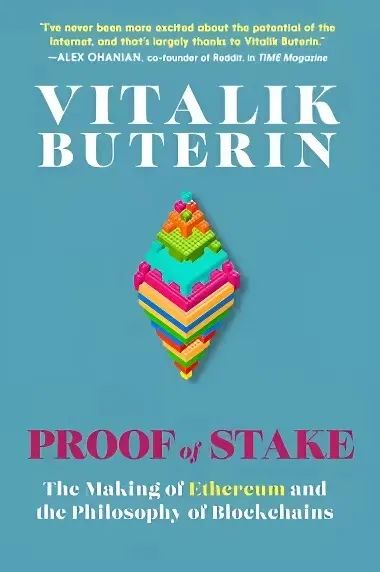
Frank:Vitalik also clearly explained his design philosophy for the PoS blockchain in his blog selection Proof of Stake, and the Merge process this time fully confirmed the practicality of this philosophy. In fact, Vitalik and early members of the Ethereum community were originally members of the Bitcoin community. Vitalik is the founder of BitcoinMagazine and has written articles about Bitcoin since 2012. To some extent, the Ethereum community forked from the Bitcoin community. The reason for their forking was that a part of the Bitcoin community represented by Vitalik wanted to do more things on the Bitcoin network, such as Namecoin, but the Bitcoin community does not welcome everyone to change these basic layer things.
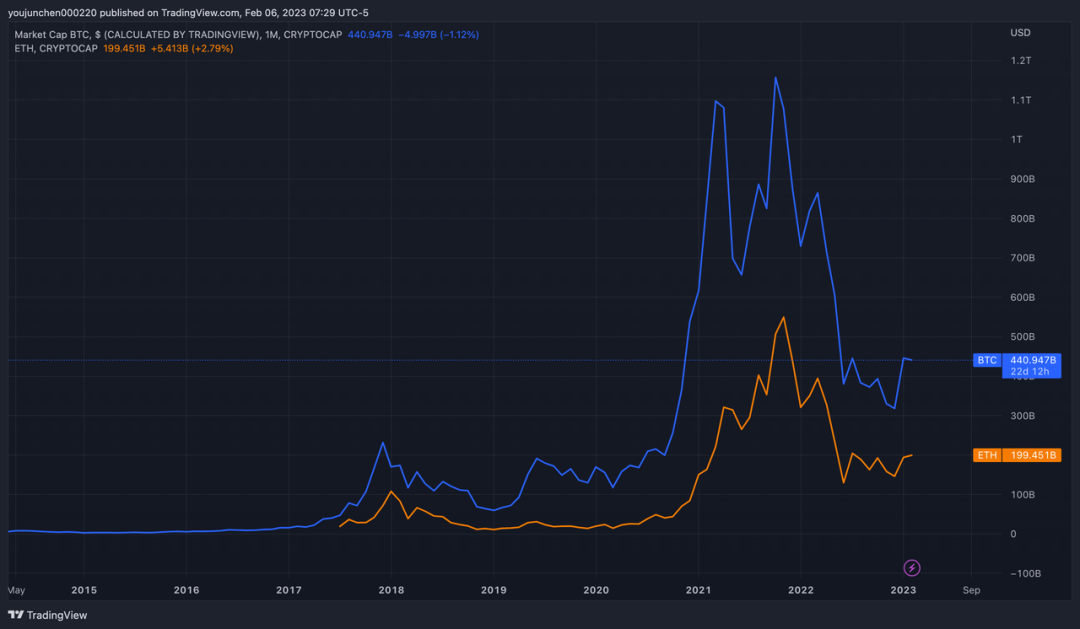
Facts have proved that the stability of Bitcoin still has great value. It is still possible to understand Bitcoin by reading the Bitcoin white paper. The white paper of Ethereum at that time has almost only historical value. Bitcoin, on the other hand, is still a much bigger asset than Ethereum to this day.
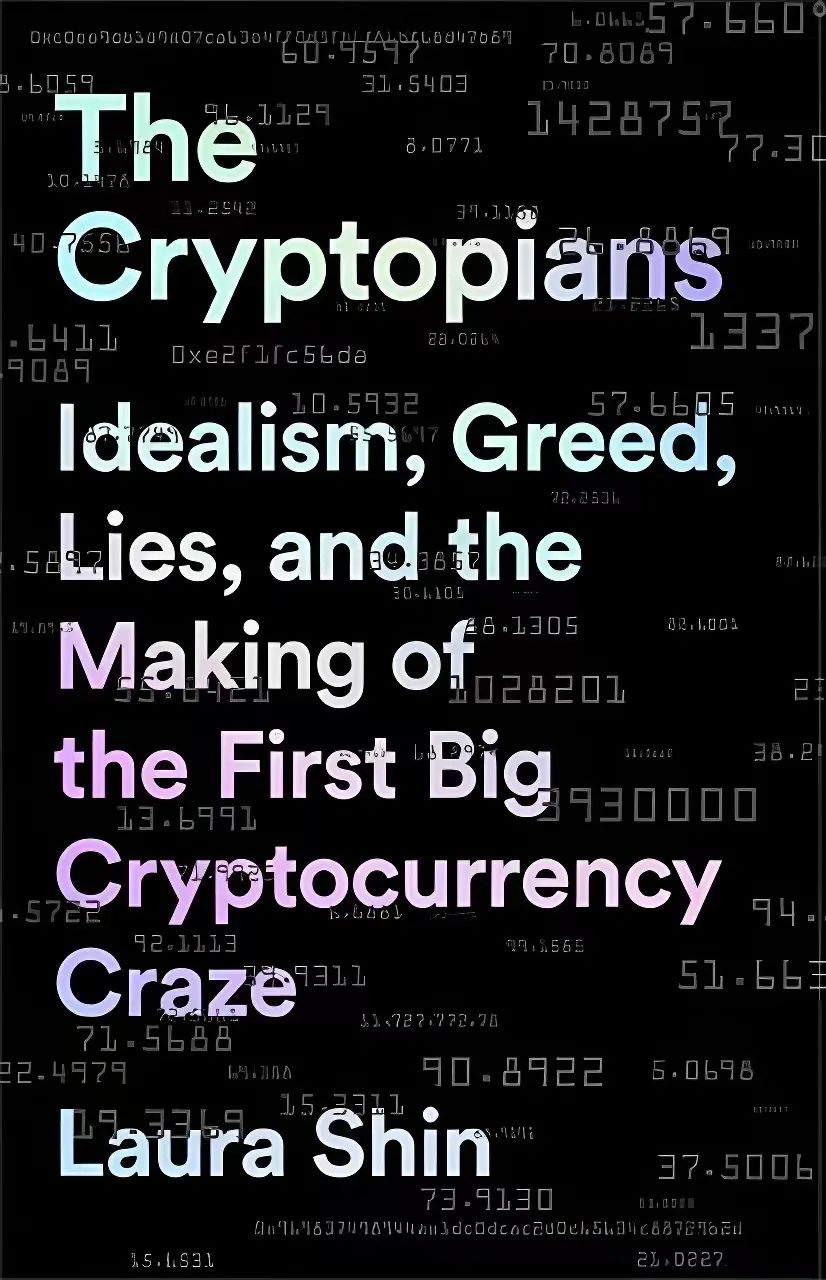
Reading Cryptopians written by Laura Shin, you will find that the development of Ethereum in the past few years has been very tortuous. The first large application (DAO) was hacked to the bottom by hackers, and it was directly hacked to a hard fork. Gavin Wood, the CTO of Ethereum and the creator of Solidity, the most mainstream smart contract language, wrote a multi-signature wallet written by his company Parity. The application of was also hacked by hackers. In addition, Vitalik's management ability, especially his early management ability in the Ethereum Foundation, has also been criticized by the Ethereum community for a long time.
Cryptopians:The Cryptopians: Idealism, Greed, Lies, and the Making of the First Big Cryptocurrency Craze.
Laura Shin:A former senior editor at Forbes, she was the first mainstream journalist to cover crypto assets full-time. Laura is also the host and producer of the popular blockchain and cryptocurrency podcast "Unchained", where she interviews top minds in the crypto world.
In 2021, we communicated with some mainstream public chain teams. Many people do not believe that Merge can be completed on time, because they have witnessed the stumbles of Ethereum in the past few years, and know that some people in Ethereum are not yet mature enough, and their engineering capabilities are also weak. Not to mention the world's leading, and even joked that it will take a hundred years for Ethereum 2.0 to be realized.But this Merge at least proved to everyone that Ethereum has the ability to complete an important improvement under the promotion of the developer community represented by Vitalik.
Wilson:In principle, there are some natural conflicts between the "decentralization" and "upgradability" of the blockchain, because the upgradability must require a certain degree of social consensus, which does not come from the level of mathematics or code . Other public chains may have completed such transformations and upgrades, but they are very different from Ethereum Merge. The upgrades of other public chains are not as decentralized as Ethereum, so the upgradeability of other public chains is not as good as Ethereum Merge. It does not represent the achievement of "upgradeability" in a truly decentralized blockchain.
Frank:Merge has been delayed for so long because Ethereum has always wanted to have a high degree of decentralization. The design philosophy of PoS is very different from that of PoW. PoS is not difficult on the theoretical level. Nowadays, except for Bitcoin and Litecoin, almost all of the dozens of blockchains use the PoS consensus mechanism. The difficulty of PoS lies in the fact that there are many decentralized Participate in verification. At least in terms of data, Ethereum has hundreds of thousands of verification nodes. Of course, there are fewer complete nodes. Compared with Solana’s 3000 nodes, Avalanche’s 1000+ nodes and Polygon’s 100 nodes, there are still a few more Magnitude. Moreover, many of the nodes of these public chains are established by teams or exchanges such as Binance, and the degree of centralization of the community is incomparable with Ethereum. Moreover, after the upgrade of Ethereum Shanghai is completed this year, the pledged ETH can be freely withdrawn, and there will be more and more nodes in Ethereum.
secondary title
Security of PoS
Wilson:The degree of decentralization of Ethereum is definitely much higher than that of other public chains, but after Ethereum Merge, one of the most discussed issues is the security comparison between PoW and PoS. What do you think of this issue?
Frank:On the one hand, the blockchain is a theoretical science, but it is essentially an experimental science. The final consensus is not only a theoretical consensus at the computer level, but also a consensus at the human/society level, so the security of the blockchain needs time to test. In theory, the security of PoS is higher than that of PoW, but this is only theoretical.
The design of the blockchain should consider Murphy's law, bad things will happen.For the blockchain, if these bad things are not properly resolved when they happen, or the solution is contrary to the previous design concept, this will be a huge consumption of the entire social consensus and the reputation of developers. When Luna crashed, Do Kown directly shut down Terra Chain, and Binance also shut down BNB Chain due to hacking incidents; however, the most important feature of blockchain is that it should not be shut down. Never come back. If the blockchain has not been tested by these extreme events, it is difficult to say that it has sufficient security guarantees.
Tendermint: A blockchain consensus algorithm. Most blockchains built with the cosmos sdk use tendermint, such as the Terra blockchain where UST, which was previously stormed, is located.
In the final analysis, the consensus security of the blockchain is an experimental science. Now we can only say that the past few months of running PoS in Ethereum have been relatively smooth, but in the future, if the US government intervenes or faces other more complicated consensus issues, it may still be difficult. There are some loopholes. Some people call the PoW consensus the default consensus. There is no simpler decentralized consensus than PoW, and all other consensuses require more assumptions and coordination. A vivid example is that the blockchain of the Bitcoin PoW mechanism can also run on Mars, and it takes less than 7 minutes to travel from Mars to the Earth. If a Bitcoin mining machine digs a block on Mars, it takes 3-4 minutes to send information to the earth is also completely in time.
Wilson:The stable operation of PoS requires more preconditions, and in a sense, it is also more fragile. On the other hand, one of the centralization issues that everyone talked about after Merge is that the staking operators are relatively centralized. Several relatively large staking pools such as Lido, Coinbase, and Kraken control a very high proportion of pledged ETH, respectively 30 %, 12% and 7.5%. These agencies are US agencies, and the US government has the ability to influence these agencies. What do you think of the risk of centralization of pledges that everyone is worried about?
Frank:secondary title
The importance of social consensus
Frank: In the blockchain industry, social consensus is very important. One of the characteristics of social consensus is that it has the Lindy effect. The longer you live, the stronger it becomes.In 2017-2018, many people thought that those who worked on Bitcoin were liars, related to money laundering, gambling, killing people and taking goods, etc. Now people don't even ask what is the value of Bitcoin, and more people ask whether Bitcoin can rise, which represents the process of gradually establishing social consensus.
The Lindy Effect:For something that will not die naturally, such as a technology or an idea, their life expectancy is directly proportional to the time they have existed. That is, every time it survives for a while, its remaining life expectancy will increase by a little.
Wilson:Yes, the self-reinforcing nature of consensus can make those surviving systems stronger and stronger.
Frank:Vitalik pays great attention to social consensus, and he often goes to developer conferences. It makes a lot of sense that Vitalik is running around, he's actually shaping the social consensus. Compared with Ethereum and other open source projects, the founders of many open source projects do not need to go to developer conferences, such as the Python community, and the founders do not travel around.

Wilson:From a cultural point of view, a leader is needed. Without the leader Vitalik, perhaps none of the changes we see today will happen.
Frank:Whether it is from Vitalik's writing, his performance, or his manipulation of the media by people in the Ethereum community, it all reflects Vitalik's emphasis on social consensus. The matter of "reducing energy consumption" may be for mainstream media such as Bloomberg or the president of the United States.
Wilson:secondary title
User Experience and Monetary Policy Improvements
Wilson:What other important changes does Merge have for daily users on the chain?
Frank:Under the PoW mechanism before, when the next block will come out depends entirely on the miner network situation. But for the PoS network, the predictability of the whole process is much stronger. Before, a block was generated every 13 seconds on average, but now a block is generated every 12 seconds, and the user experience has been improved to a certain extent. But in general, the experience difference on the product side has changed little, and it has not solved the long-criticized expansion/handling fee problem of Ethereum, which is also the problem to be solved in the next upgrade.
Wilson:secondary title
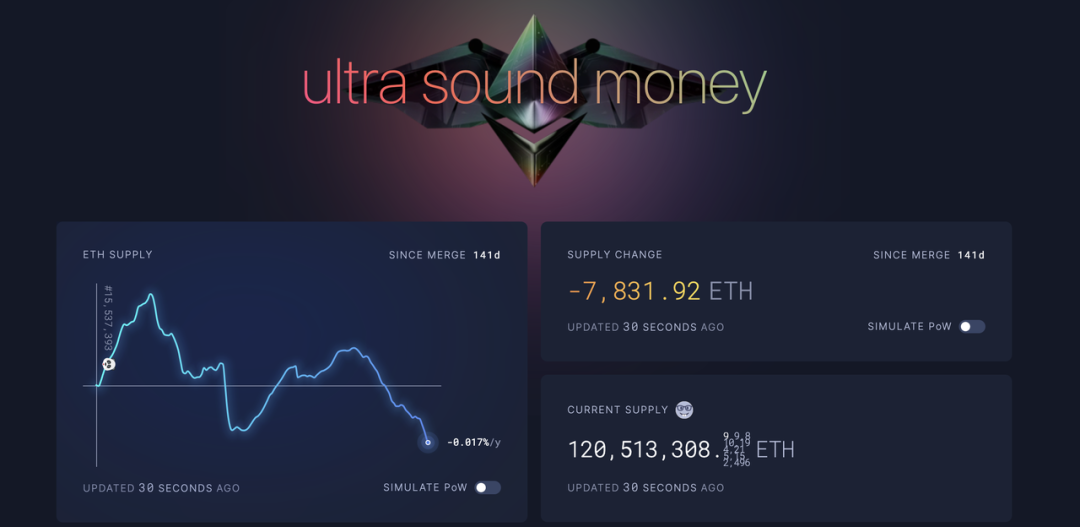
Ethereum's self-circulation
Frank: The PoS mechanism also makes the value circulation of the Ethereum ecology change from an external circulation to a self-circulation, and the dependence on the outside is lower.
Ethereum's mining algorithm Bitcoin's mining algorithm is complex, the Bitcoin chip is ASICS, Ethereum relies on graphics cards, Bitcoin mining is ultimately cheaper than anyone else's electricity. The core of Ethereum mining is to see who can get the first batch of chips from Nvidia, but at that time the best chips from Nvidia were given to the data center for rendering, graphics calculation, and AI training, but not to the miners. In this way, PoS makes the Ethereum community no longer dependent on Nvidia and AMD, which is a good thing.
first level title
02 The stagnation of application layer innovation in the past year
Wilson:Ethereum Merge is the most important thing in the collection layer in 2022. Looking back at the application layer, my feeling is that in 2022, there is no application innovation from level 0 to level 1. Basically, it is still iterative on the original category .
Frank:My thinking may be more extreme than yours. I think that since the release of Uniswap V3 in April 2021, there has been no essential innovation on the product side in the entire industry. You have provided me with a good perspective before, reviewing the most popular products on the chain in the past year is to see which contracts on the chain consume the most gas.
Wilson:Yes, we can take a look at the top twenty products that consume the most gas on Ethereum. The top ranking is Uniswap V3, the second and third are the two contracts of OpenSea, the fourth is Otherside, and the 2nd to 4th are all NFT-related products. The fifth place is USDT, the sixth place is Uniswap V2, the seventh place is OpenSea's contract, the eighth place is USDC, and the ninth place is Metamask's Swap Router. In fact, the top 20 belong to two categories: NFT and DEX.
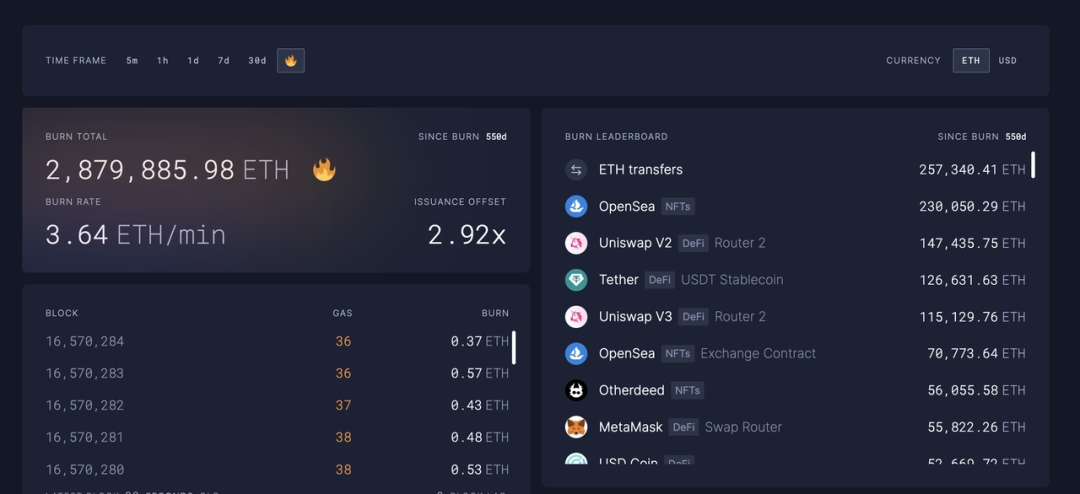
Frank:The four types of products in the entire DeFi industry are already very clear:
1. Spot exchanges represented by Uniswap;
2. Loans represented by AAVE;
3. Liquid staking represented by Lido;
4. Various tools, including the previously popular DeFi 2.0 represented by Olympus Dao, are essentially on-chain DeFi revenue aggregators.
Wilson:None of the top 30 TVL projects on DefiLlama are new ideas born in 2022, only some partial upgrades. AAVE, Compound, and Uniswap are all old projects in 2017 and 2018.
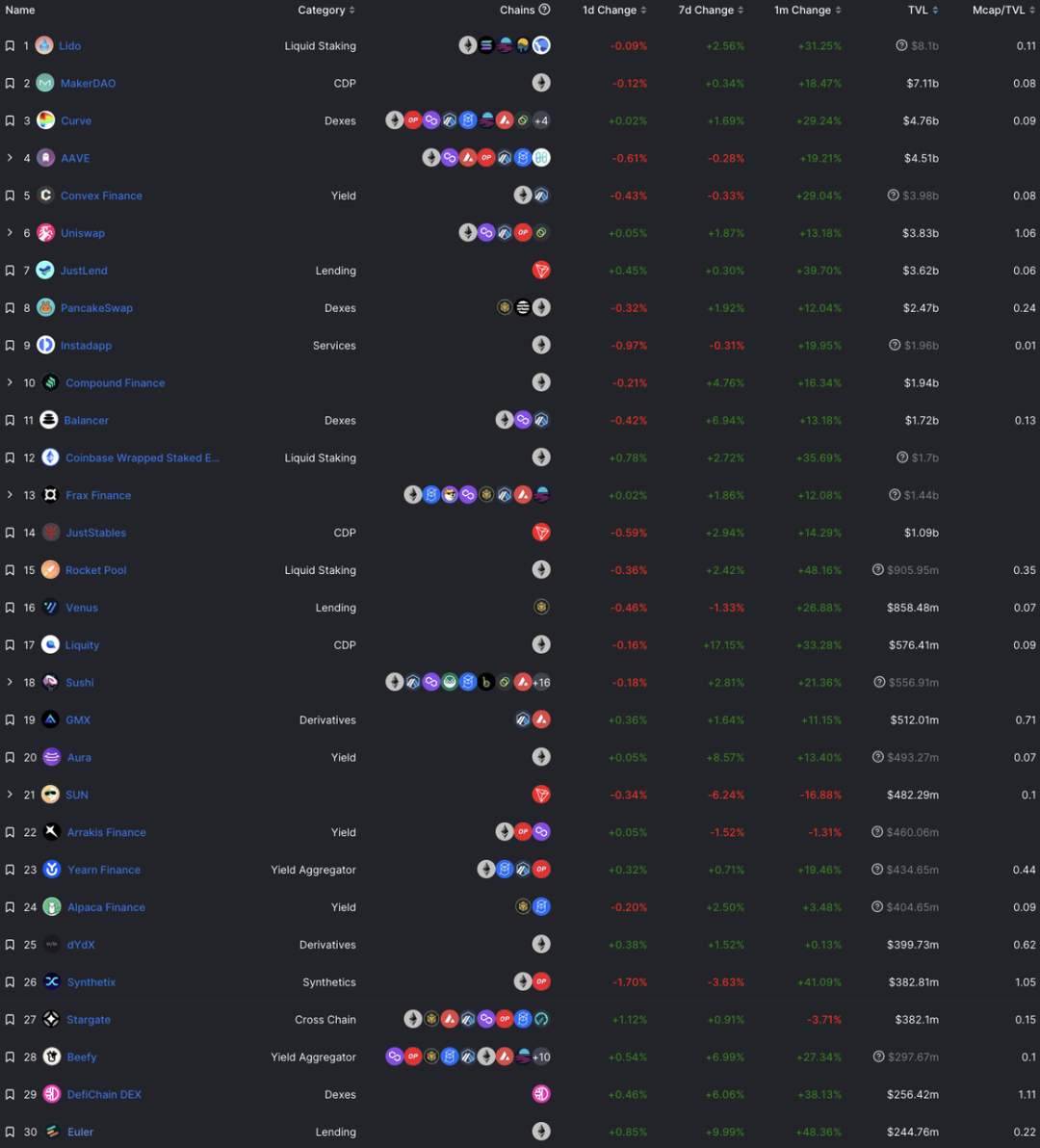
Frank:AAVE, Compound, etc. are all products born in the last cycle. Looking at the design concept at that time, there are some problems, because there were not so many assets in 2018, and DeFi transactions were not so active, so both AAVE and Compound need a product called Gauntlet's company specializes in risk management for them to deal with the increasing number of attacks on DeFi. The current new protocols are more based on small iterations and small innovations of AAVE and Compound. A new wave of lending protocols will be born in 2021-2022. In addition to forking AAVE and Compound to other public chains, such as Euler Finance for comparison The innovative liquidation mechanism also has a relatively good UI and UX. For example, Silo Finance has created an independent lending pool for each asset.
In essence, the lending project in 2022 is to add some risk management functions on the basis of AAVE and Compound. For example, Silo’s independent lending pool above, so that the risk of a single asset will not endanger the entire agreement; Curve USD also proposed a new liquidation mechanism, setting a liquidation interval by referring to the trading interval of Uniswap V3, which will greatly reduce market manipulation The proceeds of the behavior protect the interests of the lender. In the innovation of DEX, Uniswap V3 is the first, adding important functions such as trading range for risk control and centralized liquidity to improve capital efficiency. Balancer proposed that when adding liquidity, the two assets no longer need to be 1:1 to form LP, but allow a flexible ratio of 3:7 to form LP of the two assets and put them into the pool. Curve has optimized their AMM formula to further reduce user transaction wear and tear.
The development of all products also has a cycle, and products born in 2017-2018 are slowly iterating better. Even some new stablecoins, such as Liquity's LUSD, use the stability pool as a clearing mechanism, which can only require a mortgage rate of 1.1 times.
Wilson:first level title
03 Expected innovation
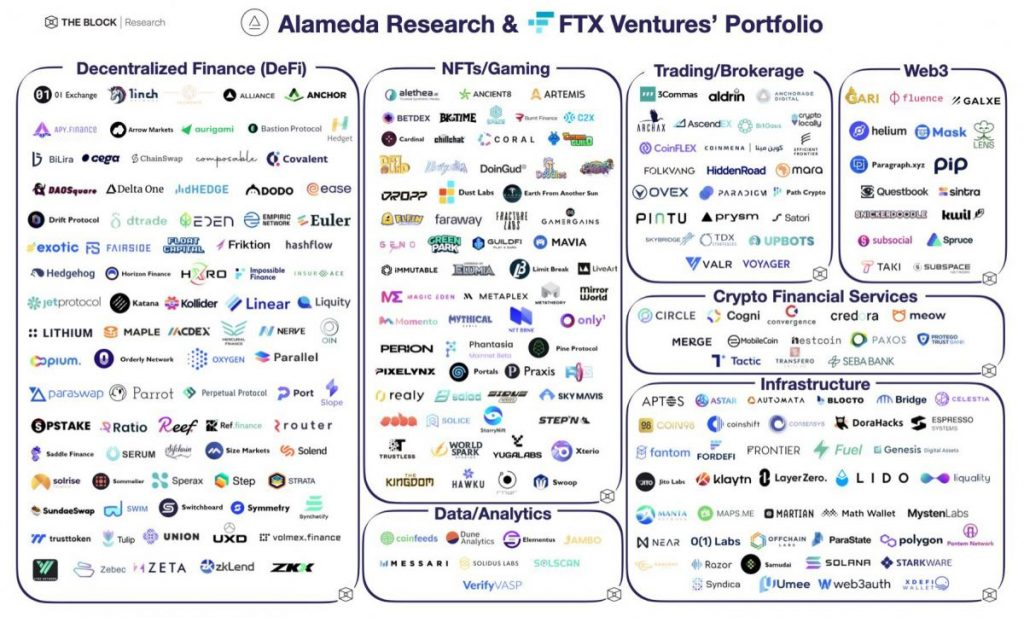
Wilson:The product I am most looking forward to in 2023 is on-chain FTX or on-chain DEX with perpetual contract transactions as the core. Although there are already many such products, most of them are still not good enough. In addition to the issues of liquidity and convenience, there is also a very common limitation that there are relatively few things that can be traded. What products does Frank think of that you want to trade on the chain, but there is no way to provide you with it now?
Frank:One of the features of FTX that I like very much is tokenized stock (tokenized stock). Shorting on the chain is very easy, but shorting traditional equity is very troublesome. I'm not a professional stock trader, and I don't have a Bloomberg account. The only way to short a stock on Robinhood is to buy options on it.
Wilson:In order to prevent retail investors from shorting too much and exploding their positions, Robinhood has restricted permissions. It is very difficult to short stocks on Robinhood. General brokerages have this function, but even so, for many people, especially those in non-US regions, it is not an easy task to have a US dollar stock account.
Frank:There were such products on Terra before on the chain, but there is no such product on Ethereum yet. According to the idea of perpetual contracts, as long as there is a relatively reliable Oracle, this can be done. This holds great promise because the stock market is theoretically off limits to insiders. If the market is good enough, I believe Tim Cook must be a core trader in the market. To some extent, there were not so many Apple employees trading in the market before, but if Apple employees come to trade Apple stocks with you, the price will definitely be more real. For example, VCs have many locked positions, but if there is a perpetual contract for them to trade, the effectiveness of the market will definitely increase.
secondary title
Perpetual contract DEX
Wilson:There are several clear drivers for the development of on-chain perpetual DEXs.
First of all, after the FTX explosion, the counterparty risk of centralized exchanges is still difficult to control. If transactions can be done in a self-hosted and trustless manner, everyone will definitely be more willing to participate. So it has a trustless advantage over centralized exchanges.
Secondly, it can list richer assets, whether it is stocks, foreign exchange, or even commodities. As long as there is something that Oracle (oracle machine) can support, it can be done theoretically (of course, the liquidity may not be good at the beginning). This is also very important for the real value creation of the blockchain world.
Frank:Do you care about others seeing your positions?
Wilson:People with some trading advantages will worry about this problem. Everyone may hide it through multiple addresses on the chain. In the future, zk technology may also solve this problem.
Frank:Yes, the FTX mine explosion made me think of an attack method. On the chain, everyone can be an Alameda, and they can see who is blowing up their positions, and they can snipe positions in a targeted manner.
Wilson:There is a way to achieve low-cost directional sniping. We can manipulate the spot market at a relatively low cost, and then snipe the positions in the futures market to obtain greater profits.This is because there is such a basic assumption: the price of derivatives is anchored to the spot, and after the spot price changes, the futures price will also change accordingly.secondary title
Yu'ebao in the encrypted world
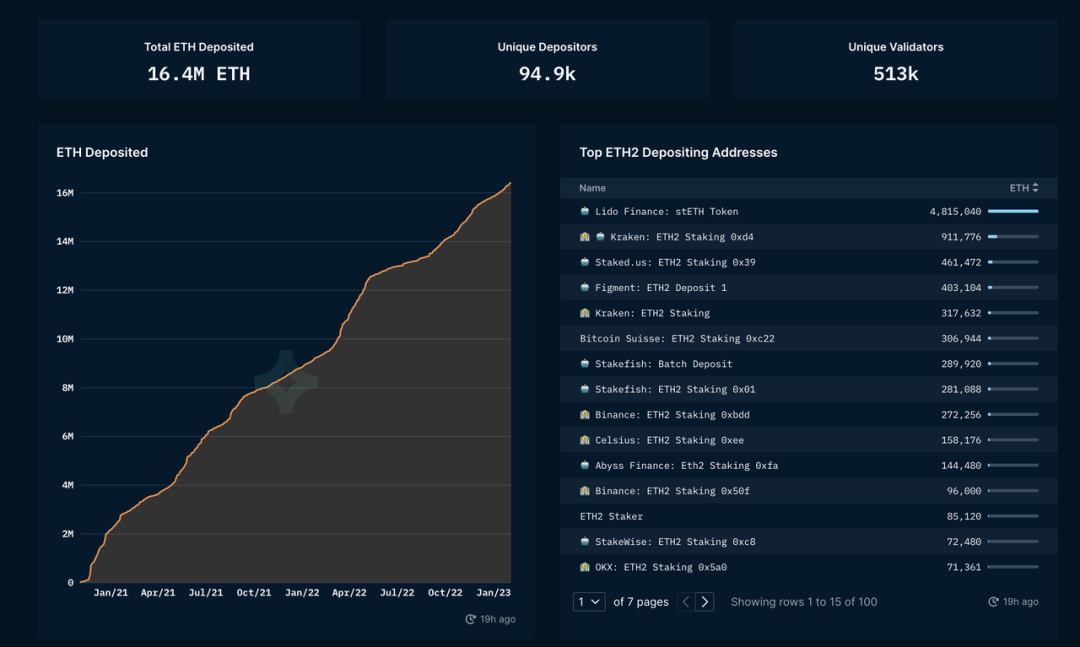
Wilson:The second thing to look forward to is the biggest hot spot since January 2023 - Liquid Staking. Recently, the prices of Lido, Rocketpool, Frax, SSV and other tokens related to liquidity staking have all performed very well. The reason is also very simple:
After Ethereum Merge, everyone can get 4-5% annualized income by staking ETH, and the bull market will be even higher. Looking at the entire blockchain industry, this income is the largest single actual income, because this is the tip fees paid by these people using Ethereum and the original PoS rewards given to verification nodes by Ethereum.
Now the proportion of everyone participating in the pledge is not particularly high, less than 15% of the total amount. But in the long run, I think it should reach a very high proportion. After the Shanghai upgrade is completed, staking Ethereum can be absolutely risk-free and extremely liquid. It is very similar to the money market or overnight interest rate market in traditional finance. I can almost have no counterparty risk and very good liquidity. , to obtain a base rate.
It is very similar to Yu'e Bao. Everyone puts money in Yu'e Bao in the hope of earning some interest. After the emergence of such a very convenient financial product as Yu'e Bao, few people would put their money in a place that does not bear interest. Ethereum’s liquid pledge is a product like Yu’E Bao. All Ethereum holders will deposit ETH here without affecting their use of ETH, because this is a relatively high risk-free interest rate, and everyone should To enjoy such an interest rate, under such assumptions, there is room for a substantial increase in its current penetration rate.
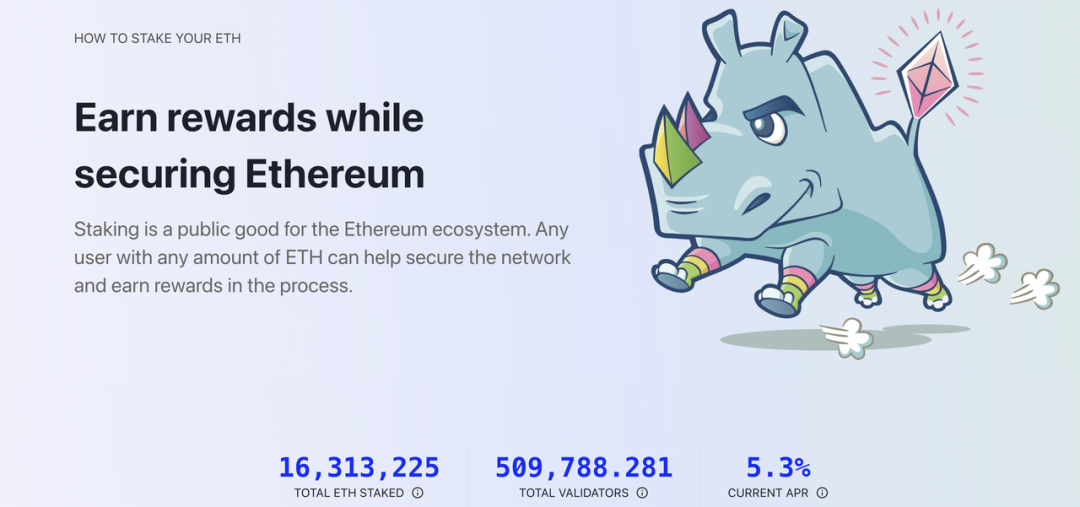
After the Shanghai upgrade, the ETH stored in Lido can also be raised, and users in the market have the opportunity to re-select suppliers. Everyone can switch between different pledge pools, and the advantages and disadvantages of different products can be reflected. Market competition will also become more active.
secondary title
DIDs and DAOs
Frank:Vitalik's insight is very strong, rollup-centric roadmap and DEX are the first things he mentioned. Out of respect for him, let's mention a few other important topics he said. For example, DID can be simply understood as sign in with Ethereum. I haven't particularly understood where its disruptive and important value lies.
DID: Decentralized identifiers (decentralized identity identification), is a new type of identifier that can realize verifiable and decentralized digital identities.
rollup-centric roadmap: refers to the rollup-centric Ethereum blueprint proposed by Vitalik in October 2020.
sign in with Ethereum: It can be compared to sign in with emali or sign in with phone number. This is a way to log in using the DID on the Ethereum network as an identity certificate.
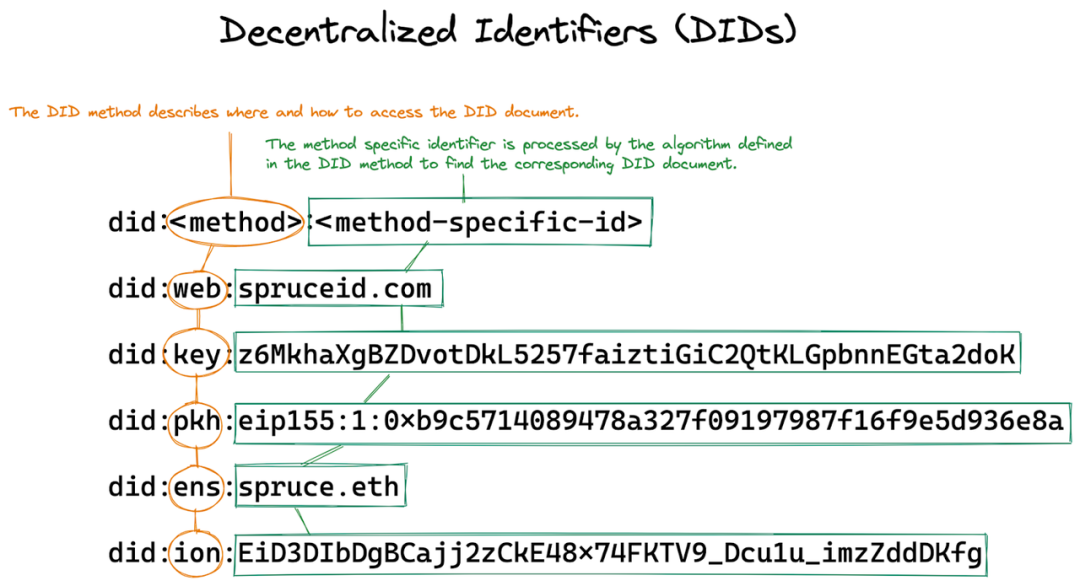
Wilson: First of all, DID is not a complex technical issue. Second, its value depends on what the identity is used for.To put it simply, an ID card is issued to you, and you can go to a bank to open an account, apply for a driver's license, rent a house, take an airplane, and take a high-speed rail. These things make your ID card useful. Crypto can also issue you an ID card, but if we don't have scenarios like buying a house, taking a driver's license test, or taking a high-speed train by plane, then the value of identity doesn't exist. So I think DID will naturally derive value after it has an application scenario.What we may be lacking at present is the application scenario itself.
Frank:He also mentioned DAO. By reading his book, I clearly feel that Vitalik cares about social governance. The example he likes to mention is Gitcoin. He wants to explore how everyone can "collaborate" with the blockchain to do some "good things". of. Vitalik is very interested in this kind of problem, and DID also belongs to this field. With identity, everyone can collaborate together.
Gitcoin: Provides a platform where you can get paid for your work on open source software such as Python, Rust, Ruby, JavaScript, Solidity, HTML, CSS, Design, and more. What Vitalik promotes is the product of its Gitcoin Grant, a grant program that has been focused on helping to sustain digital public goods that Gitcoin and the wider web3 community care about.
Wilson:He has a lot of abstract thinking about human collaboration problems, including cooperation, governance, decision-making, and execution. He mentioned in the article that decentralization has different purposes, some for long-term stability, some for efficiency, and some for operability. He will raise a lot of abstract ideas, discuss and think about how decentralized human organizations work. His ideas and thinking must be very profound and forward-looking, but from the perspective of implementation, we still have to find some usable places first. DAO is also an old concept, but the current degree of completion is very low, and it just places a lot of wishes on everyone.
Frank:Do you think Ethereum is a DAO?
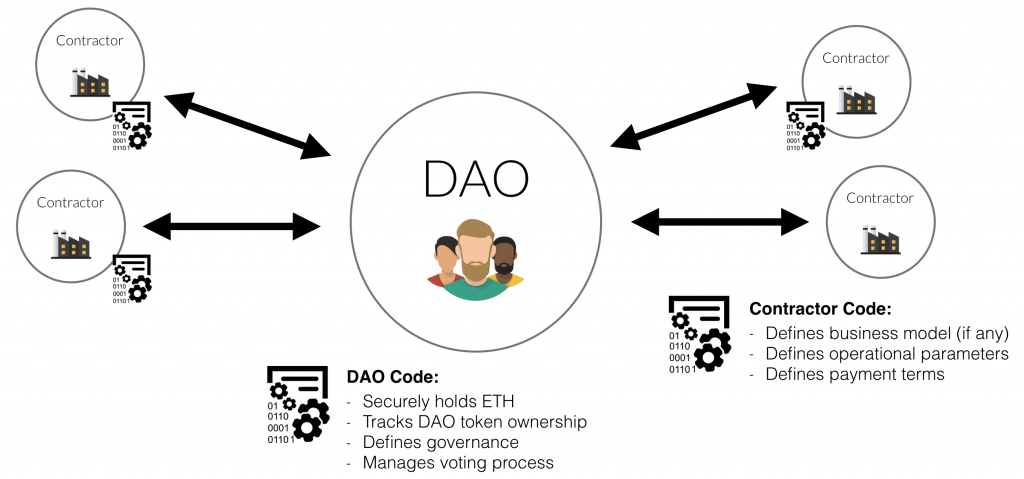
Wilson:Judging from everyone's behavior, whether it is upgrading or daily operation, it follows the concept of a decentralized organization, but there are also many ways of existence that are not decentralized or not linked to the chain, which are no different from traditional organizations, including existence A role like the Ethereum Foundation. These modes of operation are no different from traditional organizations, but its final decision-making and execution mechanism is very different from traditional organizations, with very obvious blockchain features, so I think Ethereum is a hybrid DAO.
secondary title
Innovation from 0 to 1
Frank:What was discussed just now is something from 1 to 10. Do you have any expectations for some new things from 0 to 1?
On-chain options
Wilson:I thinkNon-linear DeFi will usher in an initial explosion from 0 to 1 in 2023.First of all, options on the chain are a relatively blank market; secondly, there are already a large number of financial positions on the chain with the same risk exposure as options, and all AMMs are essentially options.
Frank:It has the same risk exposure as an option, but it does not have the payoff of an option.
Wilson:Everyone did not use it as an option for trading and hedging. But in fact, all AMM positions are options, so there are already many financial positions similar to options on the chain, but they have not been optionized.
I think there will be a lot of innovation around options, the most typical one is that Liquidity Provider (Liquidity Provider,"LP") to hedge impermanent losses. For most people, placing an AMM position in Uniswap or elsewhere inadvertently assumes the risk of an option. It is not a simple ordinary option, but a very complex option. If we can give you an AMM LP position that hedges this part of the option risk and has no impermanent loss, I believe that it will also gain a very high market share in the future, because a very high proportion of people do not want to take such risks.
Frank:I think the design of AMM is only the first step. Now Uniswap seems to have a stable position, but it has voluntarily given up part of the protection for LP in terms of mechanism design. I always feel that being a liquidity provider (LP) on Uniswap is a bit like doing public welfare.
The core point is that the liquidity provider, as a market maker, cannot place limit orders like in the traditional market. V3 is theoretically possible, but it is not feasible in practice. In the traditional market, a very basic market-making strategy is that you can place a sell order of 1 yuan for an asset worth 1 yuan. If the transaction is completed, the market maker can earn 10 cents after the asset returns to value. However, when doing LP on Uniswap, there will be various robots and people from the MEV ecosystem participating in the competition. They are active, while LP on Uniswap is passive. If you set a range, even if it is Uniswap V3, the range you set includes 1.1, but in the next block, or even in the same block, your 1.1 transactions may be snatched by others.
A large part of the money earned by traditional financial market makers comes from the natural order flow of the market, and this order flow on the chain is taken away by robots, and the cost of taking away by robots is also high. So although Uniswap now has a large amount of locked positions and is the core application on the entire Ethereum, it has very big flaws in its design.
On some Layer 2 or public chains with less expensive handling fees, everyone is already making some innovations, including Trader Joe and GammaSwap, which are very promising. So I still expect everyone to make a product that far exceeds Uniswap V3, and the market space is very broad.
Real world assets on the chain
Wilson:The second innovation from 0 to 1 that I am looking forward to is the on-chain of real world assets. Now there is a 4% risk-free interest rate on U.S. Treasury bonds, and there are a lot of dollars on the chain, and everyone wants to get such benefits on the chain. This matter is not difficult in terms of technical implementation. It is purely a regulatory issue. Can anyone get a license to become a credible organization and obtain regulatory permission to do such a thing. If this step is taken, the entire traditional financial world and the DeFi world can be completely connected, and more assets will come to the chain. This is definitely a huge expansion of the supply side for the entire blockchain financial system. This is something I am looking forward to very much in 2023, but the difficulty lies in obtaining regulatory permission.
Frank: The liquid pledge is Yu’e Bao in the currency circle, and the one you mentioned is Yu’e Bao in USD.
Wilson:Stablecoins such as USDC and USDT can be placed in Yu’e Bao, while ETH can be placed in Liquid Pledge Yu’e Bao. These two pools are huge. I have strong confidence in them becoming a viable business model.
The real large-scale application of blockchain
Wilson:The content we talked about just now basically revolves around DeFi, and it also has more practical tracks. But as Vitalik said, DeFi is quite complicated now. Its threshold is relatively high, and many people cannot participate because of the high threshold. For example, we talked about hedging impermanent loss risk positions earlier. Maybe even Uniswap LPs have a fairly high percentage of them not understanding what kind of risks they face. Because of such a high threshold, many applications cannot face large-scale markets. So of course I very much hope to see the emergence of products that can help Crypto form a large-scale market. Our industry needs safer, more fun, and easy-to-understand products. If the products become more and more obscure and complex, playing DeFi There will be fewer and fewer players, and there will be fewer and fewer players in the entire encryption ecosystem.
Frank:DeFi is now an arena for professional players, and I no longer recommend that ordinary people use DeFi applications without a deep understanding of the relevant situations. A while ago, the liquidation party of FTX, I believe they did their best, but they used DeFi to sell various cryptocurrencies held by Alameda and FTX into USD and ETH, and they were also targeted by various robots on the chain, and lost A lot of money.
Wilson:In countries with relatively developed Internet such as China and the United States, most people are Internet users. Only about 10% of people participate in securities investment, and most people only participate in simple financial behaviors such as buying and selling stocks. It is conceivable how the penetration rate of derivatives and derivatives on DeFi should be. Low.secondary title
an expensive world computer
Frank:A while ago, I just saw an advertisement of AWS. It said: "Amazon Web Services offers reliable, scalable, and inexpensive cloud computing services. Free to join, pay only for what you use." Participate and pay as much as you can.
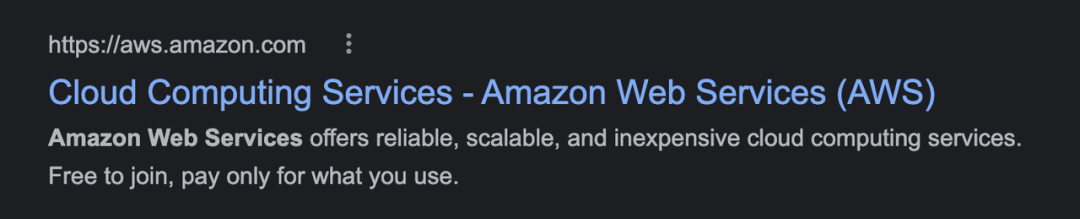
As long as you change "inexpensive" to "expensive", you are talking about Ethereum. Ethereum hopes to be a decentralized and reliable blockchain, but it is expensive and will be relatively expensive in the future.Scalable can be realized through Layer 2 or other expansion schemes; pay only for what you use is the logic of EVM, which limits a certain amount of calculation through gas. But the core is that Ethereum and other blockchains must be several orders of magnitude more expensive than AWS. Now Ethereum is 7-9 orders of magnitude more expensive than AWS, or even more. It will be 1000 times cheaper to implement sharding in Ethereum in the future, but it is still cheaper than AWS. AWS is orders of magnitude more expensive.
Many people are thinking, can Twitter run on it? This is unrealistic. If Twitter's data computing and storage costs are 1,000 times more expensive, then all its revenue will have to pay for computing resources. Products like Facebook and Twitter are more suitable to run on AWS and should not be deployed on Ethereum.Ethereum provides a very expensive cloud computing service, which should carry some more valuable things, which is why we discussed so many financial-related things, because for financial needs, blockchain can significantly reduce costs.International transfers require a fee of $75 and a one-day wait, while Ethereum transfers are much cheaper and faster. Even if the computing cost is expensive, at least it is cost-effective to meet this demand. The on-chain trading of stocks we discussed earlier is also a typical use case.
In addition, to make an analogy, why do you use AWS? It's not because AWS is cheaper per unit, it's also more expensive to use AWS than to buy a server yourself.AWS is good not because of its speed, but because of its security, stability and scalability.If there is no such demand, there is no need to run on AWS, let alone run on Ethereum or other blockchains. The future value of Ethereum should also be to support the operation of some extremely high-value applications. These applications should have a high demand for the security provided by the blockchain.
Wilson:Ethereum is indeed a very expensive computer. Although we are doing a lot of work to make this computer cheaper and more efficient, it is destined to be extremely expensive. So on the one hand, we need to make computers cheaper and more accessible to the people, and on the other hand, we need to find applications that are worth computing with such an expensive computer.first level title
04 Insufficiency of encryption community culture
Wilson:Encryption is a financial phenomenon, a technological phenomenon, and a cultural phenomenon. Do you think there have been any major changes in the culture of the encryption community in the past two years?
Frank:The most obvious thing is that there are indeed a lot fewer Chinese in the core circle of the encryption ecology. This is also the original intention that drives us to do the "step plan". Billions of people all over the world are related to the blockchain. It is not only the American elites like SBF who have the opportunity and the right to speak. We should take the initiative to fight for the right to speak.
Wilson:What do you think is the reason? Although the Chinese are very strong in the previous generation of mining and the previous generation of exchanges, the Chinese are indeed not in the core circle of Ethereum in recent years, and the Chinese in the new generation of public chain circles are also absent. Top DeFi projects Most of them are not dominated by the Chinese. We still have some influence in the field of games and NFT, and other fields are slowly falling behind.
Frank:Taking me personally as an example, I thought about working in this industry in 2017-2018, but the problem was that the community atmosphere and culture in China at that time, including government supervision, made me feel that I had nothing to do with this industry, and I didn’t know it at the time In addition to exchanges and mining, what other fields can young people participate in in the encryption ecology. I now realize that the encryption ecology is far more than the exchange ecology, and there are many things that can be done on the chain. The time when I really made up my mind to participate in this ecology was when DeFi developed and I was able to participate in more work interacting with the blockchain.
Maybe the Chinese were too successful in doing exchanges and mining before, so everyone did exchanges and mining, which caused everyone to miss the opportunity in 2020-2022. Maybe the next wave of Chinese people can contribute more, and we also want to do our part.
Wilson:What do you think of the quality of talent in this industry?
Frank:The quality of talents in this industry is indeed very different, and there are all kinds of talents. This is also the benefit of the industry. It does not have a natural discrimination. Unlike investment banks on Wall Street, the source of talents is concentrated in a few elite schools in the United States.
However, I don't think the quality of practitioners is a particularly big issue. As long as the money is paid enough, talented people will be willing to come.first level title
05 The meaning of "step plan"
Frank:Frankly speaking, when preparing for the "Ladder Plan", we clearly knew that showing your face in the encrypted community to make videos and short content can best shape the personality and IP. With the personality and IP, there will naturally be influence. The encryption circle Influence is money, but we actively chose not to, and ended up launching the podcast under two pseudonyms, Frank_Leee and Wilson. There are several considerations:
The original intention of the ladder plan is to tell the "truth".The "true" here is not necessarily real, and in many cases our content can only be as close to the real as possible. This "truth" is more of "sincerity", and as long as the IP is created, there will be people setting it up, and there will be interests, so it is inconvenient to say a lot. Just kidding, sometimes you tell me who is talking, and I can guess what he is going to say. At least at this stage, we don't have any personality and burdens, and we dare to tell the truth.
Secondly, from the perspective of the audience, human settings are good for early communication, but not necessarily for longer-term communication. Chinese people like to emphasize personality, and like to emphasize "this sentence is said by Vitalik, so we have to listen to it", or "this sentence is said by the leader, and this sentence is said by the elders". However, Satoshi Nakamoto and Bitcoin is a good case. People don’t know who Satoshi Nakamoto is, but we know the idea of Bitcoin, so that when everyone discusses Bitcoin, there will not be so many ideological disputes, but Focus on specific issues. So, the bitcoin community, it's North Korean, it's Florida rednecks, it's South American, it's all over the world — and we want to. At this point, Ethereum is a little weaker. For example, Vitalik went to Kiev, Ukraine to participate in an event, but did not go to Russia. Of course, this will allow Vitalik to gain more fans in Western countries, but there may be 1.5 billion of the 6 billion people in the world. People who support Russia are ignored by the mainstream.
Relatively speaking, Ethereum is not bad, and many other public chains have a heavy hegemonic style of American liberalism. If I were an Iranian, I would have resistance when using this style of blockchain.
If you are interested in more interpretations of "American Liberal Hegemony", Frank recommends reading Mearsheimer's book "The Big Illusion: Liberal Dreams and International Realities".
Wilson:I even thought it was "a weapon used by the US imperialists to invade and occupy us." (laughs)
Frank:Yes, anonymous podcasts can be accepted without so much barriers, and you don’t have to care who we are. It doesn’t matter who Frank and Wilson are, or our thoughts and analysis. There are certainly imperfections in the details, but we It will slowly iterate, just like this industry.This industry does not only belong to people like Vitalik, SBF, and Su Zhu, nor does it only belong to a few skilled programmers, these Cryptopunks, or those who want to get rich. This industry belongs to everyone who is willing to participate. Decentralization is not the goal, it is just an appearance. Simple decentralization is not difficult, but the difficulty is that decentralization can still reach a consensus.
Wilson:This is why Merge is important,It is difficult to hold a Zunyi meeting, and it is even more difficult to hold a decentralized "Zunyi meeting".
I just heard you say "frankly speaking" and realized what you meant by Frank_leee, which is a very good name indeed. I entered the Crypto industry myself, on the one hand, because there are many exciting innovations and new things, and many people are creating something that humans have never done before;From another perspective, what also makes me very excited is that I can see the fallacy, noise, prejudice, and ignorance in the industry. There are as many of these things as innovation. Whether Frank and I do podcasts, invest in this industry, or do research, we also hope to discover the truth of the world through layers of fog and obstacles. I hope to participate in such a close to the truth through the ladder plan process of exploration.
Frank:Step by step,Original link