






The tokenization of real assets will become an important breakthrough in the Web3 financial world


Original author:Chí Phan
Compilation of the original text: Deep Tide TechFlow
Original author:
Securitization brings about the centralization of equity and fixed income assets. With the tokenization of real-world assets becoming a hot topic in the crypto bear market of 2022, this approach promises to leverage public blockchain technology to unlock capital market share growth for alternative assets.
Public blockchains and security tokenization can be the next technological step towards deeper liquidity and lower transaction costs, thereby improving capital efficiency and onboarding new investor groups globally.
first level title
The birth and success of securitization
The modern concept of equity and debt, referring to the requirement for a company's cash flow or cash payment, dates back to the development of the modern corporation in the 17th and 18th centuries. Before securities were invented, there were two efficient ways of financing businesses:
– Borrowing money (debt) from an acquaintance.
– Form business partnerships or investor relationships (equity) with acquaintances.
However, these informal and informal practices create significant social and geographic barriers to entry for investors and businesses. Then, the mechanisms and infrastructure of securitization come into play, bringing the efficiency of capital markets to a new level.
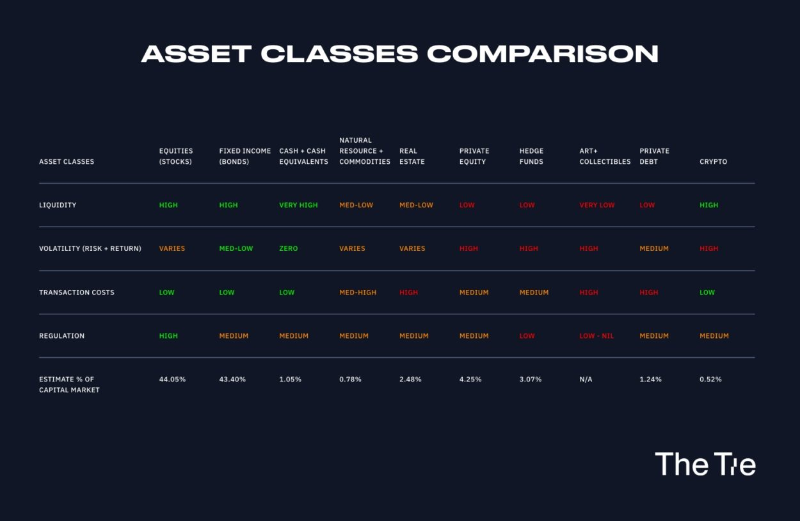 fluidity
secondary title
fluidity
By definition, liquidity refers to the efficiency or ease with which an asset can be converted without affecting its market price.
Factors that can affect liquidity in an asset class: transparency, investor confidence, accessibility and infrastructure. We will relate these factors to specific potential benefits from blockchain technology.
Transparency and Investor Confidence
Transparency tends to bring more confidence to investors, leading more people to put their savings and wealth into transparent asset classes. In addition, high levels of investor confidence also help stabilize capital markets by reducing volatility. The popularity of the U.S. equity and fixed income markets relative to markets in other regions is not surprising, as regulators have successfully put in place frameworks and requirements to increase the integrity and transparency of the markets relative to other foreign capital markets.
As the technical core of the public blockchain, the public ledger brings more transparent opportunities to the market. All transactions and smart contract settlements can be shown on the public ledger, allowing near real-time auditing if necessary.
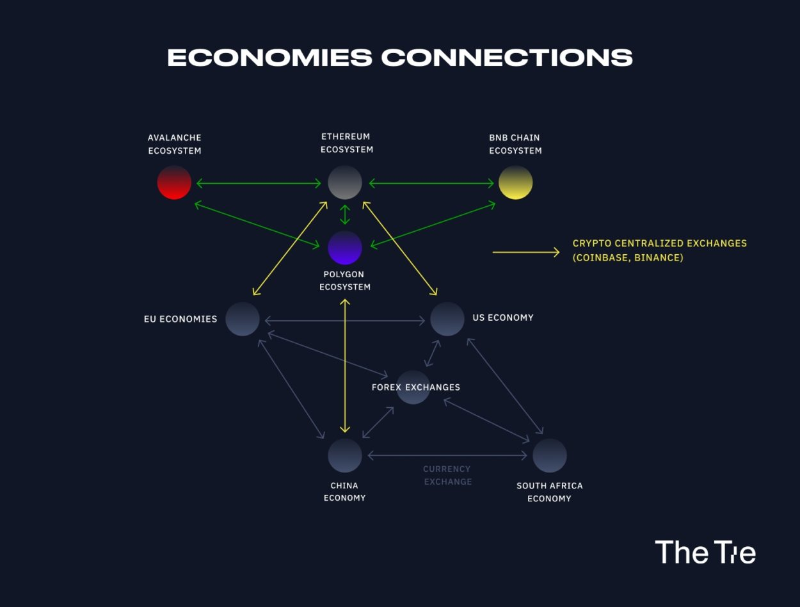
Tokenization and securitization of real assets: Why is the public chain a suitable infrastructure?
infrastructure
However, compliance with international laws has created barriers between different capital markets, artificially restricting the flow of foreign capital into different asset classes, thereby reducing market efficiency. Thus, the borderless virtues of public blockchains provide new asset classes with an edge over well-developed asset classes such as U.S. equities and fixed income instruments.
infrastructure
The underlying ACH system is limited to settling transactions after 1-3 business days and requires ongoing maintenance to function. Public blockchain technology can execute this process in minutes, using smart contracts to guarantee agreed terms and execute matching orders transparently and in real time. Blockchain infrastructure has the potential to provide the ability to eliminate the human capital required to facilitate transactions while enabling a less regulated but more transparent process.
transaction cost
secondary title
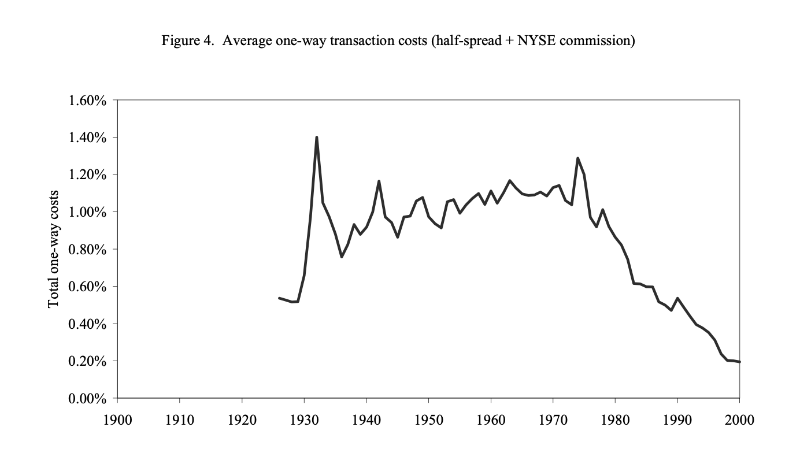
While there is room for further improvement, our current system has significantly reduced transaction costs for securities transactions.
Fundamentally, the transaction costs of exchanging assets are created by infrastructural frictions, such as operating expenses and commissions for middlemen, which are sometimes created by complex regulations and legal requirements. The more challenging it is to facilitate transactions, the higher the transaction costs for exchanging these asset classes.
Reducing transaction costs will also increase investors’ return on investment, providing incentives to create liquidity across asset classes. Are decentralized securities the right approach?
first level title
Tokenization
Reducing reliance on middlemen creates a more streamlined and cost-optimized transaction process for capital markets.
While there are different technical approaches, using public blockchains for securitization presents a unique set of advantages and challenges.
Tokenized assets can be used for global payments
While public blockchains are still figuring out the best scaling solutions for their infrastructure, settlement times and costs per transaction are already lower than ACH, and far less than the high fees of international transfers.
The peer-to-peer system of the public blockchain supports settlement in minutes, or even seconds. The cost of transacting on a public blockchain can range from a few dollars (Ethereum) to less than pennies (Avalanche, Polygon, BNB Chain, or other Ethereum Layer 2s). As such, the tokenization and digital securitization of real-world assets could significantly improve capital access in asset classes such as commodities, real estate, private equity, and hedge funds.
Bringing a new set of underlying digital assets to DeFi
Real-world assets are protected by centralized authorities within the framework of a complex legal system. Thus, tokenized securities from centralized issuers can create a new set of digital assets on public blockchains by taking advantage of both (1) traditional legal protections and (2) technological advancements and infrastructure of public blockchains , which are pegged to strong, valuable underlying real-world assets.
first level title
Early adopters of tokenized securities
While Ethereum’s DeFi infrastructure is more developed and more liquid, transaction fees on the Ethereum mainnet (layer 1) are still significantly higher than other alternatives. These costs, along with support for customizable virtual machine subnets and support for custom regulations per virtual machine, drove the Securitize team to choose Avalanche over Ethereum.
Summarize
first level title
Summarize
Although public blockchain infrastructures are still in their infancy, they are showing potential in two ways:
Significantly increased liquidity in the asset class;
Reduce the cost of trading alternative assets while allowing more investors to participate globally.
However, evolving compliance and regulatory requirements for digital assets may challenge the tokenization process of different asset classes to help them compete successfully with equity and fixed income markets.





