Paradigm's Mistake: How rETH Will Flip stETH


Original title: Why Paradigm Was Wrong: How rETH Will Flip stETH
Analysis of the social and economic headwinds facing stETH, how these are reflected in the market conditions creating tailwinds for rETH, the broader LSD market crash, and the Rocket Pool bull case in general
Table of contents
1 - Power is not law
monopoly playbook
2 - Social headwinds for stETH growth
Governance can be attacked
Rapidly changing fee/incentive structure
multi-chain dilemma
Validator Registry
3 - Economic headwinds for stETH growth
Staking - No Risk or Risk Fee?
execution risk
tail risk
centralization risk
4 - Orange Cascade
Orange Creep - Before Withdrawal
Orange Immigration - Withdrawal
Orange Future - After Withdrawal
5 - A new challenger arrives
Loss of cbETH
frxETH - Liquidity and Design
shady super stakeholder
Rocketeer's Reflections
6 - Counterparty Token Economics - An Undervalued Art
7 - Conclusion
first level title
1 - Power is not law
The Pareto principle, also known as a power law, is a phenomenon that occurs when a small number of individuals or groups control a disproportionate amount of resources or outcomes. This can be seen in many different fields, including economics, sociology and ecology. For example, the global distribution of wealth is often described using the Pareto principle.
The Pareto principle is the basis for a now famous research paper by Hasu and Georgios of Web3 investment firm Paradigm. When it comes to the nature of liquidity staking, they argue that Ethereum's Proof-of-Stake (PoS) system will be dominated by mining pools that are socially scalable and offer the highest possible returns by accepting MEV (Maximum Extractable Value). They argue that the Pareto distribution will lead to the fact that most staked ETH will be controlled by centralized exchanges, or by less centralized alternatives that could roll out first.
first level title
About Staking Pools and Staking Derivatives - PARADIGM
The transition from Proof of Work (PoW) to Proof of Stake (PoS) is the most anticipated milestone of Ethereum since its inception. Instead of using PoW which is energy costly to scale the blockchain,The Pareto Principle holds true only in the presence of limiting pressures that prevent total domination of ecosystems. For example, in biological ecosystems, the balance between predator and prey populations can control both populations. However, ecosystems can collapse if there is human disruption, such as hunting or the introduction of non-native species.
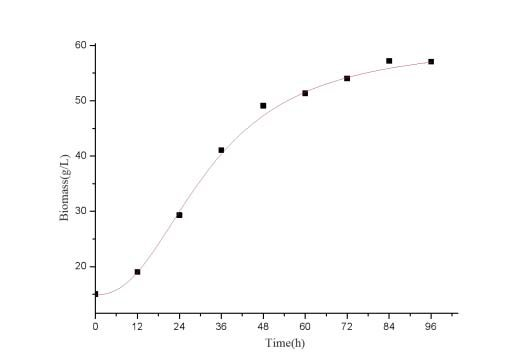
Claims that PoS ETH is already in a power-law distribution often miss an important component — limit pressure. One can see this limiting pressure through the growth stages of wildlife populations modeled by logistic curves. In the first stage, exponential growth rapidly pushes the population from essentially zero to extremes. In the middle of the curve, growth hits an inflection point and slows down as some pressure starts to build. For predatory species, this may reduce food rations due to overpredation.
The last part of the curve is the carrying capacity approach - the asymptotic relation of the population ceiling where risk or lack of food inhibits any further growth. Here, species dominate the ecosystem but fluctuate. Further growth is negated as it would reduce resources leading to population collapse, which in turn would promote reproduction as resources become abundant again - a continuous cycle around a steady state. Now, imagine if the reaction force could be suppressed or hidden. What happens to bacterial populations? It consumes endlessly.
image description
secondary title
monopoly playbook
I think Lido has been artificially suppressing power law dynamics in order to maintain an unsustainably high percentage of the Ethereum LSD market. The long-term impact of this behavior is simple and inevitable — the invisible hand of the market will drive a return to the Pareto distribution as the seemingly endless liquidity incentives dry up and the DeFi integration gap narrows. The sheer dominance of Lido's LSD token (stETH) should decline as rational players spread out their risk.
Just like the Federal Reserve printed billions of dollars in response to the Covid-19 pandemic, Lido has been ballooning and splashing out their governance token (LDO) to tens of millions of dollars per month. By spending money to increase the utility of their stETH LSD, Lido has been trying to solidify the first-mover advantage outlined in Hasu and Georgios' paper. Therefore, retail investors face a prisoner's dilemma, and self-interested and profit-seeking participants are still seeking value enhancement of stETH despite the inherent risk being masked by a large number of LDO incentive payments. Lido's mask slipped briefly during the June 2022 3 AC (Three Arrows Capital) crash, when stETH quickly attracted a risk discount of up to -6.6% compared to liquid ETH, representing a temporary disappearance of approximately 18 month returns up. To understand how the risk realized through this discount is symptomatic of Lido losing its status as the current power-law majority player, we must consider the role of social and economic headwinds in Lido's relentless pursuit of total market dominance.
first level title
2 - Social headwinds for stETH growth
Hasu and Georgios themselves list the social arguments:
“One metric that is important for PoS security is how much stake is controlled by a single entity. 15-30% for [centralized] exchanges; more than that, there may be social concerns about the centralization of power in the Ethereum ecosystem .a decentralized stake pool can control any share of the network, as long as each validator in the DAO is not too large and withdrawal credentials cannot be changed/voted.
We must stress how important it is for decentralized stake pools to get rid of all governance functions by then. Fees, withdrawal addresses, and validator registries do not allow changes through manual entry. "
The italics are not my own, but emphasis is. In this section, the authors suggest that the social constraints imposed on centralized exchanges may not apply to decentralized protocols that meet the necessary governance standards. It is Lido's failure to meet these criteria that has hindered the protocol's continued growth and dominance.
secondary title
Governance can be attacked
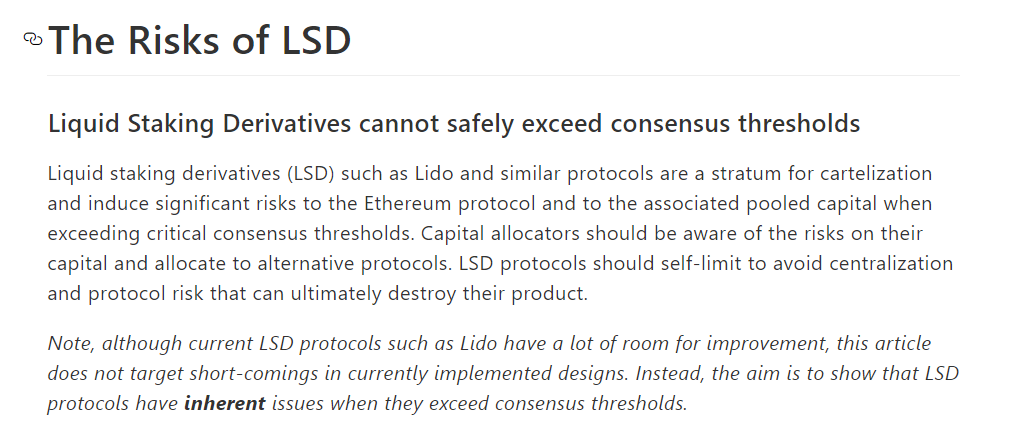
Lido now accounts for over 30% of the network, bigger than the 3 largest centralized exchanges combined, and is still under governance. Hasu and Georgios seem to have emphasized this point two years ago, but it is easy for them to forget that government minimization is a central part of their 2020 paper. In stark contrast to Lido's intense desire for growth, the move to "get rid of all its governance functions" has been conspicuously lackluster. The updated dual governance structure gives LDO holders voting rights and stETH holders a secondary veto. But, if anything, it’s that no real steps have been taken to weaken Lido’s governance — which has understandably drawn the ire of some of Ethereum’s influential core developers.
Power changes slowly and relinquishes control. If individuals in this group become corrupt, they could effect significant negative changes to the core Lido protocol, which then spill over into the wider Ethereum ecosystem.
image description
Danny Ryan, Ethereum Foundation - https://notes.ethereum.org/@djrtwo/risks-of-lsd
Looking at different liquidity staking protocols helps provide some interesting comparisons in terms of governance. Rocket Pool eschews strict controls and centralized structures, operating through rough consensus among different stakeholder groups. The overall protocol direction is driven by the DAO of Node Operators (pDAO), and changes are then made by the core developer team.
The core development team has demonstrated its strong alignment with Ethereum's core ethos in a number of ways. First, when the Ethereum core developers changed Casper's staking contract in late 2018, the team was willing to completely restart work. Additionally, the team issued a statement of intent to impose a self-imposed cap on Rocket Pool's market share.
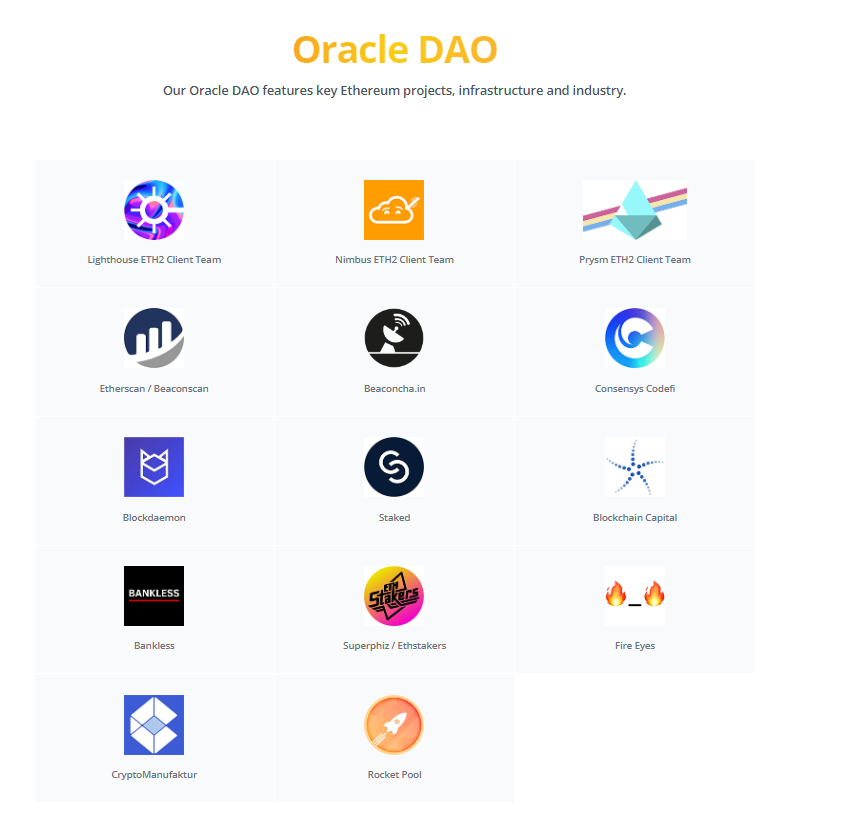
The actual implementation is controlled by a second external DAO (oDAO), which operates from a distance to review and operate protocol upgrades. oDAO is made up of key parties from across the Ethereum ecosystem and is tightly bound through a combination of three ties: financial bonds, substantial social capital, and a natural fit with Ethereum's core principles.
Individuals' quadratic voting rights in pDAO are tied to their number of validators and a capped number of RPL utility tokens. This means that individuals gain voting rights by participating in the network and staking a certain amount of RPL tokens, rather than simply holding a large number of LDO tokens as in Lido's governance structure. This makes Rocket Pool's governance more robust and less susceptible to manipulation by a small group of people.
secondary title
Rapidly changing fee/incentive structure
image description
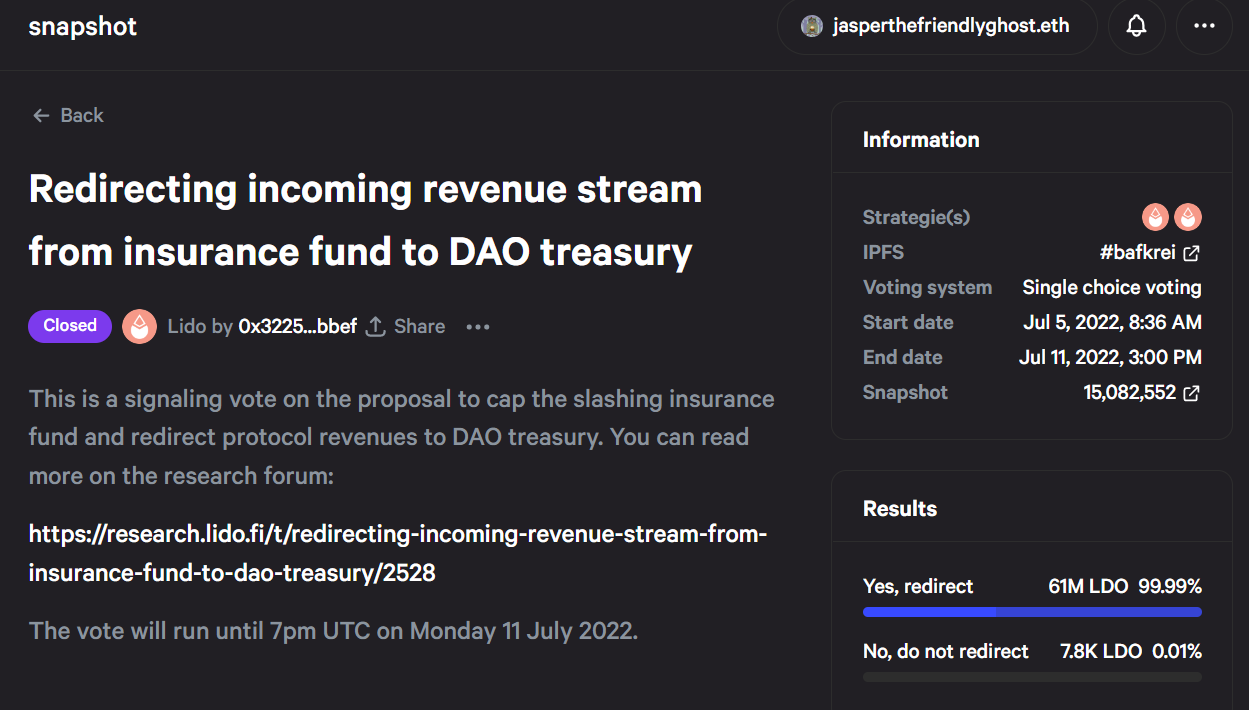
https://snapshot.org/#/lido-snapshot.eth/proposal/0 xb 99 f 87 eb 8 e 168 b 8 ad 28 a 70 fabbe 94 fe 5 e 0 d 9023 b 04 c 112331 df 0880480 f 96 a 63
A related question is the general nascent stages of on-chain governance. DeFi tokens act as voting shares, but without any of the information rights that such shares confer on their owners in the traditional financial world. Thus, an information asymmetry between those who benefit the most from governance (VCs, other protocols) and those who care most about the interests of the protocol (founders, active community members) will lead to occasional exploitative governance votes.
Venture capital firm Dragonfly attempted to sell LDO from the Lido Treasury to itself in a highly controversial vote. Due to the backlash, this vote was not passed; however, the DAO cannot expect someone to sound the alarm every time someone votes undercover. The governance network is extensive, and all aspects of the Lido protocol indirectly affect each other. As long as capital flows remain flexible, the protocol will continue to be a focus of governance development.
secondary title
multi-chain dilemma
One advantage is that a group of approved companies operate the majority of Ethereum's validators, for-profit businesses will be more focused than home stakers.
Lido's CTO even recently claimed that "[home stakers] run nodes for fun and drop them...when it's no longer fun...if your business [and] career depends on the blockchain, You tend to be thoughtful and committed."
However, the obvious problem is that Lido's many professional validators are serving multiple different chains at the same time. This apparent conflict of interest calls into question just how loyal Lido is to Ethereum.

Lido Co-Founder's Comments Spark Debate About Ethereum Decentralization - The Defiant Shapovalov Says Staking Is For 'Enthusiasts' thedefiant.io
image description
https://lido.fi/
But things could get worse. In a truly doomsday scenario where multiple blockchains stop and need to be restarted, a high degree of coordination among validators is required. Trying to do this for a single blockchain is hard enough, but managing multiple blockchains simultaneously is next to impossible.
secondary title
Validator Registry
image description
https://blog.lido.fi/additions-to-ethereum-node-operator-set-wave-4/
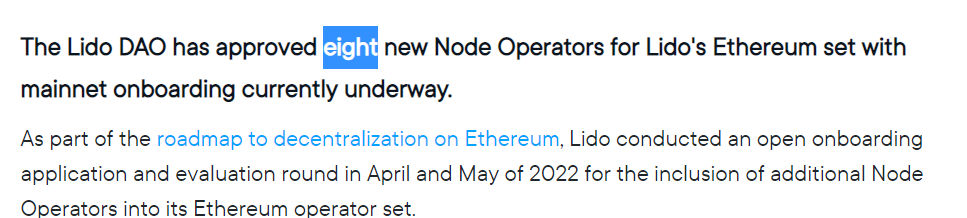
For these social reasons, the broader Ethereum ecosystem has shown increasing resistance to Lido's dominance. With the DAO gaining power, Lido presents an unprecedented risk, and future investors will be very concerned about social risk.
At this point, I'd like to step back and make a meta point. Even if one disagrees with me that Rocket Pool outperforms Lido in broad governance resilience as measured by these social vectors, the difference in market share is unjustified. An individual who takes social risk very seriously will have roughly a 50/50 rETH and stETH split to reduce risk. The issue of social pressure is most relevant to market leaders. So, if I'm right about social issues, rETH has incredible tailwinds, and if I'm (modestly) wrong, rETH still has great tailwinds.
first level title
3 - Economic headwinds for stETH growth
secondary title
Staking - No Risk or Risk Fee?
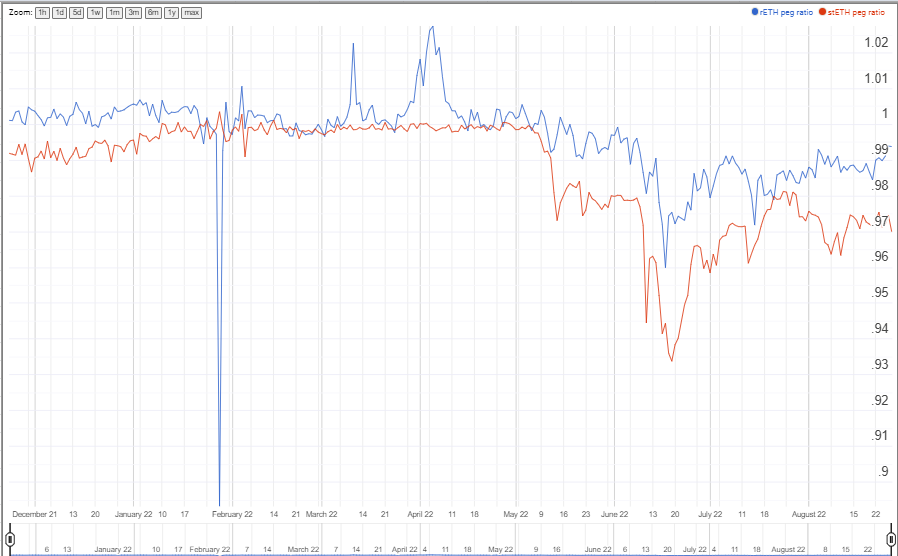
Various different LSD tokens fluctuate around their peg or reference price. Coinbase's cbETH, followed by stETH, with the largest and most persistent peg discount is Rocket Pool's rETH, which has been trading at a premium since the merger. The ongoing decoupling of stETH can be traced back to the fact that hundreds of thousands of tokens were minted with leverage and then dumped into the secondary market, driving down the price. Because every stETH minted with leverage is eligible to redeem ETH, Lido loosely participates in fractional reserve banking by facilitating the creation of more deposit receipts than deposits.
Nansen's analysis of stETH's -6.6% decoupling event during the 3 AC capitulation shows that most of the sales came from large wallets, while buying pressure came from smaller retail investors. Thus, stETH's price deviation from the peg represents a risk discount or the possibility of banks running on Lido from small retail ETH deposits. Therefore, the price at which retail investors are willing to purchase stETH accurately reflects the market risk associated with stETH.
On the flip side, anyone who bought stETH shortly before the crash would have seen roughly 18 months of so-called low-risk rewards disappear in a matter of days — and it's important not to underestimate the scale of this decoupling. During this event, apparently few people thought of stETH as a risk-free wrapper for future ETH redemptions.
It’s worth noting that rETH also decoupled at the same time, but to a much lesser extent and recovered more quickly. The APR of ETH collateral is lower than other avenues in DeFi, so losses are more painful because they are harder to earn back. In such a capital-intensive, low-yield environment, proper risk management is critical. Fortunately, the market has more or less priced all LSD tokens as a function of perceived risk through its degree of "decoupling". From this pricing information, we can draw conclusions about the risks of the LSD token.
image description
secondary title
execution risk
I define execution risk as existential threats to the protocol arising from necessary future upgrades.
secondary title
tail risk
Next, tail risk refers to a range of potential governance abuses and events that can occur on-chain or off-chain, such as smart contract exploits, slashing, secondary leaks, hardware failures, and custody errors. These events are difficult to predict and occur infrequently, but are important to consider in risk management due to their potential seriousness. Furthermore, the resilience of an anti-fragile DeFi primitive like wETH should be measured by its ability to withstand worst-case scenarios.
In the Ethereum ecosystem, node operators are punished for events such as offline loss and slashing proportional to the number of validators involved. Each of Lido's node operator companies manages thousands of validators. As a result, protocol-wide tail risk exposure is higher when each operator runs a smaller number of validators compared to a more decentralized set of operators. That said, Lido is putting a lot of its eggs in a few baskets.
image description
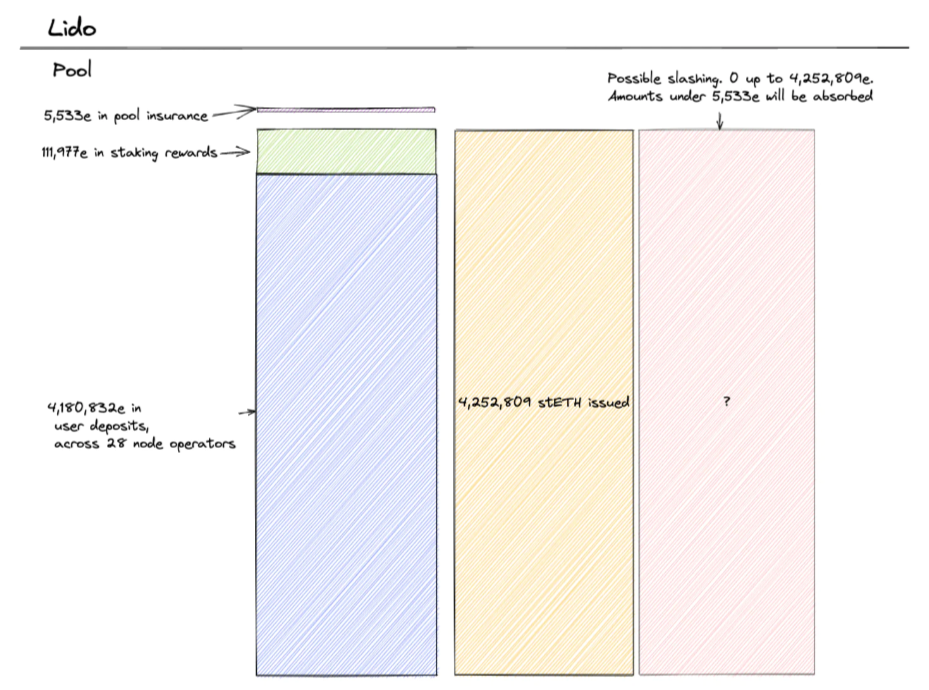
Courtesy of dabdab.eth - note the entire stETH supply is barely insured
secondary title
centralization risk
While the above two categories are bad enough for Lido itself, anything that happens within what is supposed to be a DeFi primitive has the potential to be much worse, with ramifications throughout the entire industry built upon it . This is an example of centralization risk, where execution risk and tail risk have a greater impact as any protocol grows in size.
image description
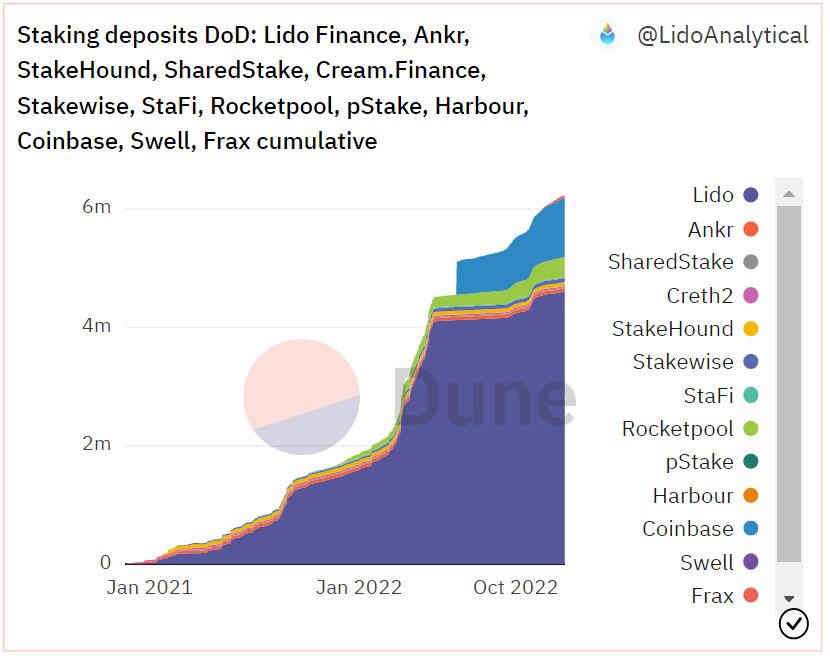
https://dune.com/LidoAnalytical/Lido-Finance-Extended Lido: 4.6 m ETH,Rocket Pool: 330 k ETH
stETH accounts for over 30% of all validators and 75% of all liquid ETH, an order of magnitude larger than rETH at 1.5% of all validators and 5% of liquid ETH. Although Lidos do not yet have an absolute majority of all ETH, they voted against self-capping and maintained a peculiar, perhaps unnatural lead.
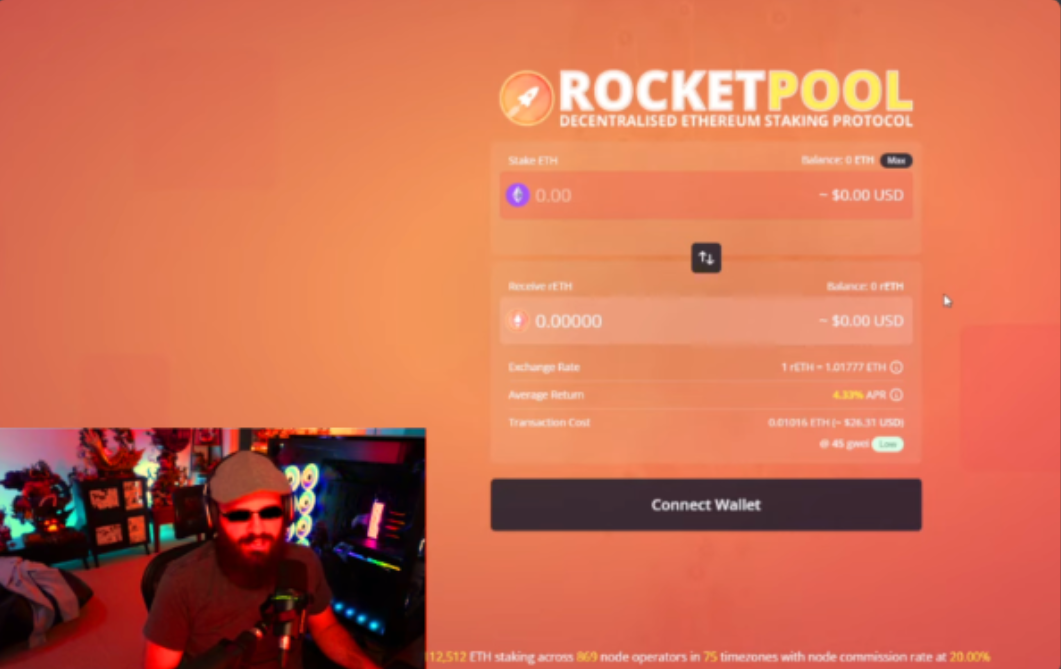
To recap, rETH has far less execution risk, tail risk, and centralization risk than stETH, as evidenced by rETH's continued premium demand over stETH. In terms of execution risk, Rocket Pool handled the merger well, while Lido, one of the main node operators, experienced significant downtime. With the highly complex Merge complete, the impact of future upgrades is likely to be minimal, and therefore the relevance of execution risk is minimal. However, Lido still faces slightly greater execution risk, as the centralization of validators means that any error will be more costly, as noted by the BridgeTower incident.
In terms of tail risk, rETH is much more insured than stETH, and all deposits are currently over 100% overcollateralized. This will prevent almost any serious cutback barring an ecosystem-wide failure. Therefore, rETH holders are unlikely to be hit. Additionally, upgrades to Rocket Pool Smart Nodes are opt-in, so propagation across the system is gradual enough for risk-averse operators to wait for any bugs to surface. This also means that Rocket Pool nodes can run indefinitely without any upgrades from the core team. However, the oracle DAO does represent a centralized source in the protocol. If the oracle DAO is compromised, rETH could suffer huge losses as the oracle data is manipulated. Such an attack would require the coordination or compromise of a majority of public, doxxed, oDAO's Ethereum-aligned participants. I'll elaborate on this in the Rocketeer's reflections section.
image description
first level title
4 - Orange Cascade
secondary title
Orange Creep - Before Withdrawal
Paradigm researchers suggest that the first socially scalable and pro-MEV LSD could quickly attract the Lindy effect and dominate in a power-law distributed fashion. I think Lido's growth has been so aggressive that what was supposed to be a power law space has turned into a single market, with stETH accounting for over 90% of the LSD market cap in DeFi. Social and economic resistance to this dominance of stETH is growing. Ultimately, the majority of ETH remains uncollateralized and more funds are expected to come in in the coming months. Compared with the boom period in 2021, as the market becomes more aware of risks, there will be a more rigorous focus on tail risk scenarios.
With stETH's inflexibility and inadequate insurance already diverted to general "financial" use, Lido will find itself unable to safely scale further. stETH may have reached its relative peak. In terms of social barriers to growth, Lido relies heavily on corrupt human-appointed whitelists for governance. Economically, the liquidation cascade that collapsed in June and the ongoing decoupling proves that stETH actually has greater centralization and slashing risks than other LSDs.
A major curtailment event in any one of Lido's node operators would permanently reduce trust in the system - as over a very long time frame it becomes a question of when large investors are willing to participate Come in? There is already evidence that shaking confidence in the broader market could wipe out years of gains. How severe will the impact of a particular Lido event be? How would mass stETH react to rebalancing towards red? It may be necessary for the ecosystem to learn its lessons through major curtailment events, but the pressure remains.
Even if Lido tries to increase stETH's LSD dominance through distorted incentives, better alternatives offered by competitors will likely return the market to a traditional Pareto distribution.
Rocket Pool is already the most tail risk resilient, socially scalable and MEV friendly decentralized LSD protocol. It makes sense to be the one who benefits the most. The pre-withdrawal era will also be marked by 8 ETH Collateral Reduction (LEB 8s), which reduces collateral requirements to 8 ETH per mini-pool, and a quality of life upgrade, which offers unique ways that Rocket Pool operates for nodes provide the best experience.
The power multiplier on LEB 8 s is sufficient to triple the rETH power alone. Each group of 16 node operator ETH will generate 48 rETH, whereas previously it would only generate 16 rETH. However, the real point is that it lowers the barrier to entry. There are far more people willing to bond 8 ETH than 16 ETH, so we can expect more growth despite the expected 3x growth.
During this time, quality of life improvements will proliferate, such as MEV smoothing pools (the only way for small node operators to get EV equal to larger ones), rescue nodes, and Rocketarb. Collectively, these exclusive features will attract node operators to join Rocket Pool and expand rETH supply. The MEV smooth pool is an opt-in system where each node operator shares MEV + tips with each other. This gives all participants a higher chance of exposure to long-tail MEV, which can often make up a large portion of returns. Ken Smith of the Rocket Pool community provides an analysis here:
GitHub - htimsk/SPanalysis: Statistical Analysis of Rocket Pool Smoothing Pooling.
Statistical analysis of Rocket Pool smoothing pools.
- GitHub - htimsk/SPanalysis: Statistical Analysis of Rocket Pool Smoothing Pool.
github.com
With hundreds of node operators participating, it is a powerful entity in its own right that can make joining other large entities profitable. This in turn will attract larger players into the ecosystem and expand rETH supply.
Rescue Node is a community-led project that will allow any Rocket Pool node operator to utilize secondary beacon nodes as a backup. This is useful during pruning or minor breaks. Normally this would be tricky and expensive to set up as it is an unusual amount of redundancy, but the Rocket Pool network will soon make this available to all node operators in the network at no additional cost. There is currently some trust assumption between users and rescue node maintainers, however, maintainers are all public. Additionally, rate limiting is in place so users cannot over-rely on rescue nodes as centralized delegation nodes.
As a direct result of rescuing nodes, the overall performance of the protocol will improve significantly. There will be less downtime for users, resulting in higher returns for rETH. Also, downtime can be very daunting for new node operators. The presence of rescue nodes makes Rocket Pool a more forgiving learning environment without sacrificing performance. Even for experienced users, knowing that any planned or unplanned downtime may no longer correspond to lost revenue is a huge quality of life benefit. Most importantly, making node operations more accessible to users of the Rocket Pool ecosystem will attract new members and increase TVL.
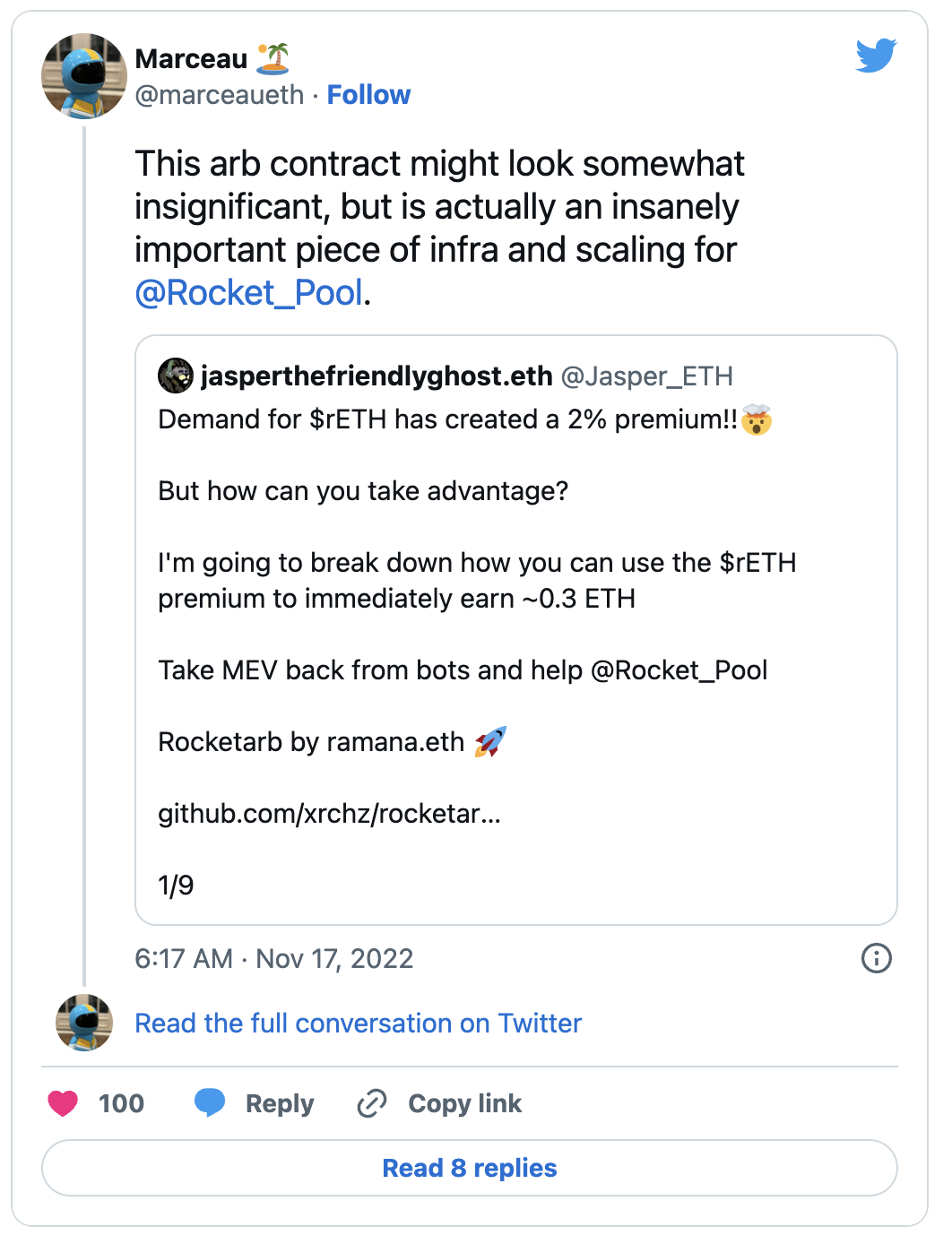
Finally, Rocketarb is a way to profit from the open market premium that rETH currently enjoys. The supply of rETH is limited by node operators and the deposit pool is full with 5k ETH. When a new mini pool starts, 16 ETH worth of rETH will be minted at the native asset value. If you manage to mint 16 ETH worth, you can make 16 x 2-3% profit, or 0.3-0.45 ETH. The Rocketarb contract ties the creation of mini-pools to the minting and selling of rETH, so node operators can earn a mini-pool and substantial bonuses for expanding the rETH supply.
rocketarb/README.md in main xrchz/rocketarb
Arbitrage rETH mint/burn with minipool deposit/withdrawal - rocketarb/README.md at main · xrchz/rocketarb
github.com
image description
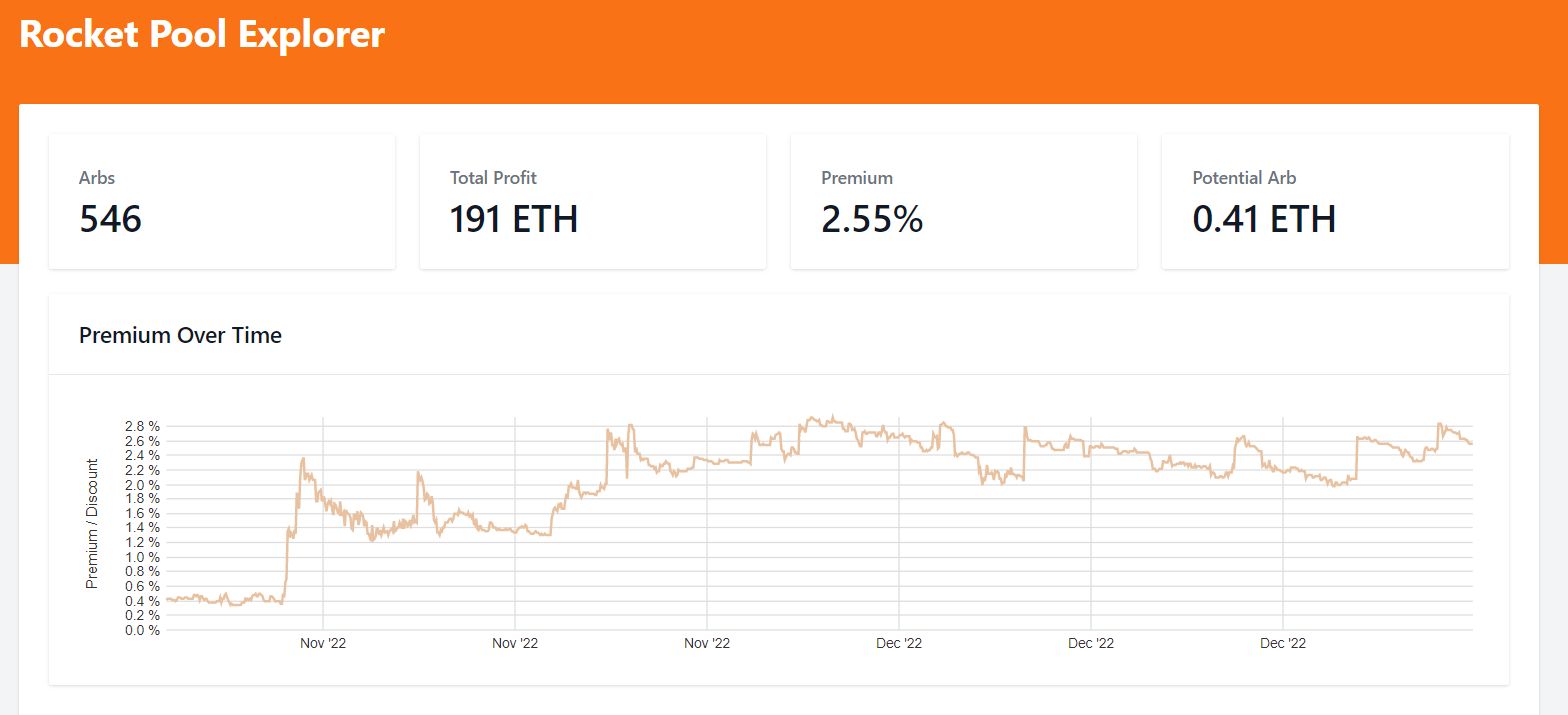
https://rocketscan.io/rocketarb
Rocketarb is also a glimpse into the future. After a withdrawal, arbitrage LSD to bring it back to the peg will be a very profitable business. Incredible work by the Rocket Pool community just to find a way to get this benefit before withdrawals go live.
To draw parallels with another Web3 power struggle, Sushiswap was never able to flip Uniswap despite its launch to much fanfare. But at the same time, Sushi has never been able to deliver a convincingly better product, which may explain why it was able to break UNI's monopoly on dex volume, but made no further progress. It has been established that Lido's stETH is opposed by social and economic forces, with liquidity and the Lindy effect underpinning its dominance. But with the emergence of a level playing field among mature players, Rocket Pool's superior social storytelling and higher resilience could propel rETH's market cap over stETH. The trendline for raw DeFi assets is towards maximum security. This is how rETH will flip stETH.
Orange Immigration - Withdrawal
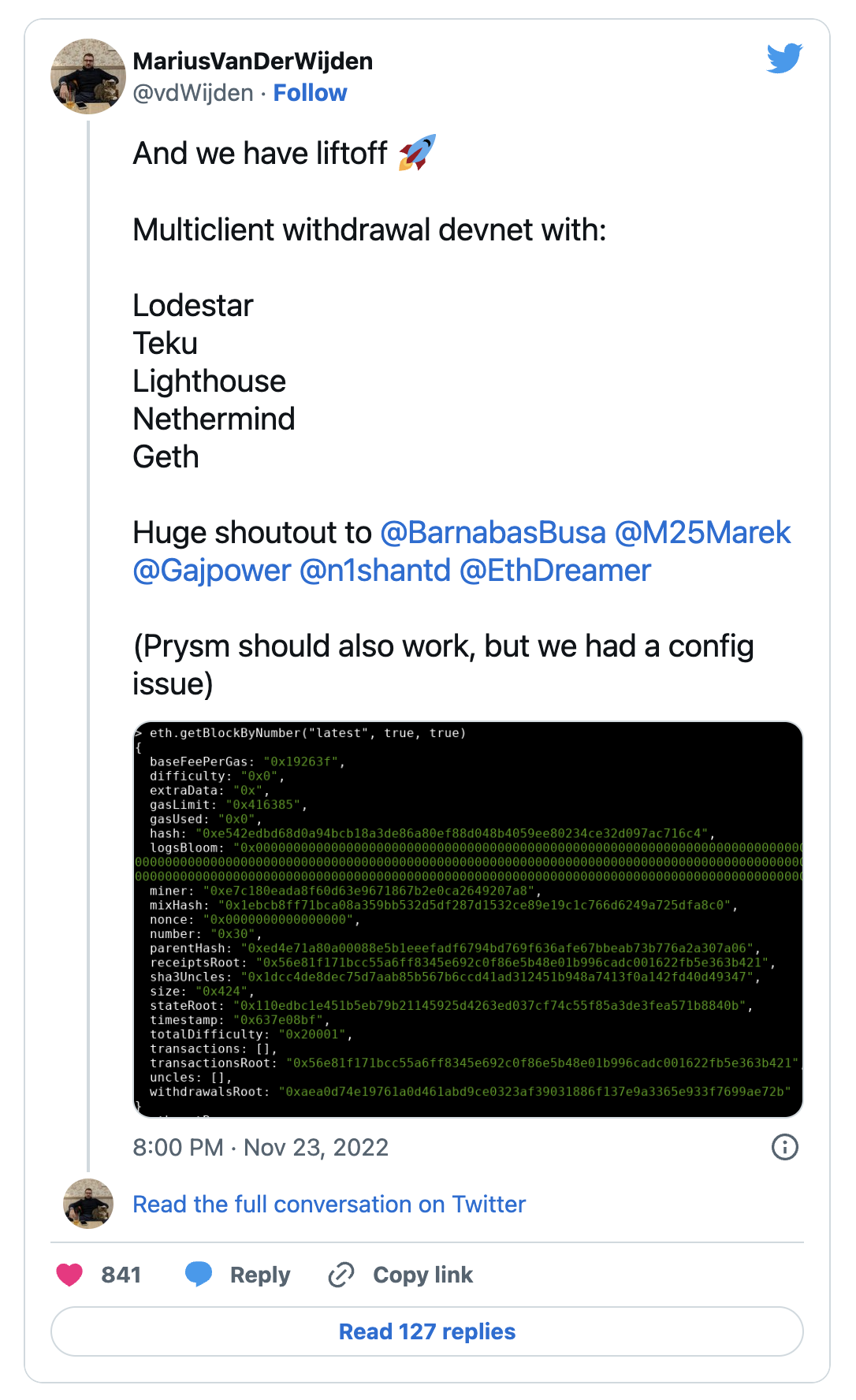
Withdrawals are likely to go live in the next six months and rETH will get three huge unique boosts: separate staker migration, flight from stETH/cbETH, and liquidity relief.
The first users who will be able to transfer to Rocket pool after withdrawals will be individual stakers who made deposits before Rocket Pool's launch at a later date. There is a strong economic argument for converting a single regular validator into multiple mini-pools (at least four for withdrawals) and earning commissions from liquid staking deposits. Someone with 32 ETH staked can migrate and get access to 128 ETH. The Smoothing Pool is another benefit exclusive to Rocket Pool node operators, which not only reduces the volatility of rewards, but also increases the average return for the majority of participants. Quality of life upgrades will continue to roll out.
It is estimated that around 30% of the existing stake is managed by these early node operators. Most of this ETH was launched before Rocket Pool went live, and certainly before it was considered battle-tested. Despite so much ETH being staked before Rocket Pool was ready, Rocket Pool node operators still accounted for 15-25% of all node operators on the network. More and more new node operators are choosing to use Rocket Pool instead of vanilla or other services. Therefore, it stands to reason that a significant number of users who had staked prior to Rocket Pool's launch will want to migrate over. Immigration will primarily affect node operator supply, which will amplify TVL growth. If 10% of the ~4.2 million ETH individually staked earlier migrated to LEB 8, rETH capacity would increase by nearly 300%. The protocol will be able to handle 1.7 million rETH TVL. This capacity will be needed in view of the second wave of immigration.
The second batch of immigrants will come from stETH and cbETH. Being able to convert LSD into ETH without having to execute a secondary market sale means investors can instantly adjust their risk allocation without having to worry about liquidity. If the facility becomes available during the June 2022 3 AC crash, Lido's TVL could collapse substantially. In fact, the sharp drop in the price of stETH versus ETH and fears of larger portfolio downturns were two inhibitors that prevented investors from selling their stETH positions at a loss. I would expect groups going through this shift for a few different reasons; a moral shift, as a response to a slashing event or hacking depegging steth, or perhaps to seek gain.
image description
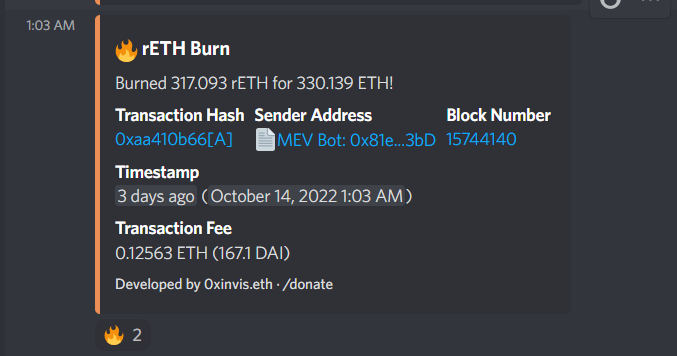
Taken from the #events tab of the Rocket Pool discord
If Ethereum itself supports such arbitrage opportunities, the cost of liquidity will be greatly reduced, leveling the playing field for all staking protocols. All of a sudden, Lido is getting liquidity from its multibillion dollar Curve pool with a maintenance cost of 20 MM per month, [EDIT: It was true at the height of the bull market, as of Dec 22nd, as a reflection of the bear market, it has down to 2 mm. From then on, the number of LDOs used for Curve will only be halved] and will be freely available to everyone via the exit queue. The MEV bot will patrol the LSD price, hoping to squeeze out any ETH for itself. The type of liquidations that previously saw the price of stETH spiral upwards will now only create a feast for arbitrageurs as the market price barely moves. Lido’s licensed set of operators can accept new Ethereum deposits as quickly as the Ethereum network allows. However, just as Lido is a black hole for ETH, it may eventually follow the life trajectory of the black hole and return all of that part of ETH in the future.
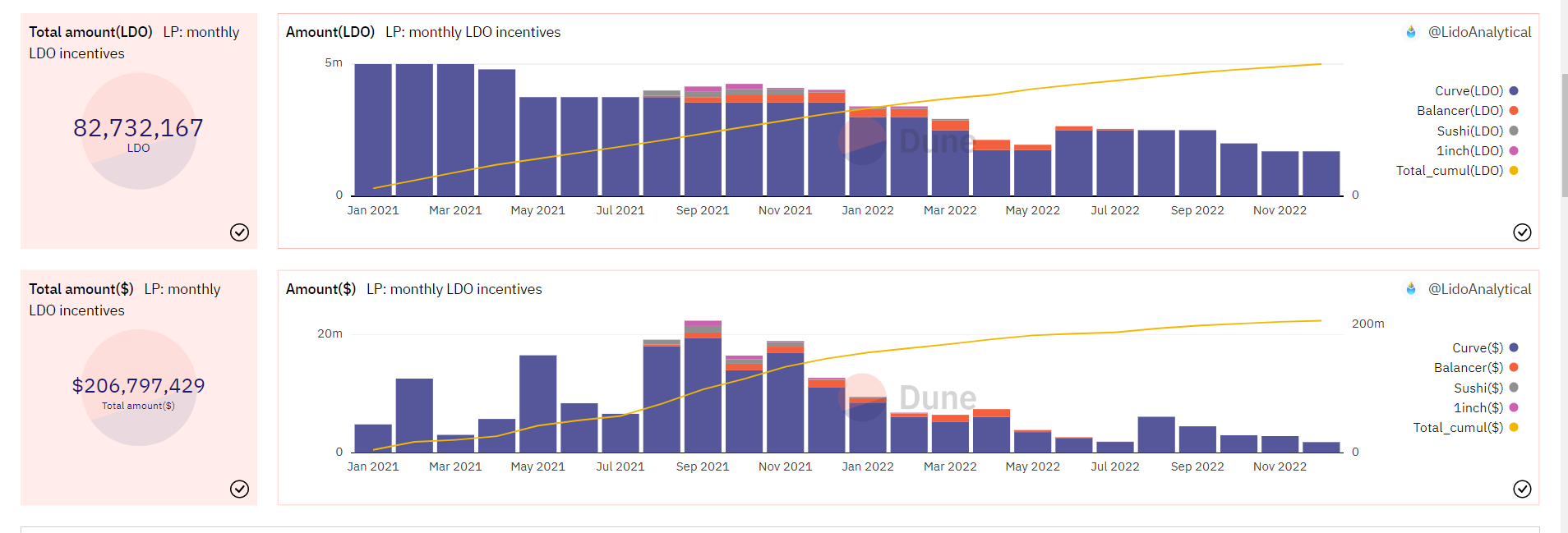
image description
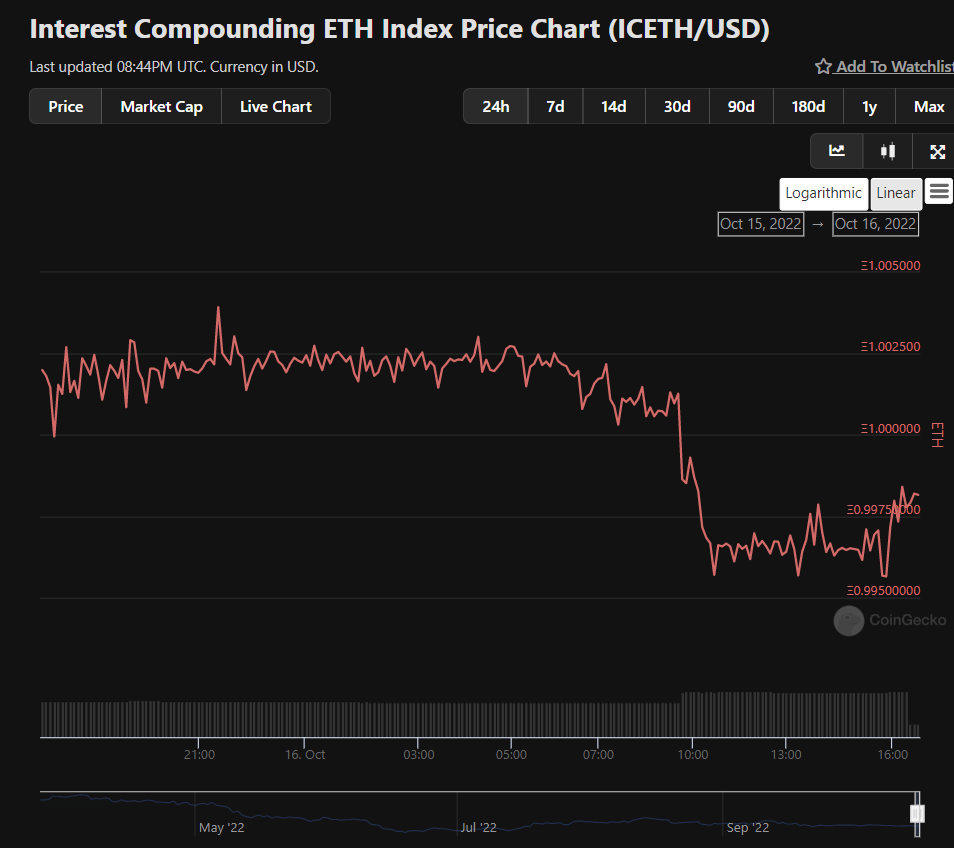
icETH uses stETH against ETH to increase the pledge yield
In fact, the first cases of liquidations of stETH depegs started to ramp up as new leverage strategies were developed. For example, the Gearbox protocol creates generalized leverage. A user goes long on stETH/ETH 8 x using this generalized leverage. A slight reliance on stETH and some oracle technical details resulted in this user's position being the first to be liquidated on the Gearbox protocol. Greed will drive users to chase seemingly safe returns with LSD tokens. The most resilient LSD will survive.

Orange Future - After Withdrawal
Rocket Pool's big future is exciting. The path to a world-dominant protocol is already clear, and they include four major upgrades that will happen sometime after being hacked. These upgrades, in the approximate order in which we might see them go live, are native staking as a service (StaaS), Eigenlayer, force exit, and distributed validator technology (DVT). Together, these upgrades will allow Rocket Pool to scale to millions of ETH staked.
One of the most prominent criticisms of the Rocket Pool system is that it forces node operators to speculate on the RPL. Many home stakers participate because they are skeptical of other coins, so this is a big hurdle. In addition, holding RPL becomes an issue for some larger institutions. Therefore, the Rocket Pool team designed an upgrade that will introduce supernodes, creating a new relationship between node operators and ETH and RPL collateral providers. It will introduce an intra-protocol way to separate the risk of three parts: node operation, ETH and RPL. Rocket Pool will greatly expand its Total Addressable Market (TAM), as many expressed a desire to stake only ETH and not expose RPL, or vice versa. The StaaS design will allow third-party groups such as node operator associations to join these users and transfer the burden of RPL collateral.
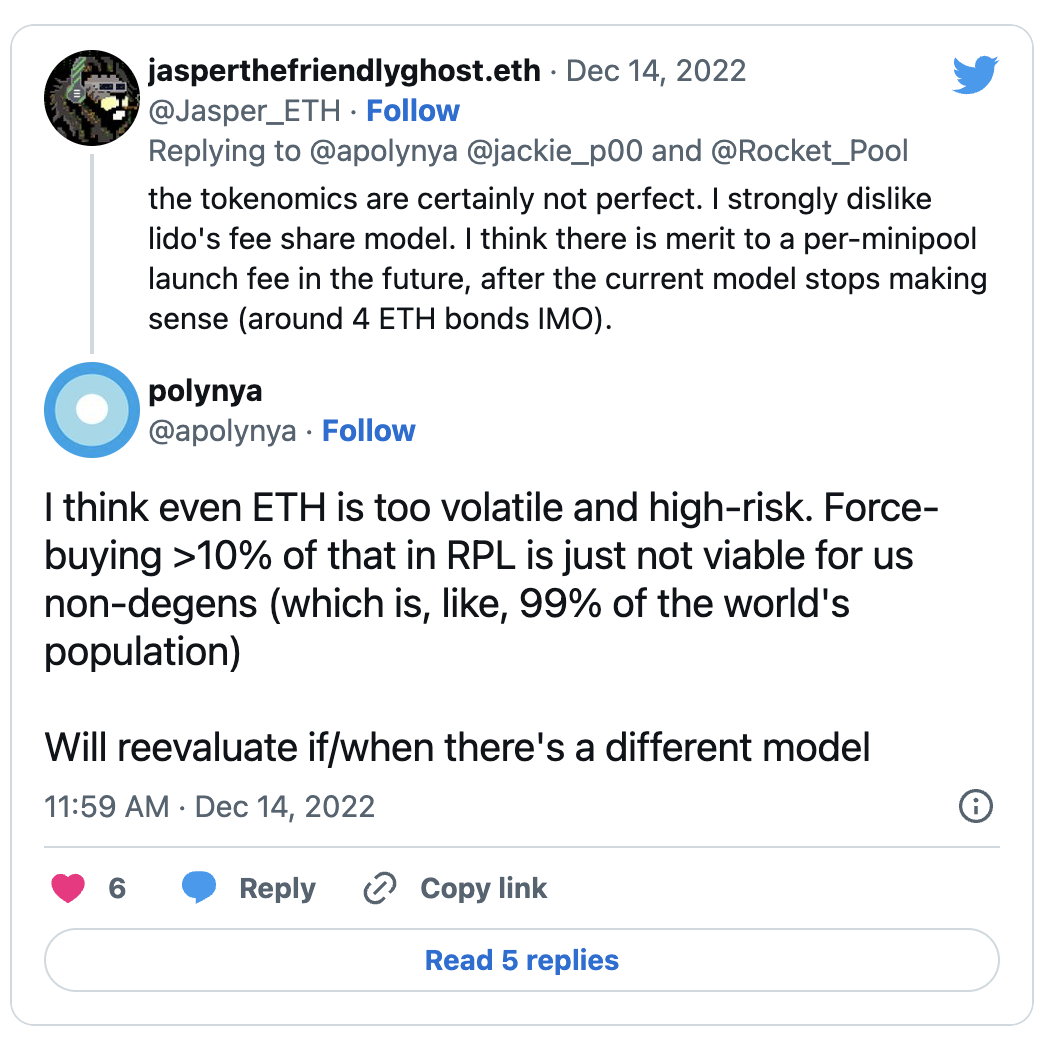
Eigenlayer represents a novel idea - pledge rehypothecation. The general idea is to add new slashing conditions to a node's ETH stake based on added tasks, such as oracle responsibilities or data storage. This would allow the market to re-use the incredible economic security locked in the deposit contract. The Eigenlayer team is developing a data availability layer for the initial product design, but is exploring other implementations. In a sufficiently developed market, a savvy node operator may be able to earn multiples of native ETH by taking on the extra burden.
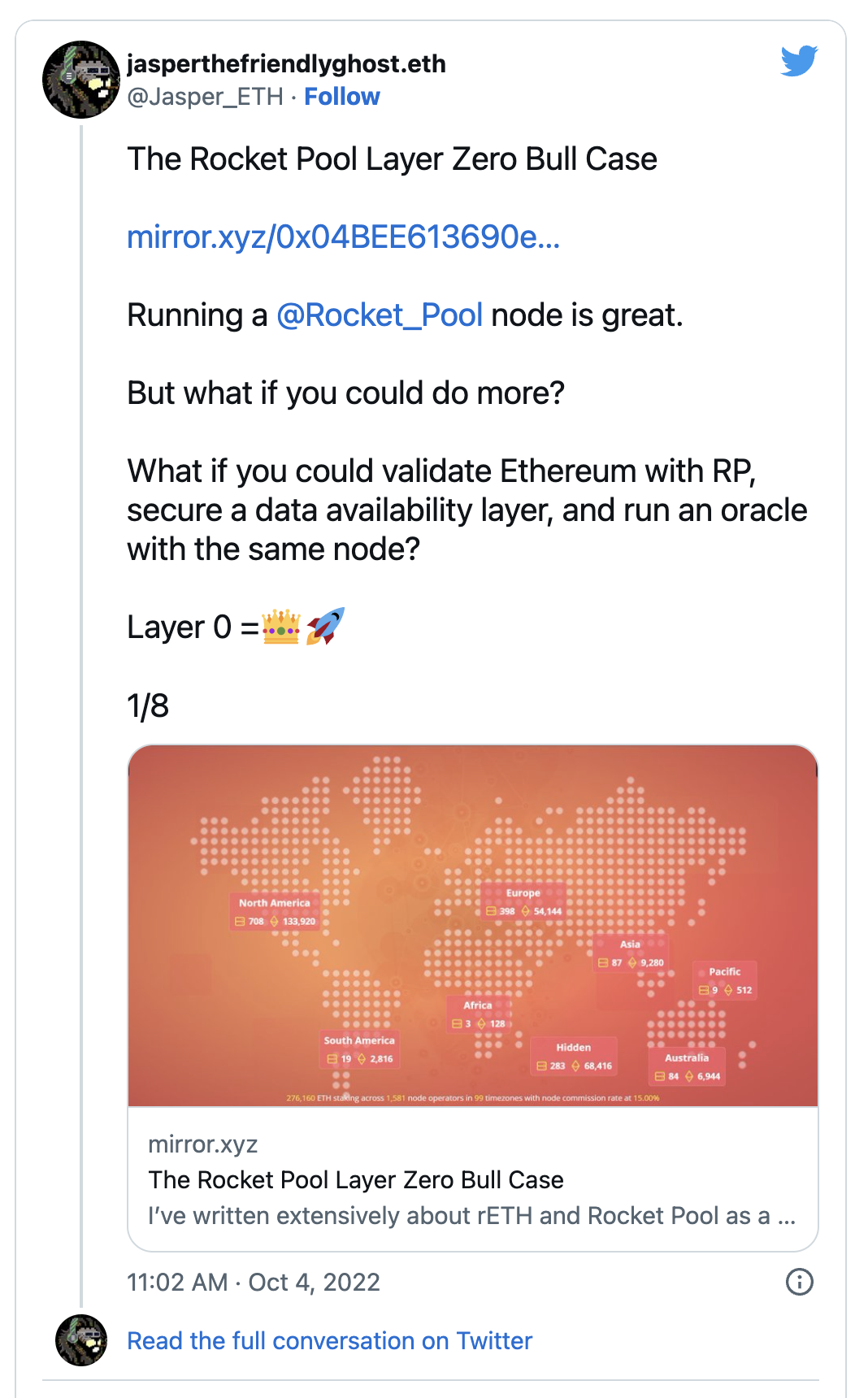
There could be many custom setups in the future, with some node operators doing pure ETH staking, while others take on a dozen additional responsibilities. This creates a challenge for centralized operators like Lido, and an opportunity for permissionless operators like Rocket Pool. For Lido, a long-term governance process centered around the safe use of the Eigenlayer application and providing an acceptable level of risk for the DAO will likely be required. The APR of stETH will be affected accordingly. With Rocket Pool, users may be free to experiment.
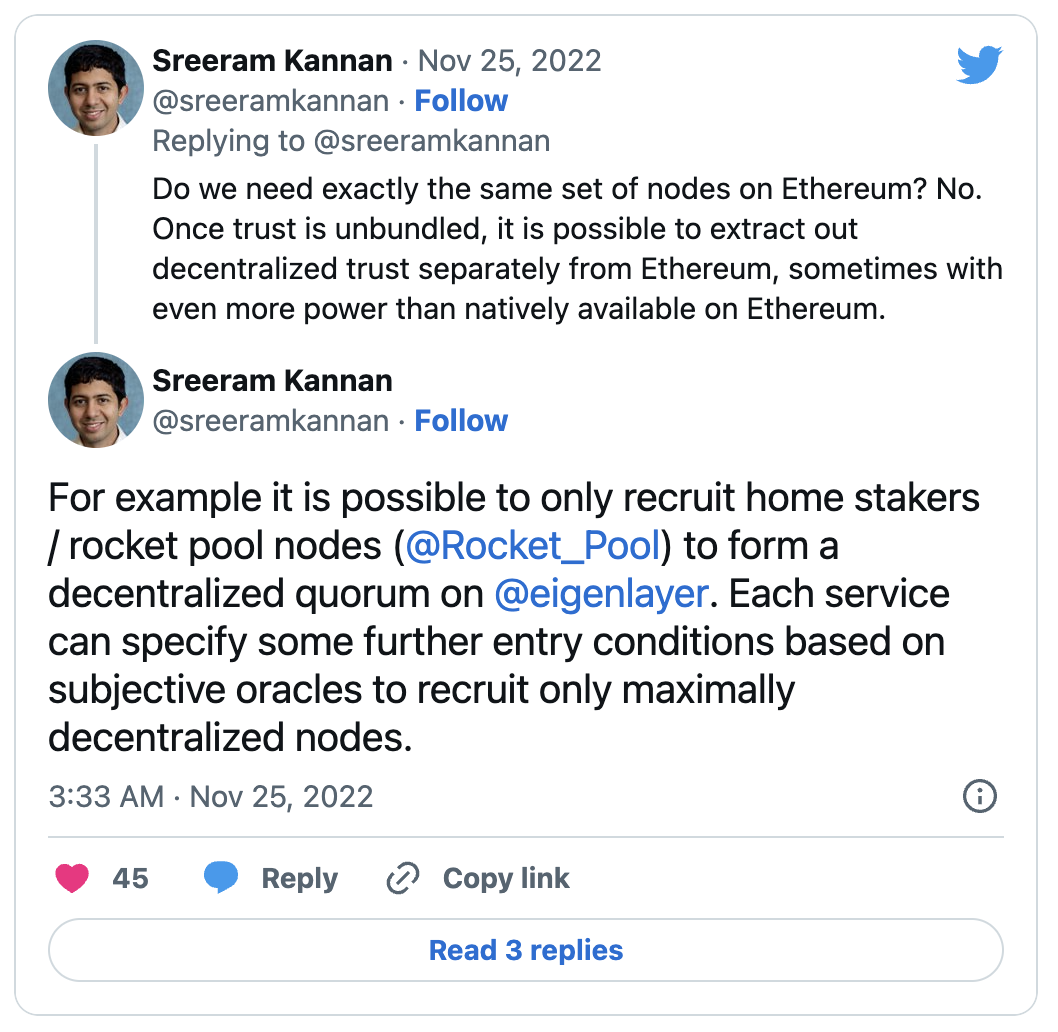
Rocket Pool and Eigenlayer continue to chat about how to integrate the two protocols in a way that makes profit sharing with rETH simple. This relationship between Eigenlayer and Rocket Pool is mutually beneficial. The Rocket Pool ecosystem is the most widely distributed marketplace for node operators on top of Ethereum. Any Eigenlayer product that wants to have strong decentralization capabilities immediately can target Rocket Pool operators.
Another future upgrade is force quit. Currently, Rocket Pool cannot force validators to exit. This is a limitation of the Ethereum specification and requires an EIP to change. Forced withdrawal is a useful feature for all LSD protocols to increase decentralization and security. So it's working together. Force quitting will help keep bad actors out and increase the value of the reservation if the actor goes rogue. Therefore, the inclusion of a forced exit may allow Rocket Pool to lower the margin requirement all the way down to 2 ETH. This is a huge change. In the long run, if every current node operator switches to a 2 ETH pool, that would give Rocket Pool the capacity to load 15 times as much rETH, or 2.4 million rETH. Currently, 16 nodes of ETH will generate 16 rETH, but with the forced withdrawal, 16 nodes of ETH will accommodate 240 rETH.
The drop in collateral from 16 ETH to 2 ETH would also mean a substantial increase in the node operator base. If this drop is 4x on a node basis, despite being 8x cheaper, Rocket Pool will scale to 10 million ETH.
Last but not least is Distributed Validator Technology (DVT). In the past, I've been critical of DVT because I don't see it as a means to solve the centralization problem. Lido's long-term plans center around DVT, which I shrug off. The premise of DVT is that several "committee" members each run a node. If a node goes down for some reason, nothing happens because only some consensus threshold from the committee is required to maintain uptime. There are huge benefits to be gained from this. A DVT can prevent most losses from downtime or slashing, however, there are some important things a DVT cannot do.
DVT itself does not mitigate centralization. For example, if ~30 node operators of the Lido network start operating on the DVT committee, the stETH token will have better uptime and reduce tail risks, but centralization and some tail risks, such as smart contract risks and secondary Leaks still exist. Furthermore, DVT associated with MEVs is an open area of exploration. One of the main reasons for providing bonds to Rocket Pool was to provide some compensation for MEV theft. If stealing MEV at the cost of bonds is trivial, it might be +EV to start mini pools and drop them after receiving large MEV payouts. These problems must be solved before they can be adopted by large protocols.
For Rocket Pool, DVT represents an exciting technology that could potentially lower the price of bonds and improve the overall efficiency of stakers. Overall, home stakers tend to have slightly lower average uptime than institutional stakers, often due to spotty internet or electricity, but DVT can even improve the playing field considerably.
first level title
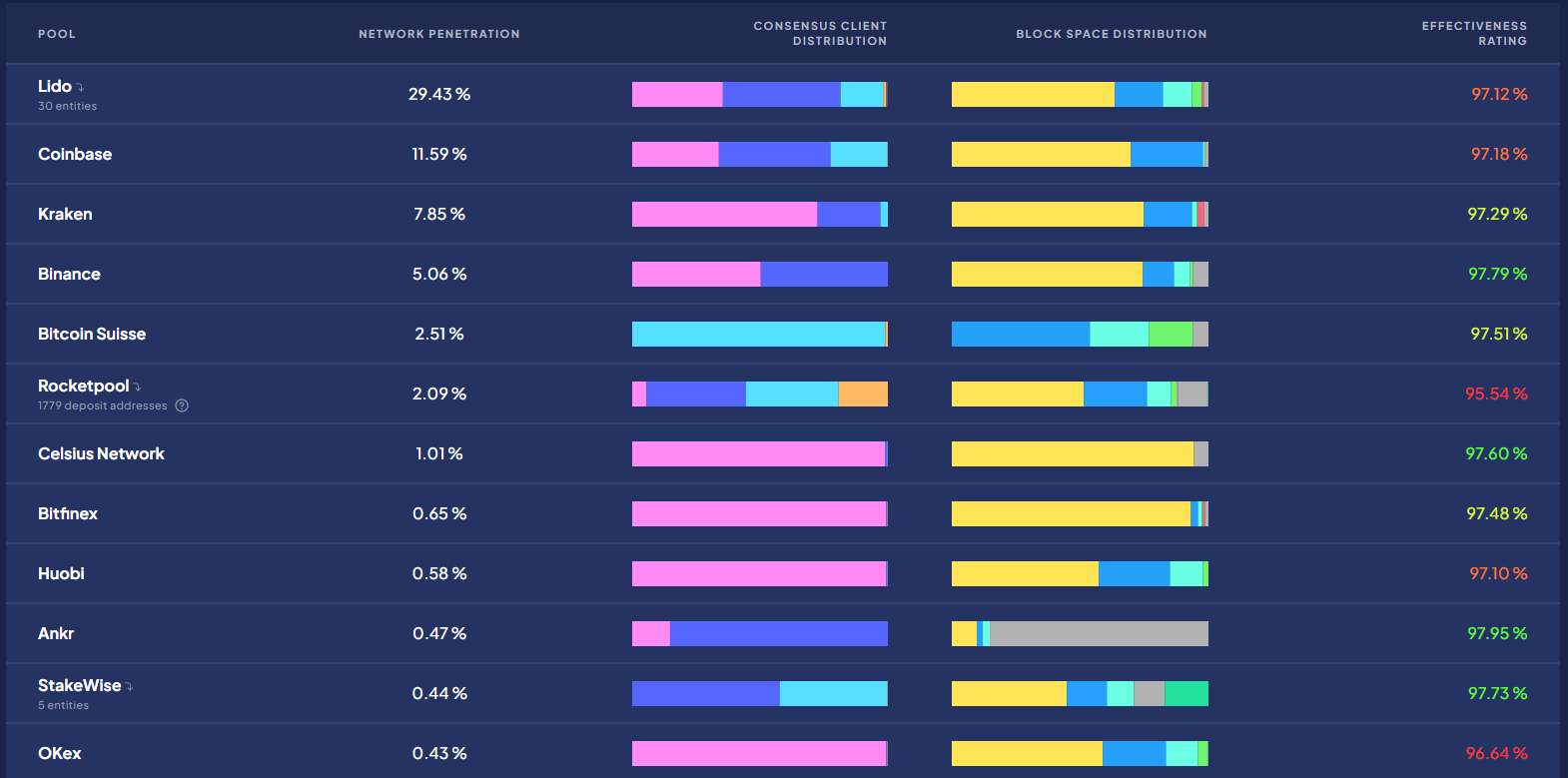
https://www.rated.network/? network=mainnet&view=pool
5 - A new challenger arrives
secondary title
image description
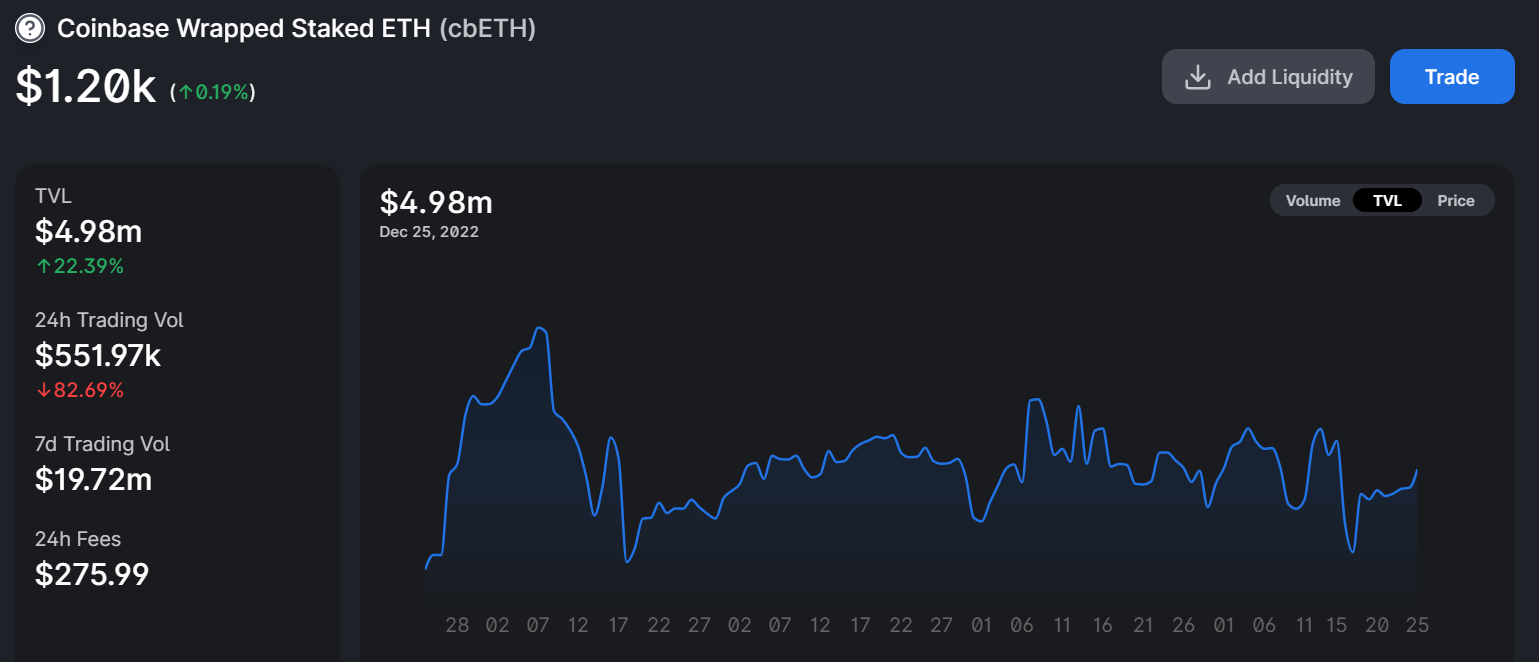
https://info.uniswap.org/#/tokens/0 xbe 9895146 f 7 af 43049 ca 1 c 1 ae 358 b 0541 ea 49704
According to Hasu and Georgios, the dominance of centralized exchanges (CEXs) in the Ethereum staking market can only be avoided if competitors focus on rapid scaling. Lido interprets this as prioritizing growth over decentralization. Oddly though, the launch of Coinbase’s cbETH LSD actually provides a useful demonstration of how, in the absence of incentives, market participants will gravitate toward the most decentralized option.
Currently, cbETH is mainly used for Uniswap. Approximately $6 million is locked in the cbETH/ETH 0.3% and 0.05% pools, reflecting lower daily transaction volumes as the total value of cbETH is many orders of magnitude larger than this TVL. Uniswap is firmly permissionless and easy to use, so it's only logical that this is where the majority of cbETH will end up. Outside of Uniswap, adoption has been low. Curve, a dApp dominated by stETH, used to have only a few hundred cbETH in its cbETH/ETH pool. With the help of some incentives from the Curve protocol, it has grown to a still paltry 2000 ETH TVL. This suggests that without a strong liquidity incentive campaign or a supportive public ethos, tokens will naturally not achieve deep liquidity.
image description
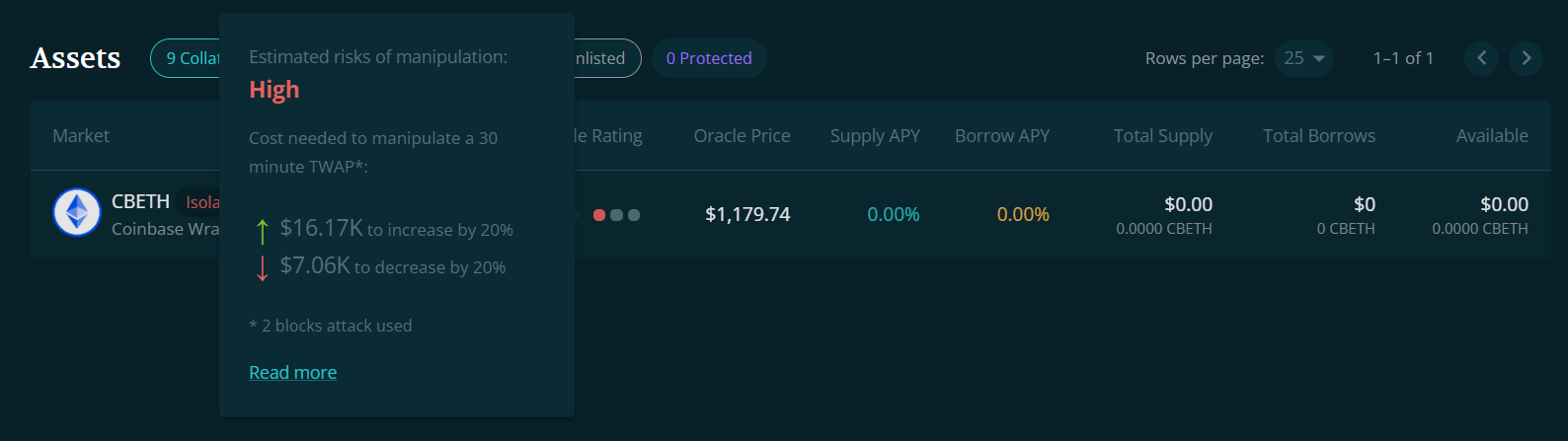
https://app.euler.finance/
As mentioned earlier, illiquidity and the resulting depressed price can trap holders and prevent them from selling. Those who do sell may sell to arbitrageurs as there is no productive use for cbETH and competitors earn more. Currently, popular DEX aggregator 1inch shows that only 2000 cbETH can be sold for ETH before 1% slippage occurs. The same transaction would only have 0.4% slippage for rETH. Due to limited yield opportunities and liquidity, most cbETH buyers on uniswap likely hold the token for arbitrage available after withdrawal. Therefore, a new framework is being built.
Over time, existing or new Coinbase users will at some point wish to exit their positions in cbETH. This could be due to a crash in the price of ETH or a desire to explore DeFi. Both users will soon realize that their best bet is to sell their cbETH to arbitrageurs. More and more cbETH will eventually be purchased with the express purpose of burning. This large group of buyers does not need DeFi integration and is therefore happy to sit on the illiquid cbETH they bought at a discount and accumulate until withdrawals create a path for any LSD to be converted into pegged ETH. This will not be a reshuffle between small holders and big whales like the stETH ecosystem did during the 3 AC crisis. But there will be a one-way flow that will quickly pull cbETH to the burning address.
Consider wallet 0 x 7 f 507739 b 624 2B048 Be 9185 cf 46 2BE 816 b 8 eFf 1 f, which has accumulated 1% of all cbETH in circulation. This wallet has been slowly migrated from wstETH to cbETH to support tokens and integrate withdrawals. Of course, the owner is taking a risk. It is possible that Coinbase could have seen the writing on the wallet and tried to prevent the damage. Coinbase may limit or even prevent cbETH redemptions, rather than allowing these scout cbETH whales to exit in large numbers, which will greatly damage Coinbase's cash flow. Such a move, while highly unlikely, would have a devastating effect on the cbETH/ETH peg by losing all confidence. A bank run scenario could become possible. This is a gamble to participate in the opaque world of CeDeFi.
secondary title
frxETH - Liquidity and Design
One of the newest players in the LSD space is frxETH from the FRAX ecosystem. FRAX is a stablecoin that rose to prominence through the active acquisition and use of liquidity-oriented tokens (veCRV/vlCVX) by the FRAX DAO. The DAO provides strategies for creating profitable liquidity for FRAX holders through the voting power of their DAO tokens, thereby attracting users to mint their stablecoins. This model has obvious advantages. Before withdrawals, all major LSD tokens must create liquidity, usually rent payments. By owning these liquidity-oriented tokens, FRAX can avoid the capital expenditure incurred by competitors such as Lido. Since FRAX had such great success with this stablecoin model, The DAO decided to venture into a new type of stablecoin, the ETH-pegged LSD.
frxETH token economics is unique in the LSD world. Most tokens either rebase for rewards (stETH) or passively increase in value (rETH). FRAX took a different path. The frxETH token itself does not generate any staking rewards. In order for token holders to receive the APR earned for ETH locked in validators, users must deposit frxETH tokens into a staking vault. All rewards earned for staking ETH on the protocol, minus fees, are then distributed to any users staking in that vault. Any user holding frxETH instead of staking it in the vault will not receive any rewards. Users are forced to make a choice - either use frxETH to pursue yield in DeFi, or earn staking rewards in the vault.
image description
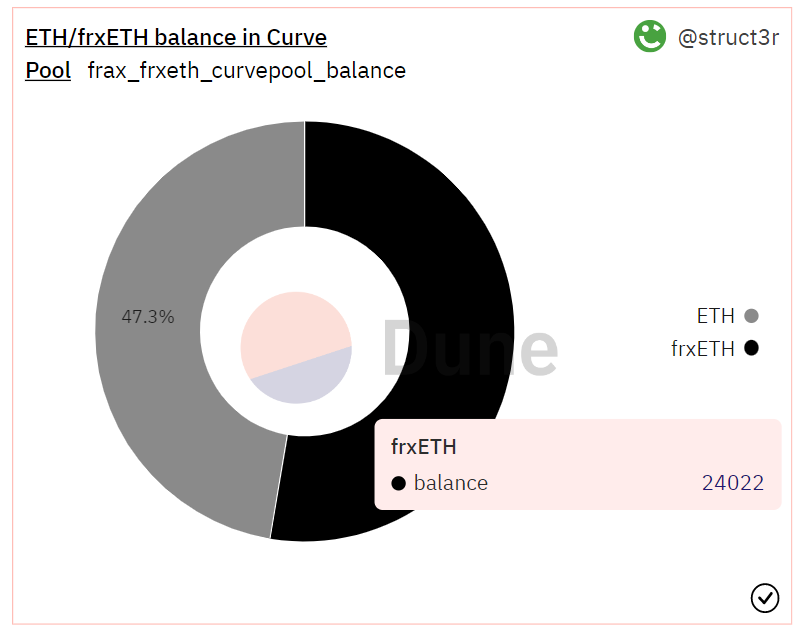
https://dune.com/struct 3 r/frax-frxeth
Grab it now. First, the model violates some core principles of DeFi, namely the principles of capital efficiency and composability. This model is deliberately not capital efficient. FRAX can incentivize yield-generating tokens so that liquidity providers can get LP rewards and staking rewards. By forcing users to choose one of these, the cost ends up being higher. Take a long-term assumption as an example, where staked frxETH tokens yield 9% and frxETH tokens in Curve yield 11%. Curve liquidity providers will not provide liquidity unless incentives exceed the staking ratio, otherwise, they will migrate to staking pools. This has to come at a cost - whether through incentives or through channeling liquidity. In this example, the cost paid to LPs to maintain the same level of liquidity could drop by ~30% because without redirection of these ETH rewards, the APR for the Curve pool could be 14% (assuming an ETH reward rate of 6% ). Cost savings become increasingly important as TVL builds in the ecosystem.
image description
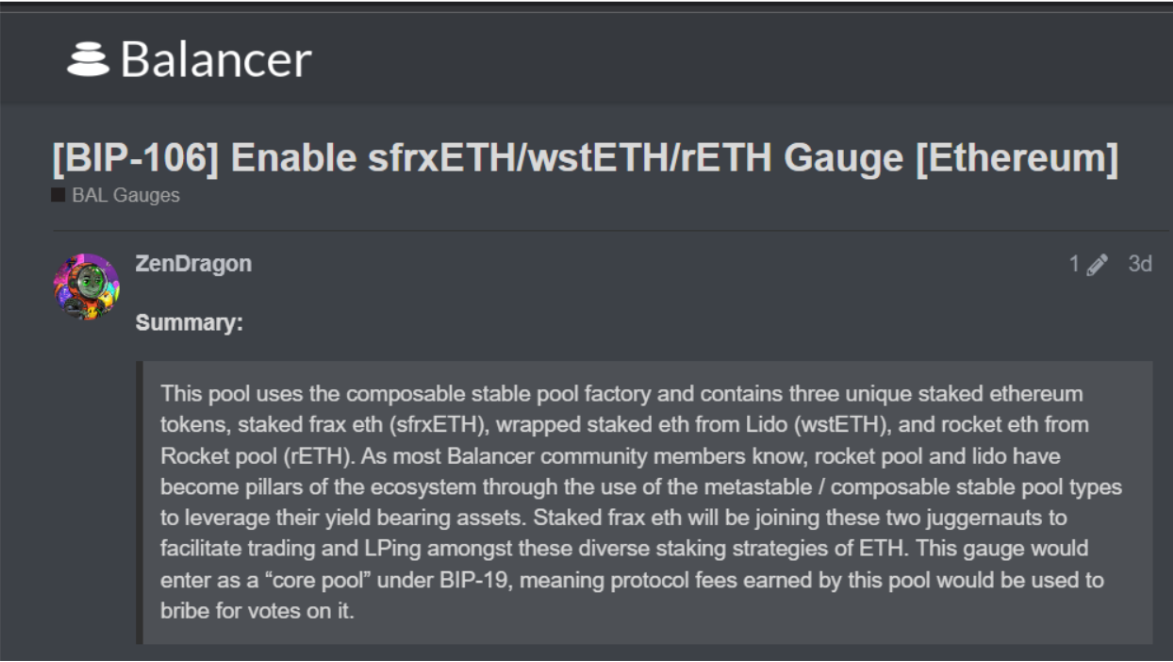
https://snapshot.org/#/balancer.eth/proposal/0 x 16 fd 7 c 010 fa 1 d 7318 fab 383 a 1 a 6 cb 59471 dda 824 b 53 a 1026 cd 197 eea 3890 dcb 4
The cost of incentivizing frxETH is twofold. First, it is capital inefficient compared to other LSD tokens to create the appearance of higher APR (when including its DeFi strategy, LSD APR should be on par or higher than staked frxETH). Second, and more importantly for FRAX, the liquidity token used to incentivize frxETH cannot be used to incentivize the FRAX stablecoin that supports the entire FRAX ecosystem. By shifting incentives from the FRAX base pair to the frxETH pair, the strength of FRAX is weakened. Liquidity is a zero-sum game, and FRAX uses the liquidity capabilities they have on inefficient models.
secondary title
shady super stakeholder
The hardest LSD to analyze is the one that doesn't exist - osETH. Stakewise is a staking service that currently operates using a set of permissioned nodes and a two-token model. Stakewise v3 will be completely reworked and is scheduled for release in 2023. With this release, Stakewise is challenging Rocket Pool’s dominance of independent node operators by becoming permissionless. Users will be able to start validators and mint osETH against said validators in a manner similar to loan-to-value calculations. Many details about osETH have not yet been released, so this section should be viewed mostly as speculation.
The Stakewise v3 platform will allow for a personalized debt marketplace. The benefit of this structure is that risk can be managed on a case-by-case basis, so the previously lacking insurance coverage offered by Stakewise could be improved. Also, depending on the LTV ratio allowed by Stakewise, it might take as little as 4-8 ETH to start running a validator. However, the Stakewise team faced many difficulties.
The biggest problem was that the SWISE team had to migrate all their liquidity from sETH 2 and rETH 2 to a single token - osETH. A complete rebrand and token economics redesign is a costly venture that will force them to start over with integration. DeFi governance is slow, and it can be a time-consuming process. Another problem is that Stakewise will want individual stakers to migrate in large numbers. However, this group is notoriously risk-averse. Rocket Pool node operator registrations show this well, as there has been no spike in registrations in the time since launch. Before delegating funds to the protocol, many individual ETH stakers may want to see the resilience of the mainnet without any hacks. Probably the majority of osETH supply is minted by Staking as a Service providers using Stakewise. However, it's unclear how these StaaS groups will attract demand.
secondary title
Rocketeer's Reflections
Ethereum ecosystem participants will ultimately decide which LSDs are worth scaling. In the pursuit of intellectual honesty, I will now explore some legitimate criticisms of the Rocket Pool protocol in hopes of driving better iterations.
One of the earliest criticisms of the protocol was that Rocket Pool was an attack vector against Ethereum consensus. Any proxy that wants to broadly attack Ethereum consensus can double their attack power by starting Rocket Pool mini-pools instead of individual validators. With LEB 8 s, this vector is further amplified. A limitation of this problem is that the mini-pool can only be started when there is ETH in the deposit pool. For this attack to work, two difficult conditions must be met. First, this attack takes a long time to execute because the deposit pool has to be filled repeatedly. It also requires Rocket Pool to be much larger than the previously discussed upper limit. So this criticism, while true, is unlikely to be relevant.
One of the criticisms I have dealt with in detail now is that Rocket Pool is capital inefficient, does not scale, and has nasty token economics that requires exposure to RPL. As discussed in Section 4