






This article explores how crvUSD solves three problems of traditional stablecoins


Original title: "Introduction to crvUSD Part 2: Three birds with one stone."
Original author: DeFi Made Here
Original compilation: Kxp, BlockBeats
In this tweet, I will introduce crvUSD, Curve's native Stablecoin, which will solve three problems at once.

Creating the protocol's native Stablecoin basically provides liquidity for the protocol. They simply allow users to borrow against their personal or external positions and charge a fixed percentage minting/repayment fee each year. Many protocols have realized this and have already deployed their own Stablecoins, or are in the process of deploying them. For example, Aave released its own stablecoin GHO.
Currently, there are almost 1 billion Stablecoins borrowed on Aave, and if we assume that GHO will take 1/5 of the Aave Stablecoin market share at 2% APR, it will have an additional $4 million per year. In a bull market, income may be even higher.
source:
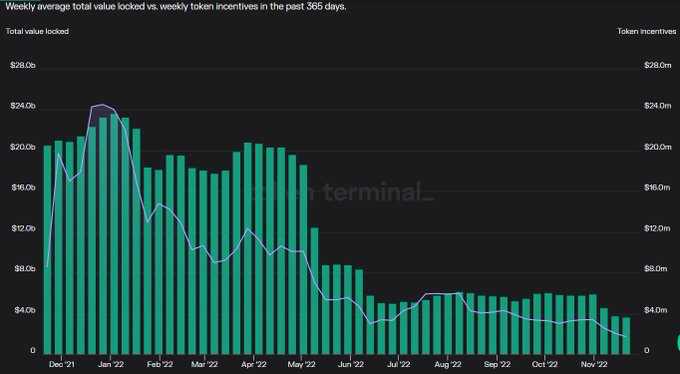
source:Token Terminal
As liquidity decreases, swaps become less efficient because:
・Reduced transaction volume
・Cost reduction
・The attractiveness of CRV is reduced
・TVL drop
To this end, Curve plans tocrvUSDdesigned to address the following three aspects:
・Get more liquidity
・Increase transaction volume
・Increase the income of veCRV
So, how will crvUSD solve these three problems? Since the white paper does not clarify all the details, I will make some assumptions in the analysis below.
1. Get more liquidity
We don't yet know what collateral crvUSD can be minted with (it seems to be only ETH at the moment), but I think in the future liquidity provider positions (3 CRV, tricrypto, etc.) can also be used for minting.
The introduction of CDPStablecoin with a liquidation-anti-liquidation mechanism can stabilize liquidity and build a huge Crypto world. In addition, if liquidity providers can collateralize their positions for borrowing, then Curve's liquidity pool will have a higher TVL.
2. Increase transaction volume
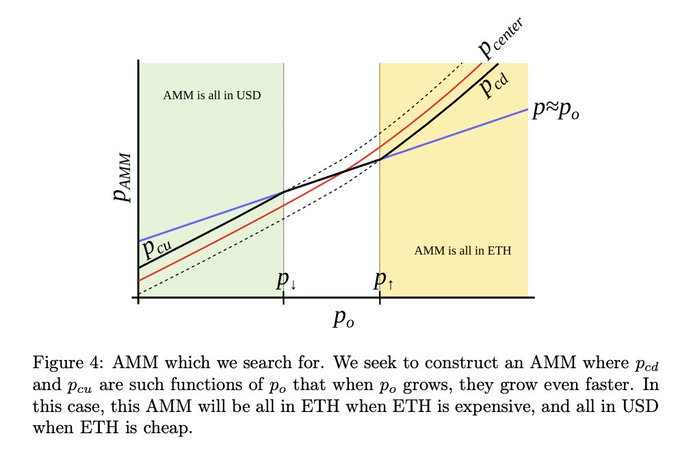
LLAMMA - a unique lending-liquidation automated market maker algorithm that allows users to borrow and lend against collateral without the risk of being liquidated. At the same time, the constant rebalancing of the asset portfolio will increase the transaction volume and fees in the fund pool.
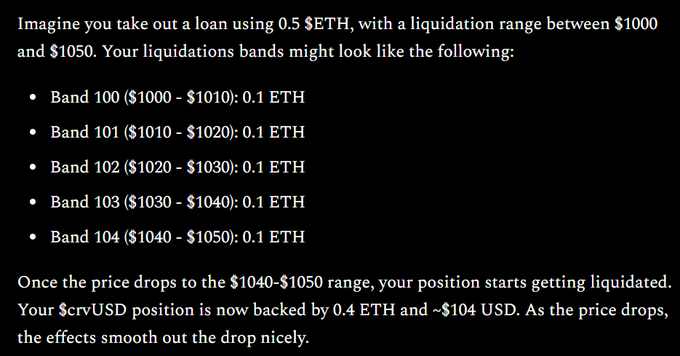
LLAMMA solves the liquidation problem by gradually liquidating/anti-liquidating the user's collateral, allowing the collateral and Stablecoin to be continuously converted:
・When collateral price falls, LLAMMA will sell collateral and buy crvUSD
・When the collateral price rises again, LLAMMA will buy back the collateral
source:
source:curvecap.lens
This is quite different from traditional liquidation engines (Aave, Compound, Maker, etc.) because among them:
・When the price drops, your collateral is sold
・When the price rises, you will hold the dollar at the floor price
And in LLAMMA:
・When the price falls, your collateral will be sold
・When the price rises, your collateral will be bought
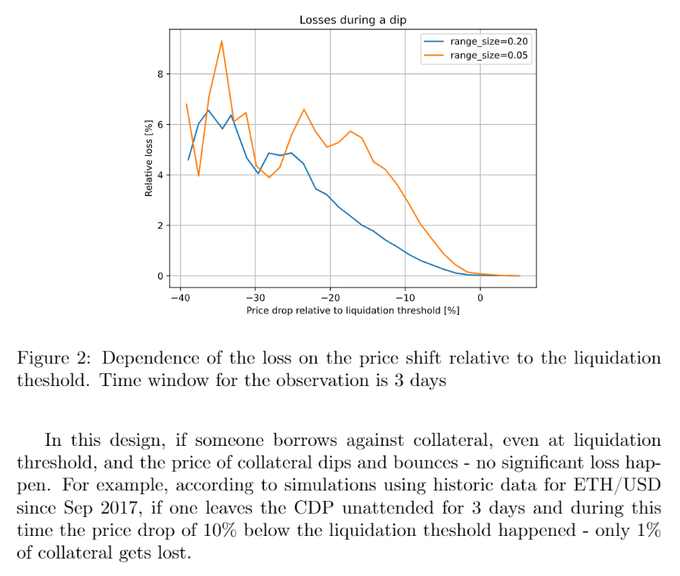
However, LLAMMA also has its downsides: automated portfolio rebalancing systems experience permanent losses. In simple terms, LLAMMA sells low and buys high every time it rebalances. Of course, this is a loss that must be incurred in order not to lose all collateral.
According to the crvUSD white paper, the amount of this part of the loss is relatively small - when the price falls by 10% in three days and falls below the liquidation threshold, only 1% of the collateral will be liquidated.
Curve also has a high gas cost, which also begs the question: how will the gas fee and slippage cost (slippage) in the process of constant rebalancing be paid for?
3. Increase the income of veCRV
Curve is very reliant on CRVs, and it needs people to lock up as many CRVs as possible to reduce selling pressure from ~530,000 CRVs per day.
Although there are a lot of hype about bundled financial products containing veCRV and "cash for life" in the market, investors are now aware of Curve's problems and will not lock as much CRV as before, so the percentage of veCRV is also declining.
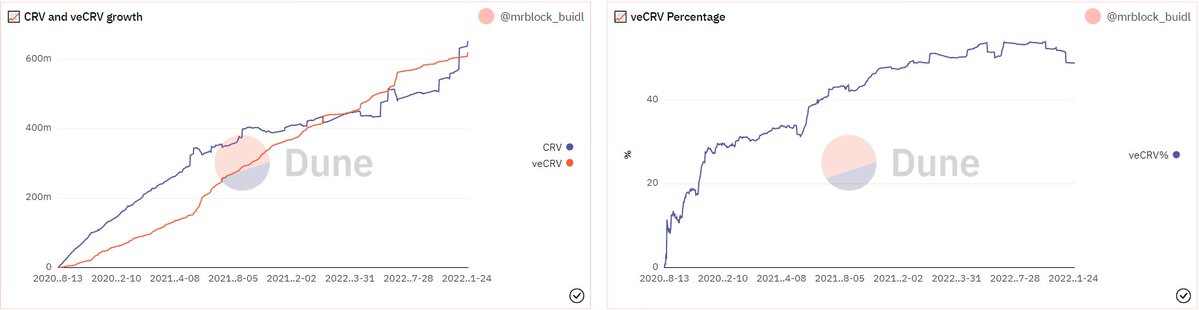
With the launch of crvUSD, veCRV holders will have a new fee payout:
・Borrowing fees for crvUSD
・LLAMMA increased trading volume
In the next post, we'll dig deeper into these numbers to see if crvUSD can significantly boost veCRV holders' earnings.
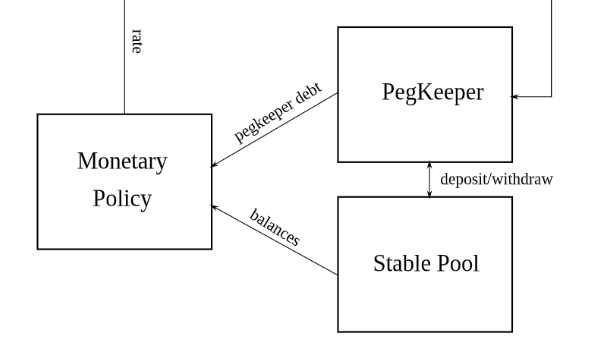
Another important thing is how crvUSD will stabilize its peg. For example, LUSD is always traded above the peg, and if people don't mint more LUSD with ETH, the demand for the coin cannot be met.
When the peg exceeds $1, Beanstalk expands its supply, but when the peg falls below $1, instead of reducing supply, Beanstalk relies on loans to restore the peg. In the case of crvUSD, when its peg exceeds $1, crvUSD algorithmically expands its supply (minting without collateral) and when its peg falls below $1, it also burns to reduce its supply quantity.
in conclusion
in conclusion
What really surprised me was that,Michael EgorovInstead of creating a brand new Stablecoin, it optimized the design on the basis of previous Tokens, which is what Curve really needs.
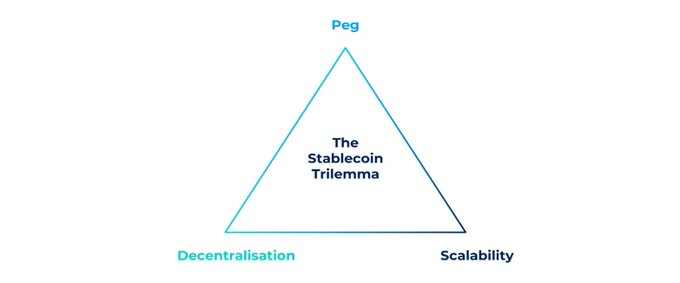
At the same time, crvUSD is solving three major problems of Stablecoin:
・Maintenance of anchor rate
・Decentralization
・Scalability for capital efficiency
Original link





