


An article to understand the "Lending-LiquidatingAMM" algorithm strategy of Curve's stable currency crvUSD


Original compilation: PANews
Original compilation: PANews
On November 23, the development team of the decentralized exchange Curve Finance released the code and official documents of the stablecoin crvUSD. According to the white paper written by Curve Finance founder Michael Egorov, crvUSD will have similar functions to MakerDAO’s stablecoin DAI, and support for Crypto assets are over-collateralized.
The white paper states that users will be able to mint stablecoins by depositing excess collateral in the form of cryptocurrency loans in reserves, a mechanism known as Collateralized Debt Positions (CDPs). In addition, crvUSD will also rely on a loan liquidity automated market maker algorithm strategy "Lending-Liquidating AMM (LLAMMA)", which is also one of the biggest innovations of the stablecoin. So, how does this LLAMMA algorithm strategy work? Let us find out together-
A problem with current stablecoins based on collateralized debt positions is that when collateral is insufficient, positions must be liquidated to maintain a "stable" anchor relationship. Although liquidating collateral is helpful for stablecoins, there are still two major flaws :
1. Mortgage debt positions at risk of bad debt
2. Users will lose money due to liquidation
The core idea of the LLAMMA algorithm strategy is to build a "continuous liquidation" or "continuous de-liquidation" automated market maker (AMM) strategy. This loan liquidation AMM strategy can be converted between collateral (such as ETH) and stable coins , That is to say - when the price of collateral (such as ETH) goes up, the user can deposit all ETH; but when the price of collateral (such as ETH) goes down, the price of ETH can be converted into US dollars.
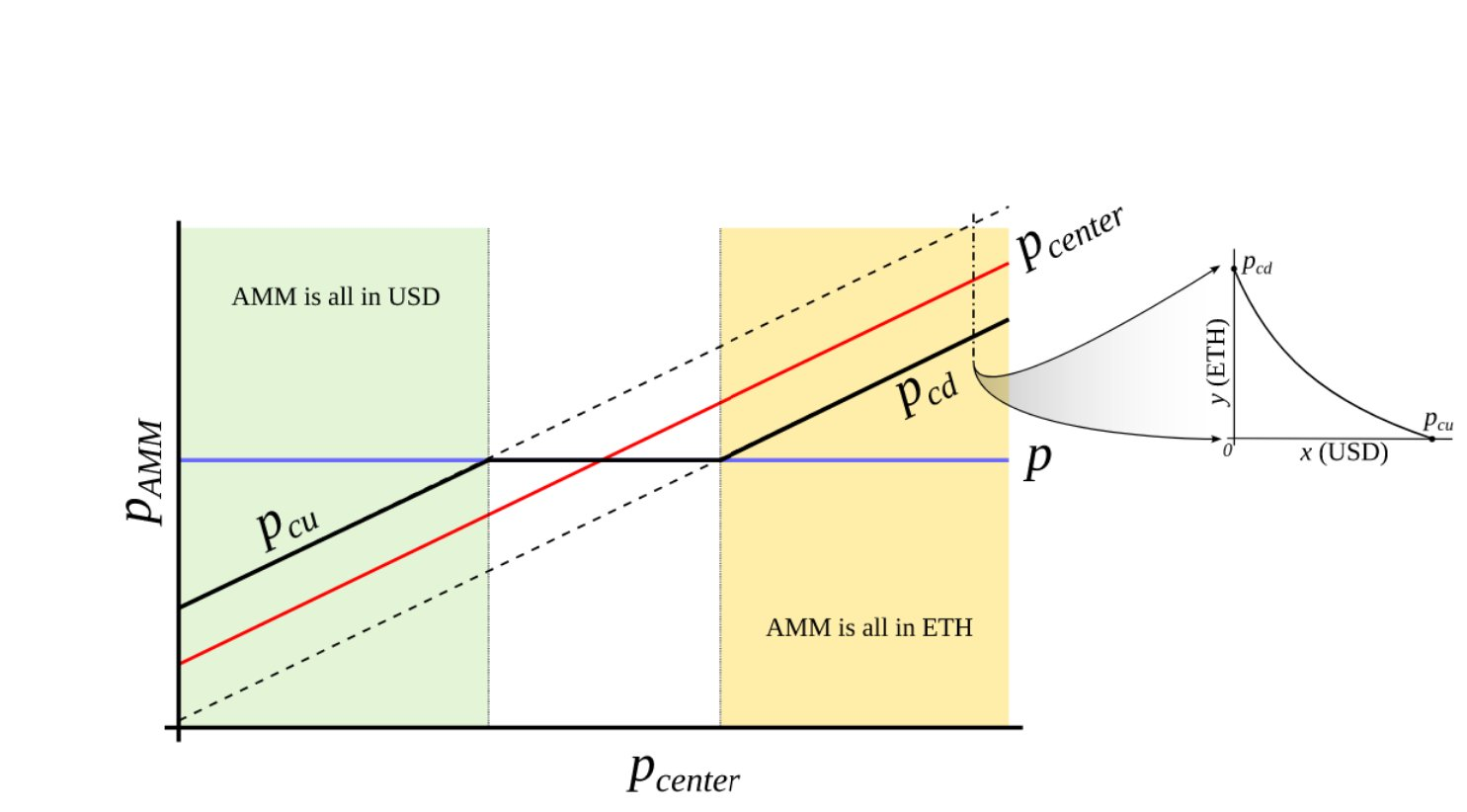
Curve gave a conceptual name "Pcenter" to form a liquidity price. When the ETH price reaches Pcu, the AMM collateral will be converted into USD; when the ETH price rises and reaches Pcd, the AMM collateral will be fully converted into ETH.
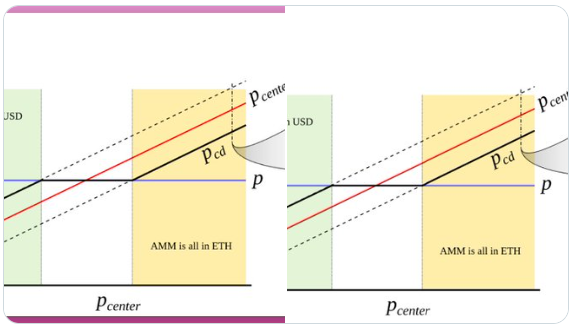
This strategy prevents collateralized positions from being liquidated (you can understand it as being temporarily closed) and has no risk of bad debts. (As a side note, does this mean that collateral suffers impermanent losses? The answer is unclear). Another important point is that LLAMMA uses ETH/USD as a price source, while the crvUSD stablecoin can be traded above or below the anchor price, namely:
1. If the price is higher than the anchor price, crvUSD will use Automatic Stabalizer (similar to Frax’s AMO) for processing. Automatic Stabalizer (PegKeeper) will mint crvUSD stable currency and directly deposit it into the Curve liquidity pool, and then increase the crvUSD stable currency liquidity and generate transaction fees.
2. If the price is lower than the anchor price, crvUSD will be withdrawn from the Curve liquidity pool and destroyed, thereby reducing the supply of crvUSD stablecoins.
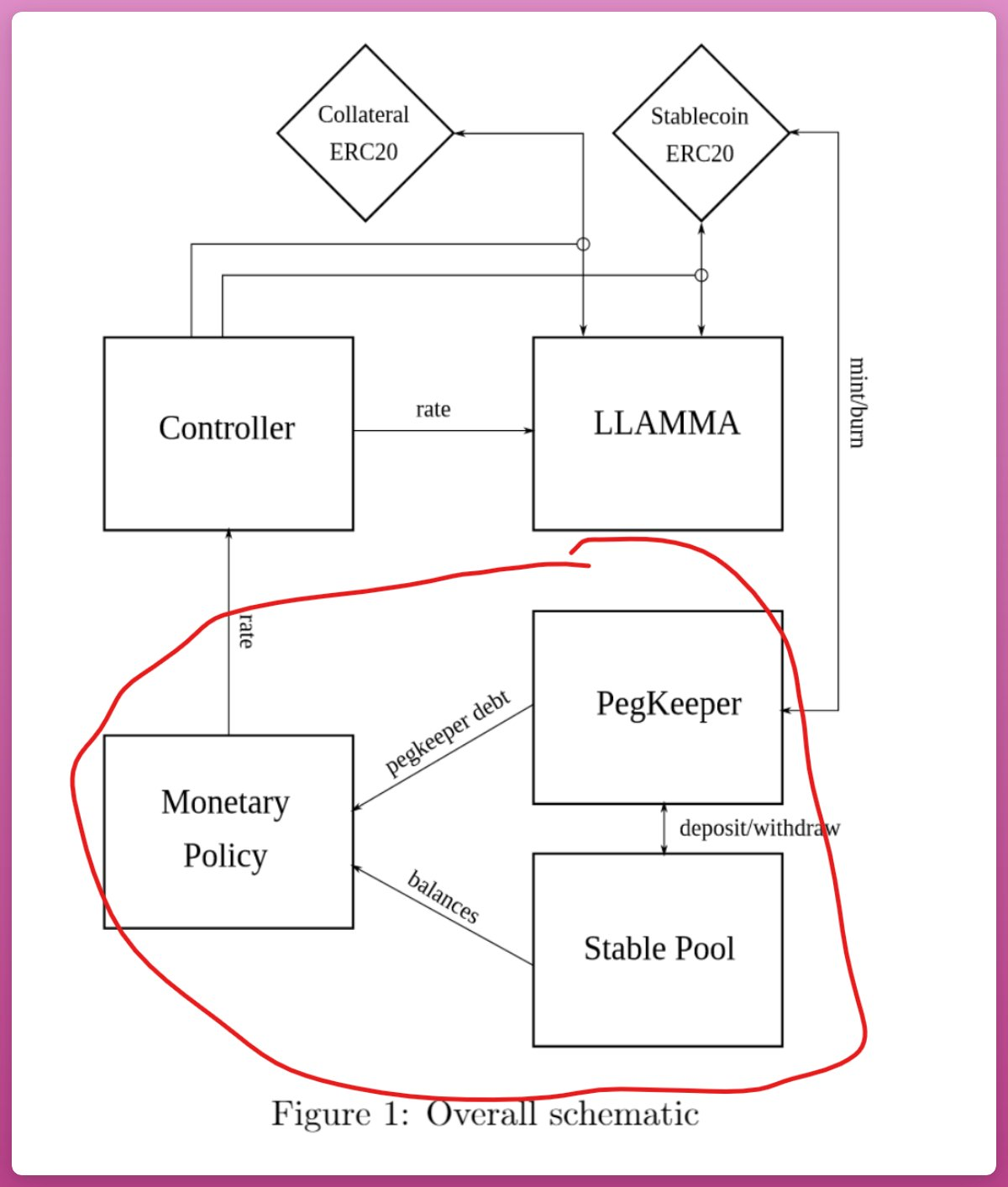
(Note: The Curve white paper does not explicitly mention that "stable currency" is crvUSD itself, so the LLAMMA strategy may cover USDT/crvUSD, USDC/crvUSD, or even 3 pool/crvUSD liquidity pools. In addition, the white paper does not seem to mention to Curve’s native token, CRV.)





