After two years of high-profile return, the big short Citron claims to continue shorting ETH


Recently, the well-known short-seller agency Citron Research (Citron Research) stated on its official Twitter that the FBI did not investigate the second largest donor to the Democratic Party (SBF), allowing anyone to get so close to the government to gain influence, and did not even check Tax filings, there are national security concerns.
first level title
After nearly two years, short selling resumed
Citron Research is a relatively influential short-selling institution in the United States. It was established in 2001 and was formerly called Stocklemon (stock lemon network). It was founded by Andrew Left, a Jew with many years of trading experience.
"Lemon" refers to bad things in English, which is also the original intention of Andrew to set up the website, specializing in the investigation of short-selling stocks. Later, I felt that this name was too direct, and then replaced it with the French "lemon" (Citron).
Citron’s usual short-selling methods include: first, thoroughly investigate the loopholes and gaps caused by the differences in financial audits between China and the United States, mainly including false reporting of sales revenue, etc.; second, check the misconduct of corporate executives; Reporting to regulators and public investors, etc.
Among the more than 150 short-selling reports released by Citron, more than 50 American companies covered by Citron's research have become targets of regulatory intervention, including Raser Technologies, Bio-Heal Laboratories and other technology companies and bio-health companies. In addition, Citron has attacked 20 Chinese concept stock companies in the past 6 years, causing 15 of them to drop by more than 66%, and 7 of them were delisted, which also allowed it to accumulate rich records in short-selling and terminal business models.
However, in early 2021 when retail investors squeezed GME (the stock of GameStop) short, Citron Research ushered in Waterloo, a 20-year short-selling career, and many Wall Street funds, including Melvin Capital and Citadel, also ushered in a complete defeat , retail investors under the banner of WallStreetBets have made a name for themselves in the US stock market.
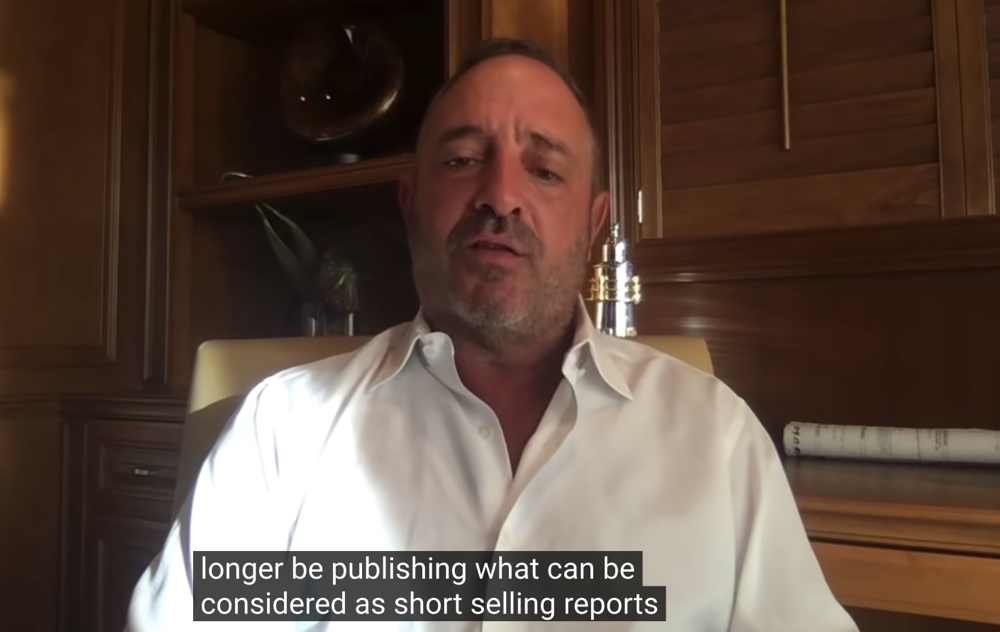
Subsequently, on January 29, 2021, Citron founder Andrew Left publicly announced that he would end his 20-year short career, stop short-selling research, focus on long-term opportunities, and provide long-term long-term investment opportunities for retail investors.
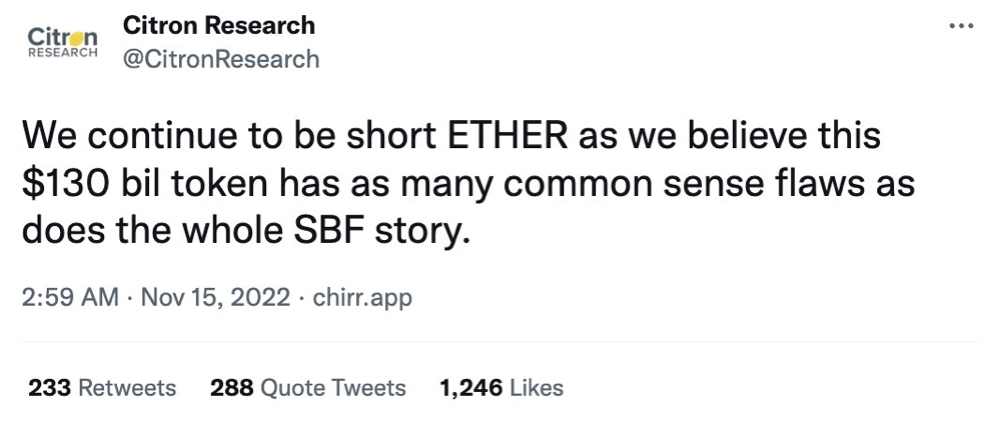
But in less than two years now, Citron has declared that it will come back and will continue to short ETH, and all this is affected by the recent FTX crash, which has rekindled its enthusiasm for shorting. Citron believes that ETH with a market value of 130 billion US dollars must have many common sense defects like FTX.
first level title
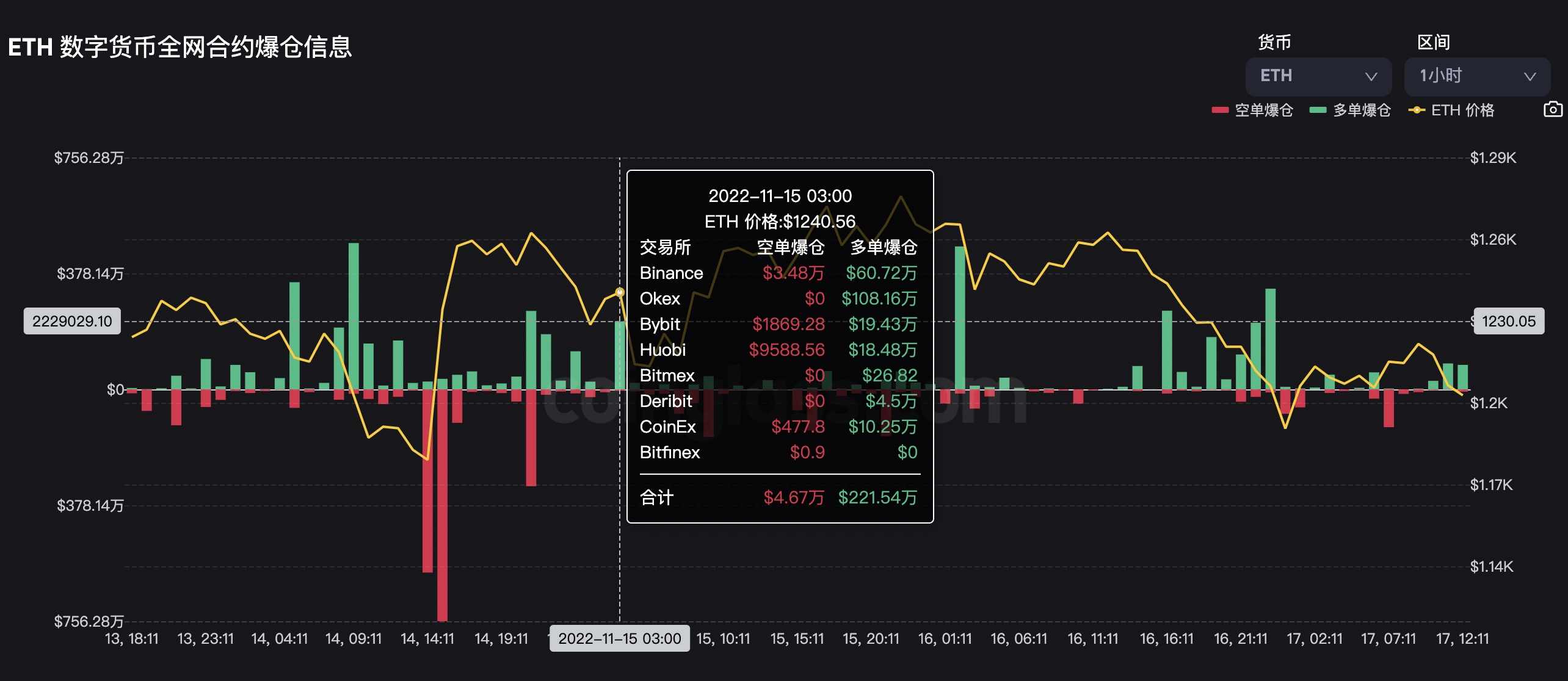
Singing empty encryption has a long history, and I don’t understand decentralization
However, after Citron Research commented on the FTX incident and released the news of shorting ETH, it ushered in ridicule from many investors.
“Do you think the FTX exchange is decentralized? Instead it’s a centralized exchange where users’ assets are managed by people who are stupid trading platforms. Funny how all the debt FTX owes on decentralized platforms They were all repaid in full. Why? Because DeFi and smart contracts make borrowers liable anyway.”
Some investors said that you can be short, but why your winning rate has been like flipping a coin, and posted the investment return of Citron Research for nearly a year.
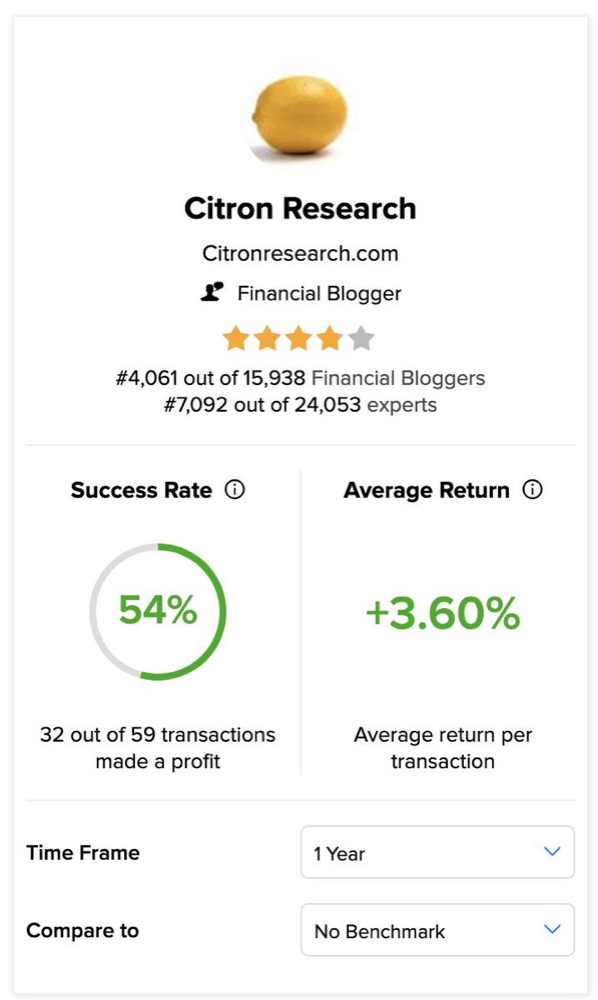
What's more, he didn't forget to expose Citron's scars: "It's like you know the benefits of shorting GME better than others."
In fact, Citron Research didn't just start shorting ETH recently, it has been shorting encryption for a long time.
Some investors said that the last time ETH fell to $1,150, Citron publicly shorted on Twitter, claiming that ETH would fall to $200 (although this is still expensive). However, after 3 days, the price of ETH rebounded, breaking through $1,600 in about two months.
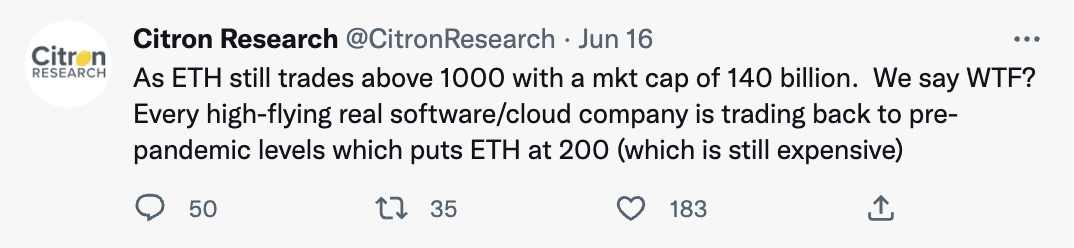
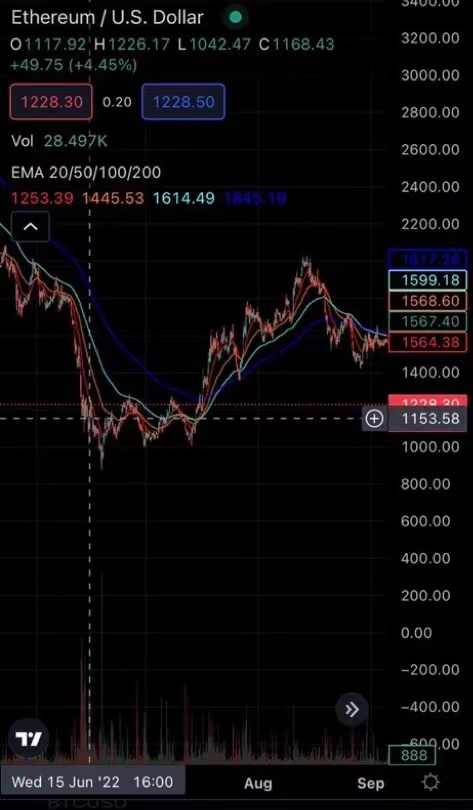
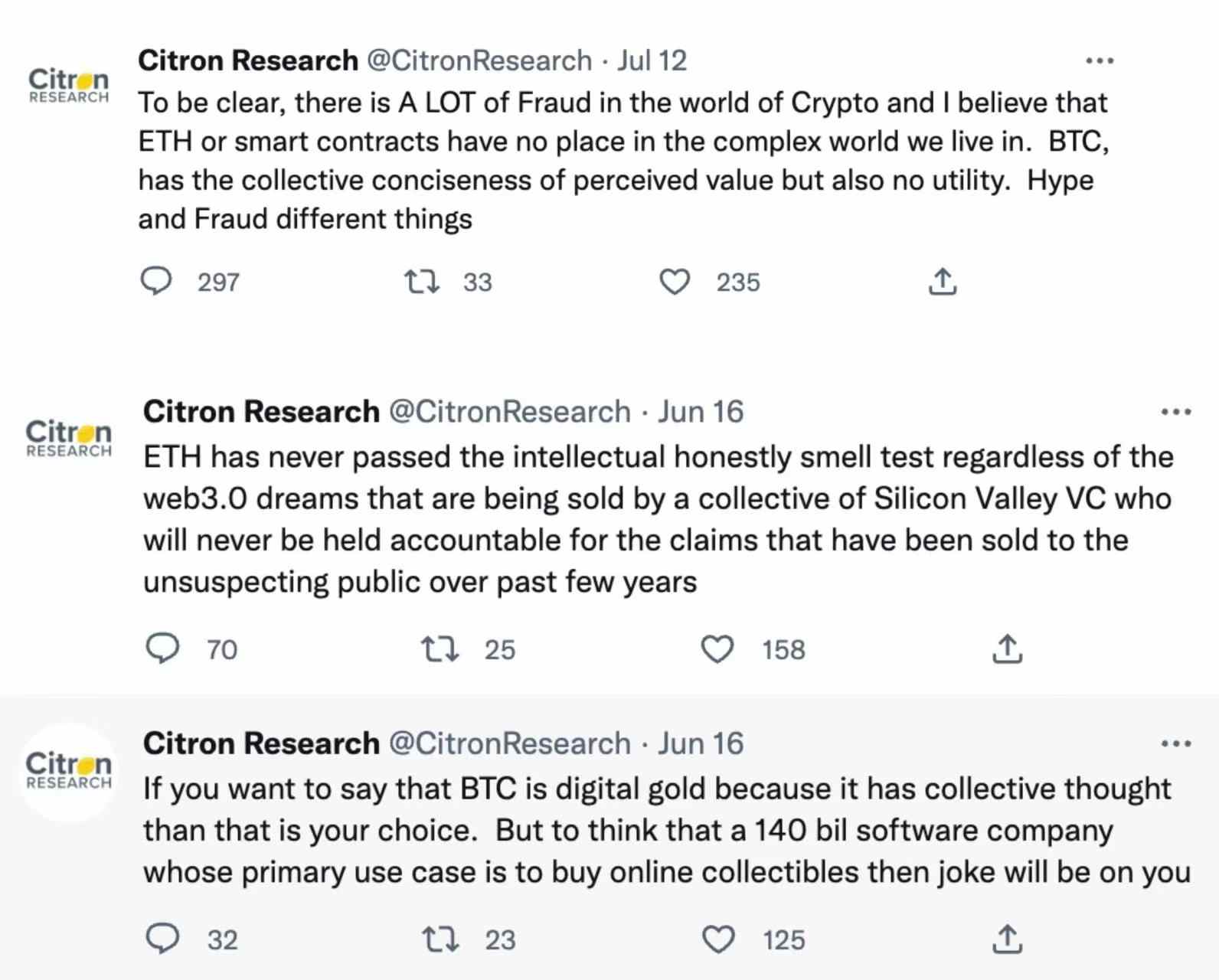
In addition, in the middle of this year, Citron also tweeted his views on encryption, BTC, and ETH on Twitter many times.
Citron said that there is a lot of fraud in the encrypted world. BTC has the collective simplicity of perceived value, which is the choice of some people, but has no practicality; ETH or smart contracts have no place in the complex world we live in. It Its main use is to buy online collectibles, but its market value is as high as $140 billion.
first level title
Former "Wall Street Bounty Hunter"
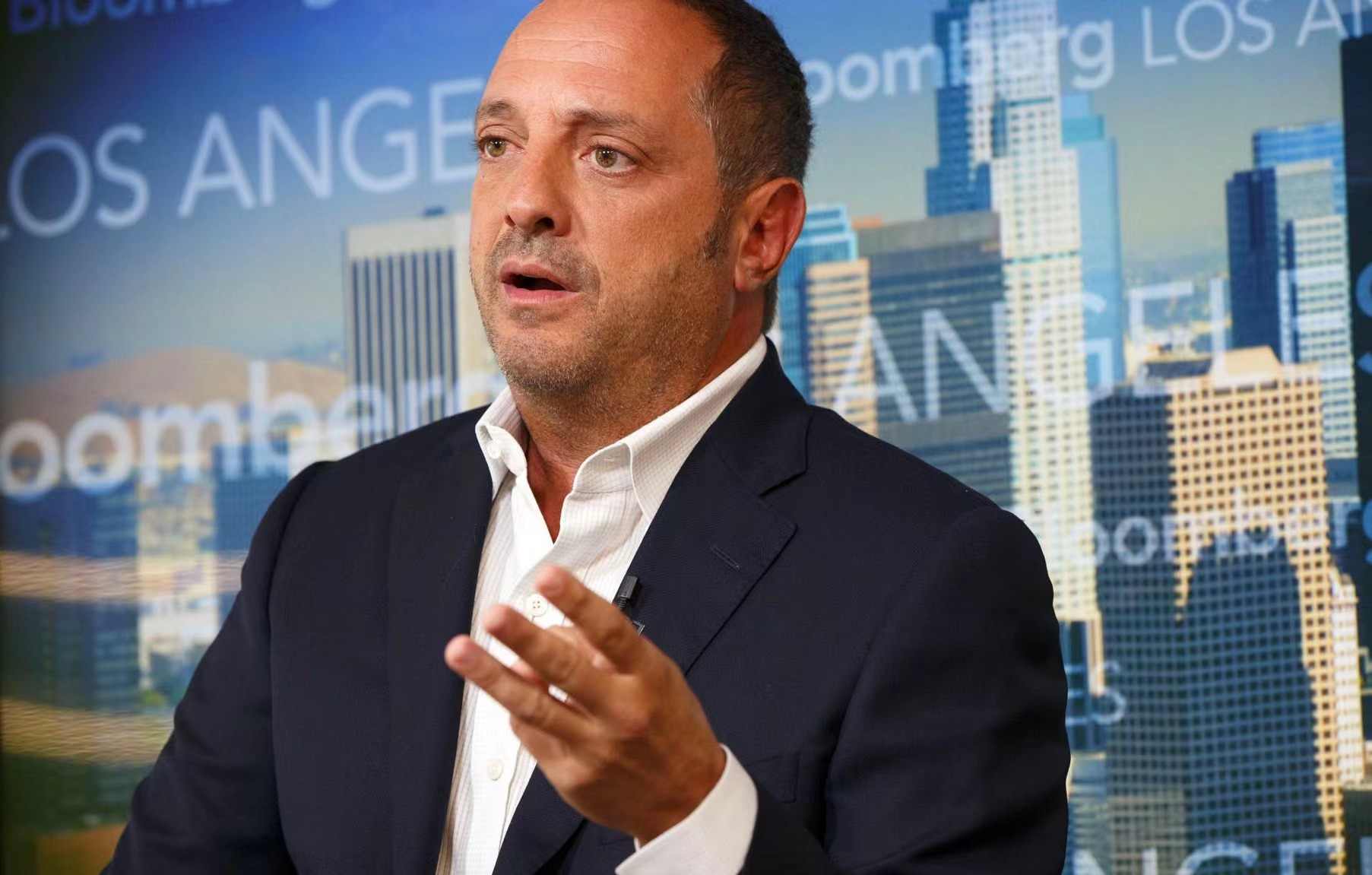
Most of the reason why Citron Research is so pessimistic about encryption is due to its founder Andrew Left.
Asked at a conference about what he sees as potentially fraudulent financial markets, Andrew told the audience unapologetically: “I think crypto is just plain fraud over and over again.”
While the press later commented: Andrew started his career with the best intentions of exposing controversial companies, unfortunately, as the GME incident has shown, he still seems to be thinking about things in an overly limited way of thinking , a way of thinking that rests on a soon-to-be-outdated set of values. But now it seems that Andrew's views on encryption have not changed.
But this time, retail investors did not buy Citron Research’s short statement on ETH. Although the encryption market is currently in a bear market, the FTX incident has also triggered continuous shocks in the industry.
In addition, this radical short-seller and "Wall Street bounty hunter" has also encountered a lot of trouble in supervision, and his fund partners have also fallen into the quagmire of supervision.
After the FBI raided Andrew Left's home in December and the U.S. Department of Justice launched a wide-ranging criminal investigation into short selling by hedge funds and research firms, including Citron, evidence emerged that Andrew's Citron Reports were among those involved in illegal short selling. A tool for hedge funds, although Andrew denies any wrongdoing.
In this regard, the Department of Justice also subpoenaed nearly 30 records related to Citron investment and research companies. This list includes Gabe Plotkin, founder of Melvin Capital, Nate Koppikar of Orso Partners, Nate Anderson of Hindenburg Research and many other financial giants. In May of this year, Melvin Capital, with an AUM of US$8 billion, chose to close the fund due to the huge losses in the GME incident.
Therefore, it is foreseeable that although Citron Research has made a high-profile announcement of shorting ETH this time, its impact on the encryption market will be very limited, both in the short term and in the long term.
However, it reflects from the side that the FTX incident in the encryption field has indeed spread to a wide range, and it has been transmitted to the traditional financial circle and caused a huge impact. At the same time, it has also aroused great concerns from regulators. However, it is hoped that while regulators intervene and fill the regulatory gap, they can conduct more effective market supervision and leave room for encryption practitioners to innovate.