Six weeks after the merger, how are Ethereum validators getting rewarded?


This article comes from chainalysis & pintailThis article comes from

On September 15, 2022, Ethereum officially merged (the block height in the execution layer is 15537394, and the slot in the consensus layer is 4700013). Now, 6 weeks after the merge, we also collected data from 2 directions (PoS validator rewards and merge-related scams) and came to some interesting conclusions.
secondary title
Actual Rewards for PoS Validators
Let's first look at the distribution of rewards actually received by PoS validators. Draw the following 5 conclusions:
Executive tier rewards are lower than they were in the year before the merger. This is most likely due to the market (market), not the result of the merger itself;
At the current stage, the reward rate per validator is highly uncertain. This is because the rewards are "block-like", and this is exacerbated with the addition of executive layer rewards to validators. About 50% of validators have not produced any blocks, resulting in an annual growth rate of these validators of less than 4% during this period;
Don't see a clear advantage for large validator pools, but there isn't enough data to be sure this is true (e.g. validator pools aren't engaging in malicious behavior to maximize their rewards);
Third-party block packers consistently outperform validators that pack their own blocks. The initial data also showed performance differences between different builders.
secondary title
Merger scams surge in September
The tactic of most merger scams is "classic - the scammer (often masquerading as a celebrity) tricks the victim into sending a certain amount of cryptocurrency in order to "upgrade" to the new Ethereum blockchain and get more in return (usually twice the victim's initial payment).
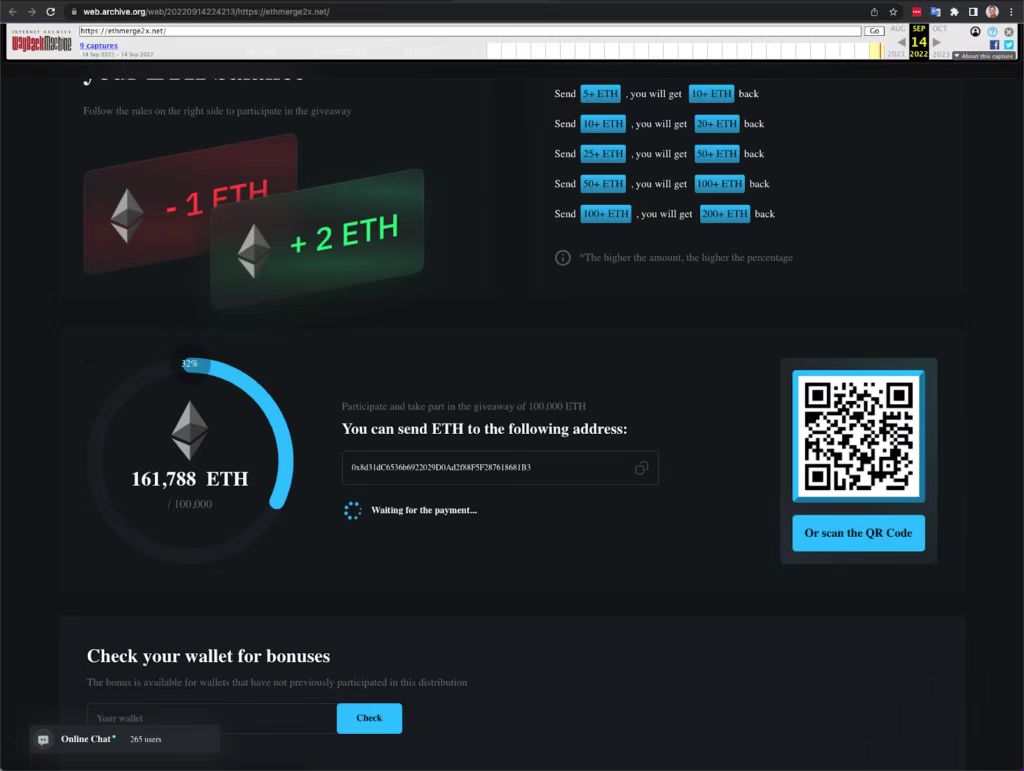
image description
The scam invites users to send 1 ETH to an address and receive 2 ETH in return.
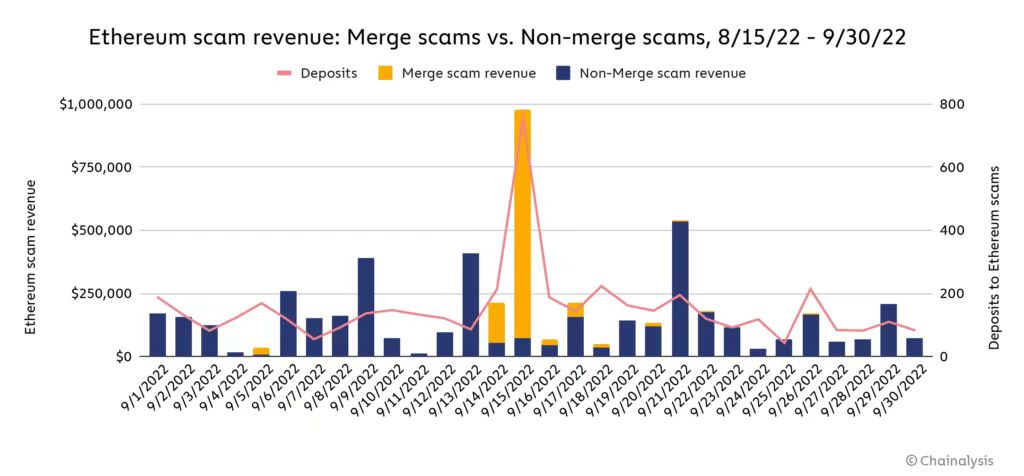
This strategy has worked out a number of times, as shown in the chart below.
On the day of the ethereum merger, the scam saw a huge spike in revenue, defrauding over $905,000 worth of ETH, while all other ethereum scams fetched less than $74,000. However, the fraud peak quickly fell back to normal levels within a few days, with merger-related scams all but disappearing by the end of September.
Merger scams accounted for eight of the top ten Ethereum scams on Sept. 15.
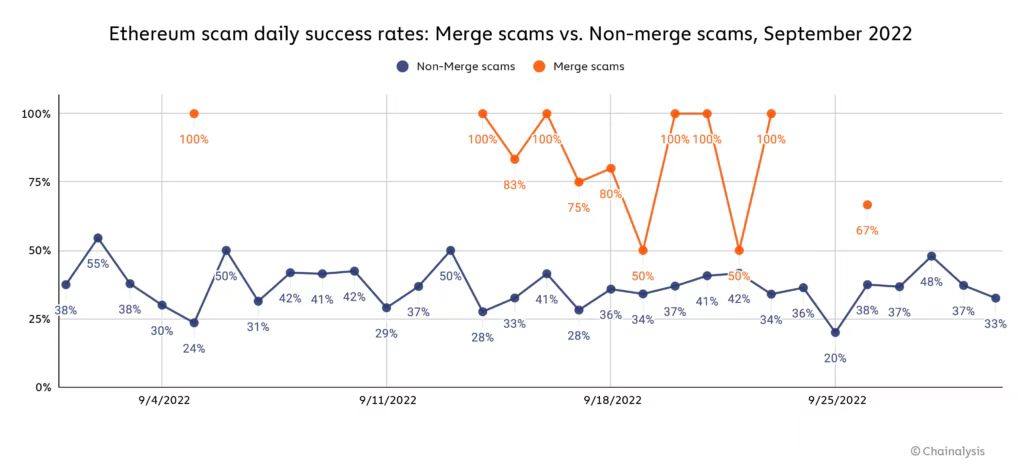
Amazingly, merger-related scams had an 83 percent success rate on the day of the merger, September 15, and a 100 percent success rate in the days before and after the merger. Such a success rate also suggests that scammers are targeting users who are uninformed about the merger.
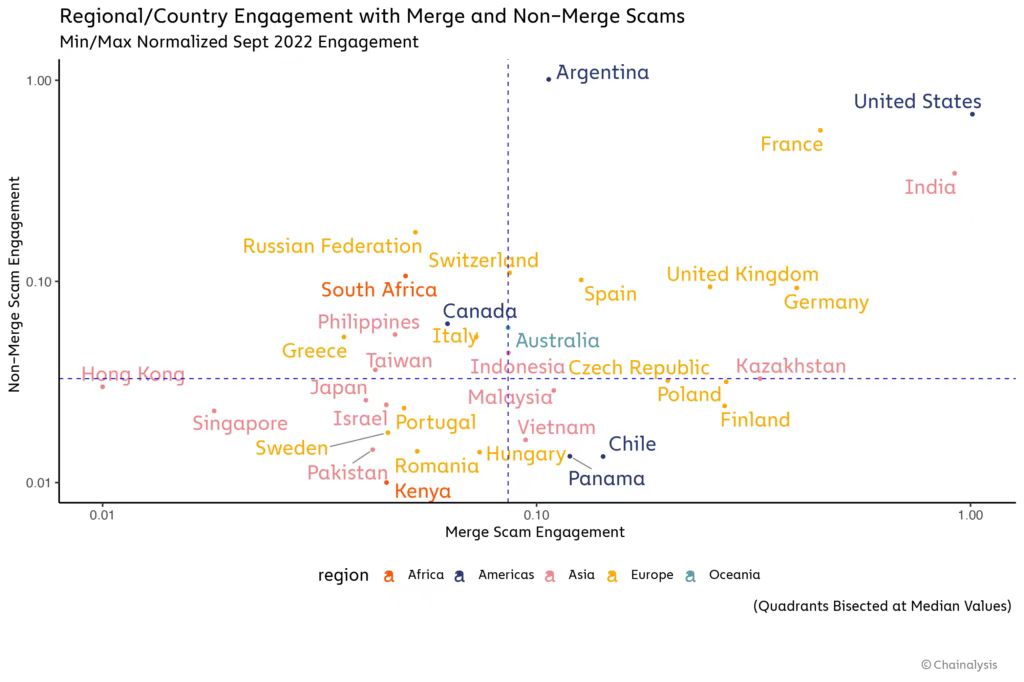
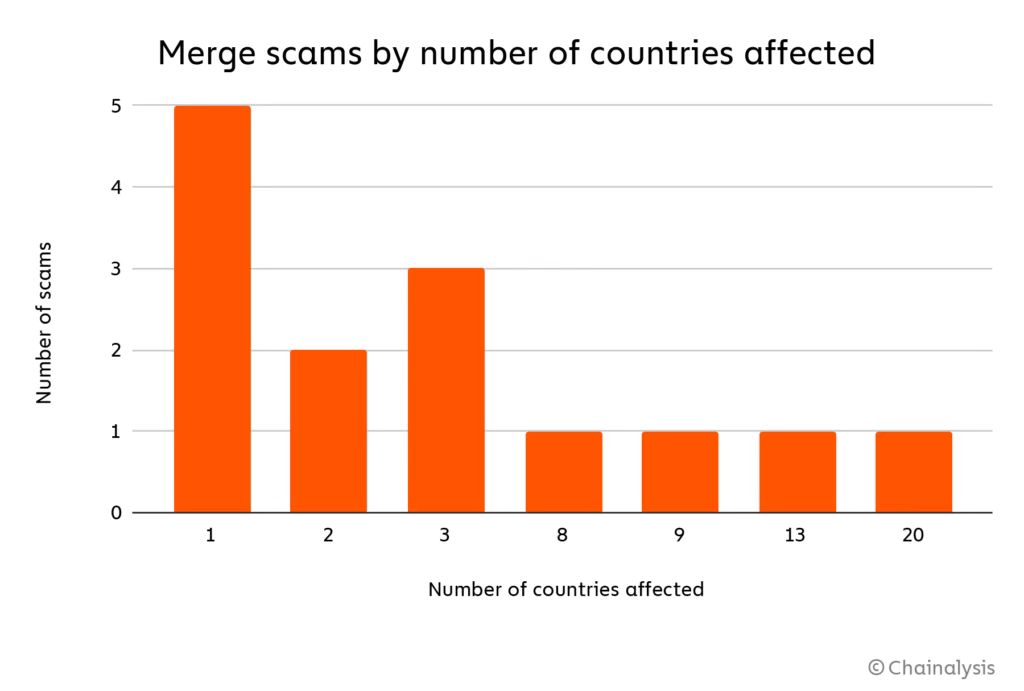
Scammers tend to scam users in their own country of residence (probably due to language barriers). In the chart below, we can see some of the countries most affected by merger scams in September, with the second axis showing connections to other Ethereum scams.
secondary title
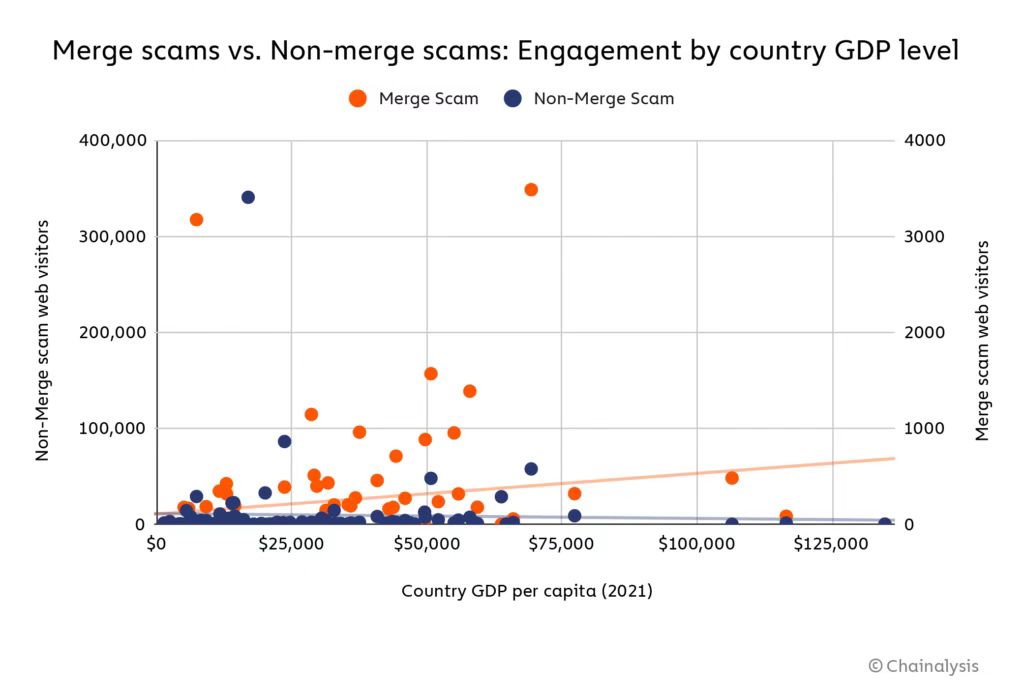
Summarize
Summarize
With DeFi hacks dominating recent headlines, fraud using traditional means remains cryptocurrency’s largest form of crime. Fraudulently exploiting user trust will seriously affect the adoption rate of cryptocurrencies. Times of change in the crypto industry like mergers are windows of opportunity for scammers, and users who lack knowledge can be exploited by bad actors.