Bankless: Will Cosmos be the ultimate form of blockchain?


Original compilation: aididiaojp.eth, Foresight News
Original compilation: aididiaojp.eth, Foresight News
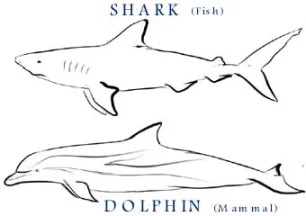
At the end of the Silurian period, 420 million years ago, jawed fishes diverged into cartilaginous sharks (and rays) and bony fishes. Some of the latter crawled out of the sea, conquered the land and the air, and eventually became amphibians, later dinosaurs and primitive mammals. After 375 million years, some of them returned to the sea and became dolphins and whales. They once again had familiar propulsion organs: tails, flippers, and at the same time used light-bone hydrodynamic strategies to become Warm-blooded, air-breathing mammals.
A brief history of Comsos and Ethereum
Between 2013 and 2014, Cosmos and Ethereum grew out of the Bitcoin blockchain network, but as both projects iterate on their respective roadmaps, they have come to have their own unique offerings in different areas. sex.
Although the design of Cosmos still supports application-level sovereignty, Ethereum has become more and more modular, and modularity has brought higher security and settlement efficiency to Ethereum. The overall structure of Ethereum allows composable smart contracts to be launched and iterated at an extremely fast speed, which is a necessary prerequisite for the outbreak of the DeFi bull market.
The great success of DeFi has promoted the research of the two most enduring problems of the blockchain network: scalability and maximum extractable value MEV, and multiple solutions have emerged at the same time. Ethereum developers have pushed past the technical and definitional limitations of single-chain scaling, seeing light in the dark forest of block producer transaction reordering.
At the same time, Cosmos abandoned the winner-take-all race of the world's financial AOL (the isolated predecessor of the World Wide Web) to develop a secure, resilient network for the Internet of Value.
It pioneered three transformable, adaptable networking technologies:
Replicable State Machines with Byzantine Fault Tolerant Consensus (Tendermint)
A set of blockchain application modules (Cosmos SDK) that interact with the consensus engine
Crown of Cosmos: Inter-Blockchain Communication Protocol IBC
All three can be used together to quickly launch a blockchain that is instantly interoperable.
IBC is both a trust-minimized data transport layer for communication between blockchains and an application layer built on top of blockchains. The most practical application of IBC is token transfer, but more and more cross-chain standards allow for more complex cross-chain interactions, such as cross-chain queries, cross-chain accounts (allowing accounts on one chain to control accounts on another chain) And cross-chain security, sharing validator power between blockchains, etc.
These IBC functions are live and widely used, laying the foundation for building fully composable DeFi between blockchains.
Convergence: With these distinct approaches, Cosmos and Ethereum are now beginning to converge again as they both adapt to the changing crypto landscape.
On the one hand, Cosmos starts to resemble Ethereum at the application layer, but this is an implementation of the Cosmos roadmap rather than an architectural change. IBC is currently connected to about 50 chains, and CosmWasm smart contracts are widely spread throughout the ecosystem. Ecological applications are proliferating in various ways such as general blockchains, smart contracts, and multi-team application suites.
As cross-chain DeFi began to flourish, many mature applications have been ported from the Ethereum network to Cosmos. However, the functions of many on-chain programs can only be completed on the main chain, and the transplanted applications are currently mainly used as a bootstrap mechanism. It is necessary to improve the function of the application chain while achieving product and market matching.
On the other hand, the design of Ethereum is also starting to become similar to Cosmos.
After the merger, it now uses the same proof-of-stake consensus mechanism as the Tendermint chain. The implementation vision of Ethereum 2.0 sharding is to cancel priority and support Rollup and quasi-application chain, aiming to move most transactions out of the main layer of Ethereum. Recently announced parts of the Ethereum scaling roadmap include Surge (data sharding), Verge (stateless), Purge (state expiry and purge), and Splurge (account abstraction, proposer-builder separation, verifiable delay functions) etc. support the Rollup-centric model.
an article at the end of last yearEndgameIn the article, Vitalik envisioned three possible expansion methods for Ethereum: no Rollup, single dominant Rollup and the current multi-Rollup pattern.
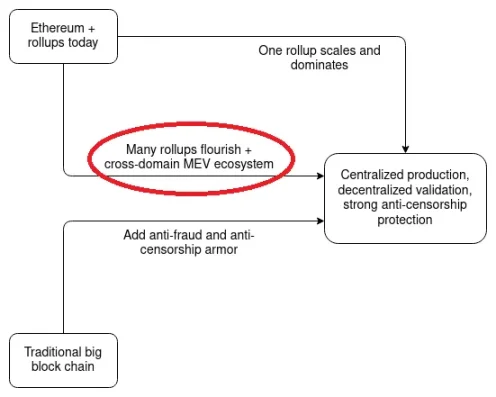
They are essentially like Lisk, so multi-rollups are likely to continue to thrive.
Each Rollup has its own developers, applications, investors and users, so they all start to develop their own unique community identities and businesses. Currently, each Rollup acts like a tax-paying, protected federation within a larger ethereum federation, but they eventually hope to become full-fledged spanning applications beyond the confines of ethereum.
Cosmos application chain
Why does an application or Rollup want to be an application chain? The basic reason is sovereign interoperability.
Because of its sovereignty, Lisk has precise control over its entire stack: execution, consensus, block size and timing, state and mempool logic, fees, smart contract environments, validator requirements, governance rules, and any other area of the blockchain structure , or even they might want custom actions.
Because they are interoperable, application chains can interact with each other freely and composably through IBC.
How does Lisk utilize these features?
To make execution faster, easier, and more efficient, they need to optimize the user experience, fine-tune front-end and wallet access to blockchain data and mechanisms, and adjust protocol logic. They increase the security of AppChain in a suitable way, recruiting their own validators to implement code, generate blocks, relay transactions, etc., or ensure security from another set of validators with cross-chain security.
Ultimately most Lisks will choose to use a mix of these two options: blockchains will share their set of validators, and the entire chain will become a shared zone.
Many application chains innovatively combine security and user experience. For example, Osmosis has developed "Superfluid Staking", a major improvement over Proof-of-Stake. "Superfluid staking" allows liquidity providers to stake their base tokens in their LP tokens to maintain the security of the chain. In addition to LP rewards, they can also get staking rewards. Currently only OSMO tokens benefit from this increased capital efficiency, but Tendermint is improving and will enable other appchains to choose to hyperstake on Osmosis or allow OSMO to be hyperstaked on their chains.
Soon, the entire cross-chain will be able to run its pledged assets in DeFi without the centralization and on-chain security risks of traditional liquid pledged derivatives.
Lisk is also good at dealing with the problem that exists in MEV: anyone with the right to decide transaction ordering and block packaging can make a profit. MEV plagues DeFi users across all ecosystems, but Lisk can develop on-chain solutions much faster, greatly reducing malicious MEV and returning healthy arbitrage profits from third parties back to users.
For example, Osmosis is developing a private memory pool with a threshold (Ethereum is also trying). These private transactions cannot be seen by nodes until executed, making front-running transactions more difficult and allowing limit orders and other possible future transactions to be privately placed on-chain. Likewise, AppChain can reserve first place in its blocks for protocol-controlled arbitrage and liquidation, which is necessary for a healthy lending and trading protocol. But on a single chain it often becomes the MEV game, with value flowing from applications to third parties. Osmosis will channel these healthy arbitrage profits that don’t harm users back to the DAO.
Remaining MEV can also be captured in-app by auctioning off the second slot in the block to MEV seekers such as Flashbots. Or, as the Cosmos Hub proposes, have all these second-slot auctions come together in one place, so that the cross-chain MEV market is transparent rather than a dark forest.
Lisk allows rapid and radical blockchain experimentation. While Tendermint and the Cosmos SDK enable applications to quickly launch IBC, the entire Cosmos stack is not required to be an IBC-connected application chain. Many high-profile Cosmos ecosystem projects are building or adopting alternative consensus or state machines that better suit their needs, including Penumbra, Anoma, and Nomic.
Liskchains are by definition indistinguishable from singlechains. Instead, Lisk modularity is largely the idea of sovereign interoperability combined with IBC's trust-minimized blockchain communication.
In contrast, single-chains typically employ so-called fat protocols, where a single chain runs the vast majority of DeFi, everything is centralized in one layer, and its tokens generate a monetary premium. Scaling such a protocol is very difficult and will require significant effort in accelerating and modularizing exciting technologies for execution, storage, data availability, and more.
Rollups are a remarkable technical achievement. Although they benefit from Ethereum’s massive security, they have so far acted as application chains without sovereignty or interoperability. By the same token, while Lisks generally do not have the block space constraints of a single chain, they will be able to employ modular solutions such as rollups and data availability layers where necessary.
Cosmos predicts the future of AppChain, allowing it to shard execution into separate blockchains by design, giving app builders the freedom to develop their own products and freely experiment with all layers of the stack.
At the same time, in the vision of AppChain, Cosmos assumed the inevitability of cross-chain bridging several years earlier than others, and developed the most comprehensive and secure cross-chain blockchain communication system so far in the era when cross-chain bridge hackers are commonplace .
IBC Security
One of the strongest arguments against Lisk is that cross-chain bridges are inherently insecure. On the one hand, it's true that no protocol or interchain messaging system is inherently secure all the time, but this is as true for Ethereum contracts as it is for IBC.
Any code can have bugs, and attackers are always trying to exploit them.
On the other hand, since the DeFi summer, there has been enough evidence that users will never limit themselves to one chain, they will use exploitable multisig to get the latest EVM across chains.
Will they be more eager to use IBC and cross-chain fully interoperable, user experience optimized, composable DeFi?
If cross-chain bridges are inevitable, why is IBC the best? Why should it be considered safe enough to be the future of finance? The answer lies in trust-minimizing design.
Participating chains run light clients of each other, meaning they each independently verify the other chain's block headers. Therefore, unless they take over the entire chain, an attacker cannot use lies to convince another chain about what happened on one blockchain. If this happened, the party controlling the chain could infinitely mint tokens on its own chain, pass them through IBC, and use them to steal funds on AMMs or through other DeFi mechanisms.
This is in stark contrast to bridges where tokens are kept in exploitable contracts (multisig or otherwise).
Therefore, it is very important for Lisk to establish an IBC connection with a reputable and secure blockchain. However, the window of vulnerability to attack the IBC connection chain is also very small. First, if a chain is taken over by an economic or governance attack, or if it fails catastrophically, IBC can shut down immediately, meaning it cannot steal any value.
To cover the brief period before the IBC connection closes, IBC rate limiting will soon be available. This will allow Lisk to restrict token flow for a given period, allowing normal activity, while limiting the value that can be captured by an attack chain, thereby minimizing the economic value of any attack.
IBC practice
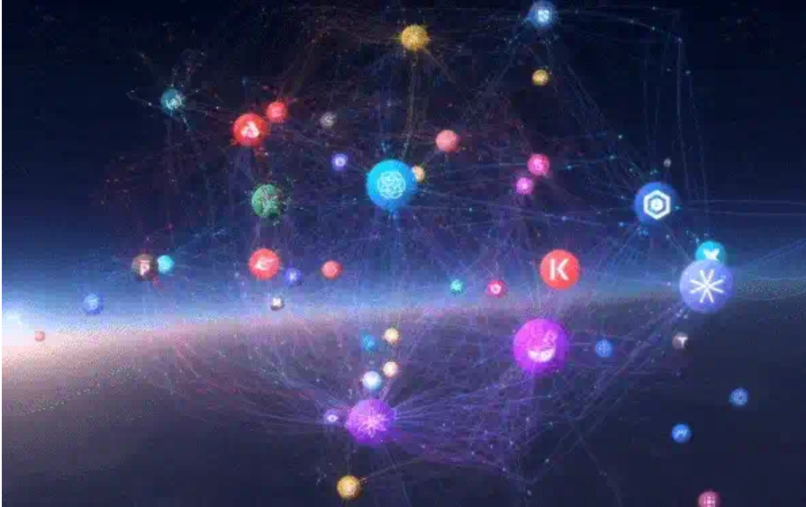
The graph above shows IBC sending and receiving between IBC-connected blockchains, where the icon size is proportional to the transaction volume (heredynamic picture). Even in this bear market, there have been about 800,000 transactions and $264 million worth of value passed through IBC in the last 30 days.
While we’re starting to see their possible shapes in a mesh of cross-chain security, encrypted mempools, protocol-controlled arbitrage, and simultaneous blockspace auctions, there are still technical challenges for cross-chain DeFi to reach its full potential.
As cross-chain adoption increases, AppChains that need to scale will also have access to Rollup and other scaling solutions being developed on Ethereum, as well as modular AppChains like Celestia.
ATOM 2.0: Cross-chain monolithic chain advantages
We discussed above how Ethereum has become more like the universe over the years. In the recent ATOM 2.0 white paper, the Cosmos Hub also proposed several use cases similar to the scope of the Ethereum ecosystem.
Cosmos Hub is the first application chain of the Cosmos ecosystem, a proof of concept of the Cosmos SDK, and also a Schelling point and source of funds for cross-chain developers, investors and users.
Note: A Schelling point is a point in game theory where a focus (or Schelling point) is the solution that people tend to default to when there is no communication.
However, as ATOM holders firmly believe that Cosmos' theory of rent-free sovereign interoperability is the only viable way to build a cross-chain future, the Hub ultimately does not have a clear use case. ATOM 2.0 uses the Hub as an ecosystem service chain exclusively.
The treasury will be primarily replenished through the scheduler's synchronous block space auctions and fees for interchain secure payments. If the investment is successful, it will bring additional revenue to the treasury. If these revenue streams provide enough ongoing value to stakers, ATOM inflation will drop to zero. This move aims to provide ATOM with robust monetary properties similar to ETH and BTC.
If all of these services are adopted as planned, the Hub can act as a non-extractive booster for the entire ecosystem, earning fees only to the extent that it provides valuable services. The value accretion mechanism enables ATOM to maintain its value as a strong ecosystem collateral, which is one of the foundations of decentralized blockchain stablecoins.
AppChain: Hubs and Outposts
Currently, several blockchain activities are loosely interconnected through various bridges and centralized exchanges. Even though the development of cost-effective light clients for some chains is still in progress, IBC can safely tie them together.
Both AppChain and applications on a single chain are progressing towards an increasingly connected future. With ad-hoc cross-chain bridging now completely out of favor, most applications should not rely on name recognition or attempt to build a durable technical moat while being constrained by decisions beyond their protocol level, but instead should try toHubs and Outposts Model。
This Hubs and Outposts model can take different forms. In all forms, the Hub is where the AppChain resides, runs governance, holds treasury and coordinates between Outposts. One of the main questions for the future of IBCs is how best to handle liquidity. It would make sense for Osmosis to store all of its liquidity in the treasury, and connect its Outposts routing with other chains' liquidity routing via the Osmosis blockchain. Mars Protocol, which launched its first loan on Osmosis, has worked closely with Osmosis to plan to provide individual liquidity for each of its Outposts.
summary
summary
Cosmos and Ethereum have always been close, both drawing heavily on the original cypherpunk spirit for inspiration. While Ethereum grew as single-chain as possible and Cosmos chose to maximize sovereign interoperability, many of their design choices have started to coincide again as they draw to a close.
The line between Rollup and Lisk is becoming more and more blurred, as evidenced by dYdX’s departure from the Ethereum ecosystem, which also retains the possibility of returning to Rollup in the future.
Other applications may also spin off their own application chains, possibly while retaining Ethereum as their primary Outposts.
Original link