


A brief history of Ethereum: The $100 billion behemoth born as Blizzard crippled Warlock


Author: Eric, Foresight News
image description

Vitalik Buterin in 2013
“This first draft is the culmination of months of thinking and work on what we call ‘Cryptocurrency 2.0’,” ethereum founder Vitalik Buterin later wrote on his blog. In addition, Vitalik Buterin once revealed that his idea of developing Ethereum came from Blizzard’s deletion of some of the skills of the warlock role in World of Warcraft, which weakened them, which made him realize the horror of centralization that can modify existing content at will.
At the invitation of Shen Bo of Fenbushi Capital, the BitShares team member "Cancer" and Gulu who later founded Bihu spent more than a month translating the Ethereum white paper into Chinese. It was also the two who named the Chinese name of Ethereum as Ethereum.
Cancer once explained that "Fang" means a workshop or studio. Ethereum emphasizes that this is a virtual workshop where players can come here to find tools and DIY to build the financial tools they want.
At that time, the center of the cryptocurrency market was Bitcoin, as well as projects such as Litecoin and BitShares. Smart contracts had not been accepted by most people, and many people did not even know what smart contracts were. Therefore, Ethereum has not received much attention, and some people even think that Cancer and others promote Ethereum purely for the purpose of "cutting leeks".
But gradually, the words "Ethereum" and Ethereum frequently appeared on the Internet, and the cryptocurrency community began to explore the smart contract platform, and the story of Ethereum began.
"Baby" Ethereum
Huge crowdfunding
In May 2014, Vitalik Buterin visited China for the first time. The purpose of this trip is considered to be to promote Ethereum and build momentum for Ethereum crowdfunding. It is worth mentioning that at that time, the domestic enthusiasm for blockchain was indeed higher than that of foreign countries, although it was considered that the "big bull market" that attracted ordinary people to participate in the understanding for the first time was still three years later.
Vitalik’s opinion on this trip to China in his blog is that he saw miners and exchanges, but there are not many interesting things other than these companies.
Accompanied by Shen Bo, Vitalik met the Chinese cryptocurrency community for the first time at InnoSpace in KIC, Songhu Road, Yangpu District, Shanghai. The event was organized by Bitcoin Entrepreneurship Camp.
image description
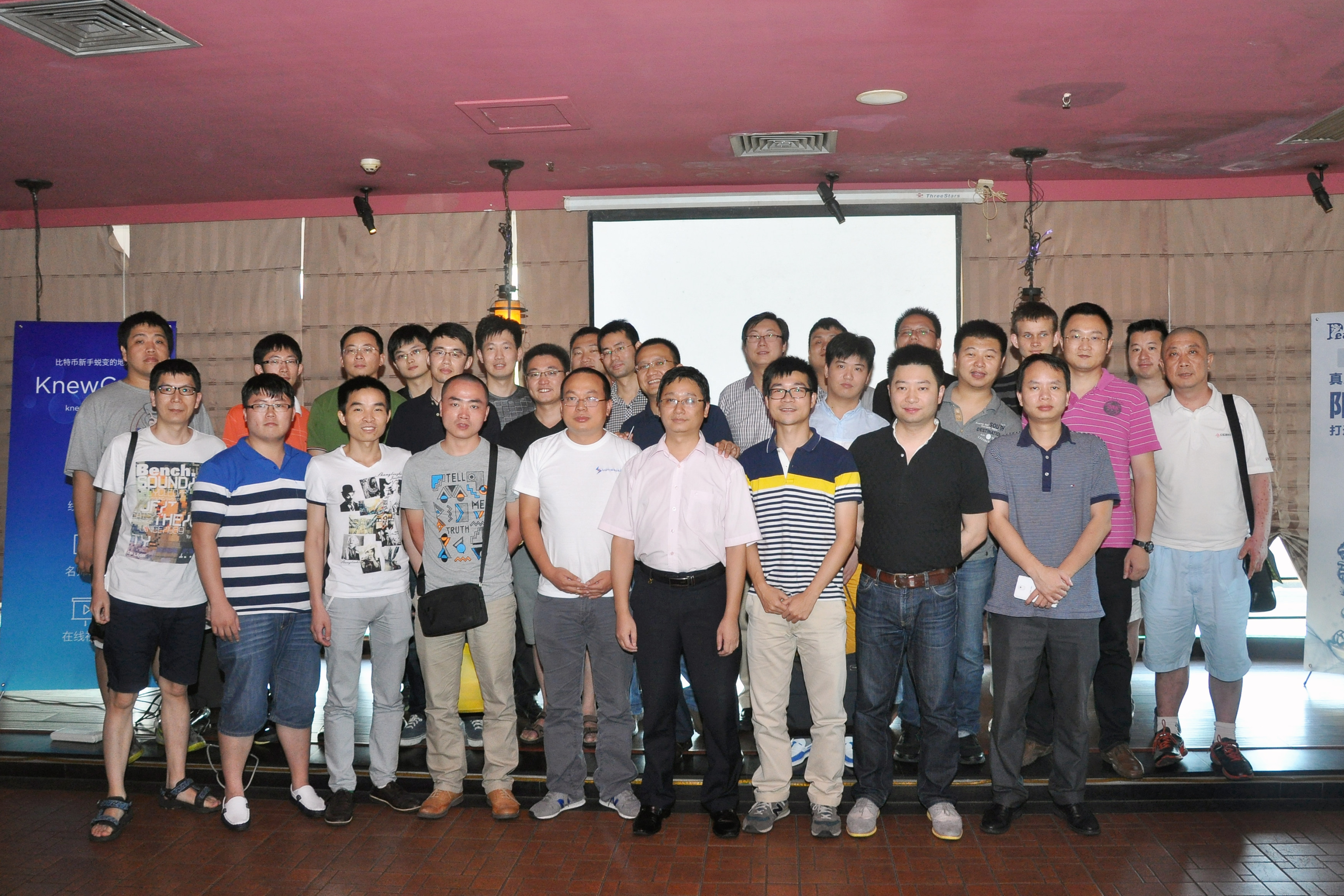
In 2014, Vitalik Buterin took a group photo after coming to China to participate in the event
In June 2014, Ethereum launched its ICO and raised more than 30,000 bitcoins in 42 days, worth about $18 million at the price at that time.
This caused a sensation in the industry at the time, and Ethereum also suffered a lot of criticism. Looking back at Weibo or forums at that time, we can find that many people’s evaluations of Ethereum are "liars" and "misappropriation". . But in 2016, Lao Mao stated in an article analyzing Ethereum that “99% of the people in the domestic bitcoin circle have missed this opportunity.”
As mentioned above, there is no unanimous optimism for the ICO of Ethereum in China. Da Hongfei, the founder of Neo, seems a little apprehensive about investment, while Lv Xujun, the founder of Wanchain, and others decisively choose to invest with Bitcoin in their hands. Ethereum. Lu Xujun later said that at that time many people thought the investment was unwise, so he himself did not dare to disclose too much about the investment.
Although the ICO of Ethereum was controversial, it was the controversy that brought Ethereum to a wider public view, and made everyone start to study what kind of story could make so many people "Stud" without reservation.
Early Development and Domestic Environment
Although a large number of bitcoins were raised through ICO, the plunge of bitcoin at the end of 2014 made many people worry about whether Ethereum has enough funds to support its development.
But the fact is that such worries are superfluous. On July 30, 2015, Ethereum successfully released Frontier, which is the first phase of Ethereum, and it is not a completely decentralized network.
image description
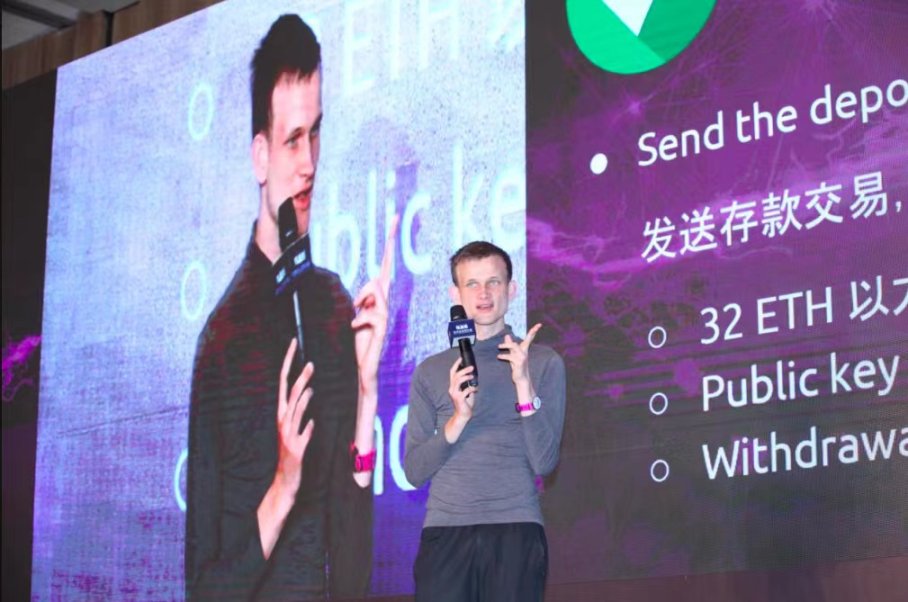
Vitalik Buterin gave a speech at the 2018 Beijing Ethereum Technology and Application Conference
Shenyu said that he didn't have much feeling about Ethereum at that time, but he vaguely felt that smart contracts might represent the future, so he also contributed a lot of graphics card computing power when testing the network on Ethereum. The reality is that until the ban in 2021, domestic miners and mining pools will still be the backbone of Ethereum security.
In addition to miners who are above the interests, Ethereum has also attracted many people who recognized its value early on.
The founder of Secret Ape Technology, Xie Hanjian, together with other enthusiasts founded the Chinese community of Ethereum, Ethereum Enthusiasts, but unfortunately, the current Ethereum Enthusiasts has ceased operations. When it was still in operation, A Jian, the content director of Ethereum enthusiasts, said that although imtoken founders He Bin, Xie Hanjian and others left the community one after another, they still insisted on funding the development of the community.
After years of hard work, Ethereum has developed faster than many people imagined. At the end of 2015, Ethereum proposed a standard that had a huge impact on the development of the cryptocurrency industry - ERC-20. The unification of token standards laid an important foundation for the subsequent development of Ethereum, and a big bull market is also brewing among.
The ICO Bubble and the Crazy 2017
In 2017, the cryptocurrency market ushered in a bull market. At that time, Ethereum, which was firmly in the second place of cryptocurrency, ushered in a crazy year following the big market.
image description
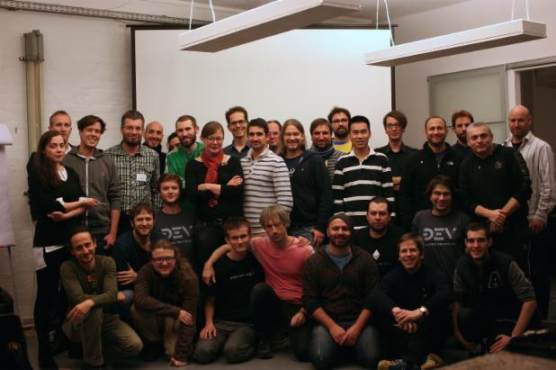
Ethereum Devcon 0 in November 2014, Gavin Wood, the co-founder of Ethereum and the founder of Polkadot, is on the right of Vitalik Buterin
The rise and explosion of ICO not only provided convenience for entrepreneurs to raise funds, but also opened a Pandora's box that was out of control. Issuing coins became a financing channel and also became a money-making machine. Not only blockchain start-ups issued coins At present, listed companies, traditional Internet companies, and even scammers and pyramid schemes have also embarked on the road of issuing coins.
Although there are many problems, ICO has indeed given many people a preliminary understanding of smart contracts, and it has also led to an explosive growth of Ethereum users. The number of Ethereum addresses has increased from 1 million at the beginning of the year to nearly 1,800 at the end of the year. Ten thousand.
At the end of May 2017, Ethereum was launched on Huobi and other domestic exchanges. The price of ETH rose steadily after that, and finally reached the previous high of around US$1,430 in January 2018, but then the bubble burst.
The encryption world in 2017 was very exciting, but I can’t elaborate on it here. Although there were many projects that seemed extremely unreliable at that time, many of them had been brilliant or set a good template for many current applications. Projects, such as CryptoKitty, Augur, etc., and the DeFi to be mentioned next also started in 2017.
For Ethereum, although the root cause of its popularity is somewhat embarrassing, it has to be said that bubbles are almost an inevitable stage in the development of things. The 2017 bubble brought capital and talent, and let everyone experience the shortcomings of Ethereum, which paved the way for the popularity of the Web3 concept in 2020 and 2021.
DeFi Summer and Another Bubble Burst
As mentioned above, bubbles also bring about infrastructure, and these infrastructures are an important engine for the next round of bull market.
In fact, DeFi did not appear in 2020, but began to take root as early as 2017.
Gnosis proposed the AMM model as early as 2017. In the same year, Bancor raised US$144 million to build an AMM-based DEX, which launched the product earlier than Uniswap; however, it was an electrical engineer who was laid off after working for one year, and a junior programmer Hyden who taught himself code for less than a year. Uniswap, which was made with US$50,000 from the Fangfang Foundation, became the final leader.
Similarly, Aave, the leading lending protocol, was launched in 2017 as ETHLend at the time and changed its name to Aave the following year.
Both Compound and MakerDAO released their first versions around the end of 2018.
These now-heavyweight products received mediocre responses at first. Until June 2020, in order to improve the liquidity of the agreement, Compound innovatively launched "Liquidity Mining", which distributes governance tokens to users who provide borrowable funds and loans. Token rewards and transfer governance rights to token holders. Afterwards, the income aggregator Yearn also adopted this strategy, and DeFi Summer, a feast about liquidity, began.
Various financial infrastructures such as transactions, lending, over-collateralized stablecoins, various aggregators, and the ve model created by Curve are progressing rapidly under the incentive of liquidity mining. According to data from DefiLlama, the total locked-up volume of DeFi on Ethereum has soared since it exceeded 1 billion US dollars on November 9, 2020. It has reached nearly 88.4 billion US dollars on May 11, 2021 in less than a year. In early December 2021, it reached an all-time high of nearly $108.07 billion.
In the middle of DeFi Summer, in addition to the successive "gold mines", there are also wonderful market competition stories such as the liquidity battle between Uniswap and SushiSwap. Those who have experienced it should have a personal experience. Uniswap could have come out on top, but because it did not "follow the crowd" to launch governance tokens for incentives, Nomi forked the code and launched SushiSwap at the end of August and directly started liquidity mining. Users who migrate Uniswap liquidity can get SUSHI token rewards, successfully robbing more than half of Uniswap's liquidity.
After that, Uniswap also quickly launched the governance token UNI, but it was not until some time ago that the Uniswap community officially proposed a plan to empower the UNI token, although this did not have much impact on Uniswap's status.
It can be said that it is the emergence of DeFi that has created a competitive landscape in the market. Project parties need to find ways to attract liquidity to provide lower slippage. Afterwards, although the black swan incident caused the liquidation volume of the DeFi lending agreement to exceed US$1 billion in a short period of time, fortunately, the market gradually recovered in the second half of the year, and new liquidity pledge agreements (such as Lido Finance) and algorithmic stablecoins (such as Frax Finance) etc. The popularity of DeFi gameplay, coupled with the upcoming NFT, has given many people the illusion of an "eternal bull market". The black swan incident in the middle of the year seems to have only made them more careful about the position management of the lending agreement rather than proactively reducing leverage. However, the DeFi protocol began to launch leveraged products crazily when the infrastructure had no new stories to tell, which built a weak stone pillar for the subsequent thunderstorms.
The following story must be clear to everyone. The thunderstorms of UST and LUNA seemed to ignite the fuse of firecrackers. Big institutions such as Three Arrows Capital and Celsius led a group of small institutions to explode one after another. Mutual lending among institutions It became a bad debt, which triggered a wave of redemption and liquidation in DeFi. Although there are no exaggerated figures in the DeFi field this time, projects with a market value of tens of billions returned to zero overnight, and the debts of large institutions worth billions of dollars are still shocking. .
No snowflake was innocent in the market collapse. Both Bitcoin and Ethereum fell below their previous highs in 2017. A large number of ERC-20 tokens fell by more than 90%, giving up almost all the gains since the summer of 2020. This story also tells us that the market can never be predicted. After all, DeFi is still finance, and the basic laws of finance must be followed. The consequences of being too addicted to it are unimaginable.
NFT craze
Getting to know NFT for the first time
The earliest "enlightenment" of NFT can be traced back to CryptoKitties causing severe congestion on the Ethereum network. As an early representative of tokens in the ERC-721 format, CryptoKitties brought serious congestion to Ethereum, which had a low upper limit of block Gas at that time, and even caused the network to stagnate for a time. It left a deep impression.

At that time, everyone was only curious about the rarity in CryptoKitties and the game of mating between cats. Although it was only a very basic gameplay, under the blessing of the bull market atmosphere at the end of 2017, Fomo's emotions were infinitely magnified.
Coincidentally, just a few weeks after CryptoKitties caused the stagnation of the Ethereum network, on December 20, 2017, OpenSea, the world's largest NFT trading market, was established in the United States. It is worth mentioning that the team that proposed the ERC-721 format proposal in 2017 is the development team behind CryptoKitties and the development team of the public chain Flow - Dapper Labs.
Although for most people, it seems that the concept of NFT has disappeared since then, and it will not return to the field of vision until the second half of 2021, but Rome wasn't built in a day, and NFT has been developing continuously during these four years. As the best carrier of "digital collections", many Web3 users even learned about Web3 and blockchain through NFT. For example, the NBA Top Shot launched by Dapper Labs is not as influential in the Web3 field as the so-called blue-chip NFTs such as CryptoPunks and BAYC. Its user base is still very large. While many people are still immersed in the wealth codes brought by DeFi Summer, NFT has completed the accumulation and ushered in the long-awaited stage after the black swan event in mid-2021.
The "Bull Market" of PFP NFT
In the second half of 2021, CryptoPunks will be the first to cause market discussions. This NFT, which was born even earlier than the ERC-721 standard, has not exceeded 1 ETH for a long period of time. In addition, the price of Ethereum was low before. CryptoPunks The series of NFTs has not attracted too much attention. After entering 2021, the floor price of the CryptoPunks series of NFTs has soared, and broke through 100 ETH for the first time in August 2021, turning from a simple pixel picture into a luxury of hundreds of thousands of dollars. In addition to the soaring floor price, this series of NFTs has also entered auction houses such as Christie’s and Sotheby’s several times, and some NFTs with special images have been sold for millions or even tens of millions of dollars.
A simple pixel-style avatar can easily be sold for hundreds of thousands of dollars, which has also sparked a lot of discussion. The second market generally accepts a point of view: CryptoPunks have become a symbol of spirit, which has nothing to do with the picture itself.
After the success of CryptoPunks, various NFT projects have sprung up, and projects that have issued NFT have also begun to strike while the iron is hot, the most representative of which is Bored Ape Yacht Club (BAYC). The BAYC series of NFTs was issued in May 2021. Perhaps due to the influence of the market environment, the casting price of 0.08 ETH did not win too much favor. All cast.

Afterwards, with the overall recovery of the cryptocurrency market, BAYC has been advancing all the way. After announcing the airdrop of APE tokens to BAYC, MAYC, and BAYC holders, and the BAYC-based Metaverse Otherland will start the casting of NFT Otherdeed, the floor price of BAYC is at It reached an all-time high of 150 ETH in April of this year. Among them, the casting contract of the NFT of the Otherdeed block destroyed more than 26,000 Ethereum in just one hour, and the Gas fee on the chain once soared to nearly 10,000 GWei.
In the midst of this "bull market", the industry has also explored to a certain extent the attributes of NFT itself, such as Loot, which was once a glorious moment but is now rarely taken care of. This NFT series, which was once defined as a "new paradigm", did not make much waves in the end. Instead, the popularity of avatar NFTs such as Azuki and Doodles continued. This also confirms that NFT is a main theme of identity, spirit, and crowd identity and symbol.
NFTFi, POAP and Equity NFT
When the NFT concept began to sweep the market, in addition to the endless avatars, everyone also began to study other use cases of NFT.
Perhaps due to the influence of DeFi, what NFT can most attract market attention is its combination with finance. Projects that combine with finance are nothing more than transactions, loans, derivatives, etc. In terms of trading, in addition to the centralized trading platforms OpenSea, Magic Eden, Zora, etc., there are also LooksRare and X2Y2 that use token inflation incentives to attract users; lending agreements are divided into peer-to-peer and peer-to-pool models. Peer-to-peer lending agreements include NFTfi, Arcade, etc. Peer-to-pool lending agreements include JPEG'd and BendDAO, which is facing a liquidation crisis due to the recent decline in the floor price of blue-chip NFTs.
As for derivatives, unlike ERC-20 futures and leveraged contracts, NFT needs to be converted into ERC-20 tokens to be endowed with more trading functions, so the "fragmentation" protocol has become the mainstream of NFT derivatives, among which Including Fractional, Tessera and other protocols. Among them, Fractional is the most talked about after fragmenting the original Doge image in 2021, pushing the total value of this meme image to hundreds of millions of dollars.

But just financialization does not seem to represent the full value of NFT. The non-homogeneous characteristics make the project party start to think about whether it can be issued as a unique "voucher". As a result, projects such as Project Galaxy and RabbitHole have begun to attract the attention of the market. They issue NFT certificates to users after completing specific tasks to help project parties promote their projects and win public recognition. A mainstream use case.
Similar to POAP, equity NFT mainly in ERC-1155 format is another major use case of NFT. Different from ERC-721, this solution first proposed by Enjin includes functions such as batch transfer, which can be used on NFTs with special but not unique functions such as tickets, admission tickets, and special identities. For example, many current NFT project parties will issue an admission ticket, and users who hold the NFT of the admission ticket can access all NFTs and other experiences issued later. This type of admission ticket is a kind of equity NFT. The required functions are more complex than ERC-20 tokens, but not every NFT is unique. For example, EtherPOAP, which will be launched when Ethereum merges, users can hold the NFT to unlock the qualifications to participate in subsequent activities.
In addition to the above-mentioned NFT applications, the current LP tokens including Uniswap V3 and some tokens representing liquidity and positions are presented in the form of NFT, showing the parameters of investor positions. Although these assets are tradable, there is currently no dedicated trading platform, and the actual trading is not active. In addition, domain names including ENS are also one of the important applications of NFT.
In essence, non-homogeneous tokens are still tokens, but ERC-721 and ERC-1155 add more additional functions to non-homogeneous tokens on Ethereum, and many virtual items with special attributes are It can be presented in the form of NFT, which further increases the possibility of Web3 expanding to the real life field.
Chain Games and Metaverse
In essence, chain games and Metaverse are the products that entered the mainstream field of vision with the development of NFT.
Compared with other products and concepts, these two are more accepted and paid attention to by the traditional mainstream market outside of Web3. Perhaps it is because of the early start, or perhaps because of the impact of the market environment. Although the two have reported frequent successes in financing, they have not aroused the enthusiasm of the market like DeFi.
Although Axie Infinity, a phenomenon-level product in blockchain games, was also established in 2018, it will become popular all over the world in 2021, especially in Southeast Asia. When the price of AXS tokens was rising all the way, many Vietnamese people even relied on the game to make a living, because the income from the game had exceeded the salary level of many ordinary local occupations. However, after the tide subsided, many Vietnamese people could only rely on part-time jobs to survive.

In essence, the design of most chain games must rely on continuous user joining to maintain vitality. The first mover has no need or willingness to pay continuously, which makes it difficult for the game itself to achieve good in-game content when the marginal growth of the number of users tends to 0. The economic cycle accelerates the loss of people who come here for the purpose of making money.
At present, most games have not successfully jumped out of a similar cycle. STEPN, which became popular at the beginning of this year, has successfully attracted such traffic in a short period of time and still encountered a bottleneck. However, Illuvium, an auto chess game with high expectations from the market and the community, has not been launched for a long time after issuing tokens before, but it also performed mediocrely after its launch this year.
In terms of Metaverse, the representative project is The Sandbox. Initially, The Sandbox was not a blockchain-based project. Instead, it transitioned to the blockchain in 2018 and took the express train of the metaverse concept in the second half of 2021, starting the acceleration mode.

Although The Sandbox is also a phenomenon-level product and has attracted many big names to settle in, this year alone has attracted well-known brands including Playboy and Martell. However, many metaverse projects represented by it have only built a simple virtual world, which seems to be far from the metaverse we imagined.
For the application of these two concepts, we will not expand too much here. The author does not think that chain games and metaverses are "pseudo-concepts", but that the blockchain infrastructure sufficient to carry such applications is not sound. Just NFTizing the assets in the game or metaverse, and tokenizing the circulating virtual currency is of little significance. Perhaps NFT-based "high-end" applications do not require less complicated infrastructure like DeFi, but require The blockchain itself can expand more functions and change the logic of the virtual world from the bottom up, which will really attract the attention of capital elements and the market.
Ethereum scaling network
The most criticized point of Ethereum is the increase in transaction costs when the transaction volume increases. However, due to the slow progress in the expansion of its main network itself, the community has to think about other expansion solutions. Among them, side chain and Rollup-based two-layer network are the two mainstream expansion solutions at present.
In a sidechain, the bridging party receives information about the independent network, but does not verify its correctness. A group of participants in charge of the bridge contract is responsible for checking the state of the independent network (making sure it is not compromised) and representing relevant facts to the bridge contract. On the other hand, Rollup is a group of participants (sequencers) responsible for providing evidence for state updates of the independent network, and the validity of these proofs is verified by the bridge contract (and whether the independent network is intact and not damaged). Generally speaking, both are independent blockchain networks, but the difference lies in whether the bridging contract on the main chain can enforce the validity of transactions on the independent network, or that it can only rely on a set of trusted parties to indicate that these transactions are valid. In comparison, the Rollup scheme can obtain the same level of security as the main chain because it needs to verify the validity of transactions on an independent network.
side chain
The concept of side chain was first proposed by Blockstream CEO Adam Back in 2014. The original purpose was to expand the capacity of Bitcoin, and then Blockstream did develop the Bitcoin side chain Liquid. After experiencing congestion, Ethereum has also begun to study sidechain-based scaling solutions, and the most successful of these is Polygon (formerly known as Matic), which was launched in May 2020.

Polygon consists of two components, one is called "commit chain" by Polygon, which can support smart contract development, and the other is a Plasma-based on-ramp for routing transactions from Ethereum to Polygon. Polygon uses an independent set of validators that do not share Ethereum's security. These validators periodically push Polygon PoS state changes to Ethereum to finalize transactions. While this approach uses Ethereum as a settlement layer, it does not provide full protection against malicious validators corrupting the checkpointing process, as stated above.
When Polygon was first launched, DeFi Summer had not yet arrived, and it did not cause too many waves. Later, with the outbreak of DeFi and the gradual rise in the price of Ethereum, the problem of high transaction costs on the Ethereum mainnet was reflected. In addition, Polygon was a rare expansion network that had been put into use at that time, which naturally became a traffic overflow. The preferred "receiving station" for .
At present, Polygon has launched mainstream DeFi protocols including Uniswap, SushiSwap, Aave, and Curve, as well as native protocols including Quickswap, Meshswap, and Klima DAO. In addition, MM Finance, the DeFi protocol originally on Cronos, recently launched Polygon, and its TVL has exceeded 300 million US dollars, second only to Aave. Polygon has a TVL of $1.74 billion at the time of writing, according to DefiLlama.
Layer 2 network based on Rollup
Vitalik Buterin, the founder of Ethereum, once published an article titled "Ethereum Roadmap Centered on Rollup", arguing that the Rollup solution is the best Ethereum expansion solution at the moment. Rollup is divided into two schemes, Optimistic Rollup and ZK Rollup. Vitalik Buterin has publicly stated that he prefers the ZK Rollup scheme, but the more mature one is Optimistic Rollup, and its representative projects Optimism and Arbitrum.
Optimistic Rollup
Optimistic Rollup was proposed by John Adler at the Ethereum Foundation Research Forum. Currently, Optimistic Rollup is used in addition to Optimism, Arbitrum, and Fuel Labs. Optimistic Rollup consists of Aggregator and Validator. The transactions that occur on Layer 2 are packaged by the aggregator, and the packaged transactions are uploaded to the Ethereum mainnet. The verifier reviews the packaged transaction and issues a fraud proof.
The so-called fraud proof, that is, the verifier can review the aggregated and packaged transactions, and if there is a false transaction, the verifier can question and change all blocks from this block to the following (blocks are uploaded from the second-tier network to the main network After that, there will be a challenge time of 1-2 weeks, if there is no challenge within this time, the block will be recognized).
Optimism and Arbitrum, two layer-2 network projects that adopt the Optimistic Rollup solution, also have their own advantages.

The biggest feature of Optimism, which will be launched on the mainnet in July 2021, is EVM equivalence, which means that smart contracts on Ethereum can copy and paste code directly to Optimism without too many modifications. Although there is a lower migration cost and the launch of the main network earlier, the Optimism ecology has not exploded as imagined. Except for Synthetix and its deep binding, other projects only support the network without passing liquidity Mining and other incentives to improve its ecological activity.
After that, Optimism officially launched the token OP airdrop in June this year, and intensively carried out a series of ecological development incentives, which greatly improved its ecology compared with before the token was launched. At the time of writing, Optimism has a TVL of $1.49 billion, according to L2Beat.
As for Arbitrum, which launched its mainnet about a month later than Optimism, it adopts an off-chain method for dispute resolution. Although it takes longer than Optimism, the cost is lower. It seems that an important reason why Arbitrum is more popular in the market is that it has gone further and further on the road of cost reduction. Arbitrum has completed the upgrade from One to Nitro, and the cost has been further reduced.
ZK Rollup
Compared with Optimistic Rollup's fraud proof that uses economic incentives to protect network security, ZK Rollup uses a cryptographic model to protect network security to achieve almost "absolute" security. At the same time, ZK's own data compression properties can further improve transaction confirmation speed and lower handling fees. But because of this, its development is more difficult. The current layer-2 network based on the ZK Rollup solution, represented by zkSync and StarkNet, is almost still in the testnet state.
Like Optimistic Rollup, ZK Rollup also packages and verifies the authenticity of transactions on the network and submits them to the main network. The difference is that it uses zero-knowledge proof and uses cryptography to confirm the correctness of transactions. According to L2 Fees data, the current gas fee of zkSync is significantly lower than that of Optimism and Arbitrum.
Previously, zkSync announced the approximate launch time of the mainnet, which is only two months away.
In fact, the exploration of network expansion is far more than those mentioned above, including Polygon Hermez's zkEVM solution, Loorping, Boba Network, Aztec, Metis, and dYdX based on StarkWare solutions (which has begun to migrate to the Cosmos ecosystem), Immutable X and so on, due to the limited space, I will not introduce them one by one.
Ethereum Security
For Ethereum or even any decentralized network, since it is difficult to reach a global consensus on the rollback of the network state, once assets are stolen, they are likely to be permanently lost, so security has become the top priority. However, unfortunately, since the birth of Ethereum, security incidents have never stopped, especially after the development of the DeFi protocol, large amounts of funds are stolen frequently, which is shocking.
Code Vulnerabilities
Code vulnerabilities account for the highest proportion of security incidents in Ethereum ecological projects. The hacking incident caused by the largest code loophole in the history of Ethereum is also the "The DAO" incident that occurred on June 17, 2016.
The DAO is a crowdfunding project initiated by the blockchain company Slock.it, and was demonstrated at the first Ethereum developer conference Devcon. At that time, the advanced concept of DAO was such a sensation that when it launched crowdfunding, it received more than 12 million Ethereum, accounting for about 14% of the total amount of Ethereum at that time. However, hackers then took advantage of the recursive loophole in the contract code of the project to successfully steal 3.6 million Ethereum.

After that, the Ethereum community formed a serious disagreement on how to solve this problem. One side thought that the block should be rolled back through a fork, and the other side thought that the spirit of decentralization means that what has happened cannot be changed. In the end, under the principle that the minority obeys the majority, Ethereum successfully forked into two chains, ETH and ETC, and the supporters of the two parties parted ways.

After that, there was another large-scale hacking incident, except that 153,000 Ethereum (worth about 30 million U.S. dollars at the time) were stolen from the Parity multi-signature wallet in 2017. After the arrival of the DeFi boom, the early DeFi projects were simply Therefore, the code is not prone to serious loopholes, but as the complexity of DeFi gradually increases, the possibility of code loopholes continues to increase.
The most "expensive" hacking incident in 2021 is the Poly Network hacking incident. At that time, Poly Network was hacked and lost a total of more than 610 million US dollars in assets. Fortunately, the hackers voluntarily returned most of the assets. However, this incident It also brought down Poly Network and O3 Swap.
The most attacked protocol category in the DeFi field is cross-chain. On the one hand, cross-chain protocols are more complex, and there are many modules that may have vulnerabilities; .
The two largest hacking incidents since 2022, the attacks on Ronin Network and Nomad are also hacking incidents in the cross-chain field.
phishing attack
Compared with the attack behavior of clearing the liquidity of the protocol at one time due to code loopholes, phishing attacks do not require too high "technical attainments". The purpose is achieved by transferring the victim's assets through a malicious contract.
other
other
There are various hacking incidents targeting the virtual world. In the above-mentioned Ronin Network attack incident, the hacker sent a fake offer with a virus to the Sky Mavis developer to control the verification node and finally realized the attack on the network. If code-level vulnerabilities and phishing attacks can be prevented through caution, then such hacking incidents are really "impossible to prevent."
One thing we have to admit is that the continuous improvement of security seems to be achieved only by plugging loopholes. Although we now have many smart contract audit companies and bug bounty platforms, the development of emerging technologies will always experience this. labor pains. There are still frequent security problems in the Web2 field today, and the unavoidable problems can only be done with caution.
Finally, Tornado Cash, as a concentration of “money laundering” by hackers on the Ethereum chain, was previously included in the sanctions list by the U.S. Treasury Department. The pros and cons of this move may only allow time to give the answer.
Important Updates for Ethereum
In addition to the Frontier stage mentioned above, Ethereum has undergone several important upgrades since 2016, including:
Homestead upgrades. Homestead is the first hard fork upgrade of Ethereum, and it is also the first time that Ethereum implements the EIP improvement proposal. This upgrade was activated at block height 1,150,000 (March 14, 2016), including three important improvements: Canary contracts were removed, and the centralized part of the network was removed; Ethereum’s contract programming language Solidity was introduced introduced new code; introduced the Mist wallet, allowing users to hold/trade Ethereum and write/deploy smart contracts.
In addition, the Homestead upgrade also introduced several EIPs, including specifying that if a contract does not receive enough Gas to complete the entire operation process, the contract creation will fail instead of creating a blank contract; canceling the difficulty value for user creation The higher block incentives stabilize the block generation time at 10 seconds to 20 seconds, and restore the entire network to the basic "settings" such as the target block generation time of about 15 seconds.
Byzantine upgrades. This upgrade was activated at block height 4,370,000 (July 20, 2016), introducing the concept of "difficulty bomb" for the first time, and adjusting the block difficulty evaluation formula to include uncle blocks in the reference range, making the token issuance rate more stable , and ensures that the issuance rate cannot be forced to increase by manipulating uncle blocks. At the same time, the Ethereum block reward was reduced from 5 ETH to 3 ETH.
Constantinople upgrade. The second phase of the Metropolis upgrade, the Constantinople upgrade, was originally scheduled to go live at block height 7,080,000 in mid-January 2019, but on January 15, an independent security audit company called ChainSecurity released a report, Indicates that there is a system upgrade that may allow attackers the opportunity to steal funds. After receiving the report, ethereum core developers and other members of the community voted to hold off on the upgrade until the security issue was resolved. At the end of January, the core developers announced that the upgrade will be activated at block height 7,280,000. On February 28, the Constantinople upgrade was officially activated.
This hard fork upgrade after nearly 3 years has introduced many important improvement proposals, including smart contracts can verify themselves by checking the hash value of another smart contract; enhance the implementability of the state channel; The block reward was further reduced to 2 ETH etc.
Istanbul upgrade. This upgrade was activated at block height 9,069,000 (October 8, 2019). In addition to postponing the difficulty bomb again and reducing the Gas consumption of transaction data, this upgrade has provided a large amount of cost reduction and improved Improvements in performance and ease of verification have promoted the rapid development of expanded networks.

The Dragonfly Crypto Summit event in 2019, from left to right are Sequoia China founder Shen Nanpeng, Dragonfly founder Feng Bo, Vitalik Buterin, Meituan founder Wang Xing, Dianping founder Zhang Tao
Muir Glacier upgrade. This upgrade was activated at block height 9,200,000 (January 2, 2020). The main content of this upgrade is to postpone the difficulty bomb by another 4 million blocks.
Berlin upgrade. This upgrade was activated at block height 12,244,000 (April 15, 2021). The upgrade content is biased towards development, including various optimizations to the contract, covering Gas efficiency, and the way to read code from the Ethereum Virtual Machine (EVM). Updates and other changes to protect against DDOS attacks, etc.
London upgrade. This upgrade was activated at block height 12,965,000 (August 5, 2021, Beijing time). If the previous upgrade was just an "improvement", then this upgrade is a "reform" of Ethereum. The London hard fork upgrade includes 5 core improvements, namely EIP-1559 (handling fee market reform), EIP-3198 (BaseFee opcode), EIP-3529 (reduce Gas refund, invalidate Gas Token, and serve EIP -1559), EIP-3541 (reject new contracts starting with 0xEF), and EIP-3554 (difficulty bomb postponed to first week of December 2021).
Among them, EIP-1559's reform of the fee market has had a profound impact on the economic model of Ethereum. According to data from ultrasound.money, at the time of writing this article, the amount of Ethereum destroyed has exceeded 2.61 million. Inflation fell to 2.5%. (Recommended reading: "The first anniversary of the upgrade of Ethereum London, what stories did EIP-1559 bring?》)
Next, what lies ahead is the merger of Ethereum. This upgrade is the first time that the difficulty bomb of Ethereum has been officially used after many delays. The consensus mechanism of Ethereum will also officially bid farewell to PoW and turn to PoS. In addition, after switching to PoS, block rewards will drop by about 90%. If the speed of Ethereum destruction last year is maintained, Ethereum will become a deflationary asset. As one of the most important moments in the history of Ethereum, many project parties and Web3 companies have launched commemorative activities, including the EtherPOAP NFT series, which will be airdropped to 8,893 addresses participating in Ethereum crowdfunding, and will also pass the whitelist way to carry out the Free Mint campaign.
Ethereum in five years
references:
《The reason for the fork of Ethereum: the famous The DAO incident》
Hacker Uses Parity Wallet Vulnerability to Steal $30 Million Worth of Ethereum
《The first anniversary of the upgrade of Ethereum London, what stories did EIP-1559 bring?》





