


IOSCO is Focusing on Creating “Common Standards” for the Crypto Industry


This article comes fromThe Blocksecondary title
Odaily Translator | Nian Yin Si Tang
Summary:
Summary:
- The IOSCO aims to publish crypto policy recommendations next year.
- Is it too late to get the world on the same side?
The question of how securities laws should apply to cryptocurrencies has never been more pressing. That is the view of Lim Tuang Lee, assistant managing director of capital markets at the Monetary Authority of Singapore.
Lim also chairs the Fintech Working Group of the International Organization of Securities Commissions (IOSCO). The task force was most recently tasked with developing a set of policy recommendations for cryptocurrencies for securities regulators around the world.
The global crypto regulatory landscape is patchwork, with wide variations in the level of tolerance for crypto projects that resemble traditional securities across jurisdictions. Certain regions allow some companies to operate in ways that other regions consider illegal.
The global securities regulator aims to publish the recommendations by the end of next year. But will they make a difference? Despite its influence, IOSCO's recommendations are not binding. Still others believe it may be too late to pursue the initiative.
secondary title
urgent problem
IOSCO has been focusing on the crypto industry since at least 2017, when the organization created an initial coin offering network to help members exchange insights on cryptocurrencies. In 2019, the regulator publishedstatementstatement
According to the report, stablecoins may be brought under the supervision of securities regulators.
Now, the group has decided to go a step further. “We think it’s time ... for a change of approach,” a spokesperson for the IOSCO General Secretariat said in an email in response to The Block’s questions. Significant progress has been made.”
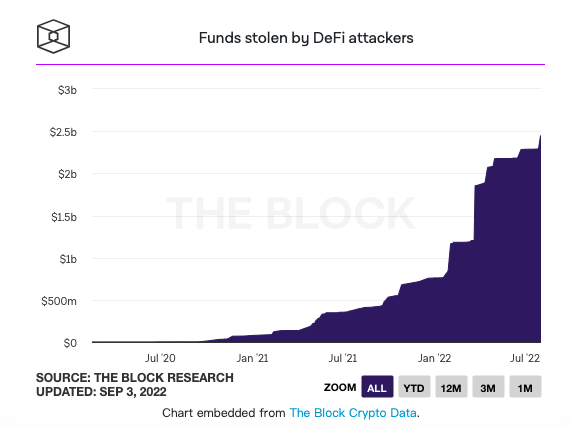
And it's not just because of the crypto market crash. During his speech, Lim also said that hacks and scams have existed in the crypto space for years, highlighting concerns about the fairness and resilience of the crypto market. Attackers have stolen more than $2 billion from DeFi protocols since 2020, according to The Block Research.
The traditional financial system works with intermediaries who have a fiduciary duty to investors, a best interest duty to brokers, etc. Traditional financial regulation is directed at these intermediaries. However, since DeFi protocols are peer-to-peer systems without intermediaries, it is impossible to regulate them using traditional frameworks.
secondary title
“Late but Arrived”
IOSCO's new initiative will be led by its fintech working group, which is chaired by the Monetary Authority of Singapore and currently has 27 members from IOSCO board member jurisdictions.
According to a roadmap released last month, the project will have two workflows: one focused primarily on crypto and digital assets, and another dedicated to DeFi.
The cryptocurrency workstream will be led by the Financial Conduct Authority (FCA), with a focus on "promoting fair and transparent markets and orderly training" and "addressing market suitability and manipulation," among other things. The U.S. Securities and Exchange Commission (SEC) will lead a DeFi workstream that will focus on "application of IOSCO principles and standards in common DeFi activities, products, and services" and "emphasize the linkages between DeFi, stablecoin, and cryptoasset transactions." connect".
If the initiative is successful, IOSCO and its fintech working group could help achieve international coordination, said Yuliya Guseva, a law professor and head of the blockchain and fintech program at Rutgers Law School. She said this was needed to prevent a "race to attract" crypto firms, in which jurisdictions vie to attract crypto firms seeking light regulatory regimes, even ones that "may not be good". , a real enterprise".
Lee Reiners, policy director at Duke University's Center for Financial Economics, said that even when the group makes useful recommendations, they are non-binding, meaning member states could theoretically ignore them -- unless other member states do not follow them because some of them don't. Rules and "criticism by name".
“If policymakers are genuinely concerned about the differing responses to cryptocurrencies around the world,” Reiners said, then the G20 finance ministers should encourage all members to follow IOSCO’s advice.
Either way, it may be too late, Guseva admits. According to data from DeFi Pulse, there are already hundreds of DeFi projects, and more than $35 billion in funds have been deposited in DeFi protocols. Guseva said the pandemic could be one of the reasons behind the delay in crypto regulation. However, she added: “In my opinion, better late than never. Regulatory policies for the crypto industry need to be looked at now.”
"We're running out of time, and investors have already lost a lot," Reiners said. "The longer you wait for policy, the more investors will be taken advantage of."





